2025-02-24 10:38
LONDON, Feb 24 (Reuters) - OPEC and its allies face a tricky dilemma: should they start loosening oil production caps even though the crude supply and demand picture is unlikely to improve in the near future? They may well opt to again delay the crucial moment to keep prices steady, but they increasingly risk losing control of the market. The Organization of the Petroleum Exporting Countries and other major producers including Russia, an alliance known as OPEC+, is scheduled to gradually start unwinding years of deep production curbs in April. The group is holding back a total of 5.85 million barrels per day of output, or about 5.7% of global demand, following a series of cuts made since 2022 to prop up the market. The rollback of 2.2 million bpd of these cuts, announced in November 2023 , opens new tab for the first quarter of 2024, has since been delayed five times due to persistently weak oil demand and continued growth in global crude output. Unfortunately for OPEC, the market backdrop is unlikely to improve markedly by April. In fact, it may get worse as increasingly fractious trade relations between the United States and other major economies weigh on oil demand growth. U.S. President Donald Trump has been urging OPEC's de-facto leader Saudi Arabia to bring down the price of oil. And Trump's conversation with his Russian counterpart Vladimir Putin and subsequent bilateral U.S.-Russia talks in Saudi Arabia have raised speculation about the possibility of a ceasefire in Ukraine and easing of U.S. sanctions on Moscow's vast oil production. DISCIPLINE OPEC+ has been highly effective in maintaining relative stability in oil markets in recent years, largely because of members' discipline. Benchmark Brent crude prices have stayed in a range of $70 to $100 a barrel since 2021, excluding a few months of volatility that followed Moscow's invasion of Ukraine. Yet by holding back significant production capacity, OPEC's market share – and, by extension, its ability to continue controlling the market – has steadily declined as non-member producers boosted output. This includes drillers in the Permian shale deposits in Texas and New Mexico, where output has soared in recent years to make the United States the world's top producer. The U.S. Energy Information Administration (EIA) this month raised its outlook for U.S. oil production slightly to a new record of 13.6 million bpd in 2025. And although the pace of growth has decelerated, production is likely to remain steady for years. The EIA expects global oil production to grow in 2025 by 1.6 million bpd, led by countries outside of OPEC+ group including the United States, Canada, Brazil, and Guyana. Meanwhile, strains are growing within the alliance. A $48 billion expansion of Kazakhstan's giant Tengiz field, operated by Chevron, is expected to reach production of 260,000 bpd by the end of February, four months ahead of plan, which will bring its total production to 1 million bpd. In order for the central Asian state to stick to its production target, it would thus have to deepen its output cuts significantly, losing much needed revenue. Nigeria has lifted production in recent months, while 300,000 bpd of oil exports from Iraq's semi-autonomous Kurdistan region could resume soon following a two-year dispute. The United Arab Emirates, a close Saudi ally, is also ramping up its own capacity following years of heavy investment. The Gulf state has already reached almost 5 million bpd in capacity, compared with a current official production level of 3.2 million bpd. The quota , opens new tab is set to increase by an additional 300,000 bpd this year. TOUGH CHOICE Supply growth in 2025 is set to outpace global oil demand, which is expected to rise by 1.1 million bpd after gaining 870,000 bpd the previous year, according to the International Energy Agency (IEA). Trends in global oil inventories are more positive for OPEC, but only slightly. Stocks should start rising this year if production indeed outpaces demand, and more OPEC+ supplies would only accelerate this build-up. OPEC+ thus faces a tough choice. Further delays in unwinding cuts has limited upside, as significant spare oil production capacity is already helping maintain stable prices by providing the market with a buffer. For producers growing capacity within the group, holding back output increases economic pressures. A delay could irk Trump. But on the other hand, increasing production in a well-supplied market could lead to an oil price sell-off. So OPEC+ may well decide on another delay, but this choice comes with consequences, as the group of producers may see its credibility and market share erode even more. ** The opinions expressed here are those of the author, a columnist for Reuters** Sign up here. https://www.reuters.com/markets/commodities/opec-risks-losing-control-with-more-output-delays-bousso-2025-02-24/
2025-02-24 10:16
BRUSSELS, Feb 24 (Reuters) - The European Commission will propose exemptions for "the vast majority" of companies covered by the European Union's carbon border levy on the grounds that they produce only 1% of emissions in the scheme, a draft proposal showed. The move, due to be proposed this week as part of a package of measures to cut red tape for businesses, would drastically reduce the 200,000 importers covered by the EU's carbon border fee, the world's first such levy. A draft of the Commission's proposal, seen by Reuters, outlined plans to change the carbon border levy (known as CBAM) so that it applies only to companies importing goods with a mass-based threshold of 50 metric tons per year. "A mass-based threshold reflecting the average emissions intensity of the volume of imported CBAM goods would better translate the climate objective of the CBAM," it said, adding that a threshold set at 50 ton will exempt the vast majority of importers from the levy. The change would maintain more than 99% of the emissions covered by CBAM, the draft said. It would replace the existing CBAM rules, under which all individuals or companies importing CBAM-covered goods with a value above 150 euros would have to pay the levy from next year. From 2026 the policy will impose costs at the EU border on the CO2 emissions embedded in imported steel, aluminium, cement and other goods. EU Climate Commissioner Wopke Hoekstra said this month that the Commission's analysis had found that 97% of the emissions covered by the carbon border tariff are produced by 20% of the companies under the scheme. Most of the exempt importers would be small and medium-sized companies or individual consumers, the draft document said. The draft proposal could change before publication and any changes to the EU policy would need to be approved by European Parliament and EU member countries. The EU also plans to simplify some rules for companies complying with CBAM. For example, the draft outlined plans to make it easier to claim a reduction in CBAM costs for goods imported from a country where manufacturers already pay a CO2 price. Rather than the company having to calculate the CO2 price paid in that country, the Commission would, from 2027, publish a calculation of annual average carbon prices in other countries. Sign up here. https://www.reuters.com/markets/europe/eu-exempt-most-companies-carbon-border-levy-draft-shows-2025-02-24/

2025-02-24 08:03
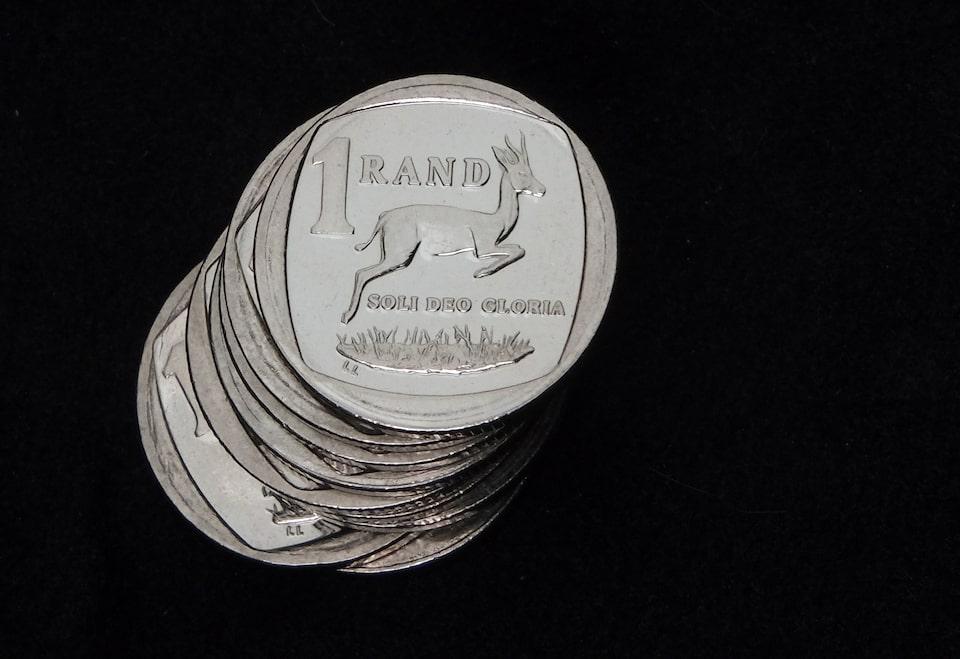
JOHANNESBURG, Feb 24 (Reuters) - South Africa's rand strengthened on Monday, ahead of a flurry of local data this week which will give traders clarity on the state of Africa's most industrialised economy. At 0748 GMT, the rand traded at 18.39 against the dollar , 0.3% firmer than its previous close. Domestic investors will focus on South Africa's monthly consumer inflation reading on Wednesday, producer inflation figures on Thursday and trade and budget balance data on Friday. The dollar was last around 0.1% weaker against a basket of other major currencies with traders digesting last week's dour U.S. economic releases and President Donald Trump's fresh tariff threats. "On the one hand, the USD is losing some ground and will support the ZAR. On the other hand, a tremendous amount of data will keep investors cautious about taking any significant directional position," ETM Analytics said in a research note. On the stock market, the Top-40 (.JTOPI) , opens new tab index was down about 0.7%. South Africa's benchmark 2030 government bond was marginally stronger, with the yield down 0.5 basis point to 9.165%. Sign up here. https://www.reuters.com/markets/currencies/south-african-rand-firms-ahead-data-packed-week-2025-02-24/
2025-02-24 07:47
Feb 24 (Reuters) - Exxon Mobil's (XOM.N) , opens new tab Australian unit will invest nearly $200 million in the Kipper 1B gas project, alongside its partners Mitsui (8031.T) , opens new tab and Woodside Energy (WDS.AX) , opens new tab, the U.S. oil major said on the company website on Monday. The Australian Competition & Consumer Commission has warned that the east coast could face a gas supply shortage from 2027, potentially necessitating imports. "Projects such as Kipper 1B are vital to help meet the country's energy security needs by bringing new supply online, which will be used exclusively for Australia's domestic market," said Exxon's local unit Esso Australia Resources. The Kipper 1B project, located in the Gippsland Basin off the south-east coast of Victoria, was jointly approved by Esso Australia Resources, Woodside Energy (Bass Strait), and Mitsui E&P Australia. Mitsui is the majority shareholder in the Kipper joint venture, holding a 35% stake, while Woodside and Exxon Mobil each own 32.5%. Esso said that it will continue to invest in its Gippsland operations to support production well into the 2030s. "The project is expected to expand capacity from the Kipper field, delivering crucial gas supplies to the market ahead of winter 2026," Esso said. Last month, the competition regulator also highlighted the challenges of building new domestic gas supplies, citing "lengthy regulatory approval processes" and "an uncertain policy environment", among other issues. Sign up here. https://www.reuters.com/business/energy/exxons-australian-unit-partners-invest-nearly-200-million-gas-project-2025-02-24/

2025-02-24 07:28
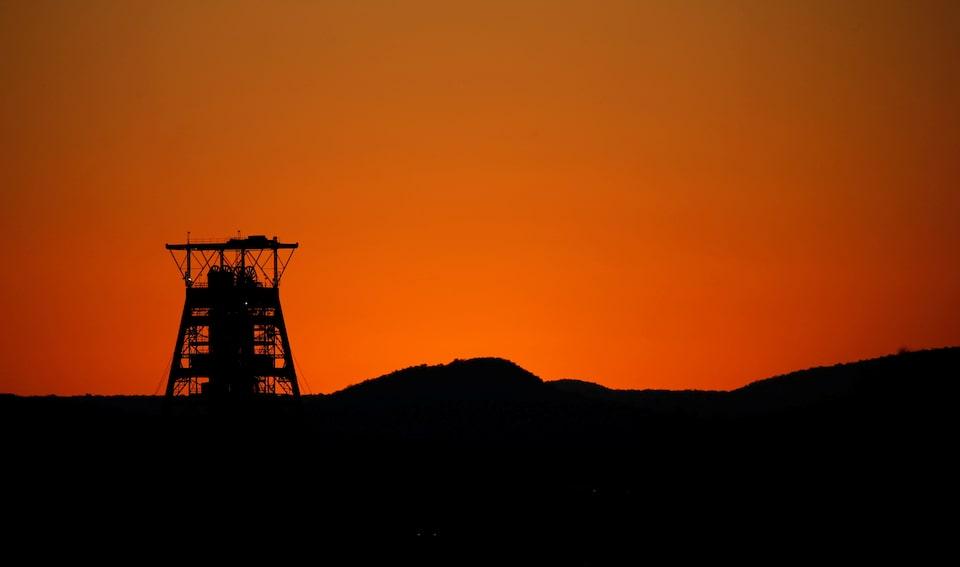
Feb 24 (Reuters) - Anglo American Platinum (AMSJ.J) , opens new tab said it had halted operations at its Tumela mine in South Africa on Thursday after excessive rains caused flooding, though the company maintained its production forecast for the year. The world's top producer of platinum group metals (PGM) used to curb vehicle emissions said in a statement that heavy rains in the northern part of South Africa over the past week had caused widespread flooding. Tumela mine, the smaller underground operation in Amplats' Amandelbult complex, was the most impacted, it said. Operations in the rest of the complex, including the main Dishaba mine, the concentrator and other infrastructure, were largely unaffected and operations there had resumed on Monday after a temporary pause. A detailed impact assessment and recovery plan to ensure safe production at Tumela mine, which produces about 10% of Amplats' monthly metal-in-concentrate, was under way. "Preliminary indications are that the 2025 metal-in- concentrate production guidance of 3 million to 3.4 million PGM ounces is not expected to be impacted," Amplats said. Amplats on February 17 reported a 40% decline in profit for 2024 to 8.4 billion rand ($458.56 million) as lower PGM prices continue to hurt its income. ($1 = 18.3184 rand) Sign up here. https://www.reuters.com/markets/commodities/amplats-halts-operations-south-african-mine-after-heavy-rains-2025-02-24/
2025-02-24 07:26
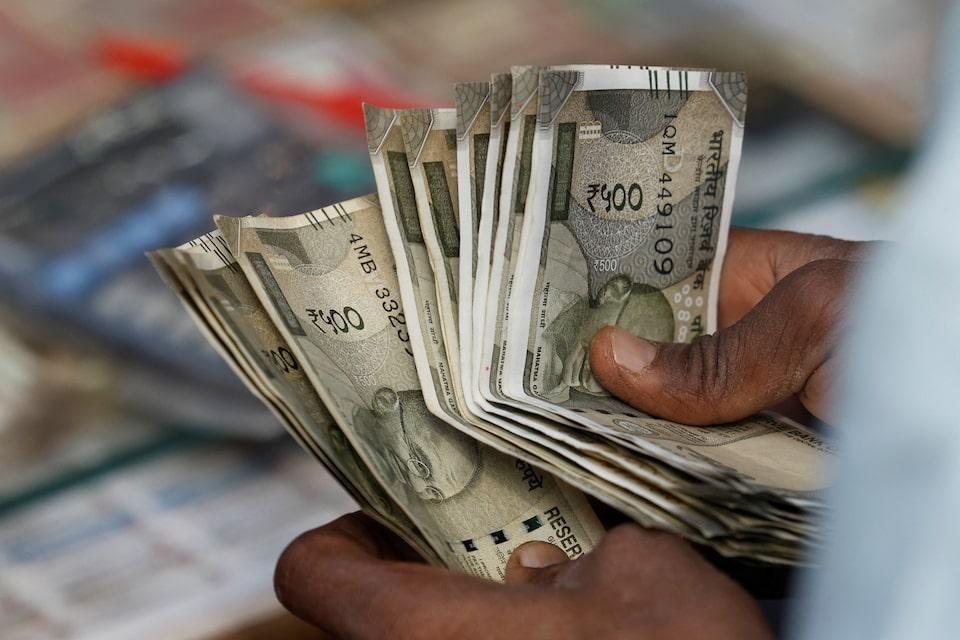
MUMBAI, Feb 24 (Reuters) - The Indian rupee was unable to sustain an uptick at the open on Monday, pressured by dollar buying by state-run banks, likely on behalf of oil companies. The rupee was quoted at 86.6900 to the U.S. dollar at 12:48 pm IST, barely changed from its close on Friday. The Indian currency opened higher at 86.56 and had hit 86.51 on the interbank order system. State-run banks bought dollars aggressively after the open and "have largely been there all through", an FX and rates head at a bank said, adding that it is likely for their oil clients. "I have been hearing that an oil company is scouting around for quotes (from banks), he said. A currency trader at a bank reckoned "that there is a small possibility" that the state-run banks may be buying dollars for the Reserve Bank of India (RBI) to replenish their FX reserves. The selloff in Indian stocks on Monday, on the back of a decline in U.S. equities, was also cited by traders a reason for the rupee being unable to hold on to its opening advance. DOLLAR STRUGGLES The dollar was down against its major peers and versus Asian currencies on the day on worries that U.S. tariffs may have a negative impact on the economy. U.S. business activity nearly stalled in February amid mounting fears over tariffs on imports and cuts in federal spending, data released on Friday showed. Separately, data revealed that U.S. consumer sentiment dropped more than expected to a 15-month low and inflation expectations rocketed. Sign up here. https://www.reuters.com/markets/currencies/rupee-struggles-after-opening-uptick-dollar-buying-by-state-run-banks-2025-02-24/