2025-02-24 07:25
Feb 24 (Reuters) - Britain's National Grid (NG.L) , opens new tab said on Monday it would sell its U.S. onshore renewables business to private equity firm Brookfield Asset Management (BAM.TO) , opens new tab and its partners in a deal valued at $1.74 billion, including debt. National Grid has been refocusing its investments on its energy network business and has sought to streamline its business as part of its strategy announced last May. The company, which runs Britain's energy systems, expects the deal to be completed in the first half of the financial year ending March 31, 2026, it said, subject to regulatory approvals. National Grid Renewables develops and operates solar, onshore wind and battery storage assets in the United States, with 1.8 gigawatts in operation and 1.3 gigawatts under construction. ($1 = 0.7896 pounds) Sign up here. https://www.reuters.com/business/energy/national-grid-sell-us-onshore-renewables-arm-174-billion-brookfield-2025-02-24/

2025-02-24 06:50
German election results boost European shares and euro U.S. markets face uncertainty over growth, valuations, and geopolitics Investors await Nvidia's earnings amid market volatility NEW YORK/LONDON/SYDNEY, Feb 24 (Reuters) - Wall Street struggled for traction on Monday, ending mixed after slumping last week, while German election results buoyed German shares and Europe's single currency as investors waited for midweek results from artificial intelligence chip leader Nvidia. The euro's positive reaction to Sunday's conservative election victory in Germany, the currency bloc's largest economy, capped the dollar. U.S. stock indexes swapped moderate gains and losses all day, mostly succumbing to more of the same uncertainty about U.S. growth and valuations and geopolitics that helped knock the S&P 500 (.SPX) , opens new tab back from record highs set early last week. The S&P 500 closed down 0.53% the Nasdaq Composite (.IXIC) , opens new tab fell 1.19%. The Dow Jones Industrial Average (.DJI) , opens new tab rose 0.08%. In recent sessions, weak U.S. retail sales, consumer confidence and services purchasing managers' reports, combined with higher-than-expected consumer price inflation, have eroded market confidence and, amid uncertainty over a barrage of federal government layoffs, have put U.S. stagflation in center of investor calculations. "Now we're looking at other things, whether it's uncertainty, geopolitical, whether we're finally looking at earnings and things like that affect markets," said Joe Saluzzi, co-head of equity trading at Themis Trading. Saluzzi said investors are distracted by German elections, the war in Ukraine, and a range of other headlines. "People get scared quick," he said. U.S. markets opened firmer, taking in a rally in German stocks, along with the euro, which hit a one-month high after German voters put centrist parties on track to form a coalition. Friedrich Merz was set to become Germany's next chancellor after his opposition conservatives won the national election. Merz should be able to form a coalition to govern with the ruling centre-left Social Democrats, even though the party came third behind the far-right Alternative for Germany. "In the end (it was) a result that was close to the latest exit polls and should be a very market-friendly outcome," said Peter Schaffrik, global macro strategist at RBC Capital Markets. Germany's DAX stock index (.GDAXI) , opens new tab rose 0.62% but the pan-European STOXX 600 (.STOXX) , opens new tab index fell 0.08%. MSCI's gauge of stocks across the globe (.MIWD00000PUS) , opens new tab fell 0.48%. The start of German coalition talks comes as EU leaders are set to hold an extraordinary summit on March 6 to discuss additional support for Ukraine and how to pay for European defence needs. This week marks three years since Russia began its full-scale invasion of Ukraine. Wall Street took a hit on Friday when a survey on services showed a slide in activity amid concerns about tariffs and cost pressures. The pullback has raised the stakes for Nvidia's NVDA.O results on Wednesday when investors will be looking for further rapid growth in revenue and a read on whether AI hype is justified and valuations in market-leading growth stocks fair. "Markets are already jittery and looking for a reason to take profits," said Gene Goldman, chief investment officer at Cetera Investment Management, noting that any question about AI is seen as one reason since the technology has driven market growth for the last few years. The Federal Reserve's favoured measure of core inflation is due on Friday and expected to show a slowdown to 2.6% from 2.8%, but any impact could be clouded by the focus on Trump's reliance on import tariffs as a tool for economic policy and leverage over trade partners, which could be inflationary. Trump's tariff deadlines on Canada and Mexico are set for next week. Investors also fear the labor market impact from actions taken by billionaire Elon Musk's Department of Government Efficiency. A survey of U.S. consumers out on Friday showed inflation expectations for the next five years climbed to 3.5%, the highest since 1995. The euro rose to a one-month high of $1.0528 before paring to last trade 0.07% higher at $1.0465. The dollar index , which tracks the currency against six peers, was last just above breakeven after being down much of the session. The U.S. currency rose 0.3% against the yen to 149.75, after sliding last week on the back of rising expectations of further rate hikes from the Bank of Japan. In commodity markets, gold was up 0.5% at $2,950.80 an ounce , having extended a string of record highs. Oil has been headed in the other direction, in part on speculation an eventual peace deal on Ukraine could lead to an easing of sanctions on Russia that could boost its fuel exports. Brent rose to $74.78 per barrel, settling up 0.47% on the day. U.S. crude rose 0.43% to settle at $70.70 a barrel. The yield on benchmark U.S. 10-year note eased 1.8 basis points from late Friday to 4.402%. Sign up here. https://www.reuters.com/markets/global-markets-wrapup-1pix-2025-02-24/
2025-02-24 06:35
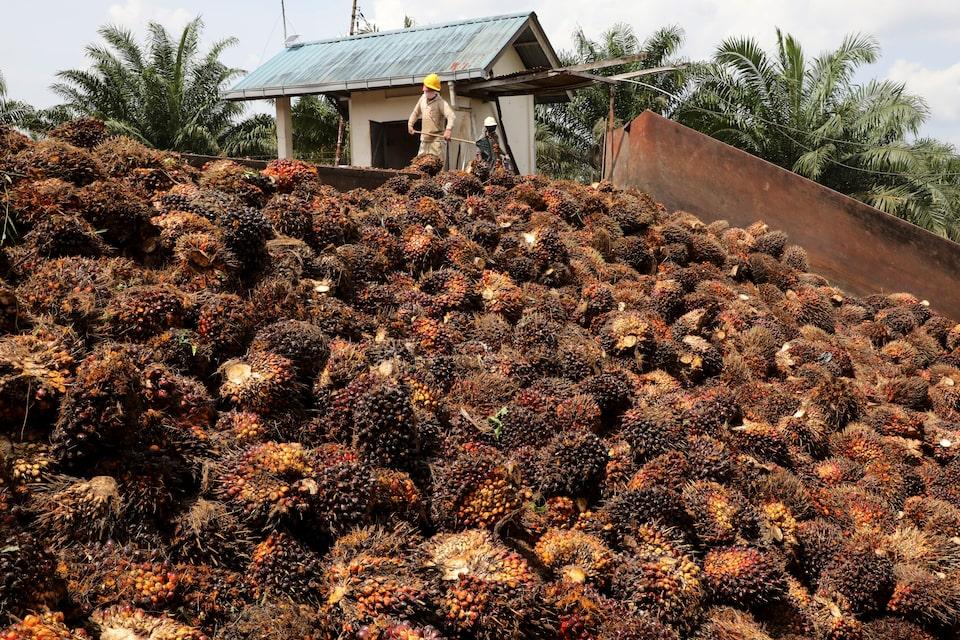
KUALA LUMPUR, Feb 24 (Reuters) - Malaysia has no plans to raise palm oil's biodiesel blend to 20% from the current 10%, as the required infrastructure development would need funding that both the industry and the government are unwilling to provide, the commodities minister said on Monday. There are challenges to implement the biodiesel blend to 20% as it will require an investment in infrastructure estimated at about 643 million ringgit ($146.20 million), Plantation and Commodities Minister Johari Abdul Ghani told parliament. Malaysia currently imposes a 10% biodiesel mandate, although a 20% biodiesel mandate is implemented in Labuan and Langkawi as well as the state of Sarawak except Bintulu, he said. "Our engagement with industry stakeholders show that they want the government to finance this but we are not ready to fund it," he said. Top palm oil producer Indonesia has launched the mandatory B40 biodiesel programme, which created supply tightness in the world market and made palm oil more expensive than rival oils. ($1 = 4.3980 ringgit) Sign up here. https://www.reuters.com/markets/commodities/malaysia-rules-out-raising-palm-oils-biodiesel-blend-20-2025-02-24/
2025-02-24 06:20
MUMBAI, Feb 24 (Reuters) - The 1-year dollar/rupee forward premium plunged on Monday and shorter-term India government bond yields fell, after the country's central bank announced an FX swap to shore up rupee liquidity. WHY IT'S IMPORTANT Forward premiums are a factor that companies take into account while making their decision on hedging their foreign exchange risks. A drop in forward premiums reduces the hedging cost of dollar payments that are due in the future. Meanwhile, lower shorter-duration yields are beneficial for corporates and non-banking financial companies as they mainly borrow through such papers. Corporate bond yields track government counterparts, and a drop in yields reduces the borrowing cost of companies. CONTEXT The Reserve Bank of India will conduct a $10 billion 3-year buy/sell swap on Friday, which would infuse around 870 billion rupees of liquidity in the banking system. The move comes at a time when the banking sector has been reeling a under large cash deficit, which is expected to persist. The RBI has already infused over 3.6 trillion rupees through a combination of open market and secondary market bond purchases, a six-month FX swap and repos that mature in early April. MARKET REACTION The 1-year dollar/rupee forward premium dropped 12 basis points to 1.99%, its lowest since the first week of December. The benchmark 10-year bond yield was barely changed, while yields on the four-year to five-year bonds were down 2 basis points, with traders anticipating further declines. The 1-year overnight index swap (OIS) rate fell to near a 30-month low. KEY QUOTES "Assuming FX intervention, tax outflows and currency leakage in the last month of the financial year, the RBI will have to do open market purchases of around 1 trillion rupees to keep durable liquidity near neutral levels going into the new financial year," said Alok Singh, group head of treasury at CSB Bank. "Durable liquidity could remain in a deficit of 300-500 billion rupees range. This would suggest need for further liquidity support from RBI in March to the tune of 500 billion–1 trillion rupees on our estimates," Citi's chief India economist Samiran Chakraborty said. CHART ($1 = 86.6770 Indian rupees) Sign up here. https://www.reuters.com/world/india/indian-rupee-premiums-short-term-bond-yields-drop-after-central-banks-10-bln-fx-2025-02-24/
2025-02-24 05:42
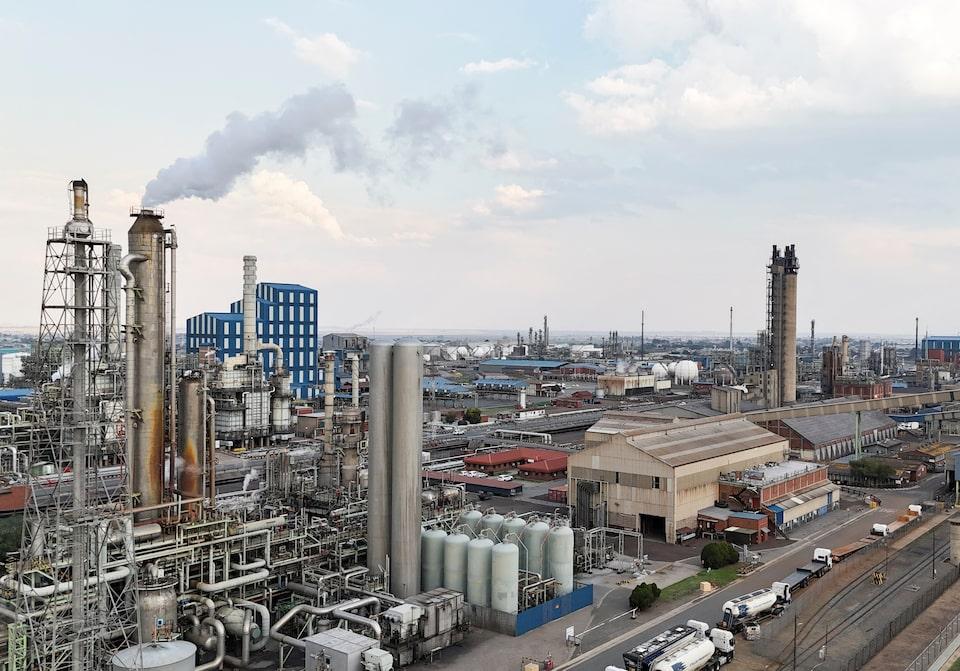
Sasol was exporting about 2 mln tons of coal annually Seeks to restore fuel, chemical production to historic levels Skips dividend after half-year profit falls sharply Feb 24 (Reuters) - South African petrochemical firm Sasol (SOLJ.J) , opens new tab is exiting the coal export market as it starts a de-stoning project to enhance the quality of feedstock into its core synthetic fuel and chemicals business, executives said on Monday. Sasol produces fuel and chemicals from coal and gas, while exporting about 2 million tons of the fossil fuel annually. However, the quality of the coal going into Sasol's Secunda operations has been poor for years, mainly due to high stone content. This has resulted in the company producing low volumes of fuels and chemicals, persistently underperforming historical output levels around 7.6 million tons. The company is repurposing its current coal export plant into one which reduces stone content to address the quality problem, CEO Simon Baloyi said during a results call. The quality of the coal coming out of its mines "was no longer export quality", Baloyi said, adding that the de-stoning project would restore fuel and chemical production to historical levels. "We make more money by beneficiating coal into fuel and chemicals than we do selling it as export coal," Sasol's finance director Walt Bruns told Reuters in an interview. Sasol will lease its allotted coal export quota at the Richards Bay Coal Terminal to other miners, Bruns added. Earlier on Monday, Sasol reported a 31% decline in headline earnings per share to 14.13 rand ($0.7712) in the six months to December 2024, from 20.37 rand per share previously on a fall in oil prices and lower sales volumes. The company said it did not declare a dividend because it ended the period with a negative free cash flow of 1.1 billion rand, while its net debt of $4.3 billion exceeded levels set in its capital allocation policy. ($1 = 18.3223 rand) Sign up here. https://www.reuters.com/business/energy/sasol-skips-dividend-after-profit-declines-31-2025-02-24/
2025-02-24 05:39
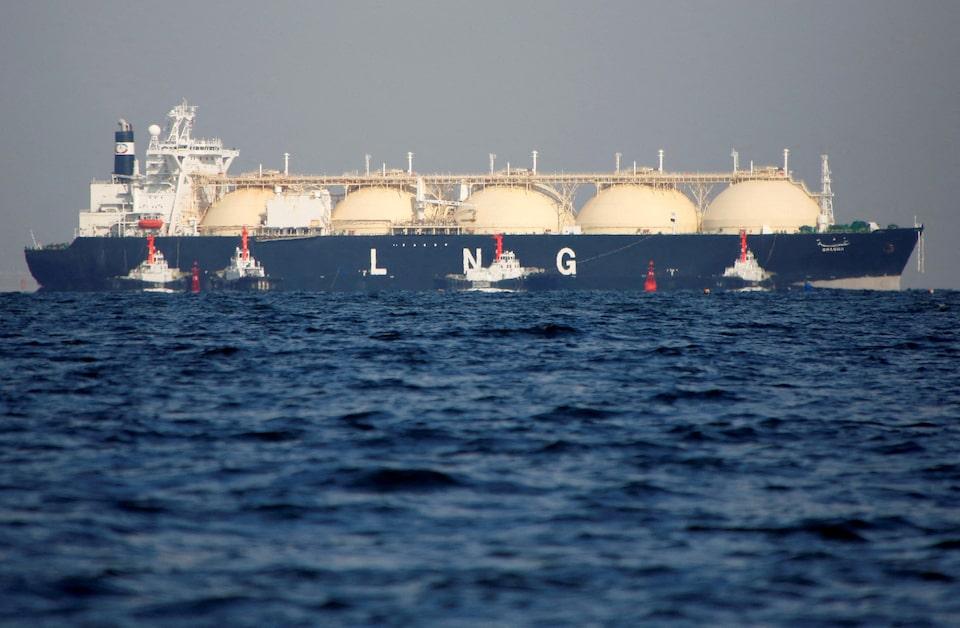
LAUNCESTON, Australia, Feb 24 (Reuters) - Asia's imports of liquefied natural gas (LNG) are poised to drop to the lowest in nearly two years in February, while Europe's are set to surge to the second-highest on record. The weakness in Asia shows buyers are shunning expensive spot cargoes, with prices at least 50% higher than what they were this time last year. A milder-than-usual winter across much of North Asia has also dampened demand, and allowed European buyers to bid for cargoes as part of efforts to re-stock the continent's depleted inventories. Asia, the top-importing LNG continent, is on track to see arrivals of 20.7 million metric tons of the super-chilled fuel in February, according to data compiled by commodity analysts Kpler. This is down from January's 24.59 million and 22.67 million in February last year. It is also the lowest monthly total since April 2023, according to Kpler. In contrast, Europe's February imports of LNG are expected to come in at 11.81 million tons, in line with 11.84 million from January. These two months are the third-and fourth-highest on record, but if February's imports are calculated on a per day basis, they become the second-highest behind April 2023. Europe is increasingly turning to LNG after supplies from Russia via pipeline crossing Ukraine ended at the start of January, which added to the loss of pipeline gas from Russia after Moscow's February 2022 invasion of its neighbour. Much of Europe's increased demand for LNG is being met by the United States, which overtook Australia in 2023 to become the biggest exporter of the fuel. Europe's imports from the United States are set to reach 6.53 million tons in February, down from the record 6.84 million in January. However, on a per day basis, February imports are an all-time high and are almost three times above the 2.30 million tons Europe bought from the United States in July last year. The increasing reliance of European buyers on U.S. LNG may help the continent argue its case with new U.S. President Donald Trump, who is ramping up his tariffs on trading partners as part of efforts to get them to buy more from the United States. HIGH PRICES Europe's LNG demand is also helping drive the spot price for the fuel to levels close to the European benchmark TTF , which ended at 46.06 euros per megawatt hour on February 21, equivalent to $14.12 per million British thermal units (mmBtu). This is only slightly higher than the $14.00 per mmBtu that spot Asian LNG ended at in the week to February 21, which was down the 14-month high of $16.10 the previous week. Prices for spot cargoes in Asia eased as the peak winter demand passed, but also as the high prices that have prevailed since November curbed demand. This price dynamic is on display in China, the world's biggest buyer of LNG, with imports in February expected to fall to the weakest in two years. February arrivals are slated to be 4.99 million tons, down from 6.05 million in January and 5.82 million in February last year, according to Kpler data. The Asian spot price has held around $14 per mmBtu since mid-November, a level that makes it difficult for Chinese utilities to sell at a profit. The impact of a mild winter is more of a factor in Japan, the world's second-biggest LNG importer, with February arrivals expected to be 5.79 million tons, down from 6.74 million in January and below the 6.07 million from February 2024. With winter demand passing, it's likely that demand in North Asia for LNG will ease, with the risk that the usual seasonal dip is larger than usual given the prevailing high prices. If Europe's LNG demand remains elevated as the continent works to refill storages, spot prices are likely to remain high enough to deter Asian buyers. The views expressed here are those of the author, a columnist for Reuters. Sign up here. https://www.reuters.com/markets/commodities/asia-lng-imports-set-drop-22-month-low-europe-surge-drives-prices-russell-2025-02-24/