2025-02-24 01:35
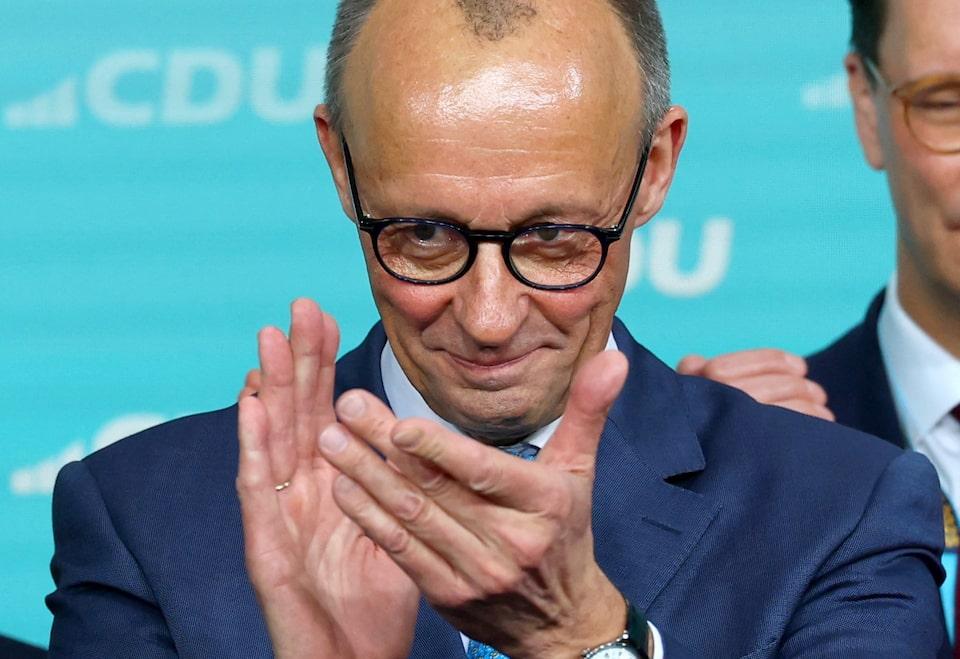
MUMBAI, Feb 24 (Reuters) - Persistent foreign portfolio outflows may keep the Indian rupee on the defensive this week with the currency taking cues from regional peers, while government bonds will react to liquidity infusions by the central bank. The rupee , rose slightly week-on-week to settle at 86.7125 against the U.S. dollar on Friday. While the local unit's near-dated realized volatility eased last week, persistent selling of domestic stocks by overseas investors has kept it under pressure, which traders reckon is likely to persist. Foreign investors have net sold over $11 billion of local equities over 2025 so far, contributing to the rupee being one of Asia's worst-performing currencies. Strong interventions by the Reserve Bank of India have reduced speculative positioning against the currency, but the trend continues to be one of steady depreciation, said Abhilash Koikkara, head of forex and rates at Nuvama Professional Clients Group. He expects the rupee to be in the 86.40 to 87.10 range in the near-term and weaken towards 88 over six months. Meanwhile, focus will be on the Reserve Bank of India's $10 billion 3-year dollar-rupee buy/sell swap on February 28. The swap follows a shorter-tenor $5 billion buy/sell swap conducted by the central bank last month as part of its measures to infuse liquidity in the banking system. U.S. personal consumption expenditure inflation data due on Friday will also be in focus to gauge the future path of the Federal Reserve's policy rates. Meanwhile, India's benchmark 10-year bond yield , which ended marginally higher at 6.7065% on Friday, should move in the 6.67% to 6.74% range this week, traders said. Over the last five weeks, the RBI bought 1 trillion rupees ($11.54 billion) of bonds via open market operations and another 388 billion rupees through secondary market purchases. It has also infused around 440 billion rupees through a dollar/rupee buy/sell swap and injected 1.83 trillion rupees via long-term repos. The focus should be towards maintaining durable liquidity, which has seen recent drain due to the rundown of FX reserves, said Dipanwita Mazumdar, an economist with Bank of Baroda. India's inflation is seen aligning with the target of 4%, which opens up space for monetary policy to address concerns on the growth front, members of the rate-setting committee said in the minutes of the latest meeting released on Friday. The RBI cut interest rates by 25 basis points at the February meeting. Foreign investors have turned sellers of government bonds over the last two weeks. ($1 = 86.6380 Indian rupees) Sign up here. https://www.reuters.com/markets/currencies/indian-rupee-take-cues-regional-peers-bond-traders-eye-liquidity-moves-2025-02-24/
2025-02-24 00:26
NAPERVILLE, Illinois, Feb 23 (Reuters) - Whenever speculators build sizably bullish views in Chicago corn, they are not usually in a hurry to completely erase them. In the week ended February 18, money managers increased their net long position in CBOT corn futures and options to 353,533 contracts from 332,389 a week earlier. That corresponded with a 3.6% rise in May futures . The new position is nearly identical to those from the same dates in 2021 and 2022, when May corn futures were trading around $5.50 and $6.50 per bushel, respectively. May corn in the week ended February 18 averaged just below $5.10. Historically, the early months of the year typically feature money managers’ most bullish corn bets. February is the most popular month for the weekly fund net long to exceed 300,000 contracts, though there are no cases in July and only two in June. Traders sometimes worry that huge net long positions leave the market vulnerable to sharp selloffs. Past data shows that the steepest corn selloffs do not immediately follow funds' most bullish positions, though sizable reductions can be made. Waves of stronger net selling (up to 150,000 contracts over six weeks) occurred in both April and May of 2021 and 2022, which is not uncommon for that time of year. But of the 97 weeks in the pre-2025 record in which funds’ corn net long exceeded 300,000 contracts, money managers still held a bullish position six months later in all 97 cases. The biggest threats to this remarkable streak in 2025 include the U.S. farmer’s ability to churn out a massive corn crop and potential trade disputes between the United States and its top corn importers. WHEAT, SOYBEANS Speculators’ heavily bearish views in CBOT wheat could also pose risks to corn bulls, but that anomaly has lessened in the last few weeks owing to heavy short covering in wheat. Money managers through February 18 cut their net short in CBOT wheat futures and options to a 12-week low of 61,577 contracts. That compares with 82,809 a week earlier and 110,782 three weeks earlier. However, the February 18 fund net long in corn was nearly identical to three weeks earlier, suggesting that wheat bears, not corn bulls, were the out-of-bounds party. CBOT May wheat reached a four-month high on February 18, though it eased more than 2% in the sessions since. Wheat traders will be eyeing exports out of top supplier Russia, as those are expected to decline in the coming weeks and months. Briefly, money managers in the week ended February 18 reduced their net long in CBOT soybean futures and options to 16,526 contracts from 28,475 a week earlier. They also increased their net long in CBOT soybean oil futures and options for a sixth consecutive week, predominantly on new gross longs. The new position of 53,472 contracts is their most bullish in three months. Money managers through February 18 increased their net short in CBOT soybean meal futures and options to a four-week high of 56,993 contracts from 47,232 a week earlier. In the three sessions since, bean and meal futures rose fractionally while soyoil eased. The U.S. Department of Agriculture later this week will reveal tentative 2025-26 U.S. supply and demand outlooks, and planting estimates will be of top interest. Most analysts expect a significant rise in corn acres from last year and a fall in soybean acres. Karen Braun is a market analyst for Reuters. Views expressed above are her own. Sign up here. https://www.reuters.com/markets/us/funds-settle-mega-bullish-corn-bets-maybe-longer-haul-braun-2025-02-24/

2025-02-23 22:11
Feb 24 (Reuters) - A look at the day ahead in Asian markets. Asian stocks are set to open on the defensive on Monday, taking the baton from a bruised Wall Street on Friday as worries over the U.S. economy and new tariff threats form President Donald Trump cast a cloud over world markets. The local calendar is light, with New Zealand retail sales and inflation from Singapore the main data points, and Reserve Bank of New Zealand Deputy Governor Christian Hawkesby scheduled to speak in Wellington. Investors will digest Germany's election, which saw a victory for opposition conservatives and the far-right Alternative for Germany's best ever showing. The market tone on Monday will be one of nervousness and uncertainty, as investors seek the safety of bonds, gold and the U.S dollar. Japanese equity futures are pointing to a fall of 1.75% at the open. Unexpectedly weak U.S. and European economic activity data set the tone on Friday, and reasonably market-friendly signs over the weekend around the prospects of a U.S.-brokered Russia-Ukraine peace deal are unlikely to improve it much. Treasury yields fell last week, gold rose for an eighth week - its best run since 2020 - closing in on $3,000 an ounce, while the dollar stopped the rot of its recent selloff. The Nasdaq fell 2.5%, its worst week in three months, lagging its global peers and indicating that U.S. outperformance that has been the hallmark of global equities in recent years has peaked. As Bank of America strategists quipped, the 'Magnificent Seven' may now be the 'Lagnificent Seven'. The MSCI World index dipped 1% last week, euro zone stocks shed only 0.3% over the week after making a new record high, and the MSCI Asia ex-Japan index rose 1.5% for a sixth weekly gain in a row. That is its best run since November, 2022. A rotation out of Wall Street into Europe and Asia appears to be underway, an one can see why - U.S. stocks are over-owned, valuations are expensive and positioning is stretched. Europe and Asia look attractive. EPFR-tracked Europe equity funds in the third week of February recorded their biggest inflow since early 2022 and Chinese tech stocks listed in Hong Kong have surged a stunning 35% in the past six weeks. That momentum is unlikely to last, and next week could see a retracement. But the major indices in mainland China, Japan and India are still in negative territory for the year - could their weak exchange rates tempt a wave of inflows? Investors cheered President Xi Jinping's meeting last week with Chinese tech and other business leaders, and the feel-good factor seems to be making up for nervousness around the yuan and uncertainty surrounding the threat of U.S. tariffs and potential trade war. Here are key developments that could provide more direction to Asian markets on Monday: - German election result - Germany Ifo index (February) - Singapore inflation (January) Sign up here. https://www.reuters.com/markets/asia/global-markets-view-asia-graphics-2025-02-23/
2025-02-23 20:19
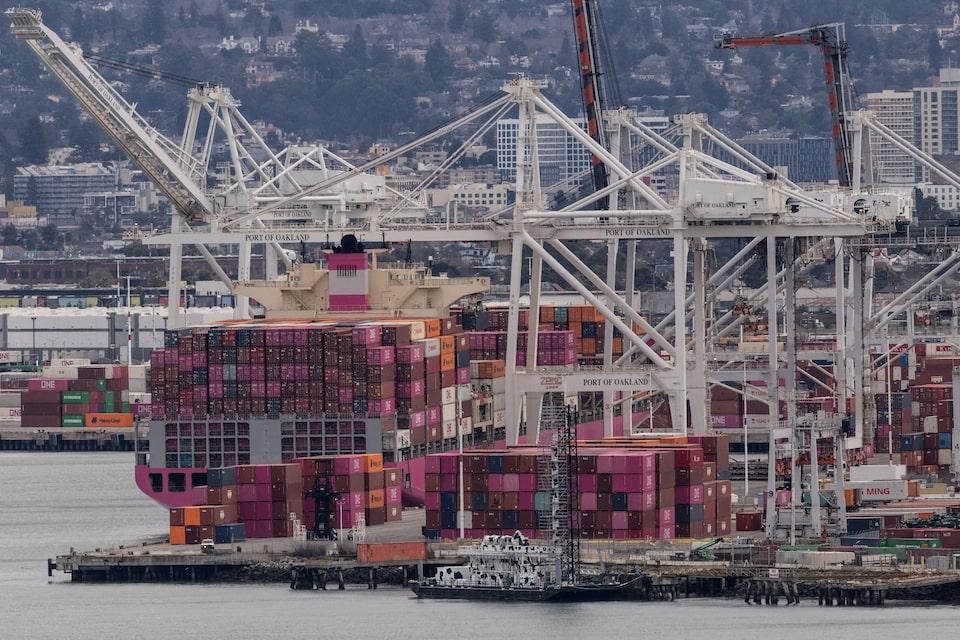
Euro touches one-month high before steadying German stocks firm, led by mid-, small-caps Likely two-party coalition positive for policymaking Focus on whether "debt brake" can be reformed LONDON, Feb 24 (Reuters) - An election win for Germany's conservatives has eased concerns of political gridlock in Europe's biggest economy, though it failed to lift uncertainty around whether a new government can deliver fiscal reforms that would boost sluggish growth. Germany's domestically-focused mid-cap stock index rose 1.4% on Monday, one of it biggest daily jumps this year, and the euro briefly touched a one-month high, as the conservatives looked most likely to form a two-party coalition with the Social Democrats. "There is an immediate relief that there were no big nasty surprises in the election outcome, and a centrist-leaning government will persist and could even pivot more towards business and investment friendly policies," said Charu Chanana, Saxo's chief investment strategist. Small-cap stocks (.SDAXI) , opens new tab rose 0.8%, while the blue-chip DAX index (.GDAXI) , opens new tab, driven by international revenues, rose a more modest 0.4% to just shy of last week's record high, outperforming Europe's broad STOXX 600 (.STOXX) , opens new tab index. Yields on safe-haven German bonds, which move inversely to prices, were little changed. ALL ABOUT THE DEBT BRAKE Reflecting lingering investor caution, the euro - which briefly touched one-month highs above $1.05 - was just a touch higher on the day at around $1.0472 . The conservative Christian Democrats (CDU) under likely next chancellor Friedrich Merz now face tricky coalition talks and the prospect of an obstructive parliament after a surge in support for far-right and far-left parties. The big question for markets is whether Germany can reform the "debt brake" that limits its structural budget deficit to just 0.35% of output. Europe's largest economy contracted for a second straight year in 2024, with critics blaming the debt brake for years of underinvestment. The CDU, Social Democrats and Greens failed to gain the two-thirds parliamentary majority needed to change the rule or to launch special funds to raise spending outside of it. While including the Left Party would make up the numbers, it opposes raising defence spending, expected to be a major part of any fiscal boost. Still, the AfD, which opposes debt brake reform, did not do better than expected, while the liberal Free Democrats, which also oppose it, failed to enter parliament. Analysts say debt brake reform would support euro area stocks, which trade at sharp discounts to U.S. peers, and the euro, which dropped to around $1.01 earlier in February on U.S. tariff risks. Pepperstone strategist Michael Brown said Monday's euro pullback showed the market was realising policymaking and debt brake reform could remain complicated. "Participants are hence paring back their expectations of significant fiscal stimulus being delivered in short order," he said. Others saw a greater likelihood of change. "The Left is in favour of reforming the debt brake so there's still a case for fiscal reform or fiscal easing. That's my reading," said Barclays' head of European equity strategy Emmanuel Cau, adding the election result was good news for stocks. Investors expect only moderate reform to the debt brake, as Merz has shown openness to only limited change. Spending expectations have nonetheless grown in recent days as markets assess Europe's capacity to find potentially hundreds of billions of euros to ramp up defence spending. Shares of German defence stocks rose sharply on Monday with bellwether Rheinmetall (RHMG.DE) , opens new tab up nearly 5% to near a record high touched last week on hopes for a Ukraine ceasefire. The additional yield Germany pays for longer-term borrowing over shorter-term debt remained near its highest since 2022 on Monday. Sign up here. https://www.reuters.com/markets/currencies/euro-rises-early-asia-trade-after-conservatives-win-german-election-2025-02-23/
2025-02-23 19:32
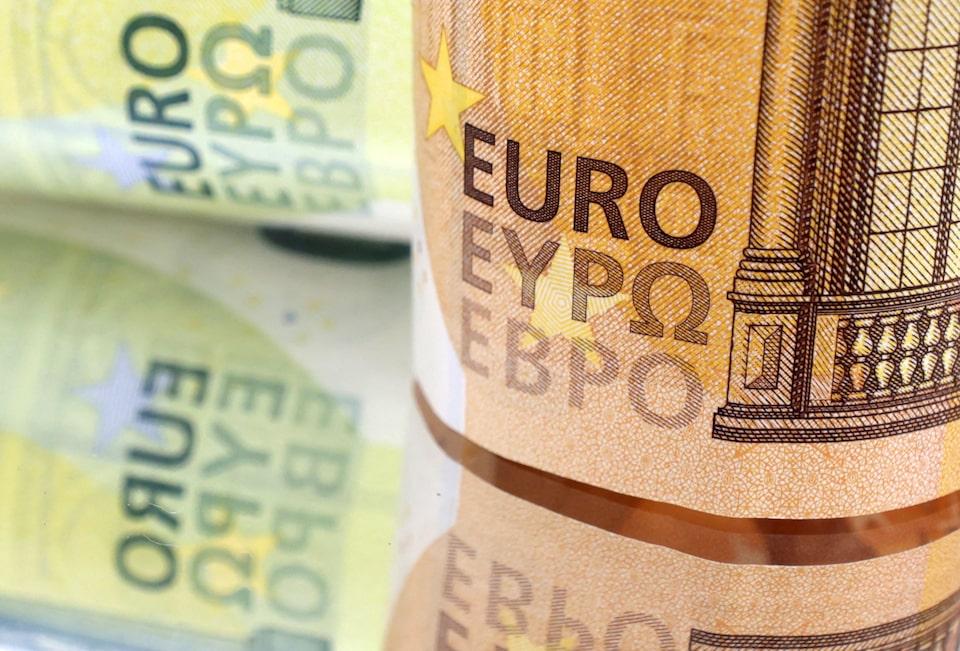
BERLIN, Feb 23 (Reuters) - U.S. President Donald Trump hailed Sunday as a "great day for Germany" after an election in which the centre-right opposition won first place followed by the far-right AfD with its strongest result ever. "Much like the USA, the people of Germany got tired of the no common sense agenda, especially on energy and immigration," Trump wrote in a post on Truth Social. "This is a great day for Germany." Sign up here. https://www.reuters.com/world/trump-hails-great-day-germany-after-conservatives-win-election-2025-02-23/
2025-02-23 18:19
BERLIN, Feb 23 (Reuters) - Germany's conservative Christian Democratic Union (CDU) and its Bavarian CSU sister party won the election on Sunday and are likely to lead the next coalition government. Below is a summary of their key policy positions, according to their election campaign programme: ECONOMY The CDU wants to cut red tape, encourage investments and reduce energy prices to boost the economy. It wants to lower electricity taxes and grid fees, expand renewable energy, power storage and nuclear power research. It would abolish Germany's supply chain due diligence law. The party promises to support industry through digitalisation, sovereign AI, and cloud applications. A Digital Ministry would be established along with a "Startup Protection Zone" to shield new companies from red tape. FINANCE The CDU wants to cut corporate tax to a maximum of 25% from an average of 29.9%. It wants to maintain a tax benefit for married couples and give more tax benefits for children. Other parties have criticised the CDU, arguing that the party does not spell out how all the promised tax cuts would be financed. The CDU has pledged to retain Germany's debt brake, a constitutional mechanism that caps the federal government's deficit to a mere 0.35% of output and that has been criticised for stymieing investment. But party leader Friedrich Merz has left the door open to reform the debt brake without spelling out how. MIGRATION AND BORDER CONTROL The CDU advocates stricter border controls, faster asylum processing, and deportation for those without legal residency. It calls for a reform of the European asylum law, proposing that applications should be processed in safe third countries rather than within the EU. The party seeks to limit social benefits for those required to leave, expand the list of safe countries of origin, and suspend policies such as permitting families of refugees with a subsidiary protection status to move to Germany. It also aims to reverse the current government's fast-track naturalization policy and restrict people from holding dual citizenship. At the same time, the CDU plans to simplify the recognition of foreign professional qualifications and create a digital "Work-and-Stay Agency" to streamline recruitment, visas and residence permits for skilled foreign workers. SECURITY The CDU advocates for stronger law enforcement measures, including harsher punishments, expedited legal proceedings, and increased surveillance at high-risk locations. It proposes closing mosques that preach hate and anti-Semitism and promises stronger action against right-wing and left-wing extremist groups. FOREIGN POLICY The CDU is committed to complying with the NATO quota of 2% of gross domestic product on defence spending as a minimum. It wants to reintroduce mandatory military service and lead an initiative for a European missile defence system. The party has been against common European borrowing for defence, although Merz earlier this month said he would be open to discuss options on how to finance an increase on defence spending. It advocates stronger transatlantic ties with the U.S. and renewed cooperation with France and Poland. It backs Ukraine with diplomatic, financial, humanitarian, and military aid. It supports Israel and backs a two-state solution. The party calls for reducing reliance on China. CLIMATE Under the "Yes to Cars" policy, the CDU opposes measures such as inner-city driving bans, parking space reductions, and a general highway speed limit. It advocates lifting the EU's planned combustion engine ban, reviewing fleet emission limits, and preventing penalties for carmakers failing to meet emissions targets while also expanding electric vehicle charging infrastructure. The party seeks to abolish the law phasing out oil and gas domestic heating but supports tax incentives for energy-efficient housing renovations. It also proposes reinstating agricultural diesel subsidies and promote emissions trading. SOCIAL POLICIES The CDU plans to boost housing supply by simplifying building regulations, expanding construction zones and promoting social housing investments. It wants to introduce mandatory preschool language tests for German proficiency and promises to improve student financial aid and to gradually increase child benefits and tax allowances. It proposes expanding childcare access, increasing tax deductions for childcare expenses, and reversing a law passed last year that cuts regulations for gender transitions. Sign up here. https://www.reuters.com/world/europe/policies-german-election-favourites-cdu-conservatives-2025-02-18/