2025-02-22 00:51
US negotiators told Ukraine US could shutoff Starlink if minerals deal not reached SpaceX-owned satellite internet service vital for Ukraine Zelenskiy says U.S. and Ukraine working on an agreement WASHINGTON, Feb 21 (Reuters) - U.S. negotiators pressing Kyiv for access to Ukraine's critical minerals have raised the possibility of cutting the country's access to Elon Musk's vital Starlink satellite internet system, three sources familiar with the matter told Reuters. Ukraine's continued access to SpaceX-owned Starlink was brought up in discussions between U.S. and Ukrainian officials after Ukrainian President Volodymyr Zelenskiy turned down an initial proposal from U.S. Treasury Secretary Scott Bessent, the sources said. Starlink provides crucial internet connectivity to war-torn Ukraine and its military. The issue was raised again on Thursday during meetings between Keith Kellogg, the U.S. special Ukraine envoy, and Zelenskiy, said one of the sources, who was briefed on the talks. During the meeting, Ukraine was told it faced imminent shutoff of the service if it did not reach a deal on critical minerals, said the source, who requested anonymity to discuss closed negotiations. "Ukraine runs on Starlink. They consider it their North Star," said the source. "Losing Starlink ... would be a massive blow." After Reuters published its story, Musk posted on X that the article was “false” and “Reuters is lying.” Contacted by Reuters for specifics, Musk did not immediately respond. A Reuters spokesperson said the news agency stands by its reporting. Zelenskiy has rejected demands from President Donald Trump's administration for $500 billion in mineral wealth from Ukraine to repay Washington for wartime aid, saying the U.S. has offered no specific security guarantees. On Friday, the Ukrainian president said the U.S. and Ukrainian teams were working on an agreement and Trump said he expects a deal will be signed soon. Musk rushed thousands of Starlink terminals to Ukraine to replace communications services destroyed by Russia after its February 2022 invasion. Hailed at the time as a hero in Ukraine, Musk later curtailed access at least once before in the fall of 2022 as he became more critical of Kyiv's handling of the war. Poland's deputy prime minister said on Saturday that his country has been paying for Ukraine's Starlink subscription and will continue to do so. U.S. lawmakers are divided over Trump's efforts to find a quick end to the Ukraine war and some have raised questions about Musk's rapid-fire efforts to cull thousands of federal workers and shut down Federal agencies. Melinda Haring, a senior fellow with the Atlantic Council, said Starlink was essential for Ukraine’s operation of drones, a key pillar of its military strategy. “Losing Starlink would be a game changer,” Haring said, noting that Ukraine was now at 1:1 parity with Russia in terms of drone usage and artillery shells. Ukraine has a wide range of different drone capabilities, ranging from sea drones and surveillance drones to long-range unmanned aerial vehicles. The Ukrainian embassy in Washington, the White House and the U.S. Department of Defense did not respond to a request for comment. SpaceX, which operates Starlink, also did not respond to a request for comment. Russian and U.S. negotiators have planned a second meeting in the coming two weeks to discuss ending the conflict, Russia's RIA state news agency reported on Saturday. The first meeting took place in Riyadh on Tuesday. Last fall, Ukraine floated the idea of opening its critical minerals to investment by allies. This was part of a "victory plan" that sought to put it in the strongest position for talks and force Moscow to the table. Trump has embraced the idea, saying he wants Ukraine to supply the U.S. with rare earths and other minerals in return for financially supporting its war effort. Zelenskiy rejected a detailed U.S. proposal last week that would have seen Washington and U.S. firms receiving 50% of Ukraine's critical minerals, which include graphite, uranium, titanium and lithium, a key component in electric car batteries. Since then a rift has emerged between the leaders, with Trump denouncing Zelenskiy as "a dictator without elections" on Wednesday after Zelenskiy said Trump was trapped in a Russian disinformation bubble, a response to the U.S. president suggesting Ukraine started the war. Sign up here. https://www.reuters.com/business/us-could-cut-ukraines-access-starlink-internet-services-over-minerals-say-2025-02-22/

2025-02-22 00:27
Feb 21 (Reuters) - Goldman Sachs said on Friday a proposed 10% U.S. oil tariff could cost foreign producers $10 billion per year, as Canadian and Latin American heavy crudes remain reliant on U.S. refiners due to limited alternative buyers and processing capabilities. President Donald Trump plans to impose a 25% tariff on Mexican crude and a 10% levy on Canadian crude starting in March, a delay from his initial proposal. Despite this, Goldman expects the U.S. to remain the primary destination for heavy crude, as advanced refining capabilities and low costs continue to make American refiners the most competitive buyers. Goldman estimates light oil prices would need to rise by 50 cents per barrel to make medium crude from the Middle East more attractive to Asian refiners, as U.S. Gulf Coast refiners prioritize domestic light crude over imported medium grades. The investment bank estimates U.S. consumers would face an annual tariff cost of $22 billion, while the government would generate $20 billion in revenue. Meanwhile, refiners and traders could see $12 billion in benefits by linking discounted U.S. light crude and foreign heavy crude to premium coastal markets, Goldman said. The brokerage noted Canada, the top exporter of oil to the U.S., is likely to see its 3.8 million barrels per day (bpd) of pipeline exports continue flowing, with prices discounting to offset the tariff impact. Similarly, 1.2 million bpd of seaborne heavy crude imports from Canada and Latin American countries including Mexico and Venezuela would see discounts to offset the levy, ensuring continued flows into the United States. While the tariffs could reshape trade flows, Goldman highlighted that Canadian producers, as "captured sellers" with limited alternative buyers, would be forced to absorb much of the tariff burden through price discounts to remain competitive in the U.S. market. Sign up here. https://www.reuters.com/markets/commodities/trumps-10-oil-tariff-could-cost-foreign-producers-10-billion-annually-goldman-2025-02-22/

2025-02-22 00:26
Trump: Ukraine 'don't have any cards, but they're playing tough' Trump predicts a deal on critical minerals soon Zelenskiy says he seeks a 'fair result' in U.S. deal US proposes UN resolution to mark Russia invasion WASHINGTON, Feb 21 (Reuters) - President Donald Trump reversed course on Friday and said Russia did in fact invade Ukraine, and that Kyiv would soon sign a minerals agreement with the United States as part of efforts to end the Ukraine war. Trump had said on Tuesday that Ukraine "should have never started" the war three years ago, prompting a wave of criticism both domestically and internationally. Pressed on the subject in an interview with Fox News Radio on Friday, he acknowledged Russia had invaded Ukraine on the order of Russian President Vladimir Putin. "Russia attacked, but they shouldn't have let him attack," Trump said, adding that Ukraine President Volodymyr Zelenskiy and then-U.S. President Joe Biden should have taken steps to avert the invasion. Later, Trump predicted a minerals agreement would be reached soon. "We're signing an agreement, hopefully in the next fairly short period of time," Trump told reporters in the Oval Office when asked about a possible deal for Ukraine's minerals. Zelenskiy said separately on Friday that Ukrainian and U.S. teams were working on a draft agreement. "I am hoping for ... a fair result," he said in a video address after sharp exchanges this week between the two leaders. Trump denounced Zelenskiy as a "dictator" on Wednesday and warned he had to move quickly to secure peace with Russia, which invaded Ukraine nearly three years ago, or risk losing his country. The change in tone from the United States, Ukraine's most important backer, has alarmed European officials and stoked fears that Kyiv could be forced into a peace deal that favors Putin. Zelenskiy had said Trump was trapped in a "disinformation bubble", but later toned down his statements and said he was hoping for American pragmatism. Zelenskiy on Wednesday rejected U.S. demands for $500 billion in mineral wealth from Ukraine to repay Washington for wartime aid, saying the United States had supplied nowhere near that sum so far and offered no specific security guarantees in the agreement. Ukraine has valuable deposits of strategic minerals that the U.S. wants. These include uranium, lithium, cobalt, rare earths and more and are used in applications such as batteries, technology and aerospace. 'THEY DON'T HAVE ANY CARDS' Speaking at a White House event earlier on Friday, Trump was critical of Zelenskiy while refraining from negative comments about Putin. "I've had very good talks with Putin, and I've had not such good talks with Ukraine," Trump said. "They don't have any cards, but they're playing tough." Separately, the United States on Friday proposed a United Nations resolution to mark the third anniversary of Russia's invasion of Ukraine. The three-paragraph U.S. draft, seen by Reuters, mourns loss of life during the "Russia-Ukraine conflict" and "implores a swift end to the conflict." Kyiv and its European allies want their own text to be adopted by the UN General Assembly on Monday calling for de-escalation, an early cessation of hostilities and peaceful resolution to the conflict. The German government said on Friday that Chancellor Olaf Scholz and Zelenskiy agreed in a phone call that Ukraine must have a seat at the table in peace talks. Polish President Andrzej Duda, meanwhile, urged Zelenskiy to keep up calm and constructive cooperation with Trump. Duda, whose term in office expires this year, was one of Trump's preferred international partners during his 2017-2021 presidency and they have described themselves as friends. Poland's president is due to meet Trump in Washington on Saturday, Poland's state news agency PAP reported. Sign up here. https://www.reuters.com/world/us/white-house-expects-ukraine-sign-critical-minerals-deal-soon-2025-02-21/
2025-02-21 22:05
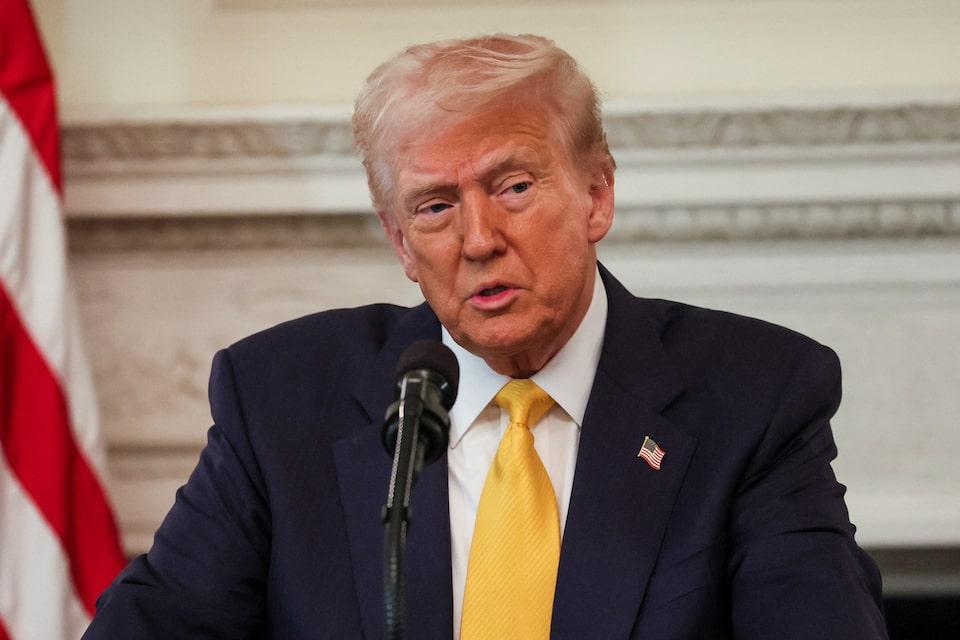
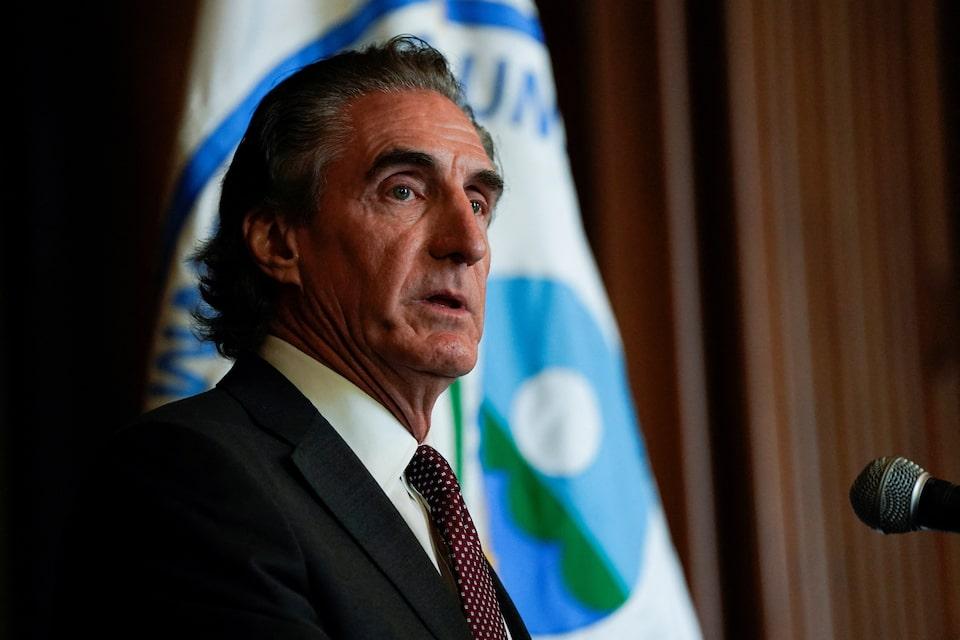
WASHINGTON, Feb 21 (Reuters) - U.S. Interior Secretary and co-chair of a new White House energy council Doug Burgum on Friday called for every U.S. power plant to produce 10-15% more electricity to meet the growing energy needs to expand artificial intelligence across the United States. "Winning the AI arms race doesn't just take software developers. It takes more electricity," Burgum told a meeting of U.S. governors in Washington. "We've got to get every electrical plant in the country that's producing energy to produce more - if they can expand by 10% or 15%, we want to do that," he said. Burgum, who co-chairs the newly-created National Energy Dominance Council , opens new tab with Energy Secretary Chris Wright, said the U.S. should avoid the example of Germany, which he said de-industrialized because it moved too quickly off of fossil fuels as it races to compete with China to become a leader in power-hungry AI. He said the U.S. needs to also rapidly permit new power plants, build new transmission lines and natural gas pipelines to respond to energy demand. Sign up here. https://www.reuters.com/business/energy/us-energy-council-chief-says-power-plants-produce-15-more-electricity-2025-02-21/
2025-02-21 21:47
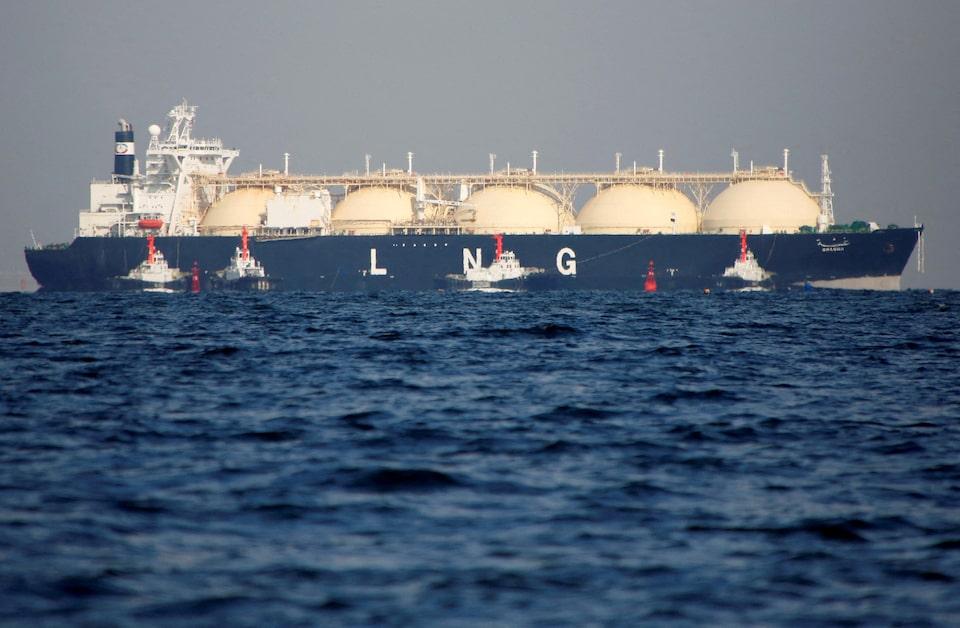
Japan, other Asian buyers look to step up US LNG purchases Alaska project featured prominently in Trump talks with Japan PM Ishiba, officials say US stressed Japan's trade imbalance, maritime security in Ishiba meeting, officials say Alaska LNG developers seeking investment from firms such as Japan's Inpex, sources say TOKYO/WASHINGTON, Feb 21 (Reuters) - When President Donald Trump sat down to lunch with his Japanese counterpart this month, talk turned quickly to how Tokyo could help realise a decades-old proposal to unlock gas in Alaska and ship it to U.S. allies in Asia. Trump and his energy tsar Doug Burgum framed the venture as a way for Japan to replace Middle East energy shipments and address its trade imbalance with the U.S., according to two officials briefed on the closed-door talks. Japanese premier Shigeru Ishiba - eager to ensure a positive first meeting and stave off damaging U.S. tariffs - struck an optimistic note about the Alaska LNG project despite Tokyo's doubts about its viability. Ishiba told Trump and Burgum that he hoped Japan could participate in the $44 billion project, said the officials, granted anonymity due to the sensitivity of the talks. Trump repeatedly mentioned the project in his public remarks after the lunch. Ishiba did not, and there was no reference to it in the official readout of the talks. Burgum, who serves as both U.S. Interior Secretary and co-chair of a White House-appointed National Energy Dominance Council, touted potential U.S. LNG exports to Asia as a key geopolitical and economic strategy in a speech to U.S. governors on Friday. "When we sell LNG to our friends and allies - from places like Alaska into Japan and South Korea and the Philippines - it not only helps stabilise the world, it also reduces our trade deficits," he said. Reuters interviews with more than a dozen people, including current and former U.S. and Asian officials, show how the Trump administration is moving to recast economic relations with East Asia by binding regional allies to Washington through increased investment in American fossil fuels, particularly LNG. The U.S. sales pitch seeks to tap into concerns in Asian capitals about tariffs and the security of sea lanes that carry their energy imports, Reuters found. Details of the behind-the-scenes exchanges and specifics of the U.S. approach have not been previously reported. While the Alaska LNG proposal faces cost and logistical hurdles, Japan, South Korea, Taiwan and others are buying into the idea of increasing U.S. gas imports more broadly, which could bolster the U.S. economy and blunt the influence of China and Russia. Japan's participation in Trump's emerging strategy would be critical: It is the world's No. 2 LNG buyer, a major investor in energy infrastructure, and a trading hub with a glut of LNG that could help open new markets for U.S. gas in Southeast Asia. "If the Trump administration were to have its way, U.S. LNG would flow in massive quantities to Japan and South Korea and then would flow downstream...so that Southeast Asia would become economically dependent on the United States," said Kenneth Weinstein, Japan chair at Hudson Institute, a conservative think tank. "It's redrawing the map of energy dependence." In a joint statement with U.S. Secretary of State Marco Rubio on Saturday, Japanese and South Korean foreign ministers agreed to strengthen energy security by "unleashing" America's "affordable and reliable energy", particularly LNG. They did not mention Alaska. White House National Security Spokesman Brian Hughes told Reuters the U.S. "produces some of the cleanest LNG in the world and we believe the Japanese can play an even bigger role in purchasing America's abundant oil and gas". Japan's foreign ministry declined to comment on the accounts of the Ishiba-Trump meeting. Japan's trade minister plans to visit Washington next month to seek exemptions from Trump's tariffs and discuss Japan's plans to buy more U.S. LNG, Japanese media reported on Thursday. SALES PITCH The idea of building an 800-mile pipeline linking gas fields on Alaska's North Slope to an export terminal on its Pacific coast has long stuttered due to the high costs and harsh terrain. But expecting Trump might raise a project he has personally championed in the February 7 meeting with Ishiba, Japan was preparing to voice tentative support to win his favour and forestall trade friction, Reuters reported last month. They did not anticipate it would feature so highly on Trump's agenda. Over lunch with Trump and Burgum, the U.S. asked Japan to consider infrastructure investments in Alaska LNG as well as long-term purchase agreements, according to the officials briefed on the talks. The U.S. side stressed the project's proximity to Japan compared to the Middle East and the fact that shipments would avoid sensitive choke points such as the Straits of Hormuz and Malacca, and the South China Sea, the officials said. Additional purchases of U.S. LNG could also help Asian allies reduce reliance on Russian gas, said Dan Sullivan, a U.S. senator for Alaska. Alaska LNG "was a big part of the discussion" with Ishiba, Sullivan, who was briefed on the talks, told Reuters. At one point in the meeting, the U.S. officials used maps to emphasise the strategic benefits of the Alaska project, said Sullivan and another official. "Having a president who's forceful and tenacious, spending this much time on this project, I'm sure made an impression on the Japanese," Sullivan said. Project developers are trying to court investment from firms such as Inpex (1605.T) , opens new tab, a Tokyo-listed oil and gas exploration company whose largest stakeholder is the Japanese government, according to two other sources. A spokesperson for Inpex, which has not been previously linked to the Alaska plan, said it would not comment on "discussions or dealings with specific stakeholders". Japan obtains around one-tenth of its LNG from the U.S., and similar proportions from Russia and the Middle East, according to Japan's finance ministry. Australia accounts for about 40%. Hiroshi Hashimoto, senior analyst at the Institute of Energy Economics, Japan, said LNG imports from the U.S. could reach 20% of Japan's total over the next five to 10 years as existing contracts, including with Russia, roll off. U.S. LNG is largely shipped to Japan from the Gulf of Mexico, which Trump recently renamed to the Gulf of America, via the Panama Canal or the long way around past Africa and through the Indian Ocean. There are no LNG export terminals on the U.S. west coast - a more direct route to Asia - although Sempra's (SRE.N) , opens new tab Costa Azul project in Mexico, fed by U.S. gas, is expected to start commercial operations next year. Of the 119.8 billion cubic metres of LNG the U.S. shipped last year, more than a third went to Asia, according to LSEG data. ENERGY SECURITY BONDS Beyond Japan, Trump's energy security argument seems to be landing elsewhere in Asia, especially with trade tariffs looming. Indian Prime Minister Narendra Modi made a similar gas pledge in a meeting with Trump this month. Taiwan, the democratically ruled island claimed by China, is also considering more U.S. energy purchases, including LNG from Alaska , opens new tab. Increasing Taiwan's dependence on U.S. energy could help deter China from taking aggressive steps such as naval blockades, said Landon Derentz, who was a senior U.S. energy official during Trump's first term. With U.S. supplies, "in some ways you're contracting for a security guarantee that the United States is going to be an advocate in the event of a conflict in making sure that supply arrives", he said. South Korea, too, is weighing investing in Alaskan LNG and other U.S. energy projects, two South Korean officials told Reuters. Seoul hoped for concessions from Trump in return, one said. A spokesperson for South Korea's industry ministry said Seoul was exploring ways to strengthen energy security with the U.S. Bill Hagerty, a U.S. senator for Tennessee who served as ambassador to Tokyo in the first Trump administration, told Reuters he would like Japan, which already trades its surplus gas, to become the key distribution hub for U.S.-origin LNG. "Whether it's from Alaska, Louisiana or Texas, America can work very closely with Japan to create the type of energy security bonds that will be great for our nations' economies and for our national security," he said. Sign up here. https://www.reuters.com/business/energy/trump-seeks-reshape-asias-energy-supplies-with-us-gas-2025-02-21/
2025-02-21 21:43
TSX falls 1.4%, its biggest loss since Dec. 18 Posts lowest closing level since Jan. 17 Materials group falls 3.1% as metal prices slide Tech sector ends 3.2% lower Feb 21 (Reuters) - Canada's main stock index fell to a five-week low on Friday, weighed by declines for energy, metal mining and high-flying technology shares, as commodity prices declined and investors grew more risk averse. The S&P/TSX composite index (.GSPTSE) , opens new tab ended down 367.05 points, or 1.4%, at 25,147.03, its lowest closing level since Jan. 17 and its biggest decline since Dec. 18. For the week, the index was down 1.3%. Wall Street's main indexes also tumbled, closing the door on a holiday-shortened week fraught with new tariff threats and worries of softening consumer demand. "People have gone from looking for reasons to buy to looking for reasons to sell," said Colin Cieszynski, chief market strategist at SIA Wealth Management. "All your cyclicals, all your high-momentum, high-beta, high-volatility stocks are getting hammered." The Toronto market's technology sector fell 3.2%, with e-commerce company Shopify Inc (SHOP.TO) , opens new tab shares down nearly 6%. The materials group, which includes fertilizer companies and metal mining shares, lost 3.1% as gold eased from a record high and copper prices fell. Shares of Ivanhoe Mines Ltd (IVN.TO) , opens new tab were down 11.3% after UBS cut its target price on the stock. The price of oil settled 2.9% lower at $70.40 a barrel, which weighed on energy. The sector was down 2%. Defensive stocks, such as utilities and telecommunications, benefited from lower bond yields. The communication services index was up 1.1%. Another standout was Storagevault (SVI.TO) , opens new tab. Its shares climbed 7.2% after the storage company beat full-year revenue estimates. Sign up here. https://www.reuters.com/markets/tsx-futures-edge-higher-ahead-us-pmi-figures-2025-02-21/