2025-02-21 11:09
A look at the day ahead in U.S. and global markets from Mike Dolan Wall Street nursed a bruising on Walmart's downbeat results, casting a cloud over the U.S. consumer just as more buoyant European markets awaited the weekend's German election. Another blizzard of often conflicting influences from geopolitics, trade, monetary policy and corporate earnings barrelled into world markets over the past 24 hours. But it was the retailing giant's (WMT.N) , opens new tab miss on its sales and profit forecasts - citing the turbulent political environment and trade uncertainties ahead - that cut deepest. Walmart's stock recoiled 6.5%, denting a rise of over 80% to record highs over the past year and a strong outperformance since President Donald Trump's election win. Following last week's disappointment on January U.S. retail sales, the miss dragged other retailers down in the slipstream and Amazon (AMZN.O) , opens new tab lost almost 2% too. The S&P500 (.SPX) , opens new tab ended off almost 0.5% and futures struggled to hold the line on Friday. And adding some anxiety to the corporate fallout from radical U.S. government cuts, Palantir (PLTR.O) , opens new tab - which provides governments with services such as software that visualizes army positions - shed 5% after the Pentagon said it was looking at potential budget cuts for the fiscal year 2026. Flash business surveys for February now top today's macro diary, with AI chip behemoth Nvidia's results due next week. The Philadelphia Federal Reserve's February surveys of its mid-Atlantic region also showed manufacturing activity readings tumbled this month by the most in nearly five years, and jobless claims ticked higher in the latest week. Even as Fed officials continued to signal caution about easing policy any further amid persistent inflation uncertainties, Treasury yields fell back on the retail and business readouts. Reining in debt yields further were comments from Treasury Secretary Scott Bessent, who said any move to increase the share of longer-term Treasuries in government debt issuance is "a long way off". That's despite his long-standing criticism of the previous Treasury boss Janet Yellen for front-loading debt in short-term maturities. "We're going to see what the market wants," he said. The retreat in yields and stocks dragged the dollar index (.DXY) , opens new tab back to its lowest level of the year - although the greenback found its feet again on Friday and clawed back some of those losses. The dollar drop on Thursday was mostly concentrated against Japan's yen , where speculation about another Bank of Japan interest rate rise as soon as next month has gone up a notch. Japanese inflation released on Friday backed up that talk, as headline annual price rises hit 4% for the first time in two years last month. Former central bank board member Sayuri Shira said March would be a 'good opportunity' to lift rates again. But, in a confusing twist, the yen retreated as Bank of Japan Governor Kazuo Ueda said on Friday the central bank stands ready to increase government bond buying if long-term interest rates rise sharply. Ueda's remarks helped push down the 10-year Japanese government bond yield to 1.42% from 1.455% earlier in the day, its highest since November 2009. Whether Ueda's comments reinforce speculation about rate rise preparations or flag concern about its impact is a matter of debate. But Japan's Nikkei (.N225) , opens new tab stock index ended higher. In Europe, Germany's election on Sunday is front of mind - with tension over Trump's shocking turn of stance on Ukraine this week and still-looming tariff threats as a backdrop. Hopes that a new German government will have enough backing to lift its self-imposed 'debt brake' after the election and up defense and investment spending are at stake - with the prospect largely behind European stocks outperformance this year. Germany's benchmark DAX index (.GDAXI) , opens new tab nudged higher on Friday and domestic-focused German mid caps were up 0.8%, having hit a seven-month-high early this week. Helping that was the release of business surveys showing activity in Germany's private sector had picked up slightly in February. The euro fell back slightly from near 3-week highs as the vote is awaited. One key to the results will be whether smaller parties clear a 5% threshold to enter parliament - critical to the math on whether a new coalition gets the two thirds majority to reform the debt clause in the constitution. Elsewhere, sterling briefly hit a new high for the year against the dollar after a surprisingly upbeat retail sales report for January. And Chinese shares rallied again, led by a buoyant tech sector on Hong Kong after Alibaba's earnings beat late Thursday. The Hang Seng (.HSI) , opens new tab ended 4% higher on the day. Key developments that should provide more direction to U.S. markets later on Friday: * US flash February business surveys from S&PGlobal, US January existing home sales, University of Michigan's final Feb consumer survey * Federal Reserve Vice Chair Philip Jefferson and San Francisco Fed President Mary Daly speak; European Central Bank chief economist Philip Lane speaks; Bank of Canada governor Tiff Macklem speaks Sign up here. https://www.reuters.com/markets/us/global-markets-view-usa-2025-02-21/

2025-02-21 10:16
Russian attacks hammer Ukrainian gas production Ukraine increases gas imports from Europe Ukraine has to accumulate gas for next winter KYIV, Feb 21 (Reuters) - Ukraine plans to import up to 800 million cubic metres (mcm) of gas from Europe in February and March to compensate for a sometimes 40% drop in production after Russian missile strikes on the sector, a senior industry source told Reuters on Friday. Russia has focused many past missile and drone attacks on Ukraine's electricity sector since its 2022 invasion, but it has stepped up attacks on gas fields in recent weeks. Ukrainian state gas firm Naftogaz and major private energy company DTEK have said Russia has attacked and damaged their facilities at least twice so far in February. Before the strikes, Ukraine produced about 52 million cubic meters of gas a day while it consumed between 110 and 140 mcm a day in winter. It covered the gap from gas storage. "We could do without imports this heating season, but the attacks on production are forcing us to import gas to compensate for this reduction in domestic production," said the source, who requested anonymity to discuss sensitive wartime matters. The Ukrainian operator of the gas transmission systems says the country started increasing gas imports at the beginning of February and the volumes since then have increased almost 10-fold to more than 20 mcm a day. The source and energy officials do not disclose the current level of gas production. Ukraine mainly uses gas to heat homes and for cooking. Ukraine's main gas production facilities are vulnerable to Russian attacks as they are located in the frontline Kharkiv region and neighbouring Poltava. The source said that Ukraine has low gas reserves in storage, but with planned imports and domestic gas production it will be able to see through the heating season - which usually starts in late October and ends in April - without imposing any restrictions on industry and households. Energy experts had previously warned that storage reserves were close to a critically low 10% of the storage capacity of around 30 billion cubic meters. The source said that Ukraine needs to start pumping gas for the 2025/26 winter season in spring and the country needs to accumulate about 13 bcm of gas. Ukraine had 12.9 bcm of gas in storage facilities at the start of the current season. It is still unclear how much gas can be imported beyond March, as this will depend on the level of local production, which will be directly affected by the intensity of Russian missile attacks, the source noted. Sign up here. https://www.reuters.com/business/energy/ukraine-plans-import-800-mcm-gas-until-april-after-russian-strikes-2025-02-21/

2025-02-21 10:15
LONDON, Feb 20 (Reuters) - Standard Chartered (STAN.L) , opens new tab on Friday pledged to cut the emissions linked to the bonds it sells for oil and gas companies and will press ahead with its net-zero strategy, in contrast with other lenders who are reassessing their climate plans. The London-listed bank plans to reduce by 26.9% the polluting emissions associated with bond deals it arranges for oil and gas companies by 2030, it said as it announced an 18% annual profit jump and $1.5 billion share buyback. Most large banks have targets for reducing emissions associated with their lending, but only a handful have set so-called facilitated emissions. Campaigners have long pushed banks to set them across polluting industries and Standard Chartered's new target is only for oil and gas. Standard Chartered CEO Bill Winters told analysts the bank remained committed to reaching net-zero by mid-century and that clients were not slowing efforts to decarbonise. "Why are we so successful in the space? Because we focused on it, because our clients need us," he said, adding that the strategy was very profitable for the bank. "Our clients are (in) transition to net zero. That's unabated despite some of the challenges." The bank's sustainable finance business brought in almost $1 billion in income last year, Winters said. Efforts to foster climate action in the financial industry have been shaken recently, including HSBC's announcement this week that it was delaying its net-zero emissions target by 20 years to 2050, the same as Standard Chartered. HSBC said it would review its financed emissions targets and policies as part of a broader overhaul of its climate strategy in 2025. Standard Chartered, which focuses on developing countries, will continue to help fossil fuel producers to raise funding but has also published its first transition plan, detailing progress to net zero and how it will help clients to do the same. Sign up here. https://www.reuters.com/sustainability/sustainable-finance-reporting/stanchart-pledges-cut-emissions-linked-oil-gas-bonds-2025-02-21/

2025-02-21 10:10
TOKYO, Feb 21 (Reuters) - Japan's biggest refiner, Eneos Corp, and trading house Mitsubishi Corp (8058.T) , opens new tab said on Friday they would move forward with front-end engineering design (FEED) for sustainable aviation fuel (SAF) production at the Wakayama plant. The plant is expected to produce about 300,000 metric tons (400,000 kilolitres) of SAF annually, along with some naphtha and light oil fractions, from fiscal 2028. The feedstock will mainly consist of waste products and by-products, such as used cooking oil and tallow. The two companies will accelerate discussions to establish a system for mass producing and supplying domestically produced SAF, they said in a joint statement. They will combine Eneos' expertise in manufacturing technology, raw material procurement and sales network with Mitsubishi's expertise in SAF raw-material sourcing both in Japan and overseas, they added. Eneos, a unit of Eneos Holdings (5020.T) , opens new tab, also said the industry ministry selected the Wakayama project for a publicly solicited initiative to support the expansion of the production and supply of SAF. Eneos declined to disclose the size of the subsidy. SAF projects by Idemitsu Kosan (5019.T) , opens new tab and Cosmo Energy Holdings (5021.T) , opens new tab were also selected for the initiative, the two companies said on Friday. Sign up here. https://www.reuters.com/business/energy/eneos-mitsubishi-move-ahead-with-sustainable-aviation-fuel-project-japans-2025-02-21/

2025-02-21 10:05
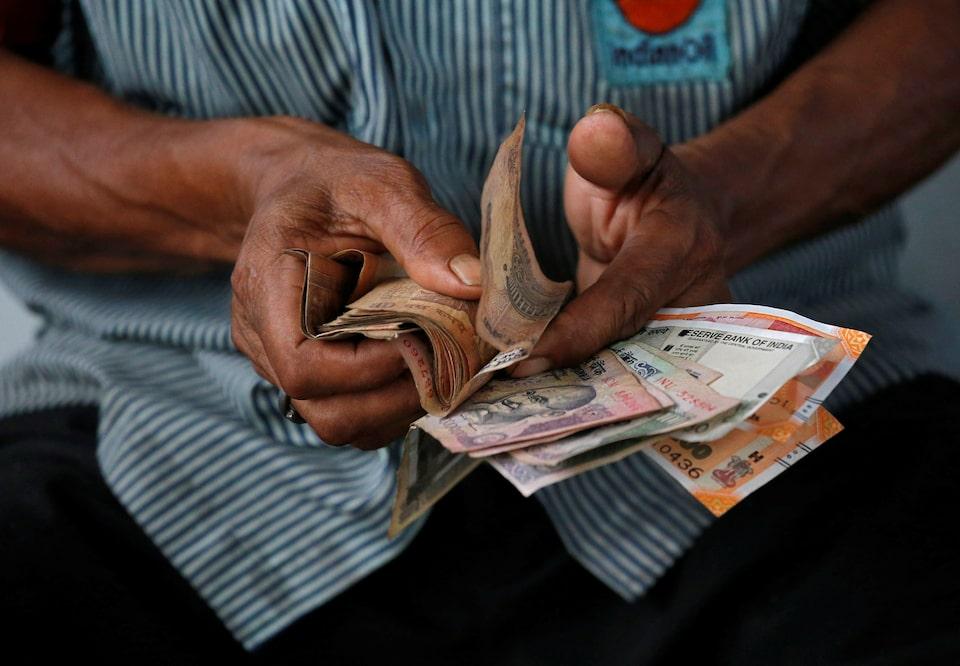
MUMBAI, Feb 21 (Reuters) - The Indian rupee weakened slightly on Friday, pressured by dollar demand from importers and weakness in local shares that have seen an exodus of foreign money over 2025. The rupee closed lower at 86.7125 against the U.S. dollar after rising to 86.4850 earlier in the session. The currency was up 0.1% week-on-week. While the currency benefited from a broadly weaker dollar in early trades, persistent dollar buying from foreign banks ate into the gains, a trader at a private bank said. "The last two days' price action suggests that unless equity inflows start, dips (on USD/INR) will be short-lived," the trader added. Foreign investors have net sold over $11 billion of local stocks over 2025 so far. Benchmark Indian equity indexes, the BSE Sensex (.BSESN) , opens new tab and Nifty 50 (.NSEI) , opens new tab declined about 0.5% each on the day. The dollar index was higher at 106.6 after touching a two-month low on Thursday, while Asian currencies were mostly higher by 0.1% to 0.3%. "We are not in the camp of thinking U.S. data will soften enough to back a dollar downtrend, but the bar for a negative USD reaction to data is not high, and we admit the path to dollar re-appreciation can be bumpy," ING Bank said in a note. Meanwhile, dollar-rupee forward premiums were choppy as they rose in early trading on lower U.S. bond yields but reversed course later in the session. Two traders pointed to dollar-rupee buy/sell swaps by state-run banks but were unsure if it was on behalf of the Reserve Bank of India. Over the last few weeks, the RBI has such swaps to mitigate the impact of its spot dollar sales on banking system liquidity. Sign up here. https://www.reuters.com/markets/currencies/rupee-slips-weak-equities-importer-dollar-bids-tad-higher-week-2025-02-21/
2025-02-21 09:50
Feb 24 (Reuters) - Ukraine marks three years since Russia's invasion began while U.S. President Donald Trump, in between tariff threats, pushes for a ceasefire, Germany faces coalition talks after an election, and investor faith in AI poster-child Nvidia gets a reality check. Here's a look at the week in markets from Rae Wee in Singapore, Lewis Krauskopf in New York and Yoruk Bahceli, Libby George and Alun John in London. 1/ ON THE EDGE Three years after Russia launched a full-scale invasion, Ukraine is at an inflection point. Investor confidence that a Trump-led ceasefire would boost Ukraine’s economic prospects prompted a stunning rally in its bonds, with GDP-linked warrants briefly at their highest since early 2022. But an equally stunning rhetorical shift has alarmed Europe: Trump now calls Ukrainian President Volodymyr Zelenskiy a "dictator" and has cut him out of U.S. talks with Russia aimed at reaching a peace deal, told Europe it must foot the bill for Ukraine going forward and demanded compensation for past U.S. support. According to the Kiel Institute, donor countries have provided roughly 80 billion euros ($84 billion) annually since the war began, with European contributions topping those of the United States. Ukraine’s 2023 GDP stood at roughly $179 billion. Moscow controls just under a fifth of Ukraine’s territory. Any wavering in U.S. support would hamper Ukraine’s ability to continue fighting. 2/ HIT THE BRAKE Germany's Friedrich Merz looks set to become the next chancellor after Sunday's election, as he and his conservatives move to form a coaltion. Markets are focused on what a new government will do to boost an economy that has flat-lined after years of underinvestment. The question is whether Germany reforms its "debt brake" that limits its structural budget deficit to just 0.35% of output, with U.S. tariffs looming and defence spending gaining urgency. For now, investors reckon any change will be limited. Merz, who has no previous experience in office, has only shown limited openness to reform. A major potential headache is that the AfD and Germany's radical Left party together garnered one-third of the seats in parliament which means they can block changes to the constitution. The election is also critical to how Europe finds the hundreds of billions of euros needed to ramp up its defences as a Ukraine ceasefire hangs in the balance. 3/ NVIDIA ON DECK Chipmaker Nvidia (NVDA.O) , opens new tab reports quarterly results for the first time since the emergence of DeepSeek's AI model sent shockwaves through markets. Nvidia suffered a record one-day loss in market value last month over how low-cost DeepSeek might shake up the AI ecosystem, although shares have since mostly bounced back. The company's February 26 report will test that rebound, as well as the market leadership of the "Magnificent 7" megacaps, which have seen mixed performances so far in 2025, as other U.S. stock sectors have picked up the slack. On February 28, the release of the personal consumption expenditures price index will give the latest read on U.S. inflation after a separate read on consumer prices came in hotter than expected. 4/ TARIFF MAN Trump will almost definitely make headlines next week with more threats of tariffs, the question is whether traders will be listening. The answer is "not really". State Street found that in November 40% of all equity market volatility could be explained by the trade war narrative. Now, it is near 2%. The shift, investors say, is due to perceptions of a growing gap between what Trump threatens and what he actually does. And right now, markets have much to process, from Ukraine to semiconductor chips. Deals might get done. The EU's trade chief has met top U.S. trade officials, and Trump says a new deal is possible with China. Alternatively, maybe something in the coming week will make markets really believe the U.S. will follow through on the tariffs they have threatened on cars, semiconductors and chips, pharmaceuticals, lumber, and - Trump says - "some other things". 5/ PRICE PRESSURES Investors will have their eyes on inflation readings for Japan and Australia to gauge the outlook for rates in their economies, with that of Japan being particularly important. The yen has been on a tear over the past few days on growing bets for imminent Bank of Japan (BOJ) rate hikes - a view that is only set to spread should Friday's data show that price pressures continued to quicken in Japan this month. While the market currently expects the next BOJ rate rise to come in July or September, some are betting that a move could come even sooner should conditions be favourable. BOJ officials have in recent times also turned more decisively hawkish. As for Australia, Wednesday's figures could provide the Reserve Bank of Australia (RBA) with more clarity on its fight against inflation, after policymakers struck a cautious tone on the prospect of further easing at their latest policy meeting. Sign up here. https://www.reuters.com/business/take-five/global-markets-themes-graphic-2025-02-21/