2025-02-21 06:52
BOJ's Ueda signals readiness to buy more bonds if yields spike Governor also says market forces should drive yield moves BOJ sets high hurdle for emergency bond buying, sources say Some analysts see 10-year JGB yield rising to 1.5% Key test to come in BOJ's taper review in June TOKYO, Feb 21 (Reuters) - Investors in Japan's government bond market are getting a glimpse of life without heavy intervention by the Bank of Japan, which is showing little sign of reverting to a hands-on approach despite the recent steady rise in long-term interest rates. BOJ Governor Kazuo Ueda issued a mild warning on Friday that it could increase bond buying if "abnormal" market moves trigger a sharp rise in yields, but he was reiterating the bank's pledge made when it began tapering bond purchases in July last year. Ueda said the BOJ was unwavering in its stance to allow market forces to determine long-term interest rates. After ditching a policy capping bond yields around zero last year, the BOJ has set an extremely high hurdle for conducting emergency bond buying operations - a tool it sets aside only for exceptional cases such as an abrupt, uninterrupted spike in bond yields, said two sources familiar with the bank's thinking. "It's natural for bond yields to creep up if market bets on the (BOJ's) terminal rate is rising," one of the sources said, a view echoed by another source. "I don't think the BOJ is too worried about the moves, which are grinding rather than abrupt," the second source said. Japanese government bond yields (JGB) have risen steadily since October last year, initially driven mostly by rising U.S. Treasury yields. The BOJ's decision to raise short-term rates to 0.5% in January, as well as stronger than expected domestic GDP and inflation data, have accelerated the upward move. The benchmark 10-year yield hit a 15-year high of 1.44% on Thursday, driven by bets the bank could take rates higher than initially thought. While Ueda's remarks helped push down the 10-year yield to 1.42% on Friday, some market players predict it could rise to 1.5% in coming weeks. "I don't think markets see yields as having peaked just because it hit 1.4%," said Naoya Hasegawa, chief bond strategist at Okasan Securities, who sees a good chance of the 10-year yield hitting 1.5% by end-March. Economists polled by Reuters expect one more rate hike this year, though swaps market betting suggests some investors are banking on a 69% chance of two more increases. TRUMP MAY CALM BOND MARKET Ueda said on Thursday he did not discuss recent bond yield gains in a meeting with Prime Minister Shigeru Ishiba, prompting some traders to buy yen on the view policymakers saw no problem with the market moves. The remark came after BOJ board member Hajime Takata, a former bond strategist, said on Wednesday the rise in yields was a natural reflection of an improving economy. The sanguine approach is a sea change from when the BOJ mixed vocal warnings and huge bond purchases to cap bond yields and reflate the economy under a radical monetary experiment undertaken by former Governor Haruhiko Kuroda. It also highlights the BOJ's focus on weaning the economy off decades of massive monetary support including by diminishing its huge presence in the Japanese government bond (JGB) market. Ramping up bond buying won't be easy as it would run counter to the BOJ's efforts to phase out its massive sitmulus. The BOJ ended Kuroda's stimulus, including bond yield control, in March last year. It also began tapering its huge bond buying under a plan laid out in July, which would halve monthly purchases to 3 trillion yen ($20 billion) by March 2026. The central bank is reducing the amount of bonds it buys each month in several stages and now buys 4.5 trillion yen. At the current pace, analysts expect it to take roughly seven years just to halve its 585-trillion-yen holdings - nearly the size of Japan's gross domestic product (GDP). "The BOJ likely won't conduct emergency bond purchases even if yields keep rising because its primary focus is on reducing its huge bond holdings," said former BOJ board member Sayuri Shirai, now a professor at Japan's Keio University. "The current pace of tapering is moderate in the first place," she said. "The government, for its part, is probably fine as long as the 10-year yield remains below 2%." The BOJ hopes its taper plan will help ease market strains caused by its past heavy intervention in the bond market. So far, progress has been slow, according to a BOJ survey that asks insurers, asset management firms and other investors whether the bond market's volume and liquidity has improved or not. The survey's index measuring bond market functioning, which consists of questions such as whether market players were able to make deals in big enough lots, stood at -20, which meant there were more respondents who thought bond market functioning was low compared with those who replied they were high. The key test will come in June, when the BOJ will conduct a review of its existing tapering plan through March 2026, and come up with a plan for April of that year and beyond. While internal discussions on the review have yet to begun, the decision will be key to how quickly the BOJ can reduce its huge balance sheet. If the rise in long-term yields persist, that could affect the pace at which the BOJ would taper beyond April 2026. Rising bond yields could also affect the board's debate on the pace and timing of raising its short-term policy rate, analysts say. But it may be U.S. President Donald Trump's auto tariff threats that could bring down yields by stoking fears of a slowdown in Japan's economy and taming bets of aggressive BOJ rate hikes, said former BOJ board member Takahide Kiuchi. "If fears over Japan's economic outlook heighten and weigh on domestic stock prices, JGBs could be bought back as a safe asset" and push down bond yields, said Kiuchi, who is currently an economist at Nomura Research Institute. ($1 = 150.3600 yen) Sign up here. https://www.reuters.com/markets/rates-bonds/boj-isnt-fretting-much-about-rising-bond-yields-now-2025-02-21/
2025-02-21 06:46
Yen breaks below 150 per dollar on Japan CPI before retreating Euro sags after French, German PMIs US data comes in weaker than expected, weighs on dollar NEW YORK, Feb 21 (Reuters) - The U.S. dollar rose against a broad range of currencies on Friday including the euro, sterling and those tied to commodities such as the Australian dollar, as investors consolidated positions ahead of the weekend, looked to more inflation data next week and kept an eye on tariff headlines. "The greenback is undergoing a technical rebound after suffering a sustained selloff in recent weeks, and other currencies are also seeing risk discounts come back as trade worries return," said Karl Schamotta, chief market strategist, at Corpay in Toronto. The dollar, however, pared gains after S&P Global data on Friday showing U.S. business activity dropped to a 17-month low this month. It fell again after declines seen in the University of Michigan sentiment report and U.S. existing home sales data. The reports kept the prospect of interest rate cuts by the Federal Reserve intact this year, even though the Fed will remain on hold for the next several months. U.S. rate futures on Friday priced in 44 basis points (bps) of easing this year, compared with 38 bps on Thursday, according to LSEG calculations. The Fed could likely resume cutting interest rates again either at the September or October policy meeting, LSEG data showed. Markets will next look to the Personal Consumption Expenditures (PCE) index, the Fed's preferred inflation measure, due for release a week from now for more confirmation of the central bank's rate path. In afternoon trading, the euro stumbled against the dollar after a series of business activity surveys showed a sharp contraction in early February in France and only mild improvement in Germany - the euro zone's traditional twin engines of growth. It was last down 0.4% at $1.0461, on track for its largest daily fall since early February. Investors are also looking at Sunday's election in Germany, where polls point to a conservative coalition win that could be pivotal in shaping their expectations for future economic growth. The dollar was also up against the commodity currencies: the Australian , New Zealand and Canadian dollars , but was slightly lower versus the Swiss franc at 0.8972 . Against the yen, however, the dollar dropped 0.4% to 149.02 after earlier hitting a new 11-week low of 148.93 . The U.S. currency has fallen in five of the past six weeks, and was down 2.2% on the week. The yen rallied as a selloff in Japanese government bonds drove yields to 2009 highs after national core inflation hit a 19-month peak in January. That fueled expectations of more rate hikes in Japan. Bank of Japan (BOJ) chief Kazuo Ueda quickly doused the momentum, saying the central bank could contain long-term interest rates by buying government bonds. The yen has gained about 3.9% against the dollar so far in February. Another quarter-basis point rate hike is not fully priced in until September, although interest rate markets have factored in a slight chance of a hike as soon as May . WEAK US DATA In the United States, data showing the S&P Global's flash U.S. Composite PMI Output Index falling to 50.4 this month, compared with 52.7 in January, pulled the dollar lower against the yen. This month's reading was the lowest since September 2023, with the PMI index tracking both the manufacturing and services sectors. The dollar also gave up some of its gains after a more-than-expected drop in the U.S. consumer sentiment index to a 15-month low. Inflation expectations, however, surged as households worried about President Donald Trump's steep and broad-based tariffs and their impact on their purchasing power. U.S. existing home sales also came in softer than expected, down 4.9% last month. Overall, the dollar has been struggling for traction in the past few weeks. The index has fallen 1.7% in February, heading for its biggest monthly slide since August. The dollar index was last up 0.2% at 106.59 . On the trade front, Trump unveiled this week plans for tariffs on lumber imports, but also said a new trade deal with China was possible. "If Donald Trump primarily sees tariffs as a way to plug gaps in the U.S. fiscal outlook, as some are now reporting, trading partners like Canada, Mexico and the euro area could find themselves unable to negotiate their way out of the next round of trade duties, raising the risk of downside moves in currency markets," Corpay's Schamotta said. The pound , meanwhile, fell 0.3% to $1.2631, weighed down by the dollar's overall strength. It did gain earlier after data showing UK retail sales rose more than expected in January. A separate survey showed UK business activity expanded in February, although employers made deep cuts to staffing levels. Sign up here. https://www.reuters.com/markets/currencies/dollar-hits-year-to-date-lows-bulls-get-nervous-2025-02-21/
2025-02-21 06:46
South Korea to build 2 new large-scale nuclear reactors by 2038 Plans to secure 7 gigawatts of renewable energy yearly Coal power to decrease from 31.4% in 2023 to 10.1% in 2038 SEOUL, Feb 21 (Reuters) - South Korea finalised on Friday a new energy mix plan that envisages the construction of two new large-scale nuclear power plants and one small nuclear power reactor by 2038, the country's industry ministry said. The plan also aims to secure renewable energy accounting for an average of 7 gigawatts (GW) per year by 2030, the ministry said in a statement. South Korea said its nuclear power generation is expected to grow from 180.5 terawatt-hour (TWh) in 2023 to 248.3 TWh in 2038. The portion of nuclear power generation in its energy mix is also expected to grow from 30.7% in 2023 to 35.2% in 2038. The plan by Asia's fourth-largest economy, which imports about 98% of its fossil fuel consumption, also aims to increase renewable energy more than fourfold from 49.4 TWh in 2023 to 205.7 TWh in 2038. This would lift the portion of renewable energy in South Korea's energy mix from 8.4% in 2023 to 29.2% in 2038. With this, the proportion of carbon-free power generation, including nuclear and renewables, is forecast to reach 70% by 2038. South Korea is targetting power generation of 157.8 GW by 2038, outstripping the capacity of planned facilities that should be able to generate 131.2 GW. South Korea has 26 operational large-scale nuclear power reactors, and is currently building four more. Two additional large-scale nuclear power reactors are expected to be needed in 2037-2038 to make up part of the difference, the statement said. South Korea also plans to adopt a small modular reactor (SMR) that will provide 0.7 GW of power starting from 2035-2036. The country aims to reduce coal power generation from 184.9 TWh in 2023 to 70.9 TWh in 2038, and reduce its portion in the country's energy mix from 31.4% in 2023 to 10.1% in 2038. South Korea has retained its plan to convert 28 units of aging coal power generation facilities to liquefied natural gas, while aiming to convert 12 additional coal power units due to close in 2037-2038 to carbon-free power sources such as hydropower, hydrogen and ammonia mix power generation. Sign up here. https://www.reuters.com/business/energy/south-korea-plans-two-new-large-nuclear-reactors-more-renewables-energy-mix-2025-02-21/

2025-02-21 06:35
Low platinum prices push miner to second successive annual loss Gold contributes 45% to group income, up from 17% previously Investment decision on U.S. lithium JV imminent Feb 21 (Reuters) - Sibanye Stillwater's (SSWJ.J) , opens new tab shares slumped to their lowest this year after it suffered its second consecutive full-year loss in two years. Sibanye's shares declined 9% at 0857 GMT after the precious metals producer posted a $311 million loss last year. However, the Johannesburg-based miner said a rally in gold prices helped partially offset the impact of persistently low platinum group metal (PGM) prices. Sibanye's profit tumbled $2 billion in 2023, hammered by a slump in prices for platinum and palladium, metals which are used to manufacture devices that help curb vehicle emissions. Sibanye wrote down $500 million of its U.S. palladium assets, citing a lower palladium price outlook, following a $2.6 billion impairment charge in 2023. Income at Sibanye's gold mines in South Africa surged 66% to 5.8 billion rand ($316 million) due to a rally in gold prices. The gold mines, which are some of the oldest in South Africa and deepest in the world, contributed 45% of the group's core earnings or EBITDA. While Sibanye has diversified into PGMs, lithium, nickel and zinc processing, the gold mines are "an insurance policy" when prices for industrial metals decline, outgoing CEO Neal Froneman said. Sibanye is among South African platinum miners that have cut jobs and restructured operations as they battled to squeeze profits amid a slump in metal prices. The Sibanye board is currently reviewing updated project information on the proposed Ryolite Ridge joint venture in Nevada with ioneer (INR.AX) , opens new tab and an investment decision could be made before the end of February, Froneman said. "We've presented our assessment, having received the detailed feasibility study. Probably within a week we will be able to advise the market of our decision," he said. ($1 = 18.3567 rand) Sign up here. https://www.reuters.com/markets/commodities/sibanye-narrows-loss-gold-price-rally-helps-boost-income-2025-02-21/
2025-02-21 06:16
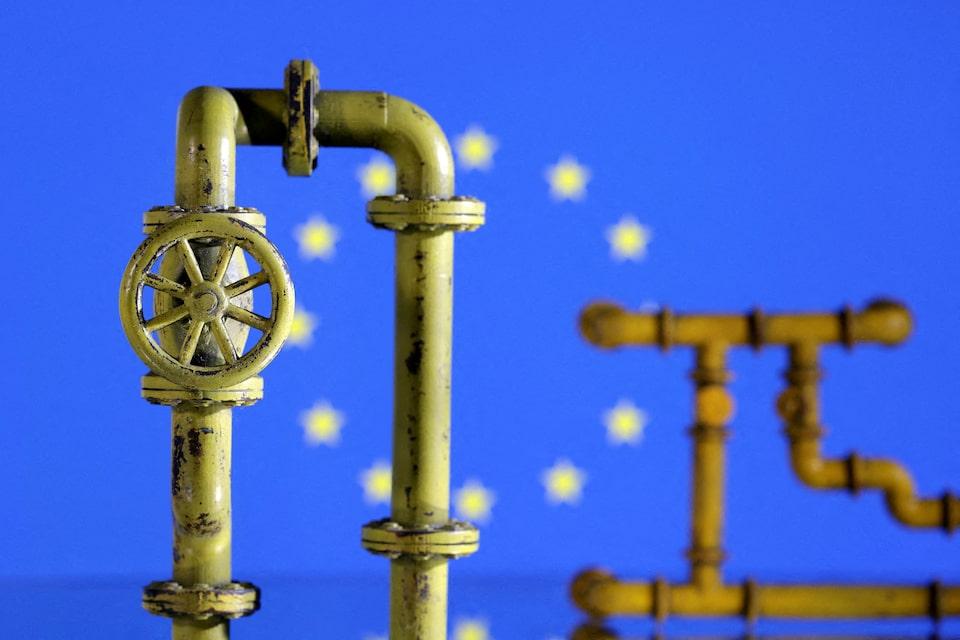
EU plans stricter gas market controls to prevent price spikes Draft shows EU aims for long-term LNG contracts to stabilize prices BRUSSELS, Feb 21 (Reuters) - The European Union will seek more gas from countries including the U.S. to replace Russian supplies, and expand renewable energy faster to cut its overall reliance on the fuel, the EU's energy commissioner has said. The EU has pledged to quit Russian fossil fuels by 2027 in response to Moscow's 2022 invasion of Ukraine. While Russian pipeline gas deliveries have plunged, the EU increased its imports of Russian liquefied natural gas last year. "Instead of using taxpayers' money, citizens' money, to pay for gas where the revenue goes into Putin's war chest, we need to make sure that we produce our own energy," EU energy commissioner Dan Jorgensen said in a joint media interview, referring to Russian President Vladimir Putin. Jorgensen said Brussels was preparing changes to permit rules to speed up building renewable energy. For industries and home heating where gas cannot be quickly replaced by electricity, he said the EU would step up efforts to source alternative supplies. "And then it's my job to make sure that it is cheap and not Russian," he said. "There will still be the need for gas, and there we will have to find other sources than Russia, and that can also mean bigger import from the U.S." European benchmark gas prices rose to two-year highs last week. U.S. President Donald Trump warned before taking office in January the EU would face trade tariffs unless it imported more oil and gas from the United States. The European Commission does not directly purchase gas, but has drawn up plans to engage with LNG suppliers and consider investing in LNG export infrastructure abroad to try to secure more long-term contracts with stable prices, draft documents reported earlier this week by Reuters showed. Under EU law, European gas contracts must end by 2049 to align with the bloc's climate change target for net zero emissions by 2050. Jorgensen declined to comment on the leaked draft documents, which the Commission is expected to publish next week. But he confirmed the Commission was working on stricter controls of the gas market to avoid speculative trading causing price spikes, and would propose "financial instruments" next week designed to decouple retail power prices from high gas prices. The EU's electricity market rules mean that, despite Europe's rapid expansion of renewable energy, the price of gas continues to set the power price many European consumers pay. Sign up here. https://www.reuters.com/business/energy/eu-seeks-more-us-gas-renewable-energy-replace-russian-supplies-2025-02-21/
2025-02-21 06:15
Wall Street stocks finish lower European stocks gain ahead of Germany elections Benchmark 10-year yields down Crude prices settled down more than 2% Gold eases from record high NEW YORK, Feb 21 (Reuters) - Stocks finished lower on Wall Street but edged higher in Europe on Friday amid uncertainty about U.S. President Donald Trump's rapid policy initiatives, including spending cuts and tariffs, and Germany's upcoming elections. Oil prices settled down more than 2% while gold eased from record highs. Trump has announced tariffs on several major U.S. trading partners since returning to the White House last month and unleashed a campaign to slash the 2.3 million-strong federal workforce. "The sell-off in the last couple of days has really been about the uncertainty with the pace of change in the government," said Joshua Wein, portfolio manager at Hennessy Funds. "We all knew there would be spending cuts and layoffs of employees, but the pace at which that is happening has given the market a new type of uncertainty that we haven't seen before." Data released on Friday showed U.S. business activity tumbled to a 17-month low, indicating that businesses and consumers were becoming increasingly rattled by the Trump administration's policies. The benchmark S&P 500, Dow Jones Industrial Average and Nasdaq Composite Index ended down driven by on losses in industrials, consumer discretionary, technology and energy stocks. The three main indexes also finished the week lower. In Europe, shares have been volatile this week ahead of Germany's election on Sunday. Europe's broad Stoxx 600 (.STOXX) , opens new tab climbed 0.52%, reversing two days of declines. It ended the week up 0.26%. The Dow (.DJI) , opens new tab dropped 1.69% to 43,428.02, the S&P 500 (.SPX) , opens new tab fell 1.71% to 6,013.13 and the Nasdaq Composite (.IXIC) , opens new tab slid 2.20% to 19,524.01. MSCI's gauge of stocks across the globe (.MIWD00000PUS) , opens new tab fell 1.03% to 874/59. The index is down 1.09% for the week. Overnight in Asia, MSCI's broadest index of Asia-Pacific shares outside Japan (.MIAPJ0000PUS) , opens new tab jumped 1.35% to its highest since November 8 and gained 1.47% for the week. Several Federal Reserve officials, including Fed Governor Adriana Kugler and Atlanta Fed President Raphael Bostic, signaled on Thursday they still feel that cooling U.S. inflation will in time allow the central bank to deliver further interest rate cuts. The benchmark U.S. 10-year note yield fell 7.2 basis points to 4.427%. "Ultimately, if you weigh what's been happening in the last few days, the equity market is pricing in more cuts than the bond market is," Wein said. "I think short term, it's this uncertainty but long term, it's the potential for tax cuts, cuts in regulation and free market forces at work as it pertains to whatever people care about in the economy." The dollar advanced against major currencies, partly retracing losses versus the Japanese yen. The euro stumbled after a series of business activity surveys showed a sharp contraction in early February in France and only mild improvement in Germany. The yen strengthened 0.31% to 149.14 per dollar. Against the Swiss franc , the dollar strengthened 0.07% to 0.897. The dollar index , which measures the greenback against a basket of currencies including the yen and euro, rose 0.25% to 106.62, with the euro down 0.38% at $1.046. Oil prices settled down more than 2% on supply disruptions in Russia, fading Middle East risk premium, while uncertainty loomed over a potential peace deal in Ukraine. Brent futures settled down 2.68% to $74.43 a barrel, while U.S. West Texas Intermediate crude settled down 2.87% to $70.40. Gold prices eased as investors booked profits from the previous session's record high. Spot gold fell 0.16% to $2,934.10 an ounce. U.S. gold futures settled 0.1% lower at $2,953.20. (This story has been refiled to add the missing word 'down' in the fourth bullet) Sign up here. https://www.reuters.com/markets/global-markets-wrapup-1-2025-02-21/