2025-02-20 23:14
MIAMI, Feb 20 (Reuters) - Supply chains for major planemakers Boeing (BA.N) , opens new tab and Airbus (AIR.PA) , opens new tab are showing signs of moderate improvement, the chief executive of Saudi start-up Riyadh Air said on Thursday. Securing adequate parts, for both new and existing planes, has been a major problem for the airline industry in recent years. The causes ranged from general disruption emanating from the COVID-19 pandemic to industrial action at Boeing which caused a seven-week halt to most jet production last fall. "Are there big challenges out there - yes there definitely are. Is the supply chain stretched and under huge stress - yes, and yes," Tony Douglas told an FII Institute event in Miami. "But am I seeing signs of moderate improvement - I honestly have to say, yes I do." Douglas said one continued bottleneck was the suppliers that serve both Boeing and Airbus, which he described as being "one level down". He said Riyadh Air was working to overcome any challenges, without adding further details. Backed by Saudi Arabia's sovereign wealth fund, the Public Investment Fund, Riyadh Air has been ordering planes from both manufacturers ahead of its launch. This includes 60 narrow-body A321-family jets from Airbus in October, as well as up to 72 Boeing 787 Dreamliners ordered in March 2023. The airline is currently engaged in a process to select extra wide-body jets, Douglas said, without elaborating further. Douglas told Reuters in October it was planning to talk to Airbus about A350-1000 aircraft and Boeing on its 777X jets. Riyadh Air is expected to start operations by the end of the year, Douglas told the event. In the October interview, Douglas had guided that it would begin flights in the second half of this year. Sign up here. https://www.reuters.com/business/aerospace-defense/riyadh-air-ceo-says-airline-supply-chain-issues-starting-improve-2025-02-20/

2025-02-20 23:03
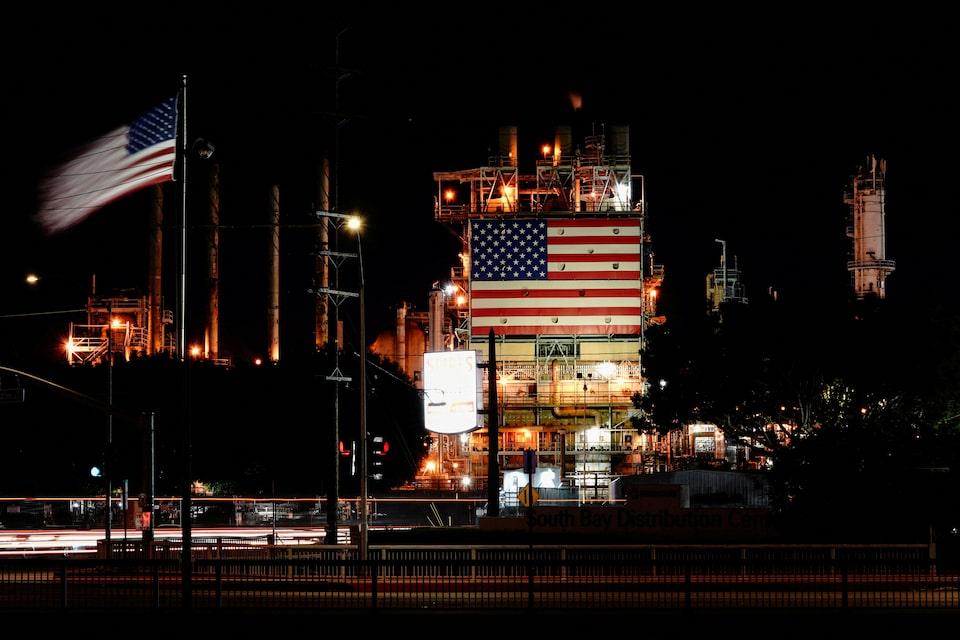
Marathon Petroleum, HF Sinclair, Delek say could pivot to alternative crudes Tariffs on Canada, Mexico would boost feedstock cost, squeeze refiner margins further Majority of US refinery capacity slated to run cheaper heavy Canadian, Mexican crude Analysts see inland refiners sticking with current heavy crude diet Switch to lighter crude raises challenge of converting refining units NEW YORK, Feb 20 (Reuters) - Top U.S. refiners are poised to seek alternative sources for heavy, sour crudes, including running more domestic grades, as they await clarity around U.S. President Donald Trump's threatened tariffs on imports from the nation's top crude suppliers Canada and Mexico, executives said. Running more domestic crude, which is predominantly light, sweet shale oil, through U.S. refineries could be a win for Trump, who has vowed to boost the nation's energy production and championed the fossil fuel industry. The tariffs, however, have generated concern among refiners, who are already watching profits slide from record highs in 2022 on softer demand, as they would now take a hit from higher feedstock costs. More than 70% of U.S. processing capacity is configured to run heavier grades, which are cheaper to import from Canada and Mexico. Trump, who took office on January 20, plans to charge a 25% tariff on Mexican crude and a 10% levy on Canadian crude beginning in March, a delay from his original plan. Canada, the biggest oil supplier to the U.S., exports some 4 million barrels per day (bpd) of crude into the U.S., 70% of which is processed by Mid-Continent refiners. Marathon Petroleum (MPC.N) , opens new tab, the top U.S. refiner by volume, said its refineries in the Mid-Continent region could switch from processing heavy sour crude to other grades. "We could look to pivot to alternative crudes because of our logistics capabilities," Rick Hessling, chief commercial officer at Marathon Petroleum, told investors during the company's fourth-quarter earnings call this month. Hessling added that domestic crude from the Bakken shale formation in North Dakota and the Rocky Mountains could be among their options. Ohio-based Marathon operates 13 refineries in the U.S., six of which are located in the Midwest. Its 253,000-bpd refinery in Robinson, Illinois, processes large amounts of heavy crude from Canada. The refiner warned that costs could rise if Trump's tariff plans go through, but the burden would primarily be borne by Canadian oil producers and, to a lesser extent, U.S. consumers. "We're working with the administration and we're working with agencies, as well as the trade associations, to be sure that the right people understand the implications of these decisions,” Marathon CEO Maryann Mannen said. Texas-based HF Sinclair , which operates seven complex refineries, could process more light sweet crude. "What we believe in our refineries is we have the ability to lighten up," Steve Ledbetter, executive vice president of commercial at HF Sinclair , said during the company’s earnings call on Thursday. Its refining system is connected to the key crude oil delivery hub in Cushing, Oklahoma, Ledbetter added. Its 94,000-bpd oil refinery located in Sinclair, Wyoming, and 135,000-bpd refinery in El Dorado, Kansas, need to run a certain amount of heavy crude, he said. "But we can minimize what that is and introduce a lighter slate." Independent refiner Delek (DK.N) , opens new tab, which operates four inland refineries, could run more light, sweet crude if it is economic to do so, its CEO Avigal Soreg said earlier this month. "We have knobs to open," he said, emphasizing that the company would do whatever was most economic. However, converting units to process lighter crudes economically would require refiners to invest in new equipment. Lighter crude tends to produce higher volumes of petrochemical feedstock naphtha and less of the more profitable diesel and jet fuel, which could also force some operators to reduce the amount of crude they run overall. "If you're configured to run heavy sour crude in the Midwest, your other options, broadly, are not going to be as desirable, as economic," said Jason Gabelman, analyst at TD Cowen. TD analysts expect U.S. refiners that run Canadian crude on the margin to switch to light sweet crude, thereby increasing the prices of U.S. benchmark West Texas Intermediate crude futures (WTI) and global benchmark Brent crude. Both benchmarks are light sweet grades. Inland refiners that run Canadian crude as a core part of their diet would likely stick with their current crude slate, the analysts said. Phillips 66 (PSX.N) , opens new tab, HF Sinclair and Par Pacific Holdings (PARR.N) , opens new tab have elevated exposure to Canadian crude, data from TD Cowen shows. Besides the lower transportation costs due to proximity, the price of a barrel of Canadian oil is still far cheaper for Midwest refiners than a comparative local grade produced in the Gulf of Mexico. A barrel of Western Canada Select (WCS) heavy crude in Hardisty, Alberta, was reported to trade last at about $13 under WTI , compared with Mars Sour , a U.S. medium sour crude produced along the U.S. Gulf of Mexico, at about a $2 premium to WTI. BRACING FOR IMPACT Ahead of the impending tariffs, U.S. imports of Canadian crude hit record highs in January. Valero Energy (VLO.N) , opens new tab, the second largest U.S. refiner, anticipates a reduction in refining throughput if heavy crude feedstocks become limited, executives said during the company's earnings call last month. "A lot depends on how far it goes and how deep you have to back off on some of those heavy barrels," said Greg Bram, vice president of refining services. The San Antonio-based refiner's 360,000-bpd Port Arthur refinery in Texas processes Mexican heavy sour crude oil into gasoline, diesel and jet fuel. "The Mid-Con needs Canadian oil to maintain throughput," said PBF Energy(PBF.N) , opens new tab CEO Matthew Lucey. "Anytime that there's going to be disruption of that size, if it happens, it will have some impact on throughput." Houston-based Phillips 66 said the tariffs may divert Canadian oil away from the U.S. at first, while the 457,000 bpd of Mexican crude that comes into the U.S. could move to Europe or Asia instead. "Without having really any clarity on what's going to happen, there is no way we can really speculate on how we deal with it. We're just going to have to deal with it when it comes up," said Valero's Chief Operating Officer Gary Simmons. Sign up here. https://www.reuters.com/business/energy/us-refiners-mull-switch-alternative-lighter-crudes-amid-trump-tariff-fears-2025-02-20/
2025-02-20 22:52
100 acre plus campus includes data center, restaurants, fitness centre Company plans to retain headquarters, few other buildings, broker says Campus part of Chesapeake Energy founder Aubrey McClendon's legacy Feb 20 (Reuters) - Expand Energy (EXE.O) , opens new tab, the largest U.S. natural gas producer formerly known as Chesapeake, is looking to sell the bulk of its storied Oklahoma City, Oklahoma, campus, according to a document reviewed by Reuters and the brokers involved in the planned sale. The planned sale of the real estate marks another step in the shrinking of the iconic Chesapeake brand, once synonymous with the U.S. shale revolution. The company has hired real estate brokers at Colliers International Group (CIGI.TO) , opens new tab and Cushman & Wakefield's (CWK.N) , opens new tab Commercial Oklahoma division to market over 100 acres (40.5 hectares) of the campus in the northern suburbs of Oklahoma City. Of the 26 buildings on the campus, Expand plans to retain its 253,000-square-foot (23,505-sq-meter) headquarters known as Building 15, three large buildings, four garden-style buildings, a parking garage and about two acres of land, said Travis Mason, director at Cushman & Wakefield's Commercial Oklahoma division. Sale considerations for the rest of the real estate, which includes a 56,250-square-foot data center with capacity for 2.9 megawatts of critical power generation, are at an early state, Mason noted. The sale is likely to attract interest from real estate developers, while other companies looking to buy individual buildings could also be in the mix, said Walker Ryan, a principal at Colliers. Mason and Ryan refused to provide a valuation for the real estate, and said it would depend on whether the properties are sold altogether or in different transactions. Expand did not immediately respond to requests for comment. The company, which in 2020 fell into bankruptcy, last year changed its name as part of a $7 billion merger with rival Southwestern Energy. The merger made it the largest U.S. natural gas producer, but its headcount has dropped drastically in recent years following scores of layoffs. The campus, once a status symbol for the company and Oklahoma City, was meticulously planned by Chesapeake's late founder Aubrey McClendon as he grew the company from 10 employees when he co-founded it in 1989 to over 12,000 in 2012. McClendon, who died in a single-car crash in 2016, spared little expense to build the campus, which includes a 67,000-square-foot fitness center with an Olympic-sized swimming pool, four restaurants and a 62,000-square-foot daycare facility. At its peak early in the previous decade, over 8,000 of Chesapeake employees worked at the campus, according to The Oklahoman. As of last year, that number had shrunk to 560 employees, the newspaper reported. Chesapeake's total workforce stood at about 1,000 employees by the end of 2023, according to annual filings. Sign up here. https://www.reuters.com/business/energy/expand-energy-explores-sale-most-iconic-oklahoma-campus-say-broker-documents-2025-02-20/

2025-02-20 22:50
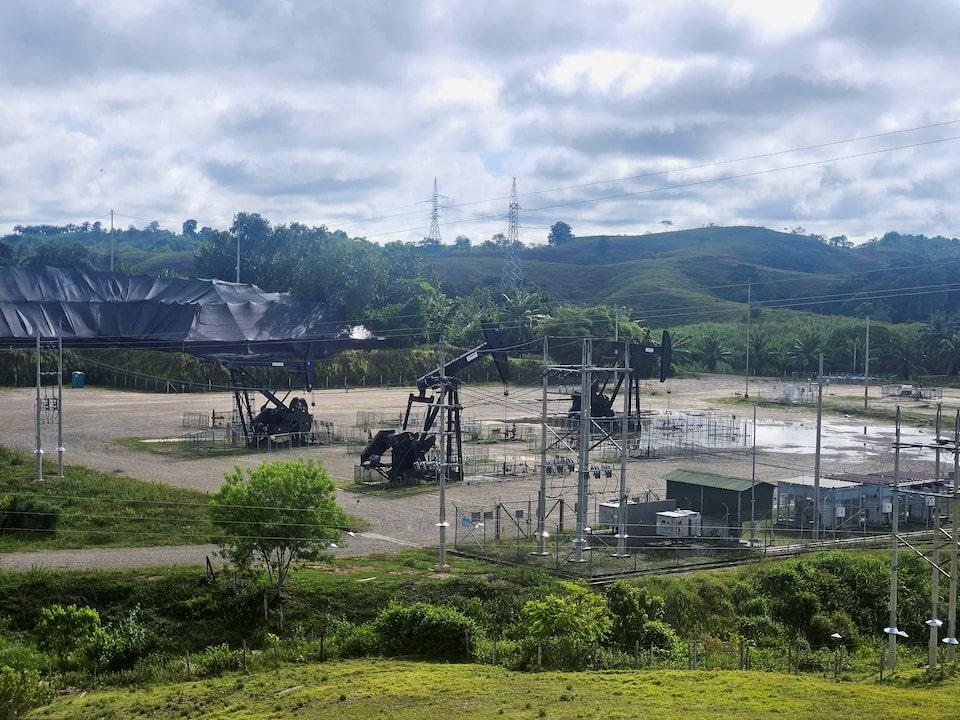
Gran Morgu project led by TotalEnergies, aims for first oil in 2028 Staatsolie's participation in Gran Morgu requires $2.4 bln State-owned company's revenue expected to triple by 2029 to $1.77 bln Staatsolie intends to participate in Petronas' Block 52, a gas-focused development GEORGETOWN, Feb 20 (Reuters) - Suriname's Staatsolie needs to secure an unprecedented $1.5 billion in bank financing this year to ensure it can participate in the country's Gran Morgu energy project, the head of the state-owned company told Reuters. The project, led by TotalEnergies (TTEF.PA) , opens new tab, is Suriname's first major offshore project. The country has discovered reserves that may allow it to compete with neighbor Guyana as a prominent offshore crude- and gas-producing country once it sees the first oil in 2028. Staatsolie wants to partner with TotalEnergies and APA Corp (APA.O) , opens new tab in the project, to be developed at Block 58, which received a positive final investment decision in October. "We are talking to big banks in the world to finance," Staatsolie's managing director, Annand Jagesar, told Reuters in an interview on the sidelines of an industry conference in Guyana. "They're very eager to do it." He did not disclose the potential financiers. The oil and gas development is expected to cost about $12.2 billion in real terms. Staatsolie's share in Gran Morgu would require $2.4 billion. The project's development, which Jagesar said is 10% complete after a set of initial contracts worth up to $7 billion were secured, will need major investments from all partners. Staatsolie already paid $175 million of its own cash, with another payment deadline coming up this year. The company has also issued bonds to cover a portion of the capital requirement. For Staatsolie, this participation represents a first step towards the challenge of doubling the size of the company. "To participate and to learn from the big boys, that fits perfectly in our strategy," Jagesar told Reuters. RAPID GROWTH The company sees its revenue almost tripling by 2029 to $1.77 billion, according to a company prospectus issued when it launched its most recent bonds. The biggest challenge for the company is raising cash soon enough to participate in big-ticket offshore projects. The state company may need to raise even more money in coming years if it decides to participate in a natural gas project to be operated by Malaysia's Petronas, which is expected to have a final investment decision next year. Jagesar said it is Staatsolie's intention to participate in Petronas' Block 52, which could be the South American country's first development completely focused on natural gas. Development of Block 52 could cost some $10 billion, with a potential 2031 start date, according to consultancy Wood Mackenzie. Staatsolie would have to raise another $2 billion to secure its 20% stake. However, the company's participation in Block 58 could earn it about $700 million a year at peak production, Wood Mackenzie added. "The cash flow collected will alleviate many of the financing needs," Wood Mackenzie's Upstream Research analyst Luiz Hayum told Reuters. The timeline could play in Staatsolie's favour, he said, as most of the Block 52 expenses would be done during the 2028-2031 period, after production begins at Block 58. Sign up here. https://www.reuters.com/business/energy/surinames-staatsolie-needs-raise-15-billion-major-energy-project-2025-2025-02-20/

2025-02-20 22:46
BOGOTA, Feb 20 (Reuters) - Colombia's Ecopetrol (ECO.CN) , opens new tab booked its biggest increase in proven oil and gas reserves in three years in 2024, rising to 1.89 billion barrels of oil equivalent, data from the majority state-owned company showed on Thursday. The country's oil and gas reserves have become a hot political topic as concerns over energy self sufficiency amid dwindling gas supplies have taken hold in recent years. The total proven (1P) reserves for 2024 compares with the 1.88 billion barrels of oil equivalent in 1P reserves that closed 2023, Chief Executive Ricardo Roa said, adding that the proven oil and gas was equivalent to 7.6 years of consumption. "One of the aspects that produced this improvement in incorporating reserves is due to signing new projects into entry of operation, and with improved recovery," Roa said at a media conference. Almost 90% of the reserves are in Colombian fields, while 11% are in the company's operations in the U.S., Roa added. One-fifth of the reserves were gas, Roa said, while the rest was oil. Sign up here. https://www.reuters.com/business/energy/colombias-ecopetrol-books-biggest-increase-proven-oil-gas-reserves-three-years-2025-02-20/
2025-02-20 22:01
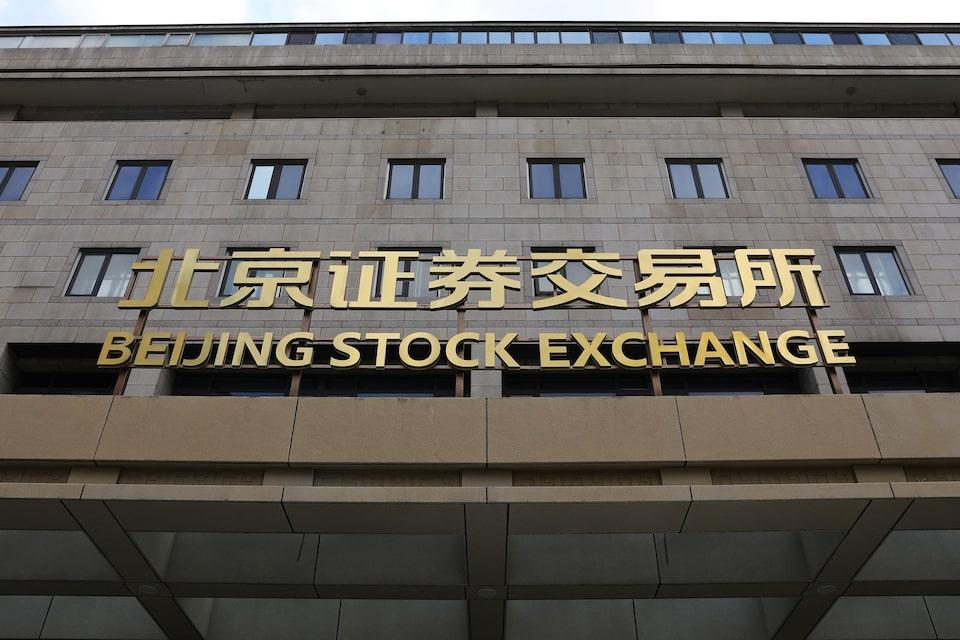
Feb 21 (Reuters) - A look at the day ahead in Asian markets. A retreat from record highs on Donald Trump's one-month anniversary in office put Wall Street on the same shaky ground as Asian markets that have been feeling the sting from his tariff threats and tack away from historic security alliances. It didn't help that Walmart (WMT.N) , opens new tab, the world's largest retailer, gave a gloomy sales and profit outlook anticipating inflation-weary consumers would tighten their wallets after several quarters of solid growth. That dovetailed with mounting concerns about stagflation that were a take-away from the minutes of January's Federal Open Market Committee meeting on Wednesday. A 6.5% slump in Walmart was a more decisive negative behind the S&P 500's (.SPX) , opens new tab 0.43% decline than the half-hearted bullishness behind consecutive record high closes this week. Some investors see any hit to growth from Trump's tariff gambits as temporary. While threatened new tariffs on imports from Canada and Mexico were postponed for a month at the beginning of February, a 10% levy on all Chinese imports has been imposed along with tariffs on global steel and aluminum imports. The U.S. president's economics team is also devising plans for reciprocal tariffs on every country that taxes U.S. imports, along with plans to introduce 25% tariffs on autos, semiconductors and pharmaceutical imports. Even as markets hold out hope for his pro-growth agenda, Trump's policies have brought mounting concerns that growth will slow and inflation become entrenched as it was during the U.S. 1970s "stagflation" period. St. Louis Fed President Alberto Musalem on Thursday added to the concern, in remarks that highlighted the potentially difficult choices facing the U.S. central bank. Chicago Fed President Austan Goolsbee said he is a bit nervous about the potential for large-scale tariffs to create a significant supply shock that could aggravate inflation as occurred during and just after the COVID-19 pandemic. The minutes of the Fed's January meeting released on Wednesday showed central bankers were uncertain about what Trump's policies mean for inflation when they paused the easing cycle in place since September. The minutes also revealed that they discussed slowing or pausing the quantitative tightening program, which diverted some flow into Treasuries. That continued on Thursday with the 10-year yield slipping 3.2 basis point to 4.503%, helped along by comments from Treasury Secretary Scott Bessent to Bloomberg downplaying the chances of increasing the size of longer dated debt auctions soon. Slowing or pausing the program of letting bonds roll off its balance sheet without replacement may reduce the amount of debt the Treasury Department needs to offer. Data showing a moderate rise in weekly unemployment claims to 219,000 from an upwardly adjusted 214,000 last week showed the labor market remained on a sound footing. The Conference Board's Leading Economic Index posted a 0.3% decline in January, all but erasing the prior two months' gains - the first gains since February 2022. With no major data due out on Friday, Asia's markets may be left to take their cue from trade war fears, and Trump's reshuffling of the geopolitical deck after denouncing Ukrainian President Volodymyr Zelenskiy as a "dictator", and appearing to side with Russia rather than traditional U.S. security partners in Europe in talks to end the Ukraine war. The yen and gold have been major safe-haven beneficiaries of the emerging Trump agenda. Dollar/yen fell below 150 to its lowest since early December, while gold got within $50 of $3,000 per ounce. It won't be a surprise if Asia's markets remain in a minimize risk mode that Thursday sent Japan's Nikkei (.N225) , opens new tab down 1.2%, Hong Kong's Hang Seng index (.HSI) , opens new tab down 1.6% and China's blue-chip CSI300 Index (.CSI300) , opens new tab down just 0.3% because of China's AI disrupter, DeepSeek. Here are key developments that could provide more direction to markets on Friday: - Japan manufacturing and services PMIs (Feb) - Malaysia CPI (Jan) - U.S. manufacturing and services PMIs (Feb) - U of Michigan Sentiment survey (Feb final) Sign up here. https://www.reuters.com/markets/asia/global-markets-view-asia-2025-02-20/