2025-02-20 11:13
Feb 20 (Reuters) - British energy regulator Ofgem on Thursday proposed that all energy suppliers offer tariffs with low or no standing charges, allowing consumers to pay these costs as part of their unit rate, to give them more flexibility in managing energy bills. Ofgem, which is seeking feedback on the proposed price cap option, is aiming to make these tariffs available by next winter. Sign up here. https://www.reuters.com/world/uk/uk-energy-regulator-plans-introduce-zero-standing-charge-tariffs-2025-02-20/

2025-02-20 11:11
A look at the day ahead in U.S. and global markets from Mike Dolan World markets were subdued on Thursday by simmering trade tensions and Washington's attempt to undermine its Ukrainian ally, while the Federal Reserve surprised with talk of slowing its balance sheet runoff at its recent meeting. A messy week of conflicting geopolitical, trade and central banking headlines has seen renewed tariff threats from President Donald Trump, a bizarre twist in U.S./Russia talks to end the Ukraine war and mix of interest rate cuts and hawkishness in global monetary policy. While stocks on Wall Street (.SPX) , opens new tab and in Europe (.STOXX) , opens new tab continue to flirt with record highs this week nonetheless, U.S. futures and recently buoyant Chinese stocks have taken a step back early on Thursday as the complicated landscape unfolds. Gold , at new record highs and up 12% for the year to date, was one of the few unambiguous winners once again. Topping Thursday's U.S. financial diaries are Walmart's latest results, February U.S. business surveys and jobless numbers. But the heat is elsewhere clearly, not least as Sunday's German election is at the front of the mind in Europe. Trump's turn against Ukrainian President Volodymyr Zelenskiy as he prepares talks with Russian leader Vladimir Putin raised transatlantic tensions considerably ahead of the vote. With euro zone economic surprise indexes at their most positive since last April and Thursday's corporate earnings impressing, the possibility of post-election fiscal loosening in Germany - especially on defence spending - saw euro stocks (.STOXX) , opens new tab recover some of Wednesday's recoil. However, hawkish European Central Bank board member Isabel Schnabel also threw a curveball into ECB easing hopes on Wednesday by saying "we are getting closer to the point where we may have to pause or halt our rate cuts". Italy's central bank chief Fabio Panetta took a more dovish line, but the combination saw 10-year German bund yields climb to their highest in three weeks and propped the euro up too. FED MINUTES Back stateside, the Fed's latest meeting minutes underlined its caution about further rate cuts for now but surprised bond markets by revealing a discussion about pausing its "quantitative tightening" policy of running down vast balance sheet holdings of Treasuries and mortgage bonds. "Regarding the potential for significant swings in reserves over coming months related to debt ceiling dynamics, various participants noted that it may be appropriate to consider pausing or slowing balance sheet runoff until the resolution of this event," the minutes noted. Fed officials have been bracing for a period of uncertainty due to government financial management and had signalled in recent meeting minutes it would be hard to know whether financial markets had enough or too little liquidity. The discussion saw Treasury yields tick lower even after another tepid debt auction for 20-year bonds and dragged the dollar down marginally too. But the dollar took a bigger hit against Japan's yen on Thursday as speculation about further Bank of Japan interest rate rises this year went up another notch. Bank of Japan Governor Kazuo Ueda said he met Prime Minister Shigeru Ishiba for a regular exchange of views on the economy and financial markets. Traders took the fact there was no discussion of rising Japanese debt yields as an indication further policy tightening was seen as warranted. Japan's 10-year government bond yield hit a fresh 15-year high of 1.44% and the yen climbed to its best level of the year. China and Hong Kong stocks dropped, meantime, following this week's fresh Trump tariff threats and as Chinese interest rates were left unchanged as expected at the latest monthly fixing. But China's Alibaba (9988.HK) , opens new tab rose 2% as it topped Wall Street expectations for third-quarter revenue on strong year-end shopping sales. Key developments that should provide more direction to U.S. markets later on Thursday: * Philadelphia Federal Reserve February business survey, US weekly jobless claims; Canada January house prices, producer price index; Mexico central bank meeting minutes * Federal Reserve Board Governor Adriana Kugler, Fed Vice Chair for Supervision Michael Barr, Chicago Fed President Austan Goolsbee and St Louis Fed boss Alberto Musalem all speak; European Central Bank policymakers Gabriel Makhlouf and Jose Luis Escriva speak * U.S. corporate earnings: Walmart, Booking, Hasbro, Baxter, Akamai, Newmont, Insulet, Alliant Energy, Centerpoint Energy, Targa, Consolidated Edison, Copart, Epam, Live Nation, LKQ, Pool, Quanta, Southern etc * U.S. Treasury sells $9 billion of inflation-protected 30-year bonds Sign up here. https://www.reuters.com/markets/us/global-markets-view-usa-2025-02-20/
2025-02-20 11:04
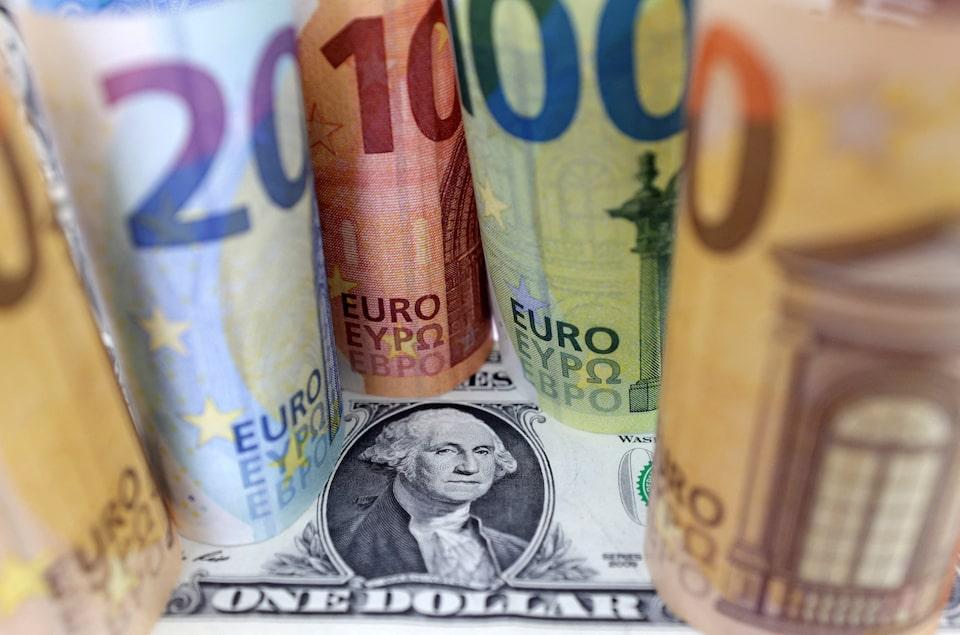
Demand for cross-currency swaps from dollars into euros growing Companies swap existing dollar debt into euros to save millions Swap supply tempered on risks dollar strength may not persist Swaps rise as macro environment uncertain on Trump policies Feb 20 (Reuters) - U.S. companies with overseas operations are taking advantage of lower rates in euros to slash their debt funding costs and soften the blow of higher interest rates with a hedging strategy that is expected to expand if the Fed continues to pause rate cuts and other central banks do not, bankers and corporate advisers said. Demand for cross-currency swaps, a hedge where companies exchange loan principal and interest payments from one currency to another, has steadily picked up as interest rates between the United States and other major economies diverged. "We have seen activity in both new cross-currency swap transactions and restructurings of existing hedges, mostly USD to EUR flows associated with net investment hedging activity," said John Wahr, head of rates sales in the derivative products group at U.S. Bank. Generally, companies turn to cross-currency swaps when there is a positive carry and also a shield against volatility that can come from macroeconomic uncertainty over the impact President Donald Trump's tariffs and policies might have on inflation, interest rates and the U.S. economy. Monthly EUR/USD cross-currency swaps increased 7% in January to $266 billion, versus the corresponding period in 2024, according to data from Clarus, an ION company that researches derivatives. The bankers and advisers told Reuters they could not name the companies doing such swaps, citing confidentiality reasons. Within days of taking over, Trump began rapidly implementing his agenda, including tariffs on steel and aluminum imports and reciprocal tariffs, sparking volatility and raising concerns this could be inflationary and further pause an easing U.S. rate cycle. In another example, Trump on Tuesday said he plans to introduce tariffs on autos, pharmaceuticals and semiconductors. Companies with overseas cash flows or significant investments in foreign operations can see their value fluctuate with changes in the exchange rate between the local currency and the dollar. The net investment hedge mitigates that volatility because it offsets the changes in the value of those investments brought on by exchange rate gyrations. By using cross-currency swaps to convert dollar interest payments to euro interest payments, companies can shave nearly 200 basis points off their interest costs, which could run up to millions of dollars, said Jackie Bowie, managing partner and head of EMEA at risk management firm Chatham Financial. Companies that started using cross-currency swaps last year, began restructuring them at the start of this year because those trades were more profitable as the euro weakened, said Amol Dhargalkar, managing partner at Chatham. CURRENCY RISK Companies were then using those profits for a variety of corporate purposes, including paying down debt, he added. Still, the flow of swaps is tempered as treasurers were sensitive to creating derivative foreign exchange exposures that may heighten the risk of mark-to-market losses if the underlying foreign currencies were to strengthen, said Marc Fratepietro, co-head of global debt capital markets at Deutsche Bank. If the foreign currency strengthened relative against the dollar, that could also eat into the interest expense savings for companies doing the swaps, said Eric Merlis, co-head of global markets, at Citizens in Boston. But for companies that have yet to place these trades, it could still present an attractive entry point from both an interest rate differential and currency perspective, said Merlis, who is seeing companies across the board with exposures in the euro, Canadian dollar, and some dollar/Swiss franc take on the hedges. "There's always uncertainty about what the Fed is going to do, or what the ECB is going to do. But this uncertainty has provided our clients with an opportunity to hedge against that macro uncertainty," he added. The fragility of such trades was revealed somewhat on Wednesday when euro zone government bond yields rose to their highest in more than two weeks as investors focused on potential extra borrowing amid U.S.-Russia talks on Ukraine and comments from a European Central Bank official floating a pause to rate cuts. Sign up here. https://www.reuters.com/markets/us-companies-swap-dollar-bonds-into-euros-lower-funding-costs-2025-02-20/
2025-02-20 10:58
Wall Street stocks finish lower Gold extends run of record highs Japanese yen surges to multi-week highs Ukraine bonds tumble on concerns about its future Five years since COVID first tore into markets NEW YORK/LONDON, Feb 20 (Reuters) - Global equity markets fell while gold prices surged on Thursday, with traders marking one month since U.S. President Donald Trump's returned to the White House and five years since COVID-19 first rocked world markets. Gold was nearing $3,000 per ounce on concerns Trump will unleash a global trade war. Bullion notched its tenth record high this year, partly fueled by safe-haven demand amid the tariff threats. The dollar was subdued against major currencies while the yen stomped higher on bets of more Bank of Japan interest rate hikes. Trump's latest tariff warning on Wednesday focused on pharmaceuticals, semiconductor chips and wood. He also intends to hit car imports as soon as April 2. That, along with other threats, has exacerbated fears of a broad trade war and unnerved investors. On Wall Street, all three main indexes finished lower, led by losses in financials, consumer discretionary, consumer staples, communications services, industrials and materials. Energy, real estate and healthcare equities ended higher. The benchmark S&P 500 hit a second straight record closing high this week on Wednesday, after the Federal Reserve's January meeting minutes showed officials expressing concern about inflation and Trump's policies. "There's been some volatility at least in the headlines and that's beginning to sip into the market, with the equities indexes still bumping along their highs," said Wasif Latif, president and chief investment officer at Sarmaya Partners. "The market just needs to come to terms that this is the new environment that we are in; just like we saw in the prior Trump administration, over time the market will begin to discount and adjust to some of the headlines." The Dow Jones Industrial Average (.DJI) , opens new tab fell 1.01% to 44,176.65, the S&P 500 (.SPX) , opens new tab fell 0.43% to 6,117.52 and the Nasdaq Composite (.IXIC) , opens new tab fell 0.47% to 19,962.36. The pan-European STOXX 600 (.STOXX) , opens new tab index fell 0.2%. Germany's DAX (.GDAXI) , opens new tab lost 0.5%. Europe's biggest economy is also set for a snap election at the weekend, following the collapse of Chancellor Olaf Scholz's three-way coalition, with analysts anticipating a Conservative-led two-party coalition. MSCI's gauge of stocks across the globe (.MIWD00000PUS) , opens new tab dropped 0.30% to 884.15. DICTATOR TRADE Ukraine's government bonds tumbled after Trump caused widespread alarm on Wednesday by calling Ukrainian President Volodymyr Zelenskiy a "dictator" and saying he needed to move fast to secure peace or risk having no country left. Foreign ministers from the G20 top economies were meeting in South Africa. Top U.S. officials have snubbed the gathering and media reports on Thursday said the U.S. had opposed calling out Russian aggression at a virtual G7 meeting on Monday. Mirabaud's head of emerging market debt, Daniel Moreno, said expectations that Trump would drive a peace deal that provided Ukraine with long-term security have all but been dashed. "The way that things are developing (with U.S-Russia talks and Trump criticisms) the market is now realizing that is not the base case anymore." "Trump is not indicating in any form that the resolution will be a good one in any way for Ukraine," he added. GOING FOR GOLD Gold prices showed no signs of slowing, though. They rose to a fresh record high of $2,956.69 an ounce. The precious metal is now up 12% in 2025 after rising 27% last year, its best performance in over a decade. U.S. gold futures settled 0.7% higher at $2,956.10. In the oil markets, Brent futures settled up 0.58% at $76.48 a barrel while U.S. West Texas Intermediate crude futures (WTI) for March delivery rose 0.44% to $72.57, underpinned by worries over supply disruptions in Russia. In currencies, the yen strengthened against the greenback to an 11-week peak of 149.40 per dollar. The euro was up 0.77% at $1.0502. The dollar index , which measures the greenback against a basket of currencies including the yen and the euro, fell 0.77% to 106.35. Sign up here. https://www.reuters.com/markets/global-markets-wrapup-1-pix-2025-02-20/
2025-02-20 10:16
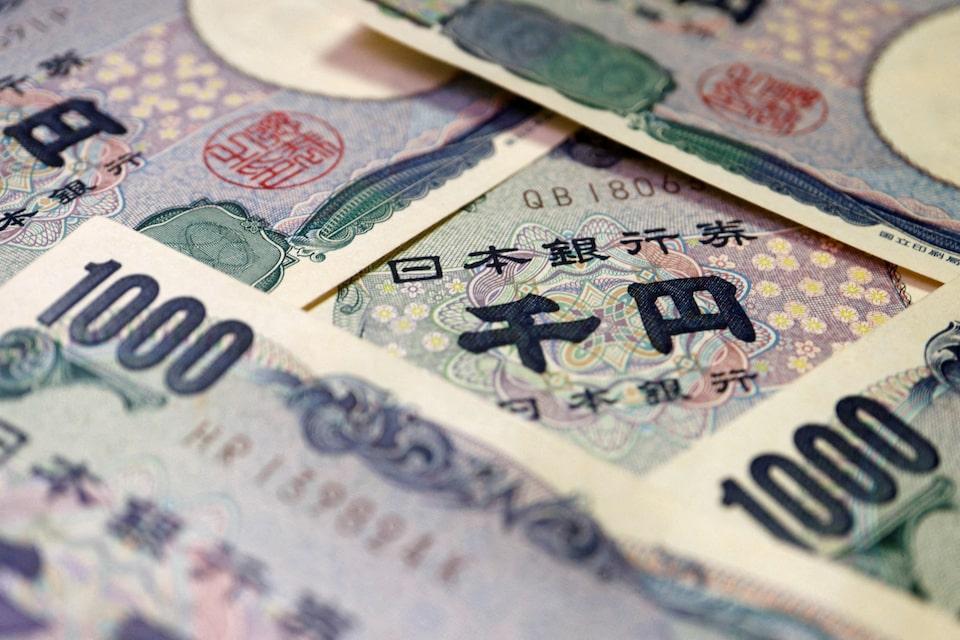
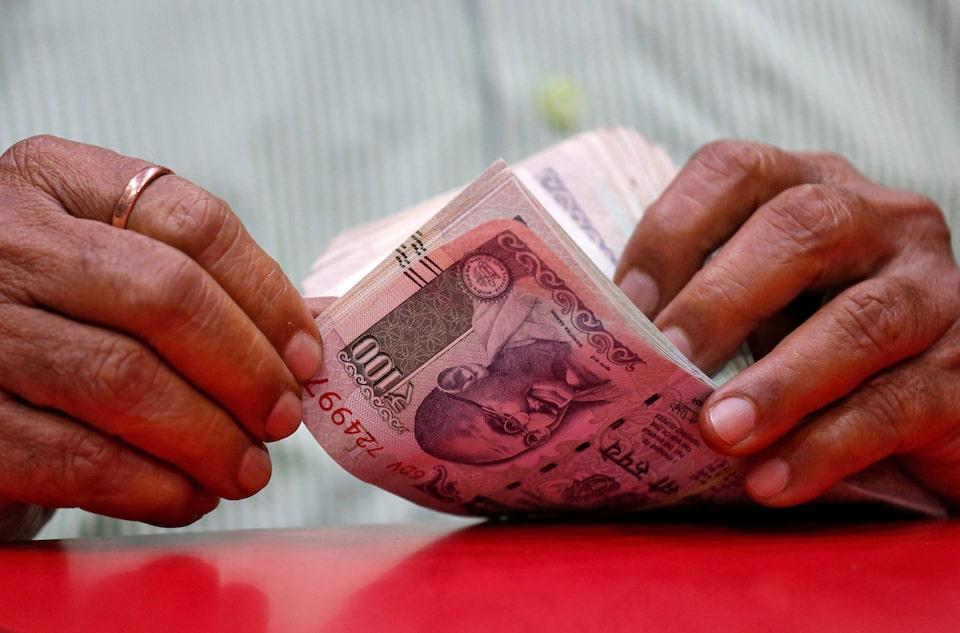
MUMBAI, Feb 20 (Reuters) - The Indian rupee topped gains among major Asian currencies and settled at a one-week high on Thursday, aided by dollar sales from foreign banks and softness in the greenback. The rupee closed at 86.66 against the U.S. dollar, up 0.3% on the day. It was the best performer among regional peers that rose amid gains in the Chinese yuan and Japanese yen. While U.S. President Trump's remark that a new trade deal with Beijing is possible lifted the yuan, the yen hit its strongest level in more than two months as investors ramped up bets on further rate hikes from the Bank of Japan. The dollar index was hovering just shy of the 107 handle, down 0.2% on the day, while the yen and the offshore yuan rose 0.8% and 0.2%, respectively. Strong dollar sales from foreign banks throughout the session also helped the rupee, a trader at a private bank said. The rupee faced significant depreciation pressure until early last week and hit an all-time low of 87.95, but that waned following heavy-handed intervention by the central bank. A multitude of factors have weighed on the rupee over recent weeks including persistent portfolio outflows, uncertainty about global trade policies and expectations of policy easing by the Reserve Bank of India (RBI). While the RBI's recent rate cut indicates a clear desire to support growth, "it may not be prudent to view this as proving a green light to opening the door to one way depreciation. Instead, the light is amber and USD/INR is on pause for now," Bank of America said in a note. Jefferies reckons the rupee is likely to keep drifting lower through 2025 but is unlikely to be hurt significantly by reciprocal U.S. trade tariffs floated by Trump. Sign up here. https://www.reuters.com/markets/currencies/rupee-ends-one-week-high-likely-inflows-tops-asian-peers-2025-02-20/
2025-02-20 10:11
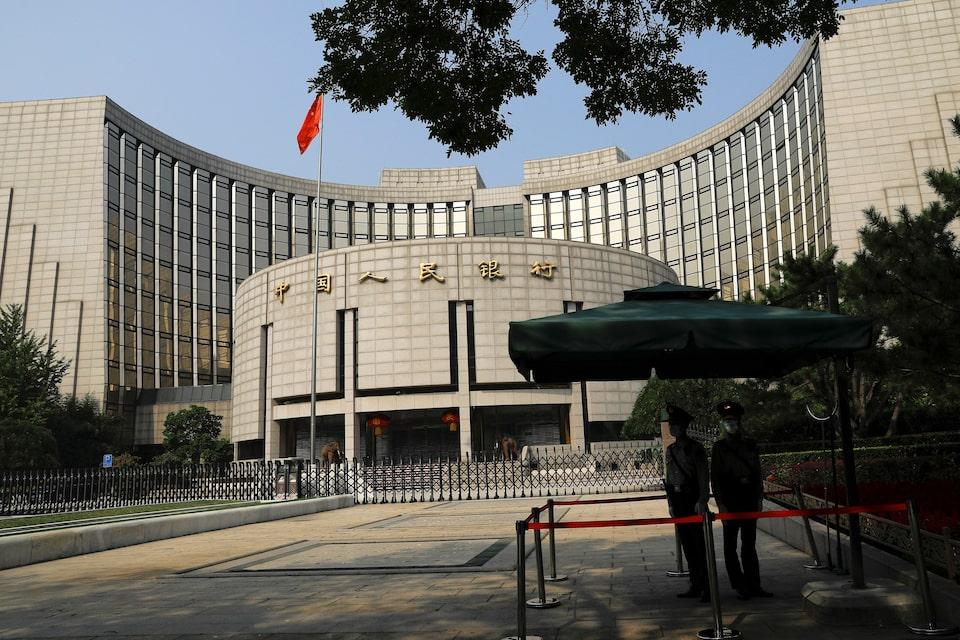
BEIJING, Feb 20 (Reuters) - China's central bank said it will support setting up a new model of real estate development to help stabilize the crisis-hit sector, according to a statement on Thursday. It will also improve real estate financial management, it said during a meeting to discuss this year's macro-prudential policy. (This story has been corrected to clarify that the central bank will support the new development model, not set up a new one, in paragraph 1) Sign up here. https://www.reuters.com/world/china/china-central-bank-vows-measures-support-real-estate-sector-2025-02-20/