2026-01-08 12:23
TSX ends up 0.8% at 32,378.64 Energy rises 1.9% as oil settles 3.2% higher MDA Space jumps 6.6% Materials group adds 0.8% as gold climbs TORONTO, Jan 8 (Reuters) - Canada's main stock index rose on Thursday as higher oil prices lifted energy shares, with the index recouping much of the previous day's decline. The S&P/TSX Composite Index (.GSPTSE) , opens new tab ended up 243.15 points, or 0.8%, at 32,378.64, moving back in reach of the record closing high it posted on Tuesday. Sign up here. "Energy companies are bouncing back today, looking past that initial shock of the U.S. replacing some little bit of Canadian oil with Venezuelan oil," said Michael Dehal, a senior portfolio manager at Dehal Investment Partners at Raymond James. The U.S. Senate voted to advance a resolution that would bar President Donald Trump from taking further military action against Venezuela without congressional authorization, even as Trump said U.S. oversight of the troubled nation could last years. The energy sector (.SPTTEN) , opens new tab rose 1.9%, with Cenovus Energy < CVE.TO> up 3.4%. The price of oil settled 3.2% higher at $57.76 a barrel, after two straight days of declines, as investors assessed developments in Venezuela and worried about supplies from Russia, Iraq and Iran. The price of gold also rose, climbing 0.6%. The materials sector, which includes metal mining shares, added 0.8%. The consumer discretionary (.GSPTTCD) , opens new tab and consumer staples (.GSPTTCS) , opens new tab sectors both rose 1%, while industrials (.GSPTTIN) , opens new tab gained 1.3% as railroad stocks rebounded. MDA Space Ltd (MDA.TO) , opens new tab was a standout. Its shares climbed 6.6% after the space and defense technology company said it was selected by the U.S. Missile Defense Agency for SHIELD, a program to expand the country's homeland missile defense. Just two of the 10 major sectors ended lower, including technology, which dipped 0.1%. https://www.reuters.com/business/tsx-futures-flat-investors-turn-cautious-ahead-key-jobs-report-2026-01-08/
2026-01-08 11:50
Restrictions followed a deadly 2020 India-China border clash Projects awarded to Chinese bidders fell 27% from a year earlier in 2021, report says Plan follows ministries' requests to ease shortages and project delays Curbs on Chinese power equipment could slow India's thermal capacity expansion NEW DELHI, Jan 8 (Reuters) - India's finance ministry plans to scrap five-year-old restrictions on Chinese firms bidding for government contracts, two government sources said, as New Delhi seeks to revive commercial ties in an environment of reduced border tensions. The curbs, imposed in 2020 after a deadly clash between the countries' troops, required Chinese bidders to register with an Indian government committee and obtain political and security clearances. Sign up here. The measures effectively barred Chinese firms from competing for Indian government contracts that were estimated to be worth $700 billion to $750 billion. Reuters is the first to report on the plan to ease the restrictions. One of the sources said officials were working to remove the registration requirement. Both sources, who declined to be named as they were not authorised to speak publicly, said Indian Prime Minister Narendra Modi's office will make the final decision. India's finance ministry and the prime minister's office did not respond to Reuters requests for comment. THE RESTRICTIONS LED TO SHORTAGES AND DELAYS The restrictions had a significant impact: months after they were made public, China's state-owned CRRC was disqualified from bidding for a $216 million train-manufacturing contract. The Ministry of Finance's plan to ease the curbs followed requests from other government departments that face shortages and project delays due to the 2020 restrictions, the sources said. A high-level committee headed by a former cabinet secretary, Rajiv Gauba, has also recommended easing the restrictions. Gauba is a member of a prominent government think tank. Soon after India imposed its restrictions, the value of new projects awarded to Chinese bidders fell 27% from a year earlier to $1.67 billion in 2021, according to a 2024 report from the Observer Research Foundation. Specifically, curbs on imports from China of equipment for the power sector have hindered India's plans to raise its thermal power capacity to about 307 GW over the next decade. Shares of equipment manufacturer Bharat Heavy Electricals (BHEL.NS) , opens new tab ended 10.5% lower and infrastructure giant Larsen & Toubro (LART.NS) , opens new tab fell 3.1% at Thursday's close after the Reuters report raised the prospect of increased competition from Chinese firms in contracts. IMPACT OF US TARIFFS ON INDIA'S TIES WITH CHINA Last year, Modi visited China for the first time in seven years and agreed to foster deeper commercial ties with Beijing following U.S. President Donald Trump's 50% tariff on Indian goods and in light of Washington's warming relations with Pakistan. Following the visit, India and China restarted direct flights and New Delhi cut red tape to speed up approvals for business visas for Chinese professionals. Even though ties between the two Asian giants have improved, India's approach is cautious as restrictions on foreign direct investment from Chinese firms remain in place. Meanwhile, the U.S. continues to send mixed signals about signing a Washington-New Delhi trade deal, which analysts said could allow the India-China relationship to improve. ($1 = 89.8460 Indian rupees) https://www.reuters.com/world/china/india-plans-scrap-curbs-chinese-firms-bidding-government-contracts-sources-say-2026-01-08/
2026-01-08 11:30
Peter Reitz to leave after 15 years, effective July 31 In-house executive Tobias Paulun moves over from ECC To focus on expanding global network of customers, partners FRANKFURT, Jan 8 (Reuters) - The European Energy Exchange (EEX) has appointed Tobias Paulun, currently head of the exchange's clearing house, as its new chief executive from August 1, EEX said on Thursday. Paulun will take over from Peter Reitz, who has been EEX CEO for 15 years and who will remain on the supervisory boards of EEX subsidiaries Nodal and EPEX SPOT. Sign up here. Paulun will step down from his job as CEO of EEX's clearing house European Commodity Clearing (ECC) on July 31, 2026, the exchange said in a statement. The EEX, part of Deutsche Boerse (DB1Gn.DE) , opens new tab, has become the world's top electricity derivatives platform with a presence in European countries, North America and Japan, whose power sector is set for a growth spurt. In EEX's core European futures marketplaces, which typically trade two or three times their annual power consumption, the exchange has market shares of 80-90%. "With him (Paulun), we will successfully continue the EEX's growth trajectory in the coming years," said Thomas Book, chairman of the EEX supervisory board. Paulun said that under his leadership, the EEX Group would expand its global network of customers and partners. "Together, we will continue to actively shape the development of the energy markets in order to offer our customers optimal trading opportunities and efficient solutions for their risk management," he said. Since the 2008 financial crisis, over-the-counter customers in commodities have turned to regulated exchanges to comply with European Union financial rules and to save money on fees. The ECC's role is to reduce counterparty risks and to guarantee the physical and financial execution of trades on the EEX, EPEX SPOT and partner exchanges. The ECC has started looking for a replacement for its CEO, the EEX statement said. https://www.reuters.com/sustainability/boards-policy-regulation/eex-energy-exchange-appoints-its-clearing-house-chief-new-ceo-2026-01-08/
2026-01-08 11:25
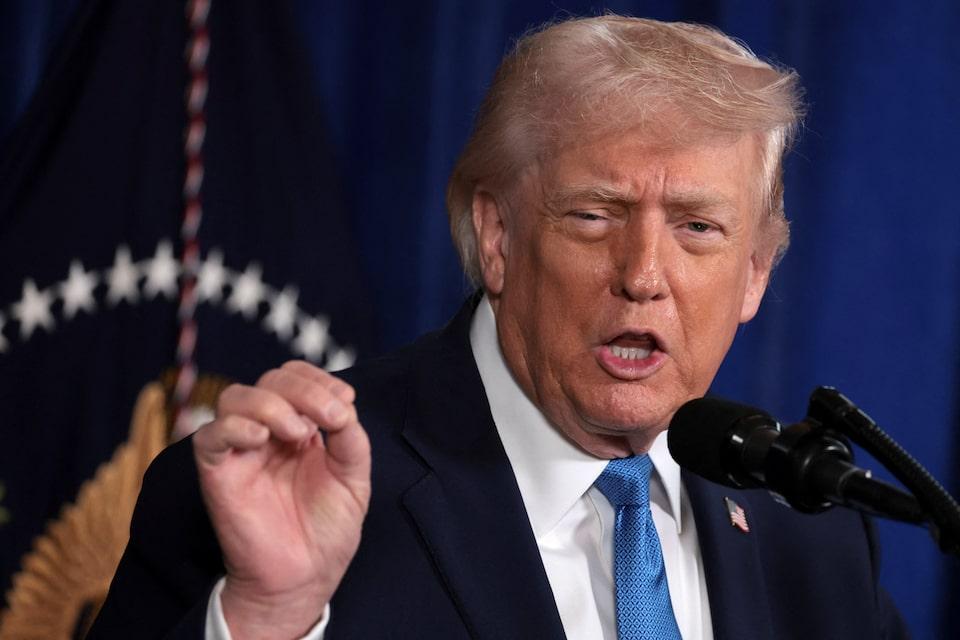
What matters in U.S. and global markets today By Anna Szymanski, Editor-in-Charge, Reuters Open Interest Sign up here. Global investors are trying to get their bearings amid a flood of geopolitical headlines – mostly courtesy of the U.S. president. Wall Street slipped on Wednesday after touching a record high earlier in the session, Asian stocks traded down today and oil stabilized after dropping sharply yesterday on news of U.S. plans to buy sanctioned Venezuelan crude. And in the latest twist in the ‘Donroe Doctrine’ drama, U.S. President Donald Trump called for a more than 50% increase in the U.S. defense budget by 2027 and threatened to block defense contractors from paying dividends or buying back shares unless they ramped up weapons production. We’re only one week into 2026 folks. Hang on for a bumpy ride! I'll get into all of the market-moving news below, but first check out thelatest episode of the Morning Bid daily podcast. Subscribe to hear Reuters journalists discuss the biggest news in markets and finance seven days a week. Today's Market Minute * Samsung Electronics on Thursday projected a three-fold jump in fourth-quarter operating profit from a year earlier to a record high as tight supply and a surge in artificial intelligence-driven demand stoked prices for conventional memory chips * Warner Bros Discovery's board unanimously turned down Paramount Skydance's latest attempt to acquire the studio, saying its revised $108.4 billion hostile bid amounted to a risky leveraged buyout that investors should reject. * Nvidia is requiring full upfront payment from Chinese customers seeking its H200 artificial intelligence chips, hedging it against ongoing uncertainty over Beijing's approval of the shipments, said two people briefed on the matter. * President Donald Trump is tearing up the global energy playbook as the administration seeks to dominate the Western Hemisphere. China may be the ultimate target of this ‘Donroe Doctine’, but U.S. oil companies could become the unintended casualties, argues ROI energy columnist Ron Bousso. * The new year has got off to a roaring start for U.S. equities and investors are anticipating a fourth consecutive year of double-digit returns. But elevated valuations could yet spoil the party, warns ROI markets columnist Jamie McGeever. Trump’s visible hand Trump said on Wednesday , opens new tab that the U.S. military budget should rise to $1.5 trillion in 2027, well above the $901 billion approved by Congress for 2026. Such a move would require congressional approval, and budget experts are sceptical about the feasibility of such a dramatic increase. Shares in European arms makers hit a new record high , opens new tab early on Thursday on the back of the news. U.S. defense stocks are also up , opens new tab but only after being jostled by an executive order , opens new tab released by the White House on Wednesday that called for curbs on defense contractors’ ability to return cash to shareholders: “Effective immediately, they are not permitted in any way, shape, or form to pay dividends or buy back stock, until such time as they are able to produce a superior product, on time and on budget.” During afternoon trading in New York, shares of defense giants Lockheed Martin fell 4.8%, Northrop Grumman slid 5.5%, and General Dynamics dropped 3.6%. Raytheon, a unit of RTX, was singled out by Trump in a Truth Social post, , opens new tab sending the company’s shares down 2%. But all have bounced back in afterhours trading. Oil prices steadied on Thursday after two days of declines. Trump said on Tuesday that the U.S. would sell up to 50 million barrels of crude oil stuck in Venezuela under U.S. sanctions. To enable this, the U.S. is "selectively rolling back sanctions" on Venezuelan oil, White House Press Secretary Karoline Leavitt told reporters on Wednesday. U.S. Energy Secretary Chris Wright , opens new tab also noted yesterday that the revenue from sales of Venezuelan oil would be used to stabilize the country’s economy and eventually repay oil majors Exxon Mobil and ConocoPhillips for losses suffered when their assets were nationalized by former Venezuelan President Hugo Chavez nearly 20 years ago. Over in Asia, shares of Japanese chemical manufacturers dropped on Thursday while those of their Chinese rivals rose after Beijing’s commerce ministry announced it was launching an anti-dumping probe into imports of dichlorosilane , opens new tab, a chemical used in chipmaking, from Japan. This is yet another sign of the strained bilateral ties , opens new tab between the two nations. Away from the geopolitical headlines, investors got some U.S. labor market data yesterday, though it offered little clarity. The JOLTS report showed that U.S. job openings fell to a 14-month low , opens new tab in November while hiring remained sluggish. Employers appear loath to lay off workers , opens new tab, but the quit rate is also low, suggesting workers aren’t optimistic about finding new jobs. ADP's national employment report , opens new tab showed that private employment rose by 41,000 jobs last month after dropping by 29,000 in November, but investors won’t pay this too much heed, as the ADP figures often diverge significantly from the official government data that drives the Federal Reserve’s interest rate decisions. The real labor market news is the release of the December non-farm payrolls report on Friday. It is expected to show a drop in the unemployment rate to 4.5% from 4.6% in November. , opens new tab Would such a move significantly increase the likelihood of more Fed easing? Almost certainly not. For that, we would need to see a more significant move in the unemployment rate toward 5% – something few economists anticipate in the near term. Chart of the day Venezuela's oil production has dropped precipitously since the early 1970s, falling to around 1 million bpd in 2025, or just 1% of global production, down from a peak of 3.7 million bpd in 1970. Production unwound amid the OPEC embargo and the nationalization of the country's oil industry under Petróleos de Venezuela, S.A. (PDVSA). Volumes recovered in the late twentieth century before declining during the presidencies of Hugo Chávez and Nicolas Maduro, reaching a low of around 665,000 bpd in 2021 after the U.S. placed sanctions on PDVSA. Today's events to watch * U.S. initial jobless claims (8:30 AM EDT), trade deficit (8:30 AM EDT), Q3 productivity (8:30 AM EDT), consumer credit (3:00 PM EDT)* U.S. corporate earnings: Acuity Brands, Commercial Metals, Greenbrier Companies, Lindsay Corp, RPM International, TD Synnex Want to receive the Morning Bid in your inbox every weekday morning? Sign up for the newsletter here. You can find ROI on the Reuters website , opens new tab, and you can follow us on LinkedIn , opens new tab and X. , opens new tab Opinions expressed are those of the author. They do not reflect the views of Reuters News, which, under the Trust Principles , opens new tab, is committed to integrity, independence, and freedom from bias. https://www.reuters.com/business/finance/global-markets-view-usa-2026-01-08/
2026-01-08 11:23
Cubans fear worsening blackouts, economic crisis US seizes more oil tankers linked to Venezuela Venezuela supplies about 50% of Cuba's oil deficit Residents voice fear, anger, and defiance as supplies tighten MATANZAS, Cuba, Jan 8 (Reuters) - Cubans braced for a deepening economic crisis after the United States seized two more Venezuela-linked oil tankers on Wednesday, a move that threatens to sever a critical energy lifeline for the Communist-run island just days after U.S. forces captured Venezuelan President Nicolas Maduro. In the port of Matanzas where oil tankers dock, shuttered gas stations and long fuel lines reflected mounting supply shortages. The latest U.S. action is stoking fears that already-frequent, hours-long power cuts will worsen. Sign up here. "Now I think that with this situation, things will get worse, because now they won't let oil come," William Gonzalez, a Matanzas resident, told Reuters. "Before oil came from Venezuela and Russia, now it will only come from Russia...So that's one less source of oil, so the country must get a little worse." In a dramatic escalation of its pressure campaign, the U.S. military on Wednesday seized the Russian-flagged tanker 'Marinera' in the Atlantic near Iceland after a two-week pursuit, U.S. officials said. The seizure, which a senior Russian lawmaker decried as "outright piracy," marks the fourth such interception since Washington imposed a blockade on all sanctioned vessels going in and out of Venezuelan waters in mid-December. Earlier on Wednesday, the U.S. Coast Guard had intercepted another Venezuela-linked tanker, the 'M Sophia,' northeast of South America. For Cuba, the loss of Venezuelan oil is devastating. Between January and November of last year, Venezuela sent an average of 27,000 barrels per day (bpd) to the island, covering roughly 50% of Cuba's oil deficit, according to shipping data and documents from Venezuelan state oil company PDVSA. "The repercussions are not going to be very good. Venezuela was one of the countries that helped us the most with energy and fuel," said Mario Valverde, a business owner in Havana. While Mexico has become an "important supplier," President Claudia Sheinbaum said on Wednesday that Mexico is not sending more oil to Cuba than it has historically. The aggressive U.S. posture has been met with a mix of anger and grim determination by some Cubans. "We are very dissatisfied with (U.S. President Donald) Trump's attitude toward Maduro, because that is forcing a country to submit by force," said resident Manuel Rodriguez. "If there are more blackouts, we will have to endure the blackouts as Cubans and resist until the end." https://www.reuters.com/world/americas/cubans-brace-more-hardship-us-pressure-venezuela-chokes-off-oil-2026-01-08/

2026-01-08 11:15
OSLO, Jan 8 (Reuters) - Equinor (EQNR.OL) , opens new tab said on Thursday it had signed framework agreements worth 100 billion Norwegian crowns ($9.93 billion) with a group of suppliers for maintenance and modifications of its offshore and onshore installations. The new deals for a five-year period, with options to extend by a further three- and two-year periods, were signed with Aibel, Wood Group, IKM Group, Head Energy and Rosenberg Worley, Moreld Apply and Aker Solutions (AKSOA.OL) , opens new tab. Sign up here. They replace deals signed in 2016 with Aibel, Apply, Wood Group, Aker Solutions and Reinertsen that expire in March. Aker Solutions acquired Reinertsen's offshore business in 2017. CORE BUSINESS FOR SUPPLIERS Aker Solutions said in a separate statement on Wednesday it would book its part of the five-year contracts, excluding options, as a major order intake in the first quarter of 2026. It defines a major contract as being between 8 billion and 12 billion crowns. Maintenance and modification contracts are widely seen as the core business of subcontractors to Norway's oil industry, amid lower demand for new field developments as large projects are wrapping up and few major oil and gas discoveries remain. Privately-owned Aibel estimated the value of its five-year contracts to be around 20 billion crowns. Maintenance and modifications make up about 30-40% of its business in Norway. "A lot of activity on the Norwegian continental shelf will revolve around existing infrastructure, upgrades, maintenance, tying in subsea fields. That's what these contracts are about today," Aibel CEO Mads Andersen told Reuters. Aker Solutions CEO Kjetil Digre said it still expects oil companies to approve some sizeable new developments in the future, including Equinor's Wisting discovery in the Barents Sea, which was put on hold due to soaring costs in 2022. On Wednesday, Aker Solutions announced layoffs at one of its Norwegian shipyards, which specializes in building steal constructions for offshore fields. ($1 = 10.0723 Norwegian crowns) https://www.reuters.com/business/energy/norways-equinor-awards-10-billion-supplier-contracts-2026-01-08/