2025-02-19 07:23
Feb 19 (Reuters) - Zambia has suspended a 15% export tax on precious stones and metals in a bid to enhance competitiveness on the global market and draw investment, the finance ministry said on Wednesday. The southern African country, the world's second largest emerald producer after Colombia, reintroduced the tax in January 2025 after it was suspended in 2019. "Zambian precious stones and metals will now be priced more competitively on the global market, thereby attracting greater interest from international buyers and leading to higher sales volumes," the ministry said in a statement. In January, Gemfields (GEMGE.L) , opens new tab, which operates the Kagem emerald mine, one of the biggest in the world, warned that the export tax would hurt Zambia's gemstone sector and asked the government to remove it. On Wednesday, Gemfields CEO Sean Gilbertson said the Zambian government's "decisive action" on the export tax would set the industry "back on track". Kagem, which accounts for about 25% supply of global rough emeralds, produced about 10 million carats of emeralds and about 30 million carats of beryl in 2024. (This story has been corrected to change the date to Wednesday from Monday in paragraph 5) Sign up here. https://www.reuters.com/markets/commodities/zambia-suspends-export-tax-precious-stones-metals-2025-02-19/

2025-02-19 07:17
UK January CPI 3.0% vs Reuters poll 2.8% Bank of England had also expected 2.8% rate Service price inflation rises less than BoE forecast Sterling little changed after data Analysts say figures could slow BoE rate cuts LONDON, Feb 19 (Reuters) - British inflation sped up by more than expected to hit a 10-month high of 3.0% in January and is likely to rise further soon, testing the Bank of England's confidence that price pressures will ease over the longer term. The BoE and economists polled by Reuters had expected inflation to rise by less, to 2.8%, after December's reading of 2.5%. The Office for National Statistics said the increase in January was driven largely by a smaller-than-usual drop in air fares that month - a volatile component that had pushed inflation down in December - and a rise in automotive fuel prices. Food prices also rose, while another factor was the increase in private school fees after the decision by the government of Prime Minister Keir Starmer to charge value added tax on them. Overall, services prices - which feature prominently in the debate at the BoE about how quickly to cut interest rates - rose sharply to 5.0% from 4.4%, but by less than the 5.2% rate expected by economists or the central bank. Sterling momentarily strengthened against the dollar after the figures were published before quickly settling back to its pre-release level. Zara Nokes, global market analyst at J.P. Morgan Asset Management, said the higher-than-expected headline inflation rate, combined with strong wage growth figures announced on Tuesday, would cause "quite the headache" for the BoE. "With the hike in employer taxes and the minimum wage increase still coming down the tracks, it is hard to see how inflation dynamics will improve meaningfully in the near term," Nokes said. Finance minister Rachel Reeves' decision to increase employers' social security contributions comes into effect on April 1 when Britain's minimum wage is also due to rise by almost 7%, raising questions about how much the increased costs for businesses will feed into prices. Ruth Gregory, an economist with Capital Economics, said she still thought the BoE would continue to cut borrowing costs gradually but "the risk is that the rise in inflation proves more persistent and rates are cut more slowly than we expect, or not as far". The BoE forecasts that consumer price inflation will peak at 3.7% in the third quarter of 2025, driven mostly by higher energy costs and regulated tariffs for items such as domestic water supply. But Governor Andrew Bailey and his colleagues say an expected slowdown in the jobs market is likely to keep a lid on higher wage demands this year limiting the risk of a build-up of inflation pressure. Core inflation, which excludes energy, food, alcohol and tobacco prices, rose to 3.7% from 3.2% in January, in line with the Reuters poll. Sign up here. https://www.reuters.com/world/uk/uk-ons-says-inflation-was-30-january-2025-02-19/

2025-02-19 07:04
COPENHAGEN, Feb 19 (Reuters) - Denmark's Arla Foods, maker of Lurpak butter and Castello cheese, reported a slight rise in 2024 revenue on Wednesday and predicted a bigger increase this year driven by higher prices. The cooperative, which is one of the world's largest dairy firms, said it had continued to slash costs and that it would raise its dividend payment for 2024 to a record high. "We see a high demand for dairy and our products in particular across the globe," Arla CEO Peder Tuborgh said in a statement. The company, owned by 7,600 dairy farmers in seven countries across northern Europe, posted 2024 revenue of 13.8 billion euros ($14.43 billion), up from 13.7 billion in 2023. It forecast revenue would rise to between 14.5 billion and 15.3 billion euros in 2025, with growth "driven by the high dairy price level". It predicted consumer purchasing power would remain stable in 2025 following improvements in 2024 that were driven by easing inflation and rising wages compared to the previous year. Arla's profit, which last year stood at 401 million euros, or 2.9% of its revenue, was expected to remain in the group's target range of 2.8% to 3.2% in 2025, it said. Arla expects global dairy supply, which fell short of demand in 2024, to adapt to the elevated price levels, potentially boosting output in 2025, it said. However, it said geopolitical tensions and uncertainty in the global market were of concern, with the war in Ukraine and developments in the Middle East highlighting vulnerabilities in international supply chains. Arla, a competitor of companies like Danone (DANO.PA) , opens new tab and Nestle (NESN.S) , opens new tab in the dairy industry, is owned by farmers in Denmark, Sweden, Britain, Germany, Belgium, Luxembourg and the Netherlands. ($1 = 0.9565 euros) Sign up here. https://www.reuters.com/business/retail-consumer/dairy-group-arla-sees-higher-revenue-2025-prices-rise-2025-02-19/
2025-02-19 06:54
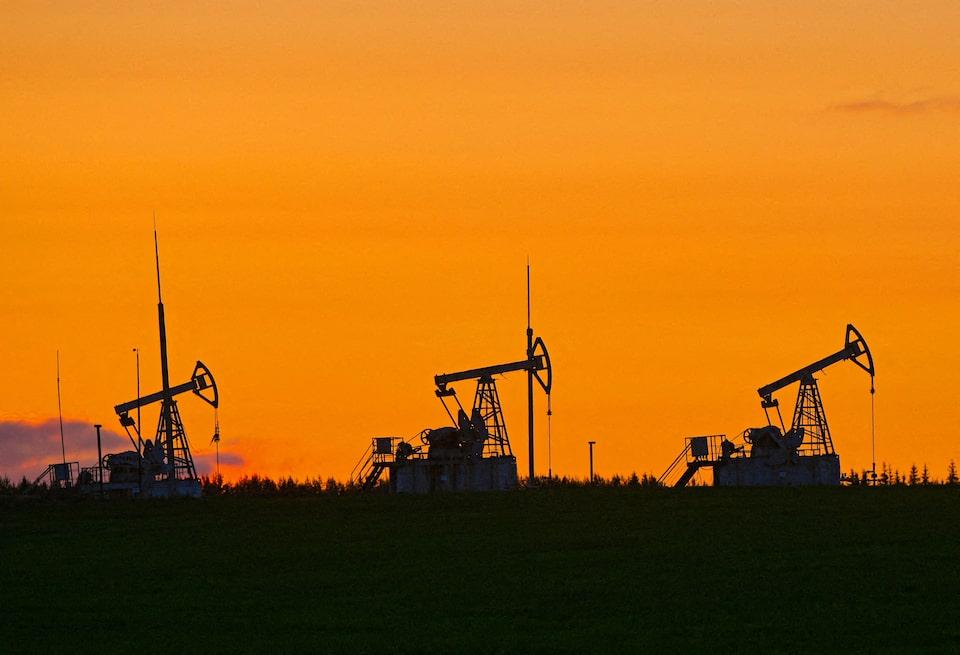
Feb 19 (Reuters) - A potential Ukraine ceasefire and the associated easing in sanctions on Russia are unlikely to substantially increase Russia's oil flows, Goldman Sachs said on Wednesday. U.S. President Donald Trump's administration said on Tuesday it had agreed to hold more talks with Russia on ending the war in Ukraine. "We believe that Russia crude oil production is constrained by its OPEC+ 9.0 million barrels per day (mbpd) production target rather than current sanctions, which are affecting the destination but not the volume of oil exports," Goldman Sachs said. OPEC+, a grouping of the Organization of the Petroleum Exporting Countries along with Russia and other allies, pumps about half the world's oil. The bank assumes that OPEC+ is likely to postpone its planned gradual ramp-up in oil production to July this year from April, on increased compliance with OPEC+ targets by Russia and several other OPEC+ producers, as well as continued uncertainty surrounding U.S. policy. OPEC+ pushed the plan to begin raising output to April, extending its latest layer of cuts through the first quarter of 2025 in December due to weak demand and rising supply outside the group. On Monday, Russia's RIA state news agency reported Russian Deputy Prime Minister Alexander Novak saying that OPEC+ producers were not considering further delays in the monthly oil supply increases. Russia, as one of the world's top oil suppliers, holds substantial sway over global oil markets and prices. Goldman Sachs continues to expect potential recoveries in positioning and valuation to nudge Brent up to $79 per barrel later this month. Brent crude prices were trading at about $76 a barrel as of 0537 GMT on Wednesday. Sign up here. https://www.reuters.com/business/energy/goldman-sachs-says-it-does-not-see-ukraine-ceasefire-boosting-russia-output-2025-02-19/
2025-02-19 06:32
DUBAI, Feb 19 (Reuters) - Saudi Arabia's ACWA Power (2082.SE) , opens new tab plans to buy stakes in assets in Kuwait and Bahrain worth $693 million from French utility developer Engie (ENGIE.PA) , opens new tab, the companies said in a joint statement on Wednesday. The share purchase agreement covers operating capacities of 4.61 GW of gas-fired power generation and 1.11 million cubic meters per day (m3/day) of water desalination facilities, they said. It also includes the related operations and maintenance companies in Kuwait and Bahrain, it added. "We consolidate our presence in Bahrain where we are already a reliable supplier of power and water, and we enter Kuwait, where we recently submitted a bid for a large power and desalination plant," ACWA Power CEO Marco Arcelli said. The transaction comprises of an 18% stake in the Az Zour North in Kuwait. Additionally, ACWA is also acquiring 45% stakes in both the Al Ezzel and Al Dur projects, as well as a 30% stake in the Al Hidd facility, all situated in Bahrain. ACWA Power will also acquire a portfolio of companies responsible for the operation and maintenance of the four assets, it said. Completion of the transaction is subject to customary regulatory and other stakeholder approvals. Sign up here. https://www.reuters.com/business/energy/saudi-arabias-acwa-power-buy-engies-share-kuwait-bahrain-assets-2025-02-19/
2025-02-19 06:22
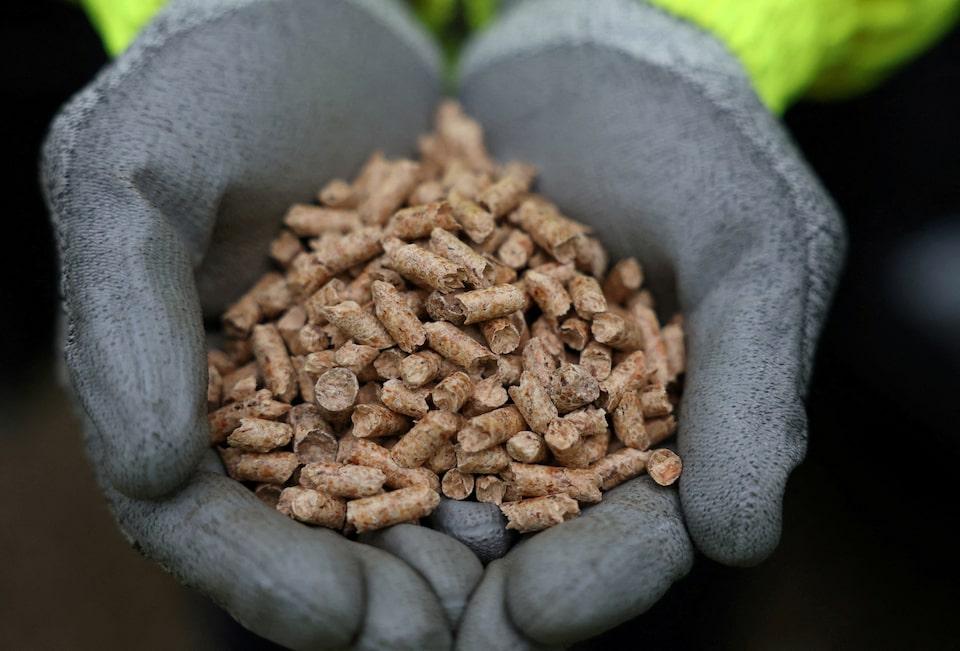
LITTLETON, Colorado, Feb 19 (Reuters) - The fuzzy characterisation of bioenergy as a clean power source has fuelled its expanded deployment in global power systems in recent years, often as a replacement for coal in countries committed to cutting fossil fuel use in power production. Bioenergy plants burn organic matter known as biomass to generate power, and are often lumped in with solar, wind and hydro plants as a form of renewable energy. However, due to the rapid rise in the use of wood pellets as the main source of biomass in large power stations, the continued growth in bioenergy capacity poses a fresh climate threat as it potentially promotes further deforestation. What's more, the United Kingdom and Japan have the largest bioenergy capacity pipelines under construction outside of China, which means that fully developed nations will play a key role in driving biomass use to new highs in the coming years. GROWING PIPELINE The UK and Japan have only a combined 10% share of currently operating bioenergy capacity, but account for nearly 30% of the bioenergy capacity under construction, according to Global Energy Monitor (GEM). Japan's 1,200 megawatts (MW) and the UK's 875 MW of bioenergy capacity under construction fall short of the 3,400 MW at the same development stage in China. However, those development totals will nonetheless lead to sharp rises in total bioenergy capacity in both Japan and the UK once construction is finished. Japan's total bioenergy capacity is set to jump by 36% while the UK's capacity will grow by 20% once the new projects come online, GEM data shows. Those capacity expansions are the largest among all major current bioenergy producers, and will serve to expand the clout of bioenergy plants within national power generation systems. EXPANDING SHARE Bioenergy power plants have been steadily increasing their share of electricity production in both Japan and the UK over the past decade. In 2024, Japan's bioenergy plants accounted for a 6% share of total electricity output, while in the UK that share was 8%, according to data from energy think tank Ember. In both countries, 2024 was the highest bioenergy electricity generation share on record. In absolute generation terms, Japan's bioenergy plants produced nearly 46 terawatt hours (TWh) of electricity in January through October of 2024, which is up 7% from the same months in 2023 and a record. In the UK, bioenergy-fired electricity output was 18.8 TWh during 2024, which was the second highest total since 2021's record 19 TWh. More significantly, the UK total was 41% greater than the bioenergy generation tally of 2023, due to a sustained climb in production late last year as bioenergy plants helped offset the halt in generation from the UK's last remaining coal plant. EMISSIONS IMPACT The growing volumes of bioenergy power production has yielded a commensurate swell in plant emissions. In Japan, bioenergy plants discharged 10 million metric tons of carbon dioxide during January to October, which was up 7% from the same months in 2023 and the highest on record. In the UK, bioenergy plants discharged around 4.3 million tons of CO2, which was just shy of the 2021 record of 4.4 million tons. Those totals pale in comparison to the discharge from fossil fuel plants over those same period: Japan's fossil fuel-fired total was 330 million tons while the UK's was 41 million tons. However, while fossil fuel use in both countries has likely already peaked, bioenergy pollution looks set to keep climbing, especially once new capacity projects reach completion. What's more, significant deforestation in key woodland areas will likely take place to produce the biomass needed for the bioenergy plants in the UK, Japan and elsewhere, which will place an additional toll on regional and global climate systems. Indonesia's ancient rainforests are the primary source of Japan's wood pellet imports, while the forests of Canada and the Unites States are the main suppliers wood pellets and chips in the UK. That means that the impact trail of bioenergy plants in Japan and the UK will extend well beyond their international borders, and may drive additional climate change through the acceleration of deforestation in other parts of the planet. The opinions expressed here are those of the author, a market analyst for Reuters. Sign up here. https://www.reuters.com/markets/commodities/uk-japan-bioenergy-capacity-plans-pose-fresh-climate-threat-maguire-2025-02-19/