2025-02-18 16:55
Daly says inflation's progress is bumpy, need to see more progess Economic impact of Trump policies depends on as-yet unknown details, Daly says Uncertainty calls for careful policymaking, Daly says Feb 18 (Reuters) - San Francisco Federal Reserve Bank President Mary Daly on Tuesday said that while there is no reason to be discouraged about bumpy and sometimes imperceptible progress toward 2% inflation, the U.S. central bank should keep short-term borrowing costs where they are until the progress is more visible. "Policy needs to remain restrictive until ... I see that we are really continuing to make progress on inflation," she told a community banking conference hosted by the American Bankers Association in Phoenix, Arizona. With the economy and labor market solid, "we want to be, in my judgment, careful ... before we make the next adjustment" to ensure there is enough downward pressure on inflation, she said. The U.S. central bank left its policy rate in the 4.25%-4.50% range at its meeting last month. It is expected to keep it there for another couple of meetings as policymakers watch the economic data and begin to assess how the Trump administration's tariff, immigration, tax and other policies may affect inflation and unemployment. Those policies, Daly said, could boost or slow economic growth, labor supply and inflation, depending on the details and their "scope, magnitude, and timing." So far, she said, not enough is known for the Fed to react. "We have to take our time," she said, and monetary policy is in a "very good place" to react powerfully as needed. Inflation as measured by 12-month change in the personal consumption expenditures price index, which the Fed targets at 2%, ended last year at 2.6%, with some analysts estimating it may have fallen to 2.4% last month. The unemployment rate was 4% in January, below what most Fed officials feel is sustainable in the longer run. Daly's view that rates ought to stay where they are appeared to be in sync with that of one of the Fed's most hawkish policymakers, Fed Governor Michelle Bowman, who told the same group on Monday that she wants "to gain greater confidence" that inflation will continue to drop before cutting interest rates any further. The deluge of executive orders and policy pronouncements from the Trump administration is creating a lot of uncertainty, Daly said. "Ultimately we need more information to find out what we're really going to do," she said. "And that's what I'll be doing: keeping a watchful eye and making sure that I'm careful enough ... in making that assessment (so) that we don't urgently get to an answer that we only regret." Sign up here. https://www.reuters.com/markets/us/feds-daly-policy-must-stay-restrictive-until-there-is-more-inflation-progress-2025-02-18/

2025-02-18 16:04
MILAN, Feb 18 (Reuters) - Cryptocurrency firm Tether is open to all future options with regards to increasing its investment in Juventus (JUVE.MI) , opens new tab, the Italian Serie A soccer club where it has built a 5% stake, and has the financial capacity to do so, its CEO Paolo Ardoino said on Tuesday. Tether, the world's fourth largest cryptocurrency, on Friday announced it held a minority stake in Italy's most popular soccer club, which is controlled by the Agnelli family through their investment company Exor (EXOR.AS) , opens new tab and is also listed on the stock exchange in Milan. Asked whether Tether was interested in increasing its stake and potentially buying the club, Ardoino said "you can buy only what someone wants to sell". "We're fine to remain as minority investors as well as engaging in different talks," he told Reuters in an interview. Ardoino, an Italian national and Juventus supporter, said Tether notified Italian market regulator Consob it had crossed the regulatory threshold of 5% of Juventus voting rights. He said Tether has built its stake over the past two months through share purchases on the open market. "We don't want to be hostile, we don't want to be seen as aggressive, we just want to help (Juventus) because we see a huge and unexpressed potential," he said. "Our main goal is to cooperate with the (Juventus) managers and owner." With a market capitalisation currently around one billion euros ($1.04 billion), a 5% stake in Turin-based Juventus is worth around 50 million euros. Tether, which does not release audited financial reports, said in January its 2024 net profits exceeded $13 billion. Ardoino said that on the back of that profit, "we have got a lot of opportunities." Exor holds a 64% stake in Juventus. It has always denied any plans to sell the club. Ardoino said he was willing to meet with Juventus owners to discuss potential development of relations with the club. Cooperation could include exploiting the firm's payment platform and 400 million-strong user base globally, especially in emerging countries, to help Juventus enhance its brand. "Soccer clubs need to take a more forward-looking approach to how to use these new technologies ... to communicate and interact with their fan base, in a new way," he said. Tether has emerged as a dominant force in the booming market for stablecoins, designed to maintain a constant value by being pegged to traditional currencies and offer users a way to move money between cryptocurrencies without exposure to price swings. Juventus, which has been controlled by the Agnelli family for a century, has raised around 900 million euros in fresh capital from its shareholders over the past six years. It reported a loss of nearly 200 million euros in the financial year ended on June 30, 2024. There are more than $140 billion Tether tokens in circulation acting as a proxy for the U.S. dollar, Tether says on its website. Tether says these tokens are fully backed by Tether's reserves. Regulators have long-standing concerns that growing stablecoin reserves expose the broader financial system to bigger risks, because they act as a bridge between the crypto universe and mainstream financial markets. U.S. regulators also have warned banks that stablecoin reserves could be subject to rapid outflows, for example if holders rushed to exchange such tokens back into traditional currency. ($1 = 0.9570 euros) Sign up here. https://www.reuters.com/markets/deals/crypto-firm-tether-open-deeper-involvement-with-juventus-2025-02-18/

2025-02-18 15:13
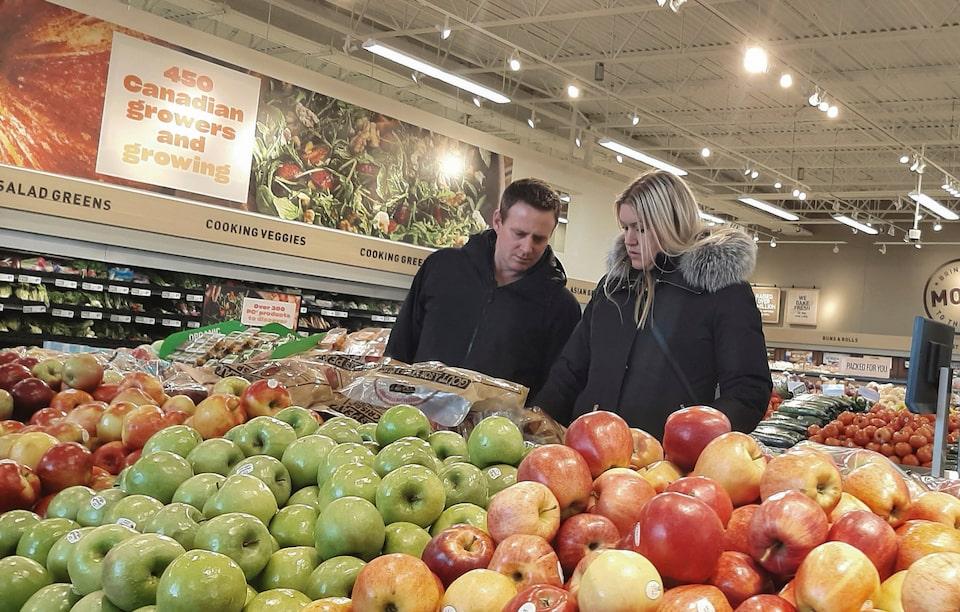
Prices fall due to sales tax holiday Prices for gasoline, natural gas, passenger vehicles rise Consumer price index was up 0.1% on a monthly basis Market bets for a hold in interest rates move up OTTAWA, Feb 18 (Reuters) - Canada's annual inflation rate inched up to 1.9% in January from the previous month as higher gasoline and natural gas costs reduced the impact of a sales tax reprieve on broader consumer prices, official data showed on Tuesday. The core measures of the consumer price index, which have not declined as fast as the inflation rate in the past few months, edged up too. January's CPI reading racked up a six-month record of inflation coming in at or below the 2% mark - the mid-point of the Bank of Canada's 1%-3% target range - but underlying price pressures reduced currency swap market bets for an interest rate cut next month. They now see an almost 63% chance of no rate cut in March, compared with 56% before January's inflation data was released. . If U.S. President Donald Trump decides to impose tariffs on Canadian imports from March, market expectations for a rate cut could change considerably. "Stronger inflation amid retailers' price discounts and budding economic activity in the fourth quarter will likely give the Bank of Canada some confidence to hold interest rates steady at its March meeting," Andrew DiCapua, Principal Economist, Canadian Chamber of Commerce, said. "This pause would let policymakers gauge whether current measures are doing enough to support growth in what remains a very uncertain environment," he added. Tuesday's annual inflation reading matched the forecast of analysts polled by Reuters. In December, inflation stood at 1.8%. On a monthly basis, prices were up 0.1% in January, Statistics Canada said. The government announced a sales tax holiday on a range of products such as food, beverages, restaurant meals and children's clothing from mid-December to mid-February, helping to ease inflationary pressures, it said. Prices for the food component of the CPI basket fell 0.6% on a year-over-year basis in January, the first yearly decrease since May 2017, driven by a record 5.1% decline in prices for food purchased from restaurants, the data showed. Without the tax relief, consumer prices would have risen at a rate of 2.7%, Statscan said. In December, excluding the tax break, prices were up 2.3%. The Canadian dollar weakened on Tuesday and was trading down 0.13% at 1.4199 to the U.S. dollar, or 70.43 U.S. cents. Yields on the two-year government bond were up 6.8 basis points to 2.797%. Economists have said the sales tax break had distorted overall inflation numbers, and that core inflation was a more accurate gauge of consumer price trends. The BoC has two preferred measures of core inflation - CPI-median and CPI-trim. CPI-median - or the centermost component of the CPI basket when arranged in an order of increasing prices - rose to 2.7% from an upwardly revised 2.6% in December. CPI-trim - which excludes the most extreme price changes - was up to 2.7% from 2.5% in the prior month. The upward pressure on inflation in January was led by an 8.6% jump in prices paid by Canadians at fuel pumps, Statscan said. That was further boosted by a 4.8% rise in natural gas prices and the first year-over-year rise in eight months in passenger vehicle costs. With prices staying at or below the BoC's 2% target, the central bank has been able to implement the most aggressive rate easing among the G7 nations. Last month, it reduced the key policy rate to 3%. Sign up here. https://www.reuters.com/markets/canadas-annual-inflation-january-edges-up-19-core-measures-also-up-2025-02-18/
2025-02-18 12:32
EU law will ban imports linked to forest destruction US paper industry wants US declared deforestation-free Trump commerce pick also calls for less stringent requirements LONDON/BRUSSELS, Feb 18 (Reuters) - The U.S. paper and pulp industry is lobbying President Donald Trump's administration to ask the EU to declare the United States deforestation-free, a step that could make it easier for exporters to meet the bloc's new environmental rules. From December, the European Union's anti-deforestation policy will ban imports of commodities linked to forest destruction. Brussels already delayed the policy's launch by a year following complaints from trade partners including Brazil, Indonesia and the Biden administration in the United States. "A delay does not solve our concerns with the regulation's complex requirements and significant technical barriers," Heidi Brock, CEO of the American Forest and Paper Association (AF&PA), told Reuters, saying the EU law would impose "costly and unnecessary obligations" on U.S. companies. "We are urging President Trump and his trade advisors to include this on the list of items to negotiate with the European Union to ensure the U.S. is recognised as a country that wisely manages its forest resources and must be recognised as not contributing to deforestation," Brock said in emailed comments. That goes beyond a call by Trump's nominee to run the Commerce Department, Howard Lutnick, for the U.S. to be classed as "low-risk" - the EU policy's least-stringent level. That would still require U.S. companies to conduct due diligence and face inspections. The Office of the U.S. Trade Representative, U.S. Commerce Department and European Commission did not respond to requests for comment. A spokesperson for the Trump transition team who has been handling media inquiries for Lutnick did not respond to a request for comment. The EU policy will categorise countries as high, standard or low risk - with imports from "low-risk" countries facing lighter compliance requirements. However, the law does not contain a category of countries deemed to be deforestation-free - despite EU lawmakers attempting unsuccessfully to add a new "no risk" category of countries which would face even lighter rules. Any changes to the EU law would require a legal proposal from the Commission, and approval from EU lawmakers and member states. SUPPLY CHAIN REQUIREMENTS Europe's world-first deforestation law will require companies and traders placing cattle, cocoa, coffee, palm oil, rubber, soy and wood products onto the EU market to provide proof their supply chain does not contribute to deforestation, or face fines and potentially have their products turned away. The aim is to ensure that European consumers are not fuelling deforestation, from the Amazon to Southeast Asia. At least 120 million metric tons of CO2 emissions were caused by deforestation associated with EU commodity imports in 2021-2022, according to campaign group Global Witness. U.S. forest product exports to the EU are valued at more than $3.5 billion, and the U.S. is Europe's biggest supplier of speciality pulp used to make diapers and menstrual products, according to AF&PA. The AF&PA said U.S. pulp and paper mills cannot comply with the EU policy's traceability requirements. "The leftover materials from sawmills and forest residues our industry uses are regularly blended multiple times throughout the production process," Brock said. "This makes tracing each individual wood chip from the original forest plot of land to a final product effectively impossible." Sign up here. https://www.reuters.com/business/us-paper-industry-asks-trump-seek-lighter-eu-deforestation-rules-2025-02-18/

2025-02-18 12:14
Feb 18 (Reuters) - Mexico's economy likely grew 1.8% in January compared with the same month a year earlier, a preliminary estimate from national statistics agency INEGI showed on Tuesday. Compared with the previous month, the economy likely grew by 0.1%, the agency said. Sign up here. https://www.reuters.com/world/americas/mexicos-economy-up-18-yy-january-preliminary-estimate-shows-2025-02-18/

2025-02-18 12:13
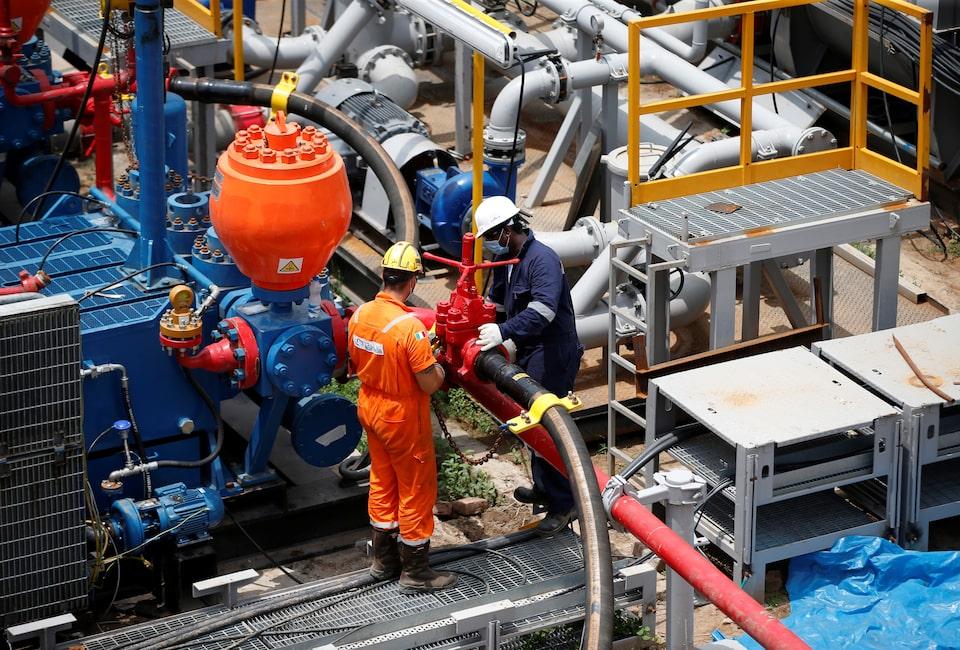
NEW DELHI, Feb 18 (Reuters) - India's oil imports from the United States rose sharply in January from December, turning Washington as the fifth largest oil supplier to New Delhi, data obtained from trade sources show. India shipped in 218,400 barrels per day of oil from the U.S. compared to 70,600 bpd in December, the data showed. Refiners in India, the world's third biggest oil importer and consumer, are bracing for higher imports of energy from Washington, as New Delhi looks to boost its energy purchases from the U.S. to $25 billion from $15 billion last year. India's imports from its top oil supplier Russia rose 4.3% last month to 1.58 million barrels per day, per data. The purchase of Russian oil by India is likely to fall in the coming months as refiners would buy Russian oil only if it is supplied by companies and ships that have not been sanctioned by the United States. Widened sanctions on Moscow by Western countries including the United States have roiled global oil trade and forced buyers of discounted Russian crude to find new ways to maintain their purchases. Imports of middle eastern oil rose by 6.5% in January to 2.7 million bpd, with Iraq continuing to be the second largest oil supplier to India, followed by Saudi Arabia and the United Arab Emirates, according to the data. Last month, Indian refiners turned to non-Russian oil after the government warned them about the U.S. sanctions weeks before they were announced. The share of middle eastern oil in India's about 5.1 million bpd crude imports in January rose to a 27-month high of about 53%, while that of Russia remained almost stagnant from December, the data showed. In the first 10 months of the current fiscal year from April 1, 2024, India's oil imports rose 4.5% to average at 4.8 million barrels per day, per data. Sign up here. https://www.reuters.com/markets/commodities/us-emerges-5th-top-oil-seller-india-january-russia-no1-2025-02-18/