2026-01-08 07:22
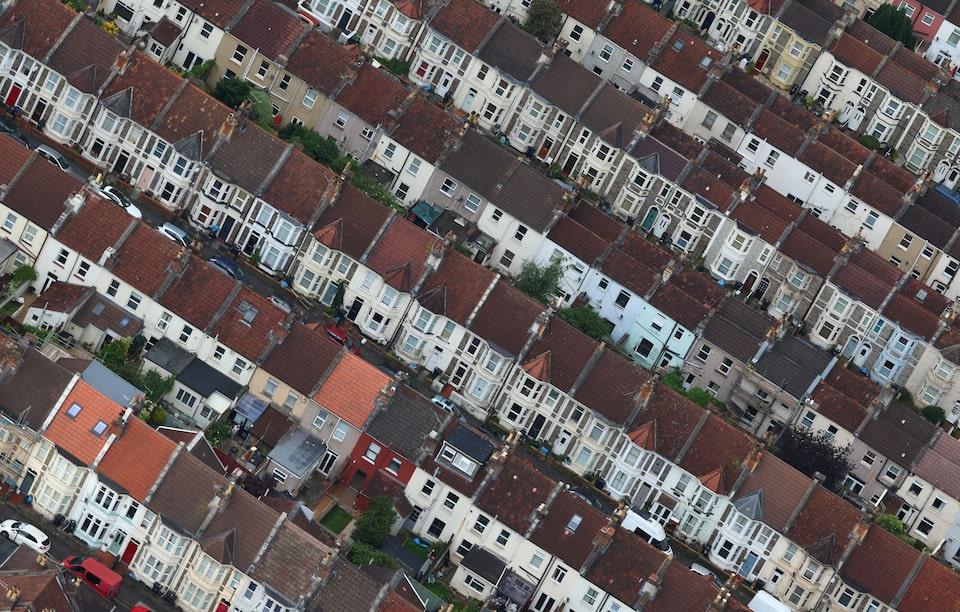
LONDON, Jan 8 (Reuters) - British house prices rose by a slower-than-expected 0.3% in the 12 months to December, the weakest annual increase since March 2024, as economic and tax uncertainty overshadowed the market at the end of the year, mortgage lender Halifax said on Thursday. Prices unexpectedly fell in month-on-month terms, dropping by 0.6% in December after falling 0.1% in November. Economists polled by Reuters had forecast prices would be 1.1% higher than a year earlier and rise 0.2% on the month. Sign up here. "While December's monthly fall in prices was likely related to uncertainty in the latter part of the year, this should now be starting to unwind," Amanda Bryden, head of mortgages at Halifax, said. Bryden said a combination of lower mortgage rates and modest growth in property prices improved affordability for first-time buyers, with the house price to income ratio at its lowest in over a decade in December. But Matt Swannell, chief economic advisor to the EY Item Club, a forecasting group, said he did not expect much improvement in affordability as the loosening in the labour market would likely slow wage growth, saying there was also limited scope for big falls in mortgage rates in 2026. "It looks very likely interest rates will be cut less this year than they were last year," Swannell said. The Bank of England cut interest rates to 3.75% from 4% in December, and investors are pricing in one or two more quarter-point cuts this year. Thursday's data chimed with rival mortgage lender Nationwide's measure of house prices, which fell by 0.4% in December alone while its estimate of annual house price growth was the weakest since April 2024. Halifax expected annual house price growth of 1-3% in 2026. A Reuters poll of property market experts conducted in December showed British home prices were expected to rise by 2.8% in 2026, speeding up from a full-year rise of 2% in 2025. House prices in London dropped by 1.3% from 12 months earlier while the strongest growth was reported in Northern Ireland where prices rose by 7.5%, Halifax said. https://www.reuters.com/world/uk/uk-house-prices-drop-unexpectedly-december-halifax-says-2026-01-08/
2026-01-08 06:47
Farmers protest against Mercosur deal, fearing cheap imports They also protested against local regulations, cattle culls Protests add pressure on President Macron EU vote on Mercosur deal expected on Friday France to vote against Mercosur deal, Macron says PARIS, Jan 8 (Reuters) - France will vote against a sweeping trade deal that the European Union is due to sign with South American nations, French President Emmanuel Macron said on Thursday, as farmers blockaded roads into Paris and landmarks like the Arc de Triomphe to protest against the pact. Farmers from the right-wing Coordination Rurale union called for the protests in Paris amid fears the planned free trade agreement with the Mercosur bloc will flood the EU with cheap food imports. Sign up here. Macron said on social media that France would vote against signing the agreement on Friday, despite having secured "major commitments" from the European Commission. "The signing of the agreement is not the end of the story. I will continue to fight for the full implementation of the commitments obtained from the European Commission and to protect our farmers," he said on X. Ireland will also vote against the agreement, its deputy prime minister Simon Harris said earlier. But as the European Commission seems to have secured the support of Italy, the agreement is likely to be adopted during Friday's vote. The trade deal, backed by countries such as Germany and Spain, is a political hot potato for the French government, with municipal elections in March and the far right polling strongly ahead of elections to replace Macron in 2027. French Farm Minister Annie Genevard repeated on Thursday that, even if EU members backed the accord, France would continue to fight against it in the European Parliament, whose approval will also be required for the agreement to enter into force. This week the European Commission proposed making 45 billion euros ($52.42 billion) of EU funding available earlier to farmers in the bloc's next seven-year budget and agreed to cut import duties on some fertilizers in a bid to win over countries wavering in their support of Mercosur. FARMERS OVERRAN POLICE CHECKPOINTS TO ENTER THE CITY On top of Mercosur, farmers also protested against high costs and excessive local regulation and demanded an end to a government policy of culling herds of cows in response to a highly contagious cattle disease, which they consider excessive. "We are between resentment and despair. We have a feeling of abandonment, with Mercosur being an example," Stephane Pelletier, a senior member of the Coordination Rurale union, told Reuters beneath the Eiffel Tower. The farmers overran police checkpoints to enter the city, driving along the Champs Elysees avenue and blocking the road around the Arc de Triomphe before dawn, before gathering in front of the National Assembly. National Assembly President Yael Braun-Pivet was booed and jostled when she stepped outside the assembly's gates to talk with the Coordination Rurale protesters. Dozens of tractors obstructed highways leading into the capital ahead of the morning rush hour, including the A13 leading into Paris from the western suburbs and Normandy, causing 150 km of traffic jams, the transport minister said. Farmers from the FNSEA and young farmers unions joined them later at the Eiffel Tower in a calm demonstration. "We're going to import products from the rest of the world that don't meet our standards – that's not possible, that's unacceptable. So we're staying mobilised, we're carrying on,” Arnaud Rousseau, president of the FNSEA farm union told reporters, referring to the Mercosur deal. Interior Minister Laurent Nunez said more protest actions were planned across the country by farmers on Friday, adding he hoped there would be, as was the case on Thursday, no violence or major damage. He also said the tractors had started leaving Paris. ($1 = 0.8584 euros) https://www.reuters.com/world/protesting-french-farmers-bring-tractors-paris-2026-01-08/

2026-01-08 06:30
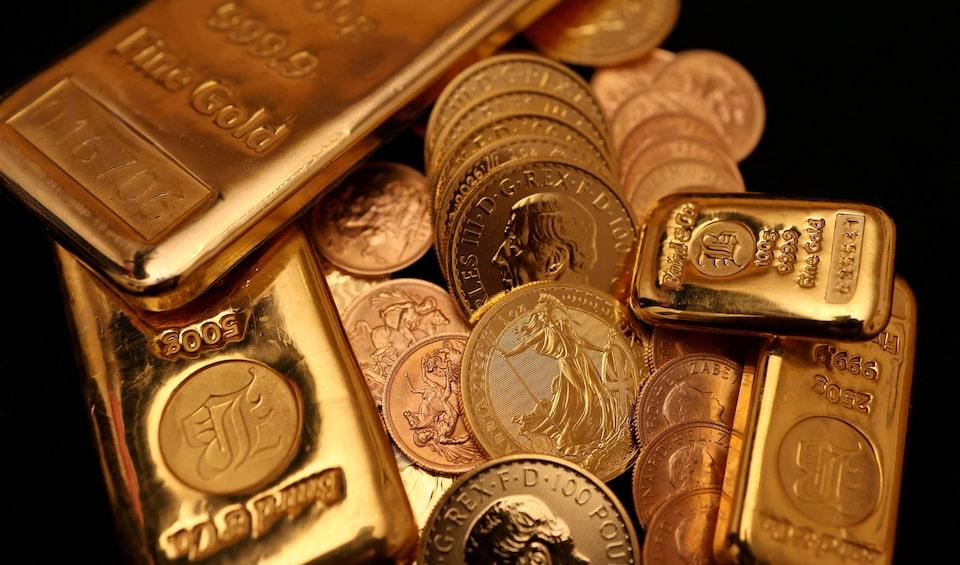
Annual Commodity Index rebalancing begins this week U.S. job openings dropped to 14-month low in November HSBC sees gold at $5,000/oz in H1; silver at $58–$88 in 2026 Jan 8 (Reuters) - Gold prices fell on Thursday as investors braced for futures selling tied to a commodity index reshuffle, with a stronger U.S. dollar adding pressure by making the metal costlier for overseas buyers. Spot gold fell 0.7% to $4,420.09 per ounce, as of 1228 GMT. U.S. gold futures for February delivery fell 0.8% to $4,427.70. Sign up here. "Gold and silver remain under pressure as the annual commodity-index rebalancing gets underway. Over the next five days, COMEX futures could see selling in the region of $6 to $7 billion in each metal," said Ole Hansen, head of commodity strategy at Saxo Bank. The annual Bloomberg Commodity Index rebalancing, designed to keep the index aligned with the current state of the global commodity market, begins this week. "(The U.S.-Venezuela conflict) added a small georisk premium at the beginning of the week which is now deflating as the attention turns to the rebalancing," Hansen added. Meanwhile, the U.S. dollar hovered near a one-month high as investors assessed mixed economic data ahead of Friday’s nonfarm payrolls report. Data on Wednesday showed U.S. job openings dropped to a 14-month low in November while hiring resumed its sluggish tone, pointing to ebbing labor demand. Investors are now awaiting the U.S. non-farm payrolls data for more clues on monetary policy, with markets pricing in two interest rate cuts by the Federal Reserve this year. On the geopolitical front, the U.S. seized two Venezuela-linked oil tankers in the Atlantic Ocean on Wednesday. Spot silver lost 4.3% to $74.8 per ounce, after hitting an all-time high of $83.62 on December 29. HSBC sees gold hitting $5,000 per ounce in the first half of 2026 on geopolitical risks and rising fiscal debts, and expects silver to trade between $58 and $88 in 2026, driven by supply deficits, robust investment demand, and high gold prices, but warned of a market correction later in the year. Spot platinum was down 5.7% at $2,176.03 per ounce, while palladium shed 3% to $1,712.18 per ounce. https://www.reuters.com/world/india/gold-edges-down-firm-dollar-investors-await-key-jobs-data-2026-01-08/
2026-01-08 06:26
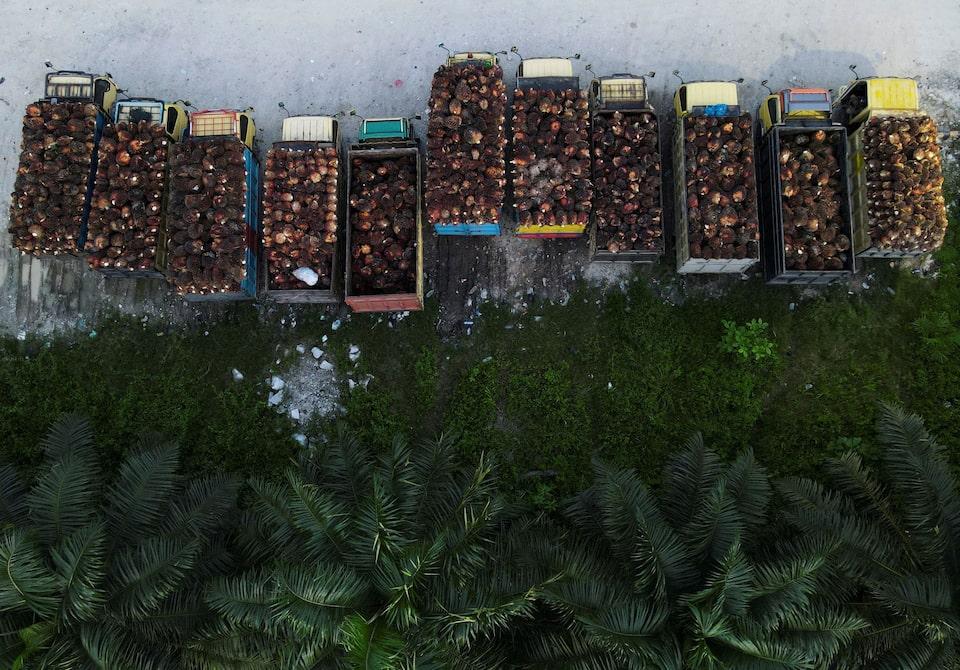
JAKARTA, Jan 8 (Reuters) - Indonesia will likely increase its palm oil export levy to support the country's biodiesel mandate, energy ministry official Eniya Listiani Dewi told reporters on Thursday, citing tightening funds. Indonesia, the largest palm oil producer, has implemented a mandatory 40% palm-based biodiesel blend, known as B40, the highest blending rate in the world. It seeks to increase the blend to 50% later this year. Sign up here. Indonesia subsidises its biodiesel programme using proceeds from palm oil export levies, which are currently set at 10% of its monthly reference price for crude palm oil (CPO), with the levy on more refined products ranging between 4.75% and 9.5%. "Whether it is B40 or B50, it has to be raised, according to an economic affairs ministry study," Eniya told reporters, adding that the cash reserves managed by the country's plantation fund were dwindling. A meeting to discuss the levy hike will be held next week, she added. Indonesia consumed 14.2 million kilolitres of palm-based biodiesel in 2025, a 7.6% increase compared to the previous year, energy ministry data showed on Thursday. A road test for B50, which typically takes six months, has started in December, the energy minister said. The energy ministry has allocated 15.65 million kilolitres of palm-based biodiesel for this year's blending mandate. https://www.reuters.com/sustainability/climate-energy/indonesia-mulls-palm-oil-export-levy-hike-support-biodiesel-mandate-2026-01-08/
2026-01-08 06:19
Annual copper demand to hit 42 metric tons by 2040 Global supplies expected to fall short by 10 metric tons AI, defense, robotics seen as increasingly large users 'Net zero' policies no longer main demand boost Jan 8 (Reuters) - Growth in the artificial intelligence and defense sectors will boost global copper demand 50% by 2040, but supplies are expected to fall short by more than 10 million metric tons annually without more recycling and mining, the consultancy S&P Global (SPGI.N) , opens new tab said on Thursday. Copper has long-been used widely across the construction, transportation, tech and electronics industries as it is one of the best electricity-conducting metals, is corrosion-resistant and is easy to shape and form. Sign up here. While the electric vehicle industry has lifted copper demand the past decade, the AI, defense and robotics industries will require even more of the metal during the next 14 years alongside traditional consumer appetite for air conditioners and other copper-hungry appliances, S&P said in its report , opens new tab. Demand globally will reach 42 million metric tons per year by that 2040 mark, up from 28 million metric tons in 2025, the report found. Without new sources of supply, nearly a quarter of that demand is likely to be unmet, the report found. "The underlying demand factor here is electrification of the world, and copper is the metal of electrification," Dan Yergin, S&P's vice chairman and one of the report's authors, told Reuters. AI is a major growth area for copper, with more than 100 new data center projects last year valued at just under $61 billion, Reuters reported last month. The conflict in Ukraine and moves by Japan, Germany and others to increase defense spending are likely to also fuel copper demand, the report found. "Demand for copper really is inelastic in the defense sector," said Carlos Pascual, an S&P vice president and former U.S. ambassador to Ukraine. Nearly every electronic device contains copper. Chile and Peru are the largest copper miners, and China is the largest copper smelter. The United States, which has imposed a tariff on some types of copper, imports half of its needs each year. The report does not factor in potential supply from deep-sea mining. S&P published a similar report in 2022 that forecasted copper demand should the world reach carbon neutrality by 2050, a goal described as "net zero." The report released on Thursday uses a different methodology, S&P said, and forecasts demand using a base-case assumption that copper demand will rise regardless of government climate policy. "The politics of the energy transition have changed pretty dramatically," Yergin said. https://www.reuters.com/business/energy/ai-boost-copper-demand-50-by-2040-more-mines-needed-ensure-supply-sp-says-2026-01-08/

2026-01-08 06:19
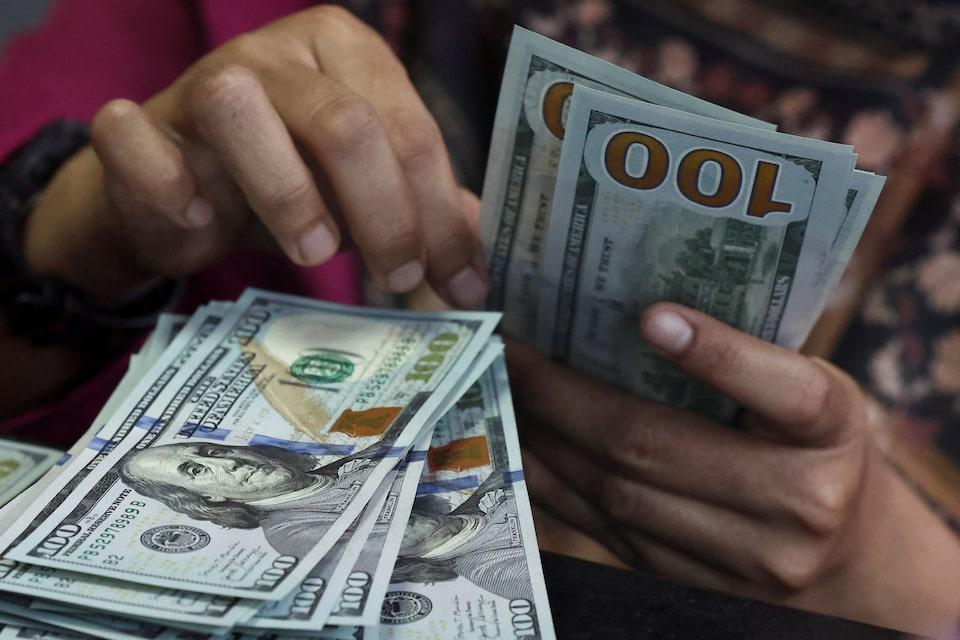
US weekly jobless claims rise marginally Data and concerns over Greenland weigh on euro Dollar index hits near one-month high Japan-China tensions under the spotlight NEW YORK, Jan 8 (Reuters) - The dollar gained against the euro and Swiss franc on Thursday, as investors awaited Friday’s crucial nonfarm payrolls report, which could help assess the U.S. labor market and the probable path of interest rates. Data on Thursday showed that the number of Americans filing new applications for unemployment benefits increased moderately last week amid relatively low layoffs. U.S. job openings fell more than expected in November while hiring eased, according to a Labor Department report on Wednesday. Sign up here. "The market is looking for a bit more definitive evidence as to which way the economy is going," said Marvin Loh, senior global market strategist at State Street in Boston. "The consensus is that the dollar will continue to weaken from here given that there's still rate cuts expected from the Fed." The dollar was up 0.13% against the Japanese yen at 156.965. The dollar index , which measures the U.S. currency against six rivals, was up 0.2% at 98.922 after hitting its highest since December 10. Traders are pricing in at least two rate cuts from the Federal Reserve this year, although a divided central bank indicated in December there would be only one cut in 2026. The Fed is expected to keep rates steady at its meeting this month. Jerome Powell's term as Fed chair ends in May. President Donald Trump's administration could be forced to refund more than to importers if the U.S. Supreme Court this week declares his duties unlawful, which could resurface to hurt the dollar. Trump said on Wednesday the 2027 U.S. military budget should be $1.5 trillion, stoking some concerns about rising debt and a higher risk premium on U.S. assets. "I think to a certain degree, we are going to be range bound for a little while until we get a little more clarity on whether or not the Fed is going to not only resume their cutting cycle but also cut more aggressively with the new leadership changes expected at the Fed a little later this year," Loh added. EURO ZONE DATA AND GREENLAND IN FOCUS On the euro front, recent inflation figures drove the currency lower and German Bund yields to a one-month low. The euro was down 0.21% at $1.16510 on Thursday, after dropping by 0.45% in the last two sessions. U.S. Secretary of State Marco Rubio told reporters Trump retained the option to address his objective to take over Greenland by military means, while alarmed allies, including France and Germany, were working on a response. "Geopolitics still doesn't look like they matter at least in the short term for markets," said John Velis, head of Americas macro strategy at BNY Markets. "Volatility across asset classes has also been crushed. I don't know why but implied volatility indexes in bonds and equities are really low." Analysts flagged that the debate about changes in European Central Bank policy shifted towards the possibility of a rate hike a year from now, while inflation is currently getting back to target with core edging lower. The dollar was up 0.21% to 0.79935 against the Swiss franc . Shares in Japanese chemical manufacturers fell on Thursday while those of their Chinese rivals jumped after China said it was launching an anti-dumping probe into imports of chemicals used in chipmaking. The Australian dollar eased 0.37% to $0.66950, just below the 15-month high it touched earlier this week. The Chinese yuan rose 0.15% against the greenback to 6.929 per dollar. https://www.reuters.com/world/asia-pacific/dollar-holds-steady-mixed-data-sets-up-fridays-jobs-report-2026-01-08/