2025-02-18 07:24
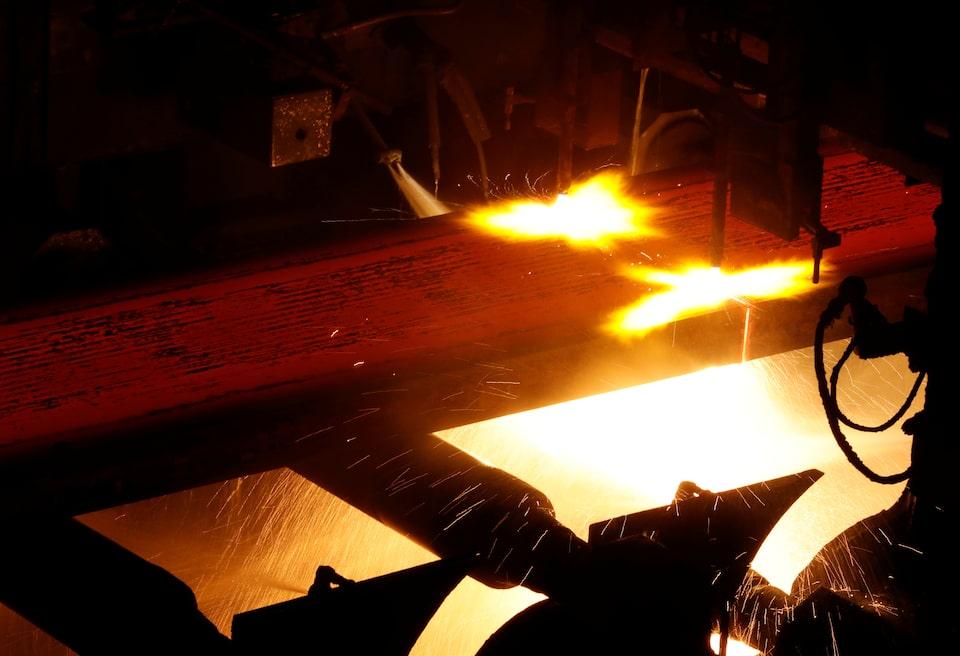
MILAN, Feb 18 (Reuters) - Bullish investors cut cash levels to 3.5%, the lowest since 2010, as they went long stocks and "short everything else", a survey of investors from BofA Global Research showed on Tuesday. BofA said equity investors rotated into bond-sensitive sectors, such as pharma, biotech, utilities and REITs, and to Europe, as a measure of investor fear of a global recession fell to a 3-year low and a trade war seen as no more than a tail risk. Tech recorded its largest month-on-month allocation drop since September 2022, according to the monthly global survey of 168 participants with $401 billion of asset under management. "Long Mag 7" remained the most crowded trade, BofA said, but US exceptionalism peaked, with 89% saying U.S. stocks are overvalued. Sign up here. https://www.reuters.com/markets/bullish-investors-cut-cash-levels-15-year-low-bofa-says-2025-02-18/

2025-02-18 07:22
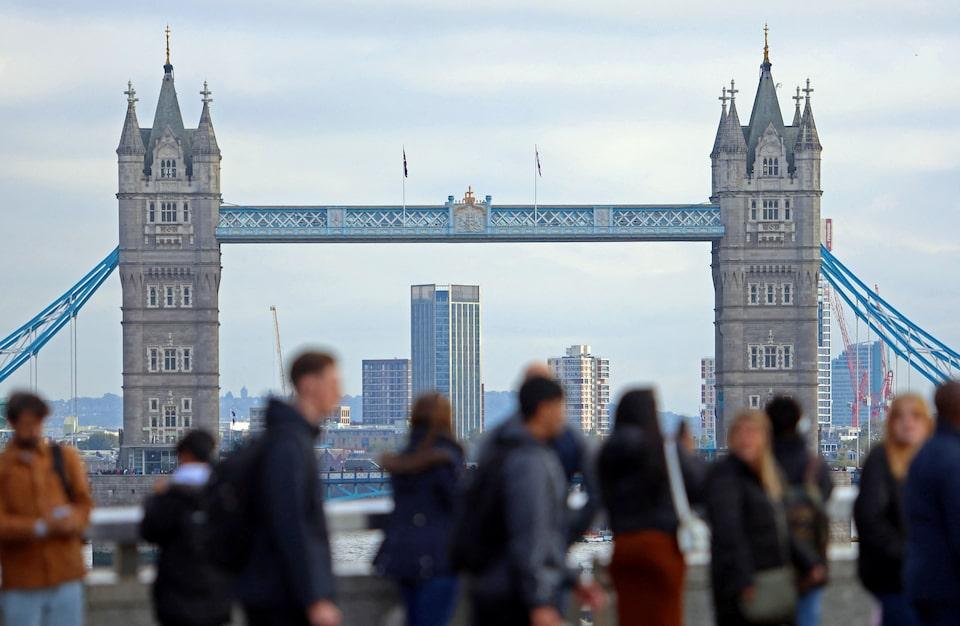
LONDON, Feb 18 (Reuters) - British pay growth accelerated in the last three months of 2024, according to official data published on Tuesday that underscored why the Bank of England has adopted a careful stance about when it will cut interest rates again despite a weak overall economy. Private-sector pay excluding bonuses - the BoE's main gauge of domestic inflation pressure - rose by 6.2% compared with the same period a year earlier, up from 5.9% in the three months to November, the Office for National Statistics said. Sterling rose against the dollar immediately after the data release. Employers say finance minister Rachel Reeves' plan to increase the social security contributions they pay from April will lead to weaker hiring and slower wage growth. However, the pace of pay increases has remained far above the levels consistent with the BoE's 2% inflation target. BoE Chief Economist Huw Pill said in an interview with Reuters last week that he believed the main problem weighing on Britain's sluggish economy was one of supply - including a shortage of workers which has pushed up wages. The ONS said pay growth across the whole economy, excluding bonuses, was 5.9% higher in the three months to the end of December than a year earlier, the strongest reading since the three months to April last year. Including bonuses, pay was up by 6.0%. A Reuters poll had pointed to both measures of wage growth rising by 5.9%. Sign up here. https://www.reuters.com/world/uk/uk-wages-rise-by-annual-59-last-three-months-2024-2025-02-18/
2025-02-18 07:20
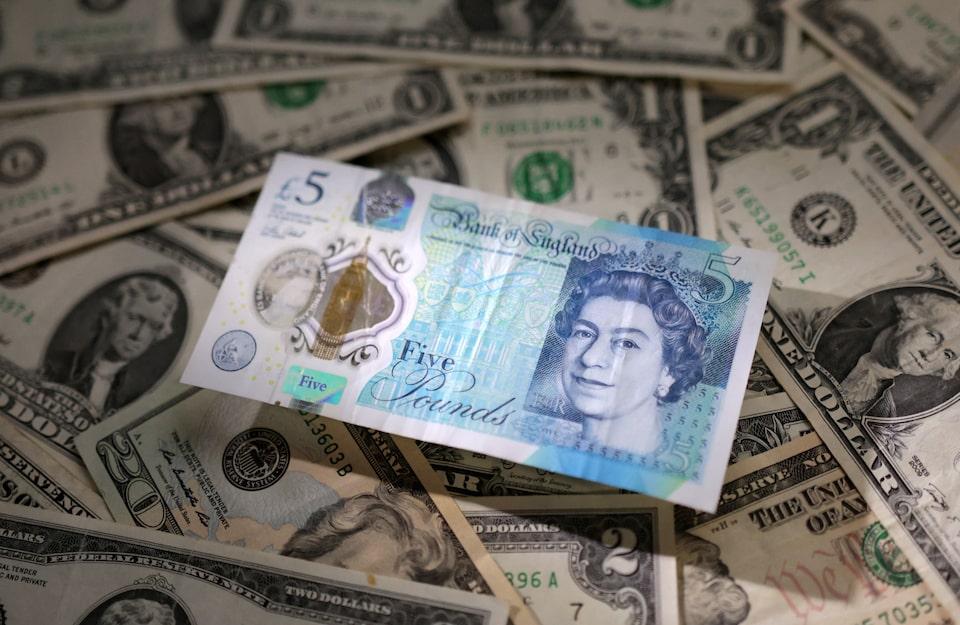
Feb 18 (Reuters) - Sterling eased on Tuesday but stayed close to its recent two-month highs, as data showed accelerating British wage growth, reinforcing bets for a cautious rate cut path ahead for the Bank of England, despite a weak economy. The pound was last down 0.2% against the dollar at $1.25995, but was not far from the $1.2635 level it touched on Monday, the highest since December 19. British private-sector pay excluding bonuses - the BoE's main gauge of domestic inflation pressure - rose by 6.2% compared with the same period a year earlier, the fastest pace in a year, the Office for National Statistics said. Average weekly earnings, excluding bonuses, rose by 5.9% in the last three months of 2024 compared with the same period a year earlier. The increase marked the third straight monthly rise in wage pressures. The pace of pay increases, remaining far above levels consistent with the BoE's 2% inflation target, present a complication for the Bank of England, which has signalled its desire to cut interest rates. "We think the ongoing strength in pay is likely to keep the BoE cautious, and we expect the BoE to remain on hold in March and deliver its next cut in May," said Modupe Adegbembo, economist at Jefferies. Investors slightly pared their rate cut bets following the data release, pricing in 58 basis points of easing from the BoE this year. BoE Governor Andrew Bailey said on Tuesday however that the latest jobs market data does not change the central bank's broad expectations for the economy. Traders now turn their eyes to Wednesday's UK inflation data, which Jefferies' Adegbembo said would be "more instructive". The pound has so far risen 1.6% in February against the dollar, as traders factored in easing tariff fears, which have dented the greenback across the board. Also in investor focus on Tuesday, U.S. and Russian officials met in Saudi Arabia's capital Riyadh for talks aimed at ending the Ukraine war. British Prime Minister Keir Starmer said on Monday it was crucial for all of Europe to spend more on defence. Sterling touched a two-week high against the euro on Tuesday, but later reversed the gains. The single currency was last up marginally on the pound with one euro at 83.06 pence. Sign up here. https://www.reuters.com/markets/currencies/sterling-pares-losses-after-uk-wage-data-2025-02-18/
2025-02-18 06:59
JOHANNESBURG, Feb 18 (Reuters) - Anglo American's (AAL.L) , opens new tab South African iron ore business wants private investors to run a rail line that is crucial for shipments of the steelmaking ingredient to export markets, it said on Tuesday. The 861 km (535 mile) rail line, owned and operated by struggling state company Transnet, runs from Kumba Iron Ore's (KIOJ.J) , opens new tab Sishen mine in South Africa's Northern Cape province to Saldanha port. However, the line has been beset by derailments and Transnet's balance sheet "constraints" mean it is unable to run the line efficiently, said Kumba CEO Mpumi Zikalala. Kumba, Africa's top iron ore miner, has scaled down production after stockpiles rose to 7.5 million metric tons last year from 7.1 million tons the previous year. "We believe that the entire line could be concessioned to a player who will be able to purely focus on this line and that could make a massive impact," Zikalala said on a media call after Kumba reported a 45% slide in annual earnings. Headline earnmings per share dropped to 38.94 rand ($2.11), hit by lower prices and the rising iron ore stockpiles caused by lack of rail capacity, the company said. ($1 = 18.4407 rand) Sign up here. https://www.reuters.com/markets/commodities/anglos-kumba-wants-private-investors-run-key-iron-ore-rail-line-2025-02-18/

2025-02-18 06:58
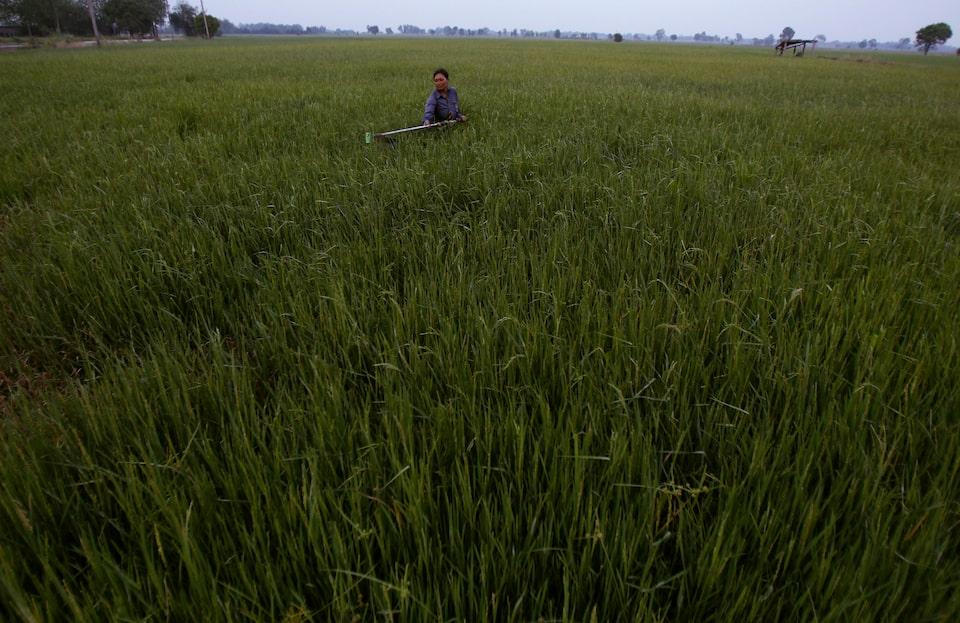
BANGKOK, Feb 18 (Reuters) - Thailand will sign a deal next month to sell South Africa 300,000 metric tons of rice worth 5.25 billion baht ($156 million), the commerce minister said on Tuesday. Thailand is also negotiating to sell China 280,000 metric tons of rice to reduce excess supply in the country, Pichai Naripthaphan said in a statement. ($1 = 33.72 baht) Sign up here. https://www.reuters.com/markets/commodities/thailand-says-sign-deal-sell-south-africa-300000-tons-rice-2025-02-18/
2025-02-18 06:51
LAUNCESTON, Australia, Feb 18 (Reuters) - Decarbonising steel production is one of the major challenges of the energy transition, especially given that consumers across the world show little appetite or capacity to pay more for green steel products. This means that greening a sector responsible for around 8% of global carbon emissions is likely to rely on government policies and regulations to create price signals. The debate is really over what policies are likely to produce the best and quickest results, with options ranging from subsidising green steel plants, or products made with green steel, to instituting carbon taxes that encourage producers to change how they make steel. Japan, the world's third-largest steel and vehicle producer, has recently announced new policies that may provide an incentive to both consumers, manufacturers and steel makers. The Ministry of Economy, Trade and Industry (METI) has introduced a subsidy of 50,000 yen ($330) for clean energy vehicles (CEVs) built with low-emission steel. This adds to consumer subsidies introduced last year of up to 850,000 yen for the purchase of an electric vehicle and up to 550,000 yen for a plug-in hybrid electric vehicle. Under the plan, METI will evaluate submissions by automakers on their low-emission steel procurement and allocate subsidies based on the percentage of green steel being used, according to Matt Pollard, an analyst at clean energy consultancy Climate Energy Finance. "In the broader context, it is important for METI to publicly release the carbon accounting methodologies, green product definitions and emission thresholds it will use to determine products and producers that will benefit from the models approved under the new subsidy scheme," Pollard said. Put simply, how all this works is likely to determine whether it is actually successful. Japan's steel sector produces about 85 million metric tons a year, the majority from coal-based blast furnaces, making it more polluting than the U.S., EU and China steel sectors, which all have more electric arc furnace capacity. It's possible that Japan's steel sector will now have incentives to switch, but what technologies and processes will be key. GREEN OPTIONS Using hydrogen to turn iron ore that's been upgraded into either direct reduced iron (DRI) or hot briquetted iron (HBI) is one method that's been proposed, but the problem for Japan is that it doesn't have the capacity to produce green hydrogen at scale, given the lack of renewable electricity generation. Importing hydrogen is also unlikely given the challenges in liquefying and shipping what is a volatile substance. Increasing the use of electric arc furnaces is also a possibility, but this needs high-grade iron ore, or DRI or HBI, to work. Electric arc furnaces also need to be powered by renewables or nuclear to be considered green, and Japan's current electricity generation is still mainly powered by coal and liquefied natural gas. The trick to getting the subsidies to work is to make it possible to produce green steel at a price that is at least equal to, but preferably lower, than the level of the subsidy. If Japan is providing $330 for an electric vehicle made with low-emission steel, can steel makers make a profit? Research from clean energy think tank Transition Asia said the premium for producing steel with green hydrogen and DRI in China is about $225 a ton, which gives a cost per vehicle of about $203 assuming the typical passenger car uses 0.9 ton of steel. Transition Asia data suggested a slightly higher cost than China for green steel in Japan and South Korea, but actually lower than in the European Union. The costs will vary from country to country, but the research does suggest that even a modest subsidy can provide sufficient incentive for steel producers to make green steel, car makers to switch to using it and consumers to embrace buying the finished product. The views expressed here are those of the author, a columnist for Reuters. Sign up here. https://www.reuters.com/markets/commodities/green-steel-needs-incentives-work-japan-has-plan-russell-2025-02-18/