2025-02-18 06:20
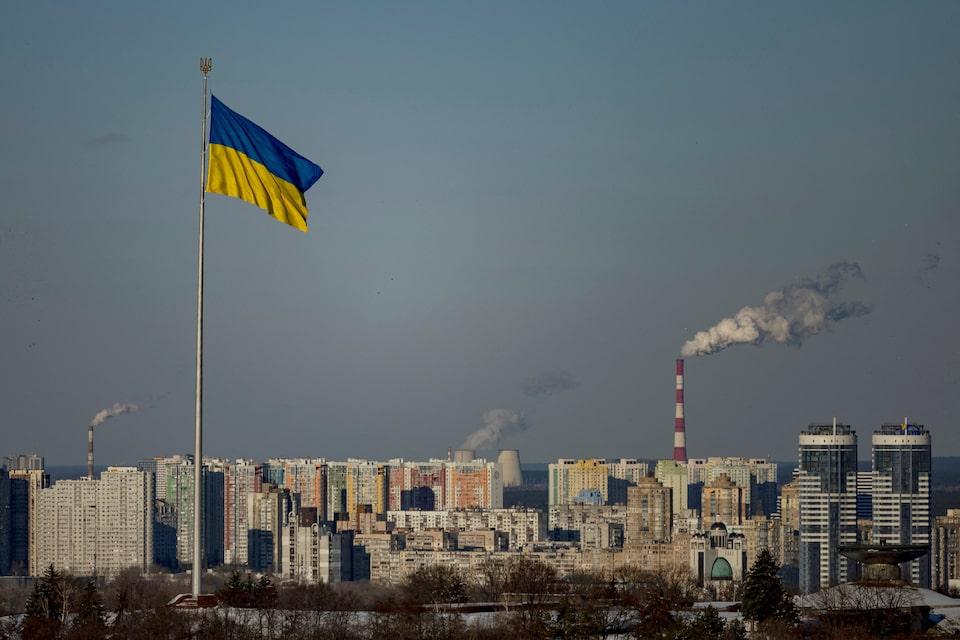
Euro, sterling edge down with focus on Ukraine peace talks Aussie slips after RBA cuts rates as expected Yen on back foot after recent rise on BOJ hike wagers Dollar/yen pares gains after US housing data NEW YORK, Feb 18 (Reuters) - The U.S. dollar strengthened against major currencies on Tuesday, led by gains versus the euro, driven by safe-haven bids amid tariff worries and tension-filled negotiations on the Russia-Ukraine conflict. The Australian dollar, meanwhile, initially held near two-month highs after the Reserve Bank of Australia cut rates, its first easing since the 2020 pandemic, cautioning, however, against further rate reductions. But broad U.S. dollar buying amid global geopolitical stress has temporarily eroded support for the Australian currency. Traders kept an eye on talks in Saudi Arabia between U.S. and Russian officials on Tuesday aimed at ending the Ukraine war. Ukraine President Volodymyr Zelenskiy said no peace deal could be made behind his back. He postponed his visit to Saudi Arabia planned for Wednesday until March 10 to avoid giving "legitimacy" to the U.S.-Russia talks. "The buck will remain a source of safety in the midst of uncertainty and what seems like a chaotic attempt at putting a very tragic and expensive conflict to rest," said Juan Perez, director of trading, at Monex USA in Washington. "Markets seem to be concerned with how cold relations are between the U.S. and EU (European Union) that the Saudi Arabia meeting between American and Russian leaders left EU officials out. It puts doubt on any original enthusiasm that emanated from the likelihood that Ukraine and Russia would find a middle ground and thus bring with it a better situation economically for all involved." In afternoon trading, the euro fell 0.4% to $1.0447 , retreating for a second straight session. Last week, the euro rose to a two-week high on hopes of a peace agreement. Russia on Tuesday, however hardened its demands for a peace deal, insisting NATO reneges on a promise it made at a summit in Bucharest in 2008 that Ukraine would join at a future, unspecified date. U.S. President Donald Trump, meanwhile, has threatened new tariffs on the EU due to trade surpluses it had with the United States, in a widening onslaught economists say could trigger a global economic slowdown. Against the yen, the dollar rose 0.3% to 151.95 . It earlier pared gains after data showed U.S. homebuilder sentiment tumbled to a five-month low in February on worries that tariffs would combine with higher mortgage rates to further drive up housing costs. The National Association of Home Builders/Wells Fargo Housing Market Index plunged five points to 42 this month, the lowest since September. The yen has been on the back foot after its recent gains, fuelled by strong growth data that bolstered odds of the Bank of Japan raising interest rates again this year, with July seen as a live meeting, instead of in the October to December period. Japan's solid October-December GDP data on Monday, coupled with recent inflation numbers, have helped lift the yen. It was up 3.5% against the dollar so far in 2025. Sterling eased 0.2% to $1.2598, hurt by a strong dollar despite data showing accelerating British wage growth. Investors will also focus on Wednesday's release of minutes of the Federal Reserve's meeting in January that may show how policymakers accounted for the risk of a broader tariff war resulting from President Donald Trump's trade policies. Data last week showed U.S. consumer prices increased at the fastest pace in nearly 18 months in January, reinforcing the Fed's message it was in no rush to resume cutting rates amid growing economic worries. U.S. rate futures have priced in about 37 basis points (bps) of easing in 2025, compared with 41 bps late Friday, according to LSEG estimates, using the January 2026 futures contract. Futures also implied the Fed will likely resume cutting rates either at the September or October policy meeting. The dollar index , which measures its performance against six other major currencies, was 0.3% higher at 107.08, not that far from the two-month low of 106.56 touched on Friday. In Australia, the RBA cut its cash rate by 25 bps to 4.10% on Tuesday and said it was cautious about prospects of further policy easing. The Australian dollar slipped 0.1% to US$0.6349 after an initial burst of choppiness following the decision. The Aussie touched a two-month high of US$0.6374 on Monday and was up 2.4% in February. Swaps imply just a 20% probability for a follow-up cut in April, although a move in May has been priced in. Sign up here. https://www.reuters.com/markets/currencies/dollar-wobbles-aussie-just-below-2-month-high-ahead-rba-decision-2025-02-18/
2025-02-18 06:10
Feb 18 (Reuters) - Japan's International Cooperation Agency (JICA) announced on Tuesday a $1 billion contribution to a fund aimed at boosting the private sector arm of the Inter-American Development Bank to finance sustainable growth across Latin America and the Caribbean. The move marks JICA's largest private sector fund in the region and the first with IDB Invest, which has prioritized leveraging financing through the "originate-to-share" strategy. This model seeks out and starts investment opportunities in the region, syndicating portions of these investments to investors instead of retaining them until maturity. The goal is to release capital for rapid reinvestment in new projects and to amplify impact, as Latin America and the Caribbean face an estimated $99 billion annual sustainable financing gap, according to Organization for Economic Co-operation and Development (OECD) estimates. In a joint statement, JICA and the IDB said that, subject to mutual agreement, the new fund has the potential to expand to $1.5 billion after three years. "This initiative will not only catalyze private investment but also foster sustainable development, innovation, and economic growth in the region," said IDB President Ilan Goldfajn. Sign up here. https://www.reuters.com/markets/japans-jica-contributes-1-billion-idb-invest-latin-americas-sustainable-growth-2025-02-18/

2025-02-18 06:10
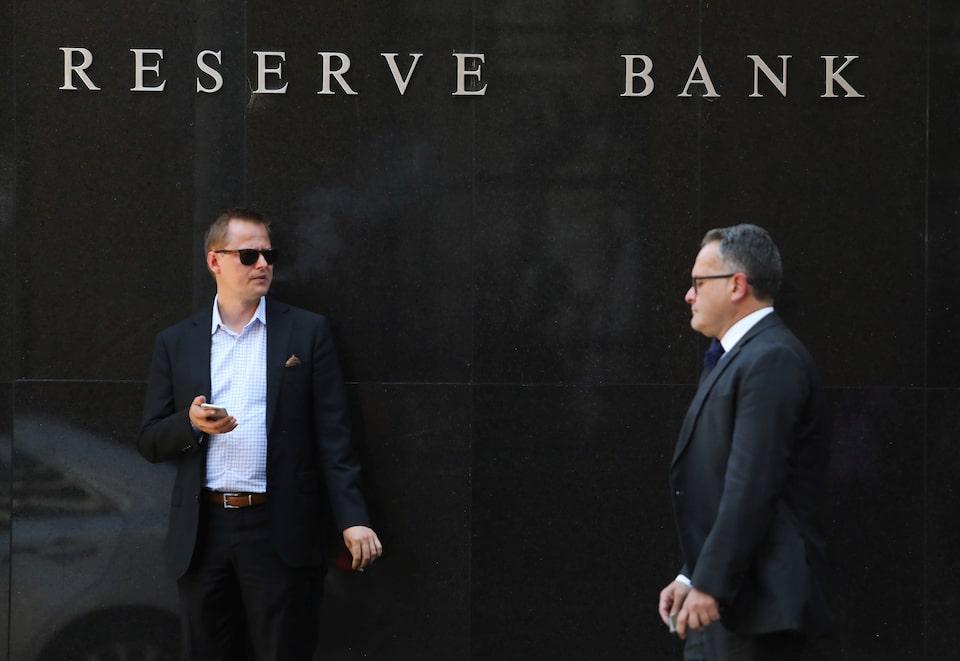
RBA cuts rates for first time since 2020 pandemic Cautious stance limits probability of further cuts Rate cut welcome news for Prime Minister Albanese SYDNEY, Feb 18 (Reuters) - Australia's central bank cut rates for the first time in more than four years on Tuesday but warned it was too early to declare victory over inflation and was cautious about the prospects of further easing. The rate cut will provide some relief to borrowers and comes as good news for Prime Minister Anthony Albanese, who is facing a tough election to be held no later than May 17. Speculation is growing that he may use the opportunity to call an early election. Wrapping up its February policy meeting, the Reserve Bank of Australia (RBA) cut the cash rate by a quarter-point to 4.1%, the first reduction since November 2020 when the pandemic crisis saw rates slashed to an all-time low of 0.1%. Markets had wagered heavily on a quarter-point cut after core inflation surprised to the downside in the fourth quarter at 3.2%. Swaps imply just an 18% probability for a follow-up cut in April, although a move in May is still almost fully priced in. "While today's policy decision recognises the welcome progress on inflation, the Board remains cautious on prospects for further policy easing," the board said in a statement, noting that upside risks to inflation remain due to a strong labour market. "The Board’s assessment is that monetary policy has been restrictive and will remain so after this reduction in the cash rate." The Australian dollar was off 0.1% at $0.6352, while three-year bond futures fell 5 ticks to 96.08 as Governor Michele Bullock pushed back on market pricing of two more rate cuts this year in her press conference. "I want to be very clear that today's decision does not imply that future rate cuts along the lines suggested by the market are coming," said Bullock, who later described market pricing as "unrealistic". "The board needs more data that inflation is continuing to decline before making decisions about the future." Having already opened the door to a cut in December, the board warned that disinflation could stall if monetary policy was eased too much too soon. LATE COMER The RBA has lagged its peers in the global easing cycle and Australia's cut comes as the Federal Reserve appears to be pausing its policy loosening. Across the Tasman Sea, New Zealand is poised to go with another 50-basis point cut on Wednesday. Inflation, which took off in Australia later than elsewhere, ran at 2.4% in the last quarter, back in the target band of 2-3%. The closely watched trimmed mean measure also slowed to 3.2%, from 3.6% previously, and is now expected to fall to 2.7% by June and stay there until mid-2027. "The 25bp reduction in the cash rate to 4.10% is more akin to easing pressure on the economic brake rather than tapping on the accelerator," said Gareth Aird, head of Australian economics at the Commonwealth Bank of Australia. "The low level of the unemployment rate means the RBA can move slowly in normalising the cash rate," said Aird, although he did add a follow-up 25 bp reduction in April cannot be ruled out if labour market deteriorates. Indeed, the central bank is still concerned about inflationary pressures from a surprisingly strong labour market where the jobless rate hovered at 4.0% in December and is only expected to tick up to 4.2%. Consumer spending has picked up thanks to the government's tax cuts while growth for public spending has been revised up by the bank, all of which suggests the economy is not screaming for consecutive rate cuts. Tuesday's rate cut is also positive for the housing market where prices have actually fallen from their record levels over the past few months, but affordability issues are still a major headache for Prime Minister Albanese. Australian "Big Four" lenders all cut their interest rates by 25 basis points, in tandem with the central bank. Treasurer Jim Chalmers said the cut was a "welcome step" in providing better relief for Australians. "This is the soft landing we have been planning for and preparing for but we know there’s more work to do," he told a press conference. Capital Economics senior APAC economist Abhijit Surya expects the RBA will only cut rates twice more in the current easing cycle. "Taken together with the RBA’s continued expectation for a recovery in household consumption, and activity more broadly, the Bank believes that some upward pressures on inflation are likely to persist into the medium term," Surya said. Sign up here. https://www.reuters.com/markets/rates-bonds/australias-central-bank-cut-rates-cautious-further-easing-2025-02-18/
2025-02-18 06:03
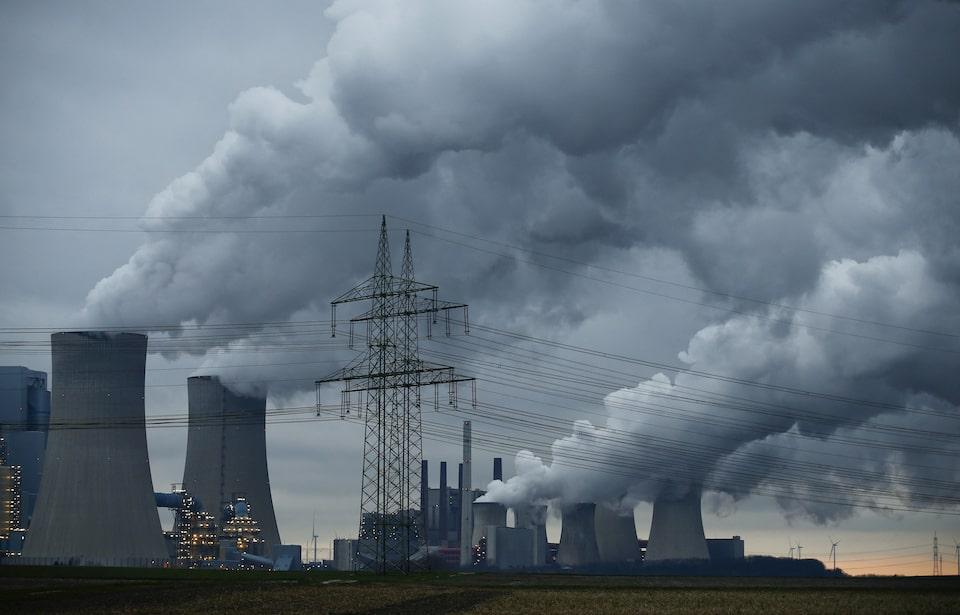
LITTLETON, Colorado, Feb 18 (Reuters) - Rapidly diverging power generation and emissions trends between the European Union (EU) and Russia highlight a growing energy use gap between several of Europe's largest economies and the former top supplier of energy products to the region. For the first time, power producers in Russia emitted more carbon dioxide from fossil fuel use in 2024 than all their peers in the EU, data from energy think tank Ember shows. That flip in emissions loads mainly reflects the significant and durable changes made to Europe's generation systems over the past three years, which have rendered the EU far less reliant on energy product imports for power. However, Russia's higher fossil emissions load also reflects Moscow's growing dependence on fossil fuels for power generation, which hit record highs in 2024. The contrasting power trends underscore how far apart the energy systems of the EU and Russia have become since Russia's invasion of Ukraine in 2022 triggered sanctions against Moscow and an energy transition acceleration across Europe. Europe's reduced reliance on power product imports also reveals Russia's sharply diminished leverage over many of its European neighbours compared to just a few years ago, which may weaken its position during any upcoming peace talks. QUICK CUTS Russia's power producers discharged 536 million metric tons of carbon dioxide (CO2) from fossil fuel use in 2024, compared to 520 million tons emitted by EU power firms, Ember data shows. As EU power firms discharged far more CO2 from fossil fuels than Russia until 2022, the deviation in emission trends since then highlights the scale of generation shifts seen in Europe in just the last three years. In total, EU power emissions from fossil fuels dropped by 31% between 2022 and 2024 as sanctions on Russia following the 2022 invasion roiled regional gas supplies and sparked a surge in power prices. Tighter gas supplies and a more than doubling in wholesale power prices in 2022 from the 2020 to 2021 average forced European power firms and industrial gas users to slash gas-fired output. Total gas-fired electricity generation by EU utilities alone dropped by 19% between 2022 and 2024, according to Ember, while gas use by industry has also dropped sharply. European power producers also slashed coal-fired generation by 40% between 2022 and 2024, so that overall fossil fuel-fired power output dropped by 27% since 2022 to the lowest on record. Over the same period, power firms and businesses also made major investments in clean power generation and in the electrification of energy production and use, which has permanently reduced fossil fuel dependence across the region. RUSSIAN GROWTH While power firms and industries across the EU have been slashing fossil fuel use, their counterparts in Russia have increased fossil fuel reliance. Between 2022 and 2024, gas-fired electricity production in Russia grew by 2% while coal-fired output rose by 12% - both to record highs. This has led to a widening in the share of fossil fuels within the power systems of both Russia and the EU. In Russia, the share of fossil fuels in electricity generation increased from 63% in 2022 to 64% in 2024. In the EU, that share has fallen from 39% in 2022 to a record low 29% in 2024. Additional growth in renewables power generation capacity looks set to further eat into the EU's fossil fuel share over the coming years. At the same time, as Russia is a major producer of natural gas, coal, and crude oil, the country may be forced to consume more of those commodities at home if Europe and other markets continue to curb purchases of those products. That in turn could result in the emergence of dramatically different energy systems that may further reduce potential trade ties between Russia and the EU, even if a potential peace deal begins to take shape over the coming months. The opinions expressed here are those of the author, a market analyst for Reuters. Sign up here. https://www.reuters.com/business/energy/power-sector-trends-reveal-widening-divide-between-eu-russia-maguire-2025-02-18/
2025-02-18 05:57
Bullion hit record peak of $2,942.70 on February 11 Central bank buying should continue to support gold- Commerzbank Fed's January meeting minutes due on Wednesday Feb 18 (Reuters) - Gold prices rose for a second straight session on Tuesday, but traded below the all-time high, as uncertainty around U.S. President Donald Trump's tariff plans continued to fuel economic growth concerns and safe haven flows into bullion. Spot gold gained 0.6% to $2,914.98 an ounce as of 1240 GMT. It hit a record high of $2,942.70 last week. U.S. gold futures added 1% to $2,928.80. "Trump's disruptive modus operandi, aggressive rhetoric and tariffs - whether actual or threatened - could unravel global trade and intricate supply chains," said Nikos Tzabouras, senior financial writer at trading platform Tradu. "With uncertainty surrounding the global economy and the broader geopolitical landscape in the Trump 2.0 era, gold is set to remain a natural beneficiary of risk-off flows and central bank buying." Since taking office last month, Trump has swiftly redrawn the global trade battlefield with a series of tariffs, while plans are already in motion for sweeping reciprocal tariffs, aimed squarely at any nation that taxes U.S. products. "Gold continues to benefit from the uncertainty surrounding the U.S. government's tariff policy. Central bank buying should also continue to provide support, even if there is no new data on this," Commerzbank analysts said in a note. The market's focus has now shifted to the U.S. Federal Reserve's January meeting minutes due on Wednesday for clues into the central bank's interest rate trajectory. "Price gains are also supported by growing expectations that the Fed will cut rates in 2025 - a sentiment that gained further traction among traders after last week's disappointing U.S. retail sales figures," said Ricardo Evangelista, senior analyst at brokerage firm ActivTrades. Bullion benefits from geopolitical and economic uncertainties, as well as rising price pressures, but higher interest rates diminish the asset's allure. Spot silver fell 1% to $32.46 an ounce. Platinum jumped 0.9% to $984.10 and palladium climbed 1.3% to $975.00. Sign up here. https://www.reuters.com/markets/commodities/gold-gains-uncertainty-about-trumps-tariff-plans-boost-safe-haven-demand-2025-02-18/

2025-02-18 05:35
A look at the day ahead in European and global markets from Tom Westbrook Europe's rally in banking and defence stocks extended into Tokyo, where shares in Mitsubishi Heavy Industries (7011.T) , opens new tab popped 3% to trade near record highs. The focus is on Ukraine and expectations that Europe will ramp up defence spending in the event of any peace deal. European futures were slightly higher and pointed to a market open around the record peaks hit on Monday, when the defence sector lifted the broader indexes including the pan-European STOXX 600 (.STOXX) , opens new tab and Germany's DAX (.GDAXI) , opens new tab. Arms maker Rheinmetall (RHMG.DE) , opens new tab surged 14%. U.S. President Donald Trump has arranged bilateral peace talks with Russia, scheduled to begin later on Tuesday in Saudi Arabia. British Prime Minister Keir Starmer said he was willing to send peacekeeping troops to Ukraine though European leaders made no similar pledge at emergency talks in Paris on Monday. The possibility of an end to fighting has the euro and European stocks (.STOXX) , opens new tab well-supported and has taken a little bit of the limelight from tariffs and interest rates. It's likely to eclipse Germany's ZEW survey, British labour data and second-tier manufacturing figures due in the U.S. Australia's central bank, as widely expected, began its rate-cutting cycle by lowering interest rates for the first time since 2020. The bank sounded, however, like it was in no rush for further cuts, and that lent a little support to the Aussie dollar while the Aussie stock market slipped. It's a bit of a different story across the Tasman Sea, in New Zealand, where a 50 basis-point cut is priced in for Wednesday and more than 100 bps of easing are expected this year. Hong Kong shares (.HSI) , opens new tab hit their highest since October in morning trade and tech stocks (.HSTECH) , opens new tab marked a three-year high on a wave of enthusiasm following Monday's rare meeting between President Xi Jinping and business leaders. Earnings will also be in focus with Chinese search giant Baidu (9888.HK) , opens new tab reporting later on Tuesday and Alibaba (9988.HK) , opens new tab on Thursday. Baidu shares steadied after a selloff in the previous session when founder Robin Li was not spotted at the symposium in Beijing. U.S. markets return from a public holiday. Key developments that could influence markets on Tuesday: Economics: German ZEW survey, UK labour data, U.S. Empire Fed manufacturing Earnings: Baidu, InterContinental Hotels Sign up here. https://www.reuters.com/markets/europe/global-markets-view-europe-2025-02-18/