2025-02-17 12:35
Feb 17 (Reuters) - Telecom Italia (TLIT.MI) , opens new tab (TIM) is moving into the energy sector with the launch of an electricity supply unit in partnership with Axpo Group subsidiary Axpo Italia, it said on Monday. The unit, TIM Energia, aims to supply fully renewable power to business owners, professionals and small to medium-sized companies, TIM said in a statement. No financial details of the launch were disclosed. A number of TIM's competitors in the highly competitive Italian telecoms market, such as Swisscom-backed (SCMN.S) , opens new tab Fastweb-Vodafone and CK Hutchison' (0001.HK) , opens new tab WindTre, are also offering power services in the country. Sign up here. https://www.reuters.com/business/tim-launches-renewable-energy-unit-tim-energia-partnership-with-axpo-italia-2025-02-17/

2025-02-17 12:32
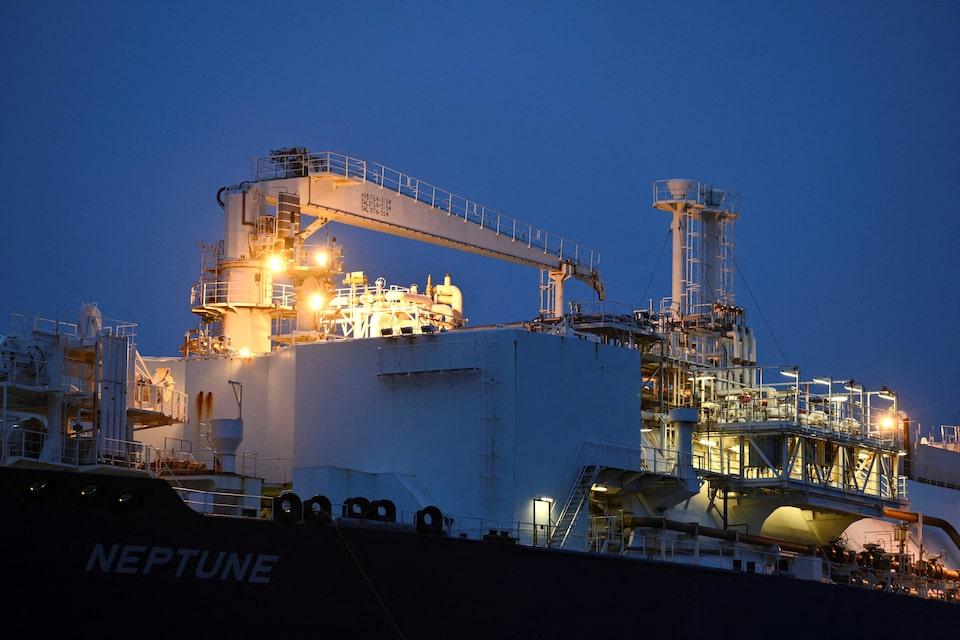
Euro, stocks perk up on potential for Ukraine ceasefire Market impact depends on extent of Russian gas flow recovery Optimism may be not enough to ease tariff fears Feb 17 (Reuters) - A ceasefire deal between Russia and Ukraine would take the sting out of heightened U.S. trade tensions and ease pressure on energy prices and the euro, markets bet, while expectations for defence spending have already sent stocks in the sector surging. President Donald Trump last week ordered U.S. officials to begin talks on ending the war and Secretary of State Marco Rubio arrived in Saudi Arabia on Monday for discussians with Russian officials. However, neither Ukraine nor European nations are expected to be present at the talks. European leaders will meet on Monday for an emergency summit. While U.S. tariffs, which have hurt the euro zone growth outlook, remain the bigger driver for European markets, hopes for a potential ceasefire after almost three years of war have boosted sentiment. The euro , which slumped to more than two-year lows near $1.01 earlier in February, jumped back to $1.05, the STOXX 600 (.STOXX) , opens new tab index rose to a fresh record high and German stocks posted their best day in two years last week. The biggest land war in Europe since World War Two has killed or injured hundreds of thousands of troops on both sides and prompted a surge in energy prices and inflation. An end to hostilities should support European growth. A ceasefire deal would "decrease energy pricing, which has been a big, big detractor of the European economy and also European assets," said Aymeric Guedy, fund manager at Carmignac. ALL ABOUT GAS Russia's invasion of Ukraine wreaked havoc on Europe's energy supplies, sending gas prices over 300 euros ($314.61) per megawatt hour in 2022. They are now around 50 euros, still well above pre-2021 levels. MUFG says the impact of a potential ceasefire on European economies and currencies, will depend on if and how quickly Russian energy supplies are restored. Natural gas prices have tumbled, ending last week more than 10% below this month's two-year highs. Germany's largest chemicals maker BASF (BASFn.DE) , opens new tab, seen as a proxy for a return of Russian gas flows, gained over 5% on Thursday, a day after Trump said he had spoken with Russian President Vladimir Putin. The stock is currently trading around its highest in 10 months, also helped by corporate news. In Germany, where high energy costs have been a major drag on competitiveness, the blue-chip DAX index (.GDAXI) , opens new tab posted its biggest daily rise in two years that day. Expectations for the amount of gas that would return, however, are limited, after Europe's painful efforts to wean itself off Russian gas since the war. Goldman Sachs expects gas prices to drop 15% if Russian flows through Ukraine, which came to a halt in January, return to 2023-24's limited levels. If Ukrainian flows reach pre-war levels, prices could fall by as much as 50%, Goldman reckons, but adds that flows through Poland or the Nord Stream pipelines, which would lower prices even further, are "very unlikely" to return. "There's a real conundrum for politicians, Europeans generally, to decide the path that they want to take in terms of energy versus energy security, if there was a ceasefire," said Jane Foley, head of FX strategy at Rabobank. "The cost would be signing over some of your energy security again to Russia," she added. Others were more optimistic. Even if Europe doesn't increase Russian imports, a drop in global energy prices will still improve the bloc's terms of trade, supporting the euro, BofA FX strategists said. Though the euro has risen, it remains sharply below last summer's highs around $1.12. Goldman Sachs, noting European stocks' underperformance against peers since the Ukraine war, raised its targets for Europe's STOXX 600 index to suggest a roughly 5% rise over the next year. The bank expects a 0.2% increase in euro zone GDP in the event of a limited ceasefire, or 0.5% in an "upside" scenario, but it also sees a 0.5% hit to output from U.S. tariffs. So for some, the threat of tariffs, which has already battered markets, from the euro to auto makers, will outweigh any short-term benefit from a ceasefire. "The market will soon realise that the growth outlook for Europe remains still very constrained," Rabobank's Foley said, still expecting the euro to drop to $1 later this year. The focus is also on defence spending, which is gaining urgency as European capitals come under U.S. pressure to generate plans for security guarantees for Ukraine. An index of European aerospace and defence stocks (.SXPARO) , opens new tab surged to a new record high on Monday. Defence names Saab (SAABb.ST) , opens new tab and Rheinmetal (RHMG.DE) , opens new tab each gained over 7%. European government bond yields, which move inversely with prices, rose as markets focused on how much additional funding may be needed. "Any peace deal will also involve security guarantees for Ukraine implying that Europe would have no choice but to increase its defence expenditure," said Jefferies chief Europe economist Mohit Kumar. ($1 = 0.9536 euros) Sign up here. https://www.reuters.com/markets/europe/ukraine-ceasefire-hopes-offer-europes-markets-tailwind-shadow-tariffs-2025-02-17/
2025-02-17 11:55
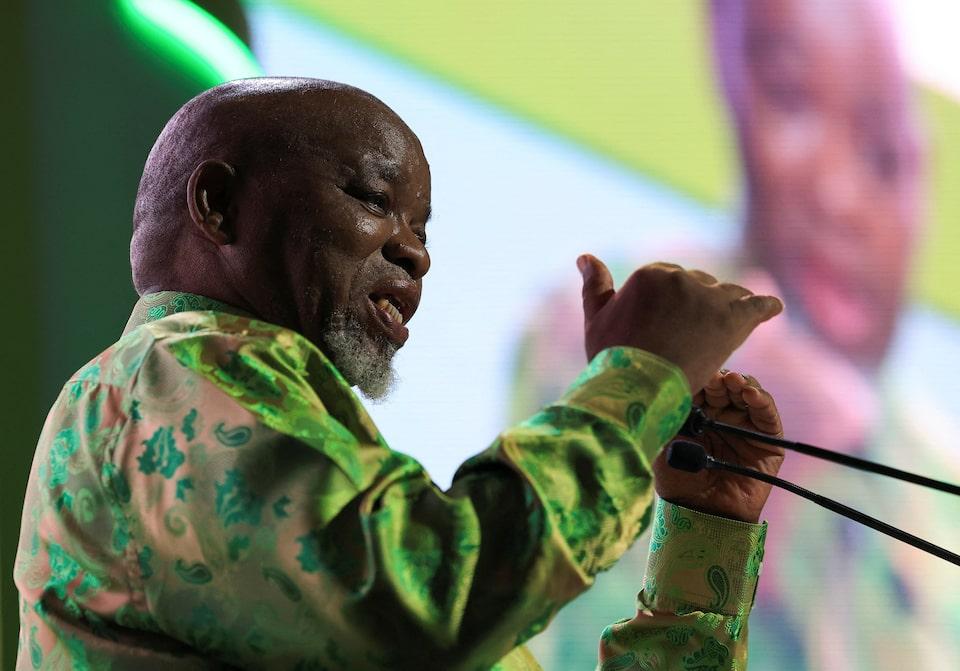
South Africa aiming to add 2,500 MW of nuclear capacity Trump has criticised South Africa and suspended aid Analysts say rift risks scuppering strategic nuclear pact CAPE TOWN, Feb 17 (Reuters) - South Africa could turn to Russia or Iran to expand its civilian nuclear power capacity, a senior government minister said, a stance analysts say could deepen a rift with the United States and further delay the renewal of a strategic energy pact. South Africa, which operates Africa's only nuclear power plant, Koeberg, plans to add 2,500 megawatts of new capacity to tackle electricity outages that have plagued the economy and to reduce emissions. "We can't have a contract that says Iran or Russia must not bid, we can't have that condition," Minister of Mineral and Petroleum Resources Gwede Mantashe, one of the government's leading proponents of expanding nuclear capacity, said. "If they are the best in terms of the offer on the table, we'll take any (country)," he told Reuters. The country is under scrutiny from Washington after President Donald Trump issued a far-reaching executive order this month halting aid. Among other criticisms, the order claimed - without providing evidence - that South Africa was "reinvigorating its relations with Iran to develop commercial, military, and nuclear arrangements". Pretoria has no bilateral cooperation with Iran on nuclear power or any nuclear-related technology, the office of South African President Cyril Ramaphosa said. A U.S. State Department spokesperson did not comment on the possibility of Iran or Russia helping South Africa expand its civilian nuclear capacity. A South African tender for nuclear projects, initially planned for last year, has been delayed for further consultation following legal challenges led by the then opposition Democratic Alliance party, now part of the coalition government. ALMOST A DECADE OF TALKS Pretoria and Washington had been seeking to conclude after almost a decade of talks a new civilian nuclear pact, known as a Section 123 Agreement, a prerequisite for exporting U.S.-made nuclear fuel or equipment. "The allegations made in the executive order can significantly complicate getting the agreement renewed," said Isabel Bosman, a nuclear energy researcher at the South African Institute of International Affairs. The State Department spokesperson did not comment on whether Trump's executive order would affect talks between the two countries. The previous 123 agreement, implemented in 1997, lapsed in December 2022. Negotiations for a new agreement have already been finalised at a technical level but nothing is signed yet as legal processes on both sides were incomplete, Zizamele Mbambo, a senior official in South Africa's energy ministry said. "As far as we know both sides remain firmly committed to conclude this new agreement," he added. Failure to secure a new deal could block South African power utility Eskom from sourcing reactor fuel from Westinghouse for Unit 1 at Koeberg, industry analysts say. Unit 2 is supplied by France's Framatome. It may also hinder U.S. companies, such as the Bill Gates-backed TerraPower and ASP Isotopes (ASPI.O) , opens new tab, from investing in South Africa during a global atomic renaissance, the analysts added. Sign up here. https://www.reuters.com/world/africa/south-africa-open-nuclear-project-bids-russia-or-iran-minister-says-2025-02-17/
2025-02-17 11:05
NEW DELHI, Feb 17 (Reuters) - Indian state power company NTPC (NTPC.NS) , opens new tab is looking to build 30 gigawatts (GW) of nuclear power capacity over the next two decades, three times more than expected, at a cost of $62 billion, three sources said. The country's top power producer, which mainly runs coal-fired plants, is seeking land for its ambitious plan in a country where local resistance to such projects is high, said the sources, who have direct knowledge of the matter. NTPC was targeting 10 GW of nuclear capacity but tripled the goal after the government this month announced plans to open up the sector to foreign and private investment, the sources said. "NTPC plans to lead India's nuclear power plan just as it did in the...thermal sector," one of the sources said. "The identified sites are promising and hold potential for large capacity addition." An NTPC spokesperson did not respond to a request for comment. India has committed to setting up 500 GW of non-fossil fuel electricity generation capacity by 2030 and wants to have at least 100 GW of nuclear capacity by 2047. State-run Nuclear Power Corp of India is currently the sole operator of the country's nearly 8 GW capacity, aiming for an increase to 20 GW by 2032. NTPC is already building two 2.6 GW plants with Nuclear Power, one in Madhya Pradesh and one in Rajasthan. It is also in the process of seeking early approvals for land in eight states for detailed studies in 27 locations, said the sources, after public resistance and acquisition issues have hobbled the country's atomic energy ambitions. The states include Prime Minister Narendra Modi's native Gujarat in the west, Uttar Pradesh in the north, central India's Madhya Pradesh and Andhra Pradesh and Tamil Nadu in the south. LAW CHANGES The sources said the locations could be enough to set up capacity of at least 50 GW. Private Indian utilities and conglomerates such as Tata Power (TTPW.NS) , opens new tab, Vedanta (VDAN.NS) , opens new tab, Reliance Industries (RELI.NS) , opens new tab and Adani Power (ADAN.NS) , opens new tab have expressed their interest in nuclear power, Reuters has reported. NTPC's newly created unit NTPC Parmanu Urja Nigam is likely to make the investments in the sector, including through partnerships, the sources said. A company executive told Reuters last week that NTPC was in talks about the construction of small nuclear reactors with foreign firms, including from Russia and the United States. The sources said potential partners include France's EDF, and General Electric (GE.N) , opens new tab and Holtec International from the U.S.. EDF said it was prepared to collaborate with Indian industrial partners to develop a small modular reactor project. General Electric and Holtec did not immediately respond to requests for comment. Modi, during visits to France and the U.S. last week, said the government would work with both countries to develop India's nuclear industry. The Atomic Energy Act of 1962 currently bars private investments in nuclear power plants, while stringent liabilities under the Civil Liability for Nuclear Damage Act, 2010, deter foreign fuel and equipment suppliers such as GE (GE.N) , opens new tab and Westinghouse (WAB.N) , opens new tab from signing deals. Indian Finance Minister Nirmala Sitharaman has proposed amending the two Acts, and promised 200 billion rupees ($2.30 billion) for the research and development of SMRs, at least five of which will be operational by 2033. ($1 = 86.8360 Indian rupees) Sign up here. https://www.reuters.com/world/india/indias-ntpc-plans-spend-62-billion-30-gw-nuclear-power-sources-say-2025-02-17/
2025-02-17 10:59
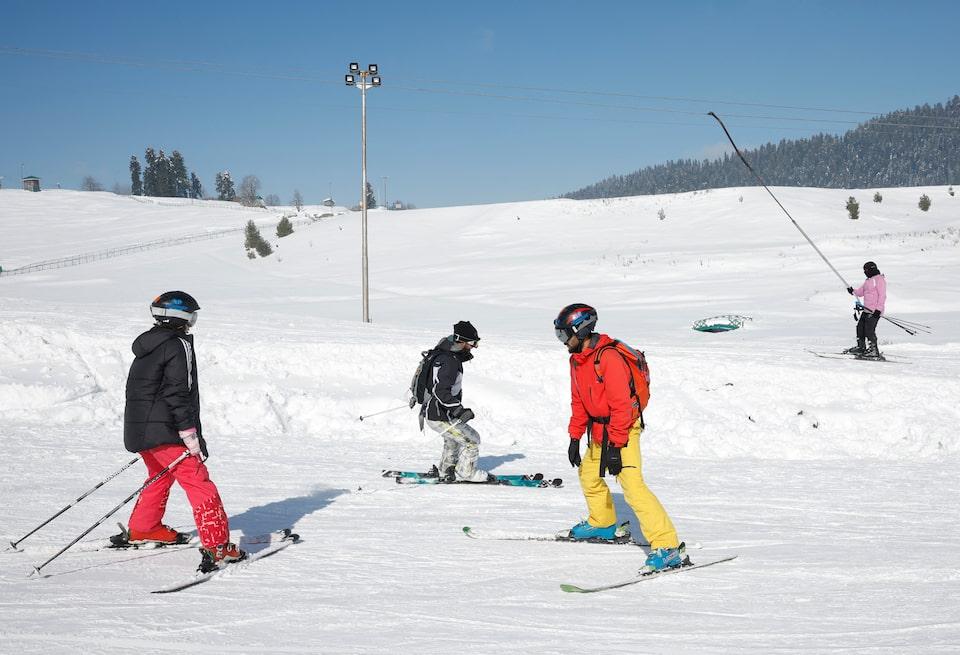
SRINAGAR, Feb 17 (Reuters) - India postponed its national winter games on Monday citing a lack of snow in the northern Kashmir territory's ski resort of Gulmarg, where the event was to be held this month. Around 300 athletes were expected to compete in four snow sports - ski mountaineering, alpine skiing, snowboard, and Nordic skiing - in the games, which had been due to be held from February 22 to 25. "We have decided to postpone the event as key ski slopes lack sufficient snow," Rauf Tramboo, president of the Winter Games Association of Jammu and Kashmir, told Reuters. The slopes normally get seven to eight feet (about 2 meters) of snowfall. A new assessment will be conducted once the snow conditions improve and a revised update will follow, the Kashmir Sports Council said on Monday. A similar lack of snowfall last January had caused a drop in visitors to ski resorts and hotels in the Himalayan region, which is claimed in full by India and Pakistan but ruled in part by both. As Kashmir sees a 79% rainfall deficit so far this year, experts fear the prevailing hot and dry weather could also affect its horticulture sector - the primary contributor to its economy - cause forest fires, and dry up lakes. Kashmir produces 2.5 million metric tons of fruit annually, with apple being its main crop, and is known for its snow-topped mountains, scenic lakes, lush meadows, and tulip gardens. "In February, we recorded temperatures 12 degrees Celsius (53.6°F)above normal. This has caused crops that should remain dormant until late February to become active in winter only," said agrometeorologist Sameera Qayoom, adding this was a "worrying pattern". Dozens of springs in Kashmir have already dried up because of the dry weather, including one at the 17th century Mughal Garden in Achabal town, located about 70 km (40 miles)south of the summer capital Srinagar. Sign up here. https://www.reuters.com/world/india/india-postpones-winter-games-kashmir-citing-insufficient-snowfall-2025-02-17/
2025-02-17 10:30
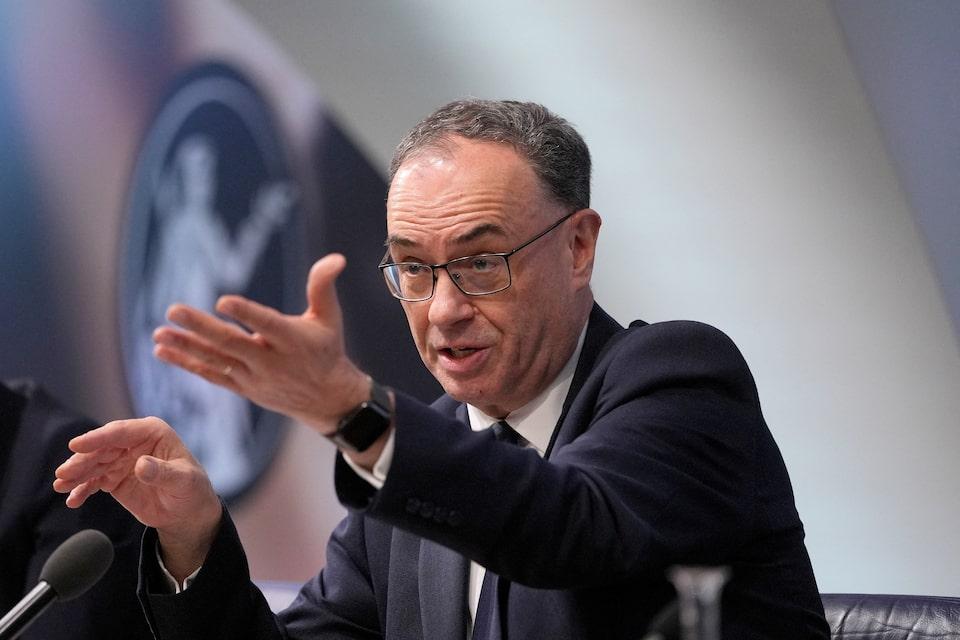
LONDON, Feb 17 (Reuters) - Bank of England Governor Andrew Bailey said in an interview , opens new tab published on Monday that inflation was slowing and an expected pick-up in price growth later this year was unlikely to embed longer-term inflation pressures in the economy. Part of the forecast increase in inflation was due to regulated price increases - for items such as domestic energy and water - while the sluggish state of the economy was also likely to act against inflation, Bailey told regional business news website BusinessLive on a visit to south Wales. "The context is not really supporting the view that we will get more persistence, so we looked through that," he was quoted as saying, adding that recent data showing the economy grew by 0.1% in the fourth quarter did not change the big picture. Earlier this month, the BoE cut its benchmark interest rate to 4.5% from 4.75% as it halved its forecast for economic growth in 2025 to 0.75%. But it also said inflation was likely to hit 3.7% later this year, almost double the BoE's 2% target, prompting the central bank to add the word "careful" to its message about a likely "gradual" further reduction in borrowing costs. "We still see the gradual disinflation going on. The after-effects of what happened two or three years ago are wearing off, but it is a gradual process," Bailey told BusinessLive. "And careful was really because the risks are two-sided for me." He repeated his view that U.S. trade tariffs could either push up or lower inflation in Britain depending on their impact on the world economy. Bailey said he was encouraged by Federal Reserve Chair Jerome Powell saying he expected the United States to implement the so-called Basel 3.1 rules on bank capital. In January, the BoE delayed implementing the rules in Britain by a year to January 2027 to get clarity on what the United States will do under Donald Trump as president. Sign up here. https://www.reuters.com/markets/bank-englands-bailey-says-inflation-is-slowing-2025-jump-will-not-last-2025-02-17/