2025-02-17 06:55
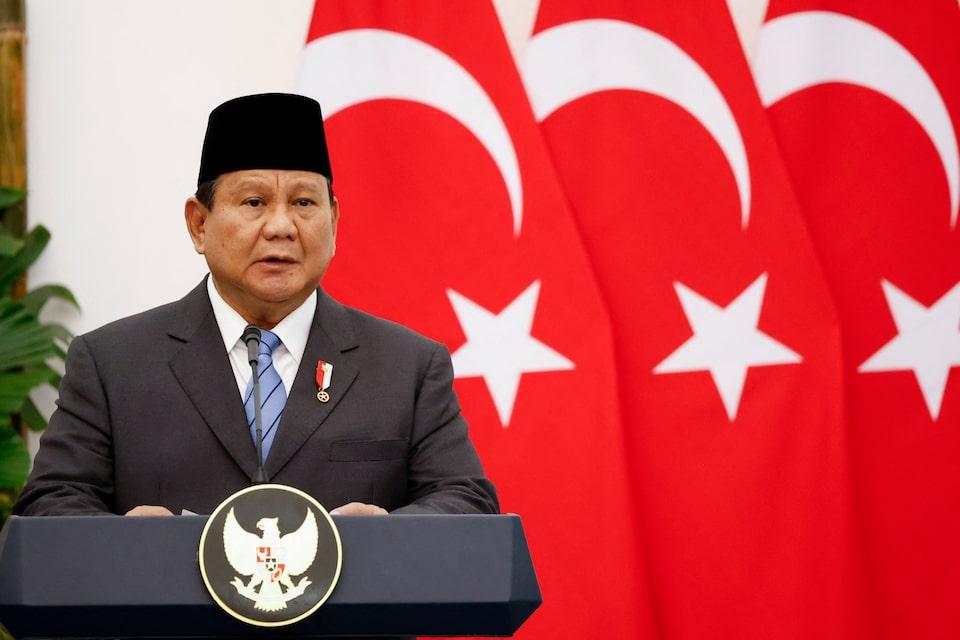
JAKARTA, Feb 17 (Reuters) - Indonesian President Prabowo Subianto on Monday signed a regulation requiring exporters of resources other than oil and gas to hold all proceeds locally for at least a year, which he said would add $80 billion to the country's forex reserves. "Indonesia's natural resources must benefit the welfare of the nation and the people, through development funding, the circular flow of money domestically, increase in foreign exchange reserves and stability of the exchange rate," Prabowo told a televised press conference. The new measure will be effective March 1, the president said. Since 2023, Indonesia has required all resource exporters to keep 30% of the proceeds from every export with a shipping document worth at least $250,000 in the local financial system, but Prabowo said exporters still preferred to keep their earnings in banks outside of Indonesia. Under the new regulation, exporters will be allowed to use the proceeds if they are converted into rupiah, or for business operations such as dividend payments, procurement of raw materials or repayment of loans, Prabowo said. Oil and gas exporters will only have to keep 30% of proceeds on onshore, in line with the 2023 rule. Much of the details of Prabowo's new regulation had already been announced by his chief economic minister, Airlangga Hartarto. Airlangga last month said the central bank would continue to offer instruments to exporters to place their funds and that the government would remove taxes on capital gains from such deposits. Sign up here. https://www.reuters.com/markets/asia/indonesia-president-signs-regulation-keeping-export-proceeds-onshore-2025-02-17/
2025-02-17 06:52
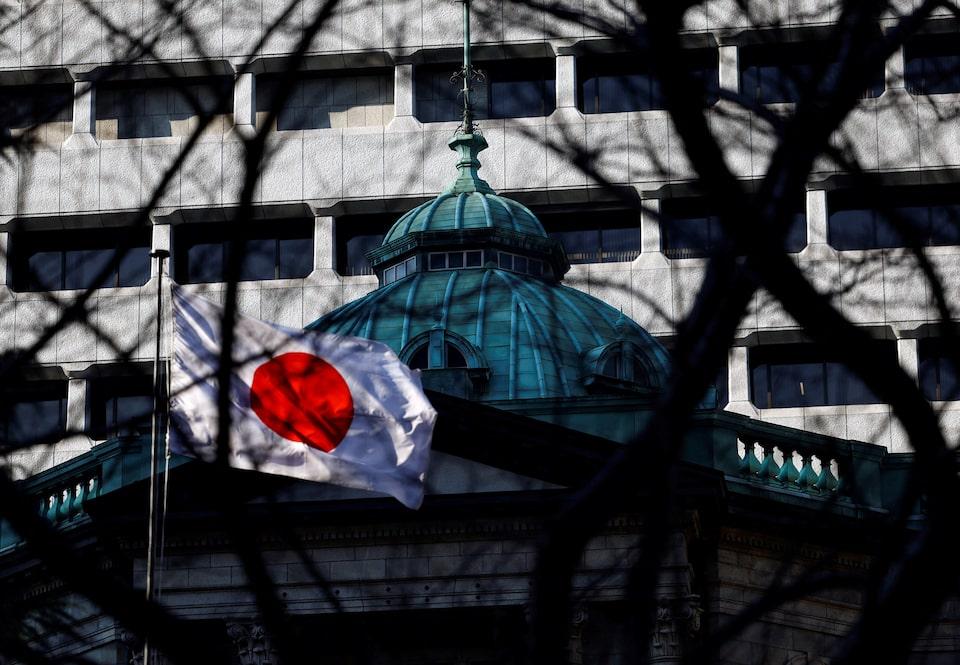
Markets converging towards view BOJ will next hike in July Bond yields rise on awareness BOJ might hike rates beyond 1% Board member Takata's Wednesday speech may offer policy clues US focus on 'currency manipulation' may help BOJ hike rates TOKYO, Feb 17 (Reuters) - Hawkish comments from the Bank of Japan and sticky inflation are lifting bond yields to multi-year highs and pushing forward rate hike expectations, shaking long-held views that rates would not rise much in the historically deflation-prone economy. Mitsubishi UFJ Morgan Stanley Securities said on Monday it now expects the BOJ to raise interest rates to 0.75% in July from 0.5% currently, instead of in October-December. It also pushed forward the timing of a subsequent hike to 1.0% to January 2026 from the final quarter of that year, pointing to growing signs that price pressures will persist. Former BOJ official Nobuyasu Atago sees the chance of a hike at the April 30-May 1 meeting, given the BOJ's rising attention to the risk of an inflation overshoot. "The BOJ's next rate hike could come unexpectedly soon. Markets are probably starting to price that in," he said on recent rises in Japanese bond yields. Japanese government bond yields have risen as markets rethink their view that the BOJ won't push up rates beyond 1% - the lower end of its staff estimate that puts Japan's nominal neutral rate in a range of 1% to 2.5%. The benchmark 10-year yield rose 2.5 basis points to 1.375% on Monday, hitting the highest level since 2010. The five-year yield also rose 3.5 points to 1.040%, a level unseen since 2008. Japan's solid October-December GDP data on Monday, coupled with recent strong inflation, have pushed up the yen and bond yields by cementing expectations of a near-term rate hike. BOJ board member Hajime Takata's speech and news conference on Wednesday will be scrutinised by markets for clues on the timing and pace of further rate hikes. The BOJ raised short-term rates to 0.5% in January and signaled its readiness to hike further on the view the economy was progressing towards durably hitting its 2% inflation target. In a quarterly report issued on January 24, the BOJ included analyses on how chronic labour shortages are leading to growing wage-driven inflation - building the case for more rate hikes. A week later, BOJ Deputy Governor Ryozo Himino said it was "not normal" for Japan's real interest rates to remain negative for too long. Board member Naoki Tamura also said earlier this month the BOJ must raise rates to at least 1% by early 2026. The hawkish BOJ signals have led markets to price in a roughly 80% chance of a rate hike to 0.75% in July. A private sector survey showed most economists projecting the next hike to come in the latter half of this year. Former BOJ board member Makoto Sakurai, who retains close contact with incumbent policymakers, expects the BOJ to raise rates to at least 1.5% in the next two years. The International Monetary Fund sees Japan's neutral rate, the level at which policy neither slows nor fuels growth, to be in a band of 1% to 2% with a mid-point of 1.5%, and predicts the BOJ to hike rates around that level by the end of 2027. Some analysts see U.S. President Donald Trump's focus on fixing trade imbalances as working in favour of BOJ rate hikes by watering down the Japanese government's historic resistance to a stronger yen and, by association, higher rates. U.S. Treasury Secretary Scott Bessent said on Friday Washington would look at whether countries are engaging in currency manipulation, in setting plans for reciprocal tariffs. "The Japanese government is mindful of the political risk of being seen (by Washington) as leaving the weak yen unattended," said Naomi Muguruma, chief bond strategist at Mitsubishi UFJ Morgan Stanley Securities. Sign up here. https://www.reuters.com/markets/asia/japan-braces-boj-lift-rates-sooner-higher-2025-02-17/
2025-02-17 06:48
Arkenu exported 7.6 million barrels of Libyan oil since May Eastern commander's son has indirect control, U.N. report says National Oil Corp historically Libya's sole crude exporter DUBAI/LONDON, Feb 17 (Reuters) - A Libyan company linked to the powerful faction that controls eastern Libya has exported oil worth at least $600 million since May, marking an end to the National Oil Corporation's monopoly on exports, according to shipping records and U.N. experts. The shipments by the little-known Arkenu Oil Company, which was set up in 2023, are the first by a private Libyan company and mean some of the country's oil revenue is likely being channelled away from the Central Bank of Libya. Ever since the fall of Muammar Gaddafi in 2011, Libya has been riven by disputes between armed factions and it is largely split, with an internationally recognised government based in Tripoli in the west and a rival administration in the east, which is controlled by the forces of military commander Khalifa Haftar. The disputes have often centred on the distribution of oil revenue by the central bank in Tripoli. Haftar's forces, which control most of Libya's oilfields, have periodically shut down production or exports, most recently in August last year, to ensure money continues to flow east. Reuters was unable to determine who owns Arkenu. However, a U.N. panel of experts said in a Dec. 13 report , opens new tab to the Security Council that Arkenu was indirectly controlled by Saddam Haftar, one of Khalifa Haftar's sons. "This is a striking precedent that reflects the growing influence of armed actors over the oil sector," said Charles Cater, director of investigations at The Sentry, an international investigative and policy group. Reuters also reviewed more than two dozen documents, including bills of lading, government decisions and oil company letters for this article, as well as interviewing diplomatic and trading sources and Libya experts. According to its website and LinkedIn profile, Arkenu is headquartered in Benghazi, a Mediterranean port city in eastern Libya with an oil terminal under the control of Haftar's forces. The company was set up in early 2023 by former employees of the state-owned National Oil Corporation (NOC), according to two of the sources. Reuters sent emails with detailed requests for comment to two addresses on Arkenu's website but did not receive a reply. Reuters also contacted a spokesman for the Libyan National Army, which Haftar commands, without receiving a reply. OPEC MEMBER Saddam Haftar was appointed chief of staff of the army's ground forces in May last year, allowing him to affirm control over its relations with neighbouring countries and its economic interests, according to the U.N. report. Arkenu was first connected to oil exports when it was awarded ownership of a May cargo by the Arabian Gulf Oil Company (AGOCO), a subsidiary of the NOC, according to a letter dated July 11 seen by Reuters. Since then, Arkenu has exported another seven oil cargoes, taking its total exports between May and December 2024 to 7.6 million barrels, according to shipping records, worth about $600 million, according to average monthly Brent crude prices. U.S. oil major Exxon Mobil (XOM.N) , opens new tab bought one of the cargoes destined for Italy on Oct. 28, according to data from LSEG and Kpler and documents reviewed by Reuters. A person familiar with the matter said Exxon bought the cargo from another trader, not directly from Arkenu. Unipec, the trading arm of the world's largest refiner, China's state-owned Sinopec, bought at least two more, destined for Britain and Italy. Sinopec did not reply to a request for comment. It was not immediately clear if Sinopec bought the cargoes directly from Arkenu, or from another trader. The NOC, AGOCO and the central bank did not reply to requests for comment. The oil ministry declined to comment. Libya, currently Africa's second-largest oil producer and a member of the Organization of the Petroleum Exporting Countries (OPEC), has been in a state of chaos since Gaddafi's overthrow, but oil exports had remained under central government control. The NOC, which has long operated independently and maintained political neutrality in the volatile country, still accounts for the bulk of Libyan exports. It shipped some 264 million barrels of oil worth nearly $21 billion during the same period covering Arkenu's eight shipments, based on Kpler data and Reuters calucations. SARIR AND MESSLA FIELDS Payments for NOC's crude cargoes are typically made in dollars to the central bank's account at the Libyan Foreign Bank in New York, before being moved to the Tripoli government's account with the central bank. Payments for the Arkenu cargoes, however, were requested to be made to accounts at Dubai state-linked bank Emirates NBD and Banque de Commerce et de Placements SA in Geneva, the shipping documents showed. Reuters was unable to determine whether the payments were made to those accounts, nor where the money may have ended up subsequently. Emirates NBD said it was unable to confirm or deny any client relationships due to internal policies and regulatory obligations. Banque de Placement also said it did confirm or deny any client relationships as a matter of policy. U.N. experts have said Haftar is backed by Egypt, Russia, and the United Arab Emirates. He lived in the U.S. for 20 years until he returned to join rebels in ousting Gaddafi. In 2014, he launched the Battle of Benghazi, which has been his stronghold ever since and his forces hold a tight grip over the east of Libya, where most of the country's main oilfields are located. Besides being allowed to export crude, Arkenu was also made a partner in the major Sarir and Messla oilfields, according to an NOC letter seen by Reuters dated July 10, during the tenure of then NOC Chairman Farhat Bengdara, who resigned last month. The letter did not give details on how the partnership will work. The two fields are run by NOC's subsidiary AGOCO and account for most of its output of roughly 300,000 barrels per day of high quality crude - the same grade Arkenu has been exporting. "There seems to be no evidence that Arkenu has actually performed any services or development work at the Mesla and Sarir oil fields," said Cater at The Sentry. "As a result, Arkenu's claims to hundreds of millions of dollars from the NOC, paid in the form of oil export cargoes, raise serious red flags for potential corruption." Arkenu also became a partner with the NOC in developing three smaller oilfields - Sultan and Latif in Libya's east and Tahara in the west - according to a 2023 cabinet decision seen by Reuters dated November 2023. The U.N. report said members of armed factions had been appointed to different positions at the NOC itself as part of a reshuffle that included setting up an office at a different site responsible for service agreements with private companies. "Among them was an agreement with the first private oil company in Libya, Arkenu Oil Company," the U.N. report said. Sign up here. https://www.reuters.com/business/energy/libyas-first-private-oil-firm-grows-eastern-commanders-shadows-2025-02-17/

2025-02-17 06:35
MOSCOW, Feb 17 (Reuters) - The deputy governor and agriculture minister of Russia's Rostov region, a major grain-producing province, Konstantin Rachalovsky, has been detained by law enforcement, state news agency TASS reported on Monday. TASS reported that Rachalovsky had been charged with exceeding his authority, resulting in damages of almost 156 million roubles ($1.70 million). RIA Novosti cited the local FSB security service as saying the money was part of the state subsidies program for agricultural enterprises. Rachalovsky has been the region's top agriculture official since 2014. Rostov is Russia's top grain-producing region, harvesting about 11% of all Russia's grain in 2023. The region also stands for about 20% of all Russia's agricultural exports. The region's crops were badly hit by extreme weather last year. Rostov's veteran governor Vasily Golubev, who had run the region since 2010, was replaced by President Vladimir Putin in November of 2024. ($1 = 91.5000 roubles) Sign up here. https://www.reuters.com/world/europe/top-agriculture-official-russian-grain-producing-region-arrested-tass-reports-2025-02-17/

2025-02-17 06:30
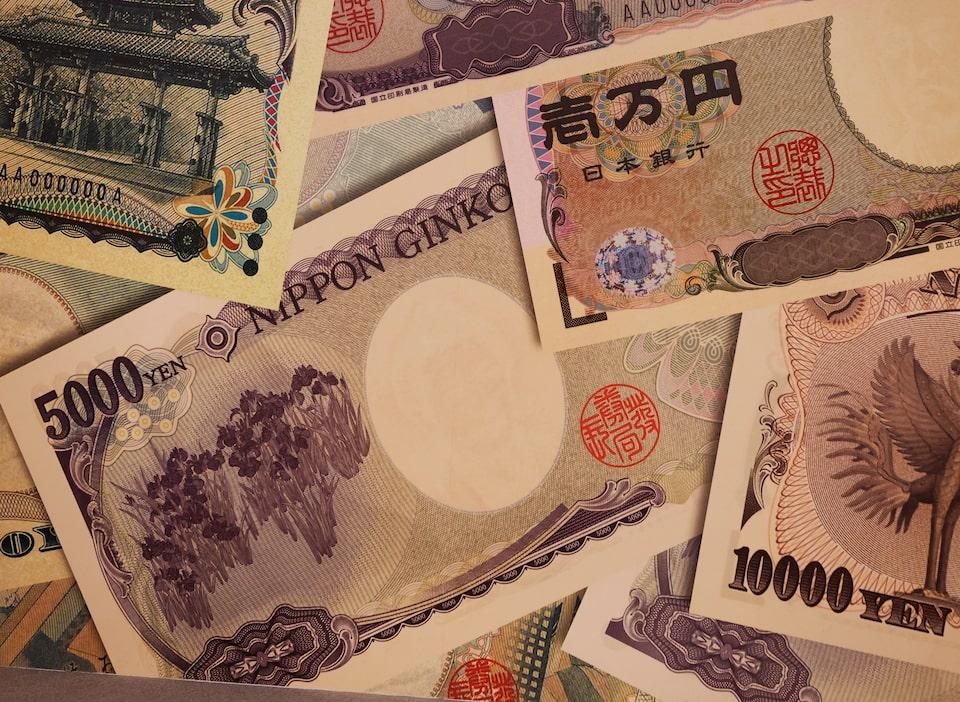
Yen rises on better-than-expected Q4 GDP data Dollar broadly on the back foot RBA, RBNZ expected to deliver rate cuts this week SINGAPORE/LONDON, Feb 17 (Reuters) - The yen rose on Monday in a boost from upbeat Japanese growth data, while the dollar hovered near its lowest in two months after investors dialled down their bets on U.S. tariffs. The dollar last traded down 0.58% against the yen at 151.44 after data showed Japan's economy grew more than expected in the fourth quarter on improved business spending and a surprise rise in consumption. That cemented the case for more rate hikes from the Bank of Japan this year. Markets are now pricing in roughly another 37 basis points worth of increases by December. "The key takeaway for us is that the nominal household consumption grew significantly faster than real consumption and their divergence remained wide, which may activate the BOJ's inflation fighting mode," said Krishna Bhimavarapu, APAC economist at State Street Global Advisors. "At the very least, this data removes the fears of stalling consumption, and is positive for the BOJ to deliver another hike, which could now come sooner rather than later." In the broader market, the dollar was struggling to recoup its losses after a selloff on the back of Friday's weak U.S. retail sales data and as investors cheered a delay in the implementation of President Donald Trump's reciprocal tariffs. U.S. stock and bond markets were closed, with traders off for Presidents' Day, although the dollar was still trading on international markets. The dollar index last stood at 106.76, flat on the day, after tumbling 1.2% last week. It fell to 106.56 on Friday, its lowest since mid-December. GEOPOLITICS IN FOCUS Geopolitics remained in focus with reports that talks aimed at ending the Russian-Ukraine conflict will begin in Saudi Arabia this week. The euro was last down 0.1% at $1.0482, having traded at its highest in two weeks on Friday at around $1.051. Sterling was up 0.1% at $1.2596, after hitting a two-month high of around $1.263 on Friday. "The dollar weakness... was a function of both ongoing optimism that maybe tariffs are not going to be as disruptive as originally thought - that of course, remains to be seen, the Ukraine story is still bubbling in the background there," said Rodrigo Catril, senior FX strategist at National Australia Bank. "And then the data, of course, playing to the idea that maybe the U.S. exceptionalism is running out of steam, so it's weighing on the U.S. dollar." The Australian dollar rose to a two-month high against a weaker dollar and last bought $0.6366, ahead of a rate decision from the Reserve Bank of Australia (RBA) on Tuesday. The RBA is expected to deliver a quarter-point cut, marking its first reduction in over four years as it joins other major central banks in their easing cycles. The kiwi similarly scaled a two-month top before paring some gains to trade at $0.5736, ahead of the Reserve Bank of New Zealand's policy decision on Wednesday, where markets have priced in a 50 basis-point reduction. Sign up here. https://www.reuters.com/markets/currencies/yen-gains-aussie-kiwi-steady-before-rate-decisions-2025-02-17/
2025-02-17 06:11
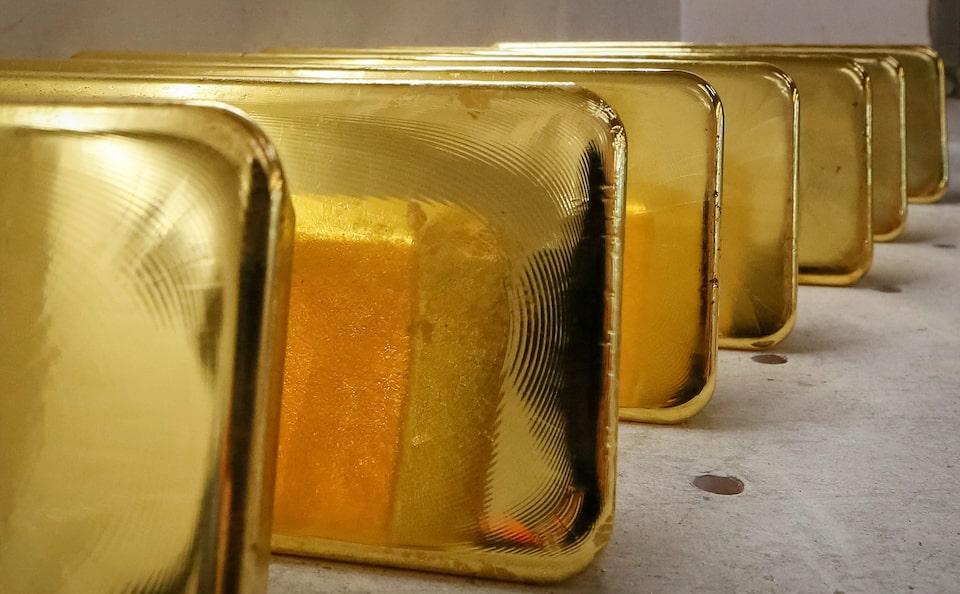
Bullion hit record high of $2,942.70/oz last week Trump keeps tariff drumbeat going, with autos targeted next Fed officials due to speak later in the week Feb 17 (Reuters) - Gold prices rose back above $2,900 per ounce on Monday, supported by a weaker dollar and fears of a trade war as U.S. President Donald Trump threatened reciprocal tariffs. Spot gold was up 0.5% to $2,897.49 as of 2:10 p.m. ET (1910 GMT), retreating from an intraday high of $2,906.38. It hit a record high of $2,942.70 last week. U.S. gold futures gained 0.3% to $2,910.30. The U.S. dollar hovered near a two-month low, making bullion less expensive for buyers holding other currencies. "Gold is still benefiting from investors looking for safe-haven assets amid concerns of a tariffs and trade war," UBS analyst Giovanni Staunovo said. "We continue to see upside for gold, with the yellow metal expected to rise to $3,000, benefiting also from ongoing central bank demand." On Friday, Trump kept to his drumbeat of tariff threats, saying levies on automobiles would come as soon as April 2. It was the latest in a series of trade actions he has unveiled since taking office for the second time. Ukraine peace talks emerged as a key market focus. U.S. Secretary of State Marco Rubio said on Sunday that Kyiv and Europe would be part of any "real negotiations" to end Russia's war in Ukraine. "We remain watchful of possible lower central bank demand (for gold) that may arise in the event of a potential Russia/Ukraine peace deal," said Morgan Stanley in a note dated Friday. Bullion is viewed as a traditional hedge against inflation and geopolitical uncertainties, but higher interest rates dull non-yielding bullion's appeal. Some Federal Reserve officials are set to speak later in the week, and market participants will be on the watch for any clues on the path for U.S. interest rates. U.S. markets are closed for the Presidents' Day holiday. Spot silver rose 0.8% to $32.40 an ounce after hitting its highest level since October 31 on Friday. Platinum fell 0.1% to $979.07, and palladium climbed 1.4% to $974.99. Sign up here. https://www.reuters.com/markets/commodities/gold-gains-easing-us-dollar-trump-tariff-moves-eyed-2025-02-17/