2025-02-14 20:12
CHORNOBYL, Ukraine, Feb 14 - A Russian drone attack badly damaged the confinement structure around the disused Chornobyl nuclear power plant intended to prevent the release of nuclear substances, a senior nuclear industry official said on Friday. Ukrainian President Volodymyr Zelenskiy and the International Atomic Energy Agency had earlier reported that radiation levels remained normal at the plant, site of the world's worst nuclear accident in 1986. "The barrier which was supposed to prevent the spread of radioactive substances has ceased to function according to its original design," Oleksandr Tytarchuk, the plant's chief engineer, told reporters at the stricken plant. "However, to minimise the consequences that you can all see now, we will do everything possible in the near future." Tytarchuk said the drone had pierced the outer cover of the containment vessel and exploded inside. The containment vessel was completed in 2019 to cover the vast, and deteriorating, steel and concrete structure hurriedly erected after the April 1986 explosion in the plant's fourth reactor. "The drone hit the outer cover, pierced it, fell into the system and exploded there," Tytarchuk said. Had the explosion occurred 15-20 metres (50-65 feet) farther away, he said, "it would have directly hit the old shelter, which is 40 years old." Emergency crews clambered over the roof of the structure, attending to a large gaping hole. Andriy Danyk, head of Ukraine's Emergency Services, said personnel working at the site were being constantly rotated. "We are ensuring that no one receives any radiation exposure," he said. "There are no excessive levels at the site." Hryhory Ishchenko, head of the exclusion zone still in effect around the plant, said that by general agreement, drones are not shot down around nuclear sites. The 1986 explosion at Chornobyl sent radiation spewing out across Europe and prompted Soviet authorities to mobilise vast numbers of men and equipment to deal with the aftermath of the accident. The plant's last working reactor was closed in 2000. Russia occupied the plant and the surrounding area for more than a month in the first weeks of its February 2022 invasion of Ukraine as its forces initially tried to advance on the Ukrainian capital Kyiv. Sign up here. https://www.reuters.com/world/europe/russian-drone-attack-damaged-chornobyl-plants-confinement-structure-chief-2025-02-14/

2025-02-14 20:02
US administration focuses on long-term yields Swap spreads widen as officials hint at capital rule review Leverage ratio reform could improve demand for Treasuries Renewed focus comes amid broader Treasury market reforms NEW YORK, Feb 14 (Reuters) - The Trump administration's pledge to contain long-term U.S. Treasury yields has strengthened bond market expectations that a long-desired regulatory shift on bank leverage requirements could be finally looming. Some traders are betting regulators may soon focus on a review of the Supplementary Leverage Ratio (SLR), a rule requiring big U.S. banks to hold an extra layer of loss-absorbing capital against U.S. government debt and central bank deposits. The possible policy change would mean banks would not need to set aside as much extra money when they hold safe assets like Treasuries. This could eventually help push U.S. Treasury yields lower, some investors and analysts said, by giving banks more leeway to hold Treasuries and likely boosting demand. The anticipation comes after U.S. Treasury Secretary Scott Bessent said last week that President Donald Trump's administration was focused on containing 10-year Treasury yields, a building block of global financial markets and a benchmark for consumers' borrowing costs. The White House and the Treasury Department did not immediately respond to requests for comment. Ryan O'Malley, head of portfolio management at Ducenta Squared Asset Management, said a potential review of the SLR would be positive for the Treasury market and other debt assets, which would benefit from banks freeing up their balance sheets. "It will increase their demand for Treasuries and other assets. It will also probably strengthen banks' credit profile," he said. The SLR was introduced as part of regulatory efforts following the 2008 global financial crisis. Over time, however, many Treasury market participants have come to see it as a major obstacle to banks providing liquidity to traders, particularly at times of heightened volatility. The Bank Policy Institute (BPI), a trade association representing large U.S. banks, said in a recent paper that a recalibration of the ratio would be crucial to preserving market functioning, particularly given the prospect of rising government debt issuance due to large budget deficits. "We think changes to the SLR could be made relatively quickly," Francisco Covas, executive vice president and head of research at BPI, told Reuters in an interview. The SLR should be near the top of the list of capital priorities for U.S. regulators, Covas added, referring to the Federal Reserve, the Office of the Comptroller of the Currency, and the Federal Deposit Insurance Corporation. Spreads of swap rates over Treasury yields have widened in recent days, a sign that investors are starting to anticipate a review of the rule. Interest rate swaps allow traders to hedge interest rate risk by exchanging a floating rate for a fixed rate, or vice versa. Swap spreads, which have been deeply negative over the last few years, widened - or become less negative - following Bessent's comments on the 10-year yield, and after recent Fed policymakers' hints at SLR revisions. The 10-year and 30-year swap spreads have gone up by about five and 10 basis points over the past week, hitting their widest since June 2024 and December 2023, respectively. TREASURY MARKET RESILIENCE The Fed in April 2020 temporarily excluded Treasuries and central bank deposits from the SLR to boost liquidity as Covid-19 pandemic fears gripped investors. But it let that exclusion expire the following year. Fed Chair Jerome Powell told Congress this week he was supportive of reducing the ratio, saying it would help Treasury market liquidity. Fed Governor Michelle Bowman also addressed the SLR in a speech , opens new tab last week, saying the Fed should "take action to address the unintended consequences of bank regulation." Travis Hill, acting chairman of the FDIC, mentioned the SLR in remarks last month in which he called for an overhaul of other U.S. capital rules. The renewed focus on the SLR comes amid broader regulatory efforts to improve liquidity in the Treasury market. One key reform is a rule adopted by the SEC in December 2023 which will force more trades through clearing houses. It will be implemented in phases by June 2026, even though Wall Street associations have recently asked regulators for more time to implement it. "In light of the U.S. Treasury clearing mandate ... we want to make sure that the SLR is not one of the areas that could impede the ability of banks to support the U.S. Treasury market," said Lisa Galletta, head of U.S. prudential risk at the International Swaps and Derivatives Association. ISDA has advocated for a reform of the rule. Changes to the SLR, however, may only have a marginal impact on reducing risk premiums demanded by investors, which influence yields, and could carry some risk, said Deutsche Bank in a recent note. "By lowering the resilience of the banking system, it increases the probability of banking stress that would require a fiscal response," analysts said. Sign up here. https://www.reuters.com/markets/us/trumps-focus-us-yields-fuels-bets-bank-leverage-rule-review-2025-02-14/
2025-02-14 19:22
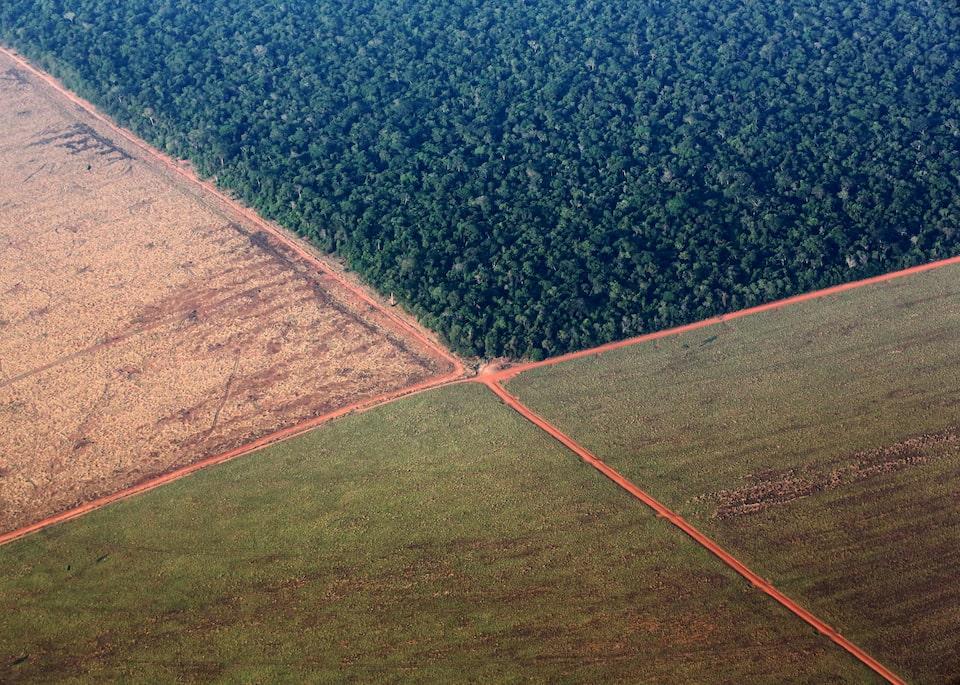
SAO PAULO, Feb 14 (Reuters) - A powerful Brazilian soy grower lobby is recommending farmers reject the inclusion in soy purchase and sale contracts of the obligation to comply with the European Union anti-deforestation law, according to a statement on Friday. Europe's landmark legislation will ban the import of beef, soy and other goods linked to the destruction of forests after December 2020. Global traders tried to impose such a rule in contracts with farmers based in Goias state, an Aprosoja Brasil spokesperson said, adding the group then decided to advise farmers nationwide not to comply. The group's stance highlights growing resistance in Brazil to measures imposed by foreign nations aimed at halting deforestation to counter the global climate crisis, which it says affront the country's sovereignty. Brazil's so-called soy moratorium pact, whereby trading companies voluntarily committed not to buy soy grown in deforested areas in the Amazon after 2008, has also been under threat. Soy processor lobby Abiove said seeking soy farmers compliant with the new anti-deforestation regulation is part of the preparation to continue supplying clients in the EU. However, Abiove warned that "uncertainties regarding how the EU will apply the new rules remain very high and they need to be resolved otherwise they will have an impact on current trade." The farmer group said the "only scenario" in which a farmer should choose to comply with the EU anti-deforestation law would be if the market offered "a premium" on the price of soy produced in the area not deforested after 2020. Last December, application of the new EU legislation was postponed by a year after industry lobbies requested more time to adapt. The EU is the main destination for Brazil's soymeal, with the bloc purchasing almost half of the country's exports. China is Brazil's main soybean buyer while Spain is a large EU importer of the raw beans. Clearing land for agriculture is legal under Brazil's forestry code. Brazilian law states that farmers must preserve between 20% and 80% of legal reserves, depending on the biome where they are planting. For Aprosoja Brasil, Brazilian environmental legislation applied to rural properties is among the most restrictive in the world. Sign up here. https://www.reuters.com/markets/commodities/brazil-soy-lobby-tells-growers-reject-eu-anti-deforestation-rule-contracts-2025-02-14/
2025-02-14 19:13
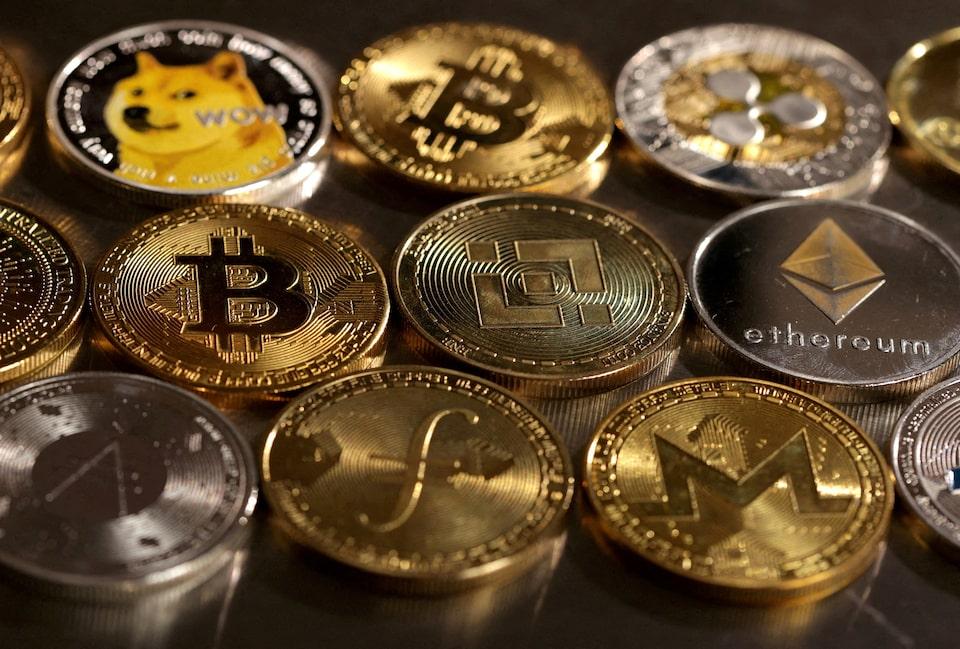
Feb 14 (Reuters) - The rise of "pig butchering" scams and the increasing use of generative artificial intelligence likely lifted revenues from crypto scams to a record high in 2024, according to blockchain analytics firm Chainalysis. Revenue from pig butchering scams, where perpetrators cultivate relationships with individuals and convince them to participate in fraudulent schemes, increased nearly 40% in 2024 from the previous year, the firm estimated in a report published on Thursday. Revenue in 2024 from crypto scams was at least $9.9 billion, although the figure could rise to a record high of $12.4 billion once more data becomes available, it said. "Crypto fraud and scams have continued to increase in sophistication," Chainalysis researchers said. The company pointed to marketplaces that support pig butchering operations and the use of GenAI as factors making it easier and cheaper for scammers to expand operations. Indeed, GenAI technology could potentially "exponentially scale crypto scams", Chainalysis said. The company, which tracks publicly available transaction data on the blockchain to identify scam revenue, said crypto fraud activity grew 24% each year on average since 2020. Cryptocurrencies, most notably bitcoin, have soared in price and popularity over the past few years as investors chased banner returns and interest in blockchain technology soared. The sector has jumped significantly since U.S. President Donald Trump's victory in the November election on hopes of an easier regulatory environment. Other particularly lucrative scams included crypto drainers, where scammers pose as blockchain projects and take control of victims' crypto wallets, and high-yield investment scams that promised outsized returns, according to Chainalysis. In January 2024, a crypto drainer posed as the U.S. Securities and Exchange Commission after the regulator's X account was compromised. Cryptocurrency ATMs have also been key hotspots for scams, according to Chainalysis, with perpetrators often impersonating government officials or customer support agents to convince victims to deposit cash into the machines. Sign up here. https://www.reuters.com/technology/crypto-scams-likely-set-new-record-2024-helped-by-ai-chainalysis-says-2025-02-14/
2025-02-14 18:18
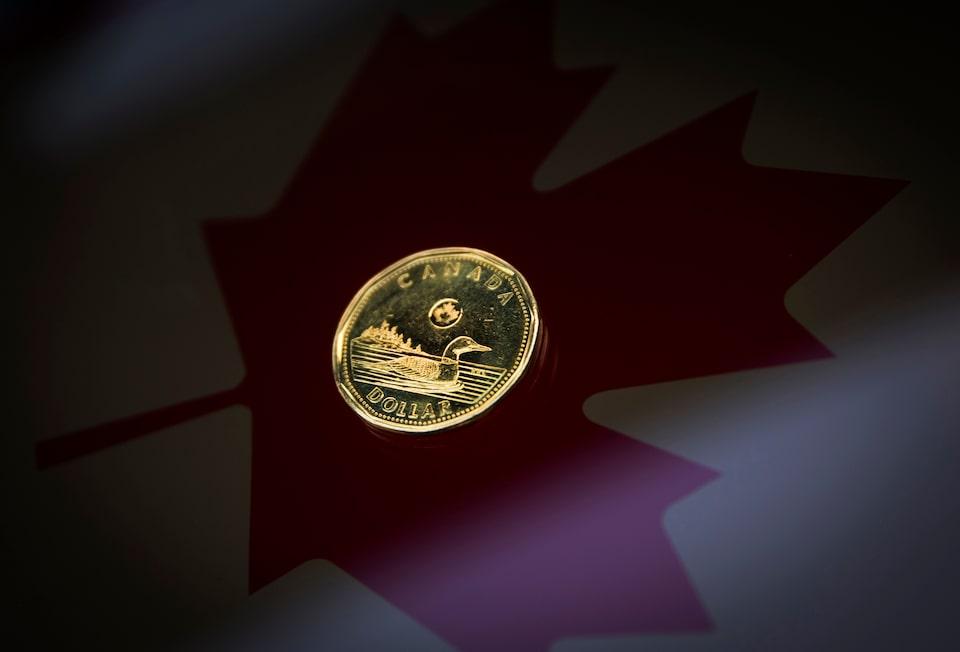
Canadian dollar gains 0.1% against the greenback Touches a two-month high at 1.4152 Factory sales rise 0.3% in December Bond yields ease across the curve TORONTO, Feb 14 (Reuters) - The Canadian dollar edged up to a two-month high against its U.S. counterpart on Friday as investors grew skeptical that the trade tariffs threatened by U.S. President Donald Trump would be as severe as first thought. The loonie was trading 0.1% higher at 1.4170 per U.S. dollar, or 70.57 U.S. cents, after touching its strongest intraday level since December 12 at 1.4152. For the week, the currency strengthened 0.9%, its second straight weekly gain. "Markets braced yesterday for what President Trump called ‘the big one’, referring to reciprocal tariffs. To their relief, what was delivered was vague and delayed until early April, after studies are completed," said Michael Goshko, senior market analyst at Convera Canada ULC. "This has become a familiar pattern that Mr. Trump’s tariff bark is worse than his bite, resulting in stocks, bonds, and currencies rallying." A directive signed by Trump on Thursday stopped short of imposing more tariffs, instead kicking off what could be weeks or months of investigation into the levies imposed on U.S. goods by other trading partners and then devising a response. Last week, Trump delayed a 25% tariff on goods from Mexico and Canada for a month until March 4. The U.S. dollar (.DXY) , opens new tab lost ground against a basket of major currencies, weighed additionally by weaker-than-expected U.S. retail sales data. Canadian data was mixed. Factory sales grew by 0.3% in December from November on higher sales of petroleum and coal products, as well as food products, while wholesale trade was down by 0.2%. The price of oi , one of Canada's major exports, fell 0.5% to $70.95 a barrel as investors weighed the potential for a peace deal between Russia and Ukraine that would likely boost global energy supplies. Canadian bond yields eased across the curve, tracking moves in U.S. Treasuries. The 10-year was down 2 basis points at 3.097%. The bond market was set for an early close ahead of the Family Day holiday on Monday. Sign up here. https://www.reuters.com/markets/currencies/canadian-dollar-notches-second-straight-weekly-gain-us-tariff-delays-2025-02-14/
2025-02-14 17:47
Juventus shares rally after announcement Tether aims to merge tech with sports industry Size of the stake not disclosed Juventus struggling off and on the pitch MILAN, Feb 14 (Reuters) - Shares in Italy's top-flight soccer club Juventus (JUVE.MI) , opens new tab rallied on Friday, after cryptocurrency firm Tether said it had become a minority shareholder, without disclosing the size of its stake. Turin-based Juventus is controlled by Italy's Agnelli family through their investment company Exor (EXOR.AS) , opens new tab, which holds a 64% stake in Italy's most successful club. The holding did not sell any shares to Tether, a spokesperson said. On its website, Tether said the investment in the Milan-listed club had a "strategic" nature, as Juventus shares rose as much as 4.7% on heavy volumes, before paring gains and closing up 1.57% at 2.531 euros. "Make Juventus Great Again," Tether CEO Paolo Ardoino wrote on X. Juventus, which has been controlled by the Agnelli family for a century, had to raise around 900 million euros ($945.5 million) from its shareholders over the past six years in three separate cash call operations to beef up its balance sheet. It reported a loss of nearly 200 million euros in the financial year ending June 30. Tether has emerged as a dominant force in the booming market for stablecoins, which are designed to maintain a constant value by being pegged to traditional currencies and offer users a way to move money between cryptocurrencies without exposure to price swings. "Aligned with our strategic investment in Juve, Tether will be a pioneer in merging new technologies... with the well-established sports industry," Ardoino said in a company statement. After dominating the Italian soccer landscape for nearly a decade until 2020, Juventus was hit by an accounting scandal linked to player trading and salary payments, whose consequences included a ban on European competitions last season. The club, popularly known as the Bianconeri because of its black and white team jersey, currently ranks fifth in Italy's Serie A standings and is in a Champions League knockout phase playoff with PSV Eindhoven. ($1 = 0.9513 euro) Sign up here. https://www.reuters.com/markets/deals/crypto-firm-tether-investment-buys-minority-stake-juventus-soccer-club-2025-02-14/