2025-02-14 16:55
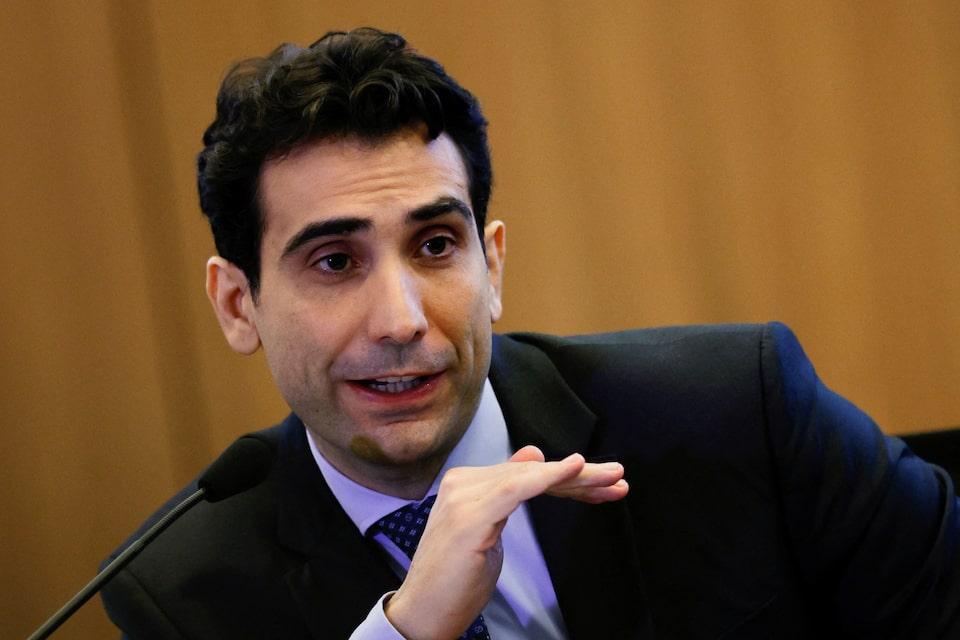
SAO PAULO, Feb 14 (Reuters) - Brazil's central bank chief on Friday acknowledged market concerns about how the bank would react to an economic slowdown but said it could not act preemptively on something that has yet to materialize. Speaking at an event hosted by industry group Fiesp, Gabriel Galipolo said the bank had moved decisively, raising rates by 100 basis points in January to 13.25% and signaling a matching hike for the next policy meeting in March. He said monetary tightening would have its intended effect and the central bank could not shy away from its inflation-fighting mandate. Policymakers want to ensure the data reflects an actual economic slowdown rather than short-term volatility, he added. "I think there is (market) uncertainty about what a reaction function might be from this slowdown," he said, acknowledging expectations that a slowdown could prompt some form of economic stimulus. Galipolo said acting preemptively is different when economic activity is clearly accelerating or slowing. "It's another thing to react to something the market sees or perceives as a possibility but that isn't actually there. It would be a mistake for monetary policy to act preemptively on a ghost," he added. Galipolo noted that asset markets have risen on relief that tariffs threatened by U.S. President Donald Trump have not been immediately imposed. He pointed out that there was initially widespread expectation that Trump's policies would be inflationary and that other currencies would depreciate against the U.S. dollar. The Brazilian currency , which lost more than 20% against the U.S. dollar in 2024, has risen nearly 8% year to date. Sign up here. https://www.reuters.com/world/americas/brazils-central-bank-chief-says-bank-cant-act-preemptively-economic-slowdown-2025-02-14/
2025-02-14 14:21
WASHINGTON, Feb 14 (Reuters) - The Trump administration is looking beyond tariffs and non-tariff barriers to examine currency manipulation as it studies the issue ahead of an April deadline, U.S. Treasury Secretary Scott Bessent said on Friday. "We're also looking at currency manipulation," Bessent said in an interview on Fox Business Network. "The U.S. has a strong dollar policy, but because we have a strong dollar policy, it doesn't mean that other countries get to have a weak currency policy." On Thursday, Republican U.S. President Donald Trump directed his economic team to develop plans for reciprocal tariffs on every country that taxes U.S. imports, raising the risk of a global trade war. Trump's memo stopped short of imposing more tariffs, but ordered his administration to calculate duties to match those other countries charge and to counteract non-tariff barriers by April 1. "We're going to come up with what is the equivalent of ... what I would call a reciprocal index: country by country, the outstanding tariffs, non-tariff, the trade barriers and currency manipulation," Bessent told FBN. Trump's planned tariffs could be very substantial if other countries did not reduce their tariffs, he added, with the ultimate tariff policies dependant on how trading partners respond. Sign up here. https://www.reuters.com/markets/us-looking-currency-manipulation-tariff-row-treasury-chief-says-2025-02-14/
2025-02-14 13:57
SAO PAULO, Feb 14 (Reuters) - President Luiz Inacio Lula da Silva said on Friday that Brazil would react to U.S. President Donald Trump's decision to issue tariffs on steel imports, suggesting his government could file a complaint at the World Trade Organization, or tax U.S. products. "I hear they are now going to tax Brazilian steel. If they do it, we will react commercially, either by filing a complaint to the WTO or taxing products we import from them," Lula said in a radio interview. The South American country is one of the largest sources of U.S. steel imports. Trump earlier this week substantially raised tariffs on steel and aluminum imports to a flat 25% "without exceptions or exemptions". Lula's remarks point to a more aggressive approach to the tariffs than his economic team had suggested in previous statements. Both his finance and trade ministers called for dialogue and potential negotiations with the United States. The White House in a fact sheet on Thursday - when Trump moved to scrap decades-old low tariff rates, raising them to match those of other countries - also pointed to Brazil's ethanol tariffs as an example of unfair trade practices. Lula said he wants Brazil's relations with the U.S. to be "harmonious" and noted the two countries have balanced trade, but added: "If there is any action against Brazil, there will be reciprocity." The U.S. has run a trade surplus with Latin America's largest economy since 2008, which reached $253 million last year on more than $80 billion of bilateral trade. The Brazilian leader said he was worried about Trump's "protectionism", saying it goes against the United States' long-standing defense of free markets. Sign up here. https://www.reuters.com/world/americas/brazil-hints-wto-complaint-tax-us-products-after-trump-steel-tariffs-2025-02-14/
2025-02-14 12:46
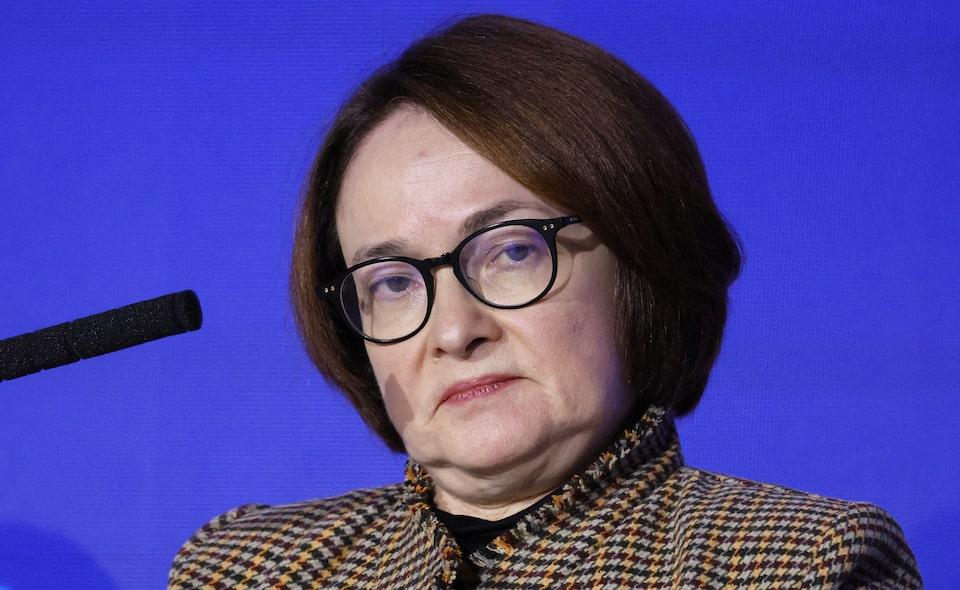
MOSCOW, Feb 14 (Reuters) - Russian Central Bank Governor Elvira Nabiullina addressed a news conference on Friday after the central bank kept its key interest rate on hold at 21%. Nabiullina spoke in Russian. The quotes below were translated into English by Reuters. *NABIULLINA ON THE POSSIBILITY OF A RATE CUT: "We didn't discuss a rate cut. We discussed two options: holding the rate and raising the rate... The interval we gave implies both the possibility of a rate cut this year and the possibility - we do not exclude it - of a rate increase. Everything will depend on how stable trends will be formed. "In order for us to start cutting the rate, it's not necessary for inflation to come down to 4%. What we need to make sure is that inflation slows steadily towards the target level. In other words, if we see a pronounced, sustained, not ad hoc slowing trend, which according to our forecast will bring inflation to 4%, then it will be possible (to cut the rate). "So far, we do not see such prerequisites - we do not see these sustainable trends yet. We are watching a wide range of indicators, but the latest data that we have on lending, on savings, and on the dynamics of monetary aggregates - if they become sustainable, then a rate cut is possible." NABIULLINA ON POSSIBLE PEACE SETTLEMENT IN UKRAINE: "For now, I think it's premature to include (this factor) in the scenarios... Everything will depend on the development of the situation. I think it's impossible to calculate the exact impact on the economy and inflation." NABIULLINA ON INFLATION: "Inflation is now unacceptably high. We have raised the inflation forecast for this year...We estimate that (annualised inflation) will peak somewhere in April or May. As for current inflation, month-on-month price growth... should start to slow down soon... "But most importantly, we expect that by the end of the year monthly inflation, which characterises just the current price pressure, will be about 4% on a year-on-year basis. But since we entered the beginning of the year with high inflation, by the end of the year annual inflation will be 7-8%." NABIULLINA ON CORPORATE LENDING: "The December-January data on corporate lending is very noisy. We need more data to ensure that this is a sustained slowdown... We will keep an eye on these dynamics." NABIULLINA ON THE ROUBLE: "The rouble strengthened in December. The rouble's strengthening... is certainly a disinflationary factor, but its effect on prices has a lag. We can already see a slowdown in the prices of goods which depend on the exchange rate, primarily smartphones and household appliances..." NABIULLINA ON THE RATE'S IMPACT ON BUSINESS, LOANS, BANKRUPTCIES "We don't expect a wave of bankruptcies. Yes, of course, there are highly leveraged companies for which the growth of debt servicing costs is an important factor that reduces their profits significantly. "But for most companies, the financial situation depends primarily on the growth of costs: it may worsen if the main costs associated with raw materials, materials, labour costs continue to grow at the same rate...higher tariffs, more expensive transportation logistics, including due to sanctions. And the growth of these costs is just a direct consequence of overheated demand, the indicator of which is high inflation. "In general, business... maintains financial stability... So far, we see an increase in restructuring requests among small- and medium-sized businesses, which is of course important. But in general, the volume of restructuring... does not exceed the level in 2023. "...The share of so-called bad loans remains small among corporate loans... it's 3.7%... We are monitoring it and we don't expect any massive problems here." NABIULLINA ON CURRENCY SUPPLY "So far we do not see any problems with the supply of currency on the market...As for the possibility of export revenue reduction, there may be different factors related to the development of processes in the global economy, fragmentation, trade wars, which may lead to a slowdown in the global economy and affect our demand." NABIULLINA ON TARIFF INDEXATION "We understand that when costs and prices in the economy are growing at high rates for a long time, which is unfortunately the fourth year already, we need a certain indexation of tariffs for housing and communal services...It is very important to find a balance here... "For our part, we have looked at what contribution this increased indexation of tariffs makes to inflation compared to the option if tariffs were indexed, as they were in previous years, to the target inflation rate of 4%. According to our estimates, this contribution to inflation is half a percent." NABIULLINA ON THE BALANCE BETWEEN ECONOMIC GROWTH AND INFLATION "A balance between economic growth and inflation reduction can be found...our monetary policy is aimed at this very thing...We need to bring inflation back under control, because moderate price growth is the basis for long-term economic growth. "Unfortunately, we have been a situation for a long time, when the growth of demand has overtaken and continues to overtake the ability to produce goods and services...the economy has to grow at a more balanced, more moderate pace. "Our task is to make sure, as they say in the language of economists, that the economy lands gently and with a quick return to sustainable growth rates and low inflation." *NABIULLINA ON BANKS' LIQUIDITY "Banks have enough capital and liquidity...There was a large capital buffer before 2022...that helped get through the most acute phase of the crisis. And in 2023-24, banks increased lending faster than their capital. "We believe that there should always be a capital reserve above this minimum level, which we regulate, so we are tightening the requirements for banks to form this reserve...By the beginning of 2025, the banking sector has already accumulated an additional capital buffer of 1.2 trillion roubles due to such macroprudential surcharges. "As for the impact of high interest rates on banks' capital... The capital reserve is not related to the fact that we have to adjust to high rates. But, of course, high rates mean that banks should take into account the risks of borrowers who take debts at these high rates, and there should be a sufficient capital reserve. And banks have to build up the proportion of highly liquid assets... "Overall, we expect banks to improve their capital position and their liquidity position. This will be a very good basis for financing the economy." Sign up here. https://www.reuters.com/markets/europe/russias-nabiullina-interest-rates-2025-02-14/
2025-02-14 12:34
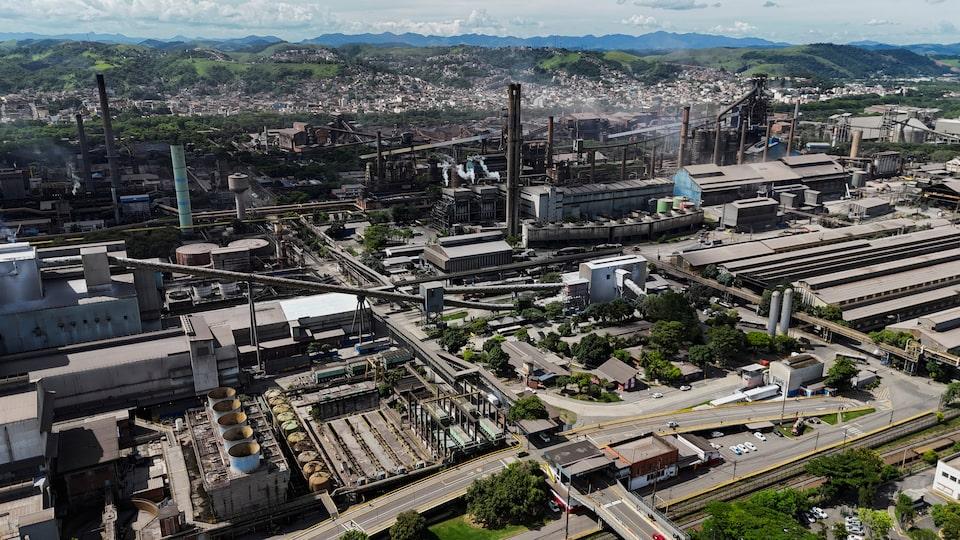
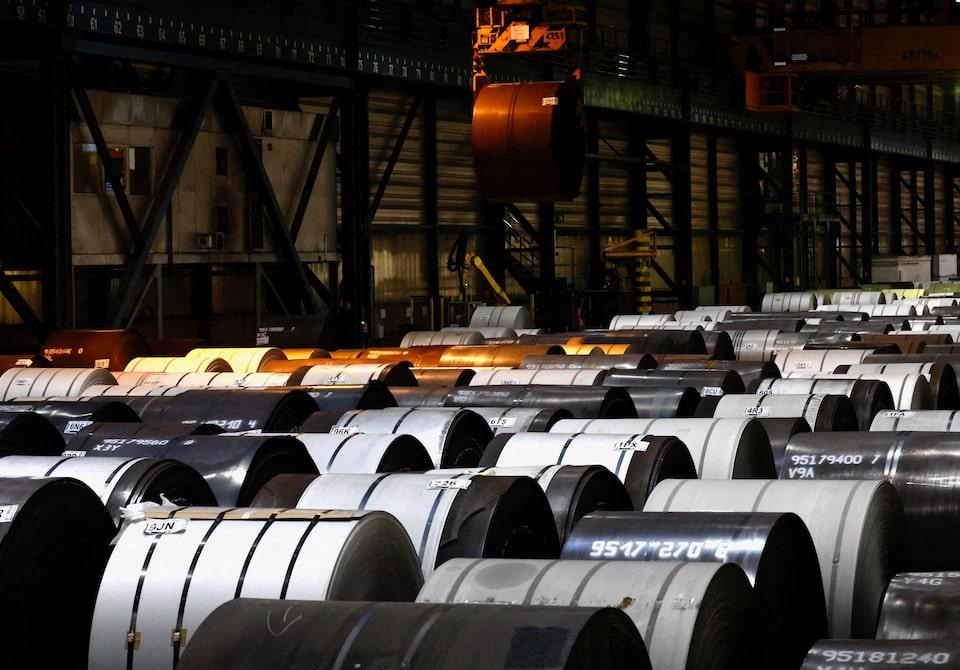
Feb 11 (Reuters) - Luxembourg-based steel group Aperam (APAM.AS) , opens new tab on Tuesday called on Brussels to intervene to curb imports if new 25% tariffs on all steel and aluminium imports into the United States prompt companies to ship more to the European Union instead. The company's comments highlight the worries among European steelmakers about a potential fresh flood of cheap steel into the EU as happened in 2018 under the first Trump presidency. Last week, the world's second largest steelmaker ArcelorMittal , from which Aperam spun off in 2011, called on the European Union to tighten trade protections. The Mittal family remains the largest shareholder of both companies with about 40% stake in each. The EU put in place in 2018 safeguard measures to limit the amount of tariff-free steel entering the bloc to prevent a surge of imports after U.S. President Donald Trump's then steel tariffs effectively closed the U.S. market. Under World Trade Organization rules, safeguards can only be in place for a maximum of eight years, meaning they will run out during Trump's second term in mid-2026. The European Commission's Executive Vice-President Stephane Sejourne said in December it would look into ways to extend those measures as part of an overall plan to protect the sector as it decarbonises. "Since 2018, we have already been managing the impact of the 25% duty, working closely with our customers to find mutually acceptable solutions," a spokesperson for Aperam, which makes stainless and speciality steels and alloys, and produces recycled steel from scrap metal, told Reuters referring to the existing U.S. tariffs. Former President Joe Biden later negotiated duty-free quota arrangements with Britain, the European Union and Japan. "We furthermore expect that if exports from third countries to the U.S. are deflected to the European market ... the European Commission promptly takes appropriate measures to safeguard the interests of its domestic steel producers, like it did in 2018." On Tuesday the bloc said it would respond with "firm and proportionate countermeasures" to the new tariffs. The EU's so-called "Steel and Metals Action Plan" aims at streamlining or delaying certain Green Deal regulations while pledging to uphold EU climate goals and regulating imports through quotas. It will be presented in Spring 2025. Aperam CEO Tim di Maulo told analysts in a call on Friday that reducing imports was not the only measure steelmakers had asked for and any review of the safeguard that strengthened inefficiencies would be positive. Sign up here. https://www.reuters.com/markets/commodities/aperam-says-brussels-must-act-if-eu-flooded-with-steel-result-trump-tariffs-2025-02-11/
2025-02-14 12:31
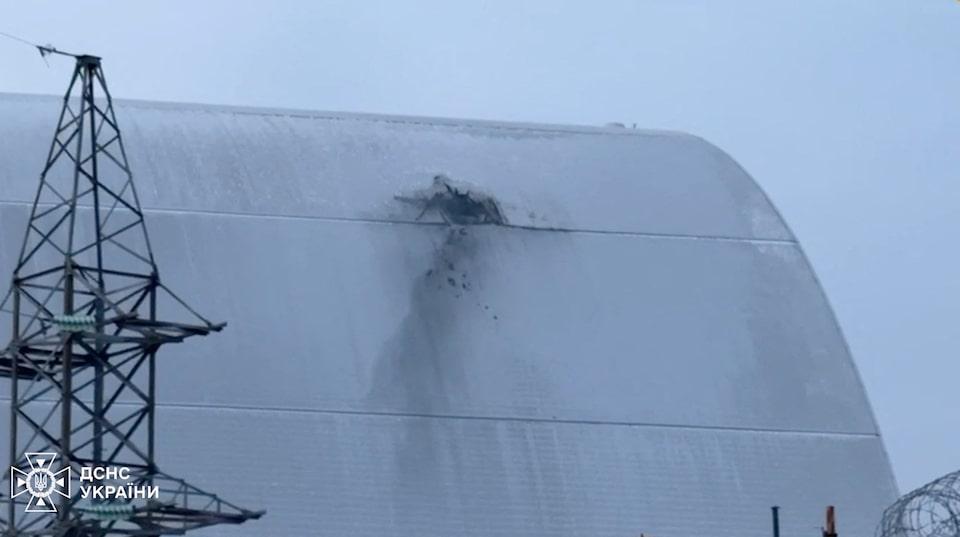
KYIV, Feb 14 (Reuters) - The Chornobyl Nuclear Power Plant, where Ukraine accused Russia of striking a radiation containment structure on Friday, is a defunct facility in Ukraine which was the site of the world's worst civil nuclear catastrophe in April 1986. Below are some facts about the plant and the accident: The explosion at reactor four on April 26, 1986 was the result of human error by the Soviet engineers operating the plant. Facility operators, in violation of safety regulations, had switched off important control systems at the Ukrainian plant's reactor number four and allowed it to reach unstable, low-power conditions, according to a United Nations report. A power surge led to a series of blasts, at 1:24 a.m. (2324 GMT), which blew off the reactor's heavy steel and concrete lid and sent a cloud of radioactive dust billowing across northern and western Europe, reaching as far as the eastern United States. DEATHS AND DAMAGE One of the plant's reactors, number four, exploded emitting vast quantities of radiation. The disaster contaminated an area of 150,000 square kilometres in Ukraine, Belarus and Russia, according to the International Atomic Energy Agency (IAEA). A 30-km (19-mile) exclusion zone is in place round the site. The Chernobyl Forum, a group of eight U.N. agencies, and the governments of Ukraine, Belarus and Russia, have estimated the death toll at several thousand as a result of the explosion. U.N. agencies have said some 4,000 people will die in total because of radiation exposure. Environmental group Greenpeace puts the eventual death toll far higher than official estimates, with up to 93,000 extra cancer deaths worldwide. CONTAINMENT In the months after the 1986 disaster, the Soviet Union built a structure around the exploded reactor to contain radiation from the vast quantities of uranium still inside. However, in subsequent years international concerns began to grow that the original structure was not fit for purpose. U.S. engineering company Bechtel said on its website there were many gaps, and most of the sarcophagus was not secured to the underlying structure, leaving the enclosure vulnerable to leaking rainwater, settling, and earthquakes. Money was raised from 45 countries and donor organisations to build the New Safe Confinement structure, a vast steel and concrete arch, over the top of the old Soviet one. Engineers shut down the last functioning reactor at Chornobyl, number three, in December 2000. The structure was officially completed and handed over to the Ukrainian government in 2019, with the ceremony being attended by President Volodymyr Zelenskiy. Sign up here. https://www.reuters.com/world/europe/key-facts-chornobyl-nuclear-plant-2025-02-14/