2025-02-14 07:10
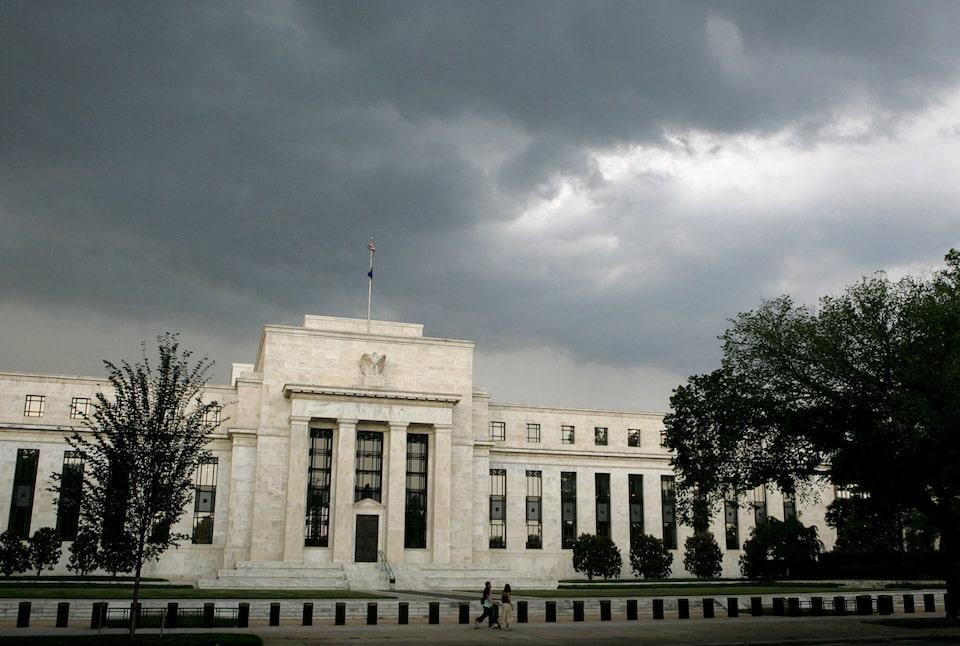
LONDON, Feb 14 (Reuters) - The Federal Reserve's widely panned and soon-to-be-revised "average inflation targeting" strategy may survive mostly intact after this year's review - with a super wide lens showing some success despite the brickbats. The decision five years ago to shift the emphasis of its 2% inflation goal to an average of that over an unspecified period now seems clumsy to many, or unfortunate timing at best. But a longer-term retrospective offers some solace. Even though the Fed has mostly muffled the idea since - as multiple shocks saw inflation explode briefly in the interim - the 20-year average core rate of inflation based on the Fed's favoured "personal consumption expenditures" (PCE) gauge is 2.1%. And that's even with the wild price swings of the post-pandemic period. Of course, this misses the politically-toxic pain caused by rising prices in the past three years, the belated scramble to jack up borrowing costs to control it and - as January's U.S. inflation readings attest - the fact prices are still running hot. It also underscores an error in viewing success or failure solely through the rear-view mirror, especially if "averaging" simply papers over cracks. And, as some Fed peers , opens new tab contend, it sidesteps the art of preemptive policy that's able to respond to shocks - likely a feature of highly uncertain years ahead. A more useful statistic may be that the core PCE measure has averaged 3.5% over the past five years, with market and household inflation expectations gravitating closer to that rate than the Fed's stated goal. It's this drift in expectations that likely most worries policymakers, suggesting any revised framework would pay more attention to these metrics than past inflation rates. In a response to lawmakers this week, Chair Jerome Powell said this year's five-year review of the Fed's monetary policy strategy will reflect on the recent experience and added "we are going to be open to criticism and will make appropriate, discreet adjustments." There will certainly be no shortage of criticism or advice. DOS AND DON'TS A conference on the review at the Brookings think tank , opens new tab in Washington last summer concluded with an 11-point list of dos and don'ts. One takeaway was that the Fed's pursuit of its dual mandate of price stability and maximum employment may be unbalanced. It details targets for the former, but leaves definitions of the latter more nebulous. And that may well be firmed up this year. And the yet basic concept of averaging inflation may remain. The 2020 average inflation targeting, or AIT, move was rooted in concern that in undershooting its target for the prior 10 years the Fed tended to tighten policy too quickly on any nearing of the target, penalising cohorts of the population still out of work. Averaging inflation over time - however woolly the timeframe - was supposed to allow the Fed to see through "temporary" overshoots to ensure employment was not being unnecessarily held back in what was then a sluggish economy. And many have since partly blamed this approach for the Fed's reluctance to tighten in 2021, even when core PCE inflation had already topped 5%. "I don't think they'd properly thought through the risk-reward of that policy shift," Washington-based economist Phil Suttle wrote this week, adding too much weight was placed on the cost of low inflation and not enough on "the obvious point that it is hard to overshoot your inflation target by just a little." In a report late last year, UBS economists said they expect this year's review to put inflation and employment "back on more equal footing", with more weight being put on inflation expectations. But they also said the gist of the AIT framework would likely survive for the most part, as Powell alluded to on Wednesday. If so, this may mean that the Fed is inclined to allow some periodic undershooting of the inflation target to balance the average picture going forward. And for that to happen, policy rates may need to remain firmly restrictive above the 3% to 3.5% "neutral rate" estimates long after monthly inflation prints actually do revert to the 2% goal, absent some major downturn in the labour market. Whatever the analysis of January's consumer prices, that suggests the bond market and the wider economy might need to brace for a hard-nosed Fed approach extending well beyond this year. That's apt to upset the new president, who has not been shy about offering Powell some advice. How the Fed avoids tying its hands in the event of any new shock, however, will require deftness of language in the review that many feel was missing five years ago. The opinions expressed here are those of the author, a columnist for Reuters Sign up here. https://www.reuters.com/markets/us/fed-may-only-nuance-much-maligned-averaging-strategy-mike-dolan-2025-02-14/
2025-02-14 06:58
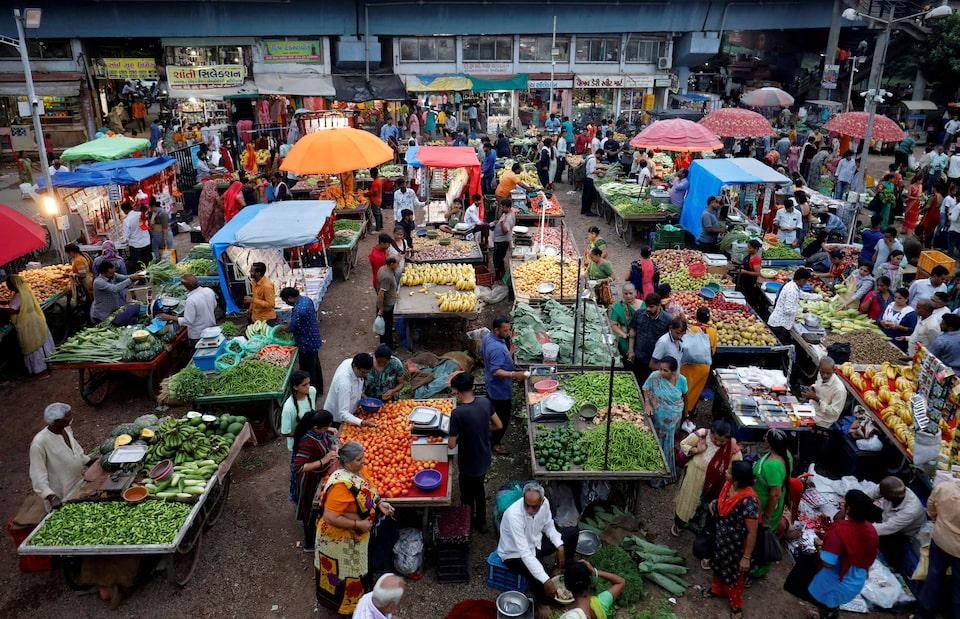
NEW DELHI, Feb 14 (Reuters) - India's wholesale inflation (INWPI=ECI) , opens new tab in January remained steady at 2.31% year-on-year, from 2.37% in December, government data showed on Friday, on moderation in food and fuel prices. The wholesale inflation rate, a proxy for producer prices, last month was a tad lower than the 2.5% projected by economists in a Reuters poll. Food prices rose 7.47% in January, compared with an 8.89% increase in December, with vegetable prices climbing 8.35% year-on-year, sharply lower than a 28.65% rise in the previous month. Cereal prices rose 7.33% in January as against a 6.82% rise a month ago. Prices of manufactured products, which account for about 64% of the wholesale price index, increased 2.51% from a 2.14% rise in the previous month. Fuel and power prices in India dropped 2.78% year-on-year, compared with a 3.79% drop in December. India's headline retail inflation slowed to a five-month low in January as food price inflation eased, raising hopes of another interest rate cut in the South Asian economy. Last week, the Reserve Bank of India cut its key interest rate for the first time in nearly five years to boost the sluggish economy upon inflation easing towards its 4% target. The central bank sees inflation averaging 4.8% in the current financial year, easing to 4.2% next year. It said food inflation pressures were expected to ease but volatile global energy prices pose a risk to the inflation outlook. Sign up here. https://www.reuters.com/world/india/indias-january-wholesale-inflation-steady-231-yy-2025-02-14/
2025-02-14 06:51
BEIJING, Feb 14 (Reuters) - China's agriculture ministry issued guidelines on Friday to promote biotech cultivation from 2024 to 2028, a ministry statement showed. The focus will be on developing precision gene-editing tools with independent intellectual property and enhancing key cultivation technologies, the statement said. The plan also includes cultivating high-yield, high-quality, multi-resistant, and adaptable varieties of rice, wheat, corn, saline-tolerant crops, and high-oil soybeans. Sign up here. https://www.reuters.com/world/china/chinas-agriculture-ministry-issues-guidelines-promote-biotech-cultivation-2025-02-14/
2025-02-14 06:48
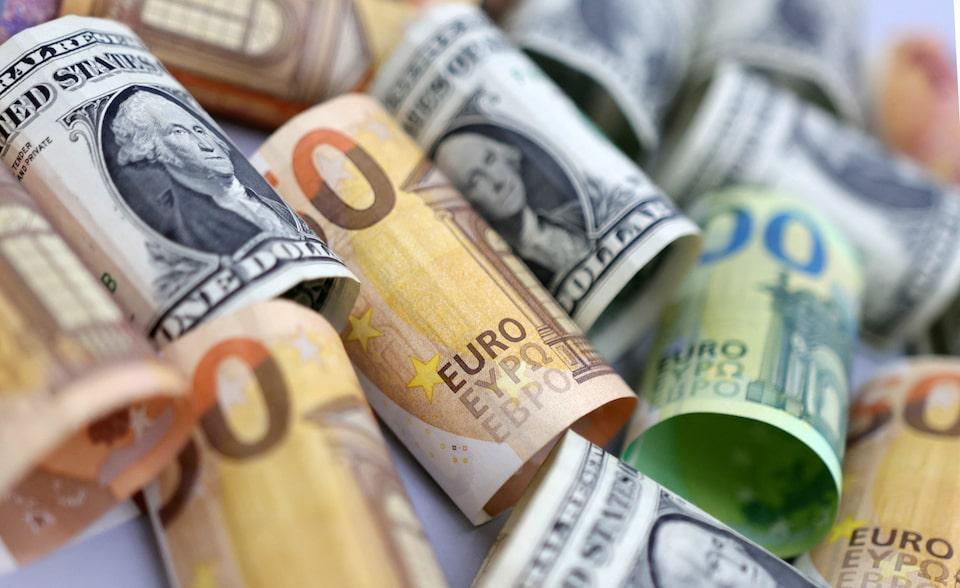
Tariffs, Russia-Ukraine optimism weigh on greenback US retail sales fall more than expected in January NEW YORK, Feb 14 (Reuters) - The dollar was on track for a weekly loss against the euro on Friday as a delay in the introduction of trade tariffs planned by U.S. President Donald Trump raised hopes that they may not be as bad as feared, while optimism about a peace deal between Russia and Ukraine helped the single currency rally. The dollar index also fell to a nine-week low after data showed that retail sales fell more than expected in January, leading traders to raise bets that the Federal Reserve may cut rates two times this year. “Markets are still hoping that tariff headwinds are not going to be as significant as perhaps previously feared, then probably the bigger element this week is enthusiasm about potential Russia-Ukraine ceasefire and to what extent that might be positive for European growth in particular,” said Vassili Serebriakov, an FX strategist at UBS in New York. “The retail sales are probably a tertiary factor, but it's kept the dollar on the back foot,” Serebriakov said. The euro rose 0.32% to $1.0497 and got as high as $1.0514, the highest since January 27. It is on pace for a weekly gain of 1.7%. The Japanese yen strengthened 0.37% against the greenback to 152.22 per dollar. The dollar index was last down 0.35% at 106.72 and on track for a weekly loss of 1.3%. It reached 106.56, the lowest since December 12. Trump on Thursday tasked his economics team with devising plans for reciprocal tariffs on every country that taxes U.S. imports. Howard Lutnick, Trump's pick for commerce secretary, said the administration would address each affected country one by one and said studies on the issue would be completed by April 1. The broad announcement appeared designed at least in part to trigger talks with other countries, with a White House official saying Trump would gladly lower tariffs if other countries lowered theirs. U.S. Treasury Secretary Scott Bessent also said on Friday that the Trump administration is looking beyond tariffs and non-tariff barriers to examine currency manipulation as it studies the issue. Analysts say that tariffs could add to inflation, keeping the dollar higher as the Fed holds rates higher for longer. Trump also said on Friday he plans to impose tariffs on imported cars around April 2. The euro and other European currencies have been supported this week by optimism that Russia and Ukraine will reach a peace deal. Trump discussed the war in Ukraine on Wednesday in phone calls with Russian President Vladimir Putin and Ukrainian President Volodymyr Zelenskiy. Friday’s retail sales data, meanwhile, comes after Thursday’s producer price report for January pointed towards lower than previously thought core Personal Consumption Expenditures Price Index later this month, which is the Fed’s preferred inflation measure. Futures traders are now pricing in 41 basis points of cuts for the year, fully reversing a move towards reduced rate cut expectations after consumer price data came in hotter than expected on Wednesday. In cryptocurrencies, bitcoin gained 1.32% to $97,781.23. Sign up here. https://www.reuters.com/markets/currencies/major-currencies-steady-markets-size-up-ppi-optimism-tariffs-2025-02-14/
2025-02-14 06:45
TOKYO, Feb 14 (Reuters) - JX Advanced Metals (JXAM), a wholly owned metals unit of Japan's Eneos Holdings (5020.T) , opens new tab, won approval to list its shares in a $3 billion share offering, a regulatory filing showed on Friday, in what would be the nation's biggest IPO in seven years. JXAM has set a tentative offering price of 862 yen ($5.64) per share ahead of its listing on the Tokyo Stock Exchange on March 19. The final pricing is set for March 10. Eneos, Japan's largest oil refiner, plans to sell 465.2 million shares of JXAM with an overallotment option of up to 69.8 million shares. The share sale would allow Eneos to raise as much as 461 billion yen ($3.01 billion), according to Reuters' calculations, giving the business a market value of 800 billion yen. Reuters reported earlier this week Eneos was seeking to raise at least 400 billion yen through the IPO. The refiner plans to use the proceeds for growth investments and to enhance shareholder returns. (Natural) gas and liquified natural gas are attractive areas, Eneos Chief Financial Officer Soichiro Tanaka said on Friday. At that size, JXAM would exceed Tokyo Metro's (9023.T) , opens new tab IPO in October, according to LSEG data, and be the largest listing in Japan since SoftBank's (9984.T) , opens new tab telecoms unit in 2018. JXAM is a leading manufacturer of sputtering targets, which are materials used to create thin metal films during chip production. The unit's semiconductor materials segment contributed around a third of its 81 billion yen operating income in the last financial year. JXAM has invested in a new plant for manufacturing sputtering targets in Arizona. The company says it sees potential for faster growth than the broader logic and memory chip market. JAXM is also a major maker of rolled copper foil for flexible printed circuits used in smartphones. Daiwa Securities, JPMorgan, Morgan Stanley and Mizuho are joint global coordinators on the IPO. ($1 = 152.8600 yen) Sign up here. https://www.reuters.com/markets/commodities/eneos-aims-raise-much-3-bln-via-metals-unit-ipo-2025-02-14/
2025-02-14 06:42
QUETTA, Feb 14 (Reuters) - A bomb targeting a vehicle carrying coal miners in southwestern Pakistan killed at least 11 people and wounded six others, local officials said on Friday. The truck had brought the workers to a mine in the Harnai area of Balochistan province, where Pakistan is battling a separatist insurgency. "An improvised explosive device was planted at the road side which exploded when truck carting coal miners reached the site," a paramilitary official said. The official, who declined to be identified, added that it may have been a remote operated device. No group has claimed responsibility for the attack. The region's deputy commissioner, Hazrat Wali Agha, said 17 miners were in the truck when the bomb went off. A doctor at the local hospital said two of the wounded are in critical condition. Mineral-rich Balochistan, which borders Iran and Afghanistan, has been the scene of a decade-old insurgency by separatist ethnic Baloch groups. Islamist militants also operate in the area. Sign up here. https://www.reuters.com/world/asia-pacific/pakistan-coal-mine-blast-kills-nine-geo-news-says-2025-02-14/