2025-02-14 06:36
Feb 14 (Reuters) - Norwegian aluminium producer Norsk Hydro (NHY.OL) , opens new tab posted a smaller than expected rise in quarterly earnings on Friday, as higher costs and weak downstream demand offset gains from strong alumina and aluminium prices. Its adjusted earnings before interest, taxes, depreciation and amortisation more than doubled to 7.70 billion Norwegian crowns ($690.5 million) in the final quarter of 2024, but missed analysts' consensus , opens new tab of 8.28 billion crowns. U.S. President Donald Trump's 25% tariffs on steel and aluminium are inflating U.S. prices and exposing the gap in domestic production, creating a potential cost surge for aluminium producers like Hydro who rely on imports to meet U.S. demand. "As the U.S. is a major aluminium importer, tariffs will likely raise premiums and costs, with Midwest premiums already surging to the highest levels since April 2023," Hydro said in the statement. The U.S. aluminium premium over the global benchmark on the London Metal Exchange (LME) has shot up by a quarter since last Friday to 35 cents per pound. It has surged by 60% since Trump was elected. Hydro said it continues to take and evaluate mitigation actions for exposed trade flows across the U.S. border. It said its extrusions business was minimally impacted by the tariffs, as it relies mainly on domestic raw materials and typically passes higher LME prices and premiums on to customers. However, due to continued market weakness, the extrusions unit is taking steps to cut costs and improve efficiency. This will include cutting more than 900 full time jobs through site closures across Europe and the Unites States, Hydro said. Hydro's European aluminium volumes have fallen in recent years, partly due to weaker electric vehicle production amid Germany's subsidy cuts and EU tariffs on Chinese imports. As a result, the company announced in November it would phase out its battery and green hydrogen businesses, while focusing on aluminium recycling and extrusion. But the weak EV sales, especially in Germany, also weigh on automotive extrusion demand, it said. Hydro expects underlying demand for its products to gradually improve into 2025, driven by lower interest rates. ($1 = 11.1511 Norwegian crowns) Sign up here. https://www.reuters.com/markets/commodities/aluminium-producer-norsk-hydros-core-profit-lags-forecast-q4-2025-02-14/

2025-02-14 06:27
Feb 14 (Reuters) - India's benchmark indexes fell on Friday as investors fretted over the implications of U.S. President Donald Trump's plans to impose reciprocal tariffs, which analysts said could hurt the country the most among its Asian peers. Trump is planning to slap reciprocal tariffs on every country taxing U.S. imports. The imposition of these duties, however, is likely to be delayed, helping global stocks stage a relief rally. Indian Prime Minister Narendra Modi met Trump on Thursday and offered to talk about easing tariffs, buying more U.S. oil and gas, combat aircraft and trade concessions. However, that did little to calm markets back home. The Nifty 50 (.NSEI) , opens new tab lost 0.44% to 22,929.25 while the BSE Sensex (.BSESN) , opens new tab fell 0.26% to 75,939.21. "Indian markets have seen sharper losses on the day due to the high tariff differential with the U.S., compared to most other Asian economies," said Narendra Solanki, head of research at Anand Rathi. Analysts said the potential consequences of U.S. tariffs on the Indian rupee and U.S. interest rates could trigger further foreign outflows, hurting domestic equities. Both the Nifty and Sensex have lost about 2.5% this week, their worst in 2025 so far. In contrast to domestic equities, other Asian markets rose, with the MSCI Asia ex-Japan index (.MIAPJ0000PUS) , opens new tab gaining 1.1% on the day. All 13 major domestic sectors were down. Drug makers (.NIPHARM) , opens new tab, which have a significant revenue exposure to the United States, fell the most with a 3% decline. The small-caps (.NIFSMCP100) , opens new tab and mid-caps (.NIFMDCP100) , opens new tab tumbled 3.6% and 2.4%, respectively, extending their downward trend on concerns over slowing corporate earnings and stretched valuations. The small-cap index is currently down about 21.6% from its record closing high on December 11 confirming bear territory. The mid-caps are 18.4% below their peak closing level on September 24. Sign up here. https://www.reuters.com/world/india/indian-benchmarks-set-open-higher-after-modi-agrees-trade-negotiations-with-2025-02-14/
2025-02-14 06:25
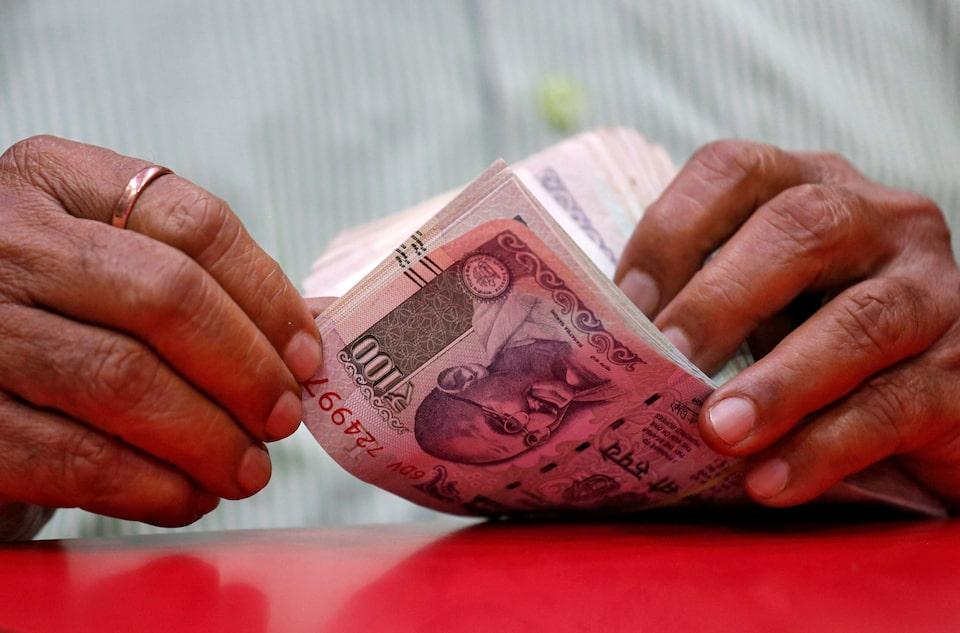
MUMBAI, Feb 14 (Reuters) - The dollar/rupee near forward premiums pushed higher this week on the back of the dollar liquidity spurred by the Reserve Bank of India's intervention while far forward premiums declined. The 1-month forward dollar/premium hit 22.5 paisa on Wednesday, up from 17.5 paisa last Friday. The RBI intervened heavily on Monday and Tuesday to prevent the rupee from slipping past the 88 level. The central bank's dollar sales boosted the U.S. currency's liquidity, which in turn pushed the overnight swap rates higher and that had an impact on the near-term forwards, a currency trader at a bank said. Hedging interest after the recovery in the rupee may have contributed to the run higher in near-term forwards, he said. The rupee , having dropped to an all-time low of 87.95 on Monday, rallied past 86.50. On Friday, it was last quoted at 86.8775 to the U.S. dollar. While the near-term forward rose this week, far forwards dropped thanks to buy/sell swaps by the RBI. On Monday and Tuesday, when the Indian central bank sold dollars to support the rupee, it conducted buy/sell dollar-rupee swaps to moderate the impact of its intervention on rupee liquidity, per traders. The 1-year forward premium is down 4 paisa from last Friday. "Right now, the direction of the premiums is dictated by the spot rate, what RBI does and what is the after-effect of its actions. It is not about U.S. or India interest rates," an FX swap trader at a private sector bank said. Sign up here. https://www.reuters.com/markets/currencies/dollarrupee-near-forward-premiums-rise-post-rbi-intervention-2025-02-14/
2025-02-14 06:04
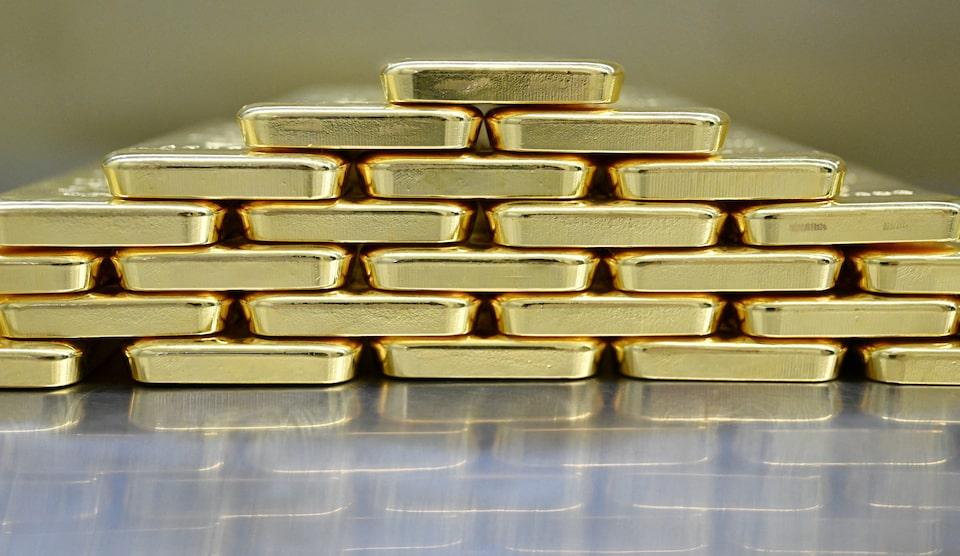
Trump outlines reciprocal tariff plan Gold hit record high of $2,942.70 on Tuesday All precious metals set for weekly gains High prices curb Indian retail demand for gold Feb 14 (Reuters) - Gold prices rose on Friday and were on track for a seventh consecutive weekly gain as worries over a potential global trade war intensified after U.S. President Donald Trump's push for reciprocal tariffs. Spot gold was up 0.3% at $2,936.99 an ounce by 1104 GMT, taking its weekly advance to 2.6%. Bullion hit a record peak of $2,942.70 on Tuesday. U.S. gold futures rose 0.6% to $2,961.30. Uncertainty over the Trump administration's policies on trade, tariffs and broader foreign policy continues to support bullion, said Nicholas Frappell, global head of institutional markets at ABC Refinery. On Thursday Trump directed his economic team to formulate plans for reciprocal tariffs on every country that imposes taxes on U.S. imports. This potentially inflationary move could drive further safe-haven demand for gold, a traditional hedge against rising prices and geopolitical uncertainty. Meanwhile, Thursday's U.S. PPI report eased some concerns about inflation in the world's largest economy after a hotter than expected consumer prices report earlier in the week. Traders expect that the Federal Reserve will not cut interest rates until September because of concerns over high inflation while a drop in jobless claims signalled a resilient labour market. Gold's path of least resistance is higher, with the $3,000 an ounce in view, said Ilya Spivak at investment analysis streaming site Tastylive. On the physical side, gold demand weakened in India as record prices curbed retail buying and forced dealers to offer discounts. Chinese demand has also been muted since the Lunar New Year holidays. In other precious metals, spot silver gained nearly 3% to $33.30 an ounce and platinum added 1% to $1,004.57 while palladium dipped by 0.2% to $992.00. All three metals were on track for weekly gains. Sign up here. https://www.reuters.com/markets/commodities/gold-set-seventh-weekly-gain-trade-war-risks-lift-demand-2025-02-14/
2025-02-14 05:39
A look at the day ahead in European and global markets from Ankur Banerjee Investors are breathing a sigh of relief for now as the roadmap for Donald Trump'sreciprocal tariffs suggested room for negotiations, while results from luxury firm Hermes will be the main event rounding out a series of strong earnings in Europe. Asian markets also took their cues from Wall Street's positive reaction to U.S. inflation data, which suggested that prices remain consistent with the Federal Reserve's target range, while Chinese tech shares extended their rally (.HSTECH) , opens new tab after home-grown start-up DeepSeek's breakthrough last month. Hong Kong's benchmark index (.HSI) , opens new tab was perched near a four-month high and on course for its best week since September. It's also on a five-week winning streak, the longest since 2022. The Hang Seng's 11% rise so far this year has made it easily the best performing major stock market in Asia and is among the top globally. Germany's DAX index (.GDAXI) , opens new tab is leading the way with a 14% gain this year, hitting a record high on Thursday. Swiss (.SSMI) , opens new tab, French (.FCHI) , opens new tab and Spanish (.IBEX) , opens new tab benchmarks are not far behind, having clocked double-digit gains so far in 2025. In corporate news, earnings from Hermes (HRMS.PA) , opens new tab will take the spotlight in Europe, where investors are keen to learn whether the Birkin bag maker remains best-placed to weather a downturn in the luxury sector, given its wealthier customer base. Luxury goods companies have been grappling with their slowest sales in years, as consumers in China tighten their belts, although upbeat results from Burberry (BRBY.L) , opens new tab, Cartier owner Richemont (CFR.S) , opens new tab and others have fuelled hopes the sector is starting the year on firmer ground. Traders in Europe may lock in profits after a strong run this week, with the pan-European STOXX 600 index (.STOXX) , opens new tab closing at a record high every day this week and up almost 10% year-to-date. Futures point to a lower open for European stock markets. For investors, the focus will be on the tariff saga after a directive from Trump stopped short of imposing fresh duties, and instead kicked off what could be weeks or months of investigation into levies imposed on U.S. goods. And finally, a valentine's day gift for TikTok fans in the United States as the popular short-video app returned to the app stores of Apple and Google. Key developments that could influence markets on Friday: - Euro zone Q4 GDP and employment data - Hermes annual results Sign up here. https://www.reuters.com/markets/europe/global-markets-view-europe-2025-02-14/

2025-02-14 05:21
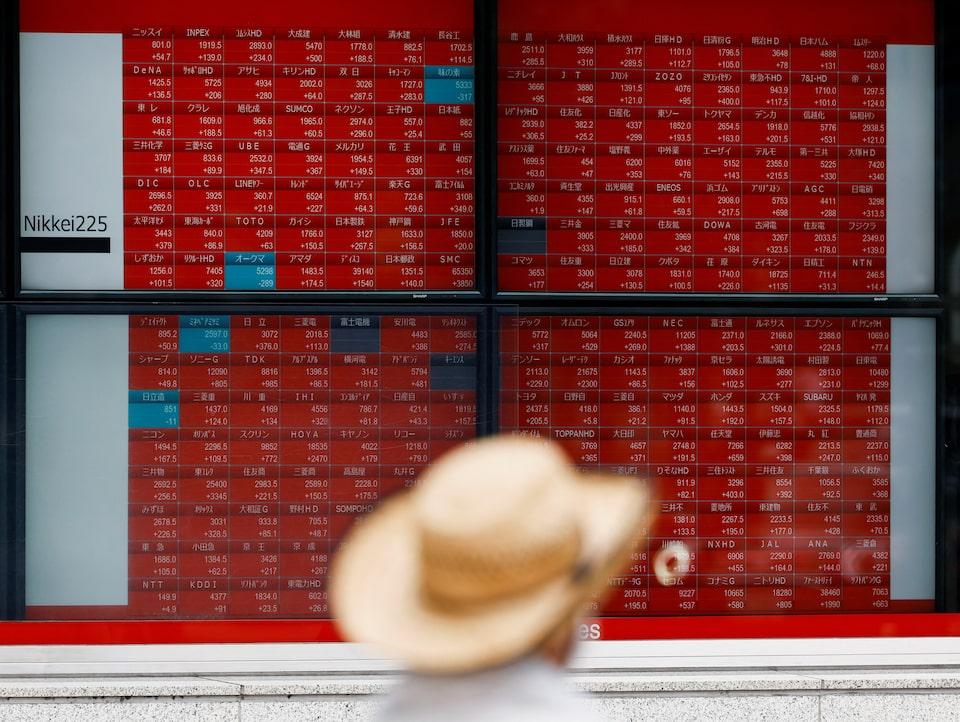
Feb 14 (Reuters) - Japanese investors withdrew heavily from foreign stocks in the week through February 8, snapping an eight-week buying spree as U.S. President Donald Trump's widening tariffs threat sparked fears of global trade relationships reshaping in the U.S.' favour. Japanese investors divested 1.27 trillion yen ($8.31 billion) worth of foreign equities on a net basis, the most for a week since November 2022, according to Japan's Ministry of Finance data. Trump has previously announced steep tariffs on Mexico, Canada, and China -- although he has delayed implementing some of those -- and towards the end of last week, widened his focus by threatening to slap reciprocal tariffs on countries that tax the import of U.S. products. In response, Japanese investors sought the relative safety of bonds, pumping in a robust 1.75 trillion yen into foreign long-term bonds, the largest amount in any week since September 2024. They also snapped up a net 18 billion yen worth of short-term bills. At the same time, Japanese shares suffered a net 384.4 billion yen worth of foreign outflows, the second week of net sales in a row. Foreigners also ditched 187.2 billion yen worth of long-term Japanese bonds, snapping a three-week-long buying trend. They, however, purchased short-term bills of a net 508.1 billion yen, registering a fifth weekly net purchase in six weeks. ($1 = 152.7900 yen) Sign up here. https://www.reuters.com/markets/asia/japanese-investors-pull-out-foreign-stocks-amid-caution-over-us-tariffs-2025-02-14/