2025-02-14 05:10
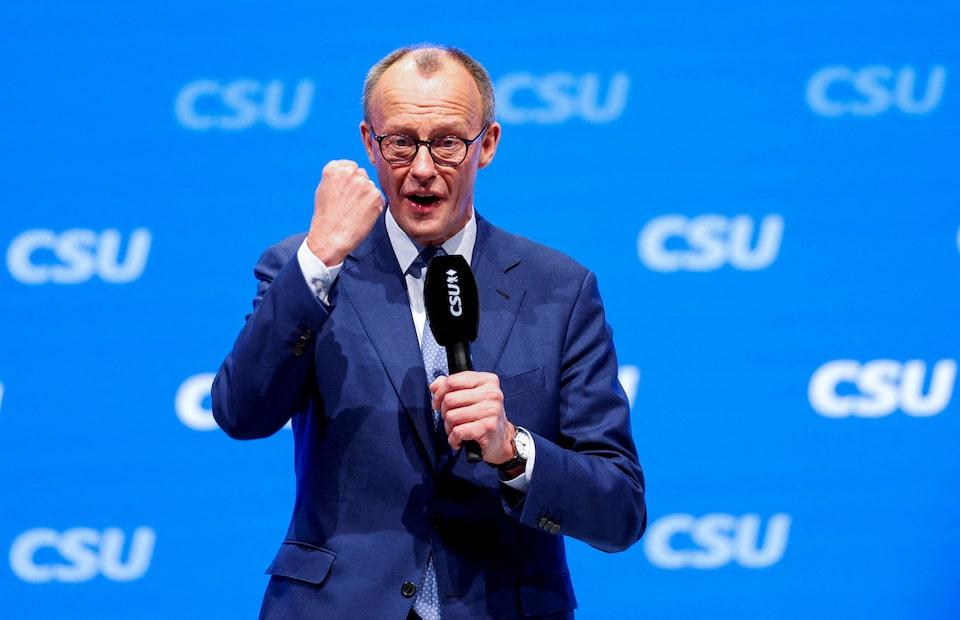
Germany can borrow more but debt brake reform likely to be limited More German spending would help euro, stocks New government must address structural issues, investors say LONDON/FRANKFURT, Feb 14 (Reuters) - As Germany heads to the polls next week, the message from investors is clear: it is the one big economy with room to spend more to boost growth and it won't be punished by financial markets if it chooses to do so. For now they are unconvinced that Germany's next governing coalition - whichever parties it contains - will take a radical step on spending and borrowing. But the case for change is strong. Germany's once-mighty economy has flatlined since 2019, while the rest of the euro area has grown by 5%, and the U.S. 11%, Goldman Sachs estimates. However, it is also the only G7 economy with debt well under 100% of output and, in contrast to concerns about high debt in the U.S., Britain and France, investors want to see Germany borrow more to boost its growth potential. Markets are watching to see if Germany will loosen a 'debt brake' rule that has stamped out new borrowing, an even more pressing concern now that U.S. tariffs threaten to hurt its ailing economy further and it needs to raise defense spending. "If there's one country where actually, potentially you could (raise borrowing), that would be Germany," said Nicola Mai, who leads sovereign credit research for bond giant PIMCO in Europe, referring to the debt brake as a 'straightjacket.' Until Germany tackles its deep-seated problems, especially deteriorating competitiveness, questions about the status of the former powerhouse will linger. So, while political uncertainty could weigh in the short term, a battered euro and long-lagging European stocks have much to gain from a meaningful rise in spending. That doesn't seem to be on the cards, with just under two thirds of investors in a poll BofA published in January expecting only a minor debt brake relaxation. Mai, who also doesn't expect a change that would be a "huge deal", said PIMCO favours taking interest rate risk in European bonds, betting rate cuts, not spending, will drive markets. MUCH TO GAIN Conservative leader Friedrich Merz, expected to head the next government, has shown openness to limited debt brake reform. Expectations are muted, with European Union deficit limits also constraining spending potential. The debt brake currently constrains structural deficits to 0.35% of output. A December poll by Citi showed clients saw the ceiling rising to 1% as the most likely outcome. That's likely not enough considering that just making up the last decade's underinvestment requires investments of around 1.5% of output annually for 10 years, ING estimates. Danske Bank reckons debt brake reform will raise growth by around 0.2 percentage points annually in the coming years. The risk of no reform at all is real if the far-right Alternative for Germany and the neoliberal Free Democrats gain enough seats to block a constitutional change. Reforming the debt brake or another option - launching special funds to raise spending outside the brake - requires a two-thirds parliamentary majority. German 10-year government bond yields exceeded the rate on interest rate swaps for the first time last year , partly on expectations of higher issuance after its government collapsed in November. But bond yields have barely risen since then, a sign that higher spending is seen as manageable. Elsewhere, the question is whether spending rises enough to halt European underperformance. The euro is down 17% from a peak $1.25 in 2018, and neared $1 earlier in February. Societe Generale's head of FX strategy Kit Juckes said European policy choices promoting less growth than in the U.S, which has spent much more, have been one key reason behind that fall, with Germany a big part of that. He said he did not see enough signs of a policy shift to change his $1.04 euro target for the first half of this year. Andreas Koenig, head of global FX at Europe's largest asset manager Amundi, agreed, continuing to favour the dollar. RE-RATING? At first sight German stocks look to have been spared with the blue-chip DAX index's (.GDAXI) , opens new tab 45% return beating U.S. stocks over the last three years. Yet relative to forward earnings, it trades at a 38% discount to the S&P 500. Driven by international earnings, the DAX masks the pain in companies with higher home exposure. Mid-cap (.MDAX) , opens new tab and small-cap stocks (.SDAXI) , opens new tab have lost 18% and 2% over that time period. Carmakers, once central to Germany’s powerhouse, have slid 35%. Rameez Sadikot, portfolio manager at Antipodes Partners, said a new government could potentially lead to a "multiple re-rating" in European equities if it started to ease concerns around low productivity. But for now, he was "cautiously optimistic", citing the risk of gridlock. Dealmakers would also welcome more spending, given Germany has seen the lowest volume of mergers and acquisitions year-to-date since before 2010, according to Dealogic. They are in 'wait and see' mode for now, according to bankers and lawyers, although Alexander Kutsch, managing partner at advisory firm Roedl & Partner said debt brake reform would support activity. The question remains whether a new government can address Germany's key structural issue, a decline in competitiveness, quickly. Fidelity International's global head of macro and strategic asset allocation Salman Ahmed said it would take much more spending than expected to change Germany's economic model, adding he saw "no consensus yet" to improve competitiveness. Sign up here. https://www.reuters.com/markets/europe/markets-need-convincing-that-german-election-will-bring-spending-boost-2025-02-14/
2025-02-14 04:34
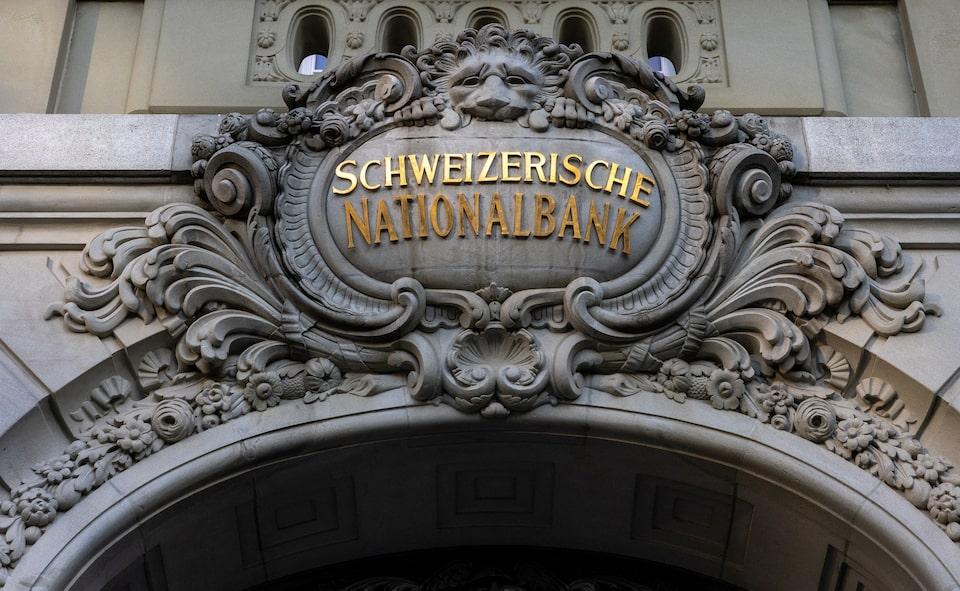
ZURICH, Feb 14 (Reuters) - The generational change at the top of the Swiss National Bank does not alter its commitment to low inflation, governing board member Petra Tschudin said in an interview published on Friday. Thomas Jordan stood down last September after 12 years as chairman and was replaced by Martin Schlegel. Tschudin and Antoine Martin both joined the three-member board, which sets interest rates, last year. "The tasks, instruments and processes remain the same," Tschudin told Swiss newspaper Neue Zuercher Zeitung. Maintaining price stability, which the SNB defines as annual inflation between 0 and 2%, remained the central bank's most important task, said Tschudin. The SNB had a "toolbox" of instruments it would use to achieve its goal, including foreign currency purchases or sales, she added. Markets expect the SNB to press ahead with interest rate cuts from the current 0.5% level at its meeting on March 18 after Swiss inflation fell to 0.4% in January, its lowest level since April 2021. In the interview, which took place before the latest data was published on Thursday, Tschudin said outside 0-2% for a short time was not a problem. "The important thing is that inflation is where we want it to be in the medium term," she said. Tschudin said negative interest rates - a policy the SNB deployed from December 2014 to September 2022 - were also an important policy instrument. SNB chairman Schlegel last month said he would consider reintroducing negative rates, although this was a path he would prefer to avoid. "For us as a small, open economy, the negative interest rate instrument is important," Tschudin told the newspaper. "It allows us to manage the interest rate differential even in a low interest rate environment." Negative rates could curb an excessive appreciation in the Swiss franc, which would push inflation lower by making imports cheaper and also hurt exporters by making their products dearer abroad. Sign up here. https://www.reuters.com/markets/europe/swiss-national-bank-generation-change-does-not-alter-policy-board-member-says-2025-02-14/
2025-02-14 03:05
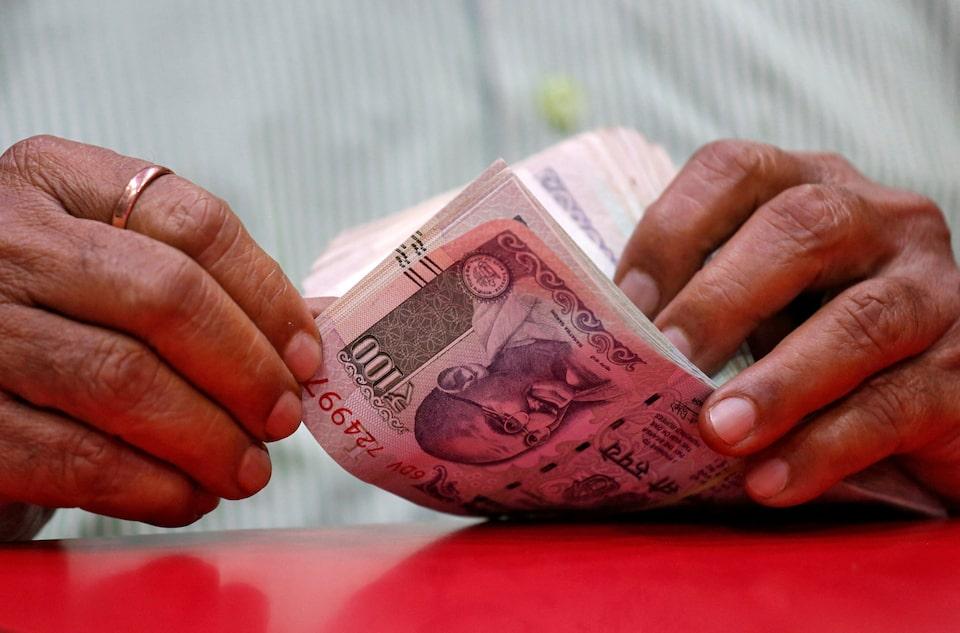
MUMBAI, Feb 14 (Reuters) - The Indian rupee is poised to open slightly higher on Friday, tracking an uptick in its Asian peers on relief that U.S. President Donald Trump reciprocal tariff's plan will not be implemented till later. The one-month non-deliverable forward indicated the rupee will open at 86.80-86.85 per U.S. dollar, compared to 86.8975 in the previous session. Despite the dip at open in the dollar/rupee pair, traders remained wary. "Do not expect it to sustain," said a currency trader at a bank. Trump tasked his economic team to draft plans for reciprocal tariffs on all nations imposing taxes on U.S. imports. Howard Lutnick, Trump's pick for commerce secretary, said the administration would address each affected country one by one and said studies on the issue would be completed by April 1. Asian currencies rose on the tariffs not being imposed immediately. The "near-term delays in tariff implementation" put the dollar under pressure, MUFG Bank said in a note. The dollar index dropped 0.8% to slip to its level lowest in more than two weeks. U.S. Treasury yields dropped and Wall Street rallied. The Korean won was the top performer in Asian currencies on Friday. The dollar was already struggling before the Trump's tariffs announcements, thanks to the U.S. wholesale inflation data. The data indicated that the core PCE inflation is likely to be lower than previously expected. The data came a day after the U.S. consumer price index rose more than expected. While the headline U.S. producer price index came in higher than expected, the components which feed into core PCE – the key inflation measure the Federal Reserve targets – were softer and will likely lead to a more benign PCE inflation print than the CPI numbers suggest, MUFG Bank said. KEY INDICATORS: ** One-month non-deliverable rupee forward at 87.01; onshore one-month forward premium at 22 paise ** Dollar index up at 107.1 ** Brent crude futures up 0.2% at $75.2 per barrel ** Ten-year U.S. note yield at 4.53% ** As per NSDL data, foreign investors sold a net $561.4mln worth of Indian shares on Feb. 12 ** NSDL data shows foreign investors bought a net $41.6mln worth of Indian bonds on Feb. 12 Sign up here. https://www.reuters.com/markets/currencies/us-tariffs-timeline-delay-sparks-dollar-slump-may-lift-rupee-2025-02-14/
2025-02-14 00:48
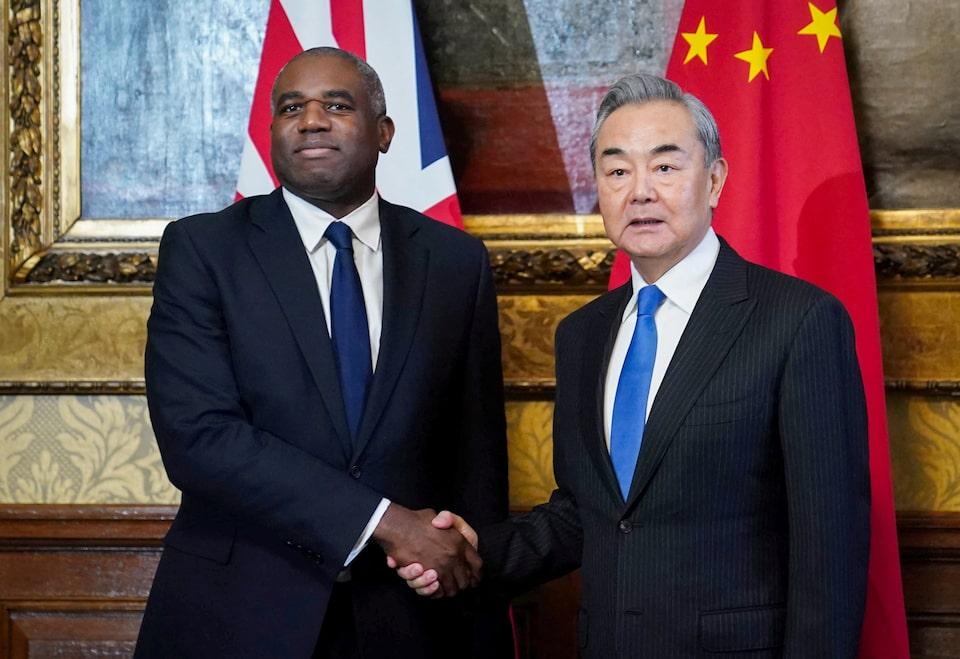
LONDON/BEIJING, Feb 14 (Reuters) - China is ready to work with the United Kingdom towards stable and improving bilateral ties, and to further cooperate in infrastructure, trade and investment, the Chinese foreign ministry said in a statement on Friday, citing its minister. Wang Yi made his first official visit to Britain on Thursday for the first time in a decade where he held talks with the prime minister, foreign minister and national security adviser. In his meeting with Prime Minister Keir Starmer, Wang said China and the UK need to strengthen strategic communication, enhance mutual trust and demonstrate responsibility as major countries. "The recent China-UK financial dialogue has achieved fruitful results, and exchanges at all levels have been resumed, demonstrating the great potential of practical cooperation between the two countries," Wang said, referring to an economic and financial dialogue between the two nations in Beijing last month. The Labour government, in power in Britain since July, has made improving ties with China one of its main foreign policy goals, after a period when relations plunged to their lowest level in decades under successive Conservative governments. Starmer told Wang he wanted "consistent and respectful" relations between their countries, when he dropped in on the planned meeting between Wang and his National Security Adviser Jonathan Powell, Starmer's spokesman told reporters. "He underlined his intention to build a consistent and respectful relationship between the UK and China ... including deepening cooperation on trade, investment and other areas of mutual benefit," the spokesman said. "He reiterated that the UK will always engage frankly on areas where our views differ, as part of the stable and regular engagement this government is committed to maintaining with China." They also discussed strengthening cooperation in dealing with climate change, artificial intelligence and clean energy, according to the Chinese readout. Both nations agreed on next-step bilateral exchanges and cooperation, and will speed up preparations for institutional dialogues on the economy and trade, health and industrial cooperation, the Chinese ministry said. British foreign minister David Lammy said he discussed with Wang international security, the war in Ukraine and Middle East. But Lammy said he would continue to challenge China on the imprisonment of pro-democracy Hong Kong tycoon Jimmy Lai, human rights and the sanctioning of British parliamentarians. Wang "comprehensively" explained China's position on the Ukraine war, and called for "no expansion of the battlefields, no escalation of hostilities, and no fanning flames", according to official news agency Xinhua. It cited Wang as saying China welcomes all efforts committed to peace talks and supports building a "balanced, effective and sustainable European security architecture". Sign up here. https://www.reuters.com/world/uk/uk-china-talks-cover-contentious-issues-2025-02-13/
2025-02-14 00:23
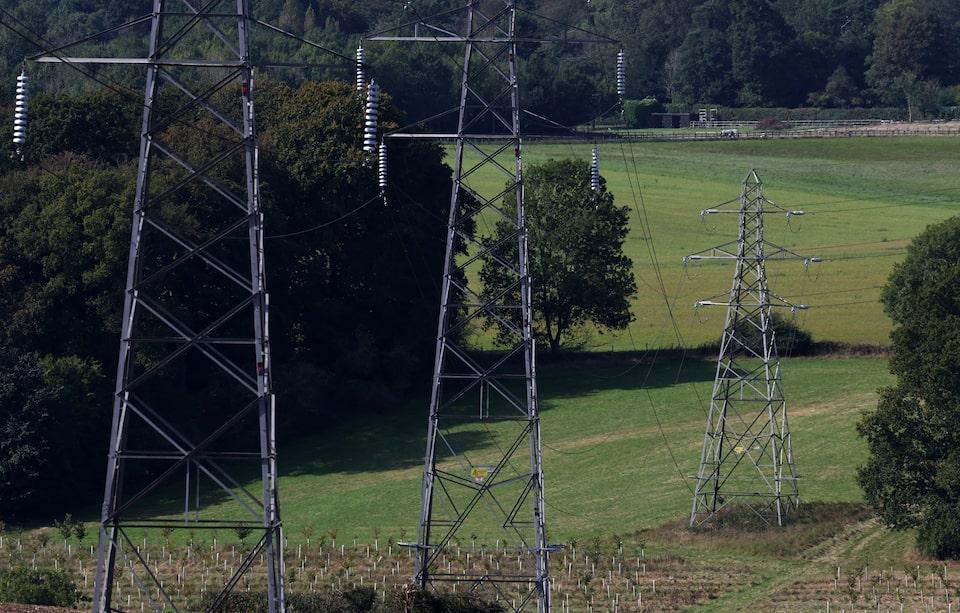
LONDON, Feb 14 (Reuters) - Britain plans over the coming months to introduce a faster way to connect new power projects to the grid, the energy regulator, said on Friday as it seeks to accelerate progress towards a goal to decarbonise electricity by 2030. Under the existing system, projects are dealt with in the order they enter a queue regardless of how advanced the projects are. The new system would seek to give priority to projects that are ready or in locations where more generation capacity is needed. “We have enough energy projects in the grid connection queue to deliver clean power by 2030, but many are stuck behind speculative schemes, leading to delays of up to 10 years,” Britain’s Energy Secretary Ed Miliband said in a statement issued by regulator Ofgem. Ofgem said a consultation was open on the plans until March 14 and after that, offers could begin to be accelerated, with the first projects approved under the new system connected and operational from 2026. Sign up here. https://www.reuters.com/business/energy/uk-energy-regulator-plans-faster-grid-tie-ups-new-projects-2025-02-14/
2025-02-14 00:16
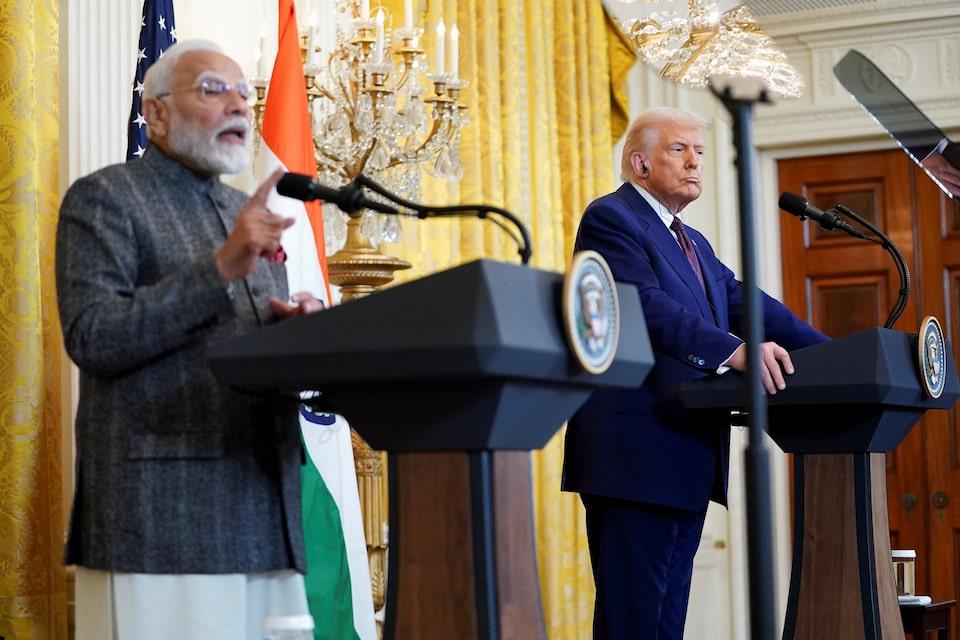
WASHINGTON, Feb 13 (Reuters) - The United States will increase military sales to India starting in 2025 and will eventually provide F-35 fighter jets, U.S. President Donald Trump said on Thursday. "We'll be increasing military sales to India by many billions of dollars. We're also paving the way to ultimately provide India with the F-35 stealth fighters," Trump told reporters. Trump did not provide a timeline, but foreign military sales, especially for cutting-edge technology like the stealthy F-35 jet, typically take years to work through. Addressing a joint news conference after a meeting with Indian Prime Minister Narendra Modi, Trump also said the countries had struck an agreement that includes India importing more U.S. oil and gas to shrink the trade deficit between the two countries. Trump also said that Washington and New Delhi will be working together to confront what he called "the threat of radical Islamic terrorism." Lockheed Martin (LMT.N) , opens new tab, which makes the F-35 jet, did not immediately comment on Trump's ambitions to sell the jets to India. Foreign military sales like those of the F-35 are considered government-to-government deals where the Pentagon acts as an intermediary between the defense contractor and a foreign government. India has agreed to buy more than $20 billion of U.S. defense products since 2008. Last year, India agreed to buy 31 MQ-9B SeaGuardian and SkyGuardian drones after deliberations that lasted more than six years. According to the U.S. Congressional Research Service, New Delhi is expected to spend more than $200 billion over the next decade to modernize its military. Lockheed is producing three models of the new warplanes for the U.S. military and allies including Britain, Australia, Italy, Turkey, Norway, the Netherlands, Israel, Japan, South Korea and Belgium. Russia has for decades been the main weapons supplier to India, the world's biggest arms importer, and its fighter jets are part of India's military fleet. But Moscow's ability in recent years to export has been hobbled by the war in Ukraine, making New Delhi look westward. Russia has offered to make its fifth-generation stealth fighter jet Sukhoi Su-57 in India for the Indian Air Force, a Russian and an Indian official said on Tuesday, as Moscow looks to maintain strong ties with New Delhi. Sign up here. https://www.reuters.com/business/aerospace-defense/markets/commodities/trump-says-india-agreed-purchase-more-us-oil-gas-2025-02-13/