2026-01-07 22:01
ORLANDO, Florida, Jan 7 (Reuters) - The S&P 500 and Dow Jones Industrials climbed to new highs on Wednesday but closed the session lower in the wake of patchy U.S. employment data, while bond yields, oil, and metals prices also posted notable declines. More on that below. In my column today I look at what equity valuations can tell us about relative stock market performance. If 2025 is any guide, expensive U.S. stocks at the start of this year suggest Wall Street could underperform once again. Sign up here. If you have more time to read, here are a few articles I recommend to help you make sense of what happened in markets today. Today's Key Market Moves Today's Talking Points * U.S. employment mixed bag U.S. job openings in December were much lower than expected, and the 'quits' rate remains low because workers are terrified of giving up their jobs and not finding another one. On the other hand, layoffs fell sharply, and the employment index of the services ISM unexpectedly jumped in November. So, a mixed bag of U.S. labor market indicators for investors to chew on ahead of the all-important December payrolls and unemployment rate numbers on Friday. The labor market is soft, but not collapsing. * Let it loose Record-high stock prices, tight credit spreads, and anchored bond yields - apart from you, Japan - in the first few trading sessions of 2026 mean global financial conditions are the loosest in four years, according to Goldman Sachs indices. There will be market dips, as evidenced by Wednesday's reversal on Wall Street. But it's a broadly bullish picture: $70 billion of U.S. corporate debt issued on Monday and Tuesday, Google and Amazon-backed Anthropic planning a multibillion-dollar fundraise, and investors putting money to work. Too bullish? * Japan's bond decoupling Japanese government bonds continue to crumble, with yields on 20-year maturities and beyond hitting new highs on Wednesday. The move was particularly notable, contrasting with the rally in euro zone and U.S. debt prices. Even more notable, perhaps, is the yen's reaction -- or lack of reaction. Dollar/yen has been remarkably stable, stuck in a narrow 155.70-157.30 yen range in the last two weeks. Renewed JGB market weakness and broad-based dollar strength is having little impact, but for how much longer? High valuations risk spoiling Wall Street's party The new year has gotten off to a roaring start for U.S. equities, with the S&P 500 and Dow Jones breaking records, and investors are anticipating a fourth consecutive year of double-digit returns. But elevated valuations could yet spoil the party. The optimism is palpable, and why not? The artificial intelligence capex boom is accelerating, the Federal Reserve is on track to lower interest rates further, and a fiscal stimulus bonanza is coming down the pike - all while economic activity and earnings growth continue to hum along nicely. Little wonder then that analysts expect the S&P 500 to deliver near 10% returns in 2026, even after three consecutive years of double-digit gains have lifted the index by a cumulative 80%. The more bullish year-end forecasts of 8,000 and above imply at least 15% upside. The most compelling counter-argument to this bullish consensus, however, is perhaps the most obvious: valuations. The best indicator of where an index will be at the end of the year relative to expectations and its peers remains its starting point. There will always be exceptions, of course, but relatively cheap markets on January 1 tend to perform better by December 31. And vice versa. This should give Wall Street bulls some pause. U.S. DISCONNECT The S&P 500 rose 16% in 2025. That is pretty impressive given the tariff tumult in the first half of the year and the index's 24% and 23% gains in the previous two calendar years. But on a global level, it was a relatively poor showing. Analysts at Deutsche Bank note that in a sample of 47 global indices, there was a "notable" relationship last year between annual returns in U.S. dollars and starting valuations. Markets that began the year with lower 12-month forward price-to-earnings ratios generally performed better. U.S. stocks, which started the year with the highest 12-month forward P/E of 25, came in 37th place by Deutsche's calculations. Indian and Danish stocks were the next most expensive markets on January 1 last year, and they both underperformed. Danish stocks were the weakest of all, with India's market coming in sixth from the bottom, despite the country boasting one of the world's fastest economic growth rates. At the other end of the spectrum, Colombian stocks were the cheapest at the start of the year and ended up returning the most. MIND THE GAP Of course, U.S. equity valuations are so high largely because Wall Street has outperformed its global peers for most of this century. But could the tide now be turning? According to strategists at Goldman Sachs, last year was the first in 15 that U.S. stocks lagged behind Asia, Europe, and emerging markets indices. Goldman's view that U.S. stocks will continue to underperform over the next decade has stirred up some debate, although not as much as the claim by Apollo Global Management's Torsten Slok that the S&P 500's annualized returns over the next decade could be zero. To be sure, Wall Street has proven the naysayers wrong for a long time, delivering strong returns despite high valuations. But as Deutsche Bank's team argues, this is the exception, not the rule. "Even if U.S. equities were to defy valuation gravity once more amid today's AI-driven optimism, the weight of evidence across economies and centuries remains clear: valuations matter," Deutsche Bank analysts wrote in a study published in October. Investors should keep this in mind. U.S. equity valuations are currently high by historical standards, both nominally and relative to their European, Asian and emerging-market peers, in large part thanks to the boom in AI-related stocks. This suggests that Wall Street could find itself near the back of the global pack for a second consecutive year. What could move markets tomorrow? Want to receive Trading Day in your inbox every weekday morning? Sign up for my newsletter here. Opinions expressed are those of the author. They do not reflect the views of Reuters News, which, under the Trust Principles , opens new tab, is committed to integrity, independence, and freedom from bias. https://www.reuters.com/world/china/global-markets-trading-day-graphic-2026-01-07/

2026-01-07 21:59
Jan 7 (Reuters) - Russian strikes late on Wednesday knocked out power supplies almost entirely in two regions of southeastern Ukraine, the energy ministry said. Hospitals and other critical sites in the affected areas were operating on reserve power, according to local reports. Emergency crews were working through the night to restore electricity, water and heating, which had also been disrupted. Sign up here. "As a result of the attack, Dnipropetrovsk and Zaporizhzhia regions are almost completely without electricity," the ministry said in a statement on Telegram. "Critical infrastructure is operating on reserve power." Deputy Prime Minister Oleksiy Kuleba, writing on Telegram, said repairs were being carried out in an "intensified manner" in Dnipropetrovsk, while ensuring the crews were safe. In Zaporizhzhia, officials were drawing on alternative power sources to provide water supplies, he said. Russian attacks have long targeted Ukraine's energy network and have become more intense in recent months. Prime Minister Yulia Svyrydenko said impending snowfalls and temperatures plunging overnight to minus 20 degrees Celsius (minus 4 degrees Fahrenheit) were likely to compound disruptions to power and heating. "Ukraine's energy system is under enemy attacks every day, and energy workers are operating in extremely difficult conditions to provide people with light and heat," Svyrydenko wrote on Telegram. "Deteriorating weather conditions put additional strain on critical infrastructure." Public broadcaster Suspilne reported power cuts in the city of Dnipro, where the metro had stopped running, and other parts of the region. Officials extended school holidays by two days. The head of the Dnipropetrovsk regional council told the broadcaster it was unclear when power would be restored. Oleksandr Vilkul, head of the military administration in Kryvyi Rih, President Volodymyr Zelenskiy's home town in the region, said conditions were particularly difficult in two districts with teams working to restore power. He called for generators to be brought into use as much as possible. Ukrainian Railways said trains in the two regions and signalling systems were being switched to reserve systems and stations were being operated with generators. Zaporizhzhia Regional Governor Ivan Fedorov said the power cuts meant that air raid sirens were not audible. Fedorov said electricity had been restored at "key facilities" and asked residents to stay off mobile telephone networks that were operating in emergency conditions. https://www.reuters.com/world/russian-strikes-trigger-power-water-cuts-southeastern-ukraine-officials-media-2026-01-07/

2026-01-07 21:49
Jan 7 (Reuters) - U.S. oil major Exxon Mobil (XOM.N) , opens new tab said on Wednesday that lower crude oil prices could cut its fourth-quarter upstream earnings by about $800 million to $1.2 billion. Oil prices declined 9.2% during the three months ended December 31, as concerns about oversupply and tariffs outweighed geopolitical risks. Sign up here. Brent crude futures shed about 19% in 2025, the most substantial annual percentage decline since 2020 and their third straight year of losses, the longest such streak on record. U.S. West Texas Intermediate crude logged an annual decline of almost 20%. The company said in a regulatory filing that changes in gas prices could affect its quarterly upstream earnings from a negative $300 million to as much as a positive $100 million. Exxon's snapshot is closely watched for clues on how the broader oil sector will fare when companies begin releasing quarterly results in a few weeks. Analysts expect Exxon to report adjusted earnings of $1.66 per share for the fourth quarter, according to data compiled by LSEG. "However, we think many brokers, including us, have yet to mark to market, which could lead to lower earnings estimates given the lower oil and gas prices compared with expectations at the beginning of 4Q25," Scotiabank analysts said in a note. Exxon also said restructuring charges could negatively impact overall earnings by about $200 million. Late last year, the company had flagged that its corporate plan focused on cutting costs and boosting profit even through periods of oil price volatility. Still, it signaled that stronger margins in the refining business could boost earnings by $300 million to $700 million in the fourth quarter. Exxon is set to release results for the final quarter of the year on January 30, the filing showed. The energy major had posted $5.7 billion in upstream earnings for the third quarter. Its total profit stood at $7.5 billion during the period. https://www.reuters.com/business/energy/exxon-signals-lower-fourth-quarter-upstream-earnings-2026-01-07/

2026-01-07 21:19
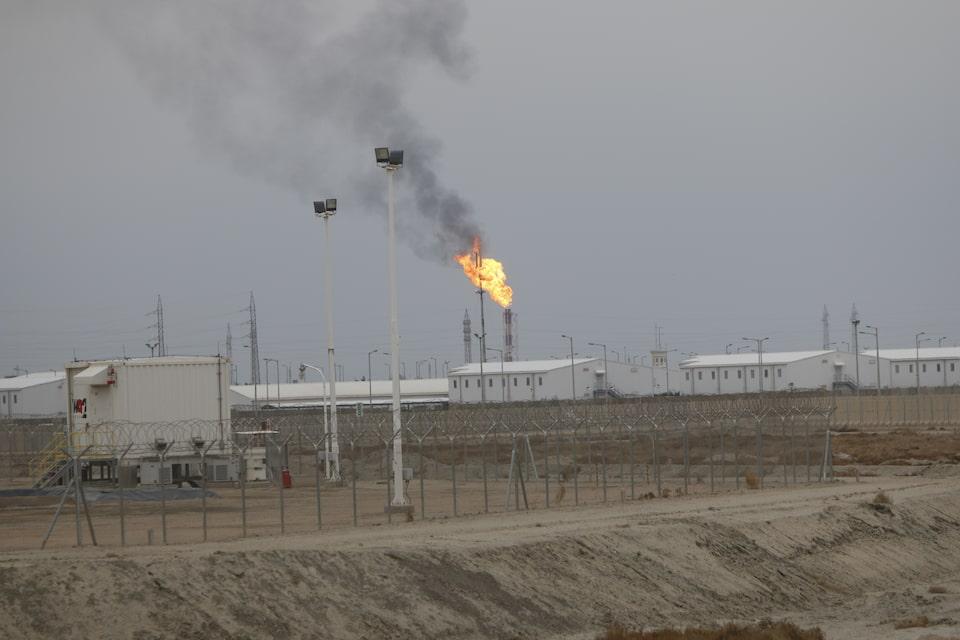
Jan 7 (Reuters) - The Iraqi cabinet has approved nationalising petroleum operations in the West Qurna 2 oilfield, one of the world's largest, in accordance with the provisions of a service contract signed with Russia's Lukoil (LKOH.MM) , opens new tab, the government said in a statement on Wednesday. The cabinet also agreed to seek approvals to finance operations through the Majnoon oilfield account, to be boosted by proceeds from crude shipments sold by state oil marketer SOMO. Sign up here. “The state-run Basra Oil Company will cover local staff salaries, operational expenses, and payments to subcontractors, using an account linked to the Majnoon oilfield to help facilitate the process," said an Iraqi oil manager at the West Qurna 2 field. Production at West Qurna 2 remains steady at around 465,000 to 480,000 barrels per day, the official said. Iraq’s Oil Ministry decided to take over operations to prevent potential production disruptions caused by sanctions on Russia’s Lukoil, said an Oil Ministry official with direct knowledge of West Qurna 2 operations. Lukoil declared force majeure in November at West Qurna 2 as it was hit with sanctions alongside Rosneft as part of U.S. President Donald Trump's push to end the war in Ukraine. The sanctions have drawn bids from about a dozen investors, including U.S. oil majors Exxon Mobil, Chevron, and private equity firm Carlyle, sources have said. Lukoil's 75% operational stake in Iraq's West Qurna 2 oilfield was its biggest foreign asset. The field accounts for about 0.5% of global oil supply and 9% of total output in Iraq, OPEC's second-largest producer after Saudi Arabia. https://www.reuters.com/business/energy/iraq-nationalise-west-qurna-2-oilfield-operations-government-says-2026-01-07/
2026-01-07 21:09
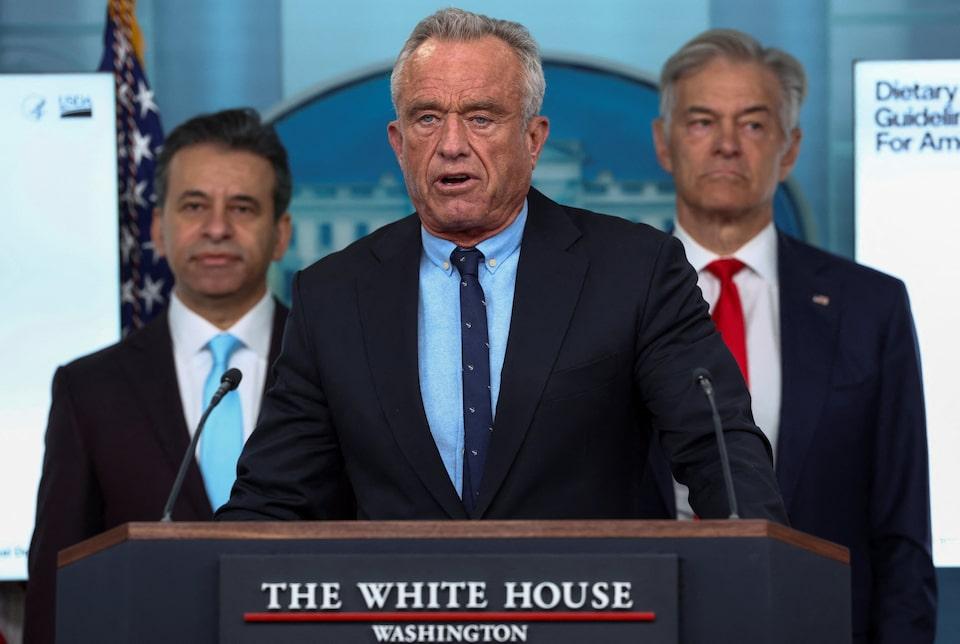
Guidelines recommend more protein, less sugar, avoid processed foods Document omits alcohol consumption limits, suggests reducing intake Guidelines inform school meals, medical advice and other federal policy WASHINGTON, Jan 7 (Reuters) - The administration of U.S. President Donald Trump on Wednesday announced a new slate of dietary guidelines that recommends Americans eat more protein and less sugar than previously advised and that consumers avoid highly processed foods to achieve a healthy diet. The guidelines are the latest product of the Trump administration's "Make America Healthy Again" agenda, named for the social movement that backs Health Secretary Robert F. Kennedy Jr. He and other officials, including Agriculture Secretary Brooke Rollins, have implemented MAHA policy goals such as curbing childhood vaccines and restricting access to unhealthy foods for people receiving food stamps. Sign up here. Kennedy and Rollins had pledged to simplify the guidelines and remove what they described as the undue influence of food companies over their recommendations. The guidelines are published every five years by the Department of Health and Human Services and the Department of Agriculture. The new guidelines implement some changes promised by Kennedy, like strongly dissuading the consumption of highly processed foods and added sugar. Kennedy and his MAHA supporters have pointed to high consumption of sugar and processed foods in the American diet as contributors to rising rates of chronic disease. "Today, our government declares war on added sugar," Kennedy said at a White House press briefing. Recommendations for prioritizing fruits, vegetables and whole grains and capping intake of saturated fat at 10% of daily calories, remain the same. Kennedy said adherence to the guidelines would lower the cost of healthcare. Healthcare affordability is a key issue for Republicans heading into the 2026 midterm elections. "The new guidelines recognize that whole nutrient-dense food is the most effective path to better health and lower healthcare costs," Kennedy said. The administration's MAHA Commission, led by Kennedy, said in a September strategy report that the USDA and HHS plan to reform the process for developing future dietary guidelines, including the structure and members of its advisory committee, which makes recommendations on the contents. Some advocacy groups have criticized the advisory committee for being overly influenced by the food industry. The committee that advised on this year's dietary guidelines was appointed by the administration of President Joe Biden. MORE PROTEIN, LESS SUGAR The dietary guidelines form the basis of federal nutrition programs for school meals consumed by nearly 30 million children, and inform medical advice and national disease prevention efforts. This iteration recommends adults eat 1.2 to 1.6 grams of protein per kilogram of body weight per day, up from the prior recommended daily consumption of 0.8 grams. It also encourages the consumption of full-fat dairy, a shift from decades-old guidance to opt for lower-fat dairy products to mitigate the health risks of high-fat diets. Dairy groups have argued that farmers are disadvantaged by policy that advises against consumption of full-fat dairy products. The guidelines omit a longstanding recommendation that adults limit alcohol consumption to one or two drinks per day, instead offering only that adults should "consume less alcohol for better overall health." A White House official said they reflect sound science and will support better public health outcomes as they are implemented. “The American Medical Association applauds the administration's new Dietary Guidelines for spotlighting the highly processed foods, sugar-sweetened beverages, and excess sodium that fuel heart disease, diabetes, obesity, and other chronic illnesses," Bobby Mukkamala, the group's president, said in a statement. The School Nutrition Association said school meals already include fruits, vegetables and other healthy foods in accordance with federal guidelines and that they need more funding and training to further expand from-scratch cooking. AVOID HIGHLY PROCESSED FOODS The guidelines say "no amount of added sugars or non-nutritive sweeteners is recommended or considered part of a healthy or nutritious diet" and that if consumed, added sugars should not exceed 10 grams per meal. Prior guidelines granted that a small amount of sugars could be added to healthier foods to help meet dietary recommendations, without exceeding 10% of daily calories. Highly processed foods and foods and drinks with artificial flavors, low-calorie sweeteners and dyes should be avoided, the new guidelines say. Some food companies are removing artificial ingredients in alignment with the administration's priorities. Soda makers like Coca-Cola (KO.N) , opens new tab and PepsiCo (PEP.O) , opens new tab, and Mondelez (MDLZ.O) , opens new tab, which manufactures Oreo cookies, have faced scrutiny from Kennedy. Major European-headquartered food producers Nestle (NESN.S) , opens new tab and Danone (DANO.PA) , opens new tab are also exposed to changes pushed by Kennedy. The American Beverage Association, which represents soda and other beverage makers, said in a statement that nearly 60% of beverages sold in the U.S. contain no sugar and that dissuading consumption of sugar-free beverages is "impractical and inherently contradictory." The guidelines do not address ultra-processed foods, the definition of which is hotly debated by the food industry. The HHS and USDA have said they are developing a federal definition for ultra-processed foods. Scientists from around the world have warned that ultra-processed foods, which often include additives and industrial ingredients, are associated with poorer health outcomes such as type 2 diabetes and obesity. https://www.reuters.com/business/healthcare-pharmaceuticals/trump-administration-advises-more-protein-less-sugar-new-dietary-guidelines-2026-01-07/
2026-01-07 20:32
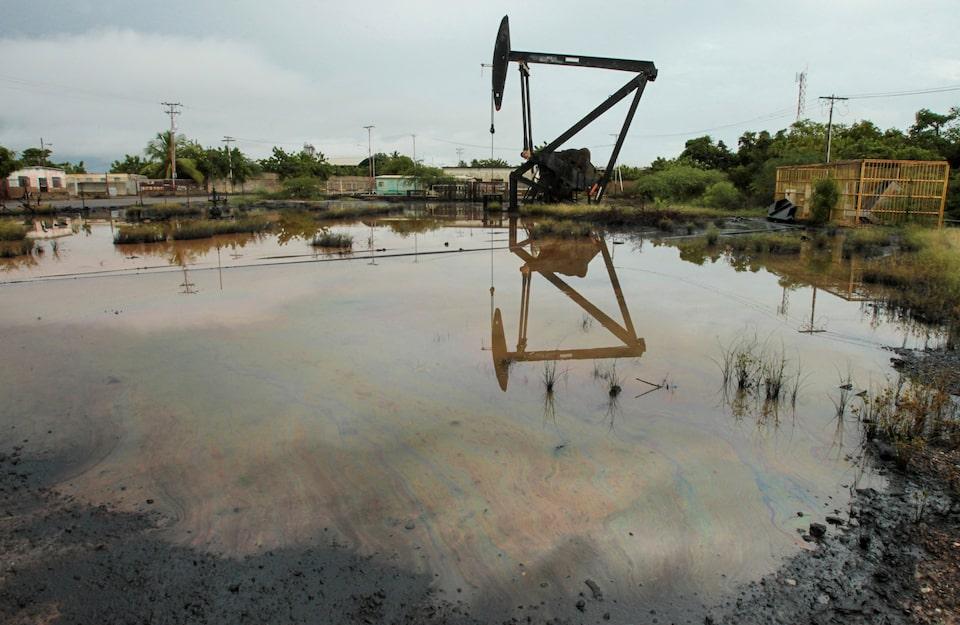
Trump says Venezuela to export $2 billion worth of oil to US Deal to redirect Venezuelan oil exports to US from China US seizing Venezuela-linked oil tanker after weeks-long pursuit HOUSTON, Jan 7 (Reuters) - Oil prices settled lower for a second straight session on Wednesday as investors digested U.S. President Donald Trump's deal to import up to $2 billion worth of Venezuelan crude, a move that would lift supplies to the world's largest oil consumer. Brent crude futures closed down 74 cents, or 1.2%, at $59.96 a barrel, while U.S. West Texas Intermediate crude fell $1.14, or 2%, to $55.99 a barrel. Both benchmarks slid more than $1 a barrel during the previous trading session, with market participants expecting ample global supply this year. Sign up here. Venezuela will be "turning over" between 30 million and 50 million barrels of "sanctioned oil" to the U.S., Trump wrote in a social media post on Tuesday. The deal between Washington and Caracas initially could require the rerouting of cargoes that were bound for China, sources told Reuters. "Crude futures continuing on the defensive after the late day sell-off yesterday on news that Venezuela will be giving the US between 30 to 50 million barrels of oil," said Dennis Kissler, senior vice president of trading at BOK Financial. EMPTY RUSSIAN-FLAGGED OIL TANKER SEIZED Venezuela has millions of barrels of oil loaded on tankers and in storage tanks that it has been unable to ship since mid-December due to a blockade on exports imposed by Trump. The blockade was part of a U.S. pressure campaign against Venezuelan President Nicolas Maduro's government that culminated in U.S. forces capturing him over the weekend. Top Venezuelan officials have called Maduro's capture a kidnapping and accused the U.S. of trying to steal the country's vast oil reserves. The U.S. also seized an empty Russian-flagged, Venezuela-linked oil tanker in the Atlantic Ocean on Wednesday. Providing some support to prices, U.S. crude stocks dropped by 3.8 million barrels to 419.1 million barrels in the week ended January 2, the Energy Information Administration said. Analysts had estimated a rise of 447,000 barrels. U.S. gasoline stocks increased by 7.7 million barrels in the week, the EIA said, compared with analysts' expectations in a Reuters poll for a build of 3.2 million barrels. Distillate stockpiles, which include diesel and heating oil, climbed by 5.6 million barrels in the week versus expectations for a rise of 2.1 million barrels. Morgan Stanley analysts estimated the oil market could reach a surplus of as many as 3 million barrels per day in the first half of 2026, based on weak growth in demand last year and rising supply from OPEC and non-OPEC producers. However, the prospect of higher, cheaply extracted Venezuelan oil exports could pause expansion of productive capacity in the U.S. and elsewhere, analysts at BMI, a unit of Fitch Solutions, said in a note on Wednesday. Venezuela has been selling its flagship Merey crude grade at around $22 per barrel below Brent for delivery at its ports. "That raises the expected price of oil over the medium term, especially if the Venezuelan regime survives," the BMI analysts said. https://www.reuters.com/business/energy/wti-crude-extends-decline-after-trump-says-venezuela-will-send-oil-us-2026-01-07/