2025-02-13 19:34
BRASILIA, Feb 13 (Reuters) - Brazil's government on Thursday cut its economic growth forecast for this year to 2.3% amid ongoing monetary tightening and lifted its inflation outlook, though it projected a more benign scenario than the market. The finance ministry's economic policy secretariat now expects consumer prices to rise 4.8% this year, up from a previous forecast of 3.6% in November, when it projected GDP growth would reach 2.5% this year. That would mark a slowdown from the estimated 3.5% economic growth in 2024. Official GDP data is set for release in early March. "We believe this is a very realistic and credible scenario," Economic Policy Secretary Guilherme Mello said at a press conference, adding that it is subject to reassessment in case of significant shifts in economic conditions. Mello said U.S. trade policy under President Donald Trump is a point of concern, but said that measures announced so far - including tariffs on Brazilian steel benefiting from previous exemptions - may have sectoral impacts but will not spill over into the broader macroeconomic picture. Inflation this year will be "impacted by lagged effects of currency depreciation and (inflationary) inertia," Mello's secretariat said in a report. Latin America's largest economy targets 3% inflation, with a tolerance range of 1.5 percentage points in either direction, meaning the government expects inflation to breach the upper limit for a second straight year. In 2024, inflation reached 4.83%. Despite the more modest outlook for economic activity and the more challenging inflation forecast, government projections remain more optimistic than those of the market. Private-sector economists surveyed weekly by the central bank expect GDP to grow 2.03% this year, with consumer prices rising 5.58%. The central bank, which recently estimated inflation to reach 5.2% this year and GDP to expand by 2.1%, has stressed that the economy, which has consistently outperformed expectations, needs to slow down to ease inflationary pressures. Central bank head Gabriel Galipolo emphasized on Wednesday that policymakers will take as much time as necessary to assess whether this cooling trend is firmly in place. The central bank raised interest rates by 100 basis points in late January to 13.25% and signaled a hike of the same magnitude for its next policy meeting in March. Mello noted that recent data already support the view that a gradual economic slowdown is underway, including confidence indicators, PMIs, and a deceleration in job creation. He also assessed that this year's growth composition will be less inflationary, relying on the booming agricultural sector, with a strong harvest expected to help ease food prices. Sign up here. https://www.reuters.com/world/americas/brazil-cuts-economic-growth-forecast-this-year-23-sees-inflation-48-2025-02-13/

2025-02-13 19:32
Feb 13 (Reuters) - New York's utility regulator on Thursday granted a unit of Norwegian energy firm Equinor (EQNR.OL) , opens new tab permission to build and operate transmission facilities for the company's Empire Wind 1 offshore wind farm under construction off the state coast. The transmission line for the project runs about 17.5 miles (28.2 kilometers) from the boundary of New York State waters to a point of interconnection in Brooklyn, the New York Public Service Commission (NYPSC) said in a release. Empire Offshore Wind 1 is an 816-megawatt wind project that will produce enough renewable power for more than 388,000 homes. The offshore wind farm is expected to be constructed by the end of 2026, and fully operational by the end of 2027, the NYPSC said. Sign up here. https://www.reuters.com/business/energy/new-york-approves-power-line-equinor-offshore-wind-farm-2025-02-13/
2025-02-13 19:11
ORLANDO, Florida, Feb 13 (Reuters) - In a world where information, money and asset prices move faster than at any time in history, one key element of financial markets remains resolutely resistant to change: forecasting. Whether it is economists' inflation outlooks or analysts' predictions for where the S&P 500 will end the year, forecasters are notoriously slow to change their views, regardless of the weight of evidence that may be mounting against them. Take the economists at Citi. They are still calling for a year-end fed funds rate of 3.25% - essentially five quarter-point cuts by December – under the assumption that inflation will keep slowing. Yet this week's U.S. inflation report was the latest in a series of recent economic indicators suggesting the Federal Reserve will not be cutting interest rates anytime soon. Rates futures markets are now pricing in only one more cut this year, which would leave the "terminal" fed funds rate above 4.00%. If anything, suggestions that the Fed's next move will be a hike are gaining traction. Are the economists at Citi truly seeing something that others - including the Fed - aren't? And how does this outlier call feed into other key house views on GDP, the dollar or Treasuries? This isn't to dunk on Citi's economists. Their reasoning is cogent and clear, and it may yet be proven right. It's just a prime example of how forecasters often remain wedded to their views longer than seems rational. STICK TO YOUR GUNS Having the courage of one's convictions is admirable, but only for so long. Some market analysts have been predicting dollar debasement, a collapsing U.S. bond market and hyperinflation for decades. If any of these things finally do happen, will these forecasters be "right" after being "wrong" for so long? Are perma-bears predicting the bursting of equity bubbles "right" if the crash comes 10 years later? And does getting an out-of-consensus call right actually mean you were smart, or simply lucky? As Oaktree's Howard Marks once observed, this "industry is full of people who got famous for being right once in a row." So why are forecasters so loath to update their priors? The prosaic truth is wheels of change turn slowly at big institutions, and on a personal level, admitting you "got it wrong" is difficult. There is, of course, the other extreme, exemplified a year ago by Barclays economists, who changed their call on the timing of the first Fed rate cut three times in a month, only to eventually end up where they started. This also does not seem like a prudent strategy. 'OVERPRECISION' Many studies on behavioral economics, such as those by Daniel Kahneman, have sought to explain the psychology around forecasting. One from last year stood out: "Overprecision in the Survey of Professional Forecasters , opens new tab" by Sandy Campbell and Don A. Moore at University of California, Berkeley. Campbell and Moore analyzed 16,559 predictions of major U.S. economic indicators in The Survey of Professional Forecasters, the collection of forecasts that has served as a kind of national benchmark since 1968. They found that forecasters reported 53% confidence in the accuracy of their forecasts but were correct only 23% of the time. That's better than Howard Marks' "once in a row," but it's still not great. Forecasting is ultimately not a science, and as former Fed Chair Alan Greenspan alluded to about the dollar, getting it right is often no more than a coin flip. In many cases, the direction of travel counts more than the destination. Perhaps the best forecasters are the ones who are willing to adapt and who never forget how likely it is that they will be wrong. (The opinions expressed here are those of the author, a columnist for Reuters.) Sign up here. https://www.reuters.com/markets/why-forecasters-stand-firm-shifting-economic-sands-mcgeever-2025-02-13/
2025-02-13 19:09
BUENOS AIRES, Feb 13 (Reuters) - Argentina's monthly inflation rate slowed to 2.2% in January, its lowest level since mid-2020, while landing slightly below analyst estimates, data from the INDEC statistics agency showed on Thursday. Inflation in the 12 months through January reached 84.5%, also slowing from a rate of 117.8% recorded in the previous month and in line with Reuters' expectations. Sign up here. https://www.reuters.com/world/americas/argentina-monthly-inflation-slows-lowest-over-4-years-january-2025-02-13/
2025-02-13 17:48
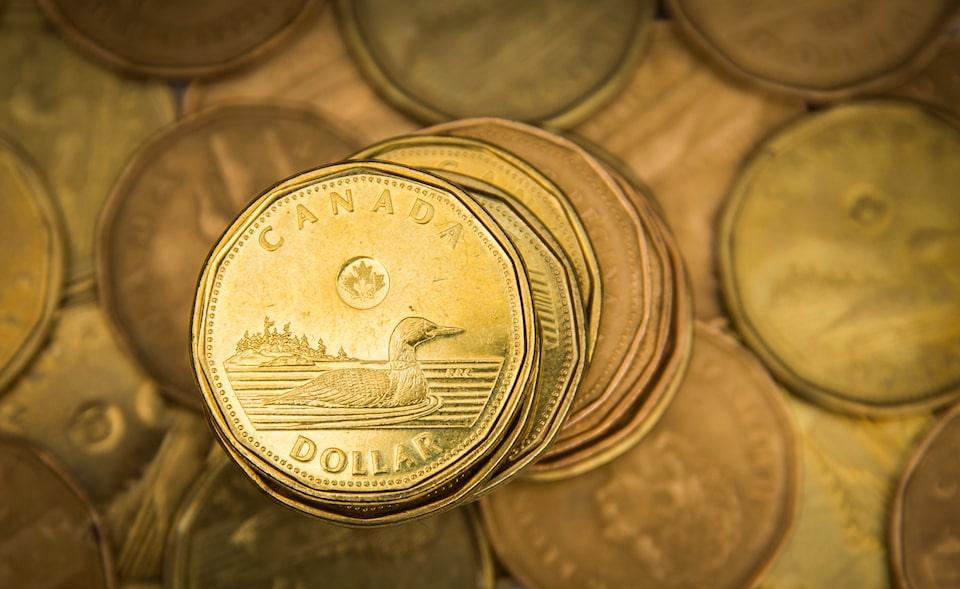
Canadian dollar gains 0.5% against the greenback Touches its strongest since December 13 Canadian bond yields ease across flatter curve TORONTO, Feb 13 (Reuters) - The Canadian dollar strengthened to a two-month high against its U.S. counterpart on Thursday as U.S. bond yields declined and a key level of support for the American currency gave way. The loonie was trading 0.5% higher at 1.4235 per U.S. dollar, or 70.25 U.S. cents, after touching its strongest intraday level since December 13 at 1.4211. "Today's move lower in U.S. yields has weakened the USD across the board, thereby allowing CAD to post gains," said George Davis, chief technical strategist at RBC Capital Markets. "Prices broke below strong support at 1.4265 which has contained selloffs in USD-CAD for the past week or so, with the break lower triggering some stops on long positions." U.S. Treasury yields fell and the greenback posted losses against a basket of major currencies after components of the U.S. producer price report for January indicated that core PCE inflation, the Federal Reserve's preferred inflation measure, is likely to be lower than previously thought when it is released later this month. Adding to support for the loonie, investors have dialed back expectations for a March interest rate cut from the Bank of Canada. The swaps market is pricing in a 44% chance, down from 85% before last week's move by U.S. President Donald Trump to delay a 25% tariff on goods from Mexico and Canada for a month. Trump said he plans to unveil reciprocal tariffs on Thursday afternoon but gave no details about his latest tariff plan, which could take aim at every country that charges duties on U.S. imports. Canadian government bond yields fell across a flatter curve, tracking the moves in U.S. Treasuries. The 10-year was down 7.4 basis points at 3.105%, after earlier touching its highest level since January 29 at 3.198%. Sign up here. https://www.reuters.com/markets/currencies/canadian-dollar-hits-2-month-high-us-bond-yields-fall-2025-02-13/
2025-02-13 17:12
Rouble at highest since September Russian stock market adds 6.4% in market cap Putin-Trump talks are in focus Analysts warn against excessive optimism MOSCOW, Feb 13 (Reuters) - The Russian rouble and stocks surged on Thursday after a telephone conversation between U.S. President Donald Trump and Russian President Vladimir Putin in which the two leaders discussed ways to end the Ukraine war. Hit by Western sanctions, Russian assets plummeted after the start of the war almost three years ago. Once a favourite play in emerging markets globally, most of them are now off-limits for Western investors. The rouble closed up 3.7% at 90.50 against the dollar, the highest level for the Russian currency since September 2024, according to data from the over-the-counter market. The rouble briefly touched the level of 89.90, the highest since September 11, during the trading session. Some foreign exchange booths in Moscow closed down on Thursday, Russian media reported, as they failed to keep up with the sharp dollar fall. The rouble strengthened 2.6% against the dollar in the previous session and is up 20% since the start of this year. The Moscow Exchange (MOEX) index surged 5.8% on Wednesday and another 5.9% on Thursday. "The moment investors have been waiting for has arrived. The next step towards easing geopolitical tensions," Sinara brokerage analysts said. The Russian stock market is up 11.1% since the start of the year. "In focus are the phone talks between the presidents of Russia and the United States, as investors increasingly hope for geopolitical de-escalation," Sberbank analysts said in a note. Russia's sanctioned corporations such as gas giant Gazprom, whose shares were hit by the loss of the European gas market, as well as dominant lender Sberbank and liquefied natural gas producer Novatek led the market rally. Shares in Russia's aluminium maker Rusal , one of the few Russian stocks still available for international investors, surged by almost 25% in Hong Kong and are at the highest since March 2023. The Russian market capitalisation surged by 400 billion roubles on Thursday, up 6.2% from the previous session's closing level. The MOEX stock index rose past 3,200 points for the first time since June 2024. Western investors cannot buy assets at MOEX due to Western sanctions, imposed in 2024. Due to sanctions, all trade in dollars and euros have moved to the over-the-counter market, making China's yuan the most traded foreign currency. The market rally is taking place ahead of the central bank's rate-setting meeting on February 14, at which the regulator is expected to keep its key rate on hold at 21%, the highest level since early 2000s as inflation shows no sign of slowing down. "We believe that markets will factor in the easing of sanctions, the partial removal of barriers to financial transactions, the possible unblocking of assets, and the return of international companies," Alfa Investment analysts said. However, many analysts cautioned against excessive optimism, stressing that there was little certainty about the upcoming summit as well as possible Ukraine peace negotiations while there was a long road ahead. "Once again, we approach this trigger with caution. Even in the best-case scenario, it will be a difficult road with its ups and corrections, requiring attention from investors," said Sofya Donets from T-Bank. Sign up here. https://www.reuters.com/markets/europe/russian-rouble-stocks-surge-after-trump-putin-call-2025-02-13/