2025-02-13 12:16
Arabica and robusta prices seen posting annual losses Brazil 2025/26 coffee crop seen down 2.7% at 64.6 million bags Vietnam 2025/26 coffee crop seen up 3.6% at 29 million bags LONDON, Feb 13 (Reuters) - Arabica coffee futures are expected to fall by around 30% by the end of 2025, with recent record high prices expected to curb demand and early signs pointing to a bumper Brazilian crop next year, a Reuters poll showed on Thursday. The poll had a median forecast for arabica prices at the end of 2025 of $2.95 per pound, a drop of 30% from Wednesday's close and a loss of 6% from end-2024. "Demand will stagnate in response to very high prices," one participant in the poll of 12 traders and analysts said. The rise in prices has been fuelled by the prospect of a smaller arabica crop in top grower Brazil in the upcoming 2025/26 season. The median forecast for Brazil's 2025/26 arabica coffee crop in the poll was 40.55 million bags, down from the prior season's 43.4 million. Several participants, however, pointed to the potential for a larger crop in the 2026/27 season. "If we can get through the frost/rain period without damage, there should be a massive 26/27 Brazil crop on the horizon," another participant said. Arabica coffee prices were among the strongest performing commodity markets in 2024, rising by about 70%, and have continued to climb this year hitting a record high of $4.2995 on February 11. Brazil's total crop was seen falling to 64.6 million bags from 66.4 million in 2024/25 with a rise in robusta (conillon) production partly offseting the fall in arabica output. Prices for robusta coffee were seen ending 2025 at $4,200 a metric ton, down 28% from Wednesday's close, to post an annual loss of 14%. Brazil's robusta crop was seen rising in 2025/26 to 24.5 million bags, up from 21 million in the previous season. A larger harvest was also forecast in top robusta producer Vietnam of 29 million bags, up from 28 million in 2024/25. "If weather conditions remain favourable (in Vietnam), we expect production to recover given the investments made by farmers in recent years," one participant said. Sign up here. https://www.reuters.com/markets/commodities/arabica-coffee-prices-seen-falling-30-by-end-2025-2025-02-13/

2025-02-13 12:15
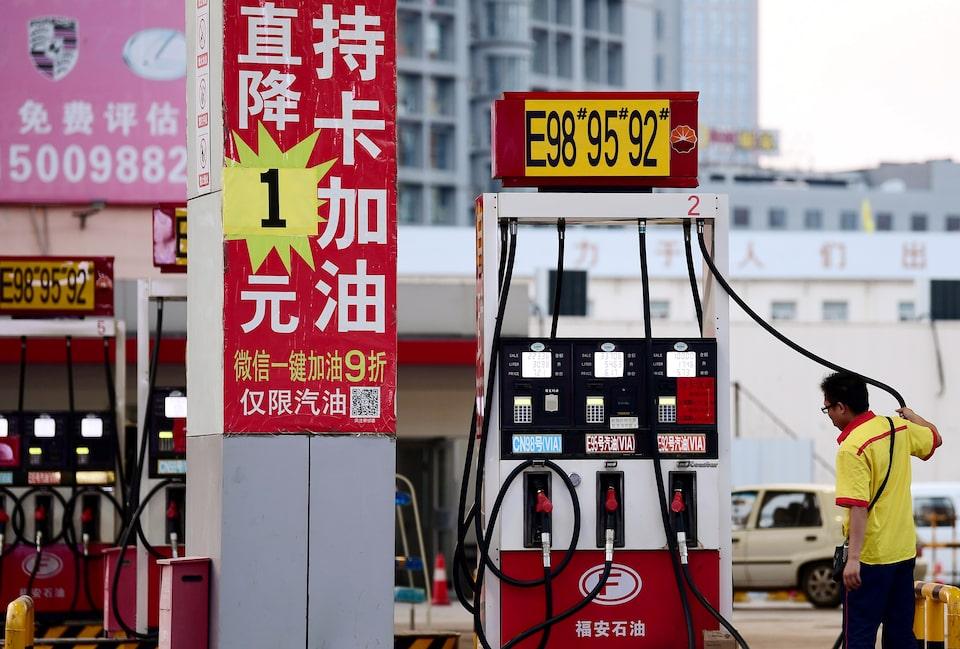
LONDON, Feb 13 (Reuters) - China's demand for road and air transport fuels may have passed its peak, the International Energy Agency (IEA) said on Thursday, citing data showing that the country's consumption of gasoline, gasoil and jet fuel declined marginally in 2024. Combined consumption of the three fuels in China last year was at 8.1 million barrels per day (bpd), which was 200,000 bpd lower than in 2021 and only narrowly above 2019 levels, the IEA said in a monthly report. "This strongly suggests that fuel use in the country has already reached a plateau and may even have passed its peak," it said. After decades of leading global oil demand growth, China's contribution is sputtering as it faces economic challenges as well as making a shift to electric vehicles (EVs). The decline in China's fuel demand is likely to accelerate over the medium term, which would be enough to generate a plateau in total China oil demand this decade, according to the Paris-based IEA. "This remarkable slowdown in consumption growth has been achieved by a combination of structural changes in China's economy and the rapid deployment of alternative transportation technologies," the IEA said. A slump in China’s construction sector and weaker consumer spending reduced fuel demand in the country, it said, adding that uptake of EVs also weighed. New EVs currently account for half of car sales and undercut around 250,000-300,000 bpd of oil demand growth in 2024, while use of compressed and liquified natural gas in road freight displaced around 150,000 bpd, it said. Sign up here. https://www.reuters.com/business/energy/chinas-fuel-demand-may-have-passed-its-peak-iea-says-2025-02-13/
2025-02-13 12:14
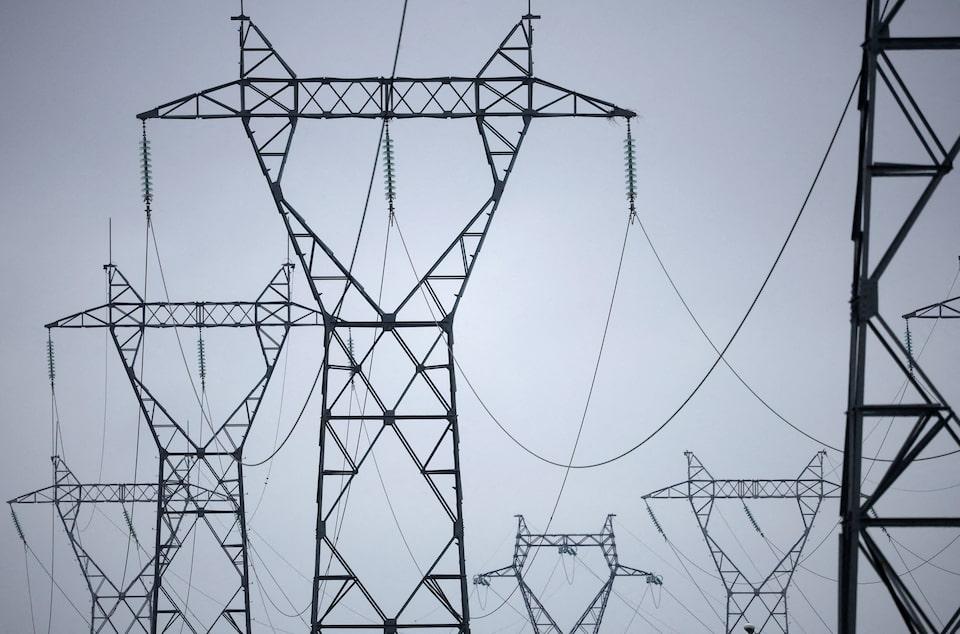
PARIS, Feb 13 (Reuters) - France needs to spend about 100 billion euros ($104 billion) by 2040 to reinforce and expand its electricity grid as demand grows, including from data centres, and as new nuclear reactors come online, state grid operator RTE said on Thursday. The French government has ambitious plans , opens new tab to become Europe's artificial intelligence hub and said earlier this week that companies had pledged about 109 billion euros to spend on infrastructure like data centres. To supply those new facilities, France will need extensive grid development, said RTE. More than half the anticipated 100 billion euros needed for grid investment will be for new demand centres including data centres and EV stations and to connect low-carbon power supply like nuclear and renewables, RTE said. "France is in a paradoxical situation: on the one hand, a large number of projects are emerging in the region...On the other hand, less than 15% of the projects are confirmed and have formally requested to start work on the network," RTE said. The annual investment rate in the electricity grid will need to more than triple in the next five years, up to 7.5 billion euros from 2.3 billion in 2024, but the investment is expected to cost less than neighbour Germany's plans, the report said. France has plans to build six new nuclear reactors that are expected to help provide power supply for future electrification. So far, more than 140 low-carbon or digital projects totalling 21 gigawatts (GW) have signed contracts for grid connection, RTE said, more than double the power currently used by those sectors, which include renewable energy and nuclear projects as well as data centres. Requests for further grid demand continue, particularly for data centres, it added. ($1 = 0.9593 euros) Sign up here. https://www.reuters.com/business/energy/french-power-grid-needs-100-billion-euros-investment-by-2040-says-operator-2025-02-13/
2025-02-13 12:13
BAMAKO, Feb 13 (Reuters) - Canadian miner Robex (RBX.V) , opens new tab has signed a new agreement with Mali to operate its Nampala mine, located around 300 km (186 miles) south of the capital Bamako, the West African country's government said. The company has been operating the mine since 2017 but the new mining code of Africa's second biggest gold producer compels international companies to pay higher taxes and hand over bigger stakes in assets to the state. In a sign of unease over the new legislation, Robex said in September it was looking to sell its Nampala mine but it had not received any reasonable offer. A statement by Mali's Council of Ministers released late on Wednesday said the company was planning to produce 1.4 tons of gold per year for a period of 8 years. "Geological research carried out by the company has identified a deposit with mineral reserves estimated at 17,351,000 tons with a gold content of 0.70 grams per ton," it said. The statement said the government and the company had signed a memorandum of understanding in September that allowed Mali to increase its shareholding in the project, entitling the state to priority dividends. Sign up here. https://www.reuters.com/markets/commodities/canadas-robex-signs-new-deal-with-mali-nampala-gold-mine-2025-02-13/

2025-02-13 12:07
Brazil's BRICS presidency won't push for common currency Agenda would ease global payments, reduce dollar reliance July BRICS summit to discuss cross-border payment systems BRASILIA, Feb 13 (Reuters) - Brazil's BRICS presidency this year will not advance a common currency for the group of major developing economies this year, four government officials said, but its agenda may pave the way for less reliance on the U.S. dollar in global trade. That agenda could draw the ire of U.S. President Donald Trump, who has repeatedly warned the BRICS group, founded by Brazil, Russia, India, China, not to challenge the dominance of "the mighty U.S. Dollar." "There is no chance that BRICS will replace the U.S. Dollar in International Trade, or anywhere else, and any Country that tries should say hello to Tariffs, and goodbye to America!" Trump wrote on social media last month. On Thursday, he repeated the threat of "100% tariffs" on BRICS nations "if they want to play games with the dollar." The Brazilian officials, who requested anonymity to discuss plans, said the idea of a shared currency to replace the dollar, floated by President Luiz Inacio Lula da Silva and others at recent BRICS summits, has never entered technical discussions. Three of the sources said Brazil is instead pushing reforms within BRICS to ease international payments in local currencies, opening the door to less dependence on the dollar for global trade, although they said that is not the main objective. "It's not directed against anyone," said one source, who stressed the focus was on reducing friction for global trade. The agenda includes studying technologies such as blockchain and linking payment systems to cut transaction costs, following standards set by multilateral bodies like the Bank for International Settlements (BIS), the three sources said. "No one wants to create trouble, but BRICS countries also don't want to abandon the idea of exploring this possibility," said another source, adding that no member countries intend to eliminate their dollar reserves. Even Lula has backed off the idea of a new currency for the bloc, while still defending last week the BRICS nations' "right to discuss establishing forms of trade that do not make us fully dependent on the dollar." Last week, Brazil's finance ministry and central bank discussed their proposals for the BRICS presidency this year, including cross-border payment initiatives, sources said. Neither institution responded to a request for comment. SUMMIT IN SIGHT BRICS representatives will meet in South Africa this month on the sidelines of the G20 meetings, where Brazil will present its plan for the BRICS summit in July, the sources added. Founded in 2009 and soon expanded to add South Africa, the BRICS group has recently included Egypt, Ethiopia, Indonesia, Iran, Saudi Arabia and the United Arab Emirates, making it a growing diplomatic counterweight to traditional Western powers. Brazil has gained prominence in discussions of global payments with the rapid rise of its instant payments system, called Pix, which launched in late 2020 and has already surpassed use of cash, credit and debit cards. In his first public remarks as Brazil's new central bank chief last week, Gabriel Galipolo said Pix is programmed in a way that it can be easily integrated with other payment systems, although governance challenges remain an important hurdle. Brazil already operates a Local Currency Payment System (SML), managed by its central bank through agreements with Argentina, Uruguay and Paraguay. The system allows transactions to be settled directly in Brazilian reais, bypassing the dollar as an intermediary and eliminating the need for foreign exchange contracts. Although the system lowers intermediation costs, settlements take at least three business days, which have limited adoption. Argentina was the top trade partner with SML transactions last year, totaling 5.1 billion reais ($878 million) — just a fraction of their overall $27.4 billion in bilateral trade. "With instant payment technology, these connections could become more secure, faster and cheaper," one of the sources said. ($1 = 5.81 reais) Sign up here. https://www.reuters.com/markets/currencies/brazil-nixes-brics-currency-eyes-less-reliance-mighty-dollar-2025-02-13/

2025-02-13 11:50
Elliott takes stake in oil major BP, sending shares higher Investment firm has built reputation as relentless activist Elliott relies on thorough research to boost shareholder wealth NEW YORK, Feb 13 (Reuters) - When Elliott Investment Management buys into a company to agitate for change, bankers and lawyers who have faced the hedge fund say executives can expect a strong view on their shortcomings, backed by meticulous research and financial firepower. Now, storied oil giant BP (BP.L) , opens new tab is in Elliott's sights. The investment firm, which manages $70 billion, has not disclosed the size of its stake in BP or what changes it wants to see. But the mere whiff of Elliott playing the corporate agitator this week sent BP shares to their highest since August, on expectations the fund will force improvements to unlock shareholder value. The day after news of Elliott's position broke, BP promised to reset its strategy as it reported weaker-than-expected results. It was not immediately clear whether Elliott played a role in the company's move, and BP’s chief executive declined to comment on the hedge fund's investment. Bankers and lawyers who have worked for the hedge fund or defended companies against it said Elliott is not an investor a board can ignore. The fund has built a reputation as a relentless activist, sometimes labeled as the most powerful player, but also hostile, in bankers' notes. On the flip side, Elliott argues its toughness will ultimately earn investors in the target company and its own portfolio bigger returns. "Elliott's team is truly scary smart. Sometimes the emphasis is on 'smart' and other times it is on 'scary'," said Kai Liekefett, co-chair of law firm Sidley Austin's shareholder activism and corporate defense practice. The investment firm is known for deep fact-finding on a target company, its peers and sector, possible buyers if a sale is considered. Sometimes executives are caught off guard by Elliott's investment, lawyers and bankers said, noting a call or news article announcing a position will spark a fevered defense. "Elliott has revived the 'ambush attack' in recent years. While Elliott and most activist investors used to first approach a target privately, nowadays Elliott often goes public right away – without any real advance warning," Sidley's Liekefett said. Elliott, while finding its roots in founder and co-CEO Paul Singer's middle name, is not a one-man show like some other prominent activist firms. Instead the firm, which employs roughly 600, relies on a large team of portfolio managers and analysts who keep tabs on sectors ranging from energy to retail and in every part of the world. The team prefers to stay out of the media limelight to let the work speak for itself, whether it is trying to break apart a corporate deal in Asia or a conglomerate in the United States. But if a company resists and Elliott can't be convinced of its counterarguments, discussions can rapidly escalate into public threats of proxy battles and special meetings. Lawyers, bankers and other investors, who know the firm well by having worked for or against it, say Elliott delivers an unmistakable message to a company: Agree with us and we'll let you take credit for positive changes, or resist and face consequences. Many sources requested anonymity for fear of upsetting the firm. Elliott declined to comment. While Elliott is officially labeled a multi-strategy hedge fund that invests in real estate, convertible bonds and sometimes buyouts, its equity activism strategy has earned the most headlines. Last year, 15 companies were approached by Elliott, including Southwest Airlines (LUV.N) , opens new tab and Starbucks (SBUX.O) , opens new tab, and the firm secured 12 board seats. Since its founding in 1977 with $1.3 million in assets, Elliott has returned roughly 13% net of fees per year, a person familiar with its performance said. Assets have doubled in the last seven years. Over the last five years, Elliott has targeted ever bigger companies, industry data show. Elliott investors praise the firm's steady returns. While it may not match other firms' occasional eye-popping gains, it has had only two years of losses in its nearly 50-year history. Often Elliott's outreach is private and negotiations are conducted behind closed doors, sometimes not becoming public until they are resolved, as happened at Etsy last year when an Elliott portfolio manager joined the board. But the firm leaves no doubt it can push ahead on its thesis for corporate overhaul even if a company rebuffs it. At Southwest Airlines, where Elliott wanted to refresh the board, review strategy and fire the CEO, the carrier eventually yielded to board-level changes, even as CEO Bob Jordan stayed put. Elliott showed its appetite for rapid change again this week, when Reuters and other media reported the fund had increased its stake in U.S. refiner Phillips 66 (PSX.N) , opens new tab to $2.5 billion from $1 billion last year. Phillips 66 had already laid out a performance improvement plan to boost shareholder returns and share price. Now, Elliott wants to push for operational changes and the sale of the company's midstream business as well. In a 2017 interview, Elliott founder Singer, now 80, told private equity executive David Rubenstein that he approves every meaningful position the firm takes. For companies who become Elliott's activism targets, Singer said it is good to know that their executives listen "with the understanding we are real and have the capacity to carry through on our projects." Sign up here. https://www.reuters.com/business/energy/hedge-fund-elliott-commands-attention-c-suites-relentless-activist-2025-02-13/