2025-02-13 07:03
COLOMBO, Feb 13 (Reuters) - India's Adani Green Energy (ADNA.NS) , opens new tab said it will withdraw from two proposed wind power projects in Sri Lanka, according to a letter sent by the company to a Sri Lankan government agency. The Sri Lankan government said last month it has started talks with the Adani Group to lower the cost of power from the projects estimated to cost a total of $1 billion. "It was learnt that another Cabinet appointed negotiations committee and Project Committee would be constituted to renegotiate the project proposal," the company wrote in a letter, a copy of which was seen by Reuters, addressed to the chairman of Sri Lanka's Board of Investment. "This aspect was deliberated at the Board of our company and it was decided that while the company fully respects the sovereign rights of Sri Lanka and its choices, it would respectfully withdraw from the said project," the letter, dated February 12, said. Sri Lanka's Board of Investment declined to comment while the power ministry secretary could not be reached immediately. Adani did not respond immediately to a request for comment. Sri Lanka started reviewing the Adani Group's local projects after U.S. authorities in November accused its billionaire founder Gautam Adani and other executives of being part of a scheme to pay bribes to secure Indian power supply contracts. Adani has denied the allegations. Under the deal with Sri Lanka, Adani Green was to build two wind power projects in Mannar town and Pooneryn village, both located in the northern province of the South Asian island nation. The Adani Group is also involved in building a $700 million terminal project at Sri Lanka's largest port in Colombo. Cash-strapped Sri Lanka, which suffered from crippling power blackouts and fuel shortages during an economic crisis in 2022, has been trying to fast-track renewable energy projects to hedge against surges in imported fuel costs. Sign up here. https://www.reuters.com/sustainability/climate-energy/indias-adani-says-withdraw-wind-power-projects-sri-lanka-2025-02-13/
2025-02-13 06:57
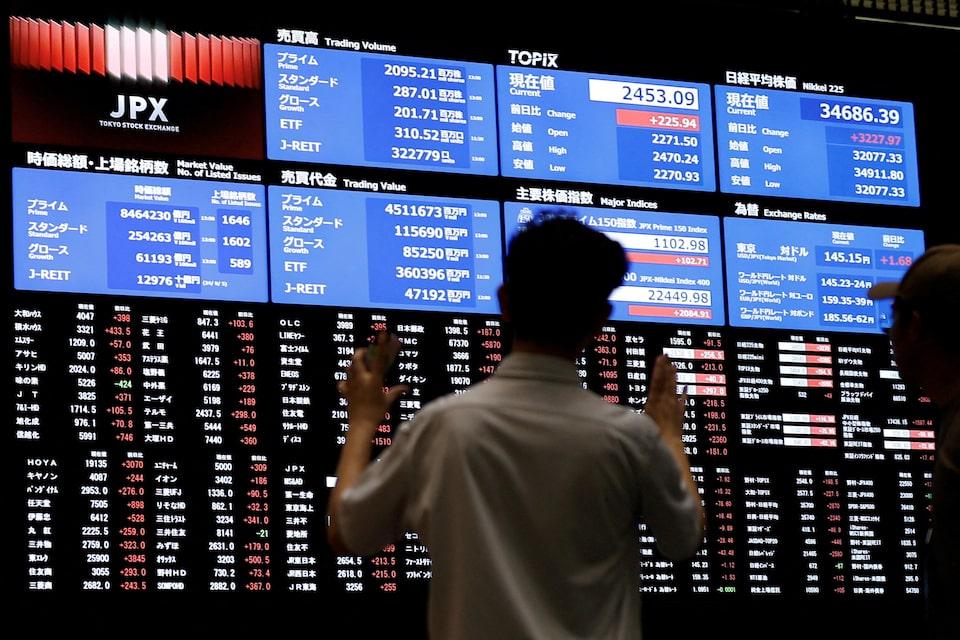
Trump's tariff timeline offers markets reprieve Gold prices set for seventh straight week of gains Chinese tech stocks rally rages on SINGAPORE/PARIS, Feb 14 (Reuters) - Global stock markets held near record highs on Friday and European indexes were set for their eighth weekly gain in a row, after U.S. President Donald Trump said reciprocal tariffs would not be immediately imposed, suggesting room for negotiations. Trump's plans to impose tariffs on every country taxing U.S. imports have stoked fears of a wide-ranging trade war, pushing gold prices to a record high earlier this week. Gold was set for a seventh straight week of gains. But a directive from Trump on Thursday stopped short of imposing fresh tariffs, instead kicking off what could be weeks or months of investigation into the levies imposed on U.S. goods by other trading partners and then devising a response. "While global financial markets may be inclined to take some relief from the delay in the immediate imposition of reciprocal tariffs, it is not clear to us whether the delay necessarily reflects a lower likelihood that they will eventually be imposed," Barclays analysts said in a note. Trump has kicked off a trade war, first by imposing tariffs on Mexico and Canada and then pausing them, but sticking with duties on Chinese goods. "It seems that Trump's bark has once again proved worse than his bite when it comes to the matter of trade," said Michael Brown, senior research strategist at Pepperstone. "That doesn't, however, stop this now rather tiresome merry-go-round of headlines, nor the accompanying yo-yo price action, as participants grapple with whatever the latest story is, and try to discount it." European stocks were mixed, with the pan-European STOXX 600 index <.STOXX> up 0.1% on the day, having closed at a record high on Thursday. Futures for Nasdaq and S&P 500 were a touch higher. European markets have outperformed in recent months due to hopes for a possible peace deal between Russia and Ukraine, as well as the prospect of interest rate cuts and U.S. tariffs being less severe than feared. Goldman Sachs raised its 12-month price forecast for Europe's STOXX 600, citing the possibility of a Ukraine ceasefire. In Asia, the spotlight has been on a rally in Chinese tech stocks, with the Hang Seng Tech Index (.HSTECH) , opens new tab hitting its highest level in three years on Thursday spurred by home-grown start-up DeepSeek's breakthrough. On Friday, Hong Kong's benchmark index (.HSI) , opens new tab rose over 2%, taking its weekly gains to 5%, its fifth straight week of gains and the strongest weekly performance in four months. James Ooi, market strategist at Tiger Brokers, said the DeepSeek-driven rally appears to have further upside in the short term, but a sustained rally will depend on the Chinese tech sector's ability to monetise AI. "While Chinese tech companies trade at lower valuations, their reliance on domestic revenue limits their potential to reach valuation levels comparable to global tech giants ... they (also) face heightened scrutiny over privacy and security concerns," Ooi said. INFLATION WATCH Data on Thursday showed U.S. producer prices rose solidly in January, bolstering financial market views that the Federal Reserve would not be cutting interest rates before the second half of the year. But components of the data that are part of the personal consumption expenditures (PCE), the Fed's preferred inflation measure, were soft and added to hopes the PCE reading may be cooler than currently expected. The data comes on the heels of Wednesday's consumer price index (CPI), which showed its largest acceleration in nearly 1-1/2 years. The yield on benchmark U.S. 10-year notes was steady at 4.5347% after tumbling 10 basis points on Thursday, clocking its biggest daily drop in a month. The dollar index , which measures the greenback against a basket of currencies, was down 0.2% on the day at 106.93 after dropping 0.8% on Thursday, its biggest one-day percentage drop since January 20. The euro hovered near its highest in more than two weeks at $1.0477, supported by optimism around potential peace talks between Ukraine and Russia. Oil prices rose, poised to end three weeks of losses, buoyed partly by rising fuel demand. Brent futures were up 0.5% at $75.37 a barrel while U.S. West Texas Intermediate (WTI) crude gained 0.4% to $71.45. Sign up here. https://www.reuters.com/markets/global-markets-wrapup-1-2025-02-13/
2025-02-13 06:54
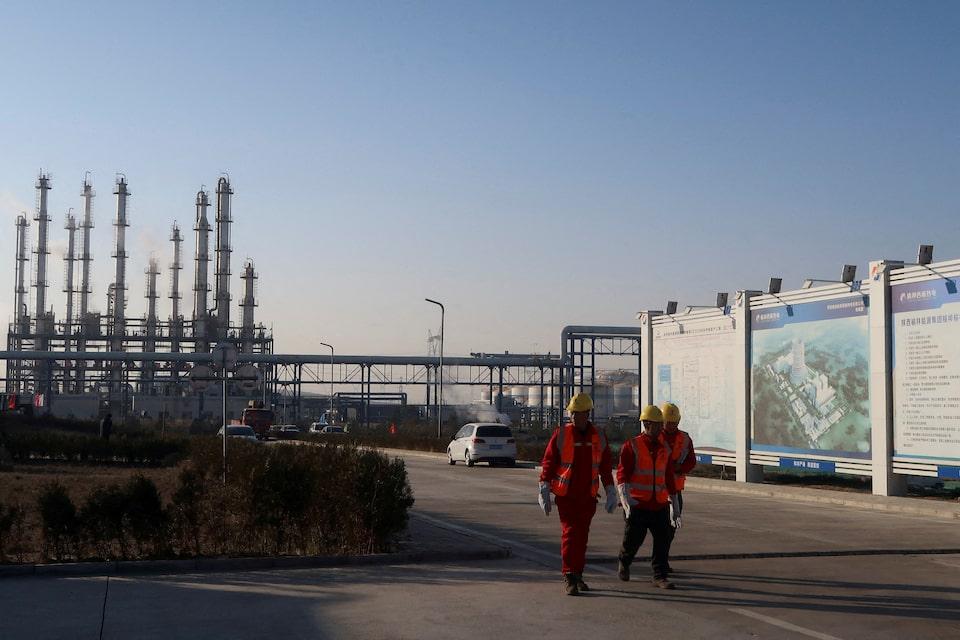
SINGAPORE, Feb 13 (Reuters) - China started construction on 94.5 gigawatts of coal-fired power in 2024, the highest volume of new builds since 2015, hampering the country's transition away from fossil fuels, researchers said in a report published on Thursday. The world's biggest coal consumer and emitter of climate-warming greenhouse gases had vowed to "strictly control" coal power over the 2021-2025 period, but power shortage concerns have led to a spike in new projects since 2023. "If coal maintains a high share in China's power system for too long, it will be much harder to achieve a rapid decline in emissions," said Qi Qin, researcher at the Centre for Research on Energy and Clean Air (CREA). "This, in turn, could pose challenges for global climate efforts, especially at a time when countries are expected to increase their ambitions for 2035 targets," said Qi, the report's lead author. The surge came despite a record-breaking increase in renewable capacity last year and could make it harder to connect clean power to the grid, said the report, published by CREA and the Global Energy Monitor (GEM) think tank. China has retired more than 100 GW of obsolete coal-fired power in the last decade, according to its energy regulator, and new projects can only be built to provide back-up for renewable energy bases. China also commissioned 356 GW of wind and solar last year, meeting its 2030 target of 1,200 GW of renewable capacity six years ahead of schedule. Renewable power, however, is struggling to compete for space on China's grid, with utilisation rates falling sharply near the end of last year, Thursday's report said. China has promised to start cutting coal use over the 2026-2030 five-year plan period as it works to bring its emissions to a peak before the end of the decade. This has created incentives for the industry to lock in as much coal capacity as it can ahead of new restrictions that could come into effect as early as next year. "China's current push for new coal power is primarily driven by industry interests that are advancing coal expansion under the banner of energy security," said Qi. "These groups recognise the constraints imposed by the 2030 carbon peak and 2060 carbon neutrality targets and are moving quickly to secure growth before the window narrows," she said. Sign up here. https://www.reuters.com/business/energy/chinas-2024-coal-power-construction-hits-10-year-high-researchers-say-2025-02-13/
2025-02-13 06:54
Raises free cash flow outlook, cuts sales outlook Quarterly adj EBIT more than doubles due to steel unit Q1 order intake up 57% FRANKFURT/DUESSELDORF, Feb 13 (Reuters) - Industrial conglomerate Thyssenkrupp (TKAG.DE) , opens new tab raised its outlook for free cash flow on Thursday, citing 1 billion euros ($1.04 billion) in advance payments for a major submarine order from the German military. The increase highlights the strength of Thyssenkrupp's warship division, which it plans to divest, and is supported by improved prospects for defense companies as governments increase military spending amid a more complex geopolitical landscape. Germany approved in December the purchase of four submarines manufactured from Thyssenkrupp in a deal worth 4.7 billion euros, highlighting the division's appeal ahead of a planned spin-off. Thyssenkrupp now expects free clash flow before M&A - a key indicator for investors on the group's ability to earn money - between 0 and 300 million euros in 2025, having previously forecast a negative range of 200 million to 400 million euros. Citing a "persistently very challenging market environment", Thyssenkrupp also cut its sales outlook for the year, and now expects revenue to be flat at best while they could fall as much as 3%. It previously expected a rise of as much as 3%. First-quarter adjusted operating profit more than doubled to 191 million euros, mainly boosted by the group's steel division, which paid less for raw materials and energy. Order intake rose more than half to 12.48 billion, boosted by the German submarine order. ($1 = 0.9626 euros) Sign up here. https://www.reuters.com/markets/commodities/thyssenkrupp-raises-free-cash-flow-outlook-submarine-orders-2025-02-13/
2025-02-13 06:51
PPI hotter than expected, but points to lower core PCE Euro boosted by optimism on Russia, Ukraine peace deal Trump announces reciprocal tariffs on other nations NEW YORK, Feb 13 (Reuters) - The dollar slipped on Thursday after components of January’s producer price report pointed to lower inflation, and fell further after the White House said that reciprocal tariffs on other nations would not be implemented immediately. Producer price data on Thursday indicated that core PCE inflation, the Federal Reserve’s preferred measure, is likely to be lower than previously expected for January when it is released later this month. It came despite producer prices rising more than economists expected. “There were some subcomponents in there that show that PCE might not be as hot as CPI suggested,” said Noel Dixon, global macro strategist at State Street Global Markets. The producer price report came after Wednesday's Consumer Price Index for January was much higher than expected, leading traders to price in fewer rate cuts this year. Futures traders are now pricing in around 33 basis points of cuts by December, up from 29 basis points before Thursday's data, but down from 37 basis points before the CPI data was released on Wednesday. The Personal Consumption Expenditures Price Index is due on February 28. Economists at Morgan Stanley revised their core PCE inflation expectation for January to 0.3%, from 0.4%, after Thursday's data. The dollar index was last down 0.61% on the day at 107.25, the lowest since January 27. The euro rose 0.58% to $1.0442 and earlier reached $1.0446, the highest since January 30. The Japanese yen strengthened 1.05% against the greenback to 152.8 per dollar. The greenback briefly pared losses before falling to lower levels after U.S. President Donald Trump said he would levy reciprocal tariffs on every country that charges duties on U.S. imports. The tariffs were not going into effect on Thursday but could begin to be imposed within weeks as Trump's trade and economic team study bilateral tariff and trade relationships, a White House official told reporters. The announcement appeared designed at least in part to trigger talks with other countries. The official said Trump would be more than happy to lower tariffs if other nations lowered theirs. "The message from Trump seems to be that - we're going to get you, but not today. And the market seems to take comfort from that," said Steve Englander, Head, Global G10 FX Research and North America Macro Strategy at Standard Chartered Bank's NY Branch. The euro and other European currencies including the Swiss franc , Swedish krona and Norwegian krone were also boosted on optimism that Russia and Ukraine could reach a peace deal. "It's telling you that geopolitics in that part of the world is calming down a little bit," said Englander. Trump discussed the war in Ukraine on Wednesday in phone calls with Russian President Vladimir Putin and Ukrainian President Volodymyr Zelenskiy, the new U.S. president's first big step towards diplomacy over a war he has promised to end. Meanwhile, the U.S. dollar remains attractive with the U.S. economy still growing well above trend, said State Street's Dixon, adding that U.S. tariffs and immigration restrictions in the U.S. are also likely to add to inflation, while tariffs could further dent growth in the euro zone. “The overarching trend for the dollar is higher,” Dixon said. Sterling gained after data showed that Britain's economy unexpectedly grew by 0.1% in the final quarter of last year. It was last up 0.8% at $1.2541. In cryptocurrencies, bitcoin fell 2.01% to $95,716.98. Sign up here. https://www.reuters.com/markets/currencies/yen-back-foot-after-us-inflation-data-euro-buoyed-by-ukraine-peace-talks-2025-02-13/
2025-02-13 06:42
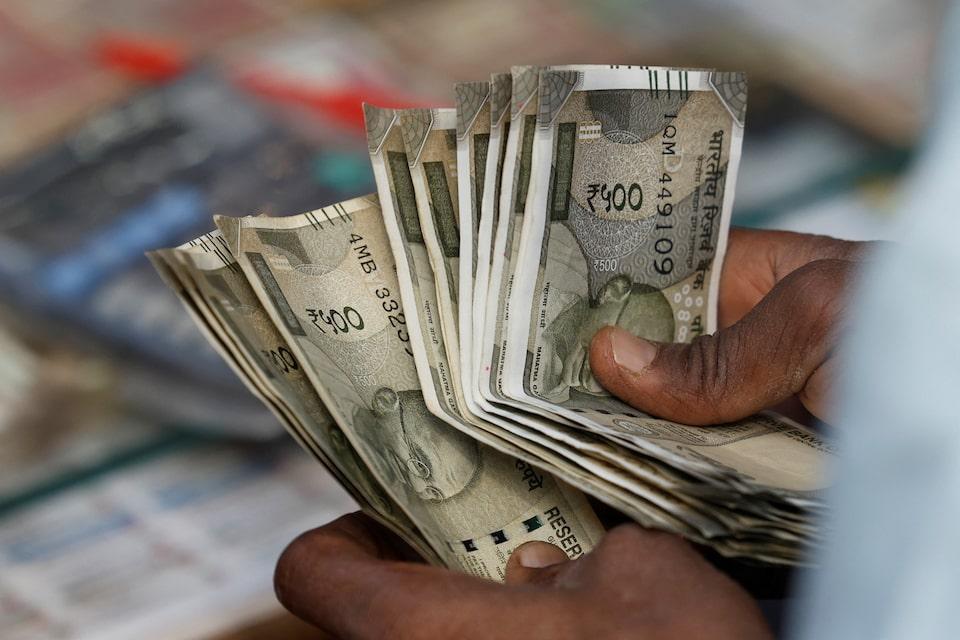
MUMBAI, Feb 13 (Reuters) - The Indian rupee has seen an increase in volatility after the central bank's unexpected and aggressive intervention in the foreign exchange market this week, accelerating a pick up in option volumes. Rupee option volumes, in a rare occurrence, surpassed that of the Australian dollar this week, according to data from the Depository Trust and Clearing Corporation. Further, activity in rupee options is two-and-a-half times that of the Swiss franc. The surge in option volumes follows heavy intervention by the Reserve Bank of India (RBI) to support the currency. The central bank stepped in on Monday to prevent the unit from slipping past the 88 handle against the U.S. dollar and intervened again on Tuesday. The rupee rebounded after the intervention and briefly surpassed the 86.50 level on Wednesday. Its trading range between 86.46 and 87.95 this week is the widest in at least two years. Volumes in rupee options have been on the higher side in recent weeks, driven by increasing confidence in the currency's decline, a Singapore-based currency trader at a bank said. India's sluggish growth combined with an interest rate cut by the RBI and foreign outflows from local stocks have spurred bearish bets on the rupee. The uncertainty around U.S. President Donald Trump's stance on tariffs has given investors one more reason to take short positions on the domestic unit. The rupee was last quoted at 86.88 to the U.S. dollar, little changed from Wednesday. A rise in U.S. yields after hot U.S. inflation data had little effect on the currency and its Asian peers. Sign up here. https://www.reuters.com/markets/currencies/india-central-banks-actions-spur-volatility-boost-option-volumes-2025-02-13/