2025-02-13 06:42
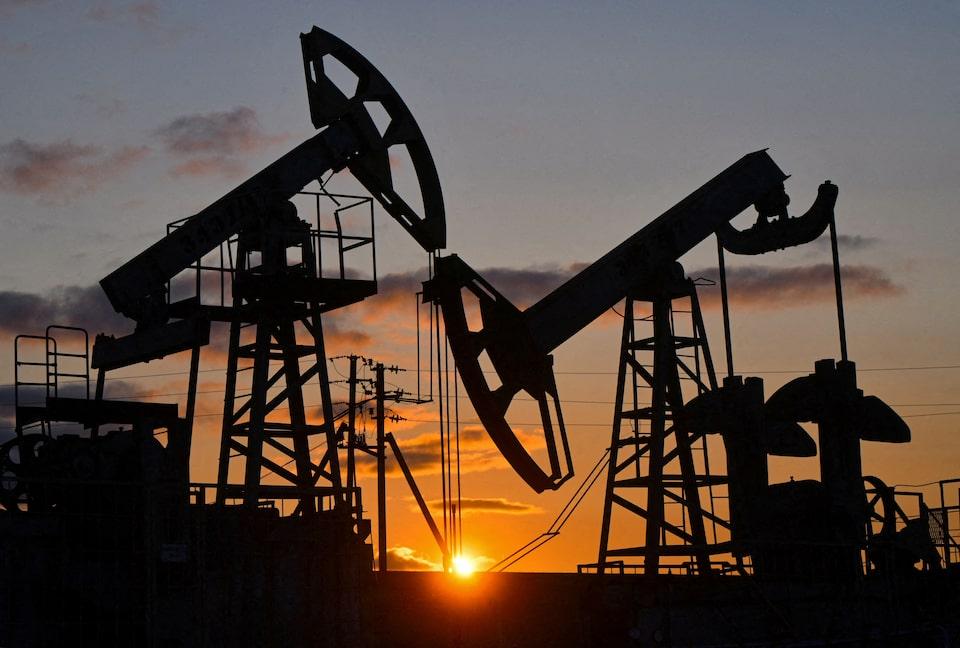
Indian refiners shun Russian crude on sanctioned ships Suppliers must meet refiners' 'internal compliance' requirements, oil secretary says India is top importer of Russian seaborne crude NEW DELHI, Feb 13 (Reuters) - India, the No. 2 importer of crude from Russia, wants to buy Russian oil only if it is supplied by companies and ships that have not been sanctioned by the United States, the country's oil secretary said. Widened sanctions on Moscow by western countries including the United States have roiled global oil trade and forced buyers of discounted Russian crude to find new ways to maintain their purchases. "It is the responsibility of the supplier to deliver to me something that meets my requirements of compliance," Oil Secretary Pankaj Jain told Reuters on the sidelines of the India Energy Week conference late on Wednesday. The Indian official's comments are the strongest declaration so far by the world's third largest oil importer and consumer on the country's position on Russian oil trade. India became the biggest buyer of Russian seaborne oil sold at a discount after Western nations imposed sanctions on Moscow and curtailed their energy purchases in response to Russia's invasion of Ukraine in 2022. India follows United Nations sanctions, rather than those imposed by individual countries, but fears of secondary sanctions by the United States create operational challenges in securing Russian oil as Indian banks and companies have significant exposure to the U.S. financial system. Purchase of Russian oil by India refiners have been hit after Washington's sanctions last month targeting Russia's oil supply chain, which caused tanker freight rates to soar as some buyers and ports in China and India avoided sanctioned ships. Indian companies take delivery of oil at their import destination, not at the port of export, Jain said. "If there is a cargo which is meeting their internal diligence requirements they will accept it," he said. "My internal compliance and diligence requirements have to be met by any supplier, because it is coming to my doorstep." Indian refining officials said they have told Russian oil suppliers and traders that the oil they sell should comply with parameters of the U.S. sanctions. "We don't want to take risk. We are not going to touch any cargo that involves sanctioned entity or ships in the supply chain," said one of the Indian refining officials. The officials declined to be named as they were not authorised to speak to media. "We are only a buyer and clean logistics have to be arranged by sellers," said another official. Indian companies met the Russian business delegation at the conference earlier this week, according to the officials. Jain said Russian companies including Novatek (NVTK.MM) , opens new tab and Sber Bank were looking to collaborate on projects with Indian energy companies. Sign up here. https://www.reuters.com/business/energy/india-says-russian-oil-suppliers-must-provide-sanctions-compliant-cargoes-2025-02-13/
2025-02-13 06:34
FY organic sales growth beats expectations Organic growth still lowest in at least 25 years 2025 margin to shrink to 16% or more Shares rise 6% LONDON, Feb 13 (Reuters) - Nestle (NESN.S) , opens new tab reported slightly better than expected annual sales growth on Thursday, driven by price increases, but the world's largest packaged food company warned of a narrower profit margin in 2025. Under new CEO Laurent Freixe, the company is trying to grow sales volumes, invest in innovation and restore investor confidence after years of soaring prices alienated shoppers and ate into its marketing budget. Nestle said it was expecting 2025 full-year organic sales to be higher than last year, maintaining the target it outlined during its capital markets day in November. But the maker of Maggi stock cubes and Nescafe coffee forecast an underlying trading operating profit margin of 16% or more, down from 17.2% last year. Freixe said he expected the margin to narrow in the short term "as we invest for growth". Shares in the company were up nearly 6% at 0809 GMT. "Although the environment remains very challenging, we believe that the 2024 results mark a new beginning," Vontobel analyst Jean-Philippe Bertschy said. While two of Nestle's most important commodities - coffee for Nescafe and cocoa for Kit-Kats - are at record-high prices, it said it would only pass on some input cost increases to shoppers. Freixe is doing "exactly what we had hoped for", said Simon Jaeger, a portfolio manager at Flossbach von Storch. "He is focussing on execution. He can already present the first results of the cost-cutting efforts." "You can already see that volume growth is accelerating slightly." Nestle's competitors, including Knorr stock cube maker Unilever, slowed price increases last year in a move to woo back shoppers who had turned to cheaper products. The Swiss company, however, did not ease as quickly, with several quarters of weak sales volumes leading to the August ouster of former CEO Mark Schneider. Nestle said in late 2024 that it was aiming for cost savings of 2.5 billion Swiss francs ($2.75 billion) by the end of 2027. It said on Thursday it has already secured more than 300 million francs of savings for this year. Price increases of 1.5% last year just topped the average analyst estimate of 1.4%. Real internal growth - or sales volumes - rose 0.8% versus expectations of a 0.7% increase. Organic sales, which exclude the impact of currency movements and acquisitions, rose 2.2% in the full year ended December 31, broadly in line with expectations for 2.1%. That represented Nestle's lowest organic growth in at least 25 years. Sales fell 1.8% to 91.35 billion francs, with net profit down 2.9% to 10.88 billion francs. ($1 = 0.9083 Swiss francs) Sign up here. https://www.reuters.com/business/retail-consumer/nestle-posts-slightly-better-than-expected-full-year-sales-growth-2025-02-13/

2025-02-13 06:22
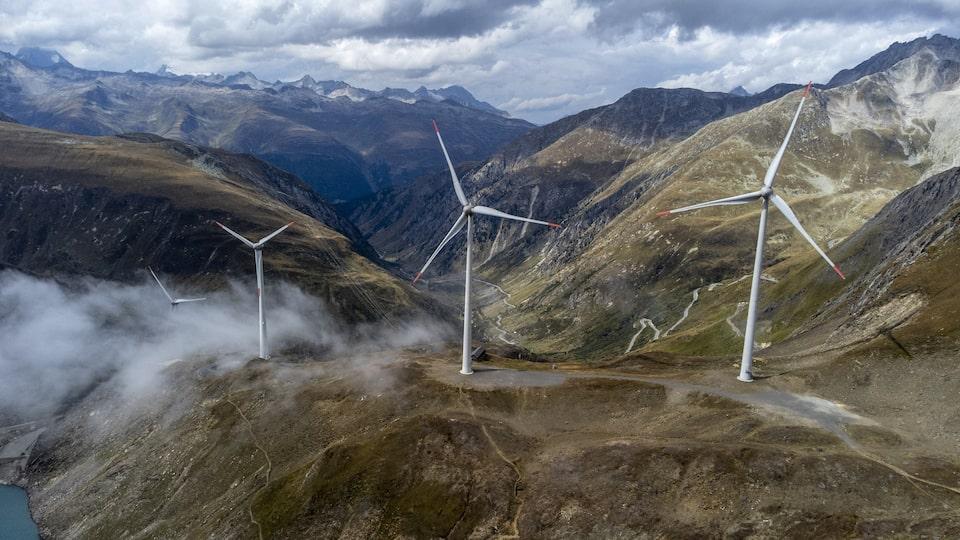
LITTLETON, Colorado, Feb 13 (Reuters) - Wind-powered electricity production across Europe dropped by over 7% in January from the same month in 2024, depriving regional power producers with a key source of clean energy right when demand for heating neared its annual peak. That wind shortfall triggered a jump in Europe's electricity generation from natural gas to the highest in three years, and helped support a rally that has pushed up benchmark regional natural gas prices more than 15% so far this year. Wind model forecasts are now projecting a rebound in regional wind production, however, which should help lift overall power generation across Europe over the coming weeks, and may set the stage for a cooldown in gas use and prices. WEAK WINDS Total wind-powered electricity production in Europe was just over 67 terawatt hours (TWh) in January, according to energy think tank Ember, which marked a roughly 7% drop from the same month in 2024 and the lowest January total since 2022. As wind farms are the fifth-largest source of electricity in Europe (after gas, nuclear, hydro and coal), the drop in wind production relative to expectations forced regional power firms to replace that lost supply with output from alternate sources. Natural gas was the main substitution, and gas-fired power output jumped nearly 6% in January from a year earlier, to the highest tally for the month since January 2022, just before Russia's invasion of Ukraine snarled regional gas flows. That elevated gas usage sparked a draw-down in regional gas inventories, in turn underpinning bullish gas market sentiment so far this year. REBOUND The latest wind projection models run by LSEG call for an upturn in wind generation in key markets over the coming weeks, which should help alleviate the tight power supply situation across Europe. In Germany, Europe's largest wind power producer, wind production is expected to remain below the long-term average through February 20, and then rebound to mainly above the long-term average through the end of March. A similar output pattern is projected in the United Kingdom, which is Europe's second-largest wind producer and largest gas-fired power generator. If these increases in wind generation materialise as projected, power producers in both countries may be able to cut back on gas-fired production while maintaining overall power output levels. Both countries may also be able to curb power imports as local wind production rises, thereby freeing up power supplies across Europe more generally. That in turn may set the stage for a cooling in regional benchmark TTF gas prices , which have climbed to their highest since early 2023 and stoked fresh concerns about energy inflation across Europe. The opinions expressed here are those of the author, a market analyst for Reuters. Sign up here. https://www.reuters.com/business/energy/recovering-wind-output-may-help-cool-europes-heated-gas-market-maguire-2025-02-13/
2025-02-13 06:13
SYDNEY, Feb 13 (Reuters) - Western Australia's ports of Dampier and Varanus Island will be closed at 6 p.m. (1000 GMT) on Thursday due to Tropical Cyclone Zelia, the ports' operator said, with emergency services in the state warning of the potential for significant damage. Zelia, which has been upgraded to the strongest possible Category 5 storm, is due to make landfall on Friday in the remote Pilbara region, home to major ports used for commodities exports, Australia's Bureau of Meteorology (BOM) said. "The intensity of Tropical Cyclone Zelia means there is significant threat to lives and property and I urge people to follow the directions of emergency services in the Pilbara," Darren Klemm, head of Western Australia's Department of Fire and Emergency Services, told a news conference on Thursday. The Port of Dampier, which mostly ships iron ore from Rio Tinto (RIO.AX) , opens new tab, and Varanus Island, a gathering and processing hub for oil and gas, have started clearing vessels, Pilbara Ports said in a statement. The closures come after Pilbara Ports on Wednesday shut Port Hedland, the world's biggest export point for iron ore and used by BHP Group (BHP.AX) , opens new tab, Fortescue (FMG.AX) , opens new tab and billionaire Gina Rinehart's Hancock Prospecting. Port Hedland is at particular risk from the cyclone because its buildings are older, Klemm said. "If the track was to shift more to the east and we would see a significant impact on Port Hedland," he said. Category 5 storms have a maximum wind speed of more than 280 kph (174mph) the BOM's Western Australia manager James Ashley told the news conference. Storms of Zelia's magnitude are rare, with the last hitting in April 2023, he added. Sign up here. https://www.reuters.com/business/environment/tropical-cyclone-forces-closure-ports-western-australias-pilbara-region-2025-02-13/

2025-02-13 06:11
Croatian ECB policymaker says market pricing of 3 more rate cuts this year not unreasonable ECB could remove reference to 'restrictive' in March, Vujcic says No euro zone recession seen but big recovery also unlikely ZAGREB, Feb 13 (Reuters) - The European Central Bank could cut interest rates three more times this year even if its U.S. counterpart moves more slowly but policy easing is predicated on a rapid fall in underlying inflation, Croatian policymaker Boris Vujcic said. The ECB has lowered borrowing costs five times since last June and hinted at even more policy easing, leaving investors guessing about the pace and extent of any further rate cuts. "The market is pricing three more rate cuts this year," Vujcic said in an interview. "Those expectations are not unreasonable." However, data in the coming few months will be critical because projections foresee a big drop in services inflation, the single largest component of the consumer price basket and a key driver of excessive price growth in the past year. "For those rate cuts to materialise, we need to see a slowdown in core inflation and a slowdown in services inflation," Vujcic, considered a moderate policy hawk, said. Cuts can go ahead even if the Federal Reserve holds back, Vujcic argued. The Fed last month said it was in no hurry to ease, and unexpectedly high inflation in January raised the possibility it might not even cut rates at all in 2025. High U.S. interest rates imply a stronger dollar and rising longer-term borrowing costs, but market moves so far raise no undue concern, Vujcic said. "The exchange rate is one factor we consider but, at the current level, it’s not something we need to worry about." The euro is down by about 7% against the dollar since the autumn but this is less than 3% on a trade-weighted basis, a relatively small shift. A weaker euro boosts inflation at home because it makes imports, especially for energy, more expensive, impacting prices quickly. LANGUAGE CHANGE The ECB should not guide investors on how far interest rates will fall, Vujcic said, but he expected the debate on the terminal rate to intensify soon and the bank could already change its language at the March meeting. The ECB still describes its policy setting as "restrictive" but one more rate cut will take the deposit rate to 2.5%, where some policymakers might start doubting whether it was still high enough to hold back the economy. "We are certainly getting close to the discussion on when we should remove 'restrictive' from our language," Vujcic said. "This could already happen at our next meeting, but it will also depend on the incoming data. "It should happen when it’s no longer possible to say with full certainty that you’re still in the restrictive zone," he added. Weak economic growth in the 20-nation euro zone could also prove a drag on inflation but growth conditions are unlikely to deteriorate further. Consumption has been especially weak, accounting for the biggest deviation compared to expectations, but conditions remain in place for a consumption-led recovery given high savings, the rebound in incomes and buoyant employment. "I don’t see much of a risk for a recession. Then again, I also don’t see any rapid recovery happening," Vujcic argued. Part of the confidence in growth stems from an increase in labour market flexibility. Some firms struggling with weak demand are reducing working hours instead of laying off staff and this is likely to foster consumer confidence as workers may be less worried about losing their jobs, Vujcic added. For key quotes from the interview, click here. Sign up here. https://www.reuters.com/markets/rates-bonds/ecb-can-keep-cutting-rates-even-if-fed-takes-it-slow-vujcic-says-2025-02-13/
2025-02-13 05:59
Russian oil exports have declined -sources Refineries cannot take more crude because of attacks Russian traders rush to buy tankers not subject to sanctions Sanctions aim to cap Russia's energy revenue Russian oil discounts widen, hitting income LONDON/SINGAPORE, Feb 12 (Reuters) - Russia may be forced to throttle back its oil output in the coming months as U.S. sanctions hamper its access to tankers to sail to Asia and Ukrainian drone attacks hobble its refineries. The United States imposed sanctions last month that targeted 180 Russian tankers while Kyiv has stepped up drone attacks to improve its bargaining position amid expectations that U.S. President Donald Trump will press Russian leader Vladimir Putin to negotiate an end to the war in Ukraine. Trump has said stopping the conflict is a priority and that he could impose new sanctions on Russia if his goals are not achieved. Reuters has spoken to three oil executives and more than 10 traders, refining executives, and port agents about the impact of these latest sanctions. Three Russian oil executives, asking not to be named due to the sensitivity of the issue, said the reality was clear: Russia will have no choice but to slow oil production. There is a growing glut of crude in Russia due to falling exports and reduced refining production which can only be addressed by lowering output, they said. Russia has little storage capacity and Ukraine has attacked some of these facilities with drones in recent weeks. The output cuts could start small, with Russia's production slipping below 9 million barrels per day (bpd) in the coming months, but may accelerate if tanker shortages and refining outages persist, the executives said. There are already signs of weakening crude exports in trading data. Volumes from Russia's western ports of Primorsk, Ust-Luga, and Novorossiisk in January were down 17% from a year earlier, Reuters calculations based on traders' data showed. Russia no longer publicly discloses its export data. Three years into the war, Russia has withstood wave after wave of sanctions, including the G7 imposing a $60 per barrel price cap on its oil sales. U.S. sanctions have not aimed to stop Russian exports, but to cap the price at which Russia can sell and to ensure it complies with the rules. Most European buyers walked away, but China and India have increased purchases, taking oil at a generous discount. SHADOW FLEET Russia has looked to minimise the impact of sanctions by amassing a fleet of own tankers, often called the "shadow fleet" as it does not use Western services and insurance. The latest U.S. sanctions have hit that fleet hard. Washington said it was taking sweeping action against Russia's energy industry, Moscow's key source of revenue. The impact has been swift, with the cost to transport a cargo from Russia's Pacific port of Kozmino to China up fivefold in January, trader data showed. Traders and shipbrokers said the sanctions have closed some Chinese and Indian ports to a fifth of the fleet. Many Chinese and Indian buyers are also now insisting on deliveries using tankers not targeted by the sanctions and are buying more Saudi, UAE, and Iraqi oil, traders said. As a result, Russian firms and traders have stored 17 million barrels aboard ships since Jan. 10, up from zero at the start of the year, Goldman Sachs estimates. The figure could rise to 50 million barrels in the first half of 2025. The rate of idling and drifting by ships carrying Russian fuel has risen by 300% in some areas, Windward, a marine analytics firm, estimates. Many are anchored in the Sea of Crete and waters off the coast of Portugal and Madagascar, it said. Russia's Arctic fields producing over 300,000 bpd are struggling to find tankers and may cut output, traders said. Moscow has already accepted lower crude output levels in agreement with Saudi Arabia and others in the so-called OPEC+ group of oil-producing countries. Those cuts are aimed at supporting oil markets, but they also reduce Moscow’s potential income. Collectively OPEC+ members plan to begin easing their output cuts from April but for Russia that may now prove more difficult. Putin already faces a budget deficit that has totalled more than $100 billion since the war began, finance ministry statements and data show. Any hit to oil income impacts the economy directly, with oil revenue of $192 billion in 2024, according to the International Energy Agency. Russia's federal revenue in 2024 totalled $383 billion, the finance ministry has said. ATTACKS ON PLANTS Russia's daily output of around 9 million barrels, already well below a record 11.25 million reached in 2019, includes approximately 5 million bpd earmarked for its own refineries. But there has been a rise in the number of Ukrainian drone attacks since January which have hit eight Russian refineries as well as oil depots and industrial sites. The attacks have knocked out around 10% of Russian refining capacity, Reuters calculations based on traders' data showed. Like its crude exports, Russia no longer makes refining data public. Major sites including the Ryazan, Volgograd, and Astrakhan refineries have shut fuel production and it will take weeks or months to restore it, said industry sources familiar with the plants' operations. Ukraine also attacked Russia's limited oil storage as well as pipelines and pumping stations, disrupting flows to export ports and refineries in January, traders said. One of Russia's biggest ports, Ust-Luga on the Baltic Sea, cut loadings to a four-year low in January, utilising only half its capacity, traders said, citing problems with pipelines. ADAPTING TO SANCTIONS Russia has built up a fleet of very large crude carriers (VLCCs) and mid-sized Suezmax tankers since 2022. One of its responses to January's sanctions has been to seek out smaller vessels. Russian oil dealers have bought at least 12 smaller Aframax tankers since January to address the sudden shortage, one shipbroker familiar with the transactions said. He asked not to be named due to the sensitivity of the issue. Aframax can carry up to 800,000 barrels, a Suezmax up to 1 million barrels, and a VLCC up to 2 million barrels. Russia's buying has helped boost prices for used Aframax tankers which have spiked to around $40 million from around $15 million last year, according to shipbrokers. At the same time, the cost of shipping oil to China in an Aframax tanker has jumped to $6.5 million-$7.5 million from $1.5 million last year, traders said, though that is still well below the record $20 million seen when prices spiked in 2022. Washington has said it sees Moscow's spending more on tankers as a win as it diverts money from the war in Ukraine. "Eventually, they will get other ships, other companies and so on," said Adi Imsirovic, an analyst at the Surrey Clean Energy consultancy and former oil trader at Russia's Gazprom. He said in the short term Russia will have to swallow the higher costs. Many analysts including the International Energy Agency (IEA) have predicted a steep decline in Russian oil output since 2022, forecasts which have failed to materialise. But one Russian oil executive told Reuters the level of complexity now involved in refining and selling oil was becoming too much. "Everyone is waiting for this war to be over," he said. ($1 = 95.8955 roubles) Sign up here. https://www.reuters.com/world/europe/russia-braces-oil-output-cuts-sanctions-drones-hit-2025-02-12/