2025-02-13 05:59
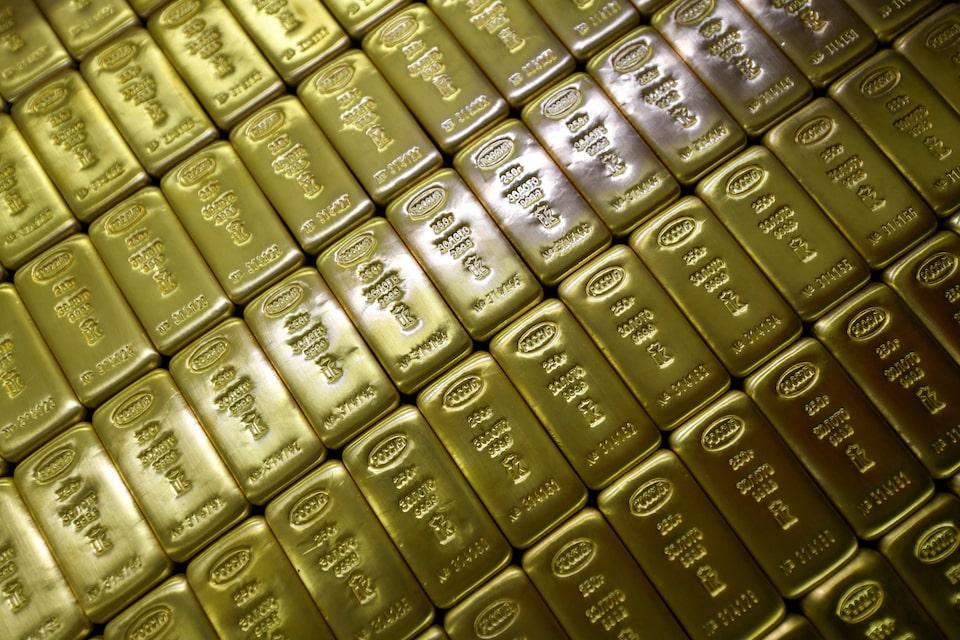
Bullion hit a record high of $2,942.70 on Tuesday Trump says he will sign reciprocal tariffs order soon Gold can reach $3,000/oz level this year - ANZ US PPI data due at 1330 GMT Feb 13 (Reuters) - Gold rose on Thursday, supported by a weaker U.S. dollar and growing worries over U.S. President Donald Trump's tariff plans, which could heighten global trade tensions, while investors eyed another set of inflation data. Spot gold added 0.5% to $2,917 per ounce as of 1158 GMT, moving back towards its record peak of $2,942.70 hit on Tuesday. U.S. gold futures firmed 0.6% to $2,944.80. On Wednesday, gold prices fell more than 1% after stronger-than-expected U.S. consumer price index for January, but rebounded later as ongoing trade war uncertainties kept the safe-haven metal's demand intact. Trump announced plans to impose reciprocal tariffs on countries that levy duties on U.S. imports, expected Wednesday or Thursday. "Trump is unpredictable and, as long as uncertainty remains in the market, gold will continue to receive support," said Ajay Kedia, director at Kedia Commodities, Mumbai. "Overall, the dollar index is currently under pressure, which has been supportive for gold." The dollar index (.DXY) , opens new tab fell 0.2%, making greenback-priced gold less expensive for foreign buyers. Investors are now focussed on the U.S. Producer Price Index (PPI) data due at 1330 GMT, followed by Friday's retail sales report, for further economic clues. Meanwhile, Federal Reserve Chair Jerome Powell, at his second congressional hearing this week, reiterated that the central bank was in no rush to cut interest rates. "Market is convinced that there is very limited room for the Fed to ease; Fed funds futures trimmed rate cut expectation to 29bps for this year, with the chance of a 25bp cut priced at 78% by September and at 94% by October," OCBC analysts said. Bullion is seen as a hedge against inflation and economic uncertainties, but higher interest rates tarnish the non-yielding asset's allure. ANZ expects gold to touch a record high of $3,000 per ounce in 2025. Spot silver was steady at $32.24 per ounce. Platinum added 0.9% to $1,000.94 and palladium firmed 0.9% to $981.95. Sign up here. https://www.reuters.com/markets/commodities/gold-inches-higher-trade-war-concerns-us-data-focus-2025-02-13/
2025-02-13 05:37
Feb 13 (Reuters) - A look at the day ahead in European and global markets from Stella Qiu Investors handled the shock surge in U.S. inflation extremely well given already limited scope for interest rate cuts. Benchmark Treasury yields shot up 10 basis points overnight but stock futures are actually firmer. Even the U.S. dollar is struggling to sustain the upward momentum that usually accompanies higher yields. That is likely thanks to hope of a peace deal between Ukraine and Russia after President Donald Trump held phone calls with both countries' leaders to discuss the end of their years-long war. China is also pushing for peacekeeping efforts to end the war, the Wall Street Journal reported. The prospect of an end to sanctions on Russian oil increasing supply pushed oil prices down more than 3% since Wednesday. Nasdaq futures rose 0.4% while S&P 500 futures gained 0.2%. EUROSTOXX 50 futures climbed 1%, leaving them up almost 11% this year. Shares are already at record highs in Europe, which is not yet in the firing line of Trump's global trade war. Meanwhile the euro has risen 0.5% to $1.0431, having bounced from a low of $1.0317 overnight even as Treasury yields jumped. It still faces heavy resistance at the January top of $1.0535. The European Central Bank has more room to cut interest rates given inflation has been better behaved than in the U.S. Markets are pricing in three quarter-point moves to a terminal rate of 2%, while expectations are for the Federal Reserve to move only once this year to a floor of 4%. Just a few months ago, investors were looking for a bottom near 3%. Over in Asia, one point of note is the 10% rise this year in shares in Hong Kong (.HSI) , opens new tab, the region's best-performing major stock market. Providing a boost is the AI-driven rally in global shares finally arriving in China, ignited by buzz around AI startup DeepSeek and benefiting mostly tech giants such as Alibaba (9988.HK) , opens new tab. Next up, investors will be keeping a close eye on Europe's reaction to developments in the Ukraine war. Analysts reckon it won't be an easy process, with countries including aid donors Britain, France and Germany saying they had to be part of any negotiations on the fate of Ukraine. And then there's Ukraine itself. Being told to give up territory to an invader before the talks even start is not a bright beginning. Britain will have its fourth-quarter gross domestic product data later in the day, with consensus seeing a decline of 0.1% in the quarter. Investors see at least two BoE rate cuts for the year. The U.S. will have weekly jobless data as well as its producer price index, which could get more attention given the surprise surge in consumer prices. Forecasts are centred on a rise of 0.3% in the month for PPI. Both of them will feed into the Fed's preferred gauge of inflation - the Personal Consumption Expenditures Price index - which could determine if Fed has room to cut at all this year. Key developments that could influence markets on Thursday: Sign up here. https://www.reuters.com/markets/europe/global-markets-view-europe-2025-02-13/

2025-02-13 05:05
LONDON, Feb 13 (Reuters) - The Bank of England needs to move cautiously with cutting interest rates because the long process of wrestling down inflation is not yet complete, BoE Chief Economist Huw Pill told Reuters. A week after the central bank cut rates for only the third time since raising them to a 14-year high in 2023, Pill said the big picture was one of inflation falling towards the BoE's 2% target. However, underlying price pressures remain, Pill said in an interview on Wednesday, explaining his call for caution on further reductions in borrowing costs even as Britain's economy is struggling to grow. "We are able to remove some of the restriction we imposed because of the successful - but not yet complete - process of disinflation," he said. But the BoE had more work to do to bring down inflation "and that means we can't just remove all restriction overnight, cut rates aggressively, etc, etc," he said. The former Goldman Sachs economist joined the BoE in September 2021, just as inflation in Britain - and many other rich economies - was starting a surge that forced central banks around the world to raise rates to their highest in decades. CAUTIOUS OR CAREFUL? After peaking at 11.1% in 2022 - a four-decade high driven largely by the leap in gas prices after Russia's invasion of Ukraine - inflation in Britain has fallen back. But it remains above target at 2.5% and the BoE expects it to pick up to 3.7% later this year, albeit due to temporary factors. Inflation is not forecast to return to target until late 2027. The BoE last week maintained its "gradual" description of the outlook for rate cuts and said some policymakers also wanted to add the word "cautious" due to weak productivity that could push up inflation. Others on the Monetary Policy Committee preferred the term "careful" which was adopted in its guidance on borrowing costs. Pill said he had argued since last year that the BoE needed to be cautious about easing policy - he voted against the first cut last August - and the "cautious-careful" debate reflected ongoing differences on the MPC about timing of future moves. "I would expect we're going to cut Bank Rate further. But the pace at which you can do it is less," he said. "And I think that's what's being indicated by the words 'cautious and gradual', as opposed to 'gradual and careful'." A bigger MPC divide has opened up about the cause of the weakness in Britain's economy. The central bank halved its growth forecast for 2025 to 0.75% last week, a blow for finance minister Rachel Reeves who has been criticised by employers for raising taxes on them. While seven MPC members backed the quarter-point cut to the BoE's benchmark Bank Rate last week, the other two called for a bigger half-point cut, arguing that a slump in demand was behind the flat-lining of output in much of 2024. Pill said he believed the main problem was one of supply - reflecting long-term inflationary trends in the economy ranging from a shortage of workers and weak business investment to the impacts of Brexit, energy prices and the pandemic - which would not be solved by stimulating demand with sharp rate cuts. However, there were signs of a hiring slowdown which would reduce the risks of this year's expected inflation jump leading to inflationary wage demands. That contrasts with the last time the BoE forecast a modest pick-up in inflation in mid-2021, when the country's tight labour market was amplified by the huge impact on energy prices caused by the war in Ukraine in 2022. "The environment in which this hump in inflation takes place, in terms of whether it's susceptible to second-round effects or not, is probably less of concern, relatively speaking at least," Pill said. However, data on wages was not completely reassuring. Employers surveyed by the BoE expect to raise wages by an average of 3.7% this year - down from 5.3% in 2024 but higher than Pill thinks is compatible with 2% inflation. "3.7% I'm not sure is job done," he said, adding it was at the top end of a 2-4% range employers had suggested was likely a few months ago. Asked about U.S. import tariffs proposed by U.S. President Donald Trump on trade partners, Pill said they would not automatically lead to higher inflation but could have "quite substantial effects", especially in the longer term. "If the disruptions to the international trading system weigh on global trend growth or UK potential growth – both of which seem plausible to me - they create a ... difficult trade-off for monetary policy where activity can remain quite sluggish and yet price pressures remain in the system," Pill said. Sign up here. https://www.reuters.com/markets/rates-bonds/bank-englands-pill-cautious-about-further-rate-cuts-2025-02-13/

2025-02-13 03:08
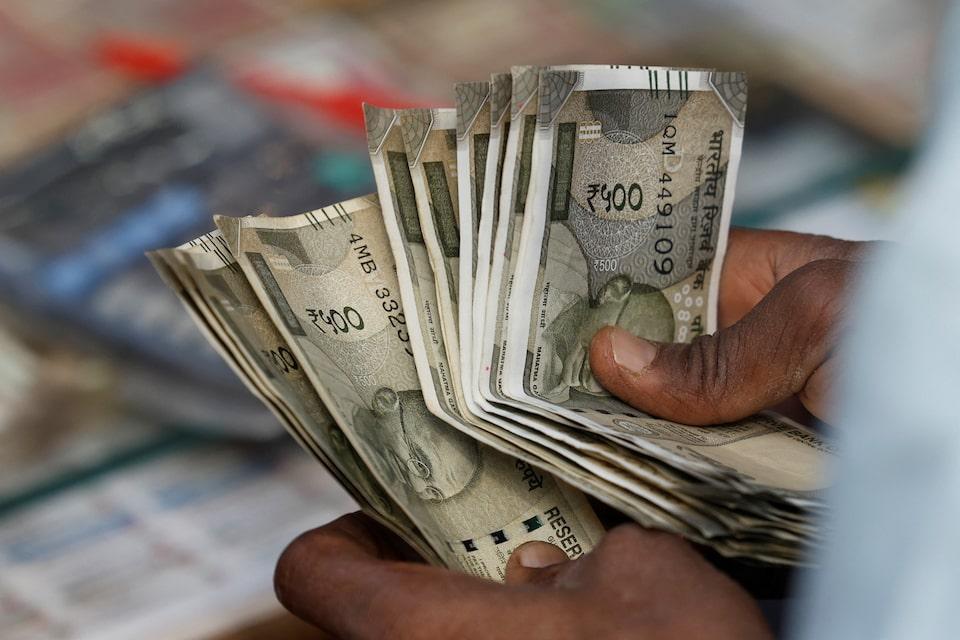
MUMBAI, Feb 13 (Reuters) - The Indian rupee is likely to open flat-to-marginally weaker on Thursday after hotter-than-expected U.S. inflation data made it likely that the Federal Reserve will not cut rates in a hurry and on comments by President Donald Trump that he will impose reciprocal tariffs soon. The 1-month non-deliverable forward indicated that the rupee will open at 86.88-86.92 to the U.S. dollar compared with 86.8925 in the previous session. The muted opening comes on the heels of a choppy few days for the Indian currency, largely due to heavy intervention by Reserve Bank of India (RBI). The currency, so far this week, has been in wide 1.5-rupee band of 86.50 to 88. Volatility has spiked, with the 1-month realized volatility at its highest in nearly two years. "It will be relatively calm today compared to what we have seen recently. The RBI has made in known that it is not happy with the quick pace of (rupee's) decline, which means that the market will be wary of piling on to (dollar) longs," a currency trader at a bank said. The "next excitement" will be when "we come to know the extent of Trump's tariffs", he said. Trump said he would impose reciprocal tariffs as soon as Wednesday on all countries that charge duties on U.S. imports, heightening the potential for a wider trade war. The U.S. President will announce his reciprocal tariff plan before India Prime Minister Narendra Modi's visit on Thursday, a White House spokeswoman said on Wednesday. Meanwhile, the headline U.S consumer price index (CPI) rose 0.5% against expectations of a 0.3% increase and posted the biggest monthly advance since August 2023. The inflation report presents "a clear red alert to the Fed", ING Bank said in a note. "Rate cut ambitions have been hit in consequence." Interest rate future are now pricing in just one rate cut from the Fed this year. KEY INDICATORS: ** One-month non-deliverable rupee forward at 87.10; onshore one-month forward premium at 22.5 paise ** Dollar index down at 107.79 ** Brent crude futures down 0.9% at $74.5 per barrel ** Ten-year U.S. note yield at 4.6%; rose 10 basis points on Wednesday ** As per NSDL data, foreign investors sold a net $470.6mln worth of Indian shares on Feb. 11 ** NSDL data shows foreign investors sold a net $57.1mln worth of Indian bonds on Feb. 11 Sign up here. https://www.reuters.com/markets/currencies/rupee-see-muted-reaction-rising-us-inflation-trump-tariff-worries-2025-02-13/
2025-02-13 00:28
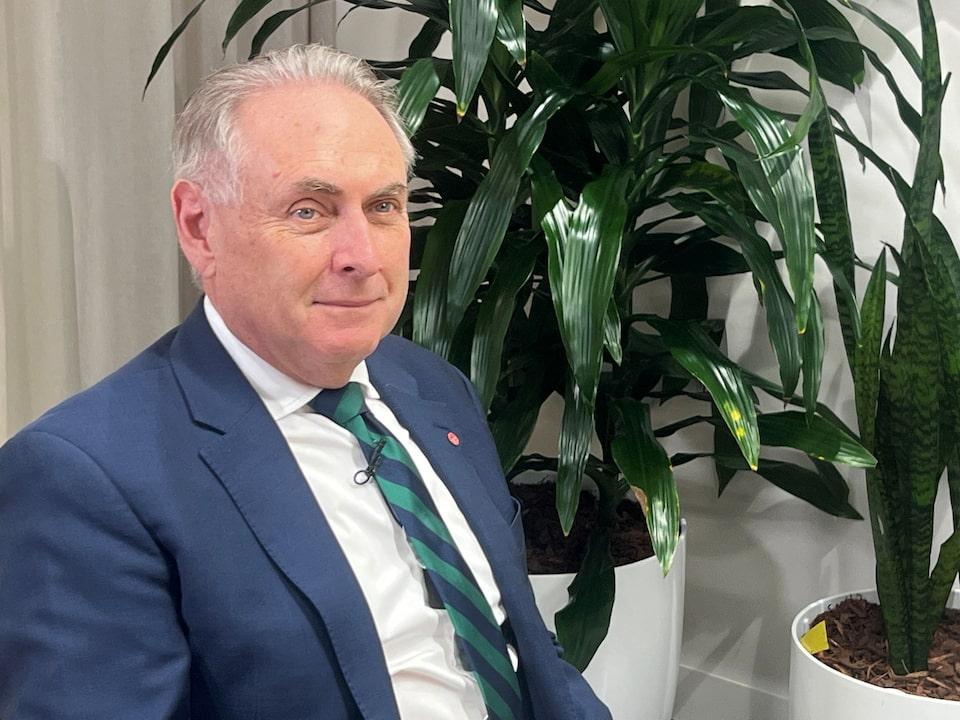
SYDNEY, Feb 13 (Reuters) - Australia's trade minister Don Farrell said on Thursday the country had increased aluminium supply to the U.S. with Washington's approval, addressing a hurdle to Canberra's request for an exemption from U.S. tariffs on aluminium and steel. U.S. President Donald Trump said this week he would consider an exemption for Australia from a flat 25% tariff on steel and aluminium imports, before one of his closest advisers said Australia was "killing our aluminum market". The executive order imposing tariffs said the volume of aluminium from Australia had surged after it was granted a tariff exemption by Trump in 2018, with the country disregarding a verbal commitment to restrain aluminium supply. But Farrell said Australia had increased its aluminium exports with the blessing of the previous administration of President Joe Biden, after supply disruptions from Russia during its ongoing war with Ukraine. "All of that was done with the full knowledge of the American government. We haven't done - at any stage - anything that the American government has not been comfortable with," he said in an interview with state broadcaster ABC. The centre-left Labor government of Prime Minister Anthony Albanese is facing a national election due by May and recently unveiled a A$2 billion ($1.26 billion) plan to help aluminium smelters transition to renewable electricity. The initiative aims to safeguard up to 75,000 direct and indirect jobs. Australia, the world's sixth-largest aluminium producer, accounted for 1% of steel imports into the U.S. and 2% of its aluminium imports. ($1 = 1.5918 Australian dollars) Sign up here. https://www.reuters.com/markets/commodities/australia-increased-aluminium-exports-with-us-blessing-trade-minister-says-2025-02-13/
2025-02-13 00:12
LONDON, Feb 13 (Reuters) - Britain opened an incentive scheme on Thursday for offshore wind projects, seeking to persuade developers to provide the investment to meet an ambitious goal of decarbonising the country's energy system by 2030. The scheme, called the 'Clean Industry Bonus', will provide successful bidders with an initial 27 million pounds ($33.5 million) in funding for every gigawatt (GW) of capacity from offshore wind projects. Britain has put offshore wind at the heart of its 2030 clean energy plan, setting out in December that it hopes to boost capacity from around 15 GW at present to 43-50 GW by the end of the decade. The country's grid operator last year described the government's ambition to generate power from 95% clean sources as a huge, but achievable, challenge. The bonus scheme aims to address some of the challenges Britain is likely to face in meeting that goal by rewarding developers who also commit to building the supply chain infrastructure their projects need. Britain is due to hold a fresh round of renewable auctions, in which developers bid for government-backed price guarantees for the electricity produced, later this year. The new funding will be delivered through the contracts awarded in that auction. ($1 = 0.8069 pounds) Sign up here. https://www.reuters.com/business/energy/britain-launches-offshore-wind-farm-incentives-scheme-2025-02-13/