2025-02-12 12:42
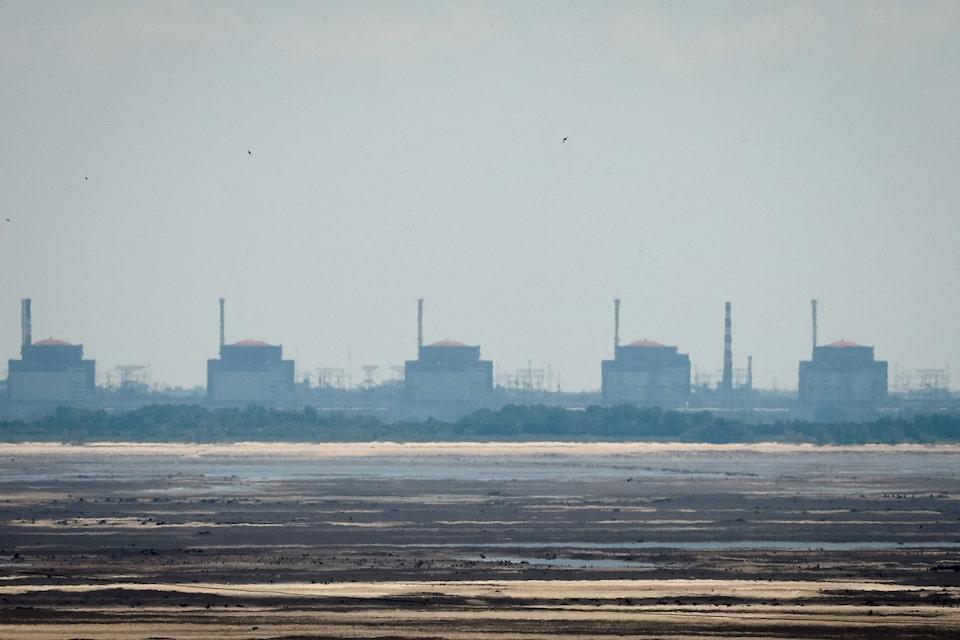
Feb 12 (Reuters) - Ukraine accused Russia on Wednesday of deliberately disrupting rotation of the International Atomic Energy Agency (IAEA) mission at the Russian-occupied Zaporizhzhia nuclear power plant. The ministry's spokesman Heorhii Tykhyi said in a statement that the Russian side had again used tactics it had employed before. "(Russia) gives vague signals of its supposed readiness to guarantee safe passage, but an hour before the start of the rotation it opens fire or starts hostilities in the area," Tykhyi said. There was no immediate comment from Russia. The Moscow-installed governor of the Zaporizhzhia region earlier accused Ukraine of attacking the city of Enerhodar near the nuclear power plant using drones. Last week Ukraine said the IAEA had to postpone the rotation due to a lack of security guarantees from Russia, an accusation rejected by Moscow. Russia captured Europe's largest nuclear power plant in southeastern Ukraine shortly after the start of its full-scale invasion of Ukraine in February 2022. The IAEA has deployed staff to the plant since September 2022. Sign up here. https://www.reuters.com/world/europe/kyiv-again-accuses-russia-failed-iaea-rotation-zaporizhzhia-nuclear-plant-2025-02-12/
2025-02-12 12:20
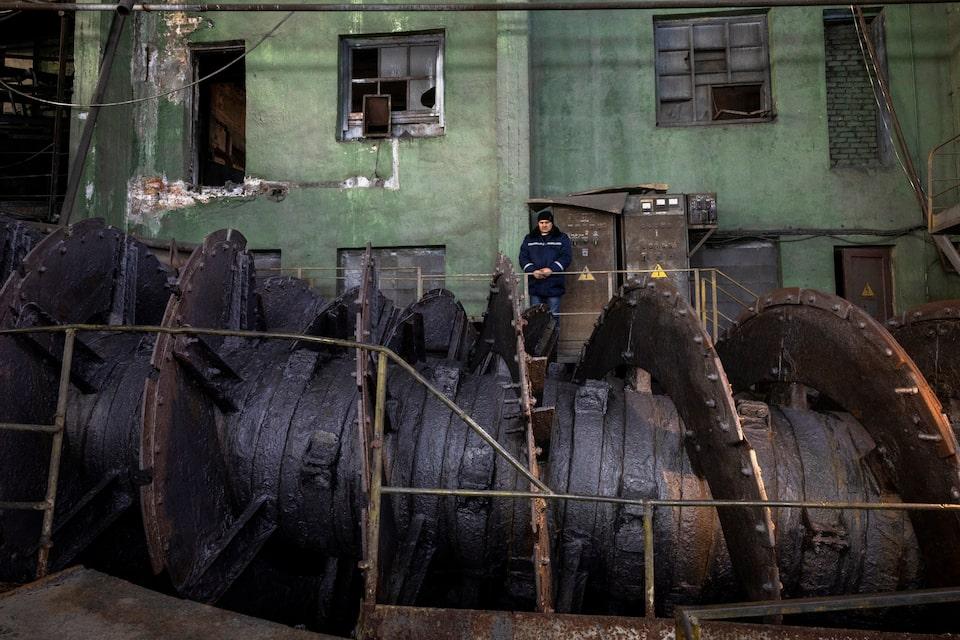
Trump seeks $500 billion in Ukraine minerals deal Ukraine graphite mine sees opportunity, wants U.S. investment But U.S. money may be unlikely to turn quick profit ZAVALLIA, Ukraine, Feb 12 (Reuters) - At the 90-year-old Zavallivsky Graphite Mine in central Ukraine, CEO Ostap Kostyuk dreams of making graphite pure enough to use for lithium batteries, something he compares to trying to "make a Rolls-Royce inside a garage", given the lack of investment. As U.S. President Donald Trump eyes a major deal on Ukraine's rare earths and critical minerals in return for Washington's continuing support in the war against Russia, operators such as Kostyuk, sitting on one of Europe's largest graphite deposits, see an opportunity - but acknowledge profits will not come quickly for any American investors. "No matter what, it's a long-term investment," said Kostyuk of the challenges extracting minerals in Ukraine. During a recent visit, he showed Reuters the sprawling facility in the Kirovohrad region, standing among ageing heavy machinery where every surface was coated in a thin layer of graphite that rubbed off to the touch. Ukraine's vast undersoil mineral wealth is at the heart of a joint partnership pitch made to Trump by President Volodymyr Zelenskiy who wants security guarantees as part of a deal to end the war. Trump, in response, has said he wants $500 billion worth of Ukrainian critical resources and dispatched his Treasury Secretary Scott Bessent to Kyiv to meet Zelenskiy this week. VAST MINERAL WEALTH In an interview last week, Zelenskiy unfurled a map of Ukrainian minerals, including lithium, graphite, titanium and rare earths, which are important for the manufacture of high-performance magnets, electric motors and consumer electronics. He said less than 20% of the country's resources - including about half its rare earth deposits - were under Russian occupation and emphasised the need to help Ukraine protect what remains. But despite what Kyiv says is trillions of dollars of untapped mineral wealth, industry experts say it could take years for investors to make significant profits from a sector reeling from war and chronic underinvestment. Volodymyr Landa, a senior economist at the Centre for Economic Strategy, said it was important to understand what specifically the United States was interested in gaining access to. Ksenia Orynchak, head of Kyiv's National Extractive Industries Association, said the mining industry had "stagnated" and lacked inflows of money for all the nine years she has worked in it. At the State Service of Geology, where she worked from 2017 to 2019, she said the government allocated just a few million hryvnia for all the body's activities, at a time when simple geological exploration would cost 2 billion hryvnias ($48 million). Orynchak said another problem was that the country's mineral reserves have been classified for more than two decades, making it impossible to accurately assess what Ukraine has. SOVIET-ERA MACHINERY The Soviet-era Zavallivsky complex, whose equipment was last modernised in 1965, illustrates the scale of the challenge. Though the mine is hundreds of miles from the front, it has been scrambling for resources since Russia's February 2022 full-scale invasion prompted its Australian partner to pull its financing. A number of Kostyuk's workers are also either serving in the military or were killed fighting for Ukraine. Despite the setbacks, he said his plant is already making a product good enough to be later purified into battery-ready spherical graphite (SPG). "We are ready for this technology," said Kostyuk, adding that his facility's goal was to eventually produce its own SPG. Ukraine's reserves of graphite, a key component in electric vehicle batteries and nuclear reactors, represent 20% of global resources. More immediately, he added, his company was ready to offer U.S. consumers a supply of natural flake graphite, in part to establish a Ukrainian brand on U.S. markets, while U.S. firms probe for new deposits in Ukraine. New digging projects - whether for graphite or other critical minerals - could take at least five to seven years before they begin to produce, he added. While his factory badly needs an upgrade, Kostyuk said his workforce has the know-how to leap forward if given the resources. "I believe in this factory, I believe in these people," he said. "Everybody here wants to work." ($1 = 41.8330 hryvnias) Sign up here. https://www.reuters.com/markets/commodities/ukrainian-graphite-mine-hopes-trump-deal-say-returns-wont-be-instant-2025-02-12/
2025-02-12 11:56
Commission sets out measures to cut energy prices, plan due soon Price cap could destabilize market, harm supply security -groups BRUSSELS, Feb 12 (Reuters) - Europe's gas and energy trading industries have urged the European Union not to cap gas prices, as Brussels seeks ways to protect consumers and businesses from energy price spikes. The European Commission is preparing a package of measures, due to be proposed on February 26, to improve industries' competitive edge and help bring down energy prices. Benchmark European gas prices rose this week to a two-year high of 58 euros per megawatt hour (MWh), boosted by cold weather and depleting gas storage tanks. That has added to concerns about the higher energy prices European firms face, compared with competitors in the U.S. and China. Industry participants are worried that this could prompt Brussels to revive the idea of capping gas prices, weeks after a previous EU gas price cap introduced during the 2022 energy crisis expired after never once being triggered. "We believe this measure, if announced, could have far-reaching negative consequences for the stability of European energy markets and the security of supply across the continent," the industry groups said in a letter to Commission President Ursula von der Leyen. A cap would "harm the trust" in the EU's benchmark gas price, prompt market participants to switch to use other reference gas prices outside the EU, and make it harder for Europe to attract liquefied natural gas cargoes in price-competitive global markets, the letter said. Its signatories included industry associations Eurogas, Energy Traders Europe, the association of energy exchanges Europex, and financial markets association AFME. The Financial Times reported on Wednesday the Commission is considering a gas price cap as part of this month's package of support for industry, citing people with knowledge of the talks. A senior EU official told Reuters on Wednesday the idea was not being considered. The prime minister of Norway, Europe's largest gas supplier, said placing a price cap on gas had been discussed with Europe three years ago and that Brussels understood that this was not an answer to the challenge of high gas prices. "Energy can take other ways, other directions. What Europe really needs to do is to get on with new power generation from renewable sources and from existing sources," Jonas Gahr Stoere told Reuters on Wednesday. The EU's previous gas price cap had also been opposed by industry and by national governments, including Germany and the Netherlands, who warned it would hamper Europe's ability to secure fuel supplies. The cap was designed to kick in if European gas prices hit 180 euros per megawatt hour. It was never triggered, as the benchmark EU gas price has not reached that level since Europe's energy crisis in 2022, after Moscow slashed gas deliveries to the region. Sign up here. https://www.reuters.com/business/energy/european-energy-industry-urges-eu-not-cap-gas-prices-2025-02-12/
2025-02-12 11:49
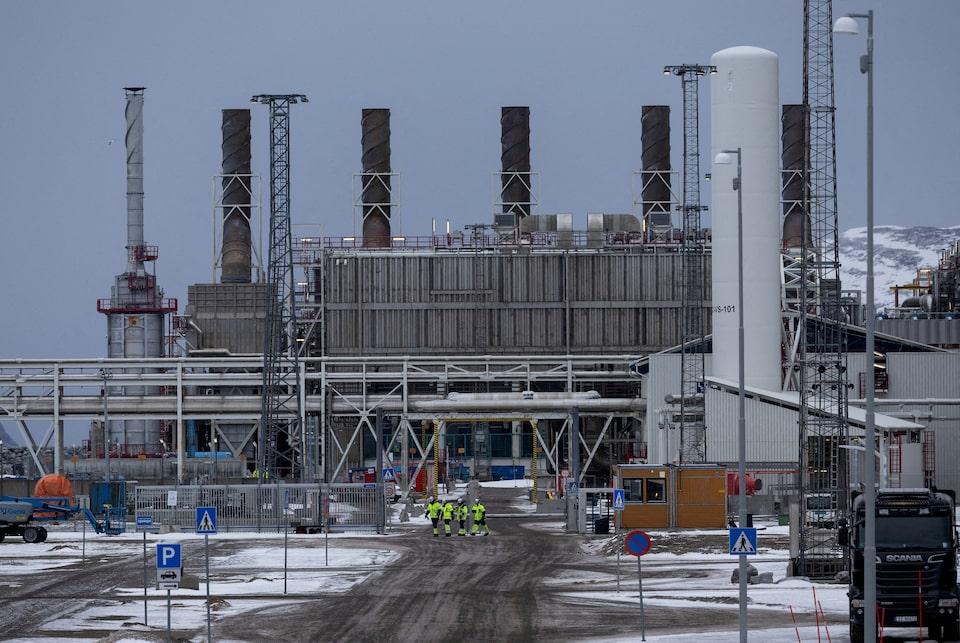
OSLO, Feb 12 (Reuters) - Norway's Ocean Industry Authority said on Wednesday it has given Gassco and Shell (SHEL.L) , opens new tab consent for the startup of production from the Ormen Lange gas field's third phase. The goal of the project has been to increase the recovery rate from the Ormen Lange field to 85% of the total resources from 75% previously, while also accelerating gas production, the regulatory agency said. The Ormen Lange field in the Norwegian Sea was discovered in 1997 and began production in 2007. Sign up here. https://www.reuters.com/business/energy/shell-gets-go-ahead-norways-ormen-lange-3-gas-field-2025-02-12/
2025-02-12 11:49
Feb 12 (Reuters) - State-owned explorer Oil and Natural Gas Corporation (ONGC) (ONGC.NS) , opens new tab said on Wednesday that its joint venture with utility firm NTPC Green Energy (NTPG.NS) , opens new tab will acquire Ayana Renewable Power, which operates solar and wind plants. Ayana is valued at $2.3 billion including debt, ONGC said in a statement. The 50-50 joint venture outbid JSW Energy (JSWE.NS) , opens new tab for the renewable energy firm, Reuters had reported in November, citing sources. Ayana, owned by quasi-sovereign wealth fund National Investment and Infrastructure Fund, British International Investment Fund and Green Growth Equity Fund, operates plants that produce 1,600 megawatts in India and has another 2,500 megawatts in such projects under construction. The acquisition comes at a time when large power producers in India are betting big on renewables and making pledges to expand their green energy capacities. The Indian government has pledged to add 500 gigawatts of clean energy by 2030 to reduce carbon emissions. Sign up here. https://www.reuters.com/markets/deals/indias-ongc-ntpc-green-energy-joint-venture-buy-ayana-renewable-2025-02-12/

2025-02-12 11:44
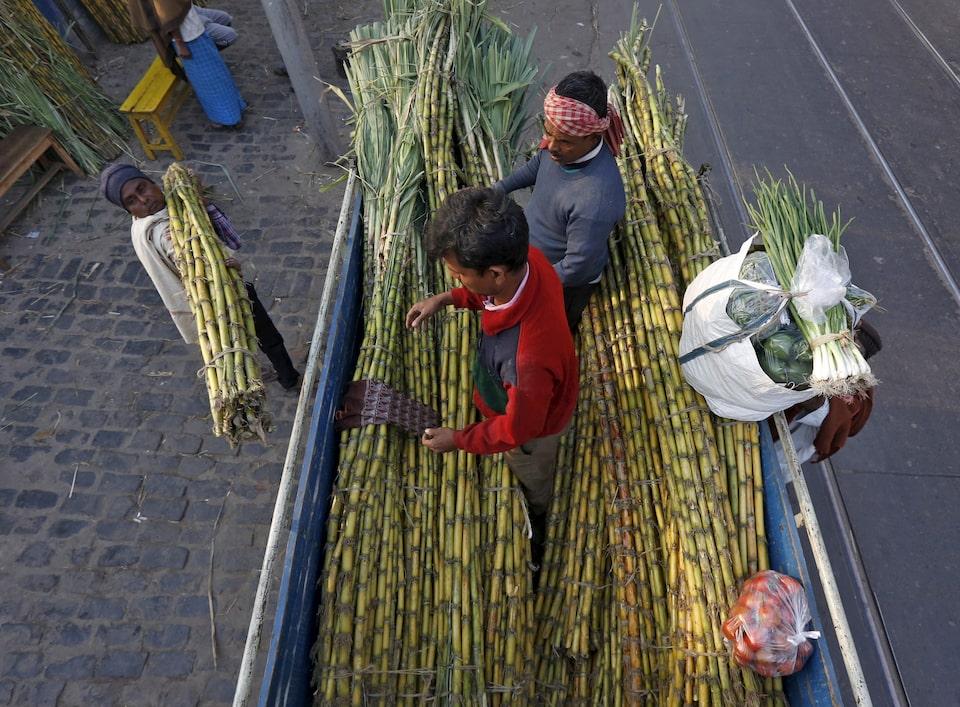
DUBAI, Feb 12 (Reuters) - India has exported up to 500,000 metric tons of sugar so far this season, but the pace is already slowing, and it may struggle to fulfil the one million tons allowed by the government, trade and industry sources said on Wednesday. "There are fears that the one million (ton) quota could actually be reduced," Prakash Naiknavare, managing director of the National Federation of Cooperative Sugar Factories, told Reuters on the sidelines of the annual Dubai Sugar Conference. India last month allowed exports of 1 million metric tons of sugar during the current season to September 2025 to help mills of the world's second-biggest producer export surplus stocks and prop up local prices. Naiknavare said exports so far had totalled around 500,000 tons and have mainly focused on neighboring countries Sri Lanka, Bangladesh, and Nepal, as well as Eastern Africa. Shashikant Pandhare, head of research at Meir India, put exports so far as only 400,000 tons at most and added the pace was slowing down. He noted mill closures in northern India and struggles elsewhere due to poor harvest conditions. The closures suggest India will produce less sugar than initially estimated and have lifted local prices, making India less competitive on global export markets. "I think at most 700,000 tons will be exported by September but I doubt the government will make any changes to the quota," he told Reuters. Pandhare said there has been a surge in demand from countries with significant Muslim populations, such as Tanzania and Bangladesh, in anticipation of Ramadan, which is set to begin around February 28. Sanjeev Mishra, the chief executive officer of Tanzania's Kagera Sugar, said, however, that Indian exporters were currently offering at "unrealistic prices" compared to other global sources. India's decision to allow sugar exports this season was a surprise to some traders with stocks expected to fall this season following crop problems. Ashwini Srivastava, joint secretary in India's Department of Food and Public Distribution, told the conference that stocks were set to fall to six million tons by the end of this season, down from eight million a year earlier. Trader and industry sources, however, said the outlook for the 2025/26 cane crop was currently more favourable. Anup Kumar, managing director of Sucden India told Reuters there was a "very good crop coming" although the size was not yet clear. He estimated, however, that only around 150,000 tons had been exported so far, mostly to countries around the Indian Ocean. Sign up here. https://www.reuters.com/markets/commodities/india-seen-struggling-fulfil-sugar-export-quota-industry-sources-say-2025-02-12/