2025-02-12 11:39
Farmers face delayed payments due to grain company bankruptcies Drought worsens financial strain on Canadian farmers Failure of unlicensed companies, complaint deadline, insufficient security seen as holes in farm support REGINA, Saskatchewan, Feb 12 (Reuters) - Canadian farmer Bill Prybylski planned to buy a new tractor with proceeds from crops sold to two grain companies in early 2024. He delivered the grain before both companies declared bankruptcy, leaving him short C$165,000 ($113,487.86) they owed. Now Prybylski has no money to replace his old tractor. Hundreds of Canadian farmers have received delayed payments for their crops or not been paid at all, as a growing number of grain-buying firms declare bankruptcy amid drought and low commodity prices, according to interviews with dozens of farmers, a government agency, and a review of bankruptcy documents. Farmers are discovering they are not necessarily protected from the failures, revealing holes in Canada's farm safety net. The bankruptcies are adding to farmer troubles in Canada, the world's top canola and No. 3 wheat producer, while they also brace for tariffs from the United States. Prybylski, who farms in Willowbrook, Saskatchewan, is relying on a line of credit to cover the shortfall until he harvests the next crop in autumn. "Where do we cut our expenses? Or how do we get more revenues to do the things we need to do?" Prybylski asked. As planting season approaches, he needs to buy fertilizer, seed and fuel. Farmers can sell crops to companies that operate storage terminals, merchants and other farmers who fatten livestock. They are generally paid a few weeks after they deliver grain and have long incurred most of their costs, a problem for those who deliver to a buyer that goes broke before paying. Canadian farmers have some financial protection through the federal government-run Canadian Grain Commission, which regulates crop transactions, oversees grain company failures and at times covers some of what farmers are owed by failed companies. The CGC pays compensation from bonds and other security that licensed companies are required to post. The CGC managed four company failures in 2024, compared to zero or one most years, and the most since at least 2001, according to government data. But some unlicensed companies have also failed, suggesting the troubles may be broader. Farmer Christi Friesen said grain buyer Agfinity tried to delay paying her for three loads of peas, though it ultimately paid the C$75,000 it owed plus interest. Agfinity declared bankruptcy on November 25. "I needed to fight," said Friesen, who farms 5,000 acres (2,023 hectares) of cropland in Alberta's Peace region. "I kept being a pain in the ass." Discovering that some failing companies, such as Agfinity, are unlicensed, has alarmed farmers, as has finding out that some licensed companies are not fully insured. The situation "has fully exposed that we are not secure," said southern Saskatchewan farmer Cherilyn Jolly-Nagel. Companies directly buying crops from farmers must, by law, be licensed with the CGC, with few exceptions. For legal enforcement, the agency must complain to the Public Prosecution Service of Canada, which then decides whether to take action. The CGC has not made such a complaint in at least seven years, said spokesperson Christianne Hacault. Other flaws in farmer protections are the CGC's requirement that farmers report non-payment within 90 days, and licensed firms who fail to post adequate security, farmers say. The CGC is holding consultations with farmers about its protection system, Hacault said. "We know there are gaps." The federal agriculture minister's office, which oversees the CGC, did not respond to a request for comment. Agfinity owner Joseph Billett told Reuters that reduced sales due to smaller crops, farmers' reluctance to sell at low prices and competition from imports of U.S. corn to feed cattle pushed the company over the edge. "These three factors made profitability very challenging, and for us, impossible, these past few years," Billett said. DUST BOWL Farmers in the western half of Canada's Prairies have grown stunted crops for four years due to dry conditions. In some places, farmers say they are facing the worst prolonged drought since the 1930s Dust Bowl. Crop insurance claims between 2021 and 2024 shot up seven-fold compared to the previous four-year period due to drought-damaged crops, according to agencies in Alberta and Saskatchewan. Numerous small grain companies, brokers and merchants are among Canadian crop buyers, unlike some countries that are dominated by global players. In the United States, farmers also had low prices to deal with, but their crops had better growing conditions, allowing them to salvage revenue. Some states regulate grain companies so that farmers have protection against non-payment, but the situation varies state-to-state. In Canada, some companies have avoided bankruptcy, but are still struggling. Farmer-built North West Terminal in Unity, Saskatchewan, said in September it would stop buying grain at least through July to avoid losses. In an interview, NWT CEO Jason Skinner said intense competition to buy reduced crops hit his company, though it has avoided bankruptcy. "We've seen some significant headwinds and . . . margins that aren't covering costs," Skinner said. In May, LSM Grain picked up two truckloads of red lentils, worth about C$50,000, from Saskatchewan farmer Kelly Arthurs, but did not pay him. The CGC revoked LSM's license in July. The company could not be reached for comment. Arthurs complained to the CGC within 90 days of delivering his grain and was eventually compensated. But 17 farmers owed a combined $842,000 by LSM waited too long and will not qualify for compensation, according to a bankruptcy document and the CGC. Prybylski is one of them. Global Foods and Ingredients also went broke owing Prybylski money in the spring. He submitted his complaint in time to qualify for coverage, but only received 75% of what he was owed because Global had posted insufficient security. A law firm representing Global Foods did not respond to a request for comment. Arthurs said he felt so much stress from months of fighting to get paid that he may quit farming. "It's time to retire." ($1 = 1.4295 Canadian dollars) Sign up here. https://www.reuters.com/markets/commodities/drought-leaves-canadian-farmers-unpaid-reveals-holes-safety-net-2025-02-12/

2025-02-12 11:28
Feb 12 (Reuters) - India's retail inflation slowed to a five-month low in January as food price inflation eased, boosting the odds of another rate cut in the South Asian economy where growth is slowing amid the escalating threat of a global trade war. Annual retail inflation (INCPIY=ECI) , opens new tab in January was at 4.31%, lower than economists' estimate of 4.6% and 5.22% in the previous month. Retail inflation was at 3.65% in August 2024. HARRY CHAMBERS, ASSISTANT ECONOMIST, CAPITAL ECONOMICS, LONDON "The sharp fall in Indian headline consumer price inflation in January reinforces our view that the RBI will continue to loosen monetary policy over the coming months to support the economy." "Looking ahead, good soil conditions, healthy reservoir levels and a high base means that we expect food inflation to continue slowing over the coming months. And with the economy in a softer patch, underlying price pressures should remain in check." "With inflation likely to fall a little further, and the central bank's focus shifting to boosting economic growth, more monetary easing lies in store. We expect another 75bps of cuts over the rest of this year, bringing the repo rate down to 5.50%." RADHIKA RAO, SENIOR ECONOMIST, DBS BANK, SINGAPORE "Softening inflation prints back the central bank MPC's (Monetary Policy Committee) move to lower rates earlier in the month, with headline prints expected to head to and below the midpoint of the target over the next 2-3 months." "Monetary policy is expected to be focused on the domestic growth-inflation trade-off at this juncture, whilst addressing rupee depreciation risks via intervention efforts." SAKSHI GUPTA, PRINCIPAL ECONOMIST, HDFC BANK, GURUGRAM "The sequential moderation in vegetable prices seen during the winter months aided the overall softness in inflation." "Inflation is expected to print between 4-4.5% over the next two months. The inflation trajectory provides greater confidence that the RBI is likely to deliver another rate cut in the April policy. Cumulatively, we expect further 50bps of reduction in the policy rate in 2025." DIPANWITA MAZUMDAR, ECONOMIST, BANK OF BARODA, MUMBAI "The softening of CPI is welcoming from a policy standpoint when global uncertainty is at play. The downward correction is supported by food and rangebound commodity prices." "Going forward, better arrival statistics of vegetables, generous rabi harvest and government efforts directed at efficient food supply management will further provide breather for RBI." "However, risks emerge from imported inflation and bottoming out of commodity price cycle." UPASNA BHARDWAJ, CHIEF ECONOMIST, KOTAK MAHINDRA BANK, MUMBAI "January CPI inflation moderated sharper than expected, led by significant easing of food prices. Meanwhile, core inflation inched up a bit to 3.7%." "Overall, we expect the inflation trajectory to remain benign in the months ahead to provide room for another 25 basis points of rate cut by the MPC. However, the pace of rupee depreciation will need to be closely watched for spillovers on domestic inflation." GAURA SENGUPTA, INDIA ECONOMIST, IDFC FIRST BANK, MUMBAI "Headline inflation was lower than expected, which bodes well for inflation outlook. The moderation was led by food inflation as supplies improve and seasonal factors." "Core inflation remains low at 3.7%, indicating presence of negative output gap. The RBI rate cut cycle is expected to be shallow given depreciation pressures on the rupee. We expect further cuts of 25 basis points to 50bps." "More important is the transmission of rate cuts which will require durable infusion of liquidity by RBI." KANIKA PASRICHA, ECONOMIST, UNION BANK OF INDIA, MUMBAI "Veggies have played a significant role with CPI ex-veggies staying nearly flat at 3.8% even as core inflation inched up slightly to 3.66%. On balance, we believe there are downside risks to the MPC's 4.4% CPI projection for Q4FY25 and maintain a 25 basis point rate cut view for April." SACHCHIDANAND SHUKLA, GROUP CHIEF ECONOMIST, LARSEN & TOUBRO, MUMBAI "The wider expectation of CPI cooling off on the back of receding food and veggie inflation has held out, in turn justifying the RBI's tilt towards supporting growth by cutting the repo rate." "However, core inflation has inched up by 10 bps to 3.7% in January. There remains a risk, though a tad distant, of persistent rupee depreciation that can feed through via higher input prices." KUNAL KUNDU, INDIA ECONOMIST, SOCIETE GENERALE, BENGALURU "Vegetable prices, which have been holding monetary policy hostage by being primarily responsible for elevated inflation, is showing signs of relenting." "A 16% monthly contraction in vegetable prices ensured a 1% monthly contraction in headline CPI, which eventually printed at 4.3% year-on-year, much lower than market expectation and the lowest since August 2024." "Given this rather soft reading, we retain our expectation of another rate cut by the RBI during its April meeting." ANITHA RANGAN, ECONOMIST, EQUIRUS, MUMBAI "Prospectively, with vegetable inflation on the sidelines and good rabi crop, food inflation should not be a near-term worry. What can, however, upset the apple cart is from the import side (FX and commodities)." "RBI has delivered its rate cut in anticipation of a moderation in inflation, and any upside risk could keep the follow-on policy accommodation waiting." "Inflation trajectory, with moderating food inflation, is a thumbs up for boosting consumption." VIVEK KUMAR, ECONOMIST, QUANTECO RESEARCH, MUMBAI "The sharp deceleration in CPI inflation vindicates the MPC's rate cut in the February policy review. With key vegetable prices continuing to show a downward bias in February so far, the disinflationary momentum could persist in the near-term." "However, one needs to keep an eye on select international prices (like precious metals) and rupee weakness, which in conjunction would start adding an upside to core inflation." DEVENDRA KUMAR PANT, CHIEF ECONOMIST, INDIA RATINGS AND RESEARCH, GURUGRAM "The sharp decline in January 2025 inflation brightens the prospects of fourth-quarter inflation meeting RBI's forecast of 4.1%. The decline in vegetable inflation is expected to continue in the next couple of months." "The monetary policy action in April 2025 will be dependent on currency movement and liquidity in the system." Sign up here. https://www.reuters.com/world/india/view-indias-retail-inflation-eases-five-month-low-january-2025-02-12/
2025-02-12 11:22
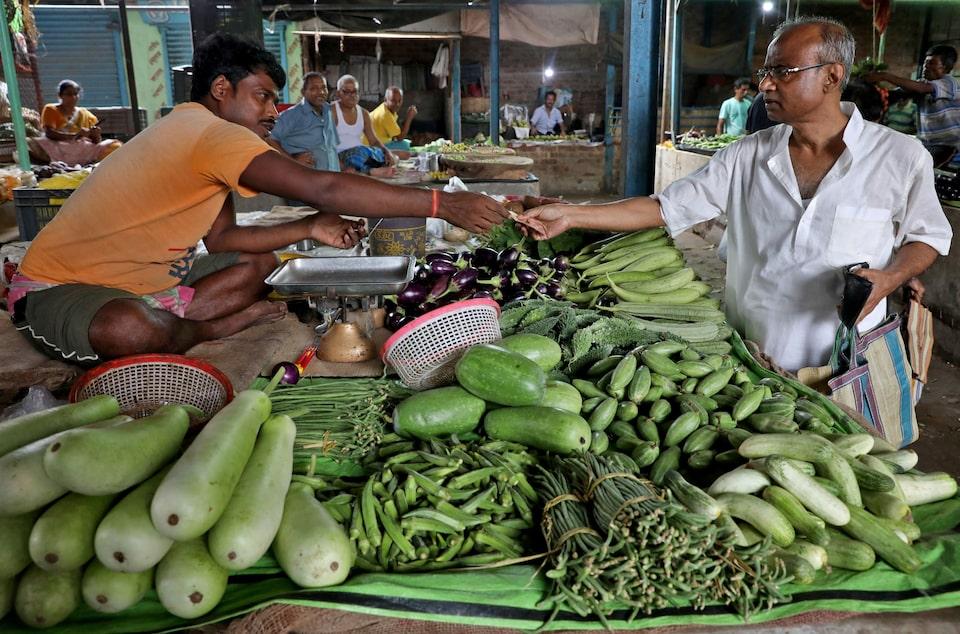
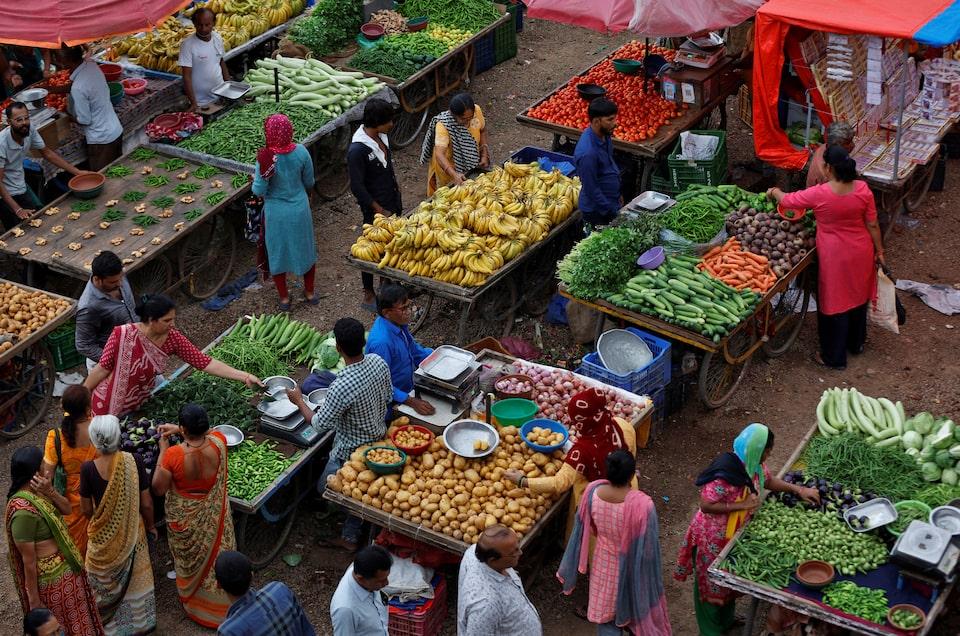
NEW DELHI, Feb 12 (Reuters) - India's retail inflation slowed to a five-month low in January as food price inflation eased, boosting the odds of another rate cut in the South Asian economy where growth is slowing amid the escalating threat of a global trade war. Annual retail inflation (INCPIY=ECI) , opens new tab in January was at 4.31%, lower than economists' estimate of 4.6% and 5.22% in the previous month. Retail inflation was at 3.65% in August 2024. Food inflation eased to 6.02% from 8.39% in December. Cooling inflation boosts chances of further policy easing by India's central bank, which cut its key policy rate for the first time in nearly five years in February in a bid to boost an economy that is expected to grow at its slowest pace in four years. The government also announced sweeping income tax cuts in its February 1 budget to lift consumption. The Reserve Bank of India sees inflation averaging 4.8% in the current financial year that ends on March 31 and expects it to fall to 4.2% next year, it said last week. "The sharp fall in Indian headline consumer price inflation in January reinforces that the RBI will continue to loosen monetary policy over the coming months to support the economy," said Harry Chambers, an economist at Capital Economics. The central bank targets inflation at 4% within a tolerance band of 2 percentage points on either side. In January, vegetable prices rose 11.35% year-on-year, compared with a 26.60% increase in the previous month. Prices of cereals rose 6.24% against a 6.50% gain in December, while those of pulses gained 2.59% against 3.80%. Prices of vegetables and pulses fell from the previous month. Winter harvests have helped moderate food prices, but warmer-than-usual temperatures in March could pose risks to crops like wheat. Core inflation, which excludes volatile items such as food and energy and is seen as a better gauge of domestic demand, quickened to 3.7% in January from 3.6% in the previous month, according to two economists. Last week, RBI Governor Sanjay Malhotra said the central bank is alert to all pressures on inflation and will be watchful of the impact of rupee depreciation on local prices. A 5% depreciation in the rupee impacts domestic inflation to the extent of 30 basis points to 35 basis points, he said. A potential trade war dragged the rupee to its lifetime low of 87.95 per U.S. dollar in February, boosting worries about higher inflation on imported goods. U.S. President Donald Trump's trade advisers were finalising plans on Wednesday for the reciprocal tariffs the president has vowed to impose on every country that charges duties on U.S. imports, ratcheting up fears of a widening global trade war. Indian Prime Minister Narendra Modi is expected to propose increased energy and defence imports , opens new tab during a two-day U.S. visit from Wednesday. Sign up here. https://www.reuters.com/world/india/indias-retail-inflation-january-slows-431-yy-2025-02-12/
2025-02-12 11:19
Feb 12 (Reuters) - Canada's Barrick Gold (ABX.TO) , opens new tab beat analysts' estimates for fourth-quarter profit on Wednesday on higher gold prices and production. On an adjusted basis, the world's second-largest gold miner posted a profit of 46 cents per share in the quarter ended December 31, compared with estimates of 41 cents per share, according to data compiled by LSEG. Gold production in the quarter came in at 1.08 million ounces, higher than 1.05 million ounces in the same quarter last year, due to its North America, Africa and Middle East operations meeting expectations. Gold prices rose over 27% in 2024, their biggest yearly rise since 2010, driven by safe-haven demand, interest rate cuts, and buying from central banks. Barrick said its average realized gold prices rose to $2,657 per ounce in the fourth quarter from $1,986 per ounce last year. All-in sustaining costs (AISC), an industry metric reflecting total expenses, however, rose to $1,451 per ounce in the quarter, from $1,364 per ounce last year. The company also announced a new share buyback program of $1 billion, scrapping its previous share buyback program that was in place from February 14, 2024. Sign up here. https://www.reuters.com/markets/commodities/barrick-gold-beats-profit-estimates-2025-02-12/

2025-02-12 11:18
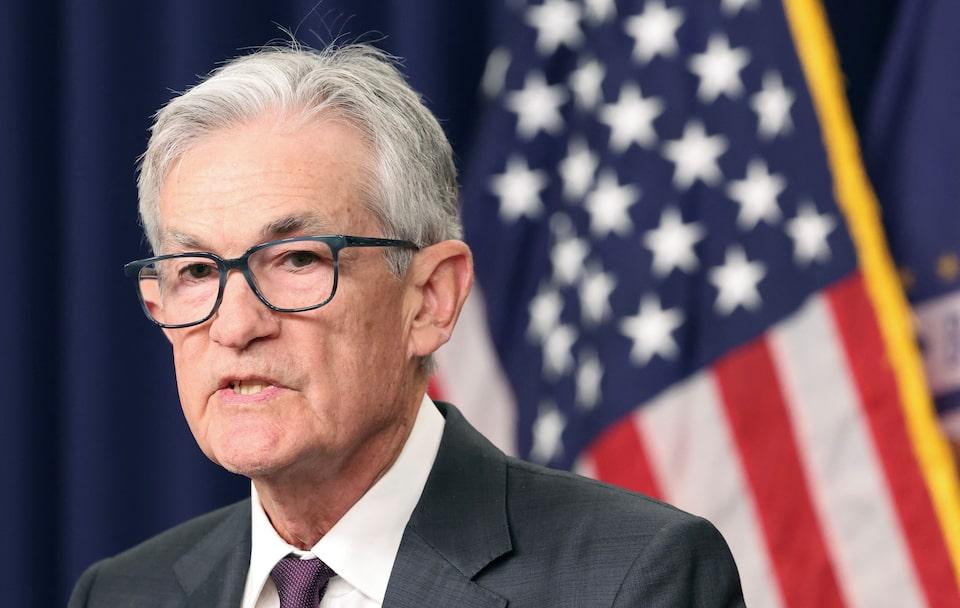
A look at the day ahead in U.S. and global markets from Mike Dolan Hyperactive U.S. policy moves appear to have frozen macro markets this week, with Wednesday's key U.S. inflation release set to hold Federal Reserve boss Jerome Powell's benign take on economy up to the light. Powell basically told Congress on Tuesday that the economy was fine and that Fed policy was sufficiently well calibrated to deal to with uncertainties surrounding the new government plans - credit is still 'restrictive' while they wait and see. "We are in a pretty good place," Powell told the Senate committee - citing tariffs, immigration, fiscal and regulatory policy as the key variables the Fed will "try to make sense of". January's consumer price inflation report might not contain many clues about the year ahead, but it will cement views on the starting point. Headline inflation is expected to remain just below 3%, with the annual core rate slipping to 3.1%, and Powell gets a chance to comment on the number as he reprises his testimony to the House Financial Services committee later. But with another sweep of Washington moves overnight on everything from reciprocal trade tariffs to cutting Federal workers, financial markets also appear to have reverted to a 'wait and see' mode. The S&P500 (.SPX) , opens new tab closed flat on Tuesday, about 1% shy of last month's record high, and index futures showed little movement overnight either. The fourth-quarter U.S. corporate earnings season provides a pretty serene backdrop, tracking circa 15% annual profit for S&P500 overall, and recent turbulence in the bond market has subsided too. Worries about investor demand for sovereign debt have been assuaged in recent weeks, with $58 billion of 3-year Treasury notes flying off the shelf yesterday and $42 billion of 10-year paper up for grabs later on Wednesday. Syndicated government debt sales in Britain and Italy this week have been more than 10 times oversubscribed. An irksome energy pop did rattle bonds earlier this week, but that too has reversed on Wednesday. U.S. crude ebbed - clocking year-on-year losses of 5% - as industry data out later is expected to show an increase in stockpiles. The Energy Information Administration, meantime, lifted estimates for U.S. crude production while leaving its demand forecast unchanged. Ten-year Treasury yields hovered just above 4.5% awaiting today's inflation update and auction. With tariffs and threats of them flying daily from Washington and retaliatory moves in the works, even currency markets previously so sensitive to the import duties have settled down considerably. The dollar index (.DXY) , opens new tab, the pivotal euro/dollar exchange rate and even China's yuan seem stuck in the middle of recent trading ranges. So too are Mexico's peso and Canada's dollar . Part of the reason for the cageyness is the gap between signal and effect - wariness about whether what has been announced or threatened will actually take effect and to what degree tit-for-tat moves cancel out macro impacts. One currency mover overnight was Japan's yen , which slipped as investors grew wary of U.S. steel and auto tariffs despite the meeting between President Donald Trump and Japan's Prime Minister Shigeru Ishiba last week. Japan's industry minister Yoji Muto said on Wednesday the nation has requested the United States exempt Japan from the proposed steel and aluminium tariffs. Bank of Japan Governor Kazuo Ueda, meantime, said the central bank warned of the risks food price rises may start to affect people's inflation expectations. In Europe, attention was turning to this month's elections in Germany but European shares (.STOXX) , opens new tab and Germany's DAX benchmark (.GDAXI) , opens new tab continued to plow ahead to new records. With the earnings season underway there too, Heineken (HEIN.AS) , opens new tab led the pack on Wednesday and jumped 12% to its highest since 2023. The brewer reported better-than-expected profit, launched a share buyback and forecasts further growth in operating profit of between 4% and 8% in 2025 - lifting other brewers and beverage firms (.SX3P) , opens new tab in the slipstream. In China, stocks (.CSI300) , opens new tab bounced back from Tuesday's stumble as investors focussed on the buzz surrounding DeepSeek's artificial intelligence breakthrough. Back on Wall Street, Lyft (LYFT.O) , opens new tab dropped 12% after the ride-hailing company forecast current-quarter gross bookings below estimates - dragging bigger rival Uber (UBER.N) , opens new tab down 1%. Super Micro Computer (SMCI.O) , opens new tab advanced 5% after the server maker said it believes it will be able to file delayed annual and quarterly reports with the U.S. Securities and Exchange Commission by February 25. Key developments that should provide more direction to U.S. markets later on Tuesday: * US January consumer price inflation report * Federal Reserve Chair Jerome Powell's reprises semiannual monetary policy testimony before House Financial Services Committee. Fed Board Governor Christopher Waller and Atlanta Fed President Raphael Bostic both speak. Bank of England policymaker Megan Greene speaks * India's Prime Minister Narendra Modi meets U.S. President Donald Trump in Washington * Canada's Prime Minister Justin Trudeau meets EU Commission President Ursula von der Leyen and European Council President Antonio Costa in Brussels * US corporate earnings: Cisco, Kraft Heinz, Albemarle, Paycom, Biogen, CME, CVS, MGM, Dominion, Equinix, Interpublic, NiSource, Rollins, Smurfit WestRock, Tyler, Ventas, Westinghouse etc * U.S. Treasury sells $42 billion of 10-year notes Sign up here. https://www.reuters.com/markets/us/global-markets-view-usa-2025-02-12/
2025-02-12 11:05
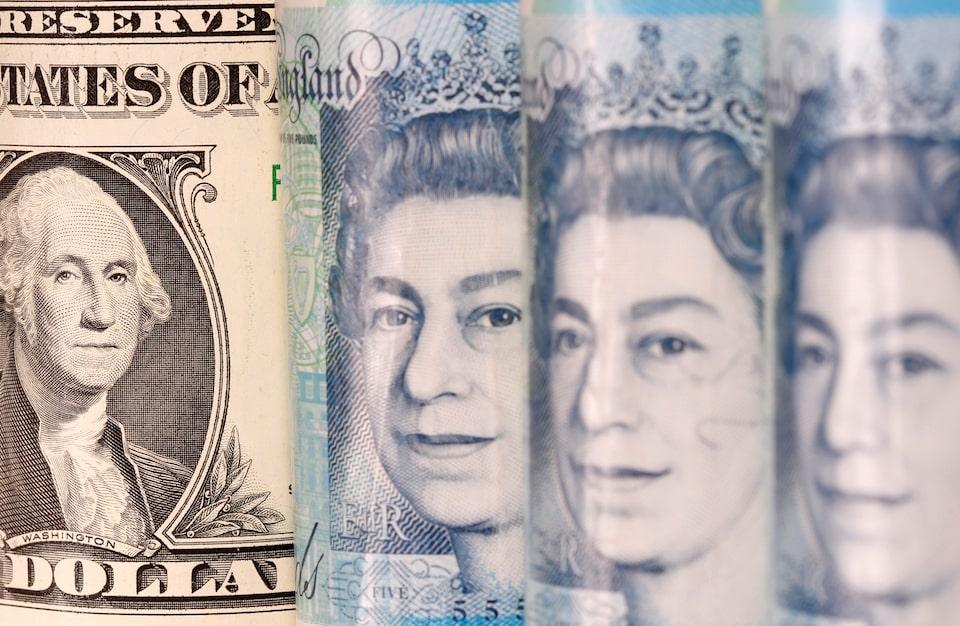
LONDON, Feb 12 (Reuters) - The British pound was steady within the middle of its recent range on Wednesday as investors awaited key U.S. inflation data, while uncertainty stemming from U.S. President Donald Trump's trade policy continued to keep investors on edge. Sterling was little changed against the dollar at $1.2443. It was down slightly at 83.37 pence per euro . Attention in currency markets on Wednesday was on U.S. inflation data - due at 1330 GMT - which could help cement market expectations for the Federal Reserve to keep rates unchanged for the time being. On Tuesday, Fed Chair Jerome Powell told lawmakers the central bank was in no rush to ease more given the strength of the economy. In contrast, markets have moved to price in more easing from the Bank of England this year after the central bank cut the bank rate by 25 basis points last week. BoE policymaker Catherine Mann, who had previously been viewed as the most hawkish member of the rate-setting Monetary Policy Committee, shocked markets by voting for a larger 50 basis point move. On Tuesday, Mann said that sufficient evidence had built up of soft consumer demand, the risk of a sharp deterioration in the labour market and weakening corporate pricing power for her to drop her opposition to cutting rates. "Confidence in the UK has been knocked because of the growth outlook," said Jane Foley, senior FX strategist at Rabobank. "I think sterling is going to struggle to find the enthusiasm that it had in parts of 2024." The threat of tariffs is also keeping currency traders on edge. Investors have assumed U.S. tariffs would be positive for the dollar, by reshaping trade flows and encouraging other countries to weaken their currencies to offset the taxes. Trump has vowed to impose reciprocal tariffs on every country that charges duties on U.S. imports by today, ratcheting up fears of a widening trade war. But Rabobank's Foley believed the UK may be more insulated from escalating trade tensions than other countries. "Sterling perhaps looks a little less vulnerable than the euro," she said, noting that the U.S. reports a trade surplus with Britain that might enable the UK to sidestep some of Trump's tariffs. Sign up here. https://www.reuters.com/markets/commodities/sterling-steady-ahead-us-data-tariff-updates-2025-02-12/