2025-02-12 10:06
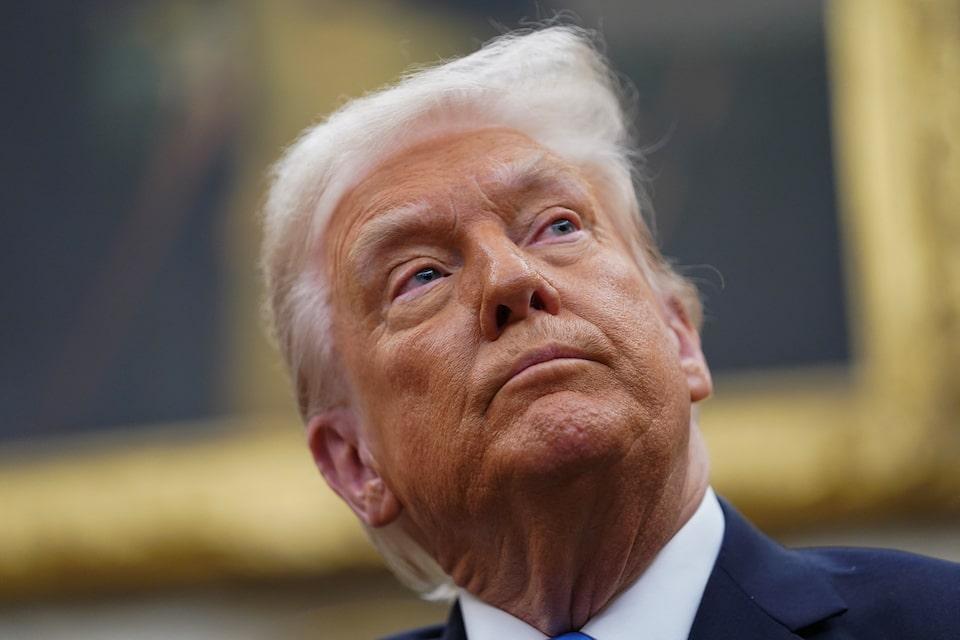
MUMBAI, Feb 12 (Reuters) - The Indian rupee gave up initial gains to settle marginally weaker on Wednesday, as hedging interest from importers and the maturity of positions in the non-deliverable forwards market boosted demand for the dollar. The rupee closed at 86.8925 against the U.S. dollar, down from its close at 86.8275 in the previous session. The currency rose to a near-two-week high of 86.47 in early trading but shed its gains amidst heightened demand to buy dollars at the daily reference rate published by the central bank, traders said. Likely outflows from Indian stocks also hurt the rupee while mild dollar sales from state-run banks kept a lid on its losses, a foreign exchange salesperson at a bank said. Despite several headwinds including portfolio outflows and global trade war concerns, the bearish bias on the rupee has eased following the central bank's firm interventions on Monday and Tuesday. The currency has weakened over 1% so far in 2025 and is among the worst performing Asian currencies. The dollar index was a tad higher at 108 while Asian currencies were largely rangebound ahead of the release of closely watched U.S. consumer inflation data later in the day. The data is expected to influence expectations of when the Federal Reserve may deliver its next rate cut. Fed Chair Jerome Powell reiterated on Tuesday that the central bank doesn't need to rush to lower policy rates. "The challenge for traders is that, despite some fatigue in the Trump trades, there's no way to predict if tomorrow will be the day Washington significantly expands tariffs," ING Bank said in a note. On Monday, U.S. President Trump unveiled a 25% tariff on all aluminium and steel imports and has said he intends to announce reciprocal tariffs this week, applying them to all countries and matching the tariff rates levied by each of them. Sign up here. https://www.reuters.com/markets/currencies/rupee-weakens-slightly-ndf-maturity-corporate-hedging-spurs-dollar-bids-2025-02-12/
2025-02-12 08:53
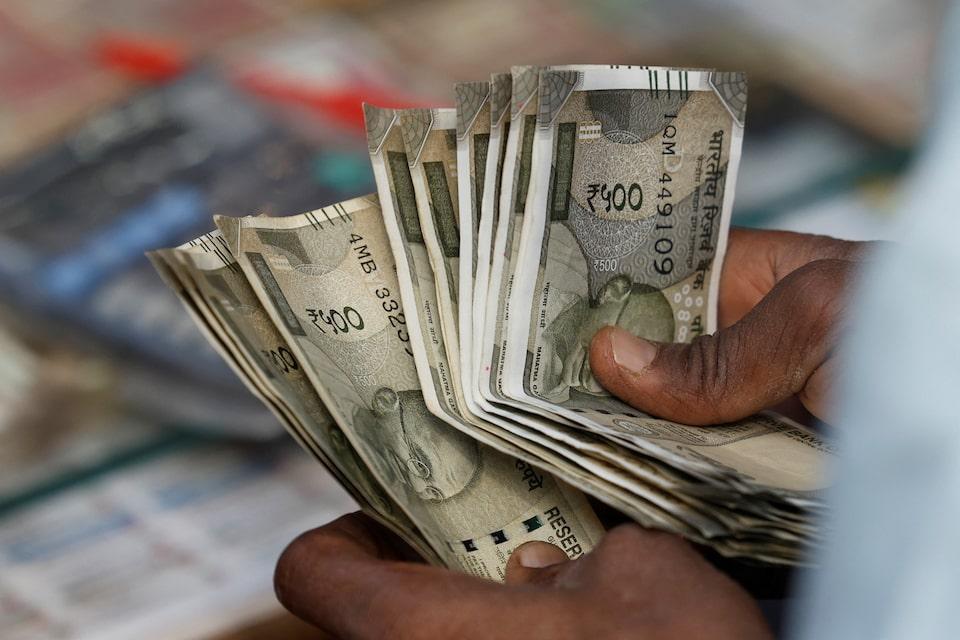
MUMBAI, Feb 12 (Reuters) - The Indian central bank's unexpected and decisive intervention in the foreign exchange markets over the past two days, worth as much as $11 billion by one estimate, has reduced the bearish bias on the currency. The Reserve Bank of India's (RBI) intervention was brought on by a build-up in bearish bets against the rupee and the currency's sharp slide over the past four months, analysts said. DBS Bank estimates the RBI sold $10 billion, while Goldman Sachs' estimate is near $11 billion -- a scale that surprised the market as the central bank's involvement had reduced since the appointment of Sanjay Malhotra as governor in mid-December. This intervention helped the rupee rebound to 86.47 per U.S. dollar on Wednesday from an all-time low of 87.95 early on Monday. Moreover, the 1-month dollar/rupee risk reversal -- which measures the cost of a dollar/rupee call option relative to a put -- dropped to the lowest since October 2024, indicating a decline in bearish sentiment. "Bets against the rupee piled up and that is what likely made the RBI uncomfortable and made it act. What the RBI is trying to is to engineer two-way volatility," said Dhiraj Nim, an FX strategist and economist at ANZ Bank. The RBI did not immediately respond to an email seeking comment. REER REASON The rupee plummeted from 84 to a shade under 88 in four months due to India's sluggish growth, equity outflows, increased hedging activity and the dollar's rally due to U.S. trade policies. This, combined with the new RBI governor's more flexible stance on the currency, increased the bets against the rupee. In late December, the one-month cost to bet against the rupee in the non-deliverable forward market was near its highest in over two years. The rupee options volume on the Depository Trust & Clearing Corporation (DTCC) had tripled from October to January. "In order to curb one-side positions on the rupee, the RBI decided to act decisively," said Upasna Bhardwaj, chief economist at Kotak Mahindra Bank. Another factor may have been the rupee's real effective exchange rate (REER) -- a measure of the currency's value against a basket of currencies of India's largest trading partners. Due to the central bank's previous interventions, the rupee's REER hit an all-time high in November, suggesting the currency was overvalued. But the currency's recent slide would have corrected that, according to economists. Goldman Sachs said with the rupee's REER "estimated to have already dropped to the hypothetical mid-band", the RBI was likely comfortable with a heavy intervention. Sign up here. https://www.reuters.com/markets/currencies/rbis-surprise-outsized-intervention-eases-bearish-bias-rupee-2025-02-12/
2025-02-12 07:55
Feb 12 (Reuters) - British energy group EnQuest (ENQ.L) , opens new tab forecast higher annual production on Wednesday, helped by its recently announced deal to buy Vietnamese assets from London-listed Harbour Energy (HBR.L) , opens new tab. The group's net production from its existing portfolio averaged 44,200 barrels of oil equivalent per day in January, and it expects pro forma 2025 production to be between 40,000 and 45,000 boped. The firm's production in 2024 averaged 40,736 boped, it said. Last month, EnQuest said it would acquire Harbour Energy's business in Vietnam as the North Sea-focused company aims to expand outside its home market. "EnQuest is successfully delivering its strategy to grow its international footprint, with successive transactions in South East Asia providing geographic and commodity diversification within the portfolio," EnQuest CEO Amjad Bseisu said on Wednesday. The company will announce its final audited results in March. Sign up here. https://www.reuters.com/business/energy/uk-energy-firm-enquest-forecasts-higher-production-2025-2025-02-12/

2025-02-12 07:38
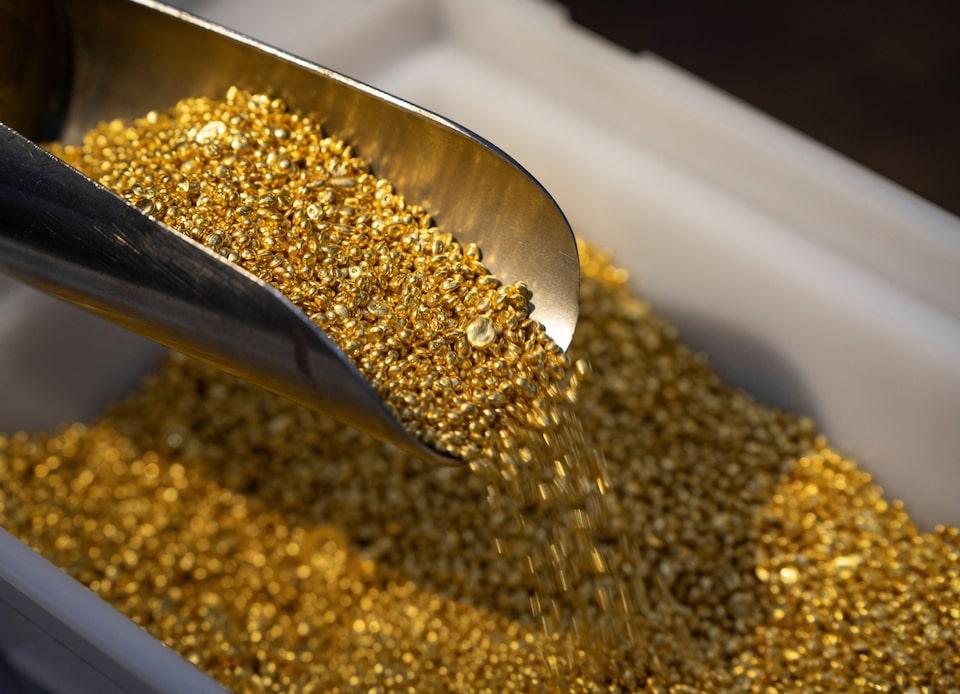
US consumer price index jumped 0.5% last month Bullion off a record high of $2,942.70 hit on Tuesday Trend remains positive for gold amid trade concerns - analyst Feb 12 (Reuters) - Gold prices steadied on Wednesday, buoyed by safe-haven demand amid fears of a global trade war spurred by U.S. President Donald Trump's new tariffs as the market digested hotter-than-expected U.S. inflation data. Spot gold was steady at $2,895.30 per ounce as of 2:39 p.m. ET (1939 GMT). U.S. gold futures settled 0.1% lower at $2,928.70. Prices dropped more than 1% after data showed the U.S. consumer price index jumped 0.5% last month, more than expected, reinforcing the Federal Reserve's message that it was in no rush to resume cutting interest rates amid growing uncertainty over the economy. "With today's CPI data coming in hotter-than-expected, that has put weight on the gold market. Obviously at this point, any expectation that the market would have had of any type of rate cut later this year has now been put down," said David Meger, director of metals trading at High Ridge Futures. Higher interest rates tend to weigh on bullion, increasing its opportunity cost as it yields no interest. While, "higher interest rate storyline provided a little bit of pressure on gold, the trend remains positive and trade concerns continue to drive the market," said Peter Grant, vice president and senior metals strategist at Zaner Metals. After raising steel and aluminium tariffs to 25% earlier this week, U.S. President Donald Trump's advisers are now finalising plans for reciprocal tariffs. Gold prices have marched into uncharted territory as bulls latch on to economic uncertainty created by U.S. import tariff plans, but behind the prize of hitting a record $3,000 per ounce, some flags of a bear case are also being planted. Despite a minor sell-off, even a drop of a few hundred dollars from near $3,000 isn't catastrophic, said Daniel Pavilonis, senior market strategist at RJO Futures, adding that with concerns about inflation, debt and geopolitics, people are still driven to invest in gold. Spot silver rose 1.1% to $32.17 per ounce and palladium fell 0.2% to $973.74, while platinum added 0.6% to $989.43. Sign up here. https://www.reuters.com/markets/commodities/golds-record-rally-pauses-ahead-us-inflation-data-2025-02-12/
2025-02-12 07:26
MOSCOW, Feb 12 (Reuters) - Russia's largest liquefied natural gas producer (LNG) Novatek (NVTK.MM) , opens new tab said on Wednesday its 2024 net profit increased by 6.5% to 493.5 billion roubles ($5.18 billion), as production rose. Novatek has been a focal point of the Western sanctions against Russia over the conflict in Ukraine. Its new project Arctic LNG 2 tentatively began production of LNG on the Gydan peninsula, which juts into the Kara Sea, in December 2023, but has struggled to sell the product. Western sanctions prompted foreign shareholders to freeze participation and Novatek to issue a force majeure to warn it would not be able to honour contractual obligations in relation to Arctic LNG 2. The company also said on Wednesday revenue rose to 1.55 trillion roubles in 2024 from 1.37 trillion roubles in 2023. Its debt jumped by 15.4 times to 141.6 billion roubles last year, while daily hydrocarbons production rose by almost 3% to 1.82 million barrels of oil equivalent. Normalized profit attributable to shareholders, excluding the effect of foreign exchange gains (losses), rose 4.6% to 553.4 billion roubles in 2024. ($1 = 95.2000 roubles) Sign up here. https://www.reuters.com/business/energy/russias-novatek-says-2024-net-profit-rises-52-billion-2025-02-12/

2025-02-12 07:12
LONDON, Feb 12 (Reuters) - Investment barriers have long been taboo among U.S. policymakers, for fear that a mere mention could spook the world's biggest financial market. But the idea of taxing or frustrating inward investment is now being openly discussed by investors as Donald Trump's sweeping economic agenda rewrites all the rules. The macroeconomic worldview that underlies much of the president's agenda is based on international trade accounts and zero-sum rivalry. If the U.S. is running large and chronic deficits in goods, so the thinking goes, then it must be because trading partners are systematically undervaluing their currencies against the dollar to uncut American business, suppressing their domestic consumption and, in the process, "stealing" U.S. manufacturing jobs. These countries then plow the savings created by these huge trade surpluses back into U.S. assets. And that, in turn, pushes the dollar's value higher, lowers the U.S. cost of capital and enables Americans to consume ever more overseas goods. Tariffs on imports, Trump's economic weapon of choice during his first month back in office, are one way to push back against this perceived global slight against American workers. FLIP-SIDE OF COIN But there's an obvious flip-side to this view. America's large and rising current account deficit, which captures U.S. net trade flows in goods and services as well as net investment income, has to be matched by an equal and opposite capital account surplus to balance the nation's books. These cumulative capital surpluses have been driving the dollar higher for years, juicing American's stock portfolios and reducing U.S. businesses' cost of capital. At last count, the net international investment position (NIIP) – or the net overseas holdings of U.S. assets less U.S. ownerships of non-U.S. securities – was a mind-boggling $23.6 trillion, roughly 80% of annual U.S. GDP. As Societe Generale's Kit Juckes wrote last week: "President Trump doesn't like the size of the US trade deficit, but would he be happy to see the savings that finance that deficit go home?" CHICKEN OR EGG? This national accounts approach suffers from the 'chicken or egg' syndrome, of course. It's not at all clear which comes first - U.S. 'exceptionalism' in market scale, growth, innovation and liquidity, which attracts foreign capital, or the flood of capital itself, which results in a chronically overvalued dollar that makes U.S. exports uncompetitive worldwide? But either way, the Trump team's current plan for dealing with the issue - taxing imports - is flawed for two key reasons. First, tariff threats have, thus far, mostly lifted the dollar even more, exaggerating the trade competitiveness problem. The second problem is that import tariffs do little to address the relentless demand for U.S. assets - the other side of this equation. To deal directly with that, some experts think you might need to "throw sand in wheels" of cross-border flows, a phrase coined by Yale economist and Nobel Laureate James Tobin almost 50 years ago when positing a "Tobin tax" on currency transactions to tame capital flows. TOBIN OR TOBIN? To be sure, Trump officials have not yet started publicly discussing capital controls - or taxes on foreign investment. But economists and investors sympathetic to the administration's policies are freely batting around the option. Currency hedge fund manager Stephen Jen at Eurizon SLJ wrote last week that taxing inward investment would be preferable to tariffs if the goal is to raise revenue, as tariffs would never bring in enough revenue to be a true alternative to income tax. Jen suggested that widening the scope of taxation to international capital flows - in effect a 'Tobin tax' on currency transactions - could widen the potential 'external' revenue base to 50 times that of the trade in goods. "There are, of course, obstacles and trade-offs in such taxes on capital flows, but in our view, they are no more daunting or negative than those associated with import tariffs." Conceivably, a fractional tax could be the sweet spot if the administration is focused primarily on raising revenue. Applying Tobin's idea of a 0.0005% tax on currency transactions in a global market that turns over $7.5 trillion every day could raise huge amounts of revenue and likely wouldn't reduce the transactions or flows. But is raising revenue really the goal of the Trump administration or is it altering supposedly "unfair" trading relationships? If it's the latter, then the capital controls would necessarily need to be disruptive to be effective. And they could be very disruptive indeed. Even the possibility that the U.S. would think about deterring overseas investment could be devastating in an already frothy market. Not only might the dollar fall sharply, but it could take the entire U.S. stock and bond market with it. So capital controls are an obvious option if Trump truly seeks to upend the global balance of trade - but they would also be the nuclear option. The opinions expressed here are those of the author, a columnist for Reuters Sign up here. https://www.reuters.com/markets/would-trump-break-capital-controls-taboo-mike-dolan-2025-02-12/