2025-02-12 05:47
Feb 12 (Reuters) - Shares of Australia's Evolution Mining (EVN.AX) , opens new tab jumped to a more than four-year high on Wednesday after the gold miner's half-year profit topped market estimates. The stock rose as much as 2.4% to A$6.370, hitting its highest level since November 9, 2020. The benchmark ASX200 (.AXJO) , opens new tab ended 0.6% higher. Evolution, majority-owned by AustralianSuper - the country's largest pension fund - said its net profit more than doubled year-on-year to A$385 million ($242.3 million) for the half-year ended December 31. Analysts at Citi said the miner's profit was 11% ahead of their expectations and 20% above Visible Alpha consensus estimates. "We have seen the benefits of the foundations laid during FY24...with record breaking financial results and significant cash flow generation achieved in the first half," said Lawrie Conway, Evolution's CEO. Morningstar analysts said higher gold and copper prices and increasing sales volumes by Evolution outweighed a modest rise in costs. Further, the Sydney-headquartered firm's earnings before interest, tax, depreciation & amortisation (EBITDA) doubled to A$985.3 million for the period from a year earlier, beating Jefferies' estimates of A$917 million. Evolution, which operates six gold mines across Australia and Canada, said it is on track to deliver its fiscal year 2025 production forecast of 710,000-780,000 ounces of gold and 70,000-80,000 tonnes of copper. "We continue to forecast gold sales volumes rising to around 840,000 ounces in fiscal 2029, driven by increased production at Red Lake and Mungari," Morningstar analysts said in a note. ($1 = 1.5888 Australian dollars) Sign up here. https://www.reuters.com/markets/commodities/australias-evolution-mining-hits-over-four-year-high-after-profit-beats-2025-02-12/

2025-02-12 05:36
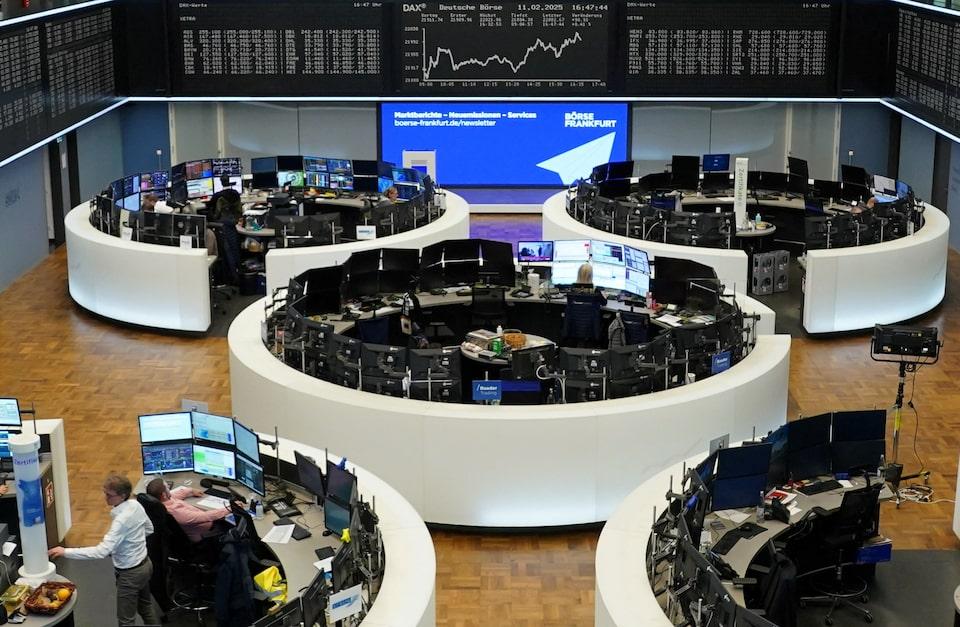
A look at the day ahead in European and global markets from Rae Wee Investors for a change started the day on Wednesday without headlines on new U.S. tariffs, allowing them to shift their attention to the U.S. inflation report later in the day and possible clues on the outlook for Federal Reserve policy. Expectations are for a slight slowdown in January's core inflation print to an annual 3.1% and for the headline number to hold steady at 2.9%, although analysts expect progress on reining in inflation will stall later in the year. Wednesday's will be the last inflation reading before any direct impact from U.S. President Donald Trump's tariff measures, which went into effect this month. Fed Chair Jerome Powell also begins his second day of testimony before Congress shortly after the January consumer price data is released, allowing for a real-time reaction from the Fed itself. But expectations are that he will reiterate the central bank's patient approach to future rate cuts, particularly as the extent of Trump's tariff salvos and their impact on the global economy remain largely unknown. Ahead of the day's developments, European stocks looked set for a positive open, extending their rally after the previous session's record high close. EUROSTOXX 50 futures were up 0.24%, while DAX futures rose 0.33%. Despite an uncertain global trade backdrop, the benchmark STOXX index has gained nearly 8% so far this year. Many analysts believe Trump's moves are simply negotiating tactics while investors are focused on corporate earnings. Pepperstone's head of research, Chris Weston, pointed to tailwinds from solid earnings at European companies and the view that European growth may be close to reaching a trough. Still, the mood remains fragile and things could turn ugly quickly, with worries over deepening trade tensions still looming large in investors' minds. Major U.S. trading partners have condemned Trump's latest tariffs on steel and aluminium imports, while European Commission President Ursula von der Leyen vowed "firm and proportionate countermeasures" in response to the move. Mexico's government and Canadian Prime Minister Justin Trudeau similarly expressed their discontent. In Japan, Industry Minister Yoji Muto said on Wednesday that the government had requested an exemption from the U.S. steel and aluminium tariffs. Gold's relentless rise to successive record highs hit a speed bump on Wednesday as the yellow metal pulled back, although the $3,000 an ounce level is still within sight. Fear over the inflationary impact of a global trade war isn't the only reason bullion is up 10% this year, but it's a big one. Central banks have been big buyers for months, along with investors seeking safety. Worries about U.S. tariffs on gold have also set off a scramble to get the stuff out of London vaults and across the Atlantic. Key developments that could influence markets on Wednesday: - U.S. inflation report (January) - Powell's testimony - Heineken NV earnings release - CVS Health earnings release Sign up here. https://www.reuters.com/markets/europe/global-markets-view-europe-2025-02-12/
2025-02-12 05:34
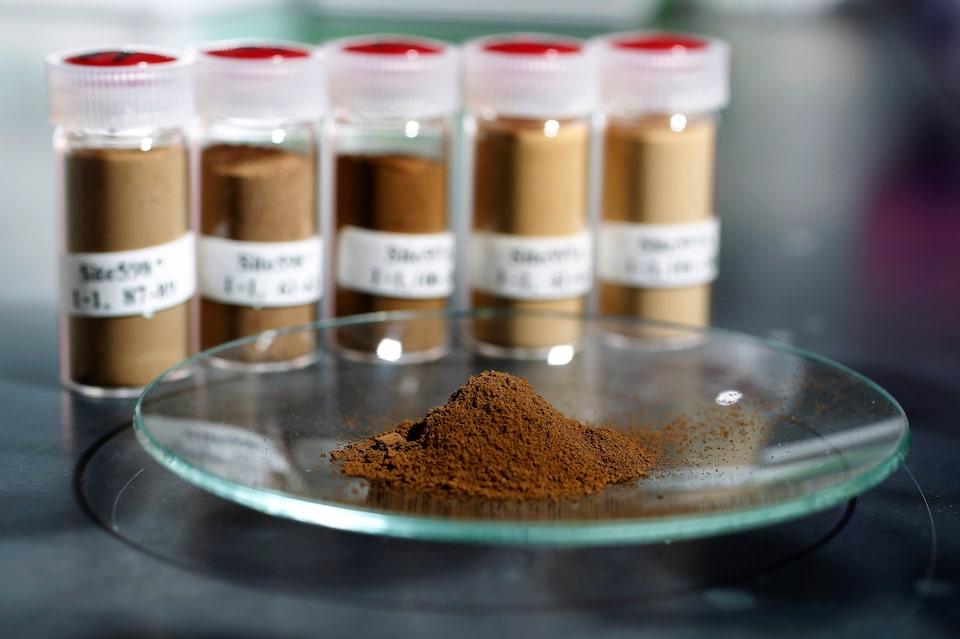
LAUNCESTON, Australia, Feb 12 (Reuters) - The term critical minerals has become so widespread that it has effectively lost its meaning, as it could be applied to virtually every metal being mined. What is needed is a new definition that differentiates between what is genuinely vital to a country, and what is just something of importance. It also was clear at last week's Mining Indaba 2025 conference in Cape Town that what is critical to one country isn't necessarily of much importance to another. So what is a better definition of a critical mineral? Simply put, it's a mineral that you don't have and are worried that you won't be able to get in the future. This means that a critical mineral is one that you need, but you don't have domestic reserves, your strong allies also don't have sufficient deposits and you don't control enough of the supply chain to ensure you get what you need when you need it. A mineral in this situation is distinct from what commodity analysts CRU refer to as a core mineral, which is one that you need but you are fairly confident that you will be able to source now and in the future. Why is this distinction important? From a Western perspective, a core mineral is one that you largely can leave to market forces to supply, relying on private mining companies to explore, develop and produce on commercial terms. However, a genuinely critical mineral is likely to require a different strategy to acquire, such as directly funding new mines, building strategic relationships with host countries and offering offtake agreements that aren't dependant on market prices. China has proven much more adept at targeting minerals it sees as critical, investing in mines and infrastructure in foreign countries and in processing plants at home, thereby locking in control of the supply chain. This has seen China, the world's biggest importer of commodities, come to dominate much of the global supply chain for minerals vital to the energy transition, such as lithium, cobalt, nickel and rare earths. It's no surprise that these four are on China's list of critical minerals, but given that China now dominates their production and supply, are they still critical to China? The answer is probably not, but only because Beijing was strategic, rather than solely commercial, in how it went about ensuring it could ensure supply. These four minerals are also on the critical list of both the United States and the European Union, as are copper, aluminium, antimony, graphite and tungsten. Critical minerals that are on China's list alone include iron ore, gold, potash and uranium. It could be argued that these are indeed genuine critical minerals for China as they are both vital to the economy and ones where Beijing has limited influence over the supply chains. Take iron ore for example. China relies on imports for more than 80% of its needs, and of its imports more than 90% come from Australia, Brazil and South Africa. While there are Chinese shareholdings in some of the companies mining iron ore in these countries, Beijing lacks control over the resources and has in effect been a price-taker for the past two decades. NEW TACTICS NEEDED Turning to the United States and Europe, it could be questioned as to why copper is on their critical mineral list, as there is little threat to supply, given much of the world's mined copper is controlled by Western companies in countries that are broadly aligned with the West. The same could be said for aluminium and lithium, and there are questions as to whether cobalt is actually that vital for the energy transition any longer. Nickel is an interesting case, as both the United States and the European Union classify it as critical, but they have done nothing to ensure supply. Rather, they have allowed Chinese-controlled mines and processing plants in Indonesia to dominate the market while those in countries like strong ally Australia are shuttered amid low prices. If nickel was truly critical, it would be logical to ensure the continued supply from allied nations, even if it cost more to do so. Likewise if Western countries are genuinely worried about securing minerals such as graphite, tungsten and rare earths, then they need to amend the ways they go about developing mines. Western mining companies find it difficult to secure long-term funding as they can't guarantee the price to be received in several years' time, when a mine can be built and become operational. This means they lose out to Chinese companies that don't care about the commercial outcomes as much. Western governments also have to become more proactive in engaging countries with resources, using both soft power such as aid programmes and direct benefits such as market access in order to cultivate stronger resource relationships. However, it appears that U.S. President Donald Trump is adopting the exact opposite tactic, abandoning aid and threatening widespread tariffs on allies and enemies alike. The European Union also appears to move at a glacial pace, producing policies and reports on critical minerals but seemingly doing very little to actually go out and develop supply chains it controls. The views expressed here are those of the author, a columnist for Reuters. Sign up here. https://www.reuters.com/markets/commodities/critical-minerals-is-meaningless-term-needs-new-definition-strategy-russell-2025-02-12/
2025-02-12 05:15
Feb 11 (Reuters) - Spirit Airlines (SAVEQ.PK) , opens new tab on Tuesday rejected Frontier Group's (ULCC.O) , opens new tab acquisition offer, worth about $2.16 billion, saying the bid from its fellow ultra-low-cost carrier was less beneficial to shareholders than its ongoing reorganization plan. Frontier's offer was a reiteration of its proposal from earlier this month in which it proposed Spirit's shareholders would get $400 million in debt and a 19% stake in Frontier. However, it dropped a requirement that Spirit complete a $350 million equity rights offering and use the proceeds to retire its debtor-in-possession facility. It also requires the bankruptcy court-approved $35 million termination fee be waived. However, Spirit, which filed for bankruptcy protection last year and expects to complete its restructuring in the first quarter, said the revised proposal did not address certain material risks and issues it had previously identified. Instead, the Florida-based airline offered a counterproposal in which Spirit shareholders would get $600 million in debt and $1.185 billion in equity -- which Frontier rejected. The two companies had been in merger talks since at least 2022, even before Spirit filed for bankruptcy due to prolonged periods of financial losses and a substantial debt load. However, JetBlue Airways (JBLU.O) , opens new tab jumped into the fray and prevailed. But that deal was scrapped after a U.S. judge blocked it on anti-competition concerns. Frontier revived its takeover efforts earlier this year, but Spirit had said the first offer was inferior to the one the two companies had discussed last year and sought an assurance that the deal would close and Frontier would not walk away. Sign up here. https://www.reuters.com/markets/deals/spirit-airlines-rejects-acquisition-offer-frontier-group-again-2025-02-12/

2025-02-12 04:39
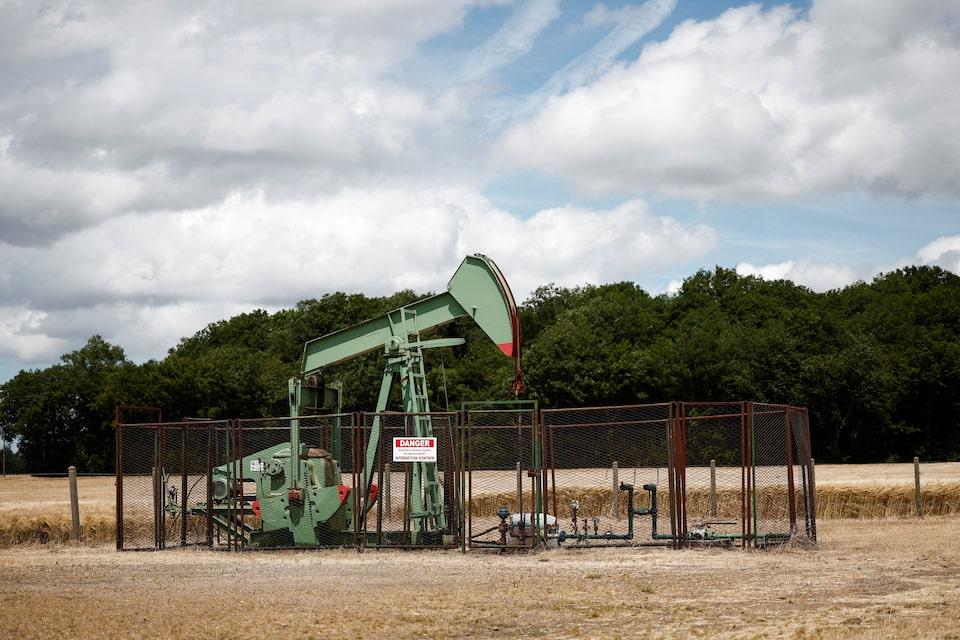
WTI futures fall more than $2 during session Trump calls Putin and Zelenskiy to discuss ending war in Ukraine Fed's Powell signals slower interest rate cuts US crude stocks rise by more than expected, EIA data shows OPEC keeps demand outlook projections unchanged HOUSTON, Feb 12 (Reuters) - Oil prices settled down more than 2% on Wednesday after U.S. President Donald Trump took the first big step toward diplomacy over the war in Ukraine he has promised to end, a war that has supported oil prices on concerns about global supplies. Brent futures settled down $1.82, or 2.36%, at $75.18 a barrel. U.S. West Texas Intermediate (WTI) crude settled down $1.95, or 2.66%, to $71.37. U.S. crude futures fell more than $2 at their session low. The declines follow three days of gains, during which Brent climbed 3.6% and WTI rose 3.7%. U.S. President Donald Trump discussed the war in Ukraine in phone calls with Russian President Vladimir Putin and Ukrainian President Volodymyr Zelenskiy. "Trump doing peace talks, I think that has taken some of the risk premium out of oil prices right now," said Phil Flynn, senior analyst with Price Futures Group. In a post on his social media platform, Trump said he and Putin had "agreed to have our respective teams start negotiations immediately, and we will begin by calling President Zelenskiy, of Ukraine, to inform him of the conversation, something which I will be doing right now." Zelenskiy's office said Trump and Zelenskiy had spoken by phone for about an hour. Investors also tried to gauge the Federal Reserve's next moves on cutting interest rates following comments on Tuesday by Fed Chair Jerome Powell and after data on Wednesday showed U.S. consumer prices increased more than expected in January. "The combination of higher inflation and the possibility of peace (in Ukraine) is causing a bit of a sell off in the market at the moment," said Price Futures Group's Flynn. Powell said the economy is in a good place and the Fed is not rushing to cut rates further, but is prepared to do so if inflation drops or the job market weakens. Consumer price data released by the U.S. Labor Department showed surprisingly strong U.S. inflation in January, stoking fears that a heating economy and looming tariffs could undercut hopes for rate cuts. Higher rates can slow economic activity and dampen demand for oil. "The inflation numbers came in hot, reducing the chances of the Fed cutting rates from September to December," said Price Futures Group's Flynn. U.S. crude oil stocks posted a larger-than-expected build last week, the Energy Information Administration (EIA) said on Wednesday. Gasoline inventories meanwhile posted a surprise draw while distillate stocks posted a surprise build. Elsewhere, Russia may be forced to throttle back its oil output in the coming months as U.S. sanctions hamper its access to tankers to sail to Asia and Ukrainian drone attacks hobble its refineries. The Organization of the Petroleum Exporting Countries (OPEC) said in a monthly report that global oil demand will rise by 1.45 million barrels per day (bpd) in 2025 and by 1.43 million bpd in 2026. Both forecasts were unchanged from last month. The EIA increased its estimate for U.S. crude production while leaving its demand forecast unchanged. It now expects U.S. crude oil output to average 13.59 million bpd in 2025, up from its previous estimate of 13.55 million bpd. The Trump administration named Kathleen Sgamma, a vocal oil and gas advocate for Western states, to head up the Interior Department's Bureau of Land Management, which manages the use of the country's nearly 250 million acres of public lands. Sign up here. https://www.reuters.com/business/energy/oil-prices-retreat-after-report-us-crude-stockpile-rise-2025-02-12/
2025-02-12 04:38
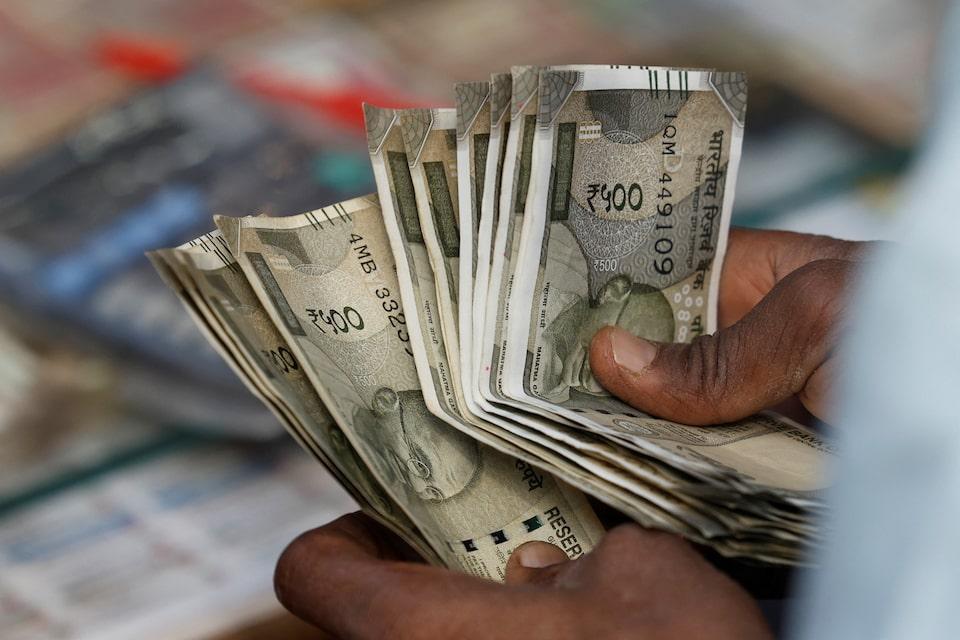
MUMBAI, Feb 12 (Reuters) - The Indian rupee rose on Wednesday, hitting a nearly two-week high and extending its two-day rally spurred by central bank intervention, which analysts reckon may have forced the liquidation of bearish positions on the currency. The rupee strengthened to 86.47 in early trading, its strongest level since late January, and was last quoted at 86.64, up around 0.2% on the day. The currency posted its largest single-day gain in nearly two years on Tuesday, boosted by significant intervention by the Reserve Bank of India. "The central bank's decisive hand is likely to stabilise the rupee in the near term, with the direction thereafter to be dictated by global dollar movements," DBS Bank said in a note. The rupee's sharp recovery after a series of record lows in recent weeks has driven its 1-month realized volatility to around 4.4%, the highest level since April 2023. DBS Bank forecasts the rupee will weaken to 88.8 by mid-2025, citing the dollar's safe-haven appeal due to U.S. President Trump's trade tariffs and the Federal Reserve's delay in rate cuts until the second half of the year. Federal Reserve Chair Jerome Powell said on Tuesday that the U.S. central bank is in no hurry to make any further interest rate cuts. The U.S. rate futures market on Wednesday has priced in about 35 basis points (bps) of easing this year, or one rate cut of 25 bps, with the first rate reduction now seen at the July or September. Market attention will now shift to U.S. consumer inflation data, due later in the day, with economists polled by Reuters forecasting that the data will show core consumer prices rose by 0.3% month-on-month in January, up from 0.2% in the previous month. Sign up here. https://www.reuters.com/markets/currencies/rupee-extends-intervention-spurred-gains-hits-near-two-week-high-2025-02-12/