2026-02-09 20:19
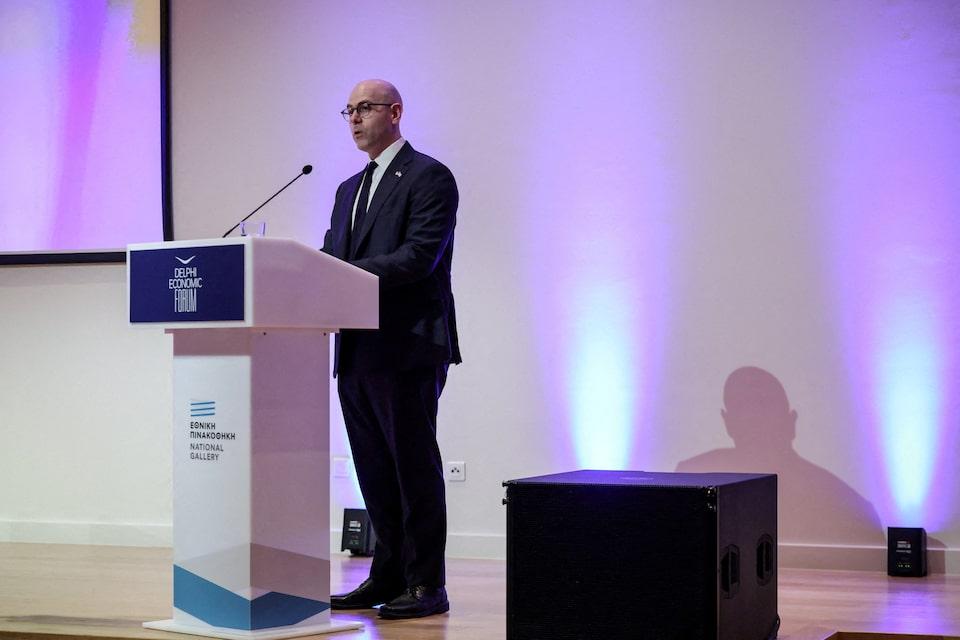
Feb 9 (Reuters) - Federal Reserve Governor Stephen Miran said Monday a weaker dollar isn’t much of an issue for the central bank right now. The kind of decline seen in the dollar “doesn’t matter that much for consumer inflation” and only would if it were very dramatic, Miran said at an appearance at the Boston University Questrom School of Business. When it comes to the dollar decline, “I don't view it as something that sort of had material consequences for monetary policy thus far,” he added. Sign up here. https://www.reuters.com/sustainability/boards-policy-regulation/feds-miran-says-weaker-dollar-not-affecting-monetary-policy-choices-2026-02-09/
2026-02-09 20:16
CHICAGO, Feb 9 (Reuters) - The U.S. Department of Agriculture will open a facility in Texas by the end of next year that produces sterile flies intended to fight the flesh-eating parasite New World screwworm, Secretary Brooke Rollins said on Monday. Rollins gave an update on the $750 million plant after announcing last August that USDA planned to build it in response to northward spread of the pest in Mexico toward the U.S. border. Sign up here. Screwworms are parasitic flies whose females lay eggs in wounds on warm-blooded animals, often livestock. Once the eggs hatch, hundreds of screwworm larvae use their sharp mouths to burrow through living flesh, eventually killing their host if left untreated. USDA produces 100 million sterile flies per week at a facility in Panama and disperses them in Mexico to prevent wild screwworm flies from reproducing. The agency opened a dispersal facility for sterile flies in southern Texas on Monday, but experts have said USDA urgently needs to produce many more. https://www.reuters.com/business/healthcare-pharmaceuticals/usda-says-fly-production-plant-open-by-end-2027-fight-screwworm-2026-02-09/

2026-02-09 20:08
SAO PAULO, Feb 9 (Reuters) - Brazil's Raizen (RAIZ4.SA) , opens new tab has appointed law firms Pinheiro Neto and Cleary Gottlieb as legal advisers and Rothschild & Co as financial adviser to strengthen its liquidity, the company said in a securities filing on Monday. The beleaguered sugar and ethanol producer also said that it has begun a preliminary and exploratory assessment of economic and financial alternatives along with its advisers, as the firm tries to turn its fortunes around. Sign up here. Raizen, a joint venture between Brazilian conglomerate Cosan (CSAN3.SA) , opens new tab and London-listed oil company Shell (SHEL.L) , opens new tab, has posted a series of heavy quarterly net losses and racked up high levels of debt. Last November the company reported a net loss of over 2.3 billion reais ($443.2 million) for the second quarter of the 2025-2026 sugar crop, while net debt for the six months ended September 30 hit 53.4 billion reais. Raizen said earlier in the day that it had appointed advisers with the aim of strengthening its liquidity position and optimizing its capital structure, without providing any names. Reuters reported later, citing three sources familiar with the matter, that Raizen had hired Pinheiro Neto and Cleary Gottlieb. "Recent results show that the capital structure is not sustainable," one of the people said, though adding that the company still has some time to try and turn things around. Rating agency S&P Global cut its ratings for Raizen to 'CCC+' following the news that the company had appointed advisers. "The engagement of financial advisors indicates the high likelihood of debt restructuring, following the weakening signals of the previously expected capitalization and asset sales," S&P said in a statement accompanying its decision. Fitch also cut Raizen's ratings on Monday, first to 'B' and later in the day to 'CCC'. The company has previously announced a number of divestments as it seeks to bring its debt under control, while owners Cosan and Shell have evaluated options for injecting more capital into the troubled sugar maker, including the possibility of bringing in new investors. Raizen is due to report its financial results for the third quarter of the 2025-2026 sugar crop on February 12. ($1 = 5.1897 Brazilian reais) https://www.reuters.com/business/energy/brazils-raizen-appoints-pinheiro-neto-cleary-gottlieb-bid-fix-its-fortunes-2026-02-09/
2026-02-09 19:32
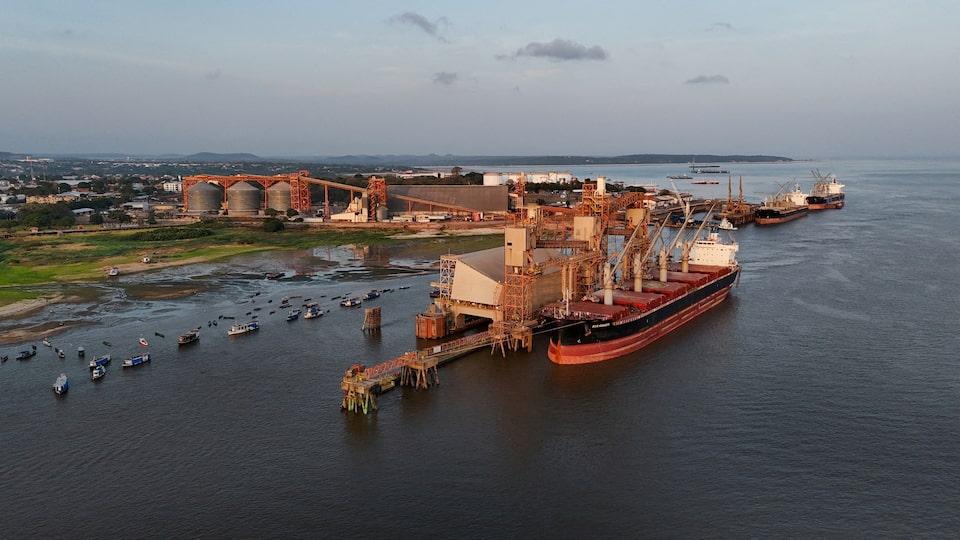
SAO PAULO, Feb 9 (Reuters) - A branch of Brazil's federal public prosecutors' office has denounced the potential use of force to remove Indigenous protesters from the vicinities of a Cargill port terminal in the Amazon, according to a statement late last week. Indigenous groups have been protesting at the company's Santarem terminal gate since January 22 against a project to dredge the Tapajos river, where traders rely on barges to move grains for export via northern ports. Sign up here. The prosecutors called for the immediate revocation of an order issued by the State Commission for Public Security in Ports, authorizing the deployment of police troops to the location. The prosecutors in Para state said a police presence could injure the Indigenous people, adding the use of force would contradict a court decision stemming from a lawsuit filed by Cargill. In that suit, said prosecutors, a federal court rejected the company's request to clear the area and ordered peaceful talks. "Any intervention by police force requires a prior court order," said the prosecutors' statement, quoting the ruling. Cargill did not have an immediate comment. In a statement on Friday, the federal government said dredging is routine to ensure river traffic during low water level periods. Still, the government suspended procurement of companies to carry out the work on the Tapajos pending talks with the Indigenous communities and a formal consultation about any work on the river. Last week, Cargill confirmed protesters were blocking truck traffic at the terminal gate, without elaborating. Cargill shipped more than 5.5 million tons of soybeans and corn through Santarem last year, according to port sector data. The exported volume, originating mainly from the Center West, represented more than 70% of the total grain volume handled at Santarem. https://www.reuters.com/sustainability/society-equity/protesters-cargills-brazil-terminal-should-not-be-forced-out-say-prosecutors-2026-02-09/
2026-02-09 19:05
BAGHDAD, Feb 9 (Reuters) - A fire at a fuel production unit caused a huge blaze at Iraq's Baiji refinery on Monday, killing a worker and injuring 13 others, according to police, medical sources and the country's oil ministry. Engineers at the Baiji refinery complex, some 180 km (110 miles) north of Baghdad, said they had seen at least one dead body and firefighters managed to control the blaze. Sign up here. The fire has not had any impact on production operations, engineers at the refinery said. The oil ministry said in a later statement that the fire was contained and was caused by some daily routine maintenance. https://www.reuters.com/world/middle-east/fire-iraqs-baiji-refinery-kills-one-injures-six-2026-02-09/

2026-02-09 18:19
Feb 9 (Reuters) - A U.S. judge in New York on Monday temporarily put her ruling on hold forcing the Trump administration to lift a four-month-old freeze on federal funding for the $16 billion Hudson River Tunnel Project connecting New York City and New Jersey. U.S. District Judge Jeannette Vargas on Friday had ordered the funding be restored. The Justice Department had warned it would be required by 1 p.m. Monday (1800 GMT) to disburse up to $200 million in funds for the Gateway Tunnel project unless her order halted. Sign up here. Vargas said she would put her order on hold until Thursday at 5 p.m. to give the Second Circuit U.S. Court of Appeals time to consider the government's emergency request. But she denied the government's request for an extended halt, saying New York and New Jersey have demonstrated the shutdown of operations prompted by the funding freeze "will have an immediate and severe impact on the region’s economic interests." The Justice Department argued it would not have an "obvious mechanism for recovering that money later if the government prevails on appeal." USDOT, the White House and Gateway did not immediately comment. The Gateway project will build a new commuter rail tunnel between Manhattan and New Jersey and repair a century-old tunnel used by more than 200,000 travelers and 425 trains daily. The existing Hudson Tunnel was heavily damaged by Hurricane Sandy in 2012 and needs frequent emergency repairs that disrupt travel on the nation’s most heavily used passenger rail line. The Gateway project halted construction Friday and has said it will resume when funding is restored. The states said the Trump administration had frozen the funds in a “brazen act of political retribution” against their Democratic leaders. The Trump administration has withheld $205 million in reimbursements for the project since October 1, Gateway said. Trump has reportedly demanded that Washington Dulles Airport and New York's Penn Station be renamed for him in exchange for unfreezing the funds, drawing strong criticism from Democrats. The project was allocated about $15 billion in federal support under former President Joe Biden. Nearly $2 billion has been spent on the project so far. https://www.reuters.com/legal/government/judge-temporarily-halts-order-requiring-trump-unfreeze-tunnel-funding-2026-02-09/