2026-01-07 16:55
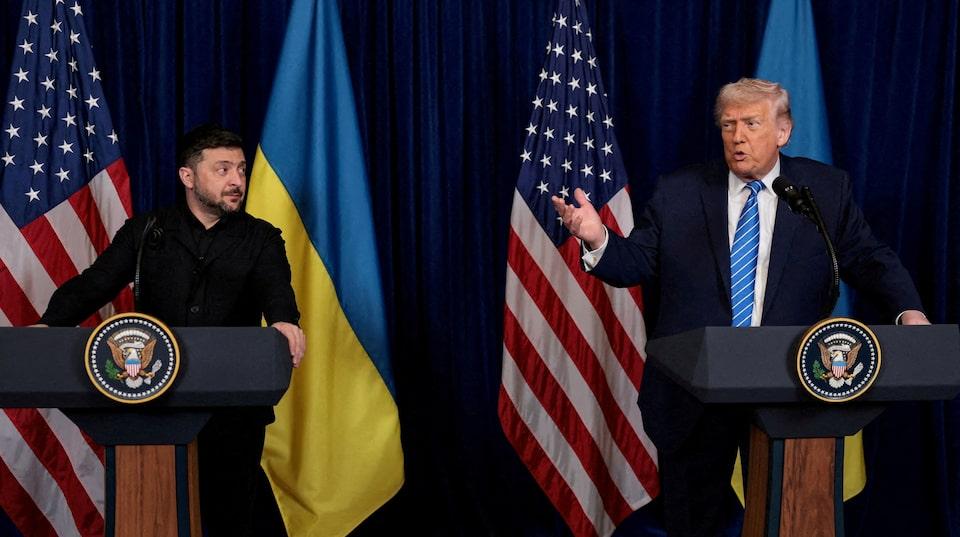
US-Ukraine fund has $173 mln on hand for investments DFC officials eye first investments in coming months Ukraine aims to announce three investments this year WASHINGTON, Jan 7 (Reuters) - The U.S. International Development Finance Corporation (DFC) on Wednesday launched an online portal , opens new tab for applicants to submit projects to a new U.S.-Ukraine reconstruction fund, saying it expected to announce first investments in coming months. The U.S.-Ukraine Reconstruction Investment Fund (URIF), established in record time as part of the minerals deal the two countries signed in April, began operations in December. Focused on investments in critical minerals and other strategic sectors, it is expected to reach $200 million by the end of the year, a senior U.S. official said, and Ukrainian officials want to announce three initial projects this year. Sign up here. "We look forward to reviewing project proposals and making our first investments in the months ahead,” Conor Coleman, DFC head of investments and a member of the fund's board, said in a statement. DFC CEO Ben Black said the launch of the portal underscored U.S. President Donald Trump's commitment to securing a lasting peace in Ukraine, paving the way for reviews of projects and investments that advance the shared national interests of the United States and Ukraine. DFC said the fund would consider proposals in several sectors, including upstream and midstream critical minerals projects, power generation, transmission and hydrocarbon extraction, as well as transport and logistics, information and communications technology, and emerging technologies. It said the fund expected to prioritize equity and equity-like investments in its early years of operations. MANY INTERESTED PARTIES Officials have already been in talks with many interested investors and are ready to carry out due diligence on some potential projects, the senior U.S. official told Reuters. Kyiv signed the minerals deal after months of pressure from the Trump administration, giving the U.S. preferential access to new Ukrainian minerals projects in exchange for investment, in hopes of securing Trump's continued support. The deal has dramatically improved the U.S. dialogue with Kyiv and energized the U.S.-Ukraine relationship, the official said. But they cautioned that investing in the country, which will mark the fourth anniversary of Russia's invasion on February 24, will be complex and challenging work, and the U.S. will insist that any projects satisfy the interests of both governments and generate commercial returns. The fund already received $23 million in revenues from hydrocarbon auctions, adding to its initial seed money of $150 million, and was "ballparking around $200 million" by the end of the year, the official said. It is structured to grow over time and promote co-investment from other countries and institutions, including the World Bank and the European Bank for Reconstruction and Development, among others. The fund's investments differ from private equity projects in that they will focus on strategic sectors and start immediately - not after a ceasefire is in place. It will also work to mobilize private capital alongside its investments, officials said. A big advantage, the official said, is they will "carry both a U.S. and Ukrainian flag," which should offer some protection and help promote additional private sector participation in aiding Ukraine’s reconstruction. https://www.reuters.com/business/us-ukraine-fund-launches-portal-potential-investment-projects-2026-01-07/
2026-01-07 15:15
TORONTO, Jan 7 (Reuters) - Canadian economic activity expanded in December as employment increased at the fastest pace in 10 months, Ivey Purchasing Managers Index (PMI) data showed on Wednesday. The seasonally adjusted index rose to 51.9 last month from 48.4 in November. Sign up here. The Ivey PMI measures the month to month variation in economic activity as indicated by a panel of purchasing managers from across Canada. A reading above 50 indicates an increase in activity. The gauge of employment increased to an adjusted 53.0 from 48.0 in November, posting its highest level since February, while the prices index was at 63.2, down from 66.1. The unadjusted PMI dipped to 43.3 from 44.5. https://www.reuters.com/world/americas/canadas-ivey-pmi-shows-activity-expanding-in-december-2026-01-07/

2026-01-07 13:15
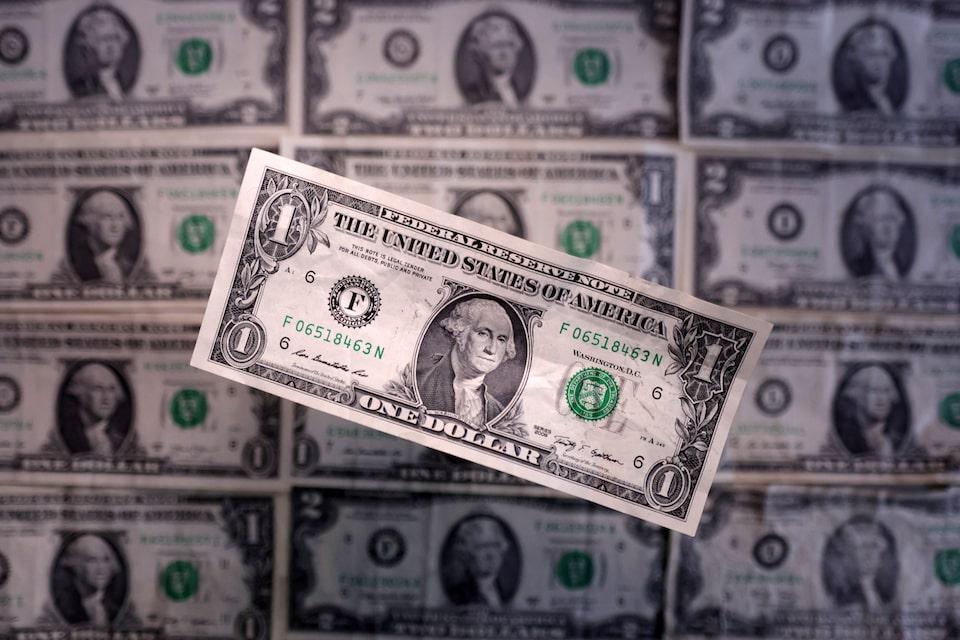
BENGALURU, Jan 7 (Reuters) - The outlook for the U.S. dollar among currency strategists polled by Reuters remains bearish at the start of 2026, with a modest decline expected by year-end based on persistent concerns around Federal Reserve independence and the possibility of lower interest rates. The greenback fell almost 10% against a basket of major currencies (.DXY) , opens new tab last year, its weakest performance since 2017. Investors weighed risks from the highest U.S. tariffs since the Great Depression, job market softness and several trillion dollars of additional U.S. borrowing planned over coming years. Sign up here. Markets have also focused on questions around the central bank’s autonomy and who will succeed Fed Chair Jerome Powell, whose term ends in May, with an announcement expected imminently. Over the past month there has been little to change the prevailing view among foreign exchange forecasters in a January 5-7 Reuters poll that the dollar’s downtrend will persist. Survey medians, broadly unchanged from December, showed the euro rising about 1% per quarter, reaching $1.19 by mid-year and $1.20 by year-end. Only 17%, 12 of the 71 participants predicted it would weaken from current levels by end-2026. "The White House wants to take control of monetary policy and set the direction of rates - and that is toward more easing," said Vincent Reinhart, chief economist at BNY Investments and a former Fed staffer. He added that the dollar would move sideways in the near-term with little happening to monetary policy until the new chair is chosen. "Over the medium to longer term, there are lots of reasons the dollar depreciates. The Fed eases more than other central banks, the U.S. is seen as a less attractive safe haven and the growth differential of the U.S. with the rest of the major trading partners narrows." The Fed has already cut the federal funds rate three times since September to a range of 3.50%-3.75%, based in large part on increased worries about a weakening job market. The U.S. central bank's own projections show one more reduction this year. Still, policymakers have signaled a pause to assess incoming data before easing further, underscoring divisions between officials wary of stoking inflation which is still above the 2% target and those worried about further job losses without lower rates. Paul Mackel, global head of FX research at HSBC, said the impact from the Trump administration's fiscal expansion "is already starting to kick in" and the effects of last year's tariffs, which added huge costs to U.S. companies importing materials and goods from abroad, are "still materializing." "I don't think we can confidently say the inflation story is done and dusted and that it's only going to soften from here," Mackel said. "But the Fed effectively still has an easing bias...so we're in a soft dollar world that's likely to persist in the months to come." Currency traders, who have maintained a net-short dollar position for much of the past year, appear set to continue their stance in the near term. Nearly 90% of strategists polled, 35 of 40, said net-short dollar positions would remain the same or increase by end-January. Interest rate futures are pricing in at least two Fed rate cuts this year, with scope for further easing if policy decisions come under greater political influence. That risk, several analysts said, was closely tied to developments around the central bank’s leadership, including the legality of President Donald Trump's attempts to remove Fed governor Lisa Cook. "If Trump is successful in removing Cook, there's going to be more outflows from U.S. assets, particularly fixed income and AI," said Erik Nelson, head of G10 FX strategy at Wells Fargo, the most accurate forecaster for major currencies in Reuters polls last year according to LSEG StarMine calculations. "We'd also potentially see the risk of more (of the board) being removed and implicit pressure on the Fed increasing as a result," he added, noting that would probably bring the dollar weakness trend forward and make it a more acute move. (Other stories from the January foreign exchange poll) https://www.reuters.com/business/soft-us-dollar-outlook-set-linger-along-with-fed-independence-worries-2026-01-07/
2026-01-07 13:06
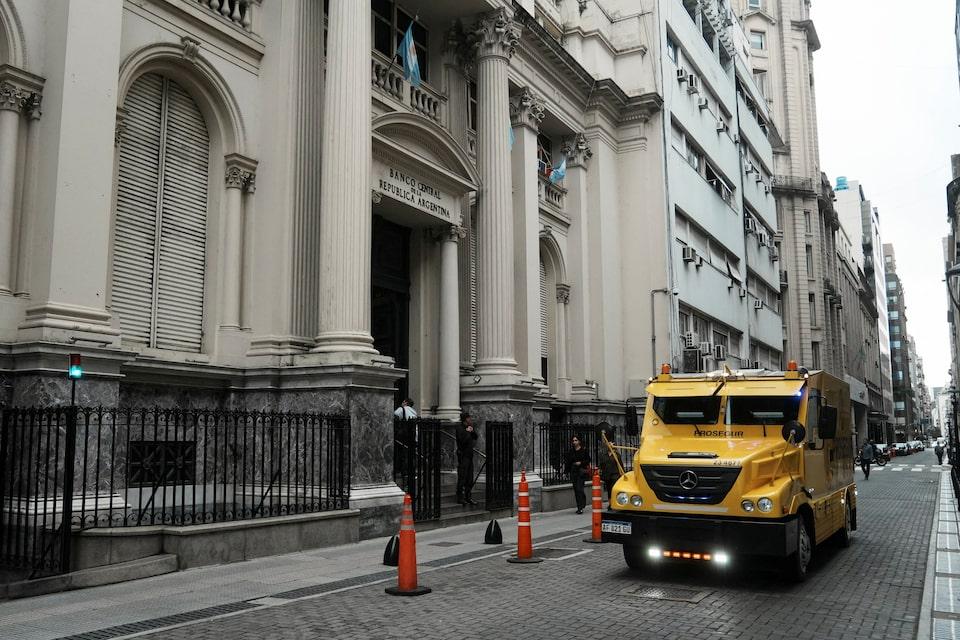
BUENOS AIRES, Jan 7 (Reuters) - Argentina's central bank announced on Wednesday a $3 billion repurchase agreement (REPO) with six international banks, as part of broader efforts to bolster its foreign currency reserves ahead of a key debt repayment deadline. The agreement was broadly expected by analysts as the country increased efforts in recent days to shore up reserves ahead of the first bondholder payment of the year, roughly $4.3 billion in principal and interest, due January 9. Sign up here. The transaction was carried out using part of the central bank's holdings of 2035 and 2038 BONARES bonds, the bank said in a statement. Demand for the deal reached $4.4 billion, the bank said, but it decided not to increase the amount despite "the strong interest shown by leading international banks". The transaction "reinforces the process of normalizing access to credit markets, in line with a decline in country risk amid consistent and sustainable macroeconomic stabilization," the central bank added. Argentina, a serial defaulter that last missed payments in 2020, is under pressure from markets and the International Monetary Fund (IMF) to strengthen reserves as a condition for regaining access to international capital markets. https://www.reuters.com/world/americas/argentinas-central-bank-inks-3-billion-repo-deal-ahead-key-debt-payment-2026-01-07/
2026-01-07 13:00
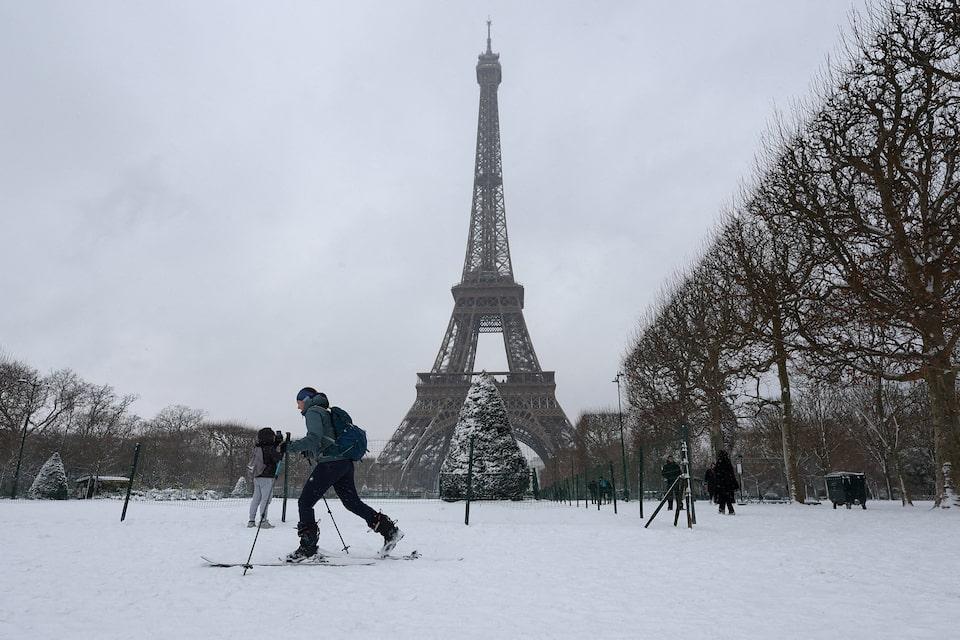
Paris, Brussels, Amsterdam airports cancel hundreds of flights Trucks and school buses kept off roads due to icy conditions Parisians grab sledges and skis to enjoy rare snow in the city PARIS/BRUSSELS, Jan 7 (Reuters) - Snow and ice brought misery to travellers in northwest Europe on Wednesday but delight to others who set out to explore a snow-blanketed Paris on sledges and skis. Storm Goretti blew in from the Atlantic coast and hit Paris as daylight broke, dumping heavy snowfall on the city that led to further flight cancellations, traffic snarls and transport disruption. Sign up here. The city's bus services were suspended as shops geared up for the first day of the New Year sales. But tourists and residents enjoyed the rare sight of snow-covered Paris, with a few taking the opportunity to ski down the slopes of Montmartre and along the Champs de Mars gardens below the Eiffel Tower. "It's exceptional, it's incredible. It's magnificent and we're enjoying it. We also came across a lot of tourists and they look so happy," said Pierre, a Parisian out admiring the snowy scenery. People grabbed sledges or even just plastic bags to slide down any slopes they could find. France's Weather Office warned of snowfall across the northern half of the country on Wednesday. AIRLINE KLM WARNS DE-ICING FLUID RUNNING OUT Dutch airline KLM (AIRF.PA) , opens new tab cancelled 600 flights scheduled for Wednesday at Amsterdam's Schiphol airport, in the sixth consecutive day of disruption at one of Europe's busiest hubs. KLM has warned it is running out of de-icing fluid for its jets and delays to supplies had made it difficult to replenish stock. No shortages were reported in France. France's civil aviation authority asked airlines to cut 40% of flights at Paris' main international airport Charles de Gaulle and 25% of flights at the smaller Orly. Brussels' international airport also faced some cancellations and delays, while train operator Eurostar flagged major delays and cancellations. PEOPLE TOLD TO WORK FROM HOME Dutch authorities urged people to work from home and French officials banned trucks and school buses from the roads in a third of all administrative departments, most in the northern half of the country. Carrefour (CARR.PA) , opens new tab CEO Alexandre Bompard said the truck ban would bring some disruption to supermarket supply chains, in particular for fresh produce. Further east, in Germany, temperatures were below minus 10 degrees Celsius (14 degrees Fahrenheit) again on Wednesday. Traffic disruption has been limited though. Spain too is facing snow and unusual cold, prompting the suspension of one commuter rail line near Madrid and disrupting more than 40 roads across the country. PASSENGERS TRAPPED ON TRAIN IN CROATIA Heavy snow and rain overnight caused travel disruptions across the Western Balkans. Passengers were trapped in a train for more than 12 hours in the town of Knin in northwestern Croatia after trees fell onto the tracks. Some towns in eastern Bosnia and western Serbia declared emergency situations after power and water cuts. In Poland, schools in many regions were closed due to snow, with some switching to remote learning. In Hungary, heavy snowfall hit highways and delayed trains and buses on Wednesday morning. https://www.reuters.com/business/environment/western-europe-braces-another-wave-snow-ice-2026-01-07/
2026-01-07 12:45
WASHINGTON, Jan 7 (Reuters) - The United States is attempting to seize a Venezuela-linked oil tanker after a more than two-week-long pursuit across the Atlantic, two U.S. officials told Reuters on Wednesday. The seizure, which could stoke tensions with Russia, came after the tanker, originally known as the Bella-1, slipped through a U.S. maritime "blockade" of sanctioned tankers and rebuffed U.S. Coast Guard efforts to board it. Sign up here. The officials, who were speaking on condition of anonymity, said the operation is being carried out by the Coast Guard and U.S. military. They added that Russian military vessels were in the general vicinity when the operation took place, including a Russian submarine. The tanker, now known as the Marinera and registered under a Russian flag, is the latest tanker targeted by the U.S. Coast Guard since the start of U.S. President Donald Trump's pressure campaign against Venezuela. Separately, the U.S. Coast Guard has also intercepted another Venezuela-linked tanker in Latin American waters, U.S. officials told Reuters, as the U.S. continues enforcing a maritime "blockade" of sanctioned vessels from Venezuela. https://www.reuters.com/business/energy/us-seizing-venezuela-linked-oil-tanker-after-weeks-long-pursuit-2026-01-07/