2025-02-12 01:28
Feb 11 (Reuters) - The U.S. Food and Drug Administration said on Tuesday it has approved SpringWorks Therapeutics' (SWTX.O) , opens new tab drug to treat a type of rare genetic disorder, which causes tumors to grow in the tissue that covers nerves throughout the body. Shares of the company were up 4% in extended trading. The oral drug, branded as Gomekli, was approved for adults and children 2 years of age and older suffering from the condition known as neurofibromatosis type 1 (NF1), with symptomatic plexiform neurofibromas in which the tumor cannot be surgically removed. In 2020, the health regulator had approved AstraZeneca's (AZN.L) , opens new tab Koselugo for children with NF1-PN, making it the first specific drug to get the green light. SpringWorks estimates that around 100,000 patients are living with NF1 in the U.S., of which 30%-50% are likely to develop plexiform neurofibromas. Patients with NF1 have an eight to 15-year mean reduction in their life expectancy compared to the general population. SpringWorks' Gomekli belongs to a class of drugs known as MEK inhibitor and is designed to inhibit protein types MEK1 and MEK2. "In addition to a capsule, we offer a tablet that dissolves in water, which is really important for patients unable to swallow, and those who couldn't previously receive therapy," CEO Saqib Islam had told Reuters ahead of the FDA decision. The approval was based on a mid-stage trial, where the drug showed 20% or more reduction in tumor volume in 52% of pediatric and 41% of adult patients. Gomekli is expected to be available in the U.S. within two weeks, the company said. Earlier this week, Germany's Merck KGaA (MRCG.DE) , opens new tab said it was in advanced talks to acquire SpringWorks. Gomekli is SpringWorks' second drug to receive the FDA's nod after Ogsiveo, which is approved for desmoid tumors — abnormal growth that occurs in connective tissues and is associated with a high rate of recurrence. Sign up here. https://www.reuters.com/business/healthcare-pharmaceuticals/us-fda-approves-springworks-genetic-disorder-drug-2025-02-11/

2025-02-12 00:47
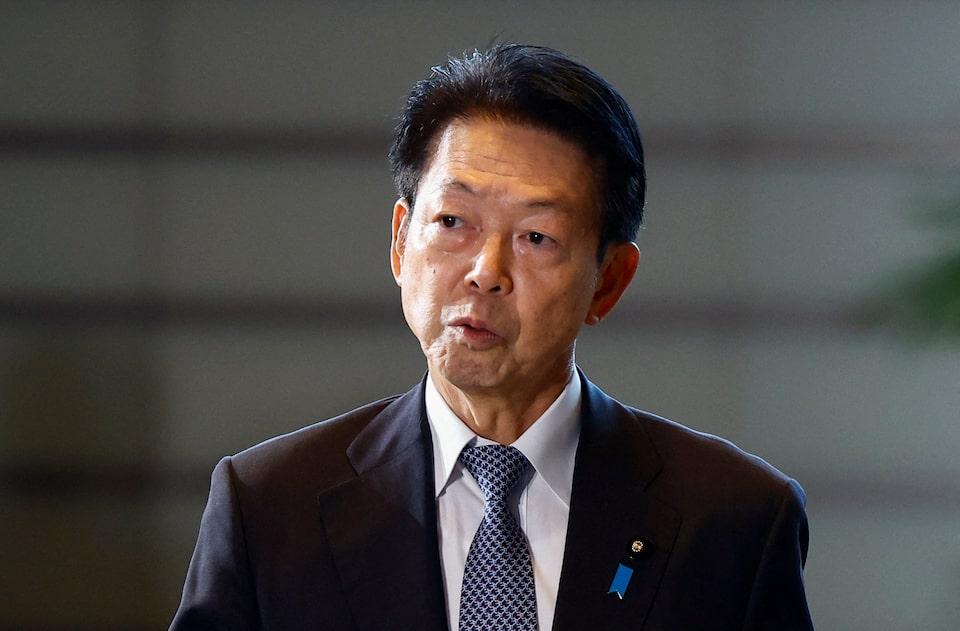
TOKYO, Feb 12 (Reuters) - Japan industry minister Yoji Muto said on Wednesday the nation has requested that the United States exempt Japan from steel and aluminium tariffs. U.S. President Donald Trump substantially raised tariffs on steel and aluminium imports on Monday to a flat 25% "without exceptions or exemptions", saying they would aid struggling industries in the U.S., but which also risk sparking a multi-front trade war. Trump later said he would give "great consideration" to Australia's request for an exemption to the steel tariffs due to that country's trade deficit with the U.S. Sign up here. https://www.reuters.com/markets/commodities/japan-requested-us-exclude-japan-steel-aluminium-tariffs-2025-02-12/
2025-02-12 00:31
HY underlying NPAT down 6.5%, but beats consensus Interim dividend of 23 Australian cents per share Narrows FY25 earnings outlook Feb 12 (Reuters) - Australia's top power producer AGL Energy (AGL.AX) , opens new tab posted a drop in half-year profit and narrowed its earnings forecast on Wednesday as cost-of-living concerns forced it to absorb higher electricity costs rather than pass them onto consumers. Underlying profit fell 6.5% to A$373 million ($234.8 million) in the six months to December 31, 2024 but was still ahead of analyst expectations of A$307 million. Statutory profit also dropped to A$97 million from A$576 million and earnings from consumers were down by one-quarter to A$102 million. Chief executive Damien Nicks said earnings were "strong" and in line with expectations, narrowing guidance for full-year profit to between A$580 million and A$710 million, with a higher midpoint from A$530 million-A$730 million previously. AGL is one of Australia’s main electricity retailers alongside Origin Energy and Energy Australia. Known as the “Big 3”, they have faced accusations of exploiting their market power amid a cost-of-living crisis, with an inquiry by the Australian Council of Trade Unions finding last year they overcharged households. AGL said the wholesale cost of electricity was higher across all Australian states, but it held back on passing on increases due to affordability concerns, causing margins from supplying energy to consumers to fall 16.7% to A$270 million. “Assisting our customers with the ongoing cost-of-living pressures remains a key priority,” Nicks said. AGL also faced margin compression as customers opted for lower-priced gas and electricity plans, the company said. But its telecommunications business posted strong growth, with gross margins jumping 53.8% to A$20 million due to increased broadband and mobile customer numbers. AGL said total operating costs were up 3.2%, driven by inflationary pressures and higher costs to keep its thermal power plants. Increased investment in renewables, including the Firm Power and Terrain Solar business, also ate into profits. Capital expenditure increased two-fold to A$667 million, with AGL ramping up investment in battery storage projects, including the ongoing construction of the Liddell Battery project. The Sydney-headquartered firm, which counts tech billionaire Mike Cannon-Brookes as its top shareholder, declared an interim dividend of 23 Australian cents per share, below the 26 Australian cents declared last year. Shares of AGL were up 2% in early trading off the back of the consensus-beating result, as the ASX swung between red and green territory. ($1 = 1.5896 Australian dollars) Sign up here. https://www.reuters.com/business/energy/australias-agl-posts-lower-profit-cost-of-living-concerns-curb-price-rises-2025-02-12/

2025-02-12 00:03
WASHINGTON, Feb 11 (Reuters) - U.S. President Donald Trump's planned 25% tariffs on all steel and aluminum imports would be added onto other levies on Canadian goods, resulting in a total 50% tariff, a White House official said on Tuesday. Canada has not been told about the stacking of the tariffs, a government source told Reuters, adding that it "sounds plausible." Earlier this month, Trump imposed 25% tariffs on most Canadian imports. However, those the tariffs were paused for 30 days last week. On Monday, Trumpsigned proclamations raising the U.S. tariff rate on aluminum to 25% from his previous 10% rate and eliminating country exceptions and quota deals as well as hundreds of thousands of product-specific tariff exclusions for both metals. The measure, which would take effect on March 12, was met with opposition by Canada with Canadian Prime Minister Justin Trudeau calling it "unacceptable". The Canadian Press, citing a senior government official, reported that Trudeau spoke with U.S. Vice President JD Vance about the impact the steel tariffs would have in Ohio, which Vance previous represented in the U.S. Senate. Sign up here. https://www.reuters.com/markets/commodities/us-25-steel-tariffs-would-stack-other-levies-canada-white-house-official-says-2025-02-11/
2025-02-12 00:00
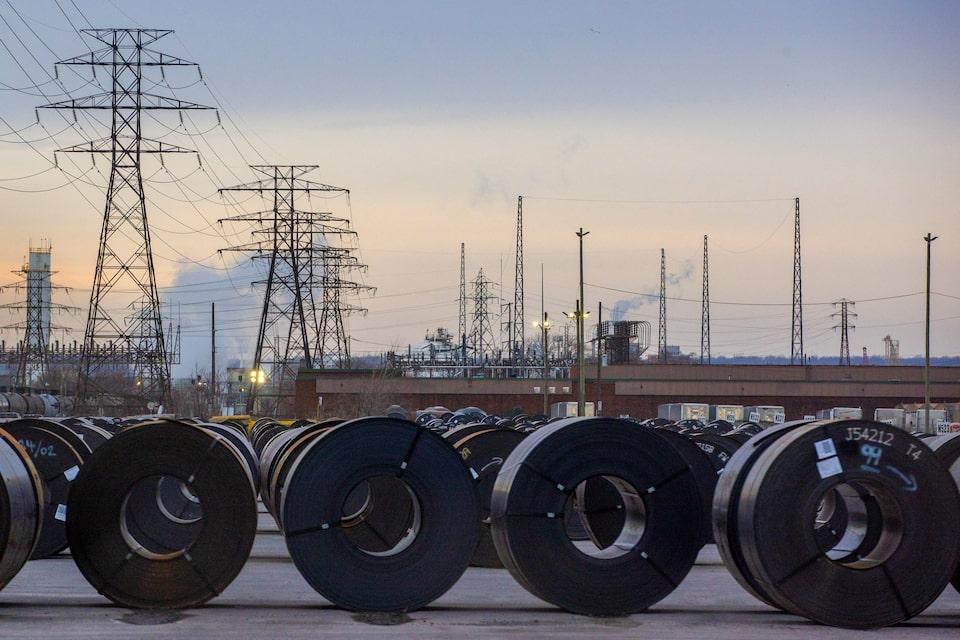
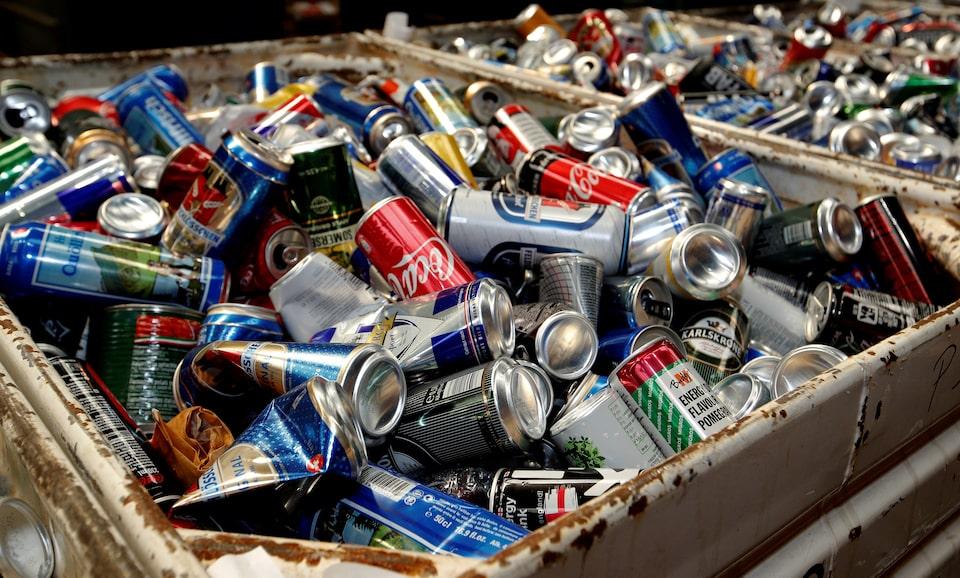
LONDON, Feb 11 (Reuters) - If in doubt, double down. Seven years ago President Donald Trump ordered 10% tariffs on U.S. imports of aluminium with the stated aim of increasing domestic primary metal production. They haven't worked. This time the tariff is going to be 25% without "exceptions or exemptions" effective March 4. Together with a similar-sized duty on steel imports, the ambition once again is to bolster industrial self-sufficiency in the name of national security. This is not good news for U.S. consumers, judging by the sharp jump in the price of aluminium delivered to the U.S. Midwest. It's also highly uncertain just how effective yet higher tariffs will be in rejuvenating the country's aging fleet of aluminium smelters. If greater aluminium self-sufficiency is the goal, there's a much easier way of achieving it in the form of the humble beer can. IMPORT DEPENDENCY Aluminium has yet again been bundled together with steel in Trump's tariff wars despite very different market dynamics. While U.S. steel imports account for 23% of the country's consumption, the ratio is much higher at 47% for aluminium, according to the U.S. Geological Survey. The U.S. is particularly reliant on imports of primary aluminium from Canada, which supplies more than two million tonnes each year. The market is already adjusting to the potential shift in pricing and trade flows. The CME Midwest U.S. premium contract, which captures the cost of delivered metal on top of the underlying aluminium price, has risen by $100 to $629 per metric ton in the space of a week. Given the London Metal Exchange cash price is currently trading at $2,645 per ton, the implied tariff cost is still only partially priced. The aluminium market has been here before with the 2018 tariffs, which ended up being highly negotiable. Canada, for example, was initially included, then exempted, included again and exempted again, the second time in the space of a month. The betting seems to be that there will be similar carve-outs this time around. However, slightly ominously for U.S. buyers of Canadian metal, European premiums have dropped sharply, suggesting that Canadian shipments will be diverted from the higher-tariff American market-place. POWER TRUMPS TARIFFS While steel tariffs have moved the domestic production dial, the same is not true of aluminium. The number of U.S. operating primary aluminium smelters has shrunk from 20 at the start of the century to just four. The only plant to reopen after the 2018 tariffs - New Madrid in Missouri - closed again in January 2024. U.S. primary metal production last year was 670,000 tons, compared with 740,000 tons in 2017, the year before import tariffs were first enacted. All hopes rest on Century Aluminum's (CENX.O) , opens new tab "Green Aluminum Smelter Project", which is being backed by the Department of Energy with a $500 million award , opens new tab made under the previous administration's Bilateral Infrastructure Law and Inflation Reduction Act. Century has just drawn down , opens new tab the first $10 million tranche to fund further studies, which tells you a new smelter won't be firing up any time soon. Critically, the project has yet to find a committed source of energy, particularly the renewable energy it needs to classify as green. Aluminium is produced by electrolysis and smelters consume huge amounts of power to convert alumina into metal. The demise of the U.S. smelter sector has been primarily down to high power costs and they remain the major hurdle for any greenfield smelter project. Indeed, the competition for power is intensifying as data centres compete for renewable energy. DON'T LITTER There is an easier way for the United States to reduce its import dependency. The solution is to hand but too often thrown away. The country is the world's largest user of aluminium beverage cans with 106.7 billion sold in 2021, accounting for over a quarter of the global market. The recycling rate was just 43% in 2023, down from a peak of 57% in 2014, according to the Container Recycling Institute (CRI). Just under half of all cans are thrown away to be land-filled or trashed. More metal is lost through improper sorting at recycling facilities, with losses assessed at roughly one third. The total wastage in 2021 amounted to over one million tons of aluminium with a notional value of $1.6 billion, CRI calculates. That's a lot of aluminium being thrown away every year and significantly more than domestic production of primary metal. Moreover, remelting a beverage can is much more energy efficient than producing virgin metal since it typically requires only 5% of the power. The countries with the highest recycling rates all operate some form of deposit return scheme. Indeed, the U.S. states with deposit schemes achieved a recycling rate of 74%, compared with 26% for non-deposit states, according to the CRI. Roll out more deposit return schemes and some of that one million tonnes of landfill could be returned to the supply chain. America's energy constraints mean that boosting recycling is going to be a faster way of shoring up its domestic aluminium supply base than tariffs. But tariffs are what the aluminium market and the U.S. consumer are going to get. The opinions expressed here are those of the author, a columnist for Reuters. Sign up here. https://www.reuters.com/markets/commodities/beer-not-tariffs-will-boost-us-aluminium-capacity-andy-home-2025-02-11/
2025-02-11 23:49
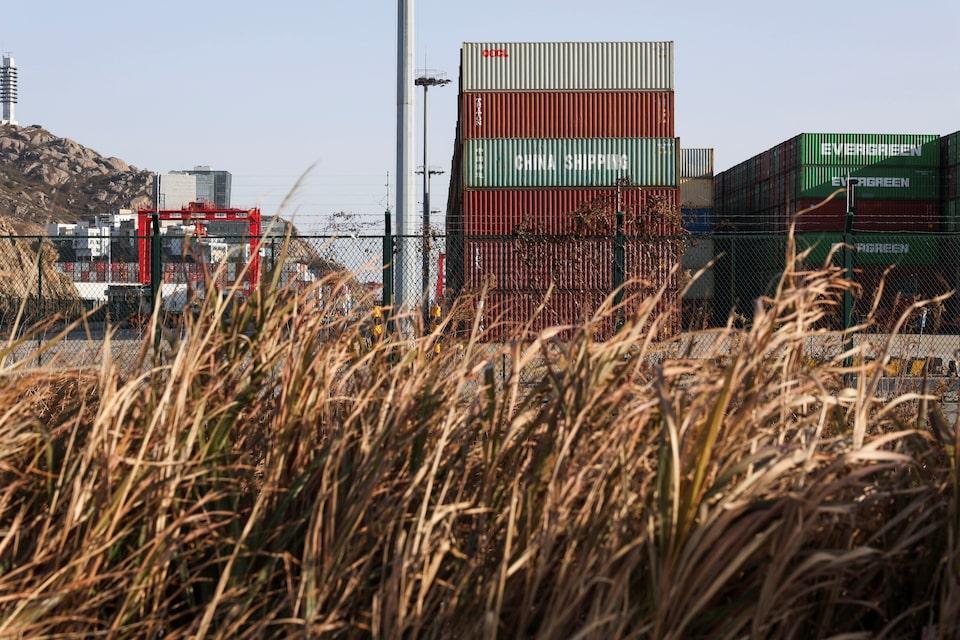
CHICAGO, Feb 11 (Reuters) - China giveth, China taketh away. Agricultural exporters around the world know this feeling all too well, as they can either flourish or flounder under China’s sometimes unpredictable demand habits. Relative to use, Chinese corn and wheat stocks in 2024-25 are both set to reach the lowest levels in about a decade, though this is not translating into the opportunity one might expect for global grain suppliers. The U.S. Department of Agriculture on Tuesday slashed Chinese grain imports for 2024-25, certainly not surprising given China’s recently lighter market involvement. The agency now pegs China’s 2024-25 corn and wheat imports at 10 million and 8 million metric tons, respectively, down nearly a quarter from the January estimates. These volumes would be down 57% and 32% from the respective averages of the previous four seasons. China’s predicted grain hauls will still be historically large, though some global grain exporters may need to block out the memories of what used to be and focus on a newer normal. BEFORE AND AFTER Throughout the 2010s, China imported modest amounts of corn and wheat, averaging just over 3 million tons of each per year. That accounted for about 2% of annual world imports - volumes that were practically drops in the bucket compared with China’s overall grain usage. China was also heavily stockpiling grain during that time in the name of food security, rapidly increasing the share of world grain supplies sitting in the Asian country. But China abruptly ramped up grain imports in 2020. Its corn haul for the 2020-21 marketing year totaled 29.5 million tons, more than five times the pre-2020 maximum. Much of that was U.S.-sourced, and China easily became top corn importer. USDA balance sheets at that time suggested Chinese corn supplies were ample and that import needs should not be dire. Domestic corn and wheat crops were near record highs. However, there were credible rumors that Chinese corn stocks had rapidly dwindled by mid-2020, much of it potentially spoiling in storage. China’s corn futures offered clues, having risen slightly earlier and more rapidly than global prices in mid-2020 and presumably reflecting domestic supply concerns. Chinese demand helped U.S. corn exports hit exceptional levels in 2020-21 and 2021-22 despite relatively thin U.S. supplies, but Brazil siphoned much of that business starting in 2023 with China finally green-lighting Brazilian corn. U.S. corn exports to China in 2022-23 fell nearly 50% from the previous year, and 2023-24 shipments fell another 60%. Brazil started feeling China’s pullback last year as 6% of its calendar-year 2024 corn exports went to China, down from a whopping 29% in 2023. The shift in Chinese wheat imports is less extreme but still notable. Its 2023-24 haul reached a 32-year high of 13.6 million tons. Australia is a top wheat supplier to China, though the United States shipped 1.9 million tons to China in calendar 2024. China was the world’s leading wheat importer in 2022-23 and 2023-24, but it is set for the fourth spot in 2024-25. CHINA’S FUTURE China’s corn and wheat harvests were both record-large in 2024-25. As such, stocks-to-use is set for levels that any other country would consider tremendously burdensome, some 65% for corn and 86% for wheat. However, those are 11- and nine-year lows, respectively, which could eventually favor China’s return to global grain trade. By comparison, some analysts cannot agree whether U.S. corn stocks-to-use at 10% is bullish. But China’s economic growth is seen slowing this year and again next year, which typically does not bode well for agricultural purchases in general. China last week delayed imports of up to 600,000 tons of mostly Australian wheat, emphasizing its retreat as an importer. It also has a negligible amount of U.S. corn on the books for export in 2024-25, the volume being the lowest for this time of year in eight years. Chinese corn futures have drifted about 13% higher from recent lows set two months ago. Chicago corn futures have risen by the same degree since then, indicating some level of synchrony between the two markets. But global grain exporters, particularly the United States and Brazil, may need to channel the pre-2020 mentality for now, ensuring that trade with their mainstay customers remains strong. Karen Braun is a market analyst for Reuters. Views expressed above are her own. Sign up here. https://www.reuters.com/markets/commodities/is-china-ending-its-stint-major-global-grain-importer-braun-2025-02-11/