2025-02-11 06:33
OSLO, Feb 11 (Reuters) - Oslo-listed Vaar Energi (VAR.OL) , opens new tab, majority-owned by Italy's Eni (ENI.MI) , opens new tab, raised its dividend on Tuesday as the oil and gas exploration and production company reported a fourth-quarter operating profit in line with expectations. Vaar's earnings before interest and tax (EBIT) for the October-December quarter rose to $1 billion from $399 million a year earlier, in line with the average $1.03 billion forecast in a company-provided poll , opens new tab of 13 analysts. The company said it will increase its dividend for the first quarter of 2025 to $300 million, or 1.213 Norwegian crowns per share, from $270 million for the fourth quarter. For the full year, it plans to distribute 25%-30% of its cash flow from operations (CFFO) after tax, compared to the previous guidance of 20%-30%. Compared to the full year of 2023, Vaar's output rose by 31% to 280,000 barrels of oil equivalent per day (boepd) due to the acquisition of Neptune Energy's Norwegian assets and the start-up of new projects. "Vaar Energi is set for significant production increase as we enter 2025, a year of transformational growth for the company, and we're on track to reach more than 400,000 boepd in the fourth quarter," CEO Nick Walker said in a statement. Vaar said the Equinor-operated (EQNR.OL) , opens new tab Johan Castberg oilfield in the Barents Sea was expected to come on stream in the first quarter, while its own Balder X development was set to start output by the end of the second quarter. Castberg, where Vaar has a 30% stake, is expected to add around 66,000 boepd net to Vaar's production alone when it hits plateau production, it said. "Considering the shares have been weak into this report and 2025 guidance being broadly in line with consensus in combination with a raised dividend slightly offset by the raised long-term capex, we expect the shares to outperform peers by about 1%–2% today," analysts at DNB Markets said in a note. Vaar increased its long-term capital expenditure guidance for 2026-2030 to $2 billion-2.5 billion, compared to the previous guidance of $1.5 billion-2 billion for 2027-2028, it added. Sign up here. https://www.reuters.com/business/energy/vaar-energi-increases-dividend-q4-profit-line-2025-02-11/

2025-02-11 06:20
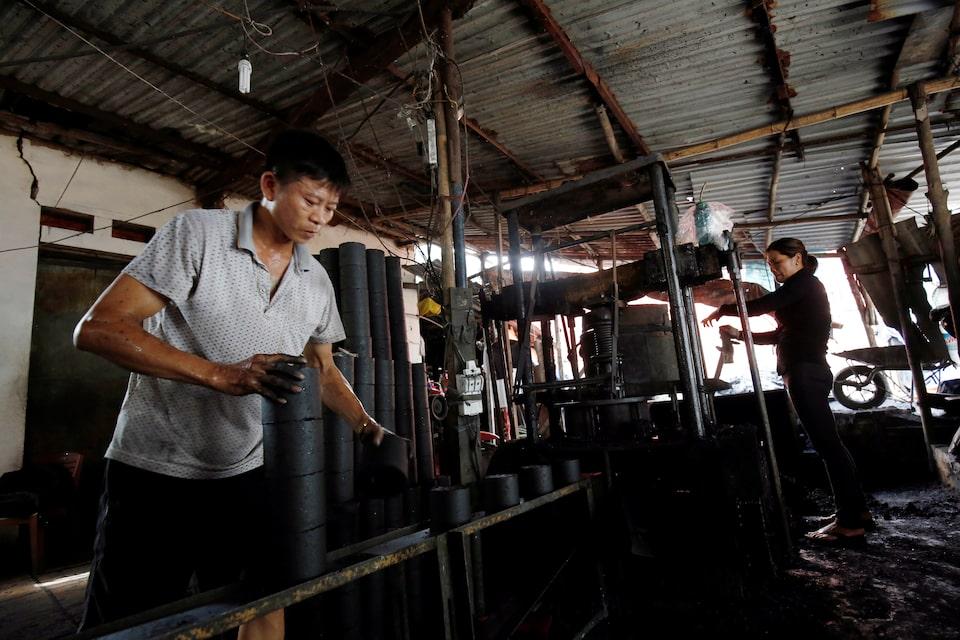
Dollar down on the day Fed's Powell in no rush to cut rates again Tariff concerns ease, but remain key focus Feb 11 (Reuters) - The U.S. dollar fell on Tuesday as Federal Reserve Chair Jerome Powell said the U.S. central bank was in no rush to cut its short-term interest rate again and as traders waited on more concrete information regarding potential trade tariffs by U.S. President Donald Trump. Powell said in testimony before the Senate Banking, Housing and Urban Affairs Committee that the view on rates reflected the U.S. economy being "strong overall," with low unemployment and inflation that remains above the Fed's 2% target. The comments were largely expected by traders. He also told lawmakers the argument for free trade still makes sense but added that it was not the role of the Fed to comment on tariff or trade policy but to react to how it impacts the economy. "He's trying to be very, very, very conservative in his commentary and not spook anybody," said Helen Given, FX trader at Monex USA in Washington. Traders are becoming more immune to news around potential tariffs, which have unnerved investors on concerns about how they may impact inflation and growth. "We've seen a lot of volatility come off of tariff headlines in the last two weeks," said Given. "What we're seeing now is that those headlines and those announcements are not necessarily an indication that these tariffs are actually going to be levied, at least not at the time that we think that they might be. So, everyone is just in a wait and see mode." Futures priced in 36 basis points worth of Fed rate cuts by the year-end , little changed from before Powell's comments, which implies one 25-bp cut and only a partial chance of a second. Powell will also testify before the House Financial Services Committee on Wednesday. Consumer price data for January due on Wednesday is this week's main U.S. economic release and is expected to show inflation remained sticky during the month. The U.S. dollar index was last down 0.37% on the day at 107.96. Tariffs are likely to remain a key focus for traders on any signs that trade tensions are intensifying. "The threat of more U.S. tariffs remains, also against the European Union. Retaliation could even lead to a tail risk scenario of a global trade war," said Athanasios Vamvakidis, global head of forex research at BofA. "Even if the worst is avoided, we are concerned that prolonged uncertainty will have negative implications for the global economy," he added. Trump on Monday said he would announce plans to impose reciprocal tariffs on other countries over the next two days, doubling down on comments he made on Sunday. On Sunday Trump said he would introduce new 25% tariffs on all steel and aluminum imports into the U.S., on top of existing metals duties. The European Union said it would respond with "firm and proportionate countermeasures". The euro was last up 0.49% at $1.0357. The Canadian dollar strengthened 0.14% versus the greenback to C$1.43 per dollar, bouncing back from earlier losses. Canada, Brazil, Mexico, South Korea and Vietnam are the biggest sellers of steel into the U.S., according to American Iron and Steel Institute data, while Canada is the dominant supplier of imported aluminum. The Japanese yen weakened 0.3% against the greenback to 152.45 per dollar. It hit 150.93 on Friday, its highest since December 10. The Australian dollar rose 0.29% versus the U.S. currency to $0.6293. Australian Prime Minister Anthony Albanese said on Tuesday Trump has agreed to consider exempting Australia from his steel and aluminum tariffs, in what Albanese called a constructive phone call with the U.S. president. In cryptocurrencies, bitcoin fell 2.26% to $95,204.76. Sign up here. https://www.reuters.com/markets/currencies/dollar-underpinned-by-latest-tariff-moves-eyes-powell-us-inflation-2025-02-11/
2025-02-11 06:03
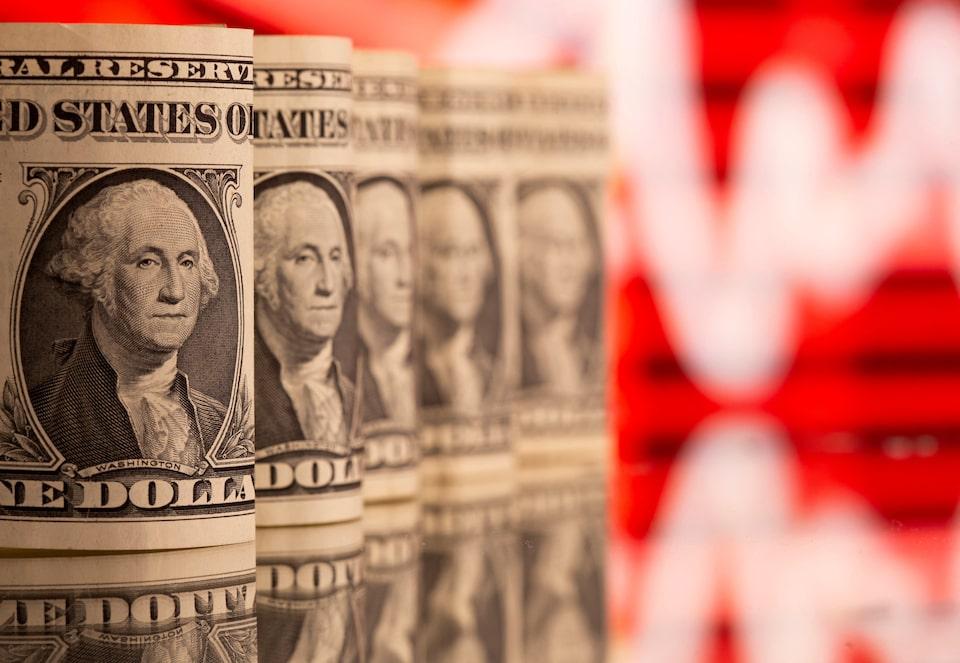
LITTLETON, Colorado, Feb 11 (Reuters) - Vietnam has become a key driver of global growth in thermal coal imports and use, after supercharging imports of the power fuel by over 30% in 2024 to record highs. Vietnam's imports of thermal coal rose 31% to 44 million metric tons in 2024, according to ship-tracking firm Kpler, which contrasts with just a 1% expansion in global thermal coal imports last year to 1.01 billion tons. An enduring boom in Vietnam's export-oriented and power-hungry manufacturing sector has been the main catalyst behind the surge in its imports and use of coal, which is the country's largest source of power. The growth rate of Vietnam's coal purchases in 2024 far exceeded the 11% rise in imports by China, the world's largest coal consumer, and ensured that Southeast Asia registered the largest rise in coal imports among all regions last year. And Vietnam's coal consumption is on track to keep growing, as the country's coal-burning capacity will rise by a further 15% once projects under construction are completed. That expanded coal capacity will likely ensure that global coal-fired power emissions will continue to grow over the coming years, even as coal burning steadily contracts outside of Asia. COAL DEPENDENCE Coal-fired power stations generated half of Vietnam's electricity from January to October in 2024, according to Ember, which is Vietnam's largest coal share since 2020. Total coal-fired generation expanded by 17% from January to October 2023, and helped drive total electricity supplies up by 10% on the year to a new high. Of the total current installed generation capacity of around 70,000 GW, coal has the largest footprint with around 39%, or 27,239 gigawatts, according to Global Energy Monitor (GEM). Hydropower has the next largest generation share of 21% (14,750 GW), while solar farms have around a 19% share (13,100 GW). Natural gas and fuel-oil plants have around a 12% share (8,150 GW), and wind farms have a 9% share (6,500 GW). There is roughly 11,600 GW of new generation capacity under construction in Vietnam, and coal and gas-fired generation are both set to grow by around 4,000 GW. There is a combined 3,500 GW of new solar, wind and hydro capacity also being built, GEM data shows. As coal and gas-fired power capacity account for around 70% of the total capacity under construction, Vietnam's fossil fuel-fired power footprint will increase from around 51% currently to 53.3% once the current capacity under construction is complete. REGIONAL NORMS While Vietnam's expanding footprint of fossil fuel generation contrasts with planned capacity changes in Europe and the United States, heavy fossil fuel reliance remains the norm across Southeast Asia. Indeed, fossil fuels have a 71% share of current power generation capacity in Southeast Asia as a whole, and around a 60% share of the capacity under construction. And a key driver of that fossil fuel dependence is the strong growth rates of several economies across the region, and the large and rapidly growing workforces in most Southeast Asian countries. Indonesia, the Philippines and Vietnam all have populations in excess of 100 million, and average gross domestic product growth rates of nearly twice the expected global average of 3.2% in 2025, according to the International Monetary Fund. LEADING ROLE Vietnam's economy has grown by an average of 5.6% a year since 2018, which is by far the fastest growth pace among all Southeast Asian nations during that period. Key to Vietnam's success has been a major rerouting of manufacturing supply chains out of China and into other low-cost production hubs since U.S. President Donald Trump kicked off a trade war with China during his first term. Vietnam's strong global trade route connections and fast-developing experience with an array of manufacturing processes made it ideal for companies looking to quickly reduce production bases within China but maintain a presence in Asia. However, the speedy expansion in Vietnam's production of manufactured goods resulted in a sharp rise in energy consumption, which in turn required local power firms to boost power supplies by whatever means necessary. Vietnam's total electricity demand jumped by 27% from 2018 to 2023, according to Ember. That growth pace exceeds the 23% rise in Indonesia and a 12% rise in the Philippines and globally over the same period, and placed sustained pressure on Vietnam's energy suppliers. The relentless growth in power consumption triggered frequent power outages in recent years, especially during heatwaves when demand for cooling systems soared. To fend off further power issues, Vietnam's energy suppliers have prioritised stability and cost efficiency as they have expanded generation, which in turn has triggered the continued strong dependence on coal as the main source of power. The country's energy firms also plan to increase generation capacity from renewables and other clean power sources between 2030 and 2050. But over the nearer term, coal remains Vietnam's power fuel of choice, and its use will continue to grow alongside the country's overall economy for the foreseeable future. The opinions expressed here are those of the author, a market analyst for Reuters. Sign up here. https://www.reuters.com/markets/commodities/vietnams-industrial-boom-drives-global-coal-imports-new-highs-maguire-2025-02-11/
2025-02-11 05:44
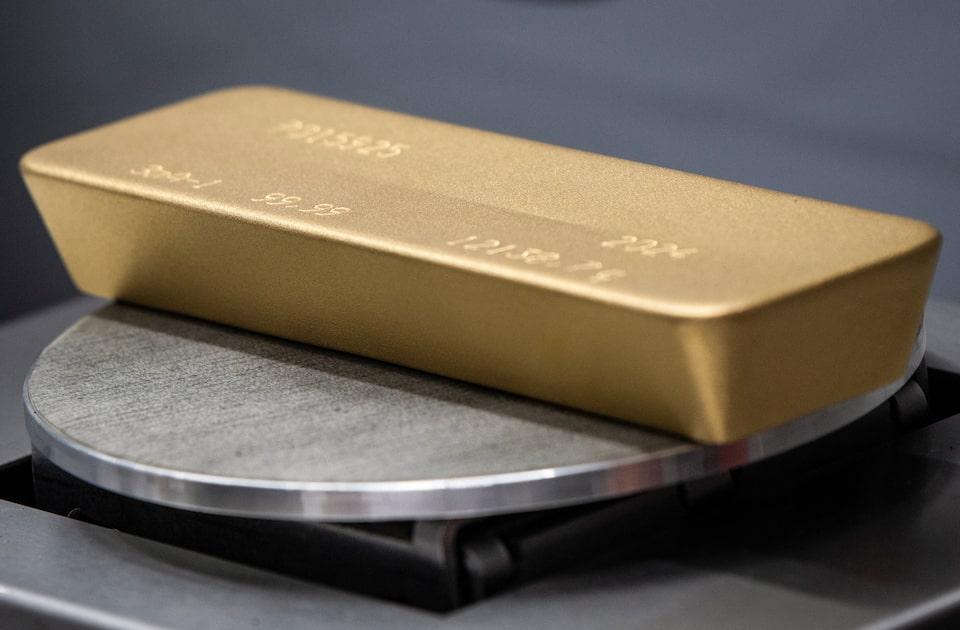
Trump raises tariffs on steel and aluminium imports Bullion hits record high of $2,942.70 per ounce Palladium, platinum down over 1% Feb 11 (Reuters) - Gold prices hit a record high on Tuesday, spurred by safe-haven demand as U.S. President Donald Trump's new tariffs on steel and aluminium imports heightened concerns about a possible global trade war. Spot gold hit a peak of $2,942.70 per ounce in Asian trading hours before easing to stand 0.1% lower at $2,904.59 as of 1118 GMT. Bullion's eighth record high of 2025 has brought the glittering $3,000 milestone into view as investors navigate growing uncertainties over the repercussions of U.S. trade policies. U.S. gold futures fell 0.1% to $2,932.20, trading at a premium over the spot price, which is currently around $28. "Uncertainty and unpredictability about Trump’s presidency could sweeten appetite for gold," said Lukman Otunuga, senior research analyst at FXTM. Trump substantially raised tariffs on steel and aluminium imports to a flat 25% "without exceptions or exemptions" in a move he hopes will aid struggling industries in the United States but which also risks sparking a multi-front trade war. Reuters technical analyst Wang Tao said that gold may extend gains into $2,950 to $2,962 per ounce before reversing its uptrend. Traders are keeping an eye on Federal Reserve Chair Jerome Powell's testimony and Wednesday's U.S. inflation data for fresh clues on the interest rate outlook in the world's largest economy. A Reuters poll showed the Fed was expected to wait until next quarter before cutting rates again. Tariffs could fuel U.S. inflation and postpone rate cuts. Any surprise in Powell’s testimony or a downside surprise in the CPI report may cause gold to experience a technical correction, added Otunuga. Bullion is considered a hedge against inflation but higher interest rates dampen the non-yielding asset's appeal. Elsewhere, gold leasing rates in India hit a record high, tracking the overseas market, where rates have jumped due to a supply crunch as banks divert the precious metal to the United States in a bid to avoid potential tariffs. Among other metals, spot silver fell nearly 1% to $31.73 per ounce, platinum eased 1.2% to $982.20 and palladium shed 1.1% to $972.45. Sign up here. https://www.reuters.com/markets/commodities/trumps-fresh-tariffs-catapult-gold-prices-record-peaks-2025-02-11/
2025-02-11 05:36
A look at the day ahead in European and global markets from Tom Westbrook Gold made a foray towards the $3,000-an-ounce mark in the Asia session overnight, touching $2,942, functioning as markets' release valve for the unpredictability of Donald Trump. Central banks have been big buyers for months, along with investors seeking safety. Worries about U.S. tariffs on gold have also set off a scramble to get the stuff out of London vaults and across the Atlantic. Stocks broadly steadied on Tuesday as Trump said he was considering exempting Australia from steel tariffs, following a call with Australia's Prime Minister - reinforcing investors' belief that everything's negotiable. Trump likes that the U.S. runs a trade surplus with Australia and said "the reason is they buy a lot of airplanes. They're rather far away and they need lots of airplanes." He has vowed to impose reciprocal tariffs on countries over the next two days. Markets' focus on Tuesday will likely also be on Fed Chair Jerome Powell's testimony on Capitol Hill, where he is sure to be questioned about his thinking on inflation and tariffs. He is due to appear over two days and on Wednesday his testimony will follow consumer price data for January. Markets have already scaled back expected rate cuts this year to just 38 basis points. EV MARKET BATTLE INTENSIFIES A DeepSeek-esque shakeout unfolded among electric vehicle stocks on Tuesday. China's BYD (002594.SZ) , opens new tab has started offering advanced autonomous driving features on most of its models, including ones priced as low as $9,555, far undercutting competitors such as Tesla (TSLA.O) , opens new tab. And Leapmotor (9863.HK) , opens new tab, the Chinese partner of Stellantis (STLAM.MI) , opens new tab, launched on Tuesday a new EV with smart driving technology priced under 150,000 yuan ($20,535). Tesla shares were down 3% to a two-month low overnight while shares in Chinese automakers Xpeng and Geely Auto (0175.HK) , opens new tab tumbled in Hong Kong on Tuesday. BYD's Hong Kong shares , meanwhile, climbed more than 4% to a record high. Key developments that could influence markets on Tuesday: - Earnings: BP, Banco BPM - Speeches: BoE's Mann and Bailey - Jerome Powell testifies to the Senate Banking, Housing and Urban Affairs Committee Sign up here. https://www.reuters.com/markets/europe/global-markets-view-europe-2025-02-11/
2025-02-11 02:58
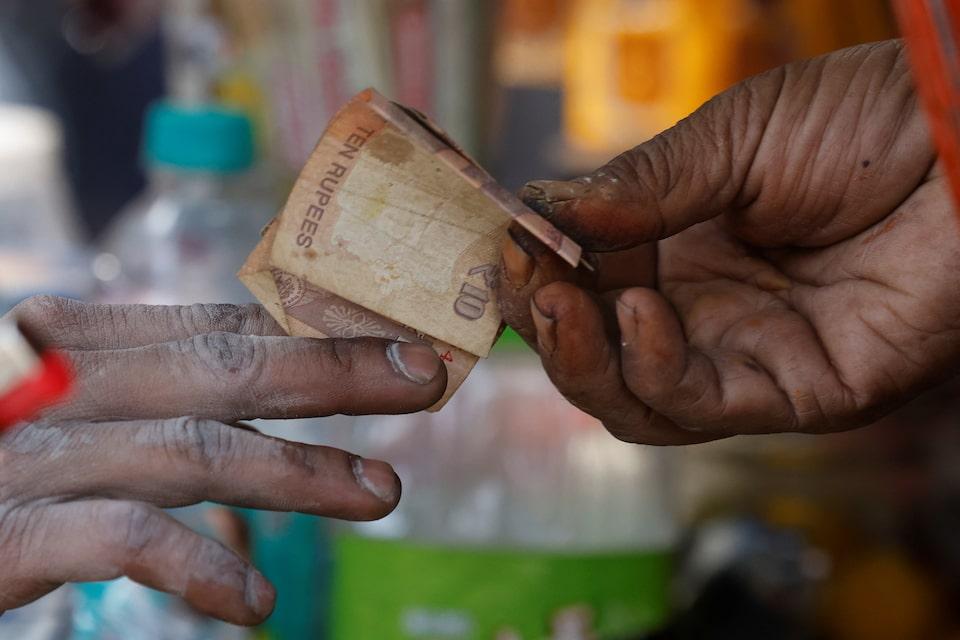
MUMBAI, Feb 11 (Reuters) - The Indian rupee is poised to open slightly weaker on Tuesday after U.S. President Donald Trump made good on his threat of imposing tariffs on steel and aluminium imports, fuelling fears of a wider trade war. The 1-month non-deliverable forward indicated that the rupee will open at 87.52-87.54 to the U.S. dollar down from 87.4750 on Monday. The Indian currency had dropped to near 88 on Monday, before aggressive intervention by the central bank helped it recover. The 88 level "probably marks the near-term top for now" for the dollar/rupee pair considering the way the Reserve Bank of India intervened on Monday, a currency trader at a bank said. A "bigger" dip on dollar/rupee from here is unlikely taking into account how Trump is "juicing up" on the tariffs, he said. Trump, following through on his comments, raised tariffs on steel and aluminium imports on Monday, spurring worries of a multi-front trade war. He reiterated that he would follow this up with reciprocal tariffs on all countries over the next two days. U.S. equity futures dipped alongside most Asian shares and the dollar index inched up. Asian currencies declined. The extent of losses on Asia forex and equities was "not really alarming" and it would look like investors "have accepted it without much noise", the currency trader said. Trump's latest moves suggest that the optimism that a trade war would be averted when he paused tariffs on Canada and Mexico might have been misplaced. Meanwhile, Federal Reserve Chair Jerome Powell's testimony before the Senate Banking Committee later in day will be watched for gauging the outlook on inflation and interest rates. "He is unlikely to deviate from the current neutral tone collectively from the FOMC (Federal Open Market Committee)", MUFG Bank said in a note. KEY INDICATORS: ** One-month non-deliverable rupee forward at 87.75; onshore one-month forward premium at 19.5 paise ** Dollar index up at 108.42 ** Brent crude futures up 0.2% at $76 per barrel ** Ten-year U.S. note yield rises to 4.5% ** As per NSDL data, foreign investors sold a net $54 million worth of Indian shares on February 7 ** NSDL data shows foreign investors sold a net $5.9 million worth of Indian bonds on February 7 Sign up here. https://www.reuters.com/markets/currencies/rupee-seen-dipping-open-trumps-tariff-turbulence-2025-02-11/