2025-02-11 00:35
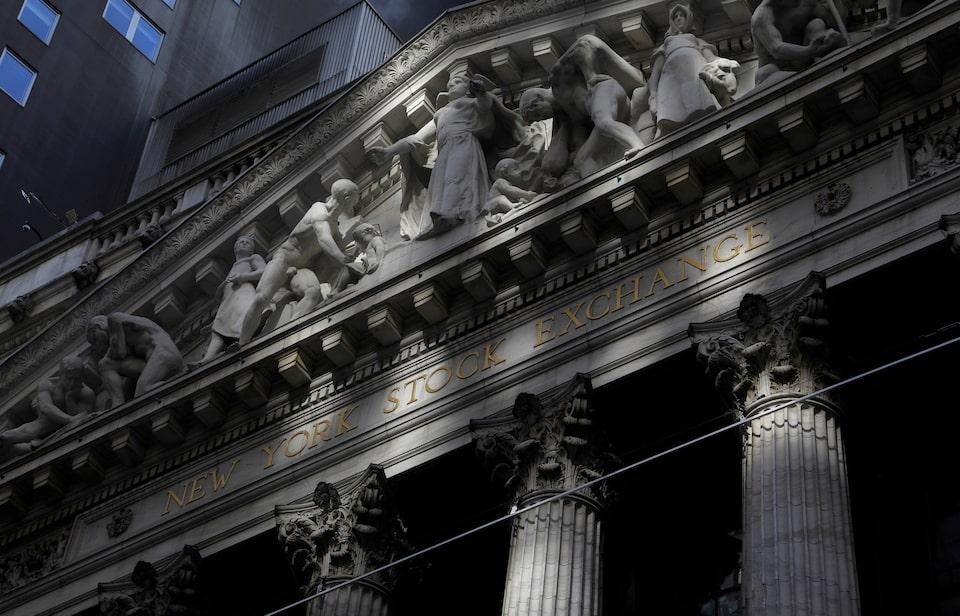
McDonald's climbs after Q4 global comparable sales rise Fed Chair Powell to testify before Congress this week Indexes up: S&P 500 0.67%, Nasdaq 0.98%, Dow 0.38% Feb 10 (Reuters) - Wall Street's main indexes closed higher on Monday, lifted by Nvidia and other AI-related stocks, while steelmakers surged after U.S. President Donald Trump said he would impose additional tariffs on steel and aluminum imports. Trump's latest potential trade barrier escalation came on Sunday when he said he would introduce 25% tariffs on all U.S. imports of steel and aluminum, on top of existing duties on the metals. U.S. metals producers that would benefit from steel and aluminum tariffs rallied. Nucor (NUE.N) , opens new tab, U.S. Steel (X.N) , opens new tab and Steel Dynamics (STLD.O) , opens new tab rose more than 4% each. Cleveland-Cliffs (CLF.N) , opens new tab jumped 18%, Century Aluminum (CENX.O) , opens new tab rallied 10% and Alcoa (AA.N) , opens new tab rose about 2%. AI chipmakers Nvidia (NVDA.O) , opens new tab and Broadcom (AVGO.O) , opens new tab climbed 2.9% and 4.5%, respectively. Amazon (AMZN.O) , opens new tab gained 1.7%. "Investors are basically saying, 'Hey, let's go back into the areas that worked.' And one reason that investors are optimistic, in my opinion, is because of earnings," said Sam Stovall, chief investment strategist at CFRA Research. Tesla (TSLA.O) , opens new tab ended down 3% after the Wall Street Journal reported that a consortium of investors led by Tesla CEO Elon Musk is offering $97.4 billion to buy the nonprofit that controls artificial-intelligence startup OpenAI. With fourth-quarter reporting season over halfway through, S&P 500 companies are expected to have posted year-over-year earnings growth of 14.8%, up from expectations of less than 10% at the start of 2025, according to LSEG I/B/E/S. Heavyweight technology stocks fell sharply on Friday after Trump announced reciprocal tariffs on all countries, matching the tariffs levied by them. The S&P 500 rose 0.67% to end at 6,066.44 points. The Nasdaq gained 0.98% to 19,714.27 points, while the Dow Jones Industrial Average added 0.38% at 44,470.41 points. Volume on U.S. exchanges was relatively heavy, with 16.1 billion shares traded, compared to an average of 14.9 billion shares over the previous 20 sessions. U.S. Steel's shares also got a boost after Japan's chief cabinet secretary said Nippon Steel (5401.T) , opens new tab was considering proposing a bold change in its plan to buy the company. McDonald's (MCD.N) , opens new tab jumped 4.8% after the hamburger chain posted a surprise rise in its global comparable sales in the fourth quarter. Rockwell Automation (ROK.N) , opens new tab surged 12.6% after the automation products maker posted higher-than-expected profit for the fiscal first quarter. Coca-Cola (KO.N) , opens new tab and DoorDash (DASH.O) , opens new tab are set to report quarterly results on Tuesday, with CVS Health (CVS.N) , opens new tab and computer-networking equipment maker Cisco (CSCO.O) , opens new tab reporting on Wednesday. Investors are also looking to Federal Reserve Chair Jerome Powell's biannual monetary policy report to the Senate Budget Committee on Tuesday and to the House of Representatives Financial Services Committee on Wednesday. Expectations for the Fed's rate cuts to stay on hold in March solidified after Friday's mixed U.S. employment report. Advancing issues outnumbered falling ones within the S&P 500 (.AD.SPX) , opens new tab by a 1.3-to-one ratio. Across the U.S. stock market (.AD.US) , opens new tab, advancing stocks outnumbered falling ones by a 1.9-to-one ratio. Sign up here. https://www.reuters.com/markets/us/futures-rise-markets-shrug-off-trumps-latest-tariff-threat-steelmakers-jump-2025-02-10/
2025-02-11 00:06
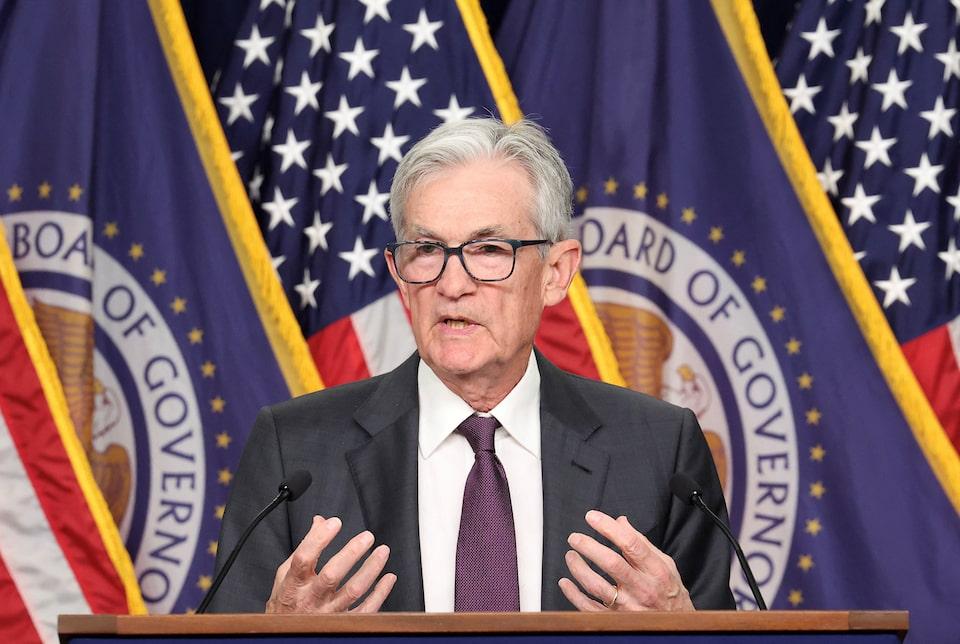
BENGALURU, Feb 11 (Reuters) - Faced with the threat of rising inflation, the U.S. Federal Reserve will wait until next quarter before cutting rates again, according to a majority of economists in a Reuters poll who previously expected a March cut. Economists have raised their inflation forecasts since U.S. President Donald Trump was elected, based on concerns his policies, particularly on tariffs, could re-ignite price pressures in the economy. After cutting rates by a cumulative 100 basis points between September and December, Fed officials, including Chair Jerome Powell, have recently said they are "not in a hurry" to lower rates further. With a strong job market and still solid consumer spending, many economists see the world's largest economy in a sweet spot, with little need for lower rates. So far, there have been new tariff announcements every week. Trump said on Sunday he would impose new 25% tariffs on all steel and aluminium imports. The White House delayed its plan to increase trade barriers on Mexico and Canada until March 1 but has levied an additional 10% tariff on imports from China. "The tariffs are inflationary and could be quite negative for economic growth as well. That uncertainty just means the Fed is sort of left waiting and wanting to see what actually does happen," said James Knightley, chief international economist at ING. "There's lots and lots of moving parts to the policy thrust of Donald Trump, and some of them are somewhat contradictory. It's very, very challenging, and so confidence in any of our forecasts around the U.S. economy, and by extension global economic activity, is pretty low right now." While a near-60% majority of economists in a January poll had expected the central bank to reduce rates in March, they were divided in the February 4-10 poll on when the Fed will cut next. A two-thirds majority of forecasters, 67 of 101, expected at least one rate cut by end-June with 22 saying March and 45 in the second quarter. Only 17 of 99 economists with end-2025 forecasts said the next cut will come in the second half of the year, and 16 expected no cuts this year. Interest rate futures are pricing in just over a 50% probability of one rate cut by mid-2025. Although poll medians predict the Fed will lower rates twice this year, reaching 3.75%-4.00% by end-2025, the range of forecasts is wide, from a low of 3.00%-3.25% and a high of 4.50%-4.75%. There is no majority view. But economists were more certain about inflation pressures. Over 90% of common contributors between the October survey - conducted just before the U.S. presidential election - and the latest poll raised their 2025 annual inflation forecast, by around 40 basis points on average. Nearly 60% of respondents, 27 of 46, who answered an additional question said U.S. inflation risks from tariffs have gone up recently. A further 17 said no change, with only two saying they had gone down. "The uncertainty is likely enough to keep Fed officials on the sidelines over the coming months, and if high tariffs are ultimately imposed then the subsequent rise in inflation will prevent further easing over the remainder of 2025," noted Neil Shearing, group chief economist at Capital Economics. After growing an annualised 2.3% last quarter, the U.S. economy will expand 2.2% this year and 2.0% in 2026, faster than what Fed officials currently see as the non-inflationary growth rate of 1.8% over coming years, poll medians found. The unemployment rate, which ticked down to 4% last month, was forecast at 4.2% this year and 4.1% next. (Other stories from the Reuters global economic poll) Sign up here. https://www.reuters.com/markets/rates-bonds/fed-wait-months-next-rate-cut-tariffs-risk-inflation-flare-up-2025-02-11/
2025-02-10 23:51
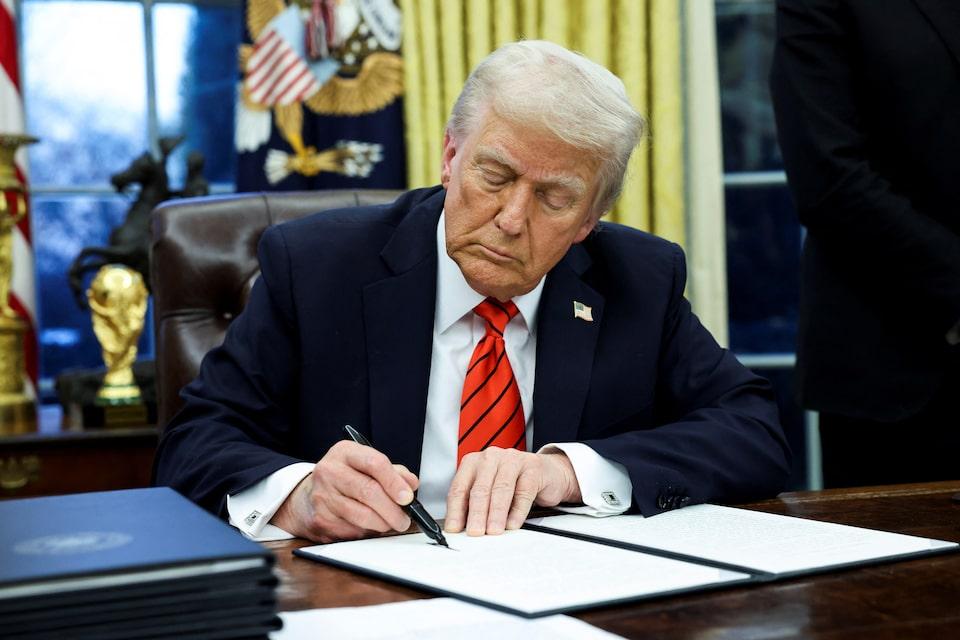
WASHINGTON, Feb 10 (Reuters) - U.S. President Donald Trump on Monday said he would announce plans to impose reciprocal tariffs on other countries over the next two days, doubling down on comments he made on Sunday. The Republican president spoke to reporters in the Oval Office as he signed two proclamations ending all exclusions on steel and aluminum tariffs first imposed during his first term and raising duties on both metals to 25%. Trump said he was also looking at tariffs on cars, semiconductor chips and pharmaceuticals. A U.S. official said the exclusion process begun under Trump had gotten out of control under former President Joe Biden, resulting in approval of hundreds of thousands of specific product exclusions. Asked about the possibility of other countries retaliating against U.S. tariffs, Trump said: "I don't mind." In an interview with Fox News, Trump said other countries had imposed duties on imports from the United States for years. "It's not fair that other countries have taken advantage of us for so many years, and now all of a sudden, we're not allowed to have tariffs," he said. Trump told Fox News in the interview that he would announce a "very sophisticated plan" for the reciprocal tariffs, probably Monday or Tuesday. Sign up here. https://www.reuters.com/markets/trump-says-he-will-announce-reciprocal-tariffs-over-next-two-days-2025-02-10/
2025-02-10 23:17
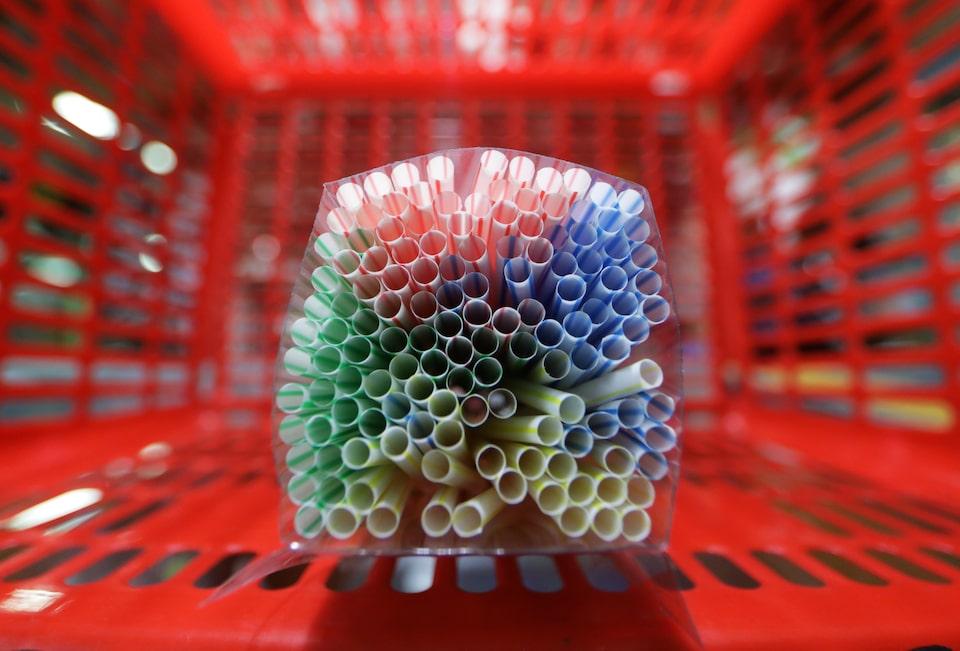
WASHINGTON, Feb 10 (Reuters) - President Donald Trump on Monday signed an executive order aimed at encouraging the U.S. government and consumers to buy plastic drinking straws, pushing back efforts by his predecessor to phase out single-use plastics and tackle waste. "We're going back to plastic straws," Trump told reporters at the White House as he signed the order, saying that paper straws "don't work." "I don't think plastic is going to affect a shark very much, as they're munching their way through the ocean," Trump said. Trump's Democratic predecessor, President Joe Biden, had proposed environmental measures to lower consumption of non-biodegradable single-use plastics, which damage ecosystems and contaminate food supplies. His administration also backed a global treaty aimed at putting a cap on plastic production. Monday's executive order was part of a broader weakening of environmental commitments by Trump, who in one of the first acts of his second term removed the United States from the Paris climate agreement for the second time. Trump also rescinded a Biden administration policy to end the use of all single-use plastic products on federal lands by 2032. Dozens of countries have imposed bans on various kinds of single-use plastics, produced mainly through petrochemicals and used to make shopping bags, bottles and other disposable items. If no new controls are introduced, the amount of plastic waste dumped into the environment is projected to rise from 81 million metric tons in 2020 to 119 million tons in 2040, according to OECD research published last year. Negotiations on a global treaty to control plastic pollution broke down last year, with major plastic-producing nations reluctant to commit to binding output caps. Negotiations are set to resume this year, but Aleksandar Rankovic, director of the Common Initiative, an environmental think tank, said he would not be surprised if Washington now pulled out of the talks. "With the new administration's pro-oil and gas stance, one can expect the U.S. to converge with countries like Russia and Saudi Arabia and oppose the adoption of global goals to reduce plastic production," he said. Sign up here. https://www.reuters.com/world/us/trump-signs-executive-order-plastic-drinking-straws-2025-02-10/
2025-02-10 23:13
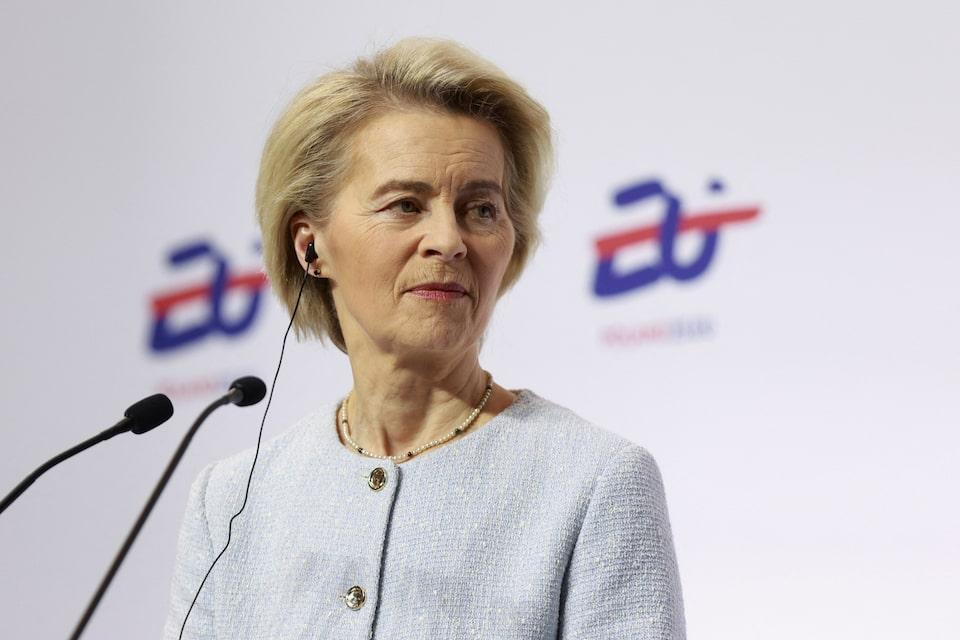
BRUSSELS, Feb 10 (Reuters) - U.S. President Donald Trump has said he will impose tariffs on imports of steel and aluminium and raise rates to match those of other countries in the coming week. The United States and European Union have the world's largest commercial relationship, trading 1.5 trillion euros ($1.55 trillion) of goods and services in 2023. European Commission president Ursula von der Leyen said last week the EU would "respond firmly" if targeted unfairly or arbitrarily. Here is the EU's possible course of action. RETALIATORY TARIFFS In 2018, after Trump imposed tariffs on 6.4 billion euros of EU steel and aluminium imports, the EU hit back with its own duties on 2.8 billion euros of U.S. products. Tariffs on a further 3.6 billion euros of U.S. imports were due to take effect three years later, but were not imposed after Joe Biden became U.S. president and the two sides agreed a truce. The EU tariffs targeted U.S. steel and aluminium, but also products concentrated in states that had voted for Trump, such as bourbon whiskey from Kentucky, motorcycles from Wisconsin-based Harley Davidson and orange juice from Florida. The EU could adopt a similar strategy of "rebalancing" measures this time as well, although Washington has more to target than Brussels. U.S. goods imports into the EU totalled 347 billion euros in 2023, against 503 billion euros of exports, according to EU statistics agency Eurostat. ANTI-COERCION INSTRUMENT The EU's Anti-Coercion Instrument (ACI), which came into force at the end of 2023, allows the bloc to retaliate against third countries that put economic pressure on EU members to change their policies, and offers far wider scope for action. As well as imposing goods tariffs, the EU can limit access to public procurement tenders for companies from a third country or take action affecting services trade or investment. While the United States has a trade deficit with the EU in goods, it has a surplus in services trade, including digital services provided by the likes of Amazon, Microsoft, Netflix or Uber. The EU can also restrict protection of intellectual property rights, limit financial service companies' access to EU markets and curb companies' ability to place chemicals and agri-food products in the EU. The ACI was proposed in 2021 as a response to EU member criticism that the first Trump administration and China used trade as a political tool. China had targeted Lithuania, according to Lithuania officials, after it allowed Taiwan to set up a de facto embassy in Vilnius. The law gives the Commission up to four months to examine possible cases of coercion and to propose courses of action to EU members, which have about another two months to approve them. The Commission can pause any measures for six months as it seeks to find a diplomatic solution. BIG TECH Beyond formal trade policy, the European Union has a number of routes to curb the activities of large U.S. tech firms, many of whose CEOs had prime seats at Trump's inauguration. The EU has ongoing investigations against Apple (AAPL.O) , opens new tab, Alphabet (GOOGL.O) , opens new tab, X and Meta (META.O) , opens new tab under its Digital Markets Act (DMA), which imposes antitrust obligations, and the Digital Services Act (DSA), which covers content moderation. It is also likely to add Amazon to the list, Reuters has reported. The DMA foresees fines of up to 10% of global turnover or 20% for repeat offences. For the DSA, the maximum fine is 6% of turnover. Meta Chief Mark Zuckerberg has called on Trump to stop the EU from fining U.S. tech firms. Trump ally Elon Musk has repeatedly clashed with EU regulators. Another avenue is to tax digital service providers. The EU suspended work on a Digital Services Tax to allow a broader solution to be found at the Organisation for Economic Cooperation and Development (OECD), which published a draft multilateral treaty in 2023 that has yet to be finalised. A number of EU countries, such as France, do have digital services taxes. Trump in his first term responded with tariffs, which were then suspended by Biden. ($1 = 0.9695 euros) Sign up here. https://www.reuters.com/world/europe/what-are-eus-options-response-trump-tariffs-2025-02-10/
2025-02-10 22:48
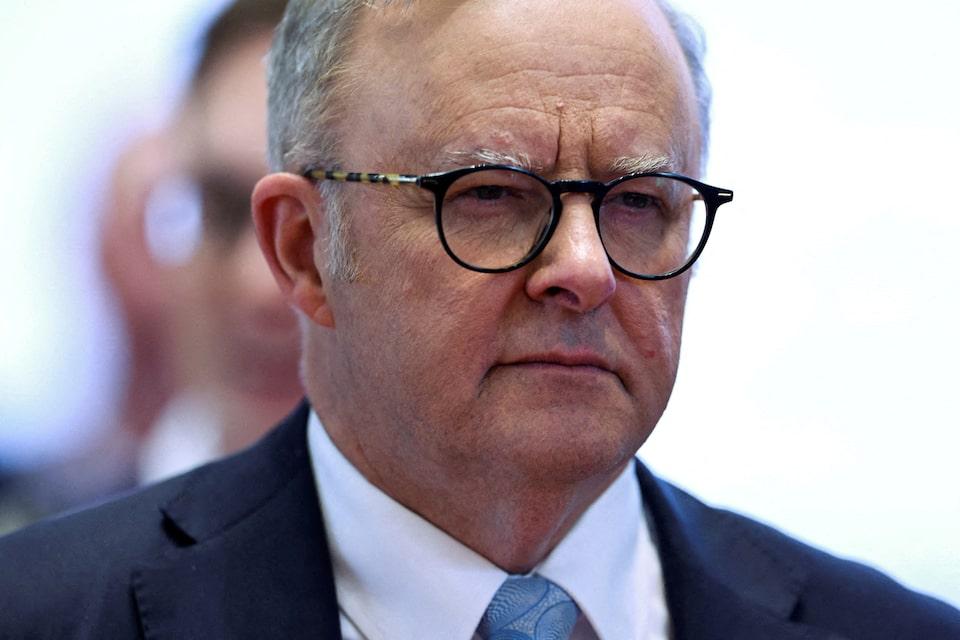
SYDNEY, Feb 11 (Reuters) - U.S. President Donald Trump has agreed to consider exempting Australia from his steel and aluminium tariffs, Prime Minister Anthony Albanese said on Tuesday after what he called a constructive phone call with Trump. Trump said on Sunday he will introduce new 25% tariffs on all steel and aluminium imports into the U.S., on top of existing metals duties, in another major escalation of his trade policy overhaul. "I presented Australia's case for an exemption, and we agreed on wording to say publicly which is that the U.S. president agreed that an exemption was under consideration," Albanese told reporters. "But we'll continue to engage quite clearly constructively ... it was a very constructive and warm discussion again with President Trump." Albanese's talk with Trump comes a day after Australia's trade minister said Australia's steel and aluminium exports to the U.S. created "good-paying American jobs" and were key to shared defence interests. Albanese said he remained confident a deal could be reached with Trump. "If you have a look at what we've achieved already, it's been a tremendous start to the relationship," Albanese said. Foreign Minister Penny Wong attended Trump's inauguration, while Defence Minister Richard Marles met U.S. Defense Secretary Pete Hegseth in Washington last week. Marles is the first foreign counterpart hosted by Hegseth since his confirmation in the role. Australia, a key U.S. security ally in the Indo-Pacific, shipped about $237 million worth of steel and iron products to the U.S. in 2023, and $275 million worth of aluminium in 2024, according to the United Nations Comtrade database. Australian-processed steel was purchased by the largest U.S. military shipbuilder as Australia, Britain and the U.S. - partners of the AUKUS defence pact - seek to integrate defence supply chains, the Australian government said last year. Sign up here. https://www.reuters.com/markets/commodities/trump-consider-exemption-australia-steel-tariffs-pm-says-2025-02-10/