2025-02-10 22:47
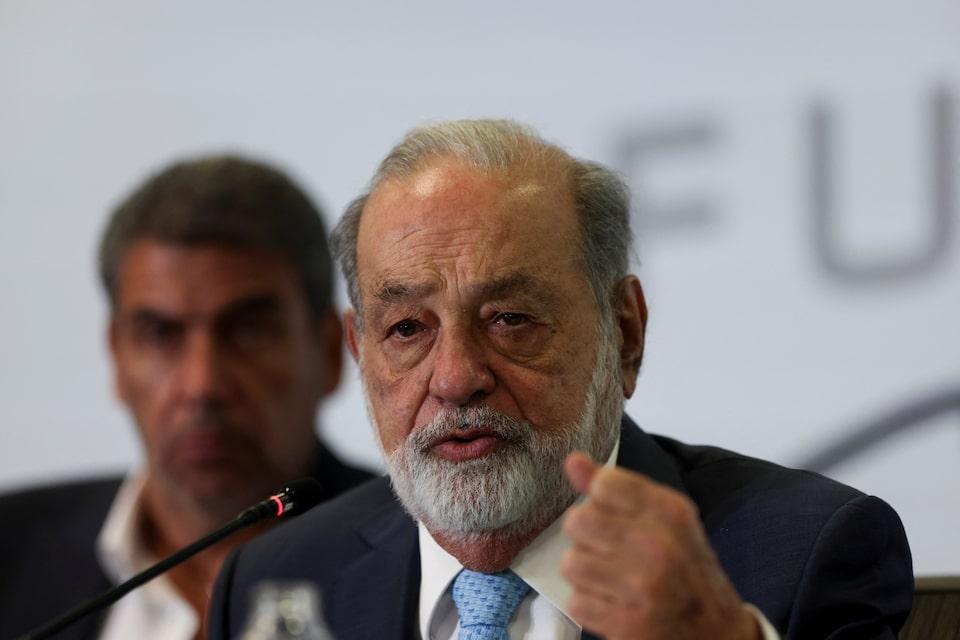
MEXICO CITY, Feb 10 (Reuters) - Mexican billionaire investor Carlos Slim said on Monday that his team is reevaluating a deal inked with state oil company Pemex to develop Mexico's first deepwater natural gas field, a project long plagued by problems over its commercial viability. The comments support a Reuters exclusive last month which revealed that representatives of Slim's Grupo Carso and Pemex have discussed changes to the deal in order to make the Lakach project profitable, despite lower forecast gas prices. "It's a complicated project that needs to be tackled by great technicians," Slim said during a press conference in Mexico City, adding that the depth at which the resource was buried in the Gulf of Mexico made it more difficult. "It'll depend on what is being built," he said when asked repeatedly whether he was still interested in the field. Pemex has already twice abandoned the Lakach project due to prohibitive development costs. Slim also reiterated the need for more investment in infrastructure and that Mexico was importing the vast majority of its gas from the United States. Reuters reported that Grupo Carso wanted to add two nearby fields with similar expected resources, Piklis and Kunah, to increase the potential profitability of the venture, and was even contemplating putting the project on ice. In recent years, Slim has been increasing his investments in the energy sector, with stakes in shallow-water fields Zama, Ichalkil and Pokoch. Last year, his team met with Pemex officials to discuss Lakach. Located some 90 kilometers (56 miles) from the Gulf port of Veracruz, Lakach holds an estimated 900 billion cubic feet of gas. Pressure is low at the existing well there, making production a challenge. It needed a lot more investment, sources said, and was made more complicated by low gas prices. Sign up here. https://www.reuters.com/business/energy/mexicos-carlos-slim-says-complicated-deepwater-gas-project-being-evaluated-2025-02-10/
2025-02-10 21:56
Feb 11 (Reuters) - A look at the day ahead in Asian markets. The drum beat of a global trade war may be getting louder by the day, but investors have started the week seemingly prepared to ignore the noise, take their cue from the flow of solid U.S. earnings and move further out the risk curve into assets like stocks. There are pockets of weakness, of course, where the waves of U.S. tariffs are likely to crash hardest. The Mexican peso, for example, is under pressure again, and the MSCI Emerging Market Equity Index ended the day flat on Monday. But considering the backdrop of U.S. President Donald Trump escalating trade tensions with promises of fresh tariffs on imports into the U.S., investor sentiment is holding up pretty well. That may change in the blink of an eye, but there's an underlying resilience supporting risk markets right now. The blizzard of tariff-related announcements from Washington is thickening. Trump on Sunday said he will introduce 25% tariffs on all steel and aluminum imports, on top of existing duties on the metals. On Friday, he announced reciprocal tariffs on all countries, matching the tariffs levied by them. As Dario Perkins at TS Lombard notes, it's becoming impossible for investors to price risk, as Trump 'floods the zone' with a torrent of proposals on anything from tariffs to government spending. "Fake news," as Perkins puts it. Which ones are serious, which are half-baked, which are off-the-cuff thoughts that no chance of being implemented? As far as the tariffs go, "Trump's revealed preference is to make big threats, create drama, and then use the slightest excuse not to follow through. Bullish thesis confirmed," Perkins says. The bullish thesis is being backed up by U.S. earnings. Aggregate S&P 500 earnings growth for the fourth quarter is running at nearly 15% year on year, according to LSEG I/B/E/S. Goldman Sachs analysts reckon earnings are on track for their best quarter in nearly three years. Asia's calendar on Tuesday is light. Currencies will be sensitive to tariff-related news and sentiment, and in China the yuan bears close monitoring as the spread between the spot market rate and central bank's daily fix approaches record levels. Since Chinese markets reopened after the Lunar New Year holidays, the yuan has been under heavy pressure, and the dollar has risen four days in a row to trade back above 7.30 yuan. The high of 7.35 yuan from September 2023 is coming into view - a break above that would be the first since December 2007. But the People's Bank of China has been fixing the yuan tightly around the 7.17 per dollar mark in an effort to keep the exchange rate stable and prevent further depreciation, widening the spread between the two rates. Here are key developments that could provide more direction to Asian markets on Tuesday: - Trump tariff announcements - China central bank's yuan fixing - Australia consumer sentiment (February) Sign up here. https://www.reuters.com/markets/asia/global-markets-view-asia-graphics-2025-02-10/

2025-02-10 21:38
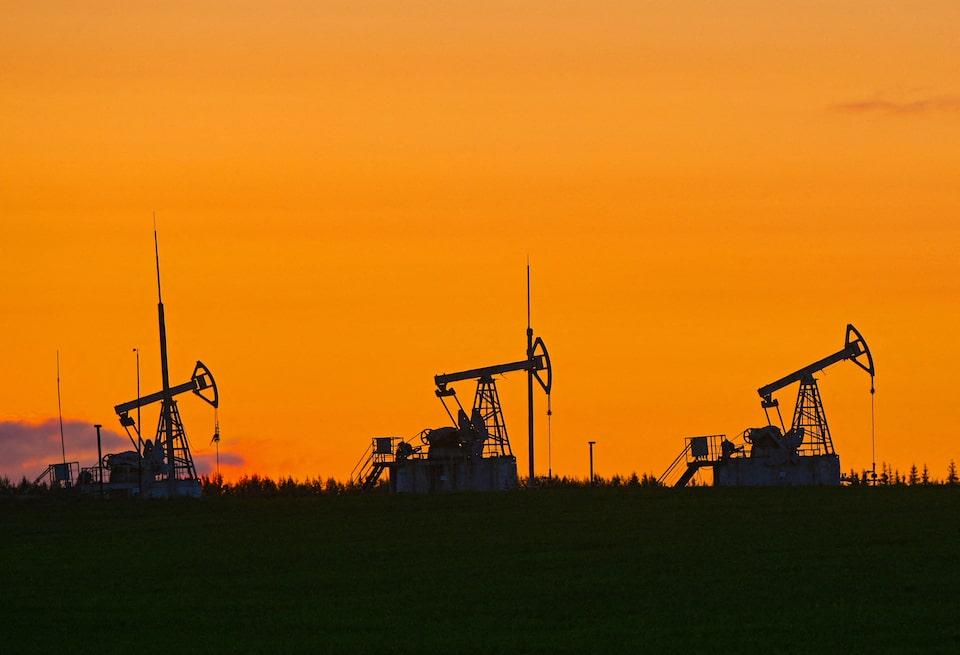
Trump to announce 25% steel and aluminium tariffs on Monday Russia's may initiate one-month ban on gasoline exports - TASS China responds with retaliatory tariffs on some US exports Trump says he's making progress with Putin to end Ukraine war HOUSTON, Feb 10 (Reuters) - Oil prices rose nearly 2% on Monday after posting their third straight week of losses, even though investors remained worried that U.S. President Donald Trump might start a trade war. Brent crude futures settled at $1.21, or 1.6%, at $75.87 a barrel, while U.S. West Texas Intermediate crude rose $1.32, or 1.9%, to $72.32. The gains come after futures fell 2.8% last week, pressured by global trade worries. "It's tariff uncertainty which is the name of the game. This affects risk appetite in general and has spillover effects into oil," said Harry Tchilinguiran at Onyx Capital. "After last week's declines, some people may be buying into the dip." Trump is expected to sign an executive order on tariffs later on Monday or Tuesday, according to a source familiar with the situation, in a move that could increase the risk of a multi-front trade war. Wall Street's main indexes closed higher on Monday. A week ago he announced tariffs on Canada, Mexico and China, but suspended those for the neighbouring countries the next day. Tariffs could dampen global economic growth and energy demand. "The market has realized tariff headlines are likely to continue in the weeks and months ahead," said IG analyst Tony Sycamore, adding that there was an equal chance they could be walked back or even increased at some point in the near future. "So perhaps investors are coming to the conclusion it's not the best course of action to react negatively to every headline." China's retaliatory tariffs on some U.S. exports are due to take effect on Monday, with no sign yet of progress in talks between Beijing and Washington. Oil and gas traders are seeking waivers from Beijing for U.S. crude and liquefied natural gas (LNG) imports. Also buoying prices, Russia's Federal Antimonopoly Service may initiate a one-month ban on gasoline exports by large producers in order to stabilize wholesale prices ahead of the crop-sowing season, state news agency TASS reported on Friday. "Tighter supplies of exported Russian crude and gasoline have Middle East cash crude prices moving higher in the early trade today," said Dennis Kissler, senior vice president of trading at BOK Financial. Trump said on Sunday that the U.S. is making progress with Russia to end the Ukraine war. Russia's point man for relations with the U.S. said on Monday that all of President Vladimir Putin's conditions must be met in full before the war can end. Sanctions imposed on Russian oil trade on January 10 disrupted Moscow's supplies to its top clients, China and India. Washington also stepped up pressure on Iran last week, with the U.S. Treasury imposing new sanctions on a few individuals and tankers that help to ship Iranian crude oil to China. "These sanctions on Iran and Russia, they are biting. This is tightening the market," said SEB analyst Bjarne Schieldrop. Rising natural gas prices are also contributing to oil price gains by boosting demand for cheaper fuels, he added. Meanwhile, U.S. crude oil and gasoline stockpiles were expected to have risen last week, while distillate inventories likely fell, a preliminary Reuters poll showed. Sign up here. https://www.reuters.com/markets/commodities/oil-prices-climb-despite-trade-war-concerns-2025-02-10/
2025-02-10 21:37
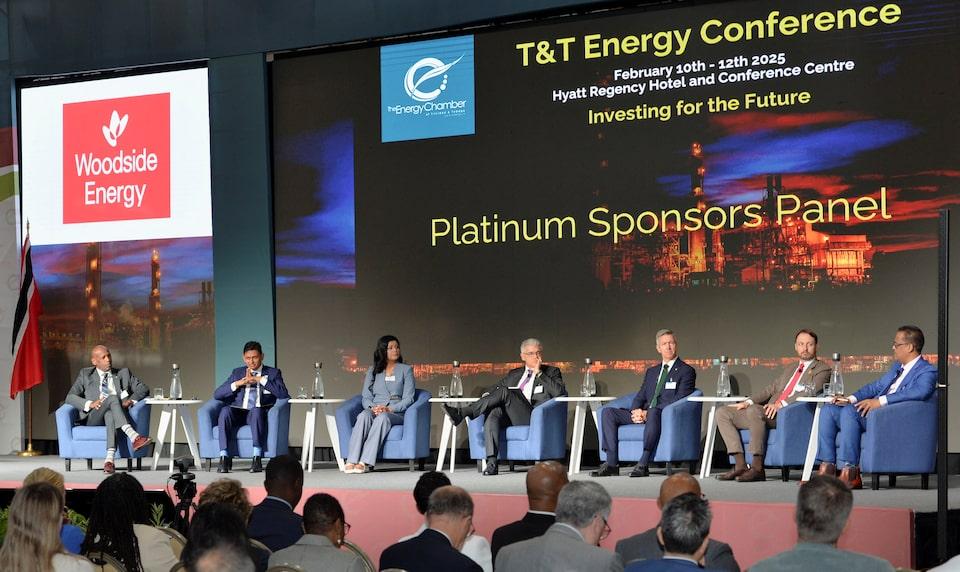
Shell's Manatee, BP's Cypre to deliver up to 1 billion cubic feet of gas by 2028 Larger LNG revenue could help offset hit to ammonia, methanol sales to Europe Contract revamped in 2023 PORT OF SPAIN, Feb 10 (Reuters) - Trinidad and Tobago, the largest producer of liquefied natural gas in Latin America and the Caribbean, is seeing an increase in government revenue from LNG exports by selling cargoes at between 15% and 55% above Henry Hub prices, energy minister Stuart Young said on Monday. The increase follows a contract revamp in late 2023 that set new financial terms for participants in the country's flagship project, Atlantic LNG, after five years of negotiations aimed at securing more revenue and recovering export volumes. Before the revamp, LNG producers in Trinidad were barely reaching prices close to the Henry Hub for cargoes sold to customers in Europe, Asia and South America. The country is pressing producers, especially offshore, to deliver first output from new projects to increase gas supply to the Atlantic LNG. One of the facility's liquefaction trains has remained idled in recent years due to a lack of gas. Among key gas projects off the country's coast are Shell's (SHEL.L) , opens new tab Manatee and BP's (BP.L) , opens new tab Cypre, expected to deliver up to 1 billion cubic feet of natural gas by 2028, Young added during Trinidad and Tobago's Energy Conference in Port of Spain. In another effort to secure future output, Trinidad last month launched its largest-ever auction for deepwater oil and gas exploration and production areas. Trinidad's government also hopes the incoming administration of Donald Trump preserves two key U.S. licenses for joint projects with Venezuela that are expected to supply gas for LNG production and exports from the Caribbean nation, Prime Minister Keith Rowley said at the conference. Larger revenue from LNG exports could help offset an expected hit to sales of ammonia and methanol from the Caribbean country as many European countries continue imposing carbon taxes on imports of petrochemical products. In an effort to reduce carbon emissions, more than 20 European countries have implemented carbon taxes, mostly since 2023. The European Union is pursuing a decarbonization strategy that no-one else in the world is doing, the CEO of petrochemical producer Proman AG, David Cassidy, said at the conference. Sign up here. https://www.reuters.com/business/energy/trinidad-sees-revenue-increase-lng-sales-after-contract-revamp-2025-02-10/
2025-02-10 21:33
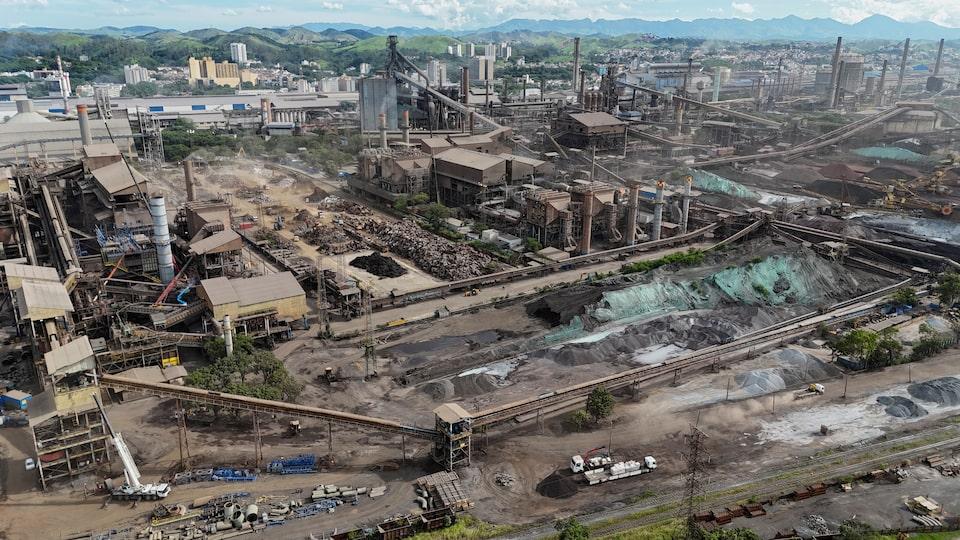
SAO PAULO/BRASILIA, Feb 10 (Reuters) - Brazil's finance minister rejected on Monday a report saying the country was planning to impose taxes on U.S. tech companies if President Donald Trump proceeds with plans to introduce a 25% tariff on all U.S. steel imports. "The information is not correct," Fernando Haddad wrote on social media, after the newspaper Folha de S.Paulo reported that President Luiz Inacio Lula da Silva's administration was mulling tariffs on big tech firms as retaliation. The South American country is one of the largest sources of U.S. steel imports as well as a top market for many big tech companies. Trump said on Sunday he would introduce on Monday new 25% tariffs on steel and aluminum imports, on top of existing metals duties, in another escalation of his trade policy shakeup. "The Brazilian government has made the sensible decision to only make statements at the appropriate time and based on concrete decisions, not on announcements that could be misinterpreted or revised," Haddad said. According to the Folha report, which cited an unnamed Brazilian authority, a potential Brazilian levy could have affected Amazon (AMZN.O) , opens new tab, Meta Platforms' (META.O) , opens new tab Facebook and Instagram, and Alphabet-owned (GOOGL.O) , opens new tab Google. A finance ministry official in 2024 had already floated the idea of a potential tax on big tech companies to meet fiscal targets in case there was a government revenue shortfall this year. Sign up here. https://www.reuters.com/technology/brazil-plans-levies-us-tech-firms-after-trump-steel-tariffs-report-says-2025-02-10/
2025-02-10 20:49
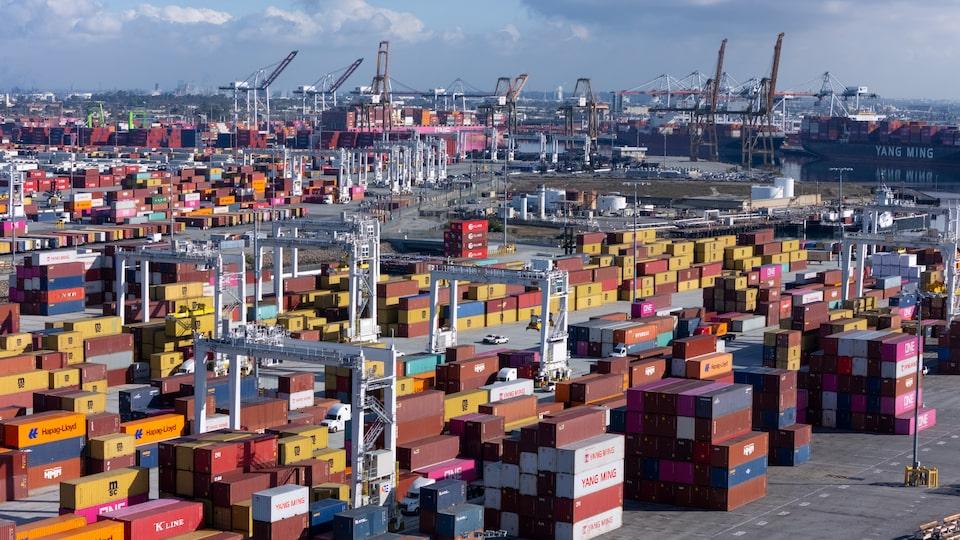
Feb 10 (Reuters) - U.S. container imports hit a record high in January, with goods from China notching a year-over-year gain of 10.2%, supply chain technology provider Descartes (DSG.TO) , opens new tab said on Monday. U.S. seaports handled 2.49 million 20-foot equivalent units (TEUs) in January, topping the previous January import record set in 2022. Goods from China accounted for 997,909 TEUs of last month's total. Some U.S. importers have been rushing in some goods ahead of expected new tariffs and other potential supply-chain disruptions. Goods ranging from plastic toys to parts from machinery have ticked higher in recent months, experts said. President Donald Trump imposed a new 10% tariff on Chinese goods as of February 4 but paused until March more aggressive 25% tariffs on imports from Mexico and Canada to allow for further negotiations. Sign up here. https://www.reuters.com/markets/us/us-containerized-imports-hit-record-high-january-2025-02-10/