2025-02-10 06:38
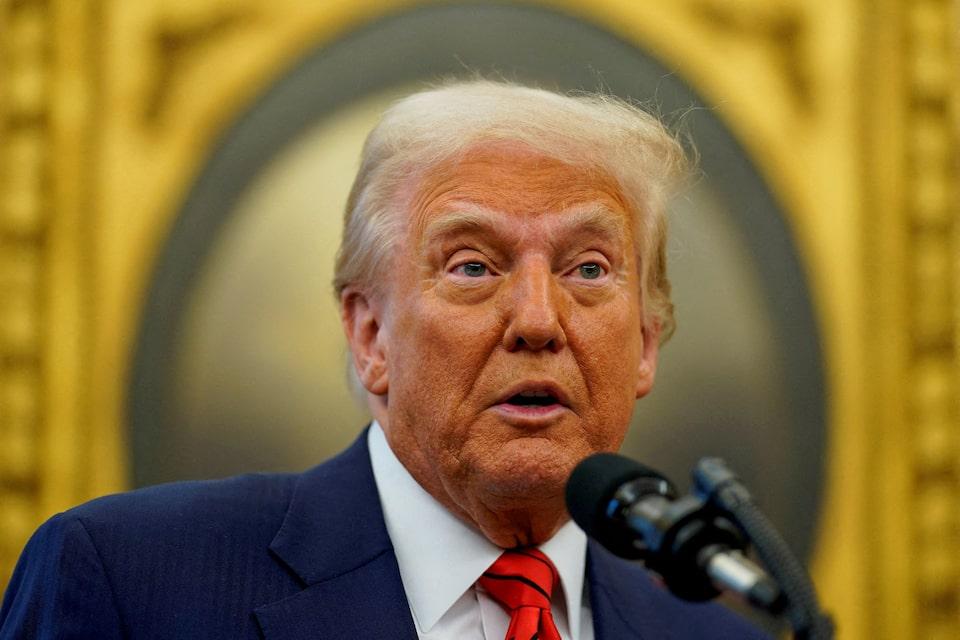
SEOUL, Feb 10 (Reuters) - South Korea's Industry Ministry said on Monday it held an emergency meeting with steelmakers in Seoul to discuss measures to minimise the impact of potential U.S. tariffs. U.S. President Donald Trump said on Sunday he will announce new 25% tariffs on all steel and aluminum imports into the U.S. on Monday, in another major escalation of his trade policy overhaul. The ministry said it was trying learn the details of the potential tariffs, and would work closely with steelmakers to actively respond to the potential tariffs. Korean steelmakers supply steel to the factories of car makers Hyundai Motor, Kia Motors as well as television and home appliance companies like Samsung Electronics and LG Electronics in Mexico and the United States, industry officials said. Sign up here. https://www.reuters.com/markets/commodities/south-korea-holds-emergency-meeting-trumps-potential-steel-tariffs-2025-02-10/
2025-02-10 06:29
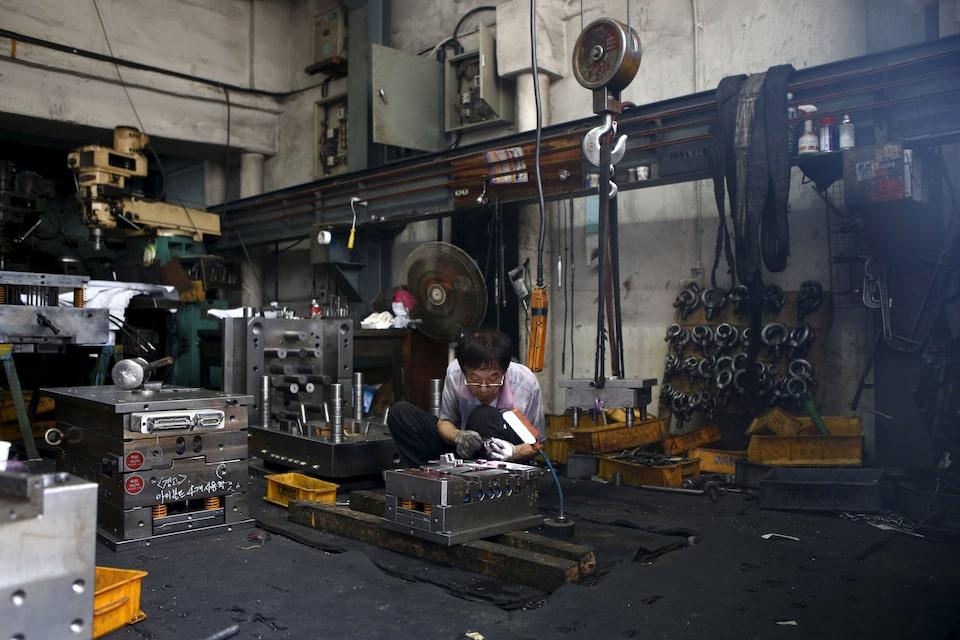
Feb 10 (Reuters) - The U.S. government has nearly $36 trillion of debt on issue and its bonds are the bedrock of the global financial system. President Donald Trump said Sunday his administration was examining Treasury debt payments for possible fraud and suggested that the country's debt might not be that high - remarks that may unsettle investors who regard the U.S. as creditworthy and its debt as a safe asset. Treasuries are held widely and used globally as financial reserves, as a benchmark for pricing and as collateral for borrowing. Below is a breakdown of U.S. debt ownership. By owner: And by foreign investor: Foreign ownership data is compiled monthly by the U.S. Treasury, which says it relies mostly on U.S.-based custodians and that because securities held in custody accounts may not be attributed to the actual owners, the data may not provide a precise account of individual country ownership of Treasuries. Total U.S. debt is $35.5 trillion and it has been rising. Sign up here. https://www.reuters.com/markets/us/who-owns-us-debt-2025-02-10/
2025-02-10 06:20
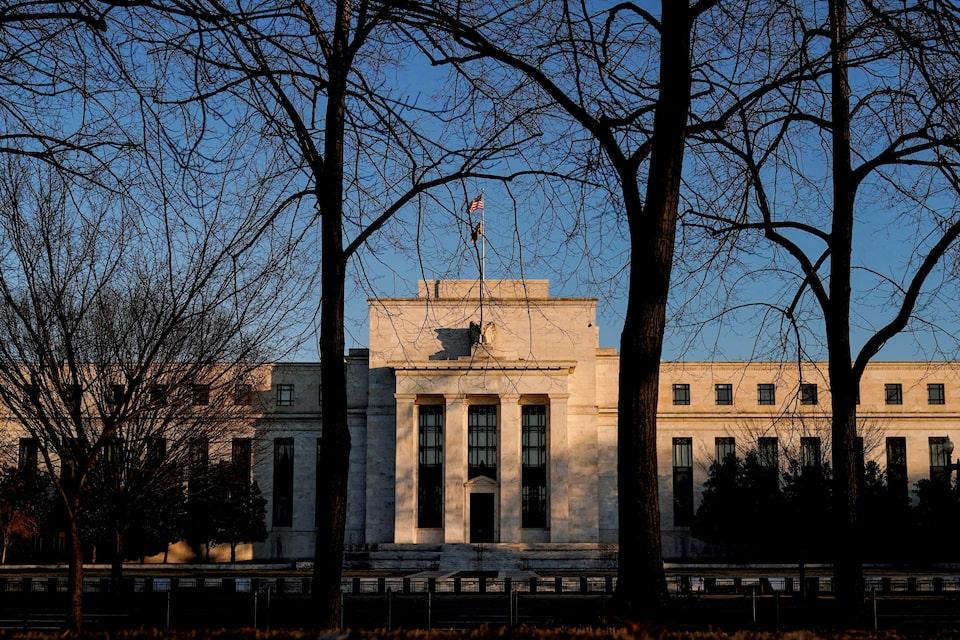
Trump to announce 25% steel and aluminium tariffs New tariffs reflect more uncertainty in global trade — analyst Bullion hits a record high of $2,911.30 per ounce US CPI, PPI due later this week Feb 10 (Reuters) - Gold prices continued their record rally on Monday and broke through the key $2,900 level for the first time, driven by safe-haven demand as U.S. President Donald Trump's new tariff threats amplified trade war and inflation concerns. Spot gold surged 1.6% to $2,905.24 per ounce, as of 01:45 p.m. ET (1845 GMT), after hitting a record high of $2,911.30 earlier in the session. U.S. gold futures settled 1.6% higher at $2,934.40. "Obviously the tariff war is behind the rise; it just reflects more uncertainty and more tension in the global trade situation," said Marex analyst Edward Meir. Trump announced plans on Sunday to impose an additional 25% tariff on all steel and aluminium imports. He also said he would announce reciprocal tariffs this week, matching rates imposed by other countries and applying them immediately. Tariffs may exacerbate U.S. inflation, with investors awaiting U.S. Consumer Price Index (CPI) and Producer Price Index (PPI) data due later in the week. If the CPI and PPI data surprise on the downside, it may weigh on the dollar and inflate gold prices, while an upside surprise could push up U.S. yields and strain gold, albeit mildly due to the market's resilience and buyer interest during dips, Meir said. Federal Reserve Chair Jerome Powell is also due to testify before Congress on Tuesday and Wednesday. Bullion has already hit its seventh record high this year, driven by Trump's tariff threats, which have fueled uncertainty over global growth, trade wars, and high inflation, prompting investors turn to gold as a safe-haven asset. Phillip Streible, chief market strategist at Blue Line Futures, said gold's 45-degree rally since December might create a self-fulfilling prophecy of further price increases, potentially leading it to raise its forecast to around $3,250 or $3,500. Spot silver rose 0.8% to $32.05 per ounce after hitting a three-month high on Friday. Platinum added 1.5% to $990.74 and palladium gained 2.1% to $985.40. Sign up here. https://www.reuters.com/markets/commodities/gold-hovers-near-all-time-highs-trumps-tariff-threats-lift-safe-haven-demand-2025-02-10/
2025-02-10 06:14
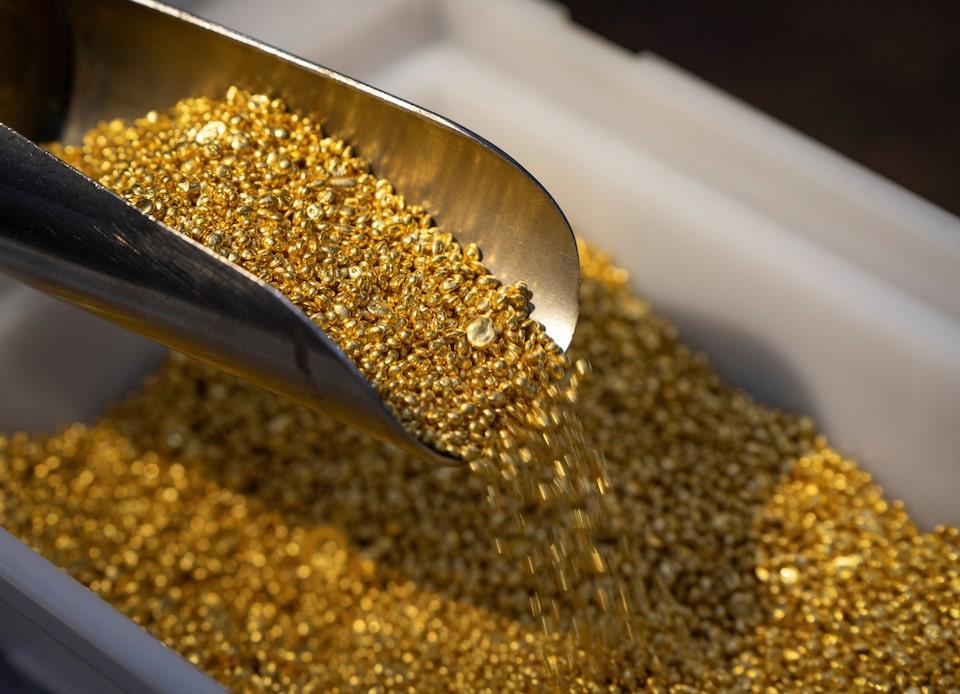
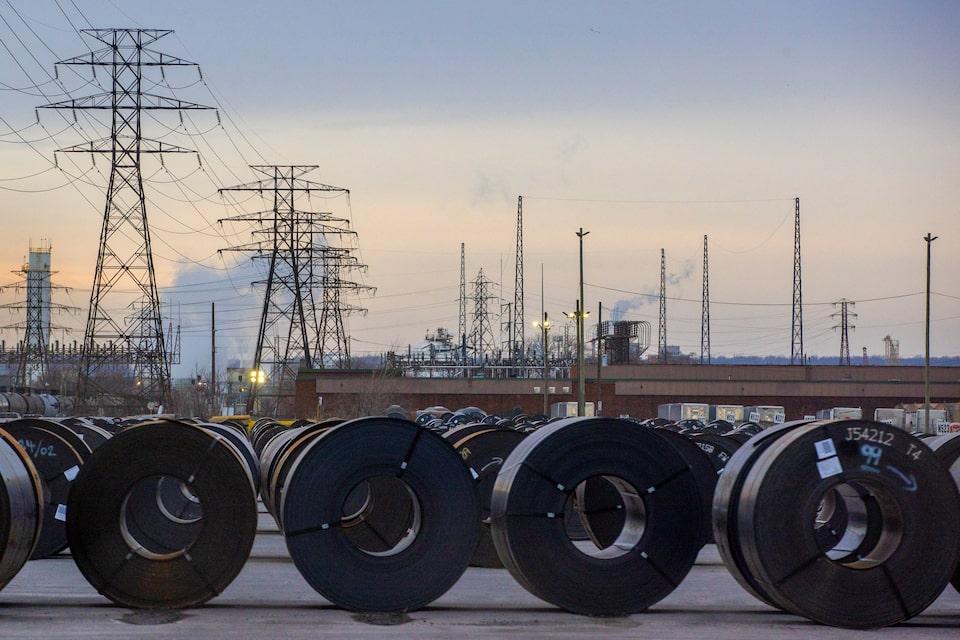
June 2 (Reuters) - U.S. President Donald Trump said on Friday he planned to double tariffs on steel and aluminium imports to 50% from 25%, starting from Wednesday, ratcheting up pressure on global producers and deepening his trade war. Here's a summary of the major trade partners it will affect. Sign up here. STEEL: Roughly a quarter of all steel used in the U.S. is imported, the bulk of it from neighbours Mexico and Canada or close allies in Asia and Europe such as Japan, South Korea and Germany. While China is the world's largest steel producer and exporter, it sends very little to the United States. Tariffs of 25% imposed in 2018 shut most Chinese steel out of the market. China exported 508,000 net tons of steel to the U.S. last year or 1.8% of total American steel imports. ALUMINIUM: For aluminum, the U.S. is more heavily reliant on imports. Roughly half of all aluminium used in the U.S. is imported, with the vast majority coming from Canada. At 3.2 million tons last year, Canadian imports were twice those of the next nine countries combined. The next largest sources of imports are the United Arab Emirates and China, at 347,034 and 222,872 metric tons, respectively. The U.S. aluminium smelting industry is small by global standards. Total smelter capacity in the country was just 1.73% of the global total according to the U.S. Geological Survey. https://www.reuters.com/markets/commodities/where-does-us-get-its-steel-aluminum-2025-02-10/
2025-02-10 06:03
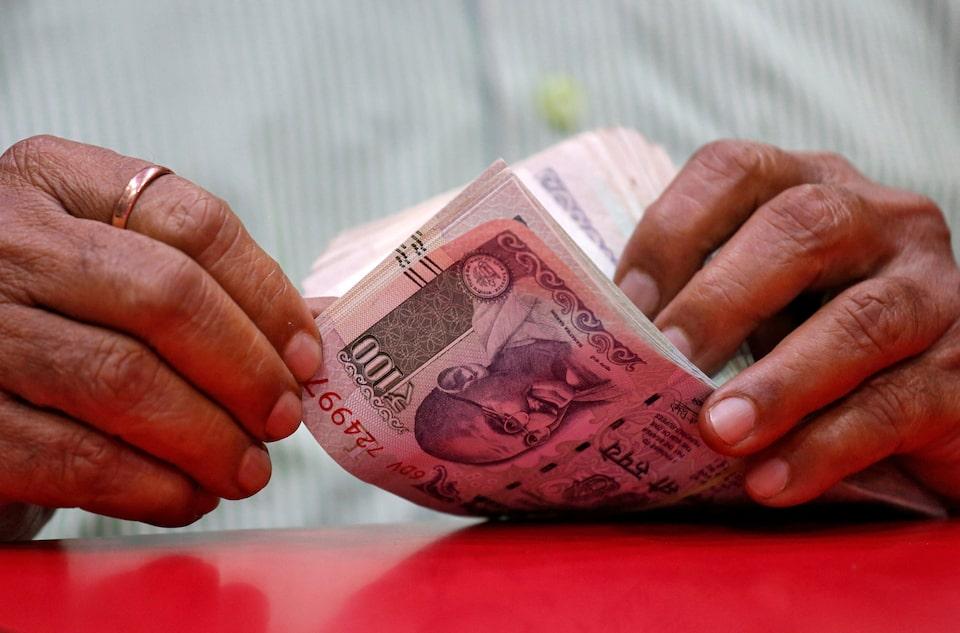
MUMBAI, Feb 10 (Reuters) - The rupee is expected to stay under pressure this week as the looming risk of trade tariffs support the dollar with remarks from the Federal Reserve chair and U.S inflation data in focus for the local currency and government bonds. The rupee closed at 87.4250 on Friday, down nearly 1% for the week, its worst weekly decline since December 2022. Concerns around a global trade war, foreign portfolio outflows and expectations of a domestic interest rate cut pushed the rupee to its lifetime low of 87.5825 last week. The Reserve Bank of India cut rates for the first time in nearly five years on Friday. Meanwhile, U.S. President Donald Trump said on Friday that he plans to announce reciprocal tariffs on many countries early this week but did not specify which countries. Indian Prime Minister Narendra Modi will visit the U.S. on Wednesday for talks with President Trump. Trump's comments helped boost the dollar alongside data on Friday that showed the U.S. unemployment rate declined to 4%, reinforcing the view that the Fed does not need to rush to cut interest rates. "Trade policy uncertainties and the solid labour market conditions will help limit an extension of the dollar selling," that emerged last week, MUFG Bank said in a note. Traders will also keep an eye on remarks from Federal Reserve Chair Jerome Powell on Tuesday, followed by the U.S. consumer price inflation data on Wednesday, both of which will influence the dollar's trajectory. Separately, the benchmark 10-year bond yield ended at 6.7043% on Friday, up 5 basis points. Traders expect the yield to trade in the 6.65%-6.75% range this week. Bond yields ended higher after the RBI cut the policy rate, as was widely expected, but investors were left disappointed as the easing was not accompanied by any other liquidity measure. Some market participants had expected a cut to banks' cash reserve ratio (CRR), or other liquidity infusion measures, but none of these materialised. No further announcements on liquidity infusion measures were disappointing. However does not rule out such announcements coming shortly, as these do not need an MPC and are purely an RBI decision. "Even though we see today's (Friday) policy statement as 'neutral', we continue to expect another 25 bps cut in April. We continue to see the policy repo rate at 5.5% by March 2026 and expect a 50 bps cut in the CRR in FY25-26," said Aastha Gudwani, India chief economist at Barclays. The central bank has bought bonds worth 588.35 billion rupees ($6.71 billion) through auctions as well as secondary market purchases, while infusing around 440 billion rupees through a dollar/rupee swap. It also infused 500 billion rupees through a 56-day repo. KEY EVENTS: India ** January CPI inflation - Feb. 12, Wednesday (4:00 pm IST) (Reuters poll: 4.69%) ** January WPI inflation - Feb. 14, Friday (12:00 pm IST) (Reuters poll: 2.50%) U.S. ** January CPI and core CPI - Feb. 12, Wednesday (7:00 p.m. IST) (Reuters poll - 0.3% month-on-month) ** January PPI machine manufacturing - Feb. 13, Thursday (7:00 p.m. IST) ** Initial weekly jobless claims week to Feb. 3 - Feb. 13, Thursday (7:00 p.m. IST) ** January retail sales - Feb. 14, Friday (7:00 p.m. IST) ** January import prices - Feb. 14, Friday (7:00 p.m. IST) ** January industrial production - Feb. 14, Friday(7:45 p.m. IST) ($1 = 87.6270 Indian rupees) Sign up here. https://www.reuters.com/world/india/tariff-risks-weigh-indian-rupee-bonds-track-us-inflation-data-2025-02-10/
2025-02-10 05:33
A look at the day ahead in European and global markets from Wayne Cole. The week started with a now all-too common bang as President Trump used a media scrum on Air Force One to announce 25% tariffs on steel and aluminium imports into the U.S., with a promise of yet more reciprocal tariffs on Tuesday or Wednesday. At the same time, China's new retaliatory tariffs on the U.S. came into effect and German Chancellor Scholz said the EU was ready to respond to levies "within an hour". Investors sold the usual suspects with the Australian dollar and euro both slipping early, though they have since pared the losses. Wall Street futures also started lower but didn't stay down for long: They are now up around 0.3%. European futures are also holding their nerve for now. Maybe tariffs are losing their shock value, or markets suspect it is all a bargaining bluff and Trump will quickly reverse course. Some analysts argue that Trump is very sensitive to moves on Wall Street and will cave if markets truly tank - another version of the Fed Put. Then again, markets would have to tank first and the current stability in stocks would surely just make him bolder. Trump also made some, frankly confusing, comments on the Treasury market suggesting the U.S. debt was not as big as assumed because some of it was "fraudulent". That rang some alarm bells as Trump has in the past floated the idea of reneging on the U.S. debt, essentially defaulting. Such a move would be a global financial catastrophe, so analysts assume he would never do it. Yet just a whiff of a hint of a suggestion of such a risk could cause mayhem. No doubt all these questions will be put to Fed Chair Powell when he testifies before Congress on Tuesday and Wednesday and he will have to be at his diplomatic best to answer without riling the White House. Wednesday's appearance will also come right after January consumer price data are released, allowing for a real-time reaction from the Fed itself. As an aside, gold hit another all-time high helped by speculation that Trump could slap tariffs on the metal, an odd move given the popularity among some conservative U.S. commentators of what John Maynard Keynes once called a "barbarous relic". The tariff talk has sparked a rush for the physical metal in London, Switzerland and Asia to ship to the U.S. ahead of any new levy. Apparently demand has been so great the Bank of England has been unable to keep up, partly due to its antiquated method of releasing its bullion stores, and that's causing a painful crunch in the market. It gives "liquid gold" a whole new meaning. Key developments that could influence markets on Monday: - Appearances by ECB President Christine Lagarde and ECB Board Member Isabel Schnabel, BoE policymaker Catherine Mann, - EU Sentix investor confidence survey - NY Fed Inflation Expectations Sign up here. https://www.reuters.com/markets/europe/global-markets-view-europe-2025-02-10/