2025-02-10 05:24
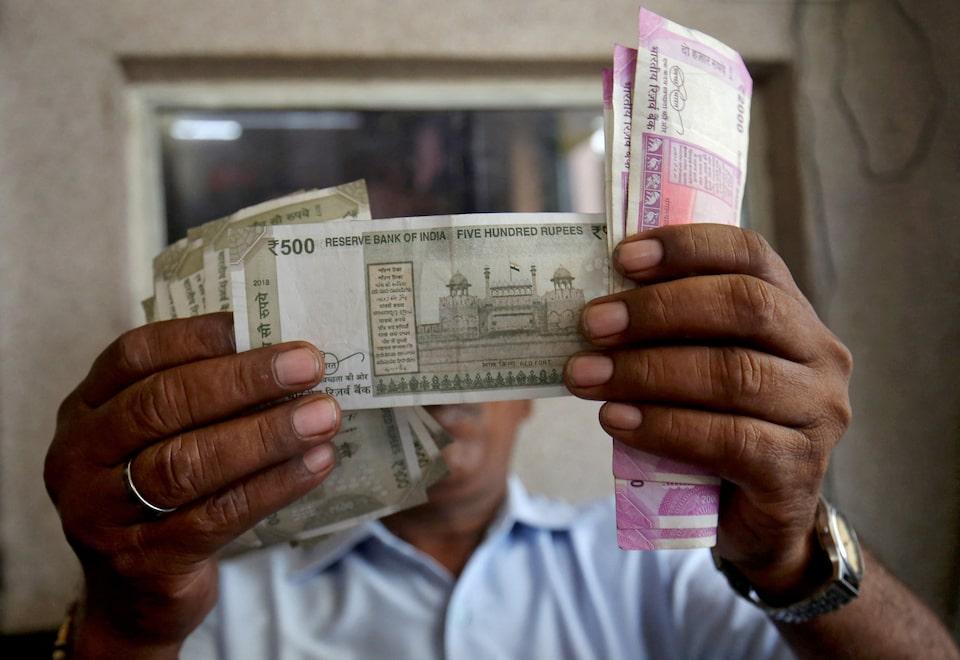
Tariff talk hits Canadian dollar, yen Powell likely to emphasize patience in upcoming testimony CPI this week's main US economic focus NEW YORK, Feb 10 (Reuters) - The U.S. dollar gained on Monday after President Donald Trump pledged 25% tariffs on all imports of steel and aluminium, while the Canadian dollar, Japanese yen, euro and sterling all weakened on concerns about the impact of any new trade levies. Canada is a major exporter of steel and aluminium to the U.S., along with Brazil, Mexico, South Korea and Vietnam, according to government and American Iron and Steel Institute data. The yen also dipped on concerns that Japan could also face tariffs. There is “a little bit of catch-up and also this idea that maybe Japan was going to escape the worst of it and now could be hit with the steel and aluminium tariffs,” said Marc Chandler, chief market strategist at Bannockburn Global Forex in New York. Japanese Prime Minister Shigeru Ishiba expressed optimism on Sunday that his country could avoid higher U.S. tariffs, saying Trump had "recognised" Japan's huge investment in the U.S. and the American jobs that it creates. Trump said on Sunday he will introduce new 25% tariffs on all steel and aluminium imports into the U.S., on top of existing metals duties. It came after he said on Friday he planned to announce reciprocal tariffs on many countries by Monday or Tuesday. The Canadian dollar weakened 0.11% versus the greenback to C$1.4307 per dollar, after earlier reaching $1.4379. The U.S. dollar strengthened 0.38% to 151.97 Japanese yen . The dollar index rose 0.21% to 108.31 . The euro dropped 0.2% to $1.0306 . The U.S. is the second-largest market for EU steel exports. Sterling weakened 0.36% to $1.2364 Britain has not seen details of U.S. President Donald Trump's proposed steel and aluminium tariffs and will continue to engage with the Trump administration as appropriate, a spokesman for Prime Minister Keir Starmer said on Monday. The U.S. is Britain's second largest steel export market after the European Union. This week's main U.S. economic focus will be consumer price inflation data for January due on Wednesday. It is expected to show that both headline and core consumer prices rose by 0.3% last month, for an annual gain of 2.9% and 3.1%, respectively, according to economists polled by Reuters. (USCPI=ECI) , opens new tab, (USCPF=ECI) , opens new tab, (USCPNY=ECI) , opens new tab, (USCPFY=ECI) , opens new tab Federal Reserve Chairman Jerome Powell is also due to testify before Congress on Tuesday and Wednesday. “I think Powell is going to tell Congress the same thing basically he told everybody else, with the economy still in a good place, and that is above-trend growth, that the Fed has time," said Chandler. "The Fed can be patient while the restrictive monetary policy helps bring inflation back down to target over time.” A New York Fed survey on Monday found that the U.S. public’s near-term inflation expectations were largely stable in January. In cryptocurrencies, bitcoin gained 1.42% to $97,378.84. Sign up here. https://www.reuters.com/markets/currencies/dollar-gains-trump-tariff-threats-euro-near-2-year-low-2025-02-10/
2025-02-10 05:08
TOKYO, Feb 10 (Reuters) - Japan's weather bureau said on Monday there were no clear indications of El Nino or La Nina events, although La Nina characteristics were becoming evident. The bureau added that there was a 60% likelihood of ordinary weather pattern continuing towards the summer. El Nino is a warming of ocean surface temperatures in the eastern and central Pacific. La Nina is characterised by colder-than-usual ocean temperatures in the equatorial Pacific region and is linked to floods and drought. Sign up here. https://www.reuters.com/business/environment/japan-weather-bureau-says-no-signs-el-nino-la-nina-2025-02-10/

2025-02-10 05:02
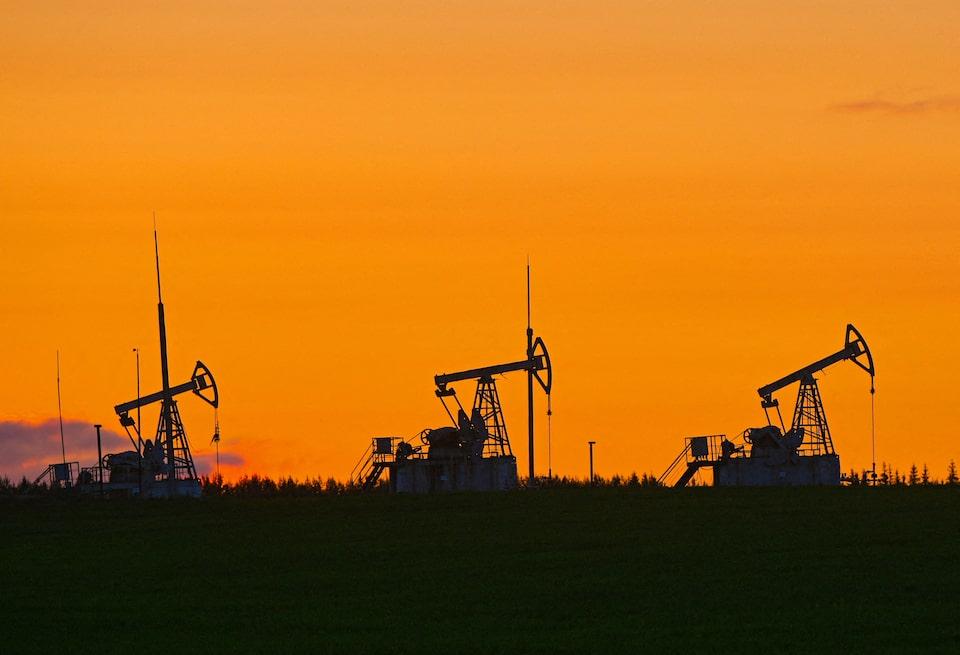
Trump to announce 25% steel and aluminium tariffs on Monday China responds with retaliatory tariffs on some US exports Trump holds talks with Putin to end Ukraine war LONDON, Feb 10 (Reuters) - Oil prices rebounded on Monday despite lingering fears over a potential global trade war after U.S. President Donald Trump's latest tariff plans, this time targeting steel and aluminium. Brent crude futures were up 94 cents, or 1.3%, at $75.60 a barrel by 1131 GMT. U.S. West Texas Intermediate crude also added 1.3%, rising 93 cents to $71.93. Monday's gains could be down to bargain hunting after the market posted a third consecutive weekly decline last week, pressured by the concerns over global trade. "It's tariff uncertainty which is the name of the game. This affects risk appetite in general and has spillover effects into oil," said Harry Tchilinguiran at Onyx Capital. "After last week's declines, some people may be buying into the dip." Trump said he will announce on Monday 25% tariffs on all steel and aluminium imports into the United States. A week ago he announced tariffs on Canada, Mexico and China, but suspended those for the neighbouring countries the next day. There are concerns that tariffs could dampen global economic growth and energy demand. But in light of Trump's temporary backdown last week, investors appeared to be shrugging off the steel and aluminium tariff threat for now, said IG analyst Tony Sycamore. "The market has realised tariff headlines are likely to continue in the weeks and months ahead," he said, adding that there was an equal chance they could be walked back or even increased at some point in the near future. "So perhaps investors are coming to the conclusion it's not the best course of action to react negatively to every headline." China's retaliatory tariffs on some U.S. exports are due to take effect on Monday, with no sign yet of progress in talks between Beijing and Washington. Oil and gas traders are seeking waivers from Beijing for U.S. crude and liquefied natural gas (LNG) imports. Trump said on Sunday that the U.S. is making progress with Russia to end the Ukraine war, but he declined to provide details about any communications with Russian President Vladimir Putin. Sanctions imposed on Russian oil trade on January 10 disrupted Moscow's supplies to its top clients, China and India. Washington also stepped up pressure on Iran last week, with the U.S. Treasury imposing new sanctions on a few individuals and tankers that help to ship Iranian crude oil to China. "These sanctions on Iran and Russia, they are biting. This is tightening the market," said SEB analyst Bjarne Schieldrop. Rising natural gas prices are also contributing to oil price gains by boosting demand for cheaper fuels, he added. Brent crude is forecast to average $60 to $65 a barrel in the second half of 2025 because Trump will be persistent in his desire to lower energy prices and he will ultimately prove to be a bearish influence on the market, Citi analysts said. Sign up here. https://www.reuters.com/markets/commodities/oil-ticks-higher-investors-weigh-new-us-tariffs-2025-02-10/
2025-02-10 04:37
TAIPEI, Feb 10 (Reuters) - Taiwan is interested in natural gas from Alaska and will continue to assess the feasibility of purchases, the economy ministry said on Monday, as the government looks to narrow the trade surplus with the United States and head off tariffs. U.S. President Donald Trump said on Friday he plans to announce reciprocal tariffs on many economies by this week, a major escalation of his offensive to reshape global trade relationships in ways he considers to be in America's favour. Taiwan runs a large trade surplus with the United States, which surged 83% last year, with the island's exports to the U.S. hitting a record $111.4 billion, driven by demand for high-tech products such as semiconductors. Taiwan's economy ministry said in a statement that the state-run energy company CPC is "indeed quite interested in Alaska's natural gas and will continue to assess the feasibility and is also willing to make additional purchases". The ministry did not elaborate, though it noted the "short shipping distance" from Alaska. CPC did not immediately respond to a request for comment. Most of Taiwan's liquefied natural gas (LNG) comes from Australia and Qatar, with U.S. imports making up around 10% of supplies. Taiwan's official Central News Agency said late on Sunday that CPC is in talks with an unnamed Alaskan company "in the hope of reducing the trade surplus with the U.S.". In 2021, CPC began receiving LNG cargoes from Cheniere Energy under a 25-year deal signed with the U.S. company in 2018 shortly before then-Taiwan President Tsai Ing-wen visited the United States. The ministry, giving details on previously announced plans to send officials to Washington to discuss tariffs, said the delegation would be led by Deputy Economy Minister Cynthia Kiang and Chen Pei-li, deputy director general of the ministry's Industrial Development Administration. Taiwan Economy Minister Kuo Jyh-huei said on Saturday that Taiwan could follow Japan's example and import more U.S. energy. Japan will soon begin importing a record amount of U.S. LNG, Trump said on Friday after talks with Japanese Prime Minister Shigeru Ishiba. Sign up here. https://www.reuters.com/business/energy/taiwan-looks-buy-alaskan-natural-gas-seeks-head-off-us-tariffs-2025-02-10/

2025-02-10 04:16
MUMBAI, Feb 10 (Reuters) - The Indian rupee dropped to its lifetime low on Monday as the risk of fresh U.S. trade tariffs spurred losses in most regional currencies, with the Reserve Bank of India likely stepping in to support the local unit, traders said. The rupee declined to 87.95 per U.S. dollar in early trading, falling past its previous record low of 87.5825 hit last week. The currency was last quoted at 87.9050 as of 09:40 a.m. IST, down 0.5% on the day. State-run banks were spotted selling dollars before the local spot market opened, most likely on behalf of the RBI, traders said. The rupee seemed on track to open around the 88 handle but the dollar selling intervention helped the currency hold above the psychologically important level. U.S. President Donald Trump said on Sunday that he will introduce fresh 25% tariffs on steel and aluminium imports into the U.S., along with reciprocal tariffs on all countries this week to match the rates levied by them. The dollar index was higher at 108.3, while Asian currencies declined 0.1% to 0.6%. The rupee has fallen continuously since Trump's victory in the U.S. elections last November and has declined about 4.5% since then. The currency's quick slide has also come in the backdrop of slowing economic growth and persistent foreign outflows. Overseas investors have pulled out over $7.5 billion, on a net basis, from Indian stocks and bonds so far this year. Amid these challenges, the RBI has stepped in routinely to curb excess volatility in the currency. The frequent interventions have weighed on India's FX reserves (INFXR=ECI) , opens new tab, which are hovering near an 11-month low. "We believe the risks to INR over coming months are skewed towards relative weakness. If the broad USD were to weaken, we believe the downside in USD/INR would be mitigated by active RBI FX purchases," Nomura said in a note. Sign up here. https://www.reuters.com/markets/currencies/trade-tariff-worries-push-rupee-record-low-rbi-steps-cap-losses-2025-02-10/
2025-02-10 02:56
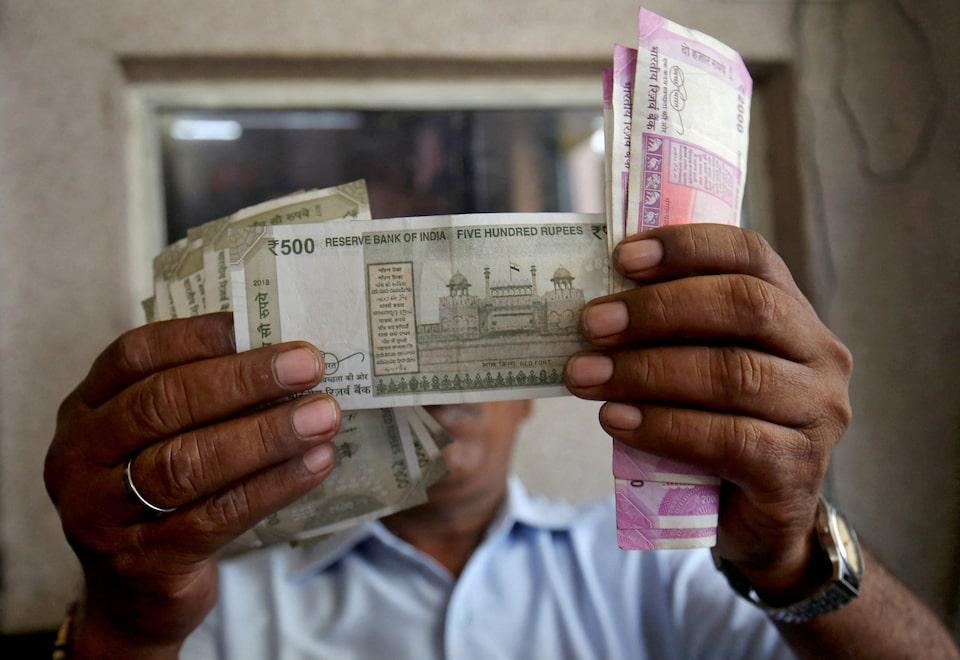
MUMBAI, Feb 10 (Reuters) - The Indian rupee is set to open weaker on Monday, tracking losses in Asian currencies after U.S. President Donald Trump said he will introduce more tariffs. The 1-month non-deliverable forward indicated that the rupee will open at 87.90-88.00 to the U.S. dollar, compared to its previous close of 87.4250 and past the lifetime low of 87.5825. The Indian currency had managed a mini relief rally on Friday after the Reserve Bank of India was not more dovish than expected at its monetary policy decision. The NDF is indicating is a "sizable up move" at open, which "when you consider the recent price action is not surprising", he said. "The 88 level will be obviously be the one to watch." Trump on Sunday said he will introduce new 25% tariffs on steel and aluminium imports into the U.S., along with reciprocal tariffs on all countries this week to match the rates levied by each country. His new tariff plan marks a significant upturn in risks of a trade war, analysts said. Reciprocal tariffs will perhaps garner the highest level of attention, said Chris Weston, head research at Melbourne-based broker Pepperstone. Japan, India, Brazil, Vietnam, China and the EU nations are now firmly in the firing line, he said. The offshore Chinese yuan dropped past 7.31 to the U.S. dollar, while the Korean won, the Indonesian rupiah and the Malaysian ringgit were down 0.4% to 0.7%. There is significant uncertainty on what Trump will actually do when it comes to tariffs. Trump has previously delayed tariffs on Mexico and Canada and he has made reconciliatory remarks on China. The key U.S. jobs report on Friday was pushed to a side note amid worries over the tariffs. The report was "encouraging" and is likely to give the Federal Reserve confidence in holding rates steady, ANZ Bank said in a note. KEY INDICATORS: ** One-month non-deliverable rupee forward at 88.18; onshore one-month forward premium at 17.5 paisa ** Dollar index up at 108.39 ** Brent crude futures up 0.7% at $75.2 per barrel ** Ten-year U.S. note yield rises to 4.49% ** As per NSDL data, foreign investors sold a net $410.5 mln worth of Indian shares on February 6 ** NSDL data shows foreign investors bought a net $45.2 mln worth of Indian bonds on February 6 Sign up here. https://www.reuters.com/markets/currencies/rupee-plunge-all-time-low-following-trumps-new-tariff-plan-2025-02-10/