2025-02-10 00:26
SEOUL, Feb 10 (Reuters) - Shares of South Korean steelmakers dropped on Monday, after U.S. President Donald Trump said he would introduce new tariffs. POSCO Holdings (005490.KS) , opens new tab shares fell as much as 3.6% to 230,500 won, the lowest since October 2022, while shares of Hyundai Steel (004020.KS) , opens new tab fell as much as 2.9% to the lowest on record. Trump said that he would announce on Monday new 25% tariffs on all steel and aluminum imports into the United States, which would come on top of existing metals duties in another major escalation of his trade policy overhaul. Shares of South Korean automakers also weakened, with Hyundai Motor (005380.KS) , opens new tab down 0.7% and Kia Corp (000270.KS) , opens new tab down 2%, while the benchmark KOSPI (.KS11) , opens new tab fell 0.5%. Sign up here. https://www.reuters.com/markets/asia/shares-south-korean-steelmakers-drop-trump-talks-tariffs-2025-02-10/
2025-02-10 00:23
Trump says some Treasury payments might 'not count' US debt is currently more than 120% of GDP Congress will have to raise debt ceiling this year Feb 9 (Reuters) - U.S. President Donald Trump on Sunday said his administration was examining U.S. Treasury debt payments for possible fraud and suggested that the country's $36 trillion debt load might not be that high. Speaking to reporters aboard Air Force One, Trump said administration officials who have been combing through payment records in an effort to identify wasteful spending have turned their attention to the debt payments that play a central role in the global financial system. "We're even looking at Treasuries," Trump said. "There could be a problem - you've been reading about that, with Treasuries and that could be an interesting problem." He added: "It could be that a lot of those things don't count. In other words, that some of that stuff that we're finding is very fraudulent, therefore maybe we have less debt than we thought." It was not clear whether Trump was referring to debt service or other government payments made by the Treasury Department. The United States currently has $36.2 trillion public debt outstanding, according to the U.S. Treasury, equal to more than 120% of GDP. Because the U.S. government spends more money than it collects, Trump and his fellow Republicans who control Congress will have to authorize more borrowing sometime this year to avert a debt default that could have catastrophic consequences. Trump's proposed tax cuts would add trillions of dollars more in debt, independent budget watchdogs say. Trump has tasked Elon Musk with an ambitious overhaul of the federal government, sparking street protests in Washington and accusations that the Trump administration is breaking the law. Musk's "Department of Government Efficiency" has disrupted operations at several federal agencies and has raised privacy and security concerns while accessing sensitive payroll and spending records. A federal judge temporarily blocked Musk's team on Saturday from accessing government systems used to process trillions of dollars in payments, citing a risk that sensitive information could be improperly disclosed. After the ruling, Musk said a do-not-pay list of entities that should not receive government payments should be updated at least weekly, if not daily. Treasury Secretary Scott Bessent, a Trump appointee, said last week that Musk's team had "read only" access to the payment system, which would not give them power to make changes. Trump's attempt to freeze wide swaths of domestic aid has been blocked in court, but project managers across the country say billions of dollars nevertheless have been withheld for clean energy and transportation projects. Some health clinics say they have been forced to lay off staff and shutter facilities because they have not been able to access federal funding. Sign up here. https://www.reuters.com/markets/us/trump-says-us-might-have-less-debt-than-thought-2025-02-09/
2025-02-10 00:03
TOKYO, Feb 10 (Reuters) - Japan's Nippon Steel (5401.T) , opens new tab is considering proposing a bold change in plan from its previous approach of seeking to buy U.S. Steel (X.N) , opens new tab, Chief Cabinet Secretary Yoshimasa Hayashi said on Monday, though the company declined to comment. "We are aware that Nippon Steel is not looking at this as a mere acquisition, but is considering a bold proposal that is completely different from anything it has done in the past," Hayashi told reporters. Hayashi said it would create a win-win situation for both Japan and the U.S. through significant investments and the production of high-quality products demanded by the U.S. and global markets. On Friday, U.S. President Donald Trump said Nippon Steel's $14.9 billion bid for U.S. Steel would take the form of an investment instead of a purchase. Two people familiar with the matter said the biggest Japanese steelmaker had not withdrawn its bid. Nippon Steel declined to comment on Hayashi's comment as well as Trump's latest statement that no one can have a majority stake in U.S. Steel. Trump made the comment on Sunday when speaking to reporters on Air Force One. He also said the U.S. will impose 25% tariffs on all steel and aluminium imports on top of existing duties, and that he will announce the new metals tariffs on Monday. Shares in Nippon Steel fell 1.5% by midday on Monday, compared with a 0.1% decline in the Nikkei index (.N225) , opens new tab. LONG PURSUIT Nippon's pursuit of U.S. Steel has stretched on for more than a year, with Trump condemning the proposal on numerous occasions, before Friday's more tempered remarks at the Oval Office with Japanese Prime Minister Shigeru Ishiba at his side. It was unclear if the investment referred to a new deal structure or what the details of the transaction would be, but Trump said on Friday he would meet with the head of Nippon Steel this week and he would be involved "to mediate and arbitrate". Nippon Steel Vice Chairman Takahiro Mori last Thursday said the Japanese company had no plan to change the acquisition structure. Ishiba, on returning from the U.S., told broadcaster Nippon TV on Sunday that there are legal questions regarding the distinction between acquisition and investment, including the extent of stock ownership. He said such details are likely to be discussed between Trump and Nippon Steel. "The key point is whether Americans will feel that U.S. Steel will remain an American company," Ishiba said. Nippon Steel on Monday declined to issue a statement on Ishiba's comments or any management meeting with Trump. Nippon Steel's bid for U.S. Steel is central to the Japanese company's global expansion plan. It was blocked last month by then-U.S. President Joe Biden, citing national security. The firm, together with U.S. Steel, filed a number of lawsuits challenging Biden's decision. Sign up here. https://www.reuters.com/markets/deals/nippon-steel-declines-comment-trump-statement-opposing-majority-stake-us-steel-2025-02-10/
2025-02-09 23:41
Dollar up as Trump talks of tariffs on steel, aluminium Stocks shrug off tariff threat, with S&P 500 futures higher Markets see less scope for Fed rate cuts this year SYDNEY/LONDON, Feb 10 (Reuters) - The dollar edged higher on Monday after U.S. President Donald Trump warned more tariffs were imminent including on steel and aluminium, although U.S. futures and European stocks shrugged off the looming levies and rose. Speaking to reporters on Air Force One, Trump said he would announce on Monday 25% tariffs on all steel and aluminium imports into the U.S., and reveal other reciprocal tariffs on Tuesday or Wednesday. China's retaliatory tariffs on some U.S. exports take effect on Monday, with no sign as yet of progress between Beijing and Washington. Investors reacted by pushing the dollar slightly higher, with the index tracking the U.S. currency up just over 0.1% from Friday's close, at 108.17. It climbed 0.59% against Japan's yen , which had its best week since November last week as investors bet on more Bank of Japan rate hikes. The euro was flat at $1.0329. The dollar rose against the currencies of commodity-exporting countries before moderating. The Canadian dollar was last around 0.2% lower. "Much uncertainty about the nature, timing and magnitude of these tariffs looks likely to keep the dollar supported this week," said Chris Turner, global head of markets at European bank ING. Turner also flagged the risk that Trump imposes reciprocal tariffs on many countries, as he said he would on Friday, which could shake currencies around the world. U.S. stock futures initially fell but quickly recovered as investors looked ahead to another busy week of earnings. S&P 500 contracts were last up 0.35%, after the cash index (.SPX) , opens new tab fell 0.95% on Friday. Shares had been roiled by some mixed earnings numbers last week, though overall earnings per share growth is running at 12% and above early expectations of 8%. Europe's continent-wide STOXX 600 index (.STOXX) , opens new tab rose 0.28% in early trading after slipping 0.38% on Friday. The shares of some European steelmakers slipped, including Luxembourg-based ArcelorMittal (MT.LU) , opens new tab and Germany's Salzgitter (SZGG.DE) , opens new tab. Analysts say tariffs could put upward pressure on U.S. inflation and further limit room for the Federal Reserve to ease policy, which has supported the U.S. dollar since Trump's re-election. Markets had already scaled back expected rate cuts this year to just 36 basis points, from around 42 basis points, following a broadly upbeat payrolls report on Friday. Fed Chair Jerome Powell is due to appear before the House of Representatives on Tuesday and Wednesday and the impact of tariffs on policy is sure to be a hot-button issue. U.S. Treasuries fell slightly on Monday, with yields on 10-year notes up 1 basis point at 4.497%. Yields move inversely to prices. Japan's Nikkei (.N225) , opens new tab stock index was flat, while Hong Kong's Hang Seng (.HIS) , opens new tab rallied 1.84%. China's CSI 300 (.CSI300) , opens new tab climbed 0.21%. "Markets are largely taking unfolding events in their stride," said Derren Nathan, head of equity research at Hargreaves Lansdown. "Stocks in China and Hong Kong were up overnight. Perhaps (due to) a mixture of trade restrictions not being as bad as they might have been and hope for further Chinese stimulus." Worries about Chinese deflation were soothed by data showing consumer inflation accelerated to its fastest in five months in January. Gold prices hit another record high at $2,901 an ounce , helped in part by talk Trump might impose tariffs on the metal. London aluminium traded in a tight range on Monday as investors weighed the possible metals tariffs. Oil prices ticked up after three weeks of losses that have been partly driven by trade concerns. Brent crude was 0.7% higher at $75.19 a barrel. Sign up here. https://www.reuters.com/markets/global-markets-wrapup-1-2025-02-09/
2025-02-09 22:04
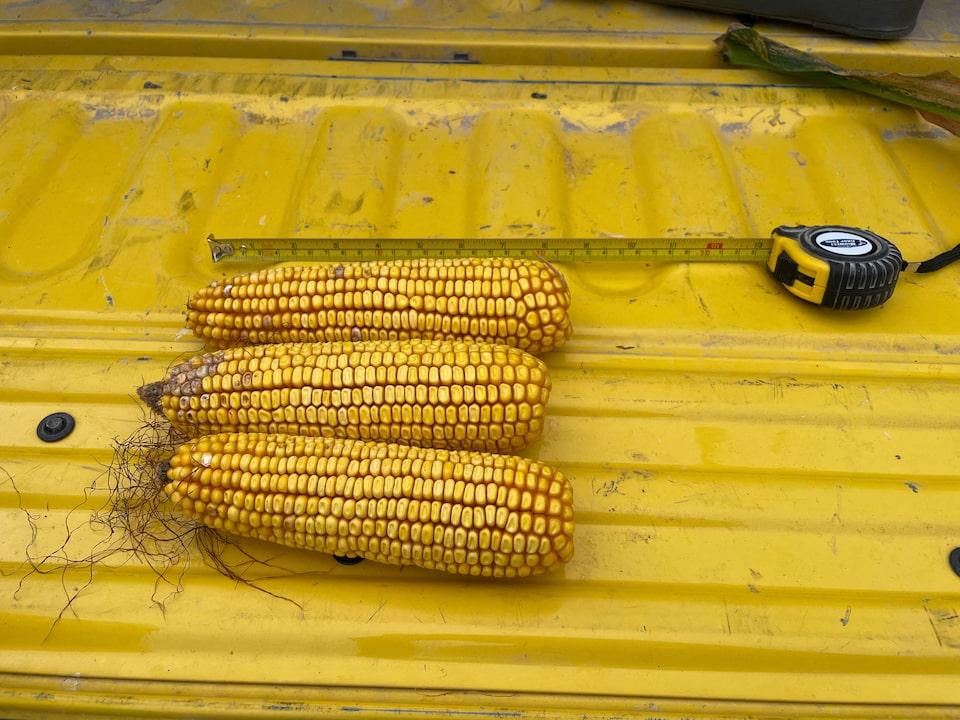
NAPERVILLE, Illinois, Feb 9 (Reuters) - “Funds bought corn” is perhaps becoming a broken record for U.S. grain markets, though there are signs that the streak could soon be snapped. In the week ended February 4, money managers increased their net long position in CBOT corn futures and options to 364,217 contracts from 350,721 a week earlier, establishing their most bullish corn view since April 2022. That marked funds’ seventh consecutive week as net corn buyers. Such a streak had been observed only one other time (September 2022) within the last four years, though the previous one involved notably fewer contracts. Money managers’ latest corn net long is below 2010’s record of 429,189 contracts, but they are holding a record number of gross long positions, having slightly surpassed 2010’s high in late January. It is possible that the February 4 data signaled an impending top in the bullish corn momentum as short covering drove the week’s net buying for the first time in several weeks. Most-active CBOT corn futures on February 5 reached their highest price since October 2023, though they declined 1.4% in the last three sessions. U.S. corn export demand has not yet shown signs of weakness, and corn-based U.S. ethanol production has recently hit several weekly records. Additionally, a potential trade dispute with top U.S. corn buyer Mexico has been put on hold. However, parched crops in Argentina got a much-needed shot of rain last week, and farmers in Brazil’s top corn state of Mato Grosso planted corn at a faster-than-normal rate last week, reducing the degree of the delays. Funds’ bullish corn and bearish wheat views remain unusually out of sync, though the situation did not worsen last week. Money managers in the week ended February 4 slashed their net short in CBOT wheat futures and options by more than 20,000 contracts to 90,442. As in corn, funds’ wheat move was also the result of short covering. Most-active CBOT wheat futures climbed nearly 6% during the week before adding another 1% over the following three sessions. The contract hit $5.92-1/2 per bushel on Friday, its highest since mid-October. Traders have been monitoring risky weather for wheat crops in the Black Sea as well as a potentially strong pullback in Russian wheat exports over the next several months. SOYBEANS AND BEYOND Most-active CBOT soybeans rose almost 3% in the week ended February 4. Money managers during that week pulled both longs and shorts out of the soybean market, and their net long drifted 533 contracts higher to 57,029 futures and options contracts. CBOT soybean meal was up 4% that week, corresponding with a slashing of money managers’ net short to 33,460 futures and options contracts from 52,291 a week earlier. Money managers through February 4 extended their net long in CBOT soybean oil futures and options to an 11-week high of 42,215 contracts, up about 2,500 on the week. Funds had held a soyoil net short of 31,999 contracts as of January 7, though three weeks of heavy short covering followed. They added both longs and shorts in the latest week. CBOT soybean oil on February 3 hit a three-month high, and soybeans on February 5 notched their highest price since late July. However, soybeans lost more than 2% over the last three sessions. Briefly, money managers through February 4 pushed their net short in ICE No. 2 cotton futures and options to yet another record, and they were net sellers in CME live cattle futures and options off their record net long from the prior week. As of Friday, traders were waiting to see if more tariffs were in store with U.S. President Donald Trump saying he may impose reciprocal tariffs on any country currently maintaining tariffs on American goods. The U.S. Department of Agriculture will release its monthly supply and demand reports on Tuesday, and analysts expect lower production numbers for Argentina and slightly higher ones for Brazil. U.S. demand will also remain under scrutiny. Karen Braun is a market analyst for Reuters. Views expressed above are her own. Sign up here. https://www.reuters.com/markets/commodities/funds-push-bullish-cbot-corn-bets-highest-since-april-2022-braun-2025-02-09/
2025-02-09 21:50
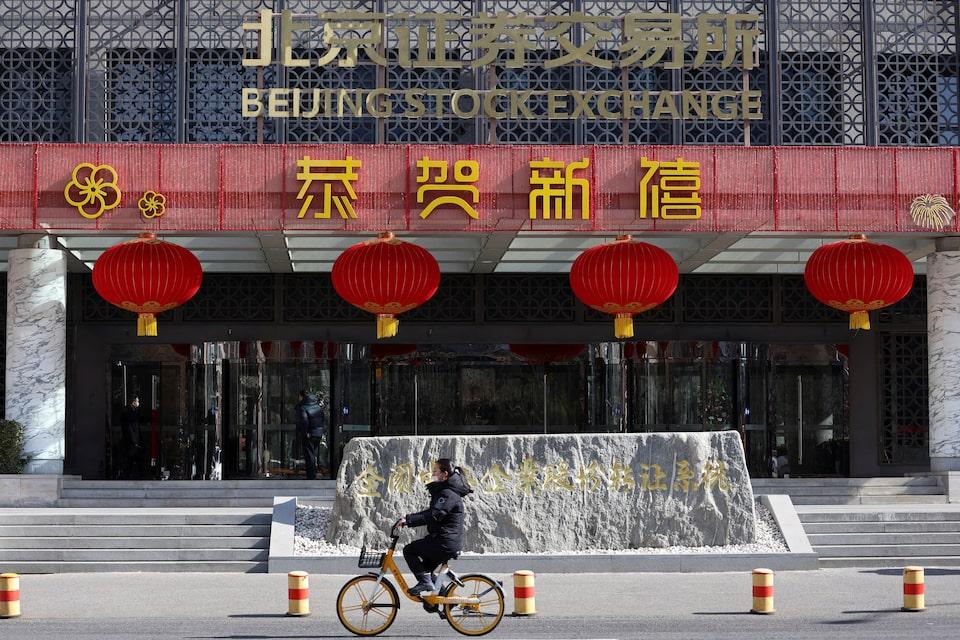
Feb 10 (Reuters) - A look at the day ahead in Asian markets. Asian markets are set for a rocky open on Monday following Wall Street's selloff on Friday, as U.S. inflation concerns bubble up and global trade war fears intensify after President Donald Trump said he plans to announce reciprocal tariffs on many economies early this week. Trump's comments mark an escalation of his 'America First' offensive to reshape global trade relationships. There may be a reprieve, like there was with the Mexico and Canada tariffs recently, but if not, many Asian economies are vulnerable. This will only deepen the nervous sentiment following the bruising day on Friday, where the big three U.S. indices lost 1% or more. Australian and Japanese stock futures are pointing to lower opens on Monday. The negative tone is mostly down to Friday's U.S. employment report which showed slowing job growth, but a fall in the unemployment rate and surprisingly strong wage growth. Rates traders are now fully pricing in only one Fed rate cut this year, and not until October. The 'risk off' reaction shows inflationary pressures and the impact on interest rates weighed more on investors' minds than any positivity from the strong growth signals. A closely-watched U.S. consumer inflation expectations survey on Friday was particularly strong too. That said, the dollar and U.S. yields have been on a downward path in recent weeks, as a few key indicators have suggested U.S. growth may be slowing. That has loosened financial conditions, which has helped offset some of the tech- and earnings-related selling on Wall Street. If inflationary pressures in the United States are bubbling up, they are pointing in the opposite direction in China - figures on Sunday showed that the battle against deflation is far from over. Consumer price inflation rose 0.7% in January on a month-on-month basis, slightly slower than expected, and rose 0.5% annually, the highest since August. Producer prices fell at a 2.5% annual rate, however, a much faster decline than the -2.3% consensus view in a Reuters poll. Annual producer inflation has been negative since October 2022. Little wonder Chinese government bond yields have slumped to their lowest on record. It's a completely different story in Japan, where bond yields and the currency are rising. The two-year government bond yield is the highest since 2008, and the yen has appreciated 5% in a month. According to Goldman Sachs, financial conditions in Japan are now the tightest in five months, and if the latest signals from the Bank of Japan are to be believed, they are likely to get even tighter. Financial conditions across emerging markets have loosened in recent weeks thanks to the fall in U.S. yields and the dollar. But not much, and tariff-related concerns loom large. Here are key developments that could provide more direction to Asian markets on Monday: - Taiwan's TSMC monthly sales (January) - Japan trade (December) - Japan current account (December) Sign up here. https://www.reuters.com/markets/asia/global-markets-view-asia-graphics-2025-02-09/