2025-02-09 21:48
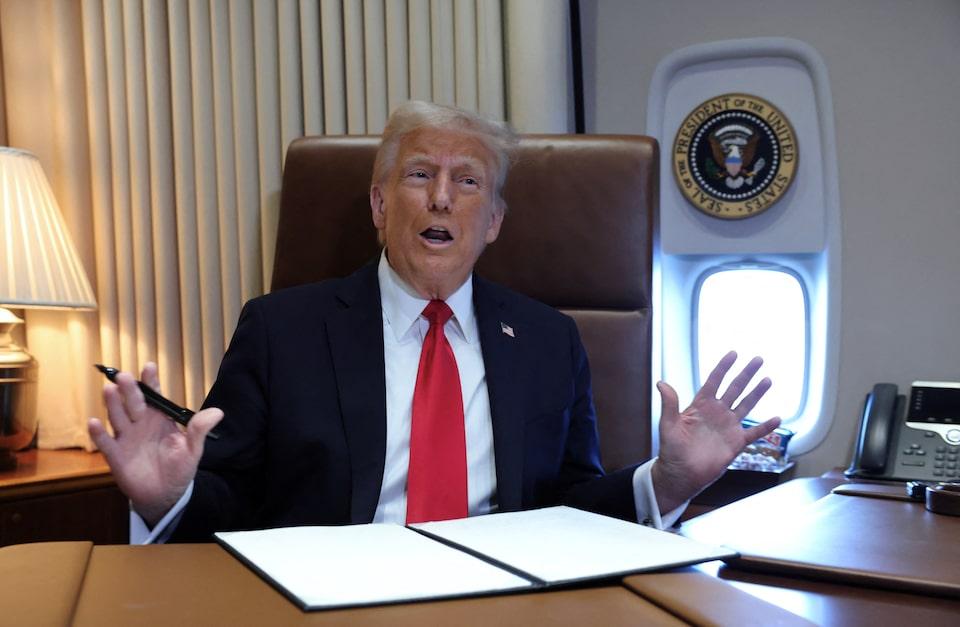
Trump to announce new steel, aluminum tariffs on Monday Importers to pay 25% on top of existing steel, aluminum tariffs Fate prior metals tariff exemptions for Mexico, Canada unclear Trump says US reciprocal tariffs to match other countries' rates ABOARD AIR FORCE ONE, Feb 9 (Reuters) - U.S. President Donald Trump said on Sunday he will introduce new 25% tariffs on all steel and aluminum imports into the U.S., on top of existing metals duties, in another major escalation of his trade policy overhaul. Trump, speaking to reporters on Air Force One on his way to the NFL Super Bowl in New Orleans, said he will announce the new metals tariffs on Monday. He also said he will announce reciprocal tariffs on Tuesday or Wednesday, to take effect almost immediately, applying them to all countries and matching the tariff rates levied by each country. "And very simply, it's, if they charge us, we charge them," Trump said of the reciprocal tariff plan. The largest sources of U.S. steel imports are Canada, Brazil and Mexico, followed by South Korea and Vietnam, according to government and American Iron and Steel Institute data. By a large margin, hydropower-rich Canada is the largest supplier of primary aluminum metal to the U.S., accounting for 79% of total imports in the first 11 months of 2024. "Canadian steel and aluminum support key industries in the U.S. from defence, shipbuilding and auto," Canadian Innovation Minister Francois-Philippe Champagne posted on X. "We will continue to stand up for Canada, our workers, and our industries." Trump also said that while the U.S. government would allow Japan's Nippon Steel (5401.T) , opens new tab to invest in U.S. Steel (X.N) , opens new tab, it would not allow this to become a majority stake. "Tariffs are going to make it very successful again, and I think it has good management," Trump said of U.S. Steel. Nippon Steel declined to comment on the latest announcements from Trump. QUOTA QUESTIONS Trump during his first term imposed tariffs of 25% on steel and 10% on aluminum, but later granted several trading partners duty-free exemptions, including Canada, Mexico and Brazil. Mexico is a major supplier of aluminum scrap and aluminum alloy. Former President Joe Biden later negotiated duty-free quota arrangements with Britain, the European Union and Japan. It was not immediately clear from Trump's announcement what will happen to those exemptions and quota arrangements. "Quebec exports 2.9 million tons of aluminum to (the U.S.), that is, 60% of their needs. Do they prefer to get supplies from China?" Francois Legault, premier of Quebec, said on X. "All this shows that we must begin to renegotiate our free trade agreement with the United States as soon as possible and not wait for the review planned for 2026. We must put an end to this uncertainty.” Steel mill capacity usage jumped to levels above 80% in 2019 after Trump's initial tariffs, but has fallen since then as China's global dominance of the sector has pushed down steel prices. A Missouri aluminum smelter revived by the tariffs was idled last year by Magnitude 7 Metals. Kevin Dempsey, president and CEO of the American Iron and Steel Institute (AISI), said the industry trade group welcomed Trump's commitment to a strong American steel industry. "We look forward to working closely with the President and his administration to implement a robust and reinvigorated trade agenda to address the many foreign market-distorting policies and practices that create an unlevel playing field for American steelmakers.” MATCHING RATES Trump said he would hold a news conference on Tuesday or Wednesday to provide detailed information on the reciprocal tariff plan, adding that he first revealed on Friday that he was planning reciprocal tariffs to ensure "that we're treated evenly with other countries." The new U.S. president has long complained about the EU's 10% tariffs on auto imports being much higher than the U.S. car rate of 2.5%. He frequently states that Europe "won't take our cars" but ships millions west across the Atlantic every year. The U.S., however, enjoys a 25% tariff on pickup trucks, a vital source of profit for Detroit automakers General Motors (GM.N) , opens new tab, Ford (F.N) , opens new tab and Stellantis' (STLAM.MI) , opens new tab U.S. operations. The U.S. trade-weighted average tariff rate is about 2.2%, according to World Trade Organization data, compared to 12% for India, 6.7% for Brazil, 5.1% for Vietnam and 2.7% for European Union countries. Chris Swonger, CEO of the Distilled Spirits Council of the United States, expressed concern that Trump’s new steel tariffs would lead to the EU reimposing retaliatory duties on American whiskey and raising them to 50%. “We are urging that the U.S. and EU move swiftly to find a resolution. Our great American whiskey industry is at stake. A 50% tariff on America's native spirit will have a catastrophic outcome for the 3,000 small distilleries across the United States.” BORDER STEPS In a separate Fox News interview, Trump said Canada's and Mexico's actions to secure their U.S. borders and halt the flow of drugs and migrants are insufficient ahead of a March 1 tariff deadline. Trump has threatened to impose tariffs of 25% on all Mexican and Canadian imports unless America's two largest trading partners take stronger actions. He paused the tariffs until March 1 after some initial border security concessions from the two countries, with Mexico pledging to add 10,000 National Guard troops to its border and Canada deploying new technology and personnel and taking new anti-fentanyl steps. Asked whether Mexico's and Canada's actions were good enough, Trump replied: "No, it's not good enough," Trump said. "Something has to happen, it's not sustainable, and I'm changing it." Trump did not say what Canada and Mexico needed to do to avoid broad tariffs on March 1. Sign up here. https://www.reuters.com/markets/commodities/trump-says-he-will-announce-25-steel-aluminum-tariffs-monday-2025-02-09/
2025-02-09 15:54
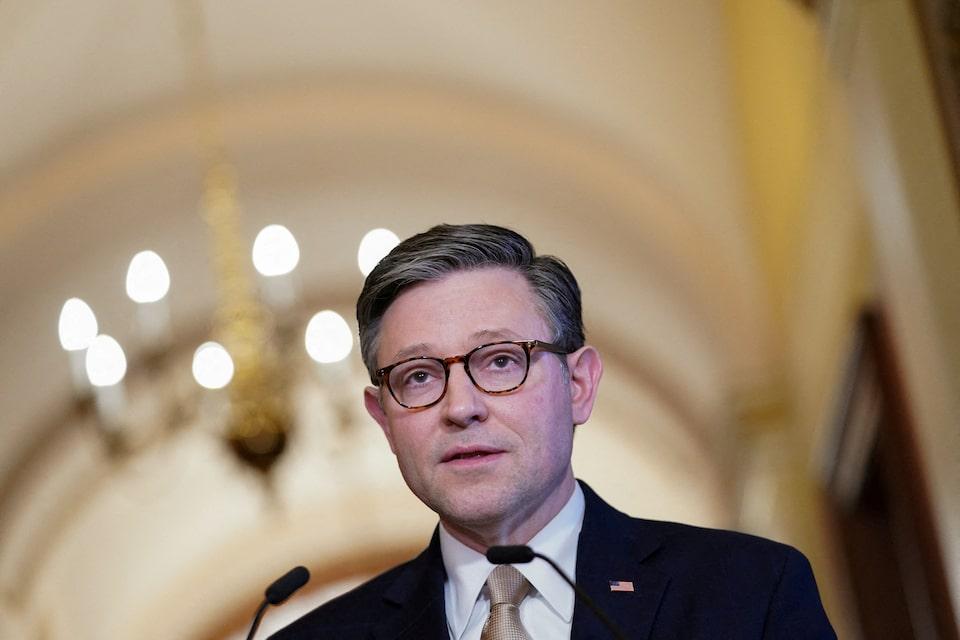
WASHINGTON, Feb 9 (Reuters) - The U.S. House of Representatives speaker said on Sunday he would stick with a "one big bill" strategy to pass President Donald Trump's tax-cut agenda and fund border and military priorities, despite a limited $340 billion budget plan unveiled on Friday by Senate Republicans. Mike Johnson told Fox News Sunday that it will take some time to secure a Republican consensus because of the party's thin House majority. But they would find savings to offset the cost of extending 2017 tax cuts that are due to expire at the end of the year and other priorities such as eliminating taxes on tips. Senate Budget Committee Chairman Lindsey Graham unveiled a plan on Friday that would boost funding by $85.5 billion for four years for border security, deportations of migrants and for the military, leaving the extension of tax cuts to another bill later this year. "Well, I talk with the president and his team about this almost constantly, reminding them that we will get the job done, but it has to be the one big bill strategy," Johnson said. Johnson said the House Budget Committee had previously planned to consider the Republican budget resolution next week, but "we might push it a little bit further because the details really matter." He said he needs to secure agreement among all House Republicans, who hold a razor-thin 218-215 majority in the chamber. The party plans to use a budget procedure that would allow them to pass fiscal legislation with only a simple Senate majority without any Democratic votes, so he cannot afford to lose more than one Republican vote. Budget forecasters , opens new tab estimate that extending current individual tax rates would cost more than $4 trillion over a decade, with some estimates topping $11 trillion for Trump's full tax agenda. Johnson said House Republicans are looking for offsetting savings and do not want to add to federal deficits. "We're going to make sure that we find the offsets to do this in a responsible manner," Johnson said. Sign up here. https://www.reuters.com/world/us/us-house-speaker-pursue-one-big-bill-trumps-tax-agenda-2025-02-09/
2025-02-09 13:49
Feb 9 (Reuters) - Sony (6758.T) , opens new tab said on Sunday that all PlayStation Plus members would automatically receive an additional five days of service, after a global outage disrupted the PlayStation Network (PSN) for about 18 hours on Friday and Saturday. "Network services have fully recovered from an operational issue. We apologize for the inconvenience and thank the community for their patience," the Japanese electronics and entertainment giant said in a post , opens new tab on X on Sunday, without specifying the cause of the outage. The outage, which began late Friday, left users unable to sign in, play online games or access its online store. By Saturday evening, the company said PSN had been restored. The PlayStation Network is a key service for Sony's gaming division, supporting millions of users worldwide. At its peak, the outage affected about 7,939 users in the U.S. and around 7,336 users in the UK on Saturday afternoon, according to Downdetector.com, which tracks outages by collating status reports from several sources, including users. "PlayStation is back up again after being down for a whole day. Sony at least saved millions of Gamers their Sunday right after ruining their Saturday," a user posted , opens new tab on X. Sony has dealt with more severe outages in the past. In 2014, a cyberattack forced the PlayStation Network offline for several days during the holiday season. A more serious breach in 2011 compromised the personal data of nearly 77 million users, leading to a month-long shutdown and a regulatory investigation. Sign up here. https://www.reuters.com/technology/sony-offer-playstation-plus-users-five-day-extension-after-global-outage-2025-02-09/

2025-02-09 12:12
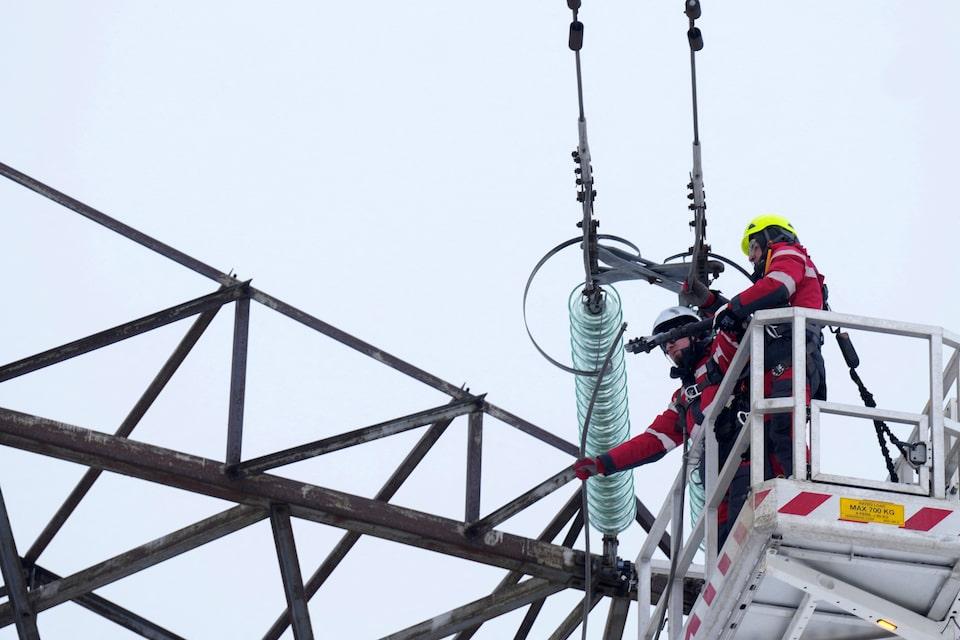
Estonia, Latvia, Lithuania left Russian power grid on Saturday Integrated on Sunday with European grid Switch cut Soviet legacy tie EU's von der Leyen hails Baltic energy freedom VILNIUS, Feb 9 (Reuters) - The Baltic states of Estonia, Latvia and Lithuania completed a switch from Russia's electricity grid to the EU's system on Sunday, severing Soviet-era ties amid heightened security after the suspected sabotage of several subsea cables and pipelines. European Commission President Ursula von der Leyen hailed the move, years in the planning, as marking a new era of freedom for the region, in a speech at a ceremony in Vilnius alongside the leaders of the three countries and the Polish president. "These chains of power lines linking you to hostile neighbours will be a thing of the past," von der Leyen said. Debated for many years, the complex switch away from the grid of their former Soviet imperial overlord gained momentum following Moscow's annexation of Crimea in 2014 and its invasion of Ukraine in 2022. It is designed to integrate the three Baltic nations more closely with the European Union and to boost the region's energy security. "This is freedom, freedom from threats, freedom from blackmail," von der Leyen said, adding that the wider European continent was also liberating itself from the use of Russian natural gas. Ukrainian President Volodymyr Zelenskiy said in his nightly video address that Kyiv had taken the same step in 2022 "and the Baltic states are also ridding themselves of this dependence. "Moscow will no longer be able to use energy as a weapon against the Baltic states." After disconnecting on Saturday from the IPS/UPS network, established by the Soviet Union in the 1950s and now run by Russia, the Baltic nations cut cross-border high-voltage transmission lines in eastern Latvia, some 100 metres from the Russian border, handing out pieces of chopped wire to enthusiastic bystanders as keepsakes. HIGH ALERT The Baltic Sea region is on high alert following power cable, telecom and gas pipeline outages between the Baltics and Sweden or Finland. All were believed to have been caused by ships dragging anchors along the seabed following Russia's invasion of Ukraine. Russia has denied any involvement. Poland and the Baltics deployed navy assets, elite police units and helicopters to monitor the area after an undersea power link from Finland to Estonia was damaged in December, while Lithuania's military began drills to protect the overland connection to Poland. Analysts say any further damage to links could push power prices in the Baltics to levels not seen since the invasion of Ukraine, when energy prices soared. The IPS/UPS grid was the final remaining link to Russia for the three countries, which re-emerged as independent nations in the early 1990s at the fall of the Soviet Union, and joined the European Union and NATO in 2004. The three staunch supporters of Kyiv stopped purchases of power from Russia following Moscow's invasion of Ukraine, but have relied on the Russian grid to control frequencies and stabilise networks to avoid outages. Analysts say that maintaining a constant power supply requires a stable grid frequency, which can more easily be obtained over time in a large synchronised area such as Russia or continental Europe, compared to what the Baltics can do on their own. For Russia, the decoupling means its Kaliningrad exclave, located between Lithuania, Poland and the Baltic Sea, is cut off from Russia's main grid, leaving it to maintain its power system alone. The Kremlin said it has taken all necessary measures to ensure uninterrupted, reliable operation in its electricity system, including the construction of several gas-fired power plants in Kaliningrad. Sign up here. https://www.reuters.com/business/energy/baltic-states-switch-european-power-grid-ending-russia-ties-2025-02-09/
2025-02-09 08:01
KYIV, Feb 9 (Reuters) - Ukraine will keep gas imports at a high level of 16.3 million cubic metres (mcm) on Sunday, data provided by the operator of the state-run gas transmission system showed. The data suggested Ukraine would import 7.1 mcm of gas from Hungary, 7.3 mcm from Slovakia and 1.8 mcm from Poland. Ukraine began sharply increasing its gas imports last week after a series of Russian missile attacks in recent months targeted Ukrainian gas sector facilities. In January Russia launched scores of missiles and drones at Ukraine's western Lviv region where gas storage facilities are located and in the Kharkiv region, the main Ukrainian gas production area. Ukraine can keep around 30 billion cubic meters of gas in storage, but the country has stopped reporting the volume of gas in facilities, which have been the target of regular Russian missile attacks since Russia's full-scale invasion in February, 2022. Both the drop in gas production and difficulties with fuel extraction from underground storage facilities may force Kyiv to increase the volume of imports. Ukrainian energy minister German Galushchenko told Interfax Ukraine news agency last week that the country could need to import around one billion cubic meters of gas during the current heating season. The former head of the transit operator, Serhiy Makogon, said last month that current Ukrainian daily gas consumption was about 110 mcm and was covered by 52 mcm of production and 58 mcm from storage. Sign up here. https://www.reuters.com/markets/commodities/ukraine-keeps-gas-imports-high-level-sunday-data-shows-2025-02-09/

2025-02-09 07:29
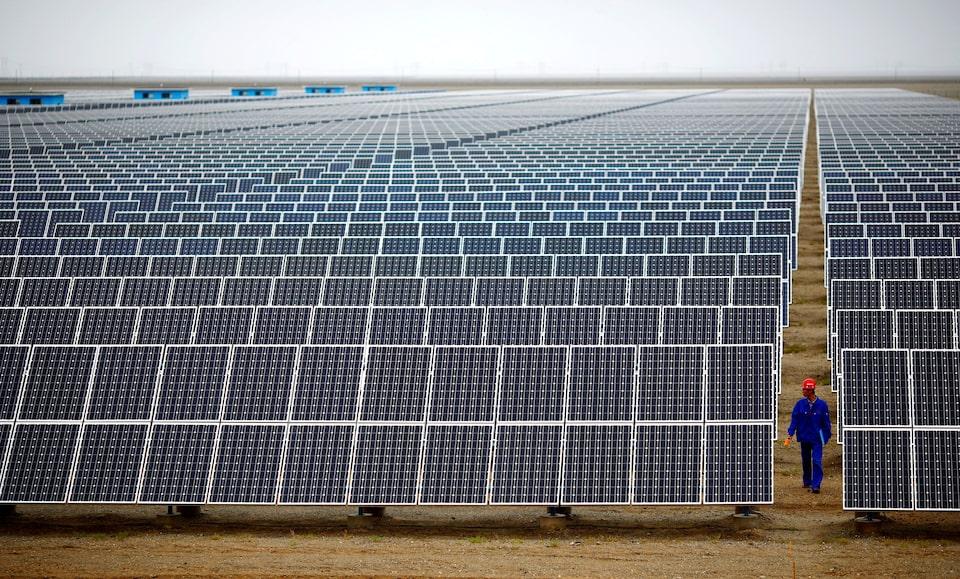
BEIJING, Feb 9 (Reuters) - China's top economic planning agency said on Sunday it was taking steps to scale back subsidies for renewable energy projects after a boom in solar and wind power installations. China broke its own records for new solar installations in 2024 with installed capacity up 45% from the previous year. China now has almost 887 GW of installed solar power, more than six times the capacity of the United States, according to data from the International Renewable Energy Agency. The surge in installations meant China hit its 2030 target six years ahead of schedule, underscoring the speed of its clean energy rollout at a time when President Donald Trump has pulled the United States out of the Paris climate deal for a second time and pledged to make it easier to drill for oil and gas. China's National Development and Reform Commission (NDRC) said together with China's energy administration it had issued "market-oriented" changes to policies intended to encourage clean energy projects. The NDRC said China's clean energy capacity of all kinds had reached more than 40% of the economy's total energy generation capacity, in part because of the support of a system that guaranteed prices for renewable energy sold to the grid. "The cost of new energy development has dropped significantly compared to earlier stages," the NDRC said in a statement. The agency said any new projects completed after June this year would face payments for electricity based on "market-based bidding". The NDRC said it expected there would be no impact on the price for residential users and farming and that power prices would be "basically the same" for industrial and commercial operations after the change took effect. The NDRC said it would work with local governments across China on the implementation of the plan. It did not provide details of the pricing formula it would introduce. Less generous subsidies for new solar farms could add pressure on China's solar industry, where overcapacity relative to global demand has sent prices for solar panels plunging and threatened to drive smaller producers into bankruptcy. Sign up here. https://www.reuters.com/business/energy/china-roll-back-clean-power-subsidies-after-boom-2025-02-09/