2025-02-09 06:52
Petroleum explorer 'fuelled' junta war crimes, activist group alleges Singapore-listed Interra requests share-trading suspension Myanmar in turmoil since 2021 military coup Feb 6 (Reuters) - Singapore-listed petroleum explorer Interra Resources (INTR.SI) , opens new tab said on Thursday a production-sharing contract between its subsidiary and an entity controlled by the Myanmar government was extended years before the military seized power in 2021. The statement was in response to a query by the Singapore Exchange a week after activist group Justice for Myanmar alleged in a report , opens new tab that Interra had "helped supply the junta" with over two million barrels of oil and "fuelled its ongoing war crimes". "The current IPRCs (improved petroleum recovery contracts) were obtained and extended under the civilian government and prior to the military coup in 2021," Interra said. Interra requested a trading suspension for its shares before Thursday's market opening and is seeking legal counsel about its compliance with foreign laws. It said it would request the suspension be lifted once it gets clarity over its compliance. Justice for Myanmar, in a response on Sunday, said its report had not alleged that the Interra subsidiary had entered the contract after the 2021 coup. "Interra Resources appear not to be using their contractual rights to prevent the oil they produce from being used in the commission of war crimes," said Yadanar Maung, a spokesperson for the activist group. Myanmar has been in turmoil since the military overthrew the elected civilian government of Nobel laureate Aung San Suu Kyi in February 2021, triggering pro-democracy protests that morphed into a widening armed rebellion that has taken over swathes of the country. Interra holds a participating interest of about 60% in Goldpetrol Joint Operating Company (GJOC), according to its website. GJOC operates two of the onshore producing oil fields in Chauk and Yenangyaung in central Myanmar. GJOC secured the production-sharing contract for oil exploration and production with Myanma Oil and Gas Enterprise (MOGE), Myanmar's state oil and gas enterprise, in late 1996. It was extended for 11 years in April 2017. GJOC continues to operate in the Southeast Asian nation under the terms of the IPRCs, which have remained unchanged since the coup in 2021, Interra said. "The company has no control over or power to dictate how the MOGE distributes or uses the oil that is produced by GJOC," the company said, calling the activist group's claims "sensationalisation". "The report therefore contains untrue allegations that GJOC is 'favouring the junta,' 'has long enjoyed a close relationship with the Myanmar military' or that GJOC signed the contracts with the 'previous military junta'," it said. Myanma Oil and Gas Enterprise was sanctioned by the United States and the European Union , opens new tab after the coup. Sign up here. https://www.reuters.com/markets/commodities/interra-says-oil-contract-with-myanmar-was-signed-prior-junta-seizing-power-2025-02-06/

2025-02-09 06:03
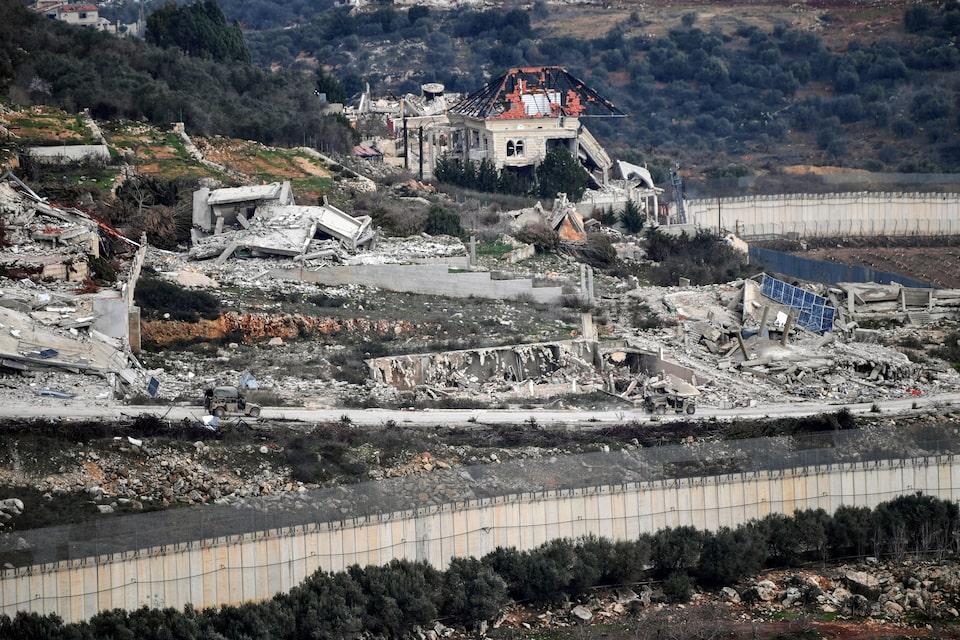
Historic political shake-up of region encouraging investors Ceasefire expected to take pressure off Israel's finances Major funds increasing positions in Egypt Hopes for resolution of Lebanon's crisis driving up its bonds LONDON/JERUSALEM, Feb 9 (Reuters) - A historic shake-up of the Middle East is starting to draw international investors, warming to the prospects of relative peace and economic recovery after so much turmoil. President Donald Trump's proposal that the U.S. take over Gaza may have thrown a curveball into the mix, but the fragile ceasefire in the Israel-Hamas war,Bashar al-Assad's ouster from Syria, a weakened Iran and a new government in Lebanon have fed hopes of a reset. Egypt, the region's most populous country and a key negotiator in the recent peace talks, has just managed its first dollar debt sale in four years. Not too long ago it was facing economic meltdown. Investors have started buying up Israel's bonds again, and those of Lebanon, betting that Beirut can finally start fixing its intertwined political, economic and financial crises. "The last few months have very much reshaped the region and set in play a very different dynamic in a best-case scenario," Charlie Robertson, a veteran emerging market analyst at FIM Partners, said. The question is whether Trump's plan for Gaza inflames tensions again, he added. Trump's call to "clean out" Gaza and create a "Riviera of the Middle East" in the enclave was met with international condemnation. Responding to the uproar, Egypt said on Sunday it would host an emergency Arab summit on February 27 to discuss what it described as "serious" developments for Palestinians. Credit rating agency S&P Global has signalled it will remove Israel's downgrade warning if the ceasefire lasts. It acknowledges the complexities, but it is a welcome possibility as Israel readies its first major debt sale since the truce was signed. (UN)PREDICTABILITY Michael Fertik, a U.S. venture capitalist and CEO of artificial intelligence firm Modelcode.ai, said the easing of tensions had contributed to his decision to open an Israeli subsidiary. He is eager to hire skilled local software programmers, but geopolitics have been a factor too. "With Trump in the White House, no one doubts the United States has Israel’s back in a fight," he said, explaining how it provided predictability even if the war re-ignites. Having largely stayed away when Israel ramped up spending on the war, bond investors are also starting to come back, central bank data shows. Economy Minister Nir Barkat told Reuters in an interview last month that he will be seeking a more generous spending package focusing on "bold economic growth." The snag for stock investors though, is that Israel was one of the best performing markets in the world in the 18 months after the October 7, 2023 attacks. Since the ceasefire - which has coincided with a sizable U.S. tech selloff - it has been in retreat. "During 2024, I think we learned that the market is not really afraid of the war but rather the internal political conflict and tensions," said Sabina Levy, head of research at Leader Capital Markets in Tel Aviv. And if the ceasefire buckles? "It is reasonable to assume a negative reaction." Some investors have already reacted badly to Trump's surprise Gaza move. Yerlan Syzdykov, head of emerging markets at Europe's biggest asset manager Amundi, said his firm had bought up Egypt's bonds after the ceasefire deal, but Trump's plan - which foresees Cairo and Jordan accepting 2 million Palestinian refugees - has changed that. Both countries have baulked at Trump's idea but the risk is, Syzdykov explained, that the U.S. president uses Egypt's reliance on bilateral and IMF support to try to strong arm the country given its recent brush with a full-blown economic crisis. Reducing the attacks by Yemen's Houthi fighters on ships in the Red Sea also remains crucial. The country lost $7 billion - more than 60% - of its Suez Canal revenues last year as shippers diverted around Africa rather than risk ambush. "Markets are unlikely to like the idea of Egypt losing such (bilateral and multilateral) support, and we are taking a more cautious stance to see how these negotiations will unfold," Syzdykov said. REBUILD AND RESTRUCTURE Others expect the rebuilding of bombed homes and infrastructure in Syria and elsewhere to be an opportunity for Turkey's heavyweight construction firms. Trump's Middle East envoy, Steve Witkoff, has said it could take 10 to 15 years to rebuild Gaza. The World Bank, meanwhile, puts Lebanon's damage at $8.5 billion, roughly 35% of its GDP. Beirut's default-stricken bonds more than doubled in price when it became clear in September that Hezbollah's grip in Lebanon was being weakened and have continued to rise on hopes the country's crisis is addressed. Lebanon's new President Joseph Aoun's first state visit will be to Saudi Arabia, a country seen as a potential key supporter, and one that likely sees this as an opportunity to further remove Lebanon from Iran's sphere of influence. Bondholders say there have been preliminary contacts with the new authorities too. "Lebanon could be a big story in 2025 if we make progress towards a debt restructuring," Magda Branet, head of emerging markets fixed income at AXA Investment Managers, said. "It is not going to be easy" though she added, given the country's track record, the $45 billion of debt that needs reworking and that Lebanese savers could see some of their money seized by the government as part of the plan. Sign up here. https://www.reuters.com/world/middle-east/new-look-middle-east-had-started-draw-investors-then-came-trump-2025-02-09/
2025-02-09 02:42
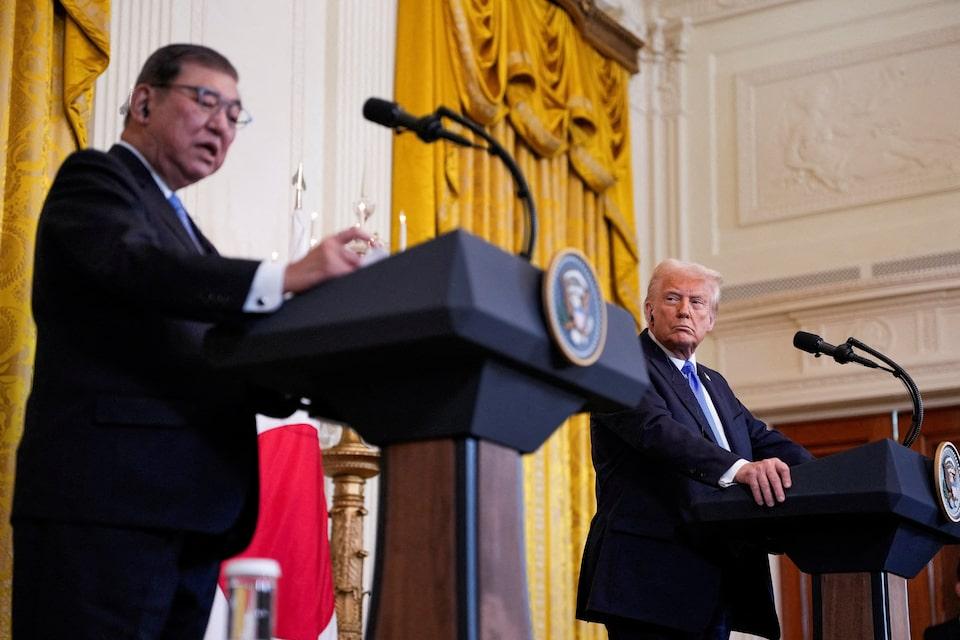
Ishiba says no talk with Trump on auto tariffs at summit Trump recognises Japan's US huge investment, job creation LNG, steel, AI and autos are areas Japan can invest in US Nippon Steel will operate under US management, staff Japan will not raise defence spending without public support TOKYO, Feb 9 (Reuters) - Japanese Prime Minister Shigeru Ishiba expressed optimism on Sunday that his country could avoid higher U.S. tariffs, saying President Donald Trump had "recognised" Japan's huge investment in the U.S. and the American jobs that it creates. At his first White House summit on Friday, Ishiba told public broadcaster NHK, he explained to Trump how many Japanese automakers were creating jobs in the United States. The two did not specifically discuss auto tariffs, Ishiba said, although he said he did not know whether Japan would be subject to the reciprocal tariffs that Trump has said he plans to impose on imports. Tokyo has so far escaped the trade war Trump unleashed in his first weeks in office. He has announced tariffs on goods from Canada, Mexico and China, although he postponed the 25% duties on his North American neighbours to allow for talks. The escalating trade tensions since Trump returned to the White House on January 20 threaten to rupture the global economy. Ishiba said he believes Trump "recognised the fact Japan has been the world's largest investor in the United States for five straight years, and is therefore different from other countries." "Japan is creating many U.S. jobs. I believe (Washington) won't go straight to the idea of higher tariffs," he said. Ishiba voiced optimism that Japan and the U.S. can avoid a tit-for-tat tariff war, stressing that tariffs should be put in place in a way that "benefits both sides". "Any action that exploits or excludes the other side won't last," Ishiba said. "The question is whether there is any problem between Japan and the United States that warrants imposing higher tariffs," he added. Japan had the highest foreign direct investment in the United States in 2023 at $783.3 billion, followed by Canada and Germany, according to the most recent U.S. Commerce Department data. Trump pressed Ishiba to close Japan's $68.5 billion annual trade surplus with Washington but expressed optimism this could be done quickly, given a promise by Ishiba to bring Japanese investment in the U.S. to $1 trillion. On Sunday, Ishiba identified liquefied natural gas, steel, AI and autos as areas that Japanese companies could invest in. He also touched on Trump's promise to look at Nippon Steel (5401.T) , opens new tab investing in U.S. Steel (X.N) , opens new tab, as opposed to buying the storied American company - a planned purchase opposed by Trump and blocked by his predecessor, Joe Biden. "Investment is being made to ensure that it remains an American company. It will continue to operate under American management, with American employees," Ishiba said. "The key point is how to ensure it remains an American company. From President Trump's perspective, this is of utmost importance." On military spending, another area where Trump has pressed allies for increases, Ishiba said Japan would not increase its defence budget without first winning public backing. "It is crucial to ensure that what is deemed necessary is something the taxpayers can understand and support," he said. Sign up here. https://www.reuters.com/world/japan-pm-ishiba-after-meeting-trump-voices-optimism-over-averting-tariffs-2025-02-09/
2025-02-09 00:35
Feb 9 (Reuters) - A district in Russia's Sakhalin region has been put on high alert after a Chinese cargo ship ran aground off the southwest coast of the Sakhalin Island, the governor of the region in Russia's Far East said early on Sunday. No fuel spillage was recorded and there was no threat to the crew, but the situation required readiness for any scenario, the governor, Valery Limarenko, said on the Telegram messaging app. The ship was stranded in the shallow waters off Sakhalin's Nevelsky district, he added. "A high alert regime has been introduced in the district," Limarenko said. Limarenko later said that it was a Chinese ship, but marine and diving rescuers could not approach the vessel due to a strong storm. "Decisions on unloading the vessel or removing it from the shallows will be made as soon as the weather conditions improve," he added. The Sakhalin region in Russia's Far East comprises the Sakhalin Island and the chain of the Kuril Islands. Soviet troops took control of the four islands off Japan's Hokkaido - known in Russia as the Kurils and in Japan as the Northern Territories - at the end of World War Two and they have remained in Moscow's hands since. The dispute has prevented the two countries from signing a peace treaty. Sign up here. https://www.reuters.com/world/europe/governor-puts-parts-russias-sakhalin-high-alert-after-cargo-ship-runs-aground-2025-02-09/

2025-02-08 16:51
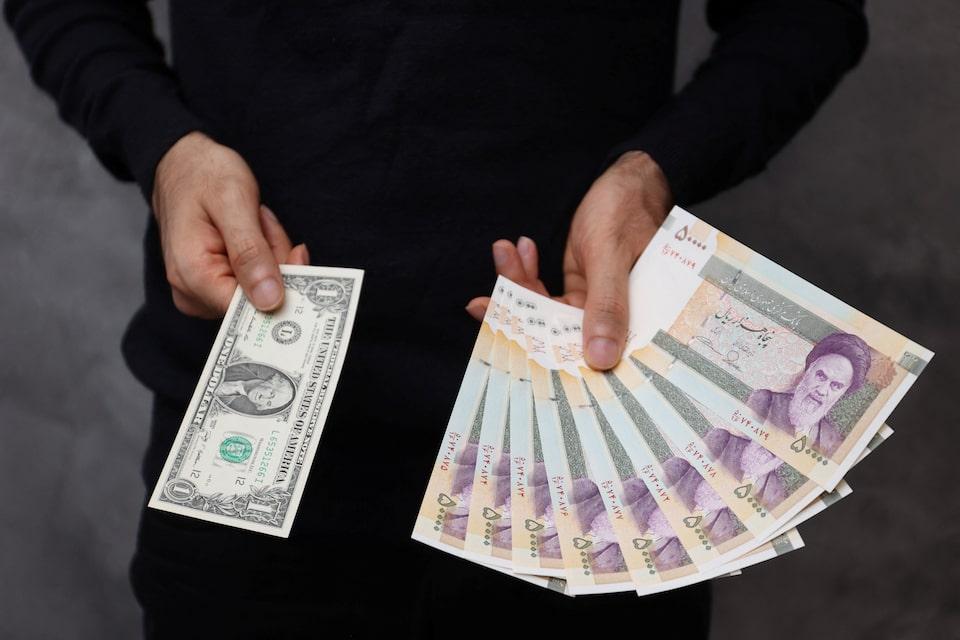
DUBAI, Feb 8 (Reuters) - Iran's currency fell on Saturday to a new all-time low against the U.S. dollar after the country's supreme leader rejected talks with the United States and President Donald Trump moved to restore his "maximum pressure" campaign on Tehran. The rial plunged to 892,500 to the dollar on the unofficial market on Saturday, compared with 869,500 rials on Friday, according to the foreign exchange website alanchand.com. The bazar360.com website said the dollar was sold for 883,100 rials. Asr-e-no website reported the dollar trading at 891,000 rials. Facing an official inflation rate of about 35%, Iranians seeking safe havens for their savings have been buying dollars, other hard currencies, gold or cryptocurrencies, suggesting further headwinds for the rial. The dollar has been gaining against the rial since trading around 690,000 rials at the time of Trump's re-election in November amid concerns that Trump would re-impose his "maximum pressure" policy against Iran with tougher sanctions and empower Israel to strike Iranian nuclear sites. Trump in 2018 withdrew from a nuclear deal struck by his predecessor Barack Obama in 2015 and re-imposed U.S. economic sanctions on Iran that had been relaxed. The deal had limited Iran's ability to enrich uranium, a process that can yield fissile material for nuclear weapons. Iran's rial has lost more than 90% of its value since the sanctions were reimposed in 2018. Sign up here. https://www.reuters.com/markets/currencies/iran-currency-plunges-record-lows-amid-escalating-us-tensions-2025-02-08/
2025-02-08 12:04
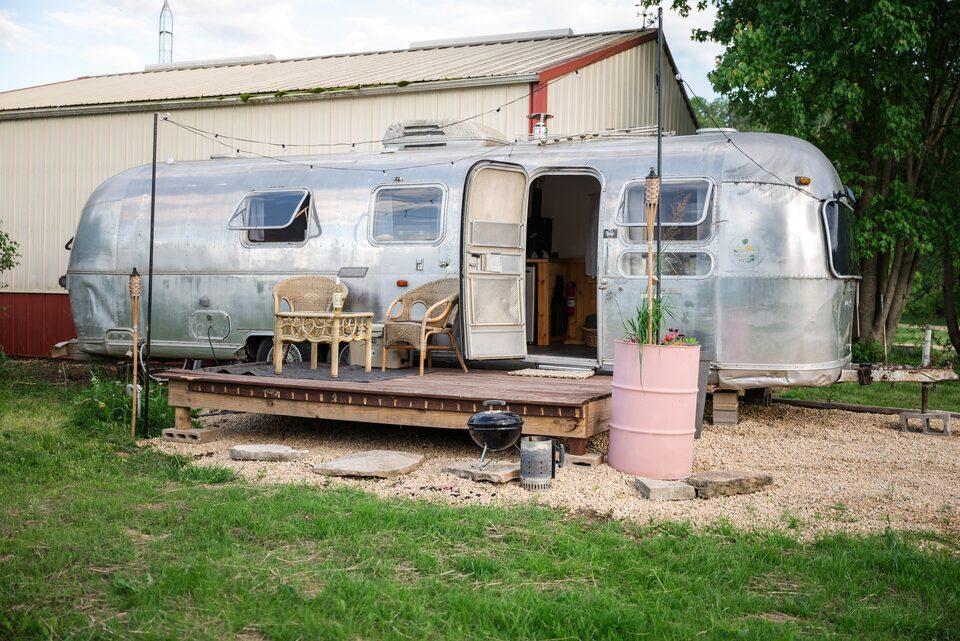
Farmers turn to agritourism amid declining crop prices and growing consumer interest Agritourism revenue helps farmers endure volatile markets Farmstays on rental platforms increased by 77% in five years-AirDNA BLANCHARDVILLE, Wisconsin, Feb 8 (Reuters) - A dead-end dirt road cutting through rural Wisconsin leads to a pasture dotted with shaggy-coated Highland cattle, fluffy Icelandic sheep and a vintage Airstream trailer that farmer Brit Thompson turned into an Airbnb to capitalize on an explosion of urbanites looking to spend time in the countryside. Her guests, mostly Chicago-area professionals, offer a steady flow of income in an increasingly unstable agricultural economy. Thompson, who also raises animals for meat at her farm, Pink River Ranch , opens new tab, is one of many farmers turning to the $4.5 billion agricultural tourism industry, according to U.S. Department of Agriculture (USDA) data, and offering activities and overnight stays as consumer demand for rural experiences grows and farm income declines. Farmers whose crops are used to make food, feed livestock and produce vegetable oils are struggling to turn a profit after corn and soy prices sank to four-year lows in 2024. Revenue from Thompson's Airbnb has helped her endure volatile commodities markets and far outpaced what she made from selling beef and lamb to restaurants and directly to consumers, she said. Free-roaming tabby cats on her property are now accustomed to the sound of guests' tires crunching on the gravel driveway and come running toward those bringing in the extra income - and the extra affection. The guests arrive nearly every weekend during her peak season, drawn by the area's spring-fed and trout-rich streams, forested hiking trails and unpolluted night skies. Thompson’s bookings soared as nearby cities shut down during the pandemic. Agritourism boomed during COVID as people chose to vacation on farms and in rural areas, drawn by the promise of socially distanced fun in the countryside. The industry has continued to grow since, driven by increasing numbers of city dwellers seeking peace and solitude and farmers seeking additional ways to infuse their farms with much-needed cash. "Now that we're back to normal, people are still remembering those experiences and they've brought those activities into their family traditions," said Suzi Spahr, director of the International Agritourism Association. Nationally, about 7% of farms offer agritourism opportunities, which also includes sales of farm products to visitors, said Lisa Chase, an extension professor at the University of Vermont. Many increased their revenue by $25,000 to $100,000 per year through agritourism enterprises, and some farms can make upwards of $1 million a year from running bed-and-breakfasts, pick-your-own apple orchards and other farm experiences, she said. The number of farmstays, an accommodation at a farm, listed on short-term rental platforms in the U.S. increased by 77% over the past five years, roughly twice the increase in overall listings, data firm AirDNA said. Airbnb, as well as popular campsite booking websites HipCamp, Harvest Hosts and The Dyrt, also said their platforms have seen substantial increases in farmstay listings over the past few years. LEAN TIMES Agritourism dollars are a welcome boon in the face of low crop prices, high interest rates, and steep costs for seeds, fertilizer and labor, farmers and industry experts said. Farm income has dropped 23% from 2022 in one of the biggest declines in history, according to the USDA, and the American Farm Bureau says the agricultural economy is in a recession. While U.S. farm income is expected to improve this year, the upturn is largely due to federal government aid. Income from selling crops has continued to decline. This year could bring further financial pain for farmers if trade wars with Canada, Mexico and China are prolonged. U.S. President Donald Trump announced tariffs on goods from the three countries on Feb 1, but later offered a 30-day reprieve to Canada and Mexico after those countries offered some concessions. "We're able to weather some of these tighter or negative margin years because we've diversified the way we earn money," said Kaylee Heap, 35, co-manager of Heap's Giant Pumpkin Farm , opens new tab, a sprawling corn and soybean farm in Illinois. "It's the reason we diversified. If we just focused on row crops, we’d be having a different conversation." In the fall, Heap's customers can pick sunflowers, mums and pumpkins; bump along on hayrides; and wander through a corn maze. The farm also produces commodity corn and soy, often for international export. Not all farms are suited for tourism. Some have inaccessible locations or owners who are unwilling to open their property to strangers. Insurance and compliance with government regulations can also be costly. But income from recreation and tourism can help families maintain ownership of their farms, pay off debt and provide jobs to younger generations, who sometimes prefer curating Airbnbs and building websites over monitoring soil moisture and grain futures prices, farmers said. "You cannot survive as a family farm only farming," said Catherine Topel, 56, a North Carolina hog producer who hosts an Airbnb cabin and campsites , opens new tab through HipCamp. "The cabins, the camping – it makes you sustainable and resilient in hard times, and it gives you flexibility to enter into other enterprises instead of toeing the line of what your dad did and what your dad's dad did." The desire to raise children in a rural setting and share their agricultural lifestyle with visitors also motivates farmers to open their property to the public, farmers said. Thompson, 33, says she enjoys teaching guests about sustainable grazing, as well as fishing from her riverbank with her five-year-old daughter, who reels in fat catfish with a miniature hot-pink fishing rod. "The younger generation finds the farm doesn't have to be this long litany of depression and bad prices," said Ryan Pesch, an extension educator at the University of Minnesota. "They say: 'Why don't we do this other thing?’ They see opportunities and entrepreneurship," he said. Sign up here. https://www.reuters.com/markets/us/us-farmers-turn-airbnb-corn-mazes-outlast-agricultural-downturn-2025-02-08/