2025-02-07 12:05
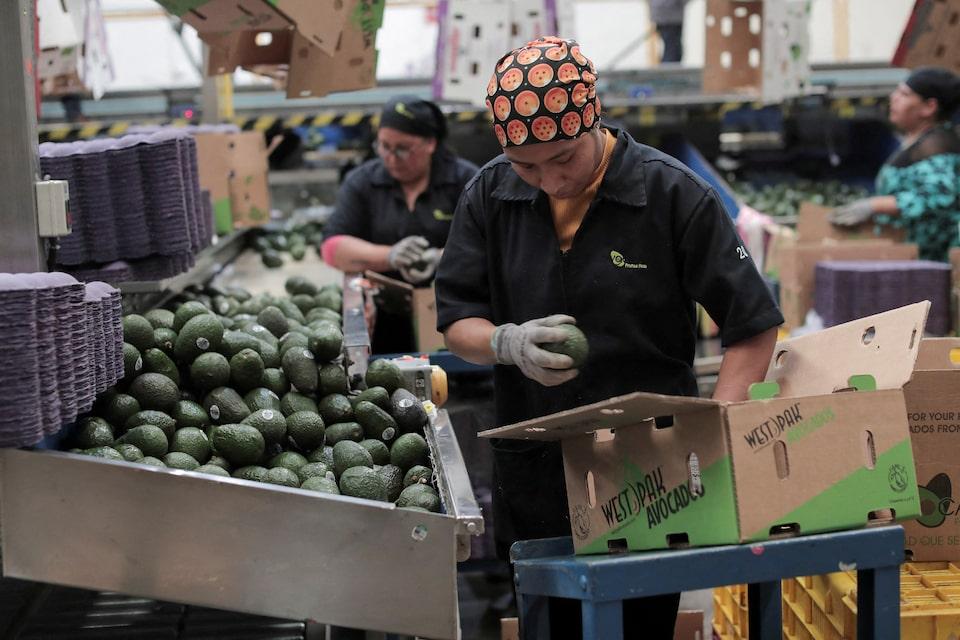
MEXICO CITY, Feb 7 (Reuters) - Mexican avocado growers will ship about 110,000 metric tons of the "green gold" fruit to the United States ahead of Sunday's Super Bowl, as threatened U.S. tariffs that could have derailed exports were paused before taking effect. The Mexican avocado packers and exporters association APEAM said the figure is similar to last year's shipments ahead of the National Football League championship game, indicating the lucrative trade avoided major disruptions this season despite a pledge by U.S. President Donald Trump to slap a 25% tariff on all Mexican imports. The U.S. paused the tariffs for a month after Mexico agreed to crack down on fentanyl trafficking. Mexican avocados, hugely popular in the U.S. as the main ingredient of guacamole, mainly come from Michoacan state, the only place that has four avocado seasons instead of one, allowing for uninterrupted harvesting. Farmers in Michoacan would feel significant pain from the U.S. tariff, which was estimated to spike prices by 10% to 20%. "Growers in Michoacan are mostly individual people or family-owned orchards, some of them are Indigenous people," said Viridiana Hernandez Fernandez, a historian at the University of Iowa specializing in Mexican avocados. "They are in a very vulnerable position with these negotiations." The rapid expansion of Mexico's avocado heartland has fueled deforestation over the last decade, pressured by growing demand for the fruit by U.S. consumers. The environmental damage has prompted lawsuits brought by the U.S. nonprofit Organic Consumers Association against importers West Pak Avocado and Fresh Del Monte Produce for labeling Mexican avocados as sustainable or responsibly sourced. Michoacan's state government launched a certification program to discourage U.S. companies from purchasing avocados sourced from orchards that were illegally deforested since 2018. Michoacan announced that some major importers, including West Pak, Mission, Calavo and others, had joined the certification program, a group that represents about 31% of exports to the U.S. last year. Fresh Del Monte is not a participant. Sign up here. https://www.reuters.com/markets/commodities/mexican-avocado-exports-steady-ahead-super-bowl-despite-us-tariff-tension-2025-02-07/
2025-02-07 11:46
Strong dollar undoing some of tariffs' intent ECB, BoE, BOC all cut rates even after Fed stayed on hold Policy divergence has risks but they are distant FRANKFURT/ZURICH, Feb 7 (Reuters) - Central banks around the globe have plenty of room to keep cutting interest rates, and a limited "decoupling" from the U.S. Federal Reserve could continue as it pauses its own policy easing, according to policymakers and analysts. Such a parting of the ways could cause problems for U.S. President Donald Trump, taking the sting out of his planned tariffs on trade and even raising the risk that U.S. companies and households will have to pay more to borrow. The Fed is the world's biggest central bank and usually leads others in setting the direction for policy. But the start of 2025 has been far from normal. The United States is in robust economic health while many of the world's other large economies are struggling, which combined with the uncertainty caused by Trump's policies and threats to trade is tying the Fed's hands on further rate cuts. The irony is that the global economy's adjustment to a threatened trade war is undoing some of the intent of Trump's tariffs even before they go into effect, to the benefit of foreign companies that sell to U.S. customers. Tariffs boost inflation at home, so the Fed is keeping interest rates high. This is strengthening the dollar at the expense of most currencies, making it more lucrative to export to the United States, contrary to what the administration wants. Switzerland, for example, is already enjoying a windfall. "A weaker franc would also help Swiss industry by making exports to the U.S. cheaper," said Karsten Junius, chief economist at J.Safra Sarasin. "This could also offset the impact of any U.S. tariffs imposed." The 20-nation euro zone, a key target of Trump's rhetoric because of its large trade surplus, could also offset some of the punitive charge via a currency that has weakened by 7% since early autumn. "European companies, in order to defend their market share, might be willing to sacrifice a bit of their margin," European Central Bank board member Piero Cipollone said. "Part of this sacrifice might be recovered through the exchange rate. So, in the end, the overall impact may not be that big." A weak currency is usually inflationary because it makes imports, particularly energy, more expensive. But inflation is heading down in many places, due not least to weak growth caused by trade frictions, and policymakers do not seem bothered by developments so far. The ECB, the Bank of England, and the Bank of Canada have all cut interest rates in recent days even after the Fed said it was not in a hurry to move. The Reserve Bank of India and the Bank of Mexico, though coming from higher levels, also cut rates overnight. Tiff Macklem, Canada's central bank chief, said the currency impact of differential interest rates had been "relatively modest" while the BoE said sterling's fall - a 7% decline against the dollar since September - was small. "We went from $1.12 (per euro last year) to $1.01 on Monday. Is it really changing the world for the ECB or for a central bank? I don’t think so," Amundi's head of global FX Andreas Koenig said. LIMITS There are signs that Trump, who only weeks ago was urging the Fed to cut, has recalibrated his view of where U.S. interest rates need to be. Treasury Secretary Scott Bessent said this week that when Trump speaks of wanting lower rates, he is referring to the yield on 10-year Treasury notes - key to determining borrowing rates in the U.S. mortgage market and bank lending to businesses - rather than the short-term rate set by the central bank. Policy divergence is also driven by economic fundamentals: the U.S. economy is simply doing better, so it will take a higher interest rate to extinguish undue inflationary pressures. The interest rate gap cannot grow indefinitely, however. "What worries central banks ... is when you see significant currency weakness that feeds into a bond market selloff that feeds into further currency weakness and into inflation," Dominic Bunning, global forex strategist at Nomura, said. "You know that spiral - that's what ultimately central banks would need to really deal with. But I don't think you're going to see that," Bunning added. Policymakers may also flinch if energy prices spike again, which could cause a double inflation hit as oil and gas are usually sold in dollars. Another issue is that central banks can push down short-term interest rates but borrowing costs further out are driven by the market and if U.S. yields rise, others are likely to follow. That makes borrowing more expensive and weakens economic growth. "Normally if U.S. yields go up or down, European bonds go in the same direction," GianLuigi Mandruzzato, senior economist at EFG Bank said. "Companies and households would face higher borrowing costs, despite short term interest rates being reduced by central banks." Sign up here. https://www.reuters.com/markets/rates-bonds/leaving-fed-behind-top-central-banks-have-room-ease-2025-02-07/
2025-02-07 11:32
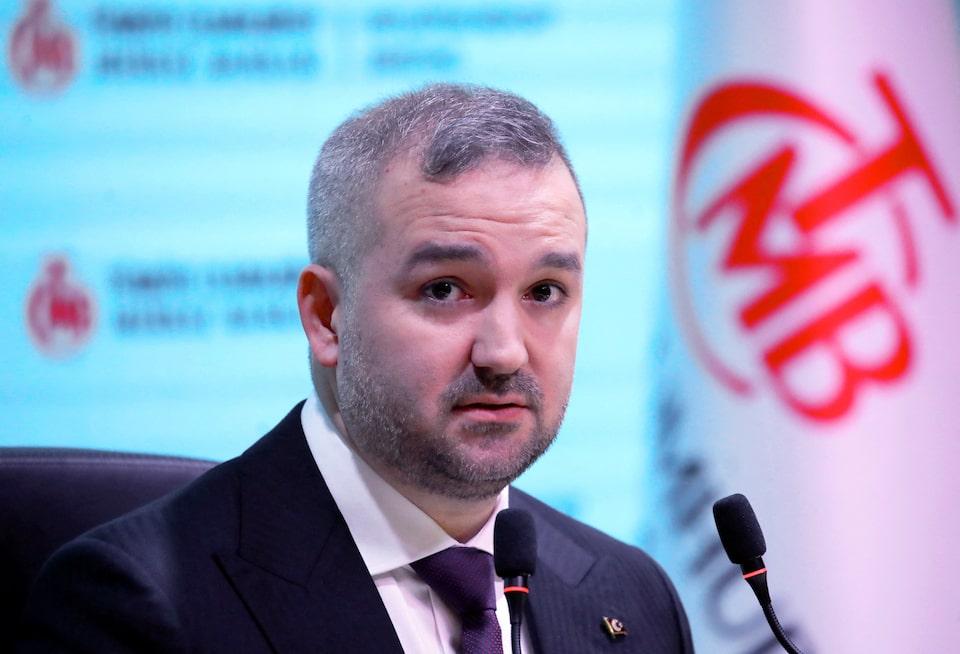
Karahan says decisions to be prudent on meeting-by-meeting basis Central bank keeps its end-2026 inflation forecast at 12% It has cut its policy rate by 500 basis points since December Monthly inflation was a higher-than-expected 5% in January ISTANBUL, Feb 7 (Reuters) - Turkey's central bank governor Fatih Karahan said on Friday the bank is "not on autopilot" after two straight interest rate cuts and its decisions are based on data, in comments after the bank raised its year-end inflation forecast to 24% from 21%. "We can pause or change the size of policy rate moves," Karahan told a news conference as the bank presented its quarterly inflation report in Istanbul. "Rate cuts are made in line with data." Karahan delivered the hawkish message at a time when both inflation and interest rates are heading lower and authorities are predicting the coming end of years of price and currency turmoil. "We make our policy decisions prudently on a meeting-by-meeting basis with a focus on the inflation outlook," he said. The lira was slightly weaker on Friday at 35.9850 against the dollar, having closed at 35.8660 the previous day. Bonds and stocks were little changed. Economists predict that the Turkish central bank (TCMB) will keep lowering its benchmark rate from the current 45%. "I expect the TCMB to continue to cut interest rates by 250 basis points in March. Of course, this is if February inflation does not exceed expectations," said Yatirim Finansman chief economist Erol Gurcan, forecasting a month-on-month inflation reading of around 3%. Data this week showed monthly inflation climbed more than expected to 5.03% in January due to a minimum wage hike and several new year price revisions. Annual inflation, which peaked above 75% last May, fell to 42.12% in January. FACTORS BEHIND REVISION Karahan said the bank left its forecast for the inflation rate at the end of 2026 unchanged at 12% and predicted an 8% rate by the end of 2027. "This revision (for 2025) is due to factors that are relatively beyond the control of monetary policy. Thus, it does not signal any easing of the monetary policy stance," he said. Among the leading factors for this year's revision were the increase in the weight of the services group in the CPI basket, along with food prices and a rise in state-administered prices, the governor added. The bank's inflation battle began in June 2023 when it launched a series of aggressive interest rate hikes that totalled 4,150 basis points taking the key rate to 50% last March. It was an abrupt shift to orthodoxy after years of low rates aimed at stoking growth. After cuts of 250 basis points each in December and January, the policy rate TRINT=ECI now stands at 45% and is expected to be lowered to 30% by the end of the year. President Tayyip Erdogan, who in the past was viewed as influencing monetary policy, had backed the previous unorthodoxy that triggered currency crashes and soaring inflation. He has since supported the current policy steps. Sign up here. https://www.reuters.com/world/middle-east/turkey-cenbank-raises-inflation-forecast-says-not-autopilot-with-cuts-2025-02-07/
2025-02-07 11:23
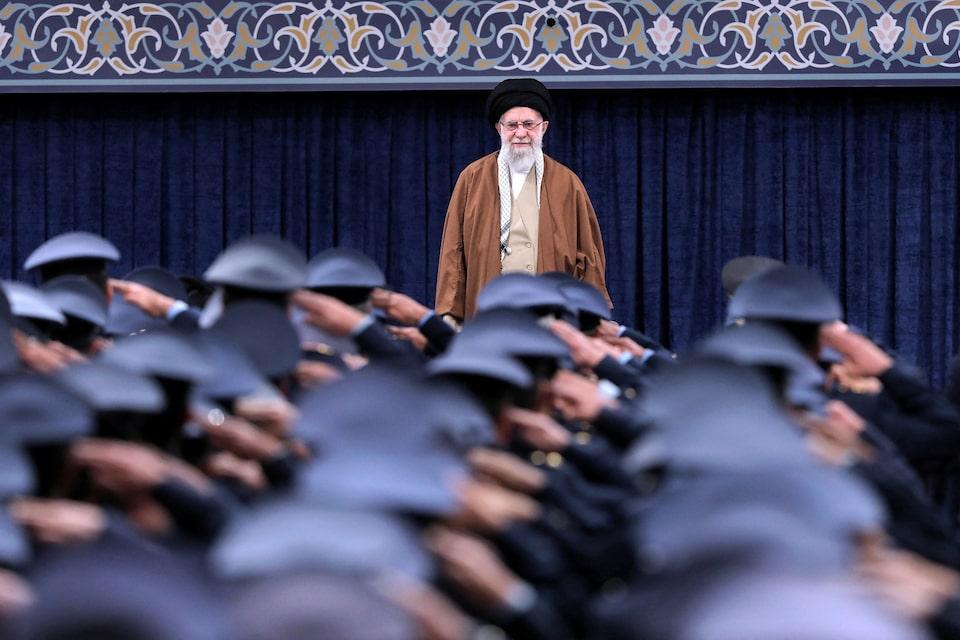
Khamenei stops short of banning talks Trump has said he'd love a deal with Iran US also restoring 'maximum pressure' campaign DUBAI, Feb 7 (Reuters) - Iran's Supreme Leader Ayatollah Ali Khamenei said on Friday that talks with the United States were "not smart, wise, or honorable", days after U.S. President Donald Trump said he would "love to make a deal" with Iran. Khamenei criticised Trump's past administration for not honouring its promises but stopped short of renewing a ban on direct talks with Washington decreed during the first Trump administration in 2018. Trump said this week he would like to start working on a "verified nuclear peace agreement" with Iran while also restoring his maximum pressure campaign on the country. Trump told reporters that his message to Iran was: "I would love to be able to make a great deal. A deal where you can get on with your lives." During his previous term in office in 2018, Trump pulled the U.S. out of Tehran's 2015 nuclear pact with world powers and reimposed sanctions that have crippled Iran's economy. Following the measures Tehran breached the pact's nuclear limitations. "Negotiating with America is neither smart, wise, or honorable. It will not solve any of our problems. The reason? Experience!" Khamenei was quoted as saying in comments to air force personnel marking the anniversary of Iran's 1979 revolution and carried by Iranian state media. Iran had reached its agreement with the U.S. and other countries after two years of talks, he said, but the Americans did not adhere to it despite Iran's many concessions. "The person in charge tore it up," said Khamenei, referring to Trump. A senior Iranian official told Reuters on Wednesday that Iran was ready to give the United States a chance to resolve disputes. Khamenei said Iran would retaliate in kind if the Americans attacked Iran. "If they threaten our security, we will threaten theirs. If they act on their threats, we will do the same." Referring to Trump's proposal to forcibly move Palestinian inhabitants from Gaza to neighboring Arab countries, Khamenei said: "On paper, Americans are changing the world map. Of course it's only on paper because it's devoid of reality." Sign up here. https://www.reuters.com/world/middle-east/irans-khamenei-says-experience-proves-talks-with-us-not-smart-2025-02-07/
2025-02-07 11:22
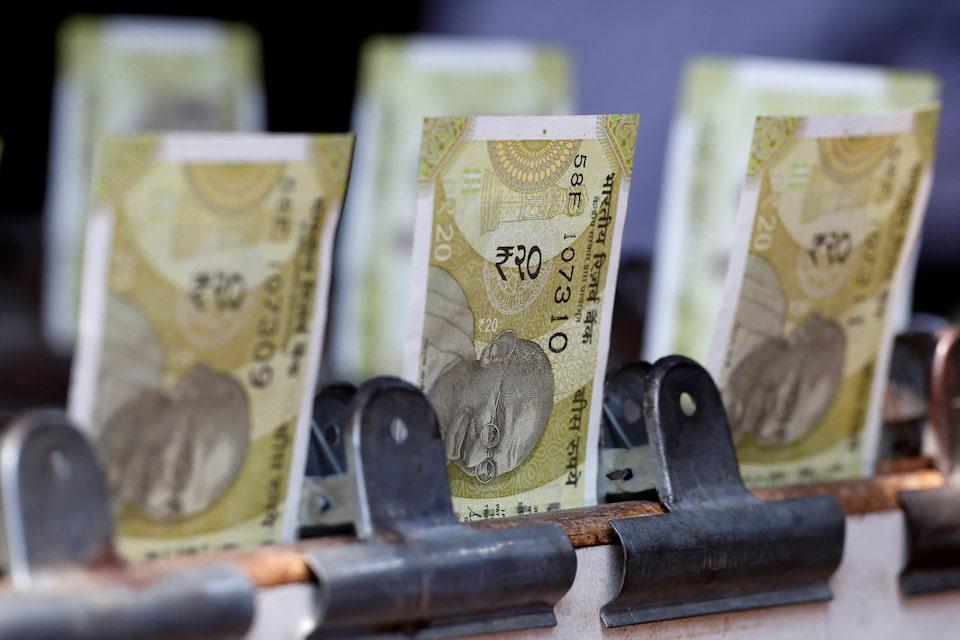
MUMBAI, Feb 7 (Reuters) - The Indian rupee strengthened on Friday after struggling for most of the week as global markets were jolted by fears of a trade war and foreign portfolio outflows persisted, pushing the rupee to its lifetime low past the 87 handle. The Reserve Bank of India cut its key interest rate for the first time in nearly five years and signalled a less restrictive policy approach, seeking to provide stimulus to a sluggish economy. Expectations that the Indian central bank will cut rates had also weighed on the rupee earlier in the week. On the day, the currency rose about 0.2% to end at 87.4250 against the U.S. dollar. It declined by nearly 1% on the week though, its worst weekly performance since December 2022. Asian currencies were mostly higher on Friday and the RBI likely intervened to support the rupee ahead of the policy decision. The rate cut had a negligible impact on the rupee with the dollar-rupee pair "finding support from the Governor’s statement that the RBI FX intervention policy will continue to focus on smoothening excessive and disruptive volatility," said Sameer Karyatt, executive director and head of trading at DBS Bank India. In his first public remarks on the currency, Governor Sanjay Malhotra reiterated the RBI's long-held position that interventions are only intended to smoothen "excessive and disruptive volatility." The rupee had declined to its all-time low of 87.5825 on Thursday after breaching the 87 handle on Monday, following the announcement of U.S. tariffs on Canada, Mexico and China. While tariffs on Canada and Mexico were delayed consequently, the rupee was unable to claw back its losses as traders positioned for a rate cut by the RBI and as foreign selling of Indian stocks persisted. Overseas investors have net sold about $9.5 billion of Indian stocks over 2025 so far. Sign up here. https://www.reuters.com/markets/currencies/rupee-sidesteps-rbi-rate-cut-end-up-posts-worst-week-over-2-years-2025-02-07/
2025-02-07 11:16
Lotte Chem 2024 operating losses deepen 157% year-on-year LG Chem 2024 operating profit down 63.75% Oversupply, Trump 2.0 create demand uncertainty in 2025 Singapore, Feb 7 (Reuters) - South Korean petrochemical companies LG Chem and Lotte Chemical both made losses in 2024, dragged down by oversupply which is set to persist this year, while trade turmoil has dampened the global economic outlook, company executives said this week. Petrochemical producers in Europe and Asia have been consolidating, as years of capacity build-up in top market China and high energy costs in Europe have squeezed margins. Lotte Chemical (011170.KS) , opens new tab, which reported results on Friday, showed that its 2024 operating losses deepened by some 157% year-on-year to 895 billion won ($619.62 million). This marked its biggest loss in operating income since 2011, the company's data showed. Financial data from before 2011 was not publicly available. The company's basic materials division, which includes petrochemicals, cut its operating loss by roughly 52% in the fourth quarter from the previous quarter to 175 billion won. LG Chem (051910.KS) , opens new tab, which reported earnings on Monday, showed that 2024 operating profits fell 63.75% from the previous year to 916.8 billion won, the lowest since 2019. Its petrochemical division posted a fourth-quarter operating loss of 99 billion won. Both companies cited a global glut as a key problem in the petrochemicals industry. "The continued market downturn was driven by an oversupply in Northeast Asia from continued capacity expansion and China's sluggish economic recovery," Yang Cheol Ho, head of strategy for LG Chem’s petrochemical division, said on a call on Monday. Oversupply is expected to persist for years with new plants still coming online in the Middle East and China. "We do expect continued overcapacity and uncertainties in global demand, especially under Trump 2.0," a senior Lotte Chemical executive said on Friday. U.S. President Donald Trump has imposed 10% tariffs on all Chinese imports, prompting retaliatory duties from China. Both companies, while noting recovery in Chinese demand was slow, were largely optimistic about demand recovery in the sector's biggest consumer. "There are very strong measures being taken to try to stimulate consumption," an LG Chem company spokesperson said, adding that this could lead to a gradual recovery in domestic demand in China for home appliances. A Lotte Chemical spokesperson said they are waiting for further announcements from Beijing on its stimulus plans in March. Beijing in January added more home appliances to the list of products in its consumer trade-in scheme in an effort to revive its struggling consumer sector. The stimulus scheme boosted last year's consumption growth by more than 1 percentage point, according to the country's commerce ministry. LG Chem is targeting revenues of 26.5 trillion won in 2025 and is likely to maintain its capital expenditure at close to 2 trillion won. It cut its capex last year by around 30% from 2023. ($1 = 1,444.4300 won) Sign up here. https://www.reuters.com/markets/commodities/south-korean-petrochemical-firms-profits-plunge-2024-oversupply-persists-2025-02-07/