2025-02-07 10:10
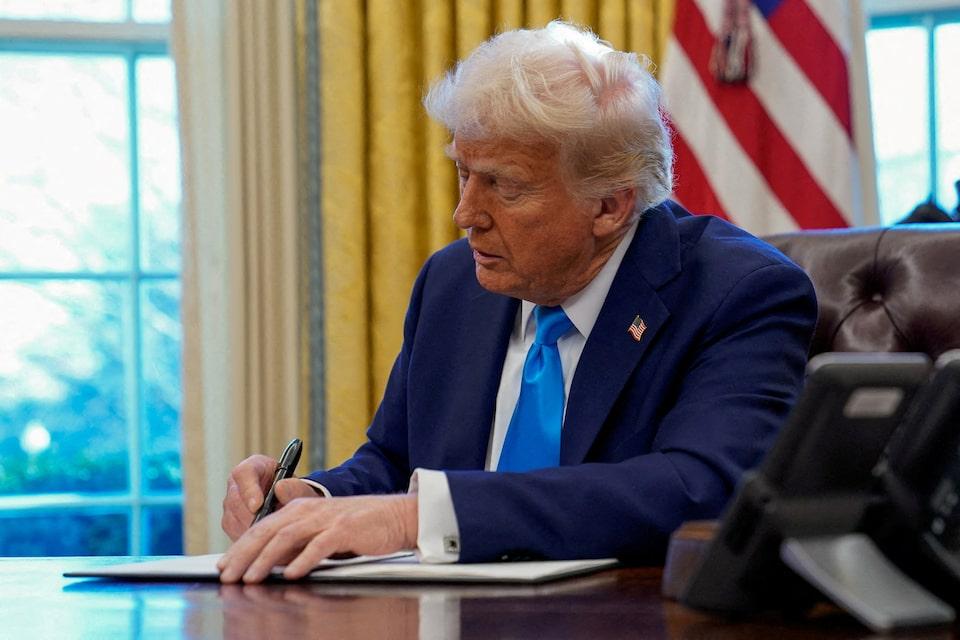
Feb 10 (Reuters) - U.S. President Donald Trump's fast-changing tariff decisions have super-charged market volatility and investor uncertainty, with little respite in prospect in the days ahead. There is plenty of potential for more Trump surprises on anything from tariffs to geopolitics, alongside the usual set events such as U.S. inflation data. And investors are keenly watching one market that has had its best start to the year in a decade versus Wall Street. Here is your look at the week ahead from Rae Wee in Singapore, Lewis Krauskopf in New York, Danilo Masoni in Milan and Naomi Rovnick and Marc Jones in London. 1/ TALKING TARIFFS Markets were cheered by Trump's decision to suspend tariffs on Mexico and Canada hours before they were due to come into force. But investors are not sure if the tariff talk is brinksmanship to extract concessions or will act to deepen global rivalries and intensify economic attacks on the U.S.. On Sunday, Trump said he would introduce new 25% tariffs on all U.S. imports of steel and aluminium on top of existing metals duties, firing another shot in his trade war. Columbia Threadneedle chief EMEA economist Steven Bell said Trump negotiating some tariffs away may not prevent him from threatening them again. Bell warns of a possible trade war that could upend the established world order. Deeper global rivalries could also intensify efforts by China, Brazil, Russia and Iran to weaken emerging nations' reliance on the U.S. currency for trade, which some economists say represents a growing challenge to dollar hegemony. 2/ PRICE POINTS Release of a key gauge of monthly U.S. consumer prices is set to test investor nerves after Trump's tariff threats triggered warnings from several Fed officials of the risk of an inflation pickup. January's consumer price index on February 12 is expected to show a 0.3% monthly increase, a Reuters poll shows. Last month's report showed core CPI, which excludes the volatile food and energy components, moderated after barely budging for four straight months, encouraging investors. But the monetary policy outlook remains uncertain after the Fed paused easing last month and Trump's tariff push began. 3/ FACE OFF Round two of the Sino-U.S. trade war has only just begun, and investors are gearing up for a prolonged tit-for-tat between the world's two largest economies. Near-term focus remains on whether a highly anticipated conversation between Trump and Chinese President Xi Jinping actually happens, and if the U.S. President could grant some sort of deferment, as he did with Mexico and Canada. But China has enough problems on its own. The wait for further stimulus measures from Beijing is proving futile and the road to recovery is seemingly a long and arduous one, meaning more investors are avoiding a market that was once a must-have in their portfolios. And Chinese consumer price data on Sunday is likely to underscore reasons to keep those bearish bets on China for now. 4/ EUROPE POWERS UP Europe Inc is ticking all the boxes: cheap valuations, earnings growth and momentum. Investors are pouring in. Powered by gains in Frankfurt, London, Milan, and Paris, the STOXX 600 (.STOXX) , opens new tab has marked its best performance since 2015 against Wall Street over the first six weeks of 2025. However, given its history of short-lived outperformance, the question remains: will this rally last, or is it just a flash in the pan? There are several potential catalysts for more near-term gains. Tariffs are a wild card, but if the stars align, Germany might loosen fiscal policy and Ukraine tensions may ease. European earnings growth is forecast at 7.9% in 2025, from 1% last year and after a 3.9% fall in 2023. U.S. earnings will grow at a slower rate, but still above Europe. 5/ DON'T GO AWAY Ecuador's elections are rarely boring, and Sunday's vote has been no exception. The presidential race will go to an April 13 runoff if current trends in the count persist, the head of the national electoral council said late on Sunday, as incumbent Daniel Noboa led leftist lawyer Luisa Gonzalez by less than 1%. Gonzalez, who faced Noboa at the polls in 2023, is vying to be Ecuador's first woman president. Opinion polls had suggested banana-business heir Noboa could win outright, but he was barely leading the count late on Sunday, with 44.5% to Gonzalez's 44.1%, with 78.7% of ballot boxes counted. Noboa is favoured by the market as the continuity candidate, but it is complicated. He has had a very public falling-out with his Vice President Veronica Abad, whom he left in charge during his unpaid campaign leave. He also just beat Trump to the punch by slapping 27% tariffs on Mexico. Sign up here. https://www.reuters.com/business/take-five/global-markets-themes-graphic-2025-02-07/
2025-02-07 09:23
PARIS, Feb 7 (Reuters) - L'Oreal (OREP.PA) , opens new tab has taken stakes in clinics in China and North America in order to observe and understand the medical aesthetics market, L'Oreal CEO Nicolas Hieronimus said in an earnings call on Friday. The company had announced in August the acquisition of a 10% stake in Swiss skin care firm Galderma. Hieronimus added that L'Oreal would be entering the nutricosmetics market with a new product and said more would be coming. Sign up here. https://www.reuters.com/business/retail-consumer/loreal-takes-stakes-chinese-namerican-clinics-understand-medical-aesthetics-2025-02-07/

2025-02-07 07:31
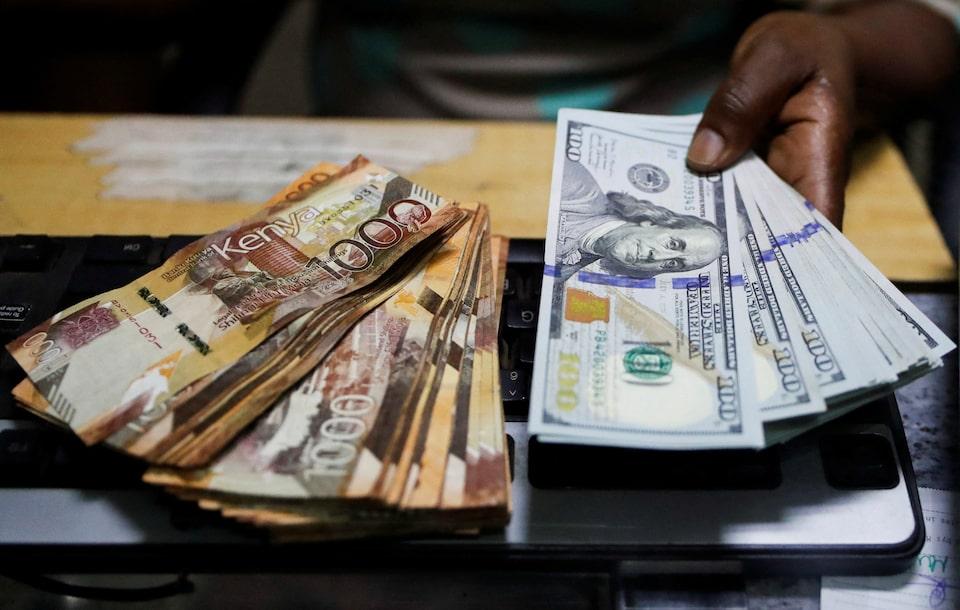
NAIROBI, Feb 7 (Reuters) - Kenya's shilling strengthened against the dollar on Friday, London Stock Exchange Group data showed. At 0715 GMT, the shilling was quoted at 128.25/129.25, compared with Thursday's closing rate of 129.00/130.00. Sign up here. https://www.reuters.com/markets/currencies/kenyan-shilling-firms-versus-dollar-lseg-data-shows-2025-02-07/
2025-02-07 07:18
Feb 7 (Reuters) - Yara International (YAR.OL) , opens new tab, one of the world's largest fertilizer producers, on Friday flagged a sharp hit from the strong U.S. dollar on its fourth quarter net result, while its core earnings landed close to market expectations. "In general, a stronger U.S. dollar is good for our business," CEO Svein Tore Holsether told Reuters. "But then the income side of that takes longer time, but you get the immediate impact on the balance sheet when this happens." The Norwegian company reported a quarterly net loss of $290 million, which it said was mainly driven by a net foreign currency exchange loss of $260 million due to non-cash one-offs. Yara's shares were trading 6.7% lower by 0955 GMT, the biggest fallers on Europe's benchmark STOXX 600 index (.STOXX) , opens new tab. Quarterly earnings before interest, taxes, depreciation and amortisation (EBITDA), excluding one-off items affecting comparability, fell 9.9% to $519 million. Analysts on average were expecting $523 million, a company-provided poll showed. The adjusted core profit was impacted by lower nitrogen upgrading margins in the quarter, the company said. Holsether said Yara had observed a significant increase in global urea prices so far in 2025, with the most recent figure standing at around $455 per metric ton. That means higher selling prices for Yara's urea fertilizers. The company expects to pay around $310 million more for natural gas in the first half of 2025 than a year earlier, below Jefferies analysts' estimate of $460 million. Gas prices make up a chunk of fertilizer firms' raw material costs, as a vast amount of natural gas is needed to produce fertilizers. "We're also progressing well on our cost and capex reduction program, with a USD 90 million reduction achieved in 2024," Holsether added in a statement. The group initiated a $150 million cost reduction and $150 million capital expenditure reduction programme in July to improve its financial performance and shareholder returns. ($1 = 11.2075 Norwegian crowns) Sign up here. https://www.reuters.com/markets/commodities/yara-reports-q4-core-profit-slightly-below-market-estimates-2025-02-07/

2025-02-07 07:05
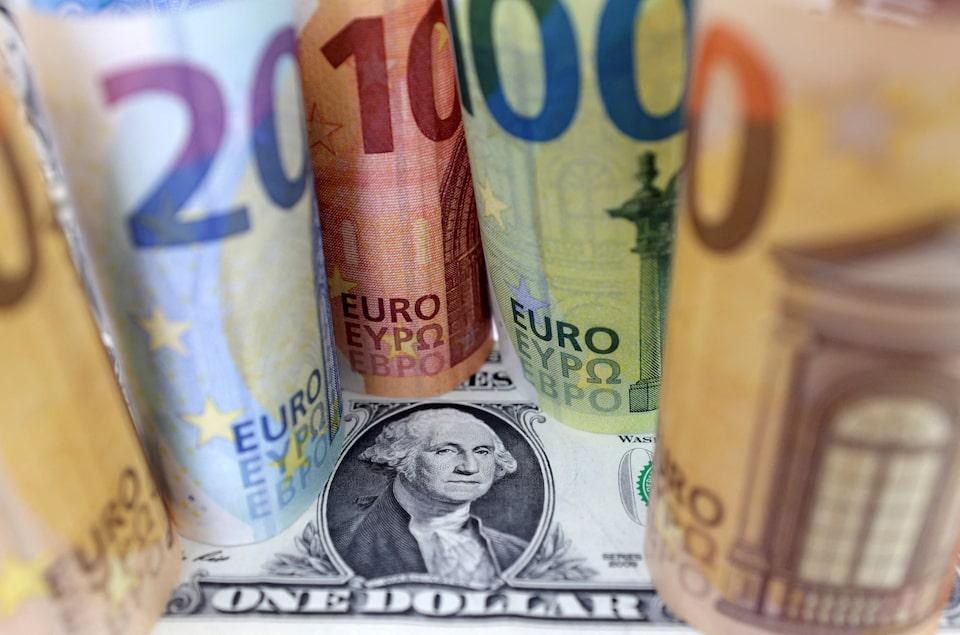
LONDON, Feb 7 (Reuters) - Hypersensitive currency swings to this week's "stop-go" U.S. tariff threats suggest a persistent offset to the new administration's trade stance that may just help central banks look beyond it all. The first salvos in President Donald Trump's latest trade war included 25% tariffs on Mexican and Canadian imports that were almost immediately pushed off for at least a month, as well as a 10% charge on Chinese goods that is still lingering. The dollar initially surged against the peso and Canadian dollar, only to reverse course on news of the tariff delays. The reaction of the Chinese yuan was complicated by the fact that mainland markets were closed at the time of the announcement. In the process, the DXY index (.DXY) , opens new tab, which measures the dollar against the most traded currencies, managed a 2% round trip from last Friday's low only to reverse by mid-week. These shifts suggest that if any of these import taxes do hit, the market's reaction function will be to lift the dollar, as concerns about the potential for overseas economic damage and domestic U.S. inflation irritation exaggerate the relative interest rate gaps. That is a plus for many foreign firms because a stronger dollar can allow them to keep the dollar price of their goods stable in U.S. markets, helping them to retain market share without a lockstep hit in their home currency earnings. Of course, a weaker local currency can affect both a country's employment and economic activity in complex ways, as recent studies , opens new tab have shown, but overall the currency market can offer an instant and significant offset to rising tariffs. A prime example is the weakening of China's yuan during Trump's 2018/19 bilateral tariff war, which clearly softened the fallout. READY RECKONERS Given the myriad moving parts, it is probably impossible to make an accurate forecast of the eventual macro fallout of tariffs, even assuming one knows for certain whether they will be applied and how large they will be. In theory, exchange rate shifts can dampen both the real impact of the tariffs and any upward pressure on U.S. inflation, though that should rein in interest rates and bond yields, setting in motion yet more changes. And then there are the debates about whether a one-off increase in prices actually boosts the inflation rate over time or how business switching and uncertainty douse domestic activity and global confidence and growth. In this type of environment, rules of thumb tend to dominate. Goldman Sachs used one to suggest that sustained 25% tariffs on imports from Canada and Mexico would amount to a 7 percentage-point increase in the "effective" overall U.S. tariff rate. And that would lead to a 0.7% increase in "core" prices in the personal income expenditure (PCE) basket. What's curious is that the effective tariff increase roughly equates to the increase in the dollar index recorded since October, when polls suggested Trump was the clear favourite to win the election. The dollar's appreciation against both the peso and Canadian dollar over that period was roughly 10%. SANDING THE SHARPER EDGES Given all of these mind-numbing complexities, it is not hard to see why central banks have avoided taking a firm stance on the tariff question. Federal Reserve officials this week have seemed intent on signaling that plans for further easing remain intact, even if the multiple uncertainties mean there is no "hurry" right now as they assess the "totality" of Trump policies. Meanwhile, the European Central Bank, Bank of England, Bank of Canada and Bank of Mexico all pushed ahead with interest rate cuts over the past week. BoE boss Andrew Bailey on Thursday put it best when he said monetary policy has little impact on short-term forces influencing headline inflation, but it should also not be used to respond to factors that will fade by the time the policy actually takes effect. It is unclear what exactly Trump's tariffs are truly designed to achieve. Trump's nominee for U.S. trade representative, Jamieson Greer, laid out his ideas this week, including "reciprocal" access to overseas markets. But regardless of the intent, the rapid moves in the currency markets may sand down the sharper edges of any inflationary fallout - along with much the point of the tariffs in the first place. The opinions expressed here are those of the author, a columnist for Reuters Sign up here. https://www.reuters.com/markets/currencies/currencies-deflect-tariff-thrust-mike-dolan-2025-02-07/
2025-02-07 06:56
MOSCOW, Feb 7 (Reuters) - Russia's oil transit through Ukraine's pipeline system declined by 15% in 2024 to 11.5 million metric tons (230,300 barrels per day), the Vedomosti newspaper said on Friday, citing two sources familiar with Russian energy ministry data. Hungary accounted for 42% of supplies, which were steady last year, at 4.8 million tons. Exports to Slovakia fell 13% to 4 million tons, while deliveries to the Czech Republic fell to 2.7 million tons. Russia's energy ministry did not immediately reply to a request for comment. Russia supplies oil via Ukraine through the Soviet-built Druzhba pipeline, its southern spur linking Russian oilfields with refineries controlled by MOL (MOLB.BU) , opens new tab, in Hungary and Slovakia and PKN Orlen (PKN.WA) , opens new tab in the Czech Republic. The northern branch of the pipeline runs to Poland and Germany from Belarus. Germany and Poland stopped purchases of Moscow's oil in 2023 over the conflict in Ukraine. Germany now receives oil from Kazakhstan via the route. The Central Asian country exported 1.5 million tonnes of oil to Germany via Druzhba last year. Sign up here. https://www.reuters.com/business/energy/russias-oil-transit-via-ukraine-down-15-2024-vedomosti-says-2025-02-07/