2025-02-07 02:41
Feb 6 (Reuters) - Titan America (TTAM.N) , opens new tab has raised $384 million after pricing its U.S. initial public offering at $16 per share, within its targeted range, the cement producer said on Thursday. Sentiment in the U.S. IPO market has improved on expectations of lower corporate taxes and a more business-friendly regulatory environment under the Donald Trump administration. However, the underwhelming market debuts of Venture Global (VG.N) , opens new tab and Smithfield Foods (SFD.O) , opens new tab highlight that investors remain cautious. Titan America sold 9 million shares, together with 15 million shares its Belgium-based parent company Titan Cement International (TITC.BR) , opens new tab offered at $16 apiece. The company had marketed to list its shares in a range of $15-$18 apiece. European companies have often sought listings in New York, which offers deeper pools of capital, a wider investor base and potentially higher valuations. The IPO valued the cement producer at $2.95 billion, ahead of its New York Stock Exchange debut. Titan America's common shares are expected to begin trading on the New York Stock Exchange under the ticker symbol "TTAM" on February 7. European cement makers described U.S. market as a place to grow aggressively, that could offer companies an opportunity to capitalize on the region's infrastructure and construction boom, as well as capture higher valuation. Swiss cement giant Holcim (HOLN.S) , opens new tab said last year it would spin off its North American business into a separate U.S.-listed entity, while German-listed Heidelberg Materials (HEIG.DE) , opens new tab has also considered listing in the country. Titan America supplies heavy building materials and services to resellers and construction contractors in the eastern region of the United States. Citigroup and Goldman Sachs are the lead underwriters for the offering. Titan Cement will control 87% of the voting power after the IPO. Sign up here. https://www.reuters.com/markets/commodities/cement-producer-titan-america-raises-384-million-us-ipo-2025-02-07/

2025-02-07 01:38
Japan's debt-servicing cost to double by 2030, IMF says IMF welcomes Japan's commitment to flexible exchange rates BOJ must closely monitor liquidity conditions, funding rates Faster-than-expected rate hike could disrupt banks, JGB market TOKYO, Feb 7 (Reuters) - Japan should be on alert for any spillover effects from rising foreign market volatility that could affect liquidity conditions for its financial institutions, the International Monetary Fund said on Friday. The IMF also said the country needed to be vigilant about monitoring any fallout from the Bank of Japan's interest rate rises, such as an increase in the government's debt-servicing costs and a possible jump in corporate bankruptcies. "As interest rates rise, the cost of servicing the large public debt is expected to double by 2030, putting a premium on a robust debt management strategy," the IMF said in a statement released after its consultation with Japanese policymakers. "In the face of rising gross financing needs and a shrinking BOJ balance sheet, government bond issuance will need to rely on additional demand from foreign investors and domestic institutions," it said. The yen has made sizable swings against the dollar, driven largely by shifts in the Japan-U.S. interest rate differentials, but also amplified by the build-up and unwinding of yen carry traders, the IMF said. Rises in foreign market volatility could affect domestic liquidity conditions, potentially triggering spill-over effects, the IMF said. "To mitigate these risks, the central bank should closely monitor liquidity conditions and funding rates in money markets, while paying particular attention to the uneven distribution of liquidity among banks," it said. The IMF welcomed Japan's "continued commitment to a flexible exchange rate regime," saying that should continue to help the country absorb external shocks and support its monetary policy's focus on price stability. The BOJ ended a decade-long, radical stimulus programme last year and raised short-term interest rates to 0.5% from 0.25% in January, reflecting its growing conviction that Japan is on track to sustainably achieve its 2% inflation target. After three decades of near-zero inflation, there are signs Japan's economy can sustainably converge to a "new equilibrium" with inflation exceeding the BOJ's 2% target for more than two years and a tight job market pushing up wages, the IMF said. The IMF called for a gradual increase in the BOJ's policy rate, saying Japan's ultra-low interest rates may have allowed low-productivity firms to survive longer than they otherwise would have and delayed necessary economic restructuring. But it warned that faster-than-expected interest rate increases coupled with rising bankruptcies among smaller firms could destabilise the banking sector. "While gradually rising interest rates have helped bank profitability, faster-than-expected increases in interest rates or sudden changes in global financial conditions could amplify financial market volatility," the IMF said. A faster-than-expected monetary tightening could also disrupt the Japanese government bond (JGB) market, amplifying interest rate risks for banks with larger exposures, it said. Sign up here. https://www.reuters.com/markets/asia/imf-warns-japan-spillovers-rising-foreign-market-volatility-2025-02-07/

2025-02-07 01:00
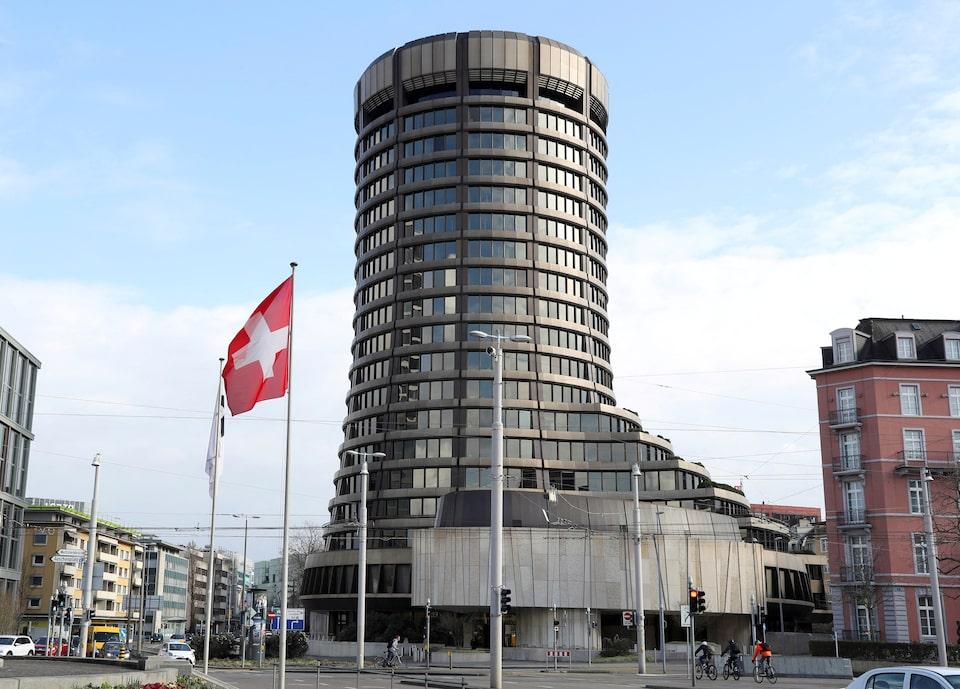
LONDON, Feb 6 (Reuters) - The world's leading central bank umbrella group, the Bank for International Settlements, has delivered its first public warning about the risks posed by U.S. President Donald Trump's trade war and deregulation plans. BIS head Agustin Carstens said trade developments were a prominent worry now, while fiscal policy, regulation, immigration policy and the broader geopolitical backdrop all carry major question marks. "Such pervasive policy uncertainty will affect central banks in several ways," Carstens, who was previously governor of the Bank of Mexico, said in a speech delivered in Mexico City. Economic growth is likely to suffer, he said, as companies postpone investment and households put off large purchases. Financial markets are also likely to be more volatile, given the sizeable currency and asset market swings seen in recent weeks as investors have struggled to gauge the tariff threats to Canada, Mexico and China. "Some of these asset price movements, particularly exchange rate depreciations, could be inflationary," Carstens said, urging central banks to respond by sticking to their primary job of keeping inflation in check. The BIS is a forum for the world's top central banks, helping to manage their foreign exchange reserves and it also hosts the Basel Committee for Banking Supervision. Trump's re-election has threatened to shatter the already-fraying global consensus on financial rulemaking, triggering worries, especially in Europe, of a global race to the bottom in supervision. Carstens also warned about loose fiscal policies and a possible further surge in debt, which typically fuels inflation and buffets currencies. "In the extreme," he said, "an abrupt repricing of public debt could put financial stability at risk." There is also the danger of an amplified divergence between U.S. interest rates and those of other major economies. "Economic growth in the United States has been much stronger than in much of the rest of the world of late," Carstens said. "Should this continue, we could see greater variability in (central bank) policy settings, with flow-on effects to capital flows, exchange rates and global financial conditions." Sign up here. https://www.reuters.com/business/bis-warns-risks-economies-central-bank-policy-over-trump-uncertainties-2025-02-07/
2025-02-07 00:00
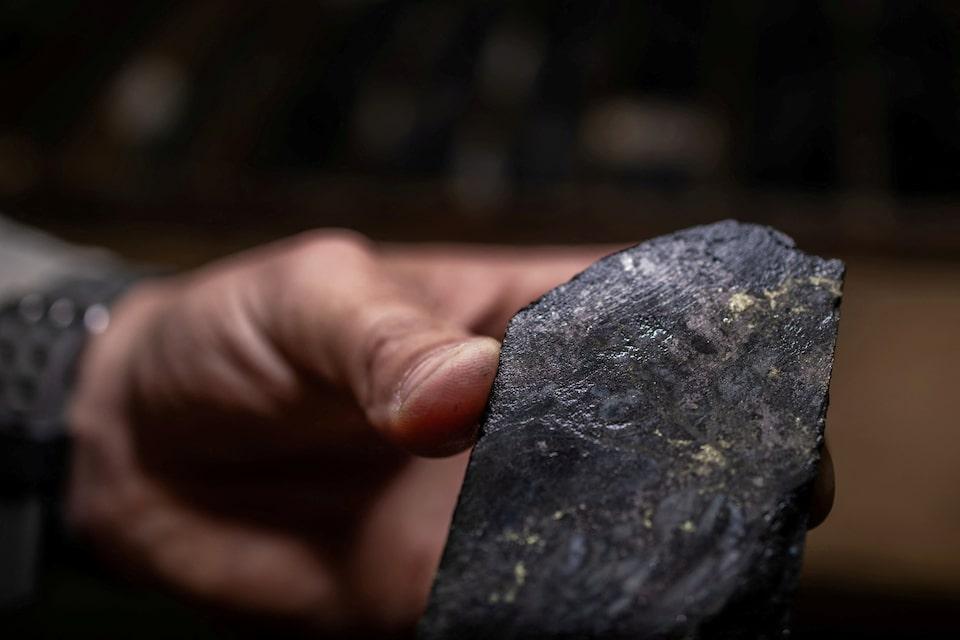
LONDON, Feb 6 (Reuters) - The cobalt market is no stranger to boom and bust cycles but the current downturn is unprecedented and no-one is sure how long it's going to last. London Metal Exchange (LME) cobalt has imploded from a high of $82,000 per metric ton in April 2022 to $21,550, the lowest level since the contract was launched in 2010. Once again the market has been swamped by over-production in the Democratic Republic of Congo, the world's dominant source of the battery metal. But while it was an artisanal mining surge that caused the bust of 2018-2019, this time around it's China's giant CMOC Group (603993.SS) , opens new tab. The company more than doubled its output of cobalt last year, pumping nearly 60,000 tons of extra metal into a global market of just over 200,000 tons. It doesn't help that cobalt's bright new energy narrative is starting to unravel as the electric vehicle (EV) sector evolves. COBALT CHAMPION CMOC was formerly known as China Molybdenum Corp and it remains a significant producer of the steel alloying ingredient. But thanks to the company's two massive copper mines in the Congo it has rapidly grown to become the world's largest producer of cobalt, which comes as a copper by-product. Both TFM and KFM mines have been aggressively ramping up output and the company had said , opens new tab it planned to lift cobalt output from 55,526 tons in 2023 to 60,000-70,000 tons in 2024. Actual production last year came in at 114,165 tons, stunning the market. Guidance for this year is 100,000-120,000 tons. CMOC is not going to lose its title of world's largest cobalt producer any time soon. The concession at the TFM mine encompasses a massive 1,600 square km (618 sq. miles) of potentially resource-rich ground. BY-PRODUCT BLUES CMOC also churned out a massive 650,000 tons of copper from its Congo mines last year. While the price of cobalt has drifted ever lower, copper hit a record high last year, incentivising producers such as CMOC to rush units to market. In the Congo more copper means more by-product cobalt. Indeed, 98% of all the world's cobalt production comes as a by-product to either copper or nickel, according to the Cobalt Institute. That's a double problem for the cobalt market. Indonesia's nickel production has boomed in recent years and so too has its output of by-product cobalt. The country is now the world's second largest cobalt producer and still expanding. Cobalt's fortunes are forever tied to those of copper and nickel, meaning it has no independent price floor. The price can carry on falling but that's not going to stop CMOC from producing more cobalt as long as the copper price encourages it to maximise output. Such is the scale of CMOC's cobalt foot-print it has negated the potential of even Congo's large artisanal sector to act as a swing producer and tame supply. ELECTRIC DREAMS FADE Cobalt's demand profile has been transformed by its use in EV batteries but the metal's prospects look a little less stellar than a couple of years ago. The EV revolution is rapidly evolving. The Chinese market is shifting towards greater sales of hybrids, which need a smaller battery than a pure electric vehicle, and towards lithium-iron-phosphate battery chemistry which needs no cobalt at all. Western EV manufacturers are still largely sticking with nickel-cobalt-manganese cathode chemistry but while Chinese EV sales rose by 36% last year, North American sales growth was a modest 9% and the European market actually contracted. The amount of lithium deployed in new energy vehicles was up by 26% year-on-year in November but that of cobalt was unchanged, according to consultancy Adamas Intelligence. Even in Western markets, battery makers are increasingly shifting to low-cobalt chemistries both on grounds of cost and risk to reputation from the well-documented ethical problems with Congo's artisanal production. TOO MUCH COBALT...AND TOO LITTLE The cobalt price has been crushed by the combination of massive supply surge and slowing demand dynamic. There is a clear glut of cobalt and the prognosis is for more of the same. Analysts at Macquarie Bank are forecasting an annual supply surplus through 2028 at least. The irony is that while the world has more cobalt than it knows what to do with, the West is becoming ever more dependent on China. Cobalt has many military applications from munitions to high-temperature aerospace alloys used in fighter jets. Both the United States and the European Union classify it as a critical mineral and are committed to building out their own cobalt supply chains away from Chinese influence. But the bombed-out price is making that almost impossible. Jervois Mining, which received funds from the U.S. Department of Defense to develop a cobalt mine in Idaho, has suspended operations and announced a pre-packaged bankruptcy arrangement at the start of January. If the West wants its own cobalt supply chain, it's going to need a different pricing mechanism, because market dynamics suggest the price is not going to stage any significant recovery any time soon. Sign up here. https://www.reuters.com/markets/commodities/another-cobalt-bust-this-time-its-different-andy-home-2025-02-06/
2025-02-06 23:52
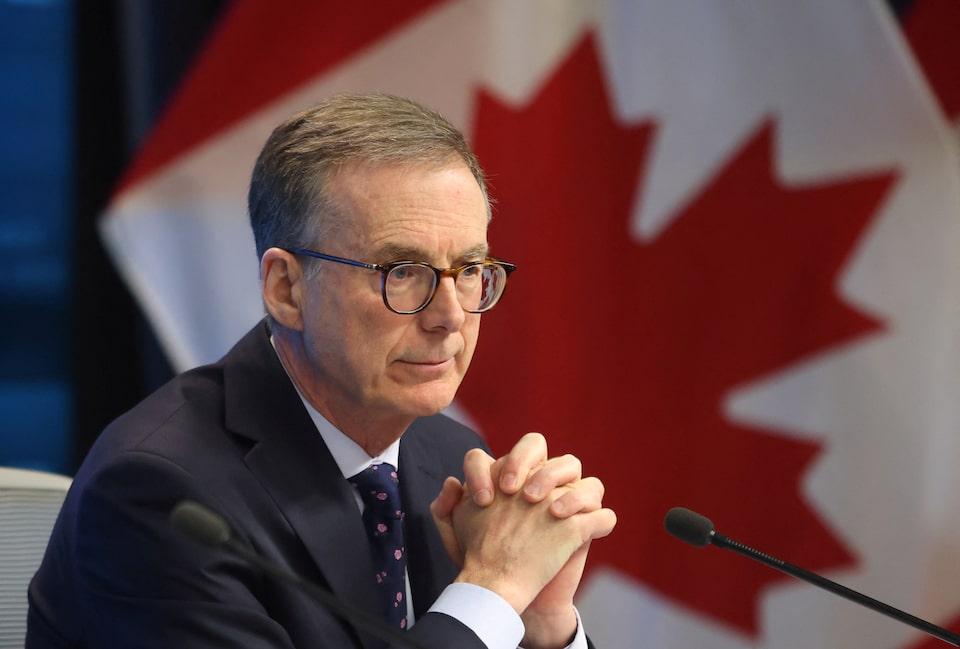
OTTAWA, Feb 6 (Reuters) - Bank of Canada Governor Tiff Macklem said on Thursday a policy shift in the U.S. was causing uncertainty and President Donald Trump's tariff threats were already impacting businesses and households. Trump agreed on Monday to temporarily pause a 25% levy on almost all imports from Canada and Mexico, which if implemented could have pushed the economies of both the countries into a whirlwind of recession and higher prices. The tariffs have been suspended for a month, the U.S. government said this week. "Trump's threats of new tariffs are already affecting business and household confidence, particularly in Canada and Mexico," Macklem said while virtually addressing a conference held in Mexico City. "The longer this uncertainty persists, the more it will weigh on economic activity in our countries," he said. The Bank of Canada said last month the threat of tariffs was making economic projections difficult, but cautioned that a 25% tariff could cause major economic damage. In his prepared remarks on Thursday, Macklem said if significant broad-based tariffs were imposed, they would reduce long-run prosperity, which monetary policy cannot change. But besides the looming tariffs, other headwinds were also posing challenges for monetary policy such as prospects of war, rising trade protectionism, economic fragmentation, the advent of new technologies and catastrophic weather events, he said. "In a world with more structural change and more negative supply shocks, central banks will be faced with harder choices," Macklem said, adding that all of the challenges make central banks vulnerable to criticism. "We will be called ineffective or criticized for not doing enough. And some will challenge our independence," he said. The Bank of Canada was criticized during the pandemic when market participants and politicians blamed its monetary policy measures for failing to tame recession and joblessness. In a report published last month on the review of steps it had taken during the pandemic, the bank said it would improve its communications and its forecasting models to predict future shocks. Macklem said amid an uncertain world, central bankers will have to rely on their strategies to maintain price stability, communicate clearly on the limitations of monetary policy, create advanced modeling and work collaboratively with other central banks. "We need to remain evidence-based, technocratic and professional, and free of political influence," he said. Sign up here. https://www.reuters.com/world/americas/bank-canada-governor-says-trumps-tariffs-threat-already-having-an-impact-2025-02-06/
2025-02-06 23:20
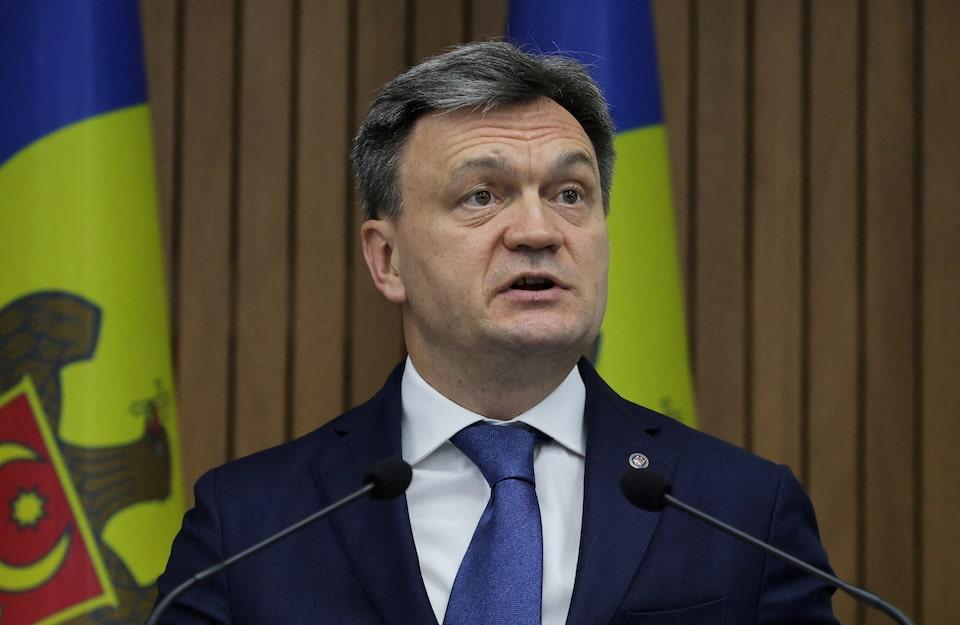
Gas supply cuts caused power cuts in separatist region EU-backed gas supply deal in effect until February 10 Moldova PM says separatists must meet conditions to extend deal CHISINAU, Feb 6 (Reuters) - Moldova's pro-European prime minister said on Thursday the ex-Soviet state's separatist Transdniestria region had to fulfil several conditions or risk being plunged into a new energy crisis with power cuts and heating and water shortages. Prime Minister Dorin Recean was taking part in a public online discussion nearly a week after gas reached Transdniestria's 350,000 residents for the first time in a month thanks to a 30 million euro ($31.2 million) grant from the European Union. The emergency gas supply extends only to February 10, when a new arrangement must take effect to ensure gas is purchased and delivered to the pro-Russian region. Recean restated the conditions set down by the EU this week for a proposed further 60 million euro grant - mainly evidence of an improved human rights record in the region and increases in prices charged for heavily subsidised power, water and heat. The region's leaders have made no comment on the conditions. Recean said he saw two scenarios unfolding. "The first is they go on to the next stage of EU assistance and for that they need to fulfil the conditions," he said. "If they don't agree, they have to find a solution on their own. Unfortunately, there is a third scenario under which people are again left without power in the cold and without water." ROLLING BLACKOUTS The region's residents suffered daily rolling blackouts of four to five hours throughout the month of January as gas remaining in the region's pipelines ran out. Transdniestria, which split from Moldova at the end of the Soviet era and fought a brief war with the newly independent state, stands accused by Moldova and human rights organisations of jailing dissenters and limiting press freedom. It has long relied on gas from Russian giant Gazprom (GAZP.MM) , opens new tab shipped through neighbouring Ukraine, with Russia providing the gas free as "humanitarian assistance". But Kyiv authorities halted the transit accord on January 1 on the grounds it helped Russia's war effort in nearly three years of conflict. The region's authorities have pledged to use a $165 million Russian credit for further gas purchases. Moldovan sources with knowledge of the deal said it would involve payment to companies in the United Arab Emirates or Saudi Arabia for shipments of gas from Hungary to Moldova. Under the first stage of the plan now being implemented, 20 million euros of EU funds were used to buy gas for the region and 10 million euros to help government-controlled areas of Moldova purchase electricity from European suppliers. Most power for Moldovan regions under government control has long been produced by a thermal plant inside Transdniestria, but authorities determined it was cheaper to buy it from elsewhere. The gas rescue package devised by the EU has given rise to a new debate about how the separatist region could again become part of Moldova after more than 30 years on its own. President Maia Sandu, who is spearheading Moldova's drive to join the EU, told a television interviewer on Thursday that a reintegration plan would cost hundreds of millions of euros annually and Moldova would need external help to implement it. Sign up here. https://www.reuters.com/world/europe/moldova-pm-says-separatist-region-must-take-steps-avoid-new-gas-crisis-2025-02-06/