2025-02-06 22:43
HOUSTON, Feb 6 (Reuters) - Oil executives called on Thursday for a return to navigation through the Red Sea en route to the Suez Canal following a halt in attacks by Iran-backed Houthi rebels, but said firms were cautiously monitoring shipping conditions and competitors. A Liberian-flagged oil tanker that was attacked last year sailed through the Red Sea this week, the Suez Canal said on Monday, in one of the first voyages since the Houthi rebels last month said they would limit attacks on commercial vessels to Israel-linked ships until the Gaza ceasefire is fully implemented. After that, the Houthis would stop targeting Israeli-linked ships. "Everyone is watching each other to see who goes first," Barbara Harrison, vice president of crude supply and trading at U.S. major Chevron , said at an oil conference in Houston. The Houthis have carried out more than 100 attacks on ships since November 2023 and have sunk two vessels, seized another and killed at least four seafarers in what they say is solidarity with Palestinians in Gaza. The intensity of the attacks disrupted global shipping, particularly last year, and prompted navigation changes, with many vessels taking long routes around the southern tip of Africa and others increasing demand to pass the Panama Canal. The chief trading officer of the State Oil Company of Azerbaijan (SOCAR), Taghi Taghi-Zada, said at the same conference that an increase in large energy companies navigating the Red Sea has yet to be seen. That "would give confidence" to others, he added. "We need to watch and see what the wider industry does. We have to see how the insurance market possesses that risk," said Simon James, vice president of crude trading and refinery optimization at Norway's Equinor (EQNR.OL) , opens new tab. Sign up here. https://www.reuters.com/business/energy/oil-executives-call-cautious-return-red-sea-navigation-2025-02-06/

2025-02-06 22:31
SAO PAULO, Feb 6 (Reuters) - Brazilian chemical firm Unigel said on Thursday it had no plans to launch an initial public offering in the short term, after newspaper Valor Economico reported that Unigel could soon go public in Singapore. Unigel's creditor-approved business plan "allows for the listing of existing shares, not a public offering as mentioned in the article," the company said in a statement. Last month Unigel, whose businesses include fertilizers and acrylics, wrapped up a restructuring of 5.1 billion reais ($885.2 million) in debt. Valor had initially reported, citing sources, that Unigel planned to launch an IPO in Singapore in three to six months. ($1 = 5.7617 reais) Sign up here. https://www.reuters.com/markets/deals/brazil-chemical-firm-unigel-go-public-singapore-media-report-says-2025-02-06/

2025-02-06 22:22
Feb 6 (Reuters) - Franklin Templeton Investments is seeking regulatory approval to launch a new crypto index exchange-traded fund, the firm said on Thursday, as asset managers hope to cash in on the crypto wave amid Donald Trump's victory in U.S. presidential elections. Trump embraced digital assets during his campaign, promising to make the U.S. the "crypto capital of the planet" and to accumulate a national stockpile of bitcoin. The Securities and Exchange Commission, which had long attempted to block ETFs from investing in bitcoin citing investor protection concerns, approved bitcoin and ether ETFs last year. Since then, the products have allowed more investors including institutional investors to gain exposure to bitcoin. Several firms have applied to seek the green light for other crypto coins' ETFs like Solana and XRP. Their approvals are still pending. "The fund currently may not hold any digital asset other than bitcoin and ether. It is uncertain whether any digital assets other than bitcoin and ether may in the future be added to the Underlying Index," Franklin Templeton said in a regulatory filing on Thursday. It gives Franklin the room to modify its ETFs if other coins gets the SEC's nod. Sign up here. https://www.reuters.com/technology/franklin-templeton-seeks-sec-approval-launch-new-crypto-index-etf-2025-02-06/

2025-02-06 22:04
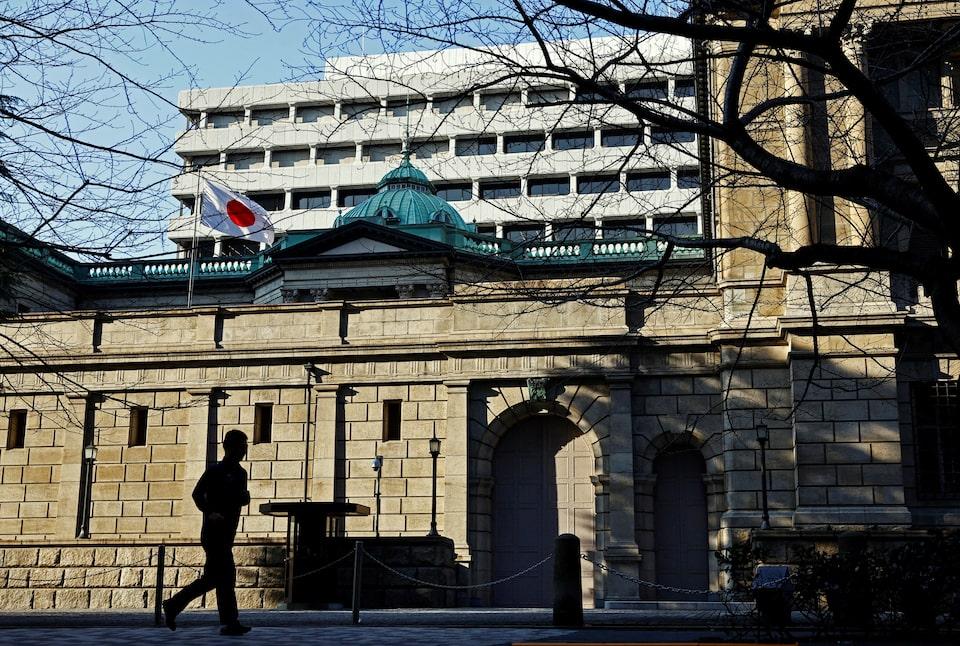
BOJ shifts focus away from output gap, towards labour shortage Board debated wage pressure, stagflation risk at January meeting Markets re-assessing view on how far BOJ could raise rates Hike to 1% only reaches bottom of estimated neutral rate range TOKYO, Feb 7 (Reuters) - The Bank of Japan is increasingly blaming chronic labour shortages, not stagnant demand, as the main reason for its weak economic activity, a justification it may use to lift interest rates beyond what was initially expected. From factories to hotels to restaurants, Japanese businesses are struggling to hit full capacity not because they can't find customers but because they can't find workers, goes the commentary now emerging more from the central bank. While the tight labour market is not a new trend, the BOJ's more vocal concerns about the resulting wage and inflationary pressures mean it will be more inclined to look past economic weakness as it considers raising interest rates further, analysts and policymakers say. "My view is that ... the output gap is already in positive territory in reality and the lack of supply capacity is exerting upward pressure on prices," Naoki Tamura, a hawkish BOJ board member, said on Thursday. On paper, Japan's output gap, which measures whether the economy is running at its full potential, remains slightly negative, suggesting demand lacks momentum to ignite inflation. Coupled with soft consumption, it has been seen by analysts as a factor that could discourage the central bank from raising borrowing costs too much. But BOJ policymakers are challenging that narrative. A close look at the BOJ's quarterly outlook report published in January shows the bank turning more attention to growing signs wage-driven inflation is taking hold due to chronic labour shortages, in turn building the case for sustained, steady rate hikes. In that report, the BOJ said a dwindling pool of female and elderly workers meant labour market conditions are tightening even amid subdued economic growth. "In this situation, upward pressure on wages and prices is likely to be stronger than suggested by the output gap, given that firms in many industries have started to face labour supply constraints," the report said. The report also analysed how labour-intensive sectors such as construction and services were facing serious worker shortages that were curtailing activity. The BOJ's increasing focus on wage-driven inflation is another sign Japan is shedding its 25-year battle with deflation and economic stagnation. It also contrasts with former Governor Haruhiko Kuroda's insistence on using radical stimulus to fire up inflation. "The BOJ is becoming more convinced that wages and services prices will keep rising," said former BOJ top economist Seisaku Kameda, who is now executive economist at Sompo Institute Plus. "Its report, the language of its policy statement and the governor's comments all back up the case for more rate hikes." Mindful of the risk of an inflation overshoot, BOJ board members debated the chance of further interest rate hikes even after raising short-term rates to 0.5%, a summary of opinions at the January meeting showed. One opinion cited labour shortages as keeping inflation elevated, while another warned of the risk of "stagflation," where high inflation and low growth co-exist, the summary showed. The BOJ's hawkish tilt means markets may put greater focus on the bank's language around wage-driven inflation, rather than its views on consumption. "The BOJ is becoming increasingly mindful of how labour market conditions could be putting upward pressure on wages and prices, more than what its output gap estimate suggests," said Ryutaro Kono, chief Japan economist at BNP Paribas. "While the initial factor may have been the weak yen, the BOJ is beginning to recognise the risk of price rises turning into home-made inflation," he added. PERSISTENT PAIN Japan's rapidly ageing population has led to a dwindling pool of workers. The country faces a deficit of 3.4 million workers by the end of this decade and 11 million by 2040, according to a 2023 study by Recruit Works Institute. Kushikatsu Tanaka Holdings, which runs a restaurant chain nationwide, is among retailers suffering from chronic labour shortages, particularly in regional areas. "It's not as if we're suddenly facing shortage of staff - it's a permanent issue," an executive of the company told Reuters. "In regional areas, it's not even about hourly pay. There's a lack of people in the first place. We're trying to consolidate our outlets and shut those that are proving unprofitable." Keen to retain workers, Japanese companies agreed to an average 5.1% wage hike in 2024, the biggest increase in three decades, a union survey showed. In his speech on Thursday, BOJ board member Tamura said labour shortages were forcing hotels to reduce occupancy rates and meant some taxi operators had more cars than drivers. As central banks have no power to address supply constraints, their mandate remains squarely on combating subsequent inflationary pressure by raising interest rates. With stubbornly high raw material costs and labour shortages keeping inflation above the BOJ's target for nearly three years, markets are now re-assessing their view rates won't rise too much. Governor Kazuo Ueda said last month the BOJ's policy rate was still distant from levels deemed neutral to the economy, leaving scope for several more rate increases. BOJ staff estimates Japan's nominal neutral rate to be in a range of 1.0% to 2.5%. Having seen Japan's prolonged struggle with deflation, many analysts had bet the highest the BOJ could hike would be up to 1%. But building inflationary pressures may reduce the chance the BOJ will pause there. Growing market expectations that the BOJ's terminal rate could be higher have helped lift Japanese government bond yields to multi-year highs and propped up the yen. "There's no reason why markets should assume that rates won't rise beyond 1.0%, which is the bottom of the estimated range," said a source familiar with the bank's thinking. ($1 = 152.2700 yen) Sign up here. https://www.reuters.com/markets/asia/bojs-fresh-take-labour-crunch-opens-door-more-rate-hikes-2025-02-06/
2025-02-06 21:46
Feb 7 (Reuters) - A look at the day ahead in Asian markets. Investors are anticipating India's first interest rate cut in nearly five years on Friday, which would be the latest move from major central banks around the world that points to a renewed desire to loosen policy and lower borrowing costs. The obvious exceptions are the U.S. Federal Reserve, which has paused its easing cycle, and the Bank of Japan, which is gradually raising rates, albeit from virtually zero. But the Reserve Bank of India's decision comes amid growing concern worldwide over the potential damage to economic activity and growth from U.S. President Donald Trump's tariff threats. The Bank of England and Bank of Mexico cut interest rates on Thursday, and there was an element of dovish surprise to both - the BoE's decision to lower rates by 25 basis points was expected but two policymakers voted to cut 50 bps, while Banxico said its 50 bps cut could be repeated at future meetings. U.S. Treasury yields, meanwhile, have fallen below 4.50% as worries about U.S. growth bubble up again, and a soft employment report on Friday will bring 4.00% closer into view than 5.00%. Economists polled by Reuters expect the Reserve Bank of India to cut its key repo rate by 25 basis points to 6.25% in Governor Sanjay Malhotra's first monetary policy review, as it attempts to shore up flagging growth. India isn't in Trump's immediate line of protectionist fire but policymakers won't be complacent. India's trade surplus with the US has doubled in five years to the current $45 billion, and the rupee's persistent weakness ties the RBI's hands in the event of further tariff-led appreciation of the dollar. The rupee is one of the worst-performing emerging currencies against the dollar this year, trading at an all-time low below 87.00 per dollar. A rate cut is widely expected so it should be in the rupee's price, leaving all eyes on the new governor's guidance. Asia's economic calendar on Friday includes foreign exchange reserves from several countries including China, inflation data from Taiwan and, perhaps more importantly in the current climate, January trade figures from Taiwan also. Taiwan's trade deficit with the US last year widened to $74 billion, meaning it has virtually quadrupled in six years. Taiwan said this week it will support companies that plan to relocate to the United States, including helping them find partners. Taiwan is home to chipmaker TSMC, which has a $65 billion investment in the US to build factories in Arizona. Wall Street's main indices essentially treaded water on Thursday, offering little direction to Asia on Friday. But Amazon shares fell as much as 5% in after-hours trade as investors gave the company's Q4 earnings an initial thumbs down. Here are key developments that could provide more direction to Asian markets on Friday: - India rate decision - Taiwan trade (January) - China FX reserves Sign up here. https://www.reuters.com/markets/asia/global-markets-view-asia-graphics-2025-02-06/
2025-02-06 21:36
Honeywell to separate aerospace and automation businesses Amazon revenue beats estimates, cloud unit falls short Indexes: Dow down 0.28%, S&P up 0.36%, Nasdaq up 0.51% Feb 6 (Reuters) - The S&P 500 and the Nasdaq ended higher while the Dow closed lower after a choppy trading session on Thursday, as investors sifted through earnings reports and awaited Amazon's results after the bell and a key jobs report on Friday. Amazon.com (AMZN.O) , opens new tab ticked up 1.1% ahead of its earnings report. The company beat expectations on quarterly revenue, but sales in its cloud computing unit came in below expectations. Investors are monitoring its artificial intelligence investments, after Chinese startup DeepSeek's cheaper AI model sharpened investor scrutiny of the billions U.S. tech companies have spent developing the technology. Nvidia (NVDA.O) , opens new tab rose 3.1%. "Today, the main focus is corporate earnings. Tariffs are in the background," said Zachary Hill, head of portfolio management at Horizon Investments. "The AI theme has been under quite a lot of volatility over the last few weeks with the DeepSeek news ... We’re watching tonight for any thoughts that (Amazon) has to say around that," Hill said. Drugmaker Eli Lilly (LLY.N) , opens new tab rose 3.3% after the company forecast annual profit largely above estimates, while fashion house Tapestry (TPR.N) , opens new tab jumped 12% on an annual sales and profit forecast increase. Philip Morris International (PM.N) , opens new tab advanced 10.9% after the cigarette maker posted better-than-expected quarterly results and forecast 2025 profit above estimates. Honeywell (HON.O) , opens new tab fell 5.6% after the industrial and aerospace company said it would split into three independently listed companies and forecast downbeat sales and profit for 2025. The Dow Jones Industrial Average (.DJI) , opens new tab fell 125.65 points, or 0.28%, to 44,747.63, the S&P 500 (.SPX) , opens new tab gained 22.09 points, or 0.36%, to 6,083.57 and the Nasdaq Composite (.IXIC) , opens new tab gained 99.66 points, or 0.51%, to 19,791.99. Eight of the 11 S&P 500 sectors traded higher, with financial services (.SPSY) , opens new tab and consumer staples (.SPLRCS) , opens new tab leading gains, and energy (.SPNY) , opens new tab stocks losing the most ground. Markets saw a dismal start to the week when U.S. President Donald Trump announced sweeping trade tariffs over the weekend, but suspended the levies on goods from Mexico and Canada on Monday for a month. The January nonfarm payrolls report is due on Friday, a crucial metric in gauging the state of the labor market and the Federal Reserve's rate path. Traders do not expect the Fed to make a move on interest rates in its next meeting in March, but a cut is widely anticipated in June, according to the CME's FedWatch. Data released on Thursday showed the number of Americans filing new applications for unemployment benefits increased moderately last week. Elsewhere in corporate moves, Skyworks Solutions (SWKS.O) , opens new tab plunged 24.7% after the Apple supplier forecast declines in revenue in its mobile segment and projected current-quarter profits below estimates. Qualcomm (QCOM.O) , opens new tab fell 3.7% as the chip designer's executives said its lucrative patent-licensing business would not see sales growth this year after a license agreement with Huawei Technologies expired. Advancing issues outnumbered decliners by a 1.05-to-1 ratio on the New York Stock Exchange. There were 179 new highs and 55 new lows on the NYSE. On the Nasdaq, 2,041 stocks rose and 2,287 fell as declining issues outnumbered advancers by a 1.12-to-1 ratio. Volume on U.S. exchanges was 13.57 billion shares, compared with the 14.95-billion average for the full session over the last 20 trading days. Sign up here. https://www.reuters.com/markets/us/futures-tick-higher-run-up-big-corporate-results-2025-02-06/