2026-01-07 06:52
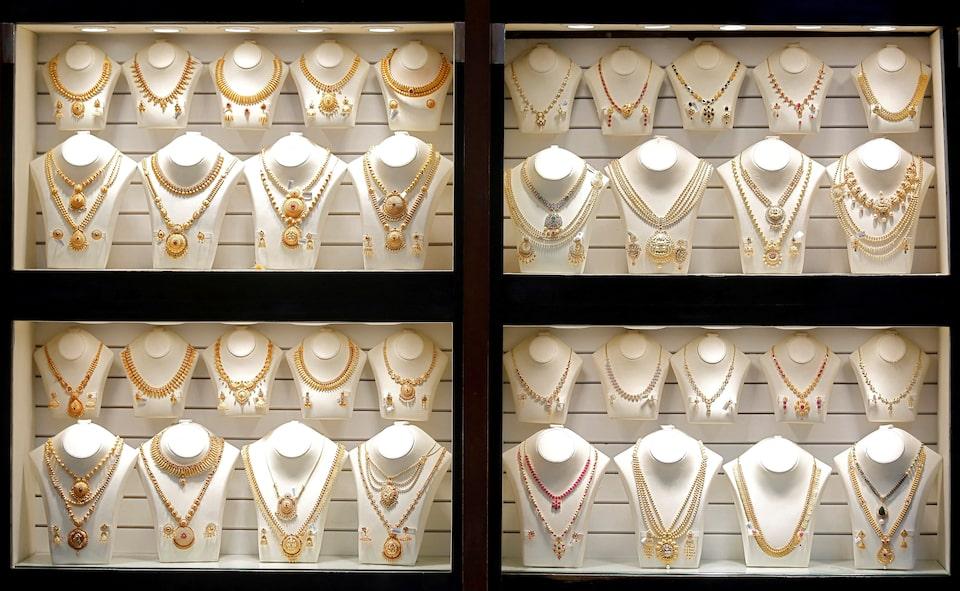
Jan 7 (Reuters) - Shares of Indian jewellery retailers surged after companies reported strong sales growth for the December quarter, driven by robust festive-season demand even as gold prices soared. Shares of Titan Company (TITN.NS) , opens new tab climbed 4.8% to hit record high of 4,307.80 rupees after the company reported a 40% jump in sales. Sign up here. Kalyan Jewellers (KALN.NS) , opens new tab and Senco Gold (SENC.NS) , opens new tab also jumped 3.7% and 12.2 %, respectively, after their quarterly sales update. Spot gold prices rose nearly 12% during the quarter, to close out a calendar year in which the precious metal clocked its steepest rise since 1979, driven by geopolitical uncertainties, rate cuts and robust central bank buying. "Higher prices did have an impact on volumes, but not on (overall) spending," said Dharmesh Kant, head of equity research at Cholamandalam Securities. Kant added that jewellery companies also benefitted from higher cash in the hands of people as a result of fiscal policies like GST cuts and income tax relief, as well as low inflation. Among other companies in the sector, PC Jewellers (PCJE.NS) , opens new tab and Thangamayil Jewellery (THNG.NS) , opens new tab gained 5.2% and 7.1%, respectively, while Tribhovandas Bhimji Zaveri (TBZL.NS) , opens new tab surged 10.5%. Titan Company was the top percentage gainer on the benchmark Nifty 50 (.NSEI) , opens new tab index, while other stocks were among top gainers in the broader indexes. CLSA said Titan's sales growth in the third quarter was robust in the context of an exceptional rise in gold prices. Analysts said the company's gold exchange offer to counter higher prices aided sustained consumer engagement. Nomura, however, cautioned that this could weigh on its margins. Kant said the sector remains on a strong footing as wedding season sales will likely support growth in the near term. https://www.reuters.com/world/india/indian-jewellery-stocks-rally-strong-festive-quarter-sales-higher-gold-prices-2026-01-07/
2026-01-07 06:38
US crude and Brent oil prices fall further Euro zone inflation eases to 2% target Copper eases from record Wall Street stocks end mixed NEW YORK, Jan 7 (Reuters) - Oil prices fell on Wednesday following U.S. President Donald Trump's deal to import up to $2 billion worth of Venezuelan crude, while major stock indexes ended mostly lower, with U.S. financial and defense shares declining. The U.S. energy secretary said that the United States needs to control Venezuela's oil sales and revenue indefinitely to stabilize that country's economy and rebuild its oil sector. U.S. forces ousted Venezuela's leader, Nicolas Maduro, in a raid on the capital Caracas on Saturday. Sign up here. On Wall Street, the Dow eased along with the S&P 500, but the Nasdaq finished higher. Stock indexes around the world had hit record highs this week even after the U.S. intervention in Venezuela. As investors digested a barrage of Trump-related headlines, they were also focused on U.S. data showing job openings fell more than expected in November while hiring eased. Friday brings the all-important U.S. employment report for December. "This week is all about the jobs report," said Jake Dollarhide, chief executive officer of Longbow Asset Management in Tulsa, Oklahoma, noting that weaker jobs data could underpin expectations for rate cuts this year by the Federal Reserve. Shares of JPMorgan Chase (JPM.N) , opens new tab fell 2.3% after Wolfe Research downgraded the bank to "peer perform" from "outperform." In addition, shares of U.S. defense companies declined after Trump vowed to block defense contractors from paying dividends or buying back shares until they speed up weapons production. Shares of Lockheed Martin (LMT.N) , opens new tab ended down 4.8%, while shares of RTX (RTX.N) , opens new tab were down 2.5%. The Dow Jones Industrial Average (.DJI) , opens new tab fell 466.00 points, or 0.94%, to 48,996.08, the S&P 500 (.SPX) , opens new tab fell 23.89 points, or 0.34%, to 6,920.93 and the Nasdaq Composite (.IXIC) , opens new tab rose 37.10 points, or 0.16%, to 23,584.28. The S&P 500 and Dow hit intraday record highs during the session. Investors also were taking in Trump's comments on Truth Social that his administration is moving to ban Wall Street firms from buying up single-family homes in a bid to reduce home prices. The U.S. earnings season kicks off next week, with results from some of the largest U.S. banks. They are expected to report higher fourth-quarter profits, helped by a rise in investment banking revenue as dealmaking accelerates. MSCI's gauge of stocks across the globe (.MIWD00000PUS) , opens new tab fell 3.67 points, or 0.35%, to 1,031.48. European stocks snapped a run of record closes as investors paused to digest the latest U.S.-Venezuela developments and assessed economic data. The pan-European STOXX 600 (.STOXX) , opens new tab index ended down 0.05%. The latest euro zone inflation report showed price increases had slowed to a year-on-year rate of 2% in December, in line with the European Central Bank's target. Investors began the year almost certain that the world economy was in a so-called Goldilocks phase, where recession and inflation risks were both low. COPPER FALLS FROM PEAK Market reaction to Trump's Venezuela moves has so far played out mostly in commodities. Earlier, China, which imported 389,000 barrels per day of Venezuelan oil in 2025, on Wednesday denounced Trump as a bully in response to his claim that he had convinced Caracas to divert crude supplies away from Beijing. U.S. crude fell $1.14 to settle at $55.99 a barrel and Brent fell 74 cents to settle at $59.96. Copper fell sharply from a record high in the previous session, while nickel tumbled from a 19-month peak as an early-year rally in industrial metals lost momentum. Benchmark three-month copper on the London Metal Exchange dropped as much as 3% to $12,842.50 per metric ton. It hit an all-time high of $13,387.50 on Tuesday. Industrial metals prices had firmed this week as investors switched out of highly priced gold and silver and bought up tangible commodities, which often rally when geopolitical tensions threaten supply-chain disruptions and shortages. Gold prices fell as investors booked profits. U.S. Treasury yields were lower on the day as traders evaluated economic data and awaited more news on the jobs front. Another report showed U.S. private payrolls rebounded less than expected in December. The yield on benchmark U.S. 10-year notes fell 4.1 basis points to 4.138%, from 4.179% late on Tuesday. The dollar was up slightly against major currencies, including the yen and euro. The dollar index , which measures the greenback against a basket of currencies, rose 0.14% to 98.75. https://www.reuters.com/world/china/global-markets-global-markets-2026-01-07/
2026-01-07 06:15
China bans export of dual-use items to Japan for military use Latest move in dispute over Japan PM's Taiwan remarks Japan calls the measures 'absolutely unacceptable' Beijing weighing broader rare earth curbs, state media says TOKYO, Jan 7 (Reuters) - Japan said on Wednesday that China's ban on exports of dual-use items to the country was "absolutely unacceptable and deeply regrettable", as a diplomatic dispute between Asia's top two economies intensified. Dual-use items are goods, software or technologies that have both civilian and military applications, including certain rare earth elements that are essential for making drones and chips. Sign up here. Japanese Prime Minister Sanae Takaichi touched off the dispute with Beijing late last year by saying a Chinese attack on democratically-governed Taiwan could be deemed an existential threat to Japan. China regards Taiwan as part of its territory, a claim the island rejects. Beijing has demanded she retract the remarks, which she has not done, prompting a series of countermeasures, the latest of which was Tuesday's ban on exports of dual-use items for military use. "A measure such as this, targeting only our country, differs significantly from international practice, is absolutely unacceptable and deeply regrettable," Japan's Chief Cabinet Secretary Minoru Kihara, the government's main spokesman, told a daily press conference on Wednesday. He declined to comment on the possible impact on Japanese industry, saying it remained unclear exactly what items would be targeted. Japan's Nikkei share index (.N225) , opens new tab fell around 1% on Wednesday, bucking a global trend that carried U.S. and European benchmarks to record highs, with stocks of major military contractors Kawasaki Heavy (7012.T) , opens new tab and Mitsubishi Heavy (7011.T) , opens new tab among the biggest losers, down about 3%. RARE EARTH RESTRICTIONS NEXT? China Daily, a newspaper owned by the ruling Chinese Communist Party, reported on Tuesday that Beijing is considering tightening the license review of rare earth exports to Japan more broadly, citing sources with knowledge of the matter. Such a move could have sweeping implications for the manufacturing powerhouse, including its key automotives sector, analysts say. While Japan has sought to diversify its supply of rare earths since China last throttled exports of the minerals in 2010, around 60% of its imports still come from China. A three-month curb on Chinese exports of rare earths, like that seen during the 2010, could cost Japanese businesses 660 billion yen ($4.21 billion) and shave 0.11% of annual gross domestic product, Nomura Research Institute economist Takahide Kiuchi said in a note on Wednesday. A year-long ban would knock 0.43% off GDP, he added. So far, China Customs data has shown no sign of a decline in rare earth exports to Japan, though the data is released with some delay. In November, the latest month for which there is data, exports grew 35% to 305 metric tons, the highest tally last year. BRACING FOR A LONG WINTER Since Takaichi's offhand remark on Taiwan in early November, Beijing has urged its citizens not to travel to Japan, halted imports of Japanese seafood and cancelled meetings and cultural events. U.S. President Donald Trump, who brokered a fragile trade war truce with Chinese President Xi Jinping late last year and plans to travel to Beijing in April, has asked Takaichi not to further escalate the dispute, sources told Reuters. The quarrel does not, however, appear to have damaged Takaichi's robust popularity at home, opinion polls show. Analysts have likened the rift to one triggered by Tokyo's 2012 decision to nationalise disputed islands that unleashed mass anti-Japan protests across China. Leaders did not meet for two and a half years during that dispute. "I think this will drag on for quite a while. President Xi seems a bit angry," Keita Ishii, president of Itochu Corp (8001.T) , opens new tab, one of Japan's biggest trading houses, said in a television interview on Tuesday. ($1 = 156.6800 yen) https://www.reuters.com/world/asia-pacific/japan-says-chinas-dual-use-export-ban-unacceptable-rare-earths-crosshairs-2026-01-07/
2026-01-07 06:15
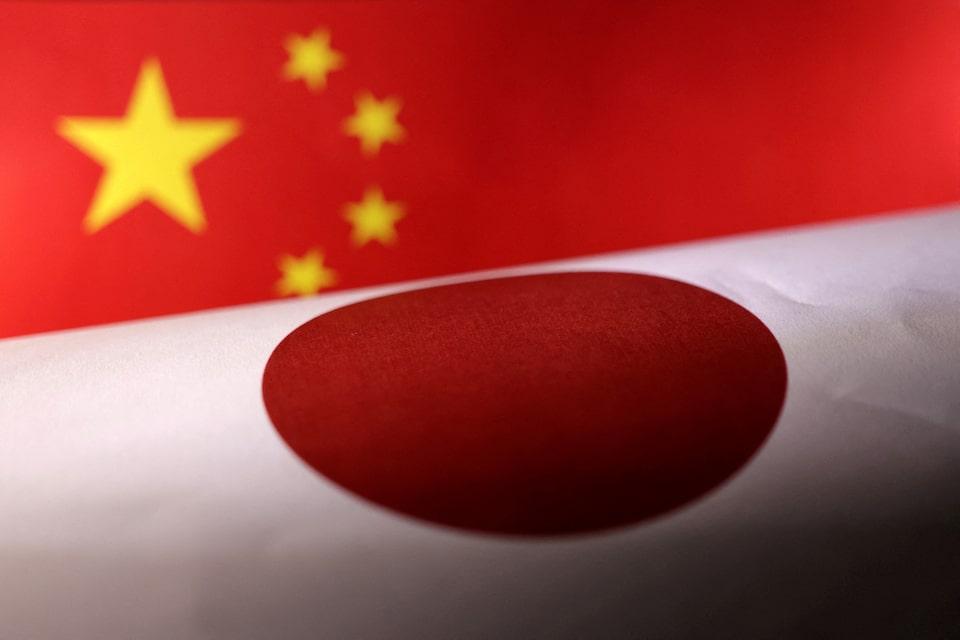
US private payrolls rebound less than expected in December HSBC raises 2026 average silver price forecast to $68.25/oz China's central bank buys gold for 14th consecutive month Jan 7 (Reuters) - Gold prices fell more than 1% on Wednesday as investors booked profits after a recent rally, though it pared some losses after weaker-than-expected U.S. jobs data bolstered bets of Federal Reserve rate cuts. Spot gold dropped 0.9% to $4,445.32 per ounce, as of 1:36 p.m. ET (1836 GMT). Prices fell as much as 1.7% to $4,422.89 earlier in the session. Sign up here. U.S. gold futures for February delivery settled 0.7% lower at $4,462.50. "We're viewing today's pullback as general profit taking after that recent surge," said David Meger, director of metals trading at High Ridge Futures. But softer employment data continues to support the case for Fed easing, which has underpinned gold prices recently, Meger added. U.S. job openings fell more than expected in November after rising marginally in October, while a separate ADP report showed that private payrolls increased less than expected in December. Markets anticipate 61 basis points of rate cuts this year, according to data compiled by LSEG. Focus now turns to Friday's nonfarm payrolls report. Meanwhile, geopolitical uncertainty persisted following Venezuelan President Nicolas Maduro's capture over the weekend, with U.S. President Donald Trump announcing plans on Tuesday to refine and sell Venezuelan crude, while the White House separately confirmed discussions about acquiring Greenland, including potential military involvement. Elsewhere, China's central bank extended its gold-buying streak to a 14th straight month in December, according to official data. The data from China "continues to show strong demand that we're seeing from Asia ... and again, one more reason why we've seen this recent push to the upside," Meger said. Gold, a non-yielding safe-haven asset, tends to benefit in low-rate environments and during times of uncertainty. Among other metals, spot silver lost 4.1% to $77.93 per ounce. HSBC raised its 2026 silver price forecast to $68.25 but warned of volatility as supply eases, while Goldman Sachs sees thin London inventories driving sharp swings and squeeze‑led rallies that may later reverse. Spot platinum dropped 6.5% to $2,285.75, while palladium traded 5.2% lower at $1,727.40. https://www.reuters.com/world/india/gold-slides-1-week-high-profit-booking-dollar-strength-2026-01-07/

2026-01-07 06:07
US job openings fall more than expected Yen unaffected by China's ban of dual-use items to Japan Dollar roughly unchanged vs euro after subdued German inflation figures NEW YORK, Jan 7 (Reuters) - The dollar was steady against major currencies including the yen and euro on Wednesday amid market positioning around several U.S. labor market data releases this week. U.S. job openings fell more than expected in November while hiring eased, according to Labor Department data, suggesting demand for labor continued to ebb. Sign up here. Institute for Supply Management data showed that U.S. services sector activity unexpectedly picked up in December, while private payrolls rebounded less than expected in December, according to the ADP's national employment report. The more comprehensive and closely watched nonfarm payrolls report is due on Friday. The dollar was up slightly by 0.24% at 0.797 against the Swiss franc and edged 0.08% higher to 156.75 against the Japanese yen . "The price action on the dollar right now is more tactical than anything else because without firm policy updates there's going to be a fade on the move that normally happens," said Olivier Bellemare, senior options dealer at Monex Canada. "The focus will be on the employment numbers at the end of the week and the reason is that the market is still looking for signs of inflation as a more sticky indicator for directional positioning on the dollar against its peers." Oil prices fell on Wednesday and China denounced the U.S. as a bully after President Donald Trump's administration said it had persuaded Venezuela to divert supplies away from Beijing. The dollar index , which measures the greenback against a basket of currencies including the yen and the euro, rose 0.07% to 98.68. JAPAN-CHINA TENSIONS UNDER SPOTLIGHT The euro edged down after falling the previous day, as German inflation eased more than expected in December, spurring traders to slightly scale back bets on a rate hike in early 2027. Markets since last summer have been pricing policy rates to remain stable through 2026, while expecting the European Central Bank to tighten policy in 2027 as inflationary pressures build from German fiscal stimulus. The single currency was down 0.04% at $1.1682, after falling 0.28% on Tuesday. Also on traders' radar: China on Tuesday banned exports of dual-use items to Japan that can be used for military purposes, marking Beijing's latest reaction to an early November remark by Japanese Prime Minister Sanae Takaichi about Taiwan. The move did not affect the foreign exchange market, strategists said, although it weighed on Japanese stock markets which lost 1% on Wednesday. Some analysts said the rise in tensions between China and Japan could give the Bank of Japan a reason for caution in hiking rates again. The Aussie dollar hit its highest since October 2024 at $0.6766, as a mixed inflation report kept alive the prospect of a near-term hike in interest rates. The New Zealand dollar was last down 0.14% at $0.5776. "We think a risk-on macro backdrop in 2026, alongside a range of regional macro and valuation tailwinds, should support a constructive backdrop for both AUD and NZD versus the dollar this year," Goldman Sachs analysts, led by Stuart Jenkins, said in an investor note. https://www.reuters.com/world/asia-pacific/dollar-meanders-traders-await-key-us-economic-data-2026-01-07/
2026-01-07 06:06
LONDON, Jan 7 (Reuters) - China's exports of refined copper surged to record levels last year as the world's top buyer found itself in unusual competition with the U.S. for spare metal. The CME's U.S. copper contract continues to command a sizeable premium over the international price traded on the London Metal Exchange (LME) as the market prices in the potential for U.S. tariffs. A decision has been deferred until June this year. Sign up here. The premium for U.S. delivery is sucking metal out of the global supply chain, with the ripple effect now emptying China's bonded warehouse zones. China's outbound shipments jumped to 143,000 metric tons in November, bringing the year-to-date total to 698,500 tons, already an annual record. The November tally included 57,700 tons headed to the U.S., all of it sourced from stocks held in bonded warehouses at Chinese ports such as Shanghai. Refined copper was also dispatched in bulk to European destinations as the lingering tariff threat continues to fracture global trading patterns. CHINA'S BONDED STOCKS RAIDED (AGAIN) The blowout of the CME-LME arbitrage last year created an unprecedented opportunity for traders to profit by shipping physical copper to the U.S. CME stocks of copper have mushroomed to over 450,000 tons, which is more than the combined inventory held by the LME and the Shanghai Futures Exchange. LME stocks of desirable brands for U.S. delivery, particularly Chilean metal, have been exhausted. Chinese and Russian copper accounted for 95% of registered inventory at the end of November. Attention has returned to what has been sitting in China's bonded warehouse zones, metal that has been physically unloaded but not yet cleared through customs for delivery to a mainland buyer. It's the second time this bonded inventory has been raided. China exported, or rather redirected, 120,000 tons of refined copper to the U.S. between February and July last year, when import tariffs seemed a racing certainty. U.S. President Donald Trump's decision in July to go ahead with tariffs, but only on copper products rather than copper in refined form, appeared to kill the tariff trade. But the CME premium has been widening again ever since as traders bet the tariff threat has only been deferred. The November jump in shipments from Chinese ports to the United States is testament to the renewed lure of U.S. delivery. PLUGGING THE GAPS China's port-side copper inventory is also leaving to plug gaps that have opened up elsewhere as traders strip the supply chain of brands of metal that can be delivered against the CME contract to ensure a frictionless arbitrage trade. November's outbound flows included 16,500 tons bound for Italy as well as smaller tonnages destined for Germany, Greece and Sweden. Such has been the scramble to ship to the U.S. that availability has fallen and physical premiums have risen everywhere else. Europe's biggest producer Aurubis (NAFG.DE) , opens new tab has aggressively hiked its premium for term sales this year to $315 from $228 per ton over the LME basis price. Chilean state producer Codelco is asking its European customers for $325 per ton and its Chinese buyers a whopping $350 per ton, reflecting trader competition for its brands. China remains the world's largest copper importer, although the jump in outbound shipments caused the country's net pull on units from the rest of the world to contract by 11% in the first 11 months of 2025. But it too has been struggling to compete with the U.S. premium when it comes to CME-deliverable brands. China's imports of Chilean copper slumped by 43% year-on-year in January-November, while those of Peruvian metal fell by a steeper 50%. Chinese buyers have become increasingly dependent on shipments from the Democratic Republic of Congo and Russia, which accounted for 37% and 11% respectively of total imports in the first eleven months of 2025. SIGNAL CONFUSION It's hard to know just how much copper has been sitting in China's bonded warehouse zones in recent years. Classified by the country's customs department as an import, the metal only becomes statistically visible if it's reshipped somewhere else, in which case it turns up on the export side of the trade ledger under a unique code. But it's clear there is a lot less now than there was before Trump first mooted import tariffs back in February. The stripping of China's port stocks is a sign of just how much the potential for U.S. tariffs has upended global flows of physical copper. It's also a big problem when it comes to assessing what's going on in a market that is currently punching out all-time price highs on a regular basis. Global exchange inventory closed 2025 above 800,000 tons for the first time since 2013, which might be expected to put a dampener on the market's bullish exuberance. But the driver of higher visible stocks has been the CME, where copper is still arriving daily. Some of that metal may have come from the statistical shadows of China's bonded warehouse zones, adding complexity to the global inventory picture. The tectonic relocation of copper stocks to the U.S. is still playing out and continues to distort both the physical supply chain and the inventory price signal. The drain on availability everywhere else, including China's port stocks, risks becoming more acute as long as the Trump tariff threat creates a CME premium sufficiently large to cover the costs of physical shipment. Andy Home is a Reuters columnist. The opinions expressed are his own Enjoying this column? Check out Reuters Open Interest (ROI) for thought-provoking, data-driven commentary on markets and finance. Follow ROI on LinkedIn , opens new tab and X , opens new tab. https://www.reuters.com/markets/commodities/us-tariff-pull-copper-drains-chinas-bonded-warehouses-2026-01-07/