2025-02-06 06:31
Feb 6 (Reuters) - Aurubis (NAFG.DE) , opens new tab, Europe's largest copper producer, reported first-quarter pretax profit above market expectations on Thursday, lifted by an overall positive business environment. Quarterly earnings before tax rose 17% to 130 million euros ($135.02 million) in the first quarter through December, from 111 million euros a year earlier. That beat analysts' expectations of 126 million euros in a company-provided poll. Aurubis attributed the result to significantly higher metal prices and robust earnings from copper product sales, as well as considerably increased sulfuric acid revenue and lower costs. CEO Toralf Haag said the metals refiner's cash flow improved, despite investments in the company's international network of smelters. "This endorses our solid business model, successful even in macroeconomically challenging times,” Haag said in a statement, adding that Aurubis' metals are key to the energy and mobility transitions. The Hamburg-based company recycles raw materials into products such as anodes, cathodes and wire rods, which are used by the energy and car industries, among others. The metals refiner, which launched a new recycling smelter in Richmond County, Georgia, in September 2024, said a slight reduction in earnings in its Multimetal Recycling segment was due to higher investment costs at the site. Aurubis also confirmed its outlook for the current fiscal year. Shares were up 1.3% in early Frankfurt trade after the results, with a local trader saying they expect a positive market reaction on the profit beat. ($1 = 0.9628 euros) Sign up here. https://www.reuters.com/markets/commodities/aurubis-beats-earnings-expectations-positive-business-environment-2025-02-06/

2025-02-06 06:08
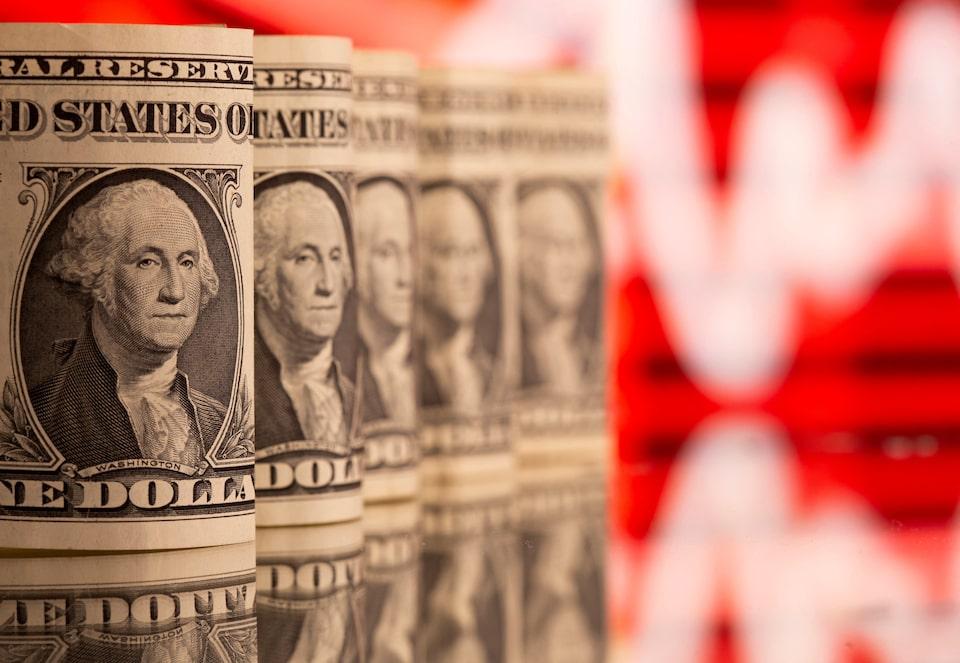
Corporate treasurers are increasing efforts to hedge against the strengthening U.S. dollar Dollar up 7% since September lows, is near two-year highs Recent U.S. tariff headlines contributed to dollar rallies and increased market volatility NEW YORK, Feb 6 (Reuters) - Corporate treasurers are ramping up efforts to guard company earnings against more dollar strength, a move that some analysts said points to increased conviction that President Donald Trump's tariff plans will help keep the U.S. currency higher for longer. The U.S. dollar index (.DXY) , opens new tab is about 7% above its September lows, hovering close to a two-year high reached in January as investors bought the buck on expectations it would benefit from sturdy U.S. economic growth and Trump's protectionist trade policies. Speculators have loaded up on bullish bets on the currency, driving up net long dollar position to as high as $35 billion, the largest in nearly nine years. Corporate treasurers, who often use forward contracts, currency options and swaps to reduce potential losses from currency fluctuations, typically move at a more staid pace. But they are increasingly coming around to the view that the dollar can power higher or linger at these lofty levels for a while. "The corporate community is slower to act and more deliberate," Paula Comings, head of foreign-exchange sales at U.S. Bank. "(But) we've seen those who have significant exposure from revenues overseas that they need to repatriate, adding to these forecasted cash flow hedging programs," she said. "What we're hearing from clients is that they are planning for a perseverance of the dollar," Comings said. Multinational companies such as Apple (AAPL.O) , opens new tab and Microsoft (MSFT.O) , opens new tab already have warned the strong dollar stands to pressure financial results in the coming months. While there is little visibility into the aggregate level of corporate hedging activity, interviews with market participants show the impetus to protect against further dollar strength kicked into high gear ahead of the November U.S. election and in anticipation of Trump's potential victory. "Leading up to the election, our research showed that North American firms below $100 million-market cap were acutely aware of the likelihood, as well as the risks, of a strong dollar after the nation went to the polls," said Eric Huttman, CEO of MillTechFX. "Half of these smaller firms reported that they were concerned about the impact of policy changes on currency values," he said. Foreign exchange markets' vulnerability to volatility came to the fore this week as threats of U.S. tariffs against Mexico, Canada and China prompted a rally on the dollar and sparked a surge in volatility. While the stronger dollar is a reflection of the relative strength of the U.S. economy, it can pose a problem for some companies. A strong U.S. currency makes it more expensive for multinational companies to convert foreign profits into dollars, while also hurting the competitiveness of exporters' products. "We have seen a strong uptick in hedging activity across a wide range of industries, as corporates have sought to protect themselves against the higher volatility environment and the increased uncertainty since Trump’s election win and the dollar’s strong rally," Kyle Chapman, FX market analyst at Ballinger Group in London, said. "FX is being driven by headlines that are ubiquitous even outside market circles, and this is drawing treasurers’ attention to market fluctuations," he said. TARIFF TROUBLE Underpinning this uptick in hedging activity is growing conviction that dollar strength is here to stay for a while as Trump's tariffs come into play. "There is a general feeling that we have entered a stronger dollar environment since Trump’s re-election ... the scale and the pace of the rally since September has woken people up to the effect of FX movements on the bottom line," Chapman said. Several companies have in recent weeks reported and projected sizeable negative impact due to unfavorable currency market moves. Apple in late January warned that it expects the stronger dollar to shave 2.5 percentage points from its current-quarter revenue, on a year over year basis. Johnson & Johnson (JNJ.N) , opens new tab also said unfavorable foreign currency moves shaved off $1.7 billion, or 2%, of its 2024 sales, while Microsoft warned its third quarter revenue growth would be hit by 2 percentage points due to the stronger dollar. Smaller and less FX-sophisticated companies, who are often constrained by leaner hedging budgets, limited amount of capital they can tie up in hedges and general lack of access to more advanced hedging programs with the best pricing, face a bigger challenge from a buoyant buck. "The stronger dollar requires treasury teams at smaller corporates to more carefully manage FX risks and implement sound hedging strategies to help adjust to this new normal," MillTechFX's Huttman said. Amol Dhargalkar, managing partner at risk management firm Chatham Financial, said that in 2024 large companies reached out more than expected to review and update their hedging program because of concerns about dollar strength, and it was not surprising to now see smaller companies make similar moves. While the tariff-related headlines might have prompted a pickup in hedging activity, a larger escalation in trade tensions might undermine those efforts since an all-out trade war may jeopardize companies' ability to forecast business activity and put on effective hedges, analysts warned. "For many businesses, their underlying cash flows are at risk here ... some may have to realign their supply chains while some may have to deal with lower customer revenues in international locations," said Karl Schamotta, chief market strategist with payments company Corpay in Toronto. "It's a lot of cross currents and it isn't just a linear increase in hedging volume," Schamotta said. Sign up here. https://www.reuters.com/markets/currencies/surging-dollar-spurs-jump-corporate-fx-hedging-2025-02-06/
2025-02-06 06:06
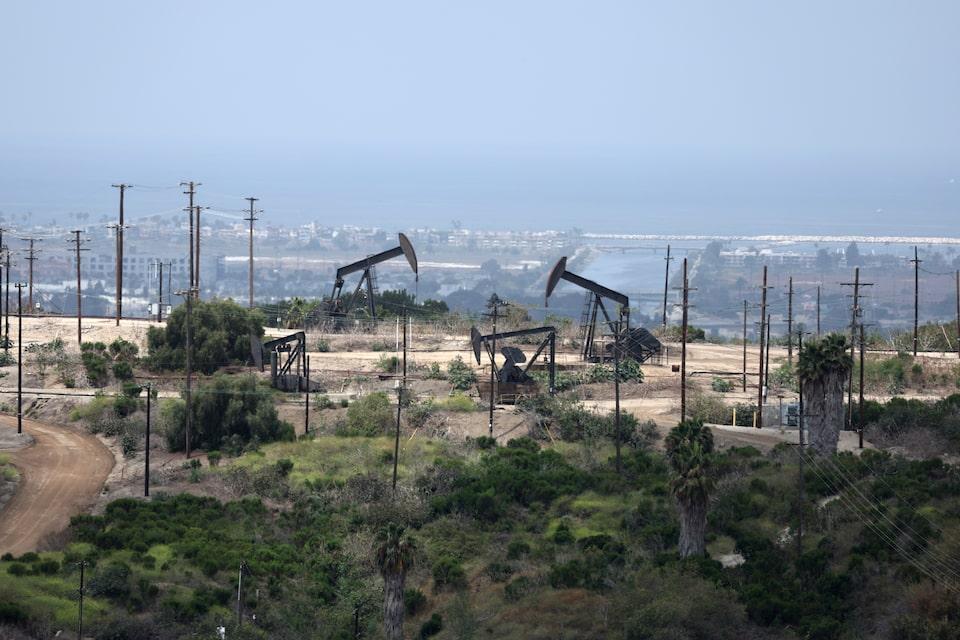
LITTLETON, Colorado, Feb 6 (Reuters) - Turkey surpassed Germany as Europe's top polluter from fossil fuel power production for the first time in 2024, marking an important shift in Europe's main polluting hubs away from traditional industrial centres to its fringes. And Turkey's ascendance in polluting heft extends beyond power, as the country's production of energy-intensive industrial products including steel and chemicals has expanded in recent years just as output of those same goods shrank in Germany. This divergence in smokestack trends highlights an ongoing change in the location of Europe's high-polluting sectors out of areas with emissions caps and strained power grids to regions with laxer pollution standards and fast-growing energy supplies. For pollution trackers, this development means that emissions monitoring must extend beyond Europe's established industrial heartland to emerging economies where policy priorities that may conflict with climate reduction goals. EMISSIONS TOLL Turkey's power sector discharged 154.5 million metric tons of carbon dioxide from fossil fuel-based power generation in 2024, according to data from energy think tank Ember. That total was only slightly above Germany's 154.4 million tons of CO2, but marks the first time in decades that Germany's power sector was not Europe's largest emitter. The key driver behind Turkey's swell in power pollution is the country's reliance on coal for a majority of its power and electricity production. Coal-fired power plants generated around 35% of Turkey's electricity in 2024, which is the second-highest coal share among major European economies behind Poland. What's more, 2024 marked the third straight year of coal-fired power growth in Turkey, and the highest coal-fired output level on record in the country. That coal use trend contrasts with that seen in Germany, Poland and other traditional coal consumers where use has steadily declined this decade as part of efforts to transition energy systems away from fossil fuels. Indeed, Turkey's expansion in the use of coal for power while all other major European economies have reduced coal use resulted in Turkey being the only major economy to register growth in fossil fuel power emissions in 2024. Turkey's emissions from fossil fuel power output increased by 7.5%, or by roughly 11 million tons of CO2, in 2024 from 2023, according to Ember. That compares to declines in fossil fuel power emissions of 9% in Germany, 12% in Italy and 13% in the United Kingdom in 2024. STRUCTURAL SHIFTS The emissions trends in the power sector are a sign of broader industrial changes underway across Europe. Europe's former industrial powerhouse, Germany, has drastically reduced output of key products such as steel, fertilizers and chemicals due to high power costs and natural gas shortages since Russia's invasion of Ukraine in 2022. Over the same period, output of some of those same industrial ingredients has climbed in Turkey, where a large population and policy support for job-generating sectors has helped spur growth across a slew of industries. A sharp difference in average electricity and power costs between the two countries has also played a role in driving these industrial shifts. Over the first half of 2024, Turkey's household electricity prices averaged less than 10 cents (euros) per kilowatt hour (KWh), compared to nearly 40 cents/KWh in Germany, according to Eurostat. Different economic growth rates have also been key. Since 2020, Turkey's annual gross domestic product growth has averaged 5.3%, compared to less than 1% in Germany, according to the International Monetary Fund. Between now and the end of the decade, Turkey's annual GDP growth is expected to be around 3.4%, compared to only 1% in Germany. These growth projections should support a continuation of the recent trends in industrial reallocations out of Germany and into Turkey for the next several years. However, to sustain a competitive advantage, Turkey's power costs must remain far lower than those across northern Europe, where industries continue to grapple with sharply lower volumes of natural gas compared to just a few years ago. That suggests Turkey's power producers will remain heavily reliant on coal for most of their power needs, which should help to keep overall energy costs lower than elsewhere in the region even if it leads to a swell in emissions. The opinions expressed here are those of the author, a market analyst for Reuters. Sign up here. https://www.reuters.com/world/middle-east/turkeys-growing-power-pollution-sign-things-come-maguire-2025-02-06/

2025-02-06 06:03
Beijing imposed 10% tariffs on US crude imports in response to US tariffs US crude export growth stalled in 2024, rising just 0.6% More medium-sour crude may go to US refineries HOUSTON, Feb 6 (Reuters) - An emerging trade war between the United States and China could drive U.S. crude exports lower in 2025 for the first time since the pandemic by reducing access to the Chinese market, according to analysts. That outlook reflects a potential unintended consequence of President Donald Trump's protectionist policies, running counter to his administration's vow to maximize already record-high U.S. oil and gas production. The U.S. has grown into the world's third-largest exporter behind Saudi Arabia and Russia since it lifted a 40-year federal ban on exports of domestic oil in 2015. While U.S. crude exports grew only slightly in 2024, the last time they fell was in 2021, after the COVID-19 outbreak slashed global energy demand. "International demand for U.S. crude may be peaking out, and this could only further accelerate that," said Matt Smith, an analyst at Kpler. Rohit Rathod, a senior analyst with ship tracking firm Vortexa, said he expected total U.S. oil exports to slip to 3.6 million barrels per day in 2025 from 3.8 million bpd in 2024, as Chinese tariffs keep some U.S. oil grades at home. China consumes around 166,000 barrels of U.S. crude daily, roughly 5% of all U.S. export cargoes. Some of that could stay on U.S. shores or be diverted to other markets after Beijing announced retaliatory tariffs this week. The fall in exports would most likely be made up of medium density types of oil with a higher sulfur content, such as Mars and Southern Green Canyon that are considered medium-sour grades. Those types made up about 48% of the U.S. crude imported by China last year. Such grades are ideal for U.S. refineries and could easily find buyers domestically - particularly if the United States follows through on its threats to impose new tariffs on Canadian and Mexican oil, analysts said. "Medium sours are welcome barrels in the U.S. Gulf Coast. Refiners need it," Rathod said. Most of the rest of China's crude imports from the U.S. were lighter density, lower-sulfur types, such as West Texas Intermediate, which are known as light, sweet grades. That type of oil could be diverted to European and Indian refiners at competitive prices, analysts said. The Louisiana Offshore Oil Port handled nearly half of all exports to China last year, according to Kpler. The company was not immediately available for comment. Another 25% of U.S. exports to China came from Enbridge's (ENB.TO) , opens new tab Ingleside, Texas, facility near Corpus Christi, Kpler data showed. Enbridge's facility will see very little impact since less than 15% of it's historical volumes have gone to China, said Phil Anderson, a senior Vice President at the company. "The market is very liquid globally for light crude," he said. Among the top sellers of U.S. crude to China is Occidental Petroleum (OXY.N) , opens new tab, which sold at least 13 cargoes of light, sweet WTI Midland there in 2024, according to Kpler. Occidental did not immediately reply to a request for comment. For China, the impact is likely muted as U.S. imports accounted for just 1.7% of the country's total crude imports in 2024, worth about $6 billion, according to Chinese customs data, and down from 2.5% in 2023. China had increased imports from Canada by about 30% last year to over 500,000 bpd, thanks to the expansion of the Trans Mountain pipeline. China's appetite for U.S. oil has also diminished in recent years due to discounted Russian and Iranian oil. Sign up here. https://www.reuters.com/business/energy/chinas-retaliatory-tariffs-crude-likely-push-us-exports-lower-2025-2025-02-06/
2025-02-06 05:33
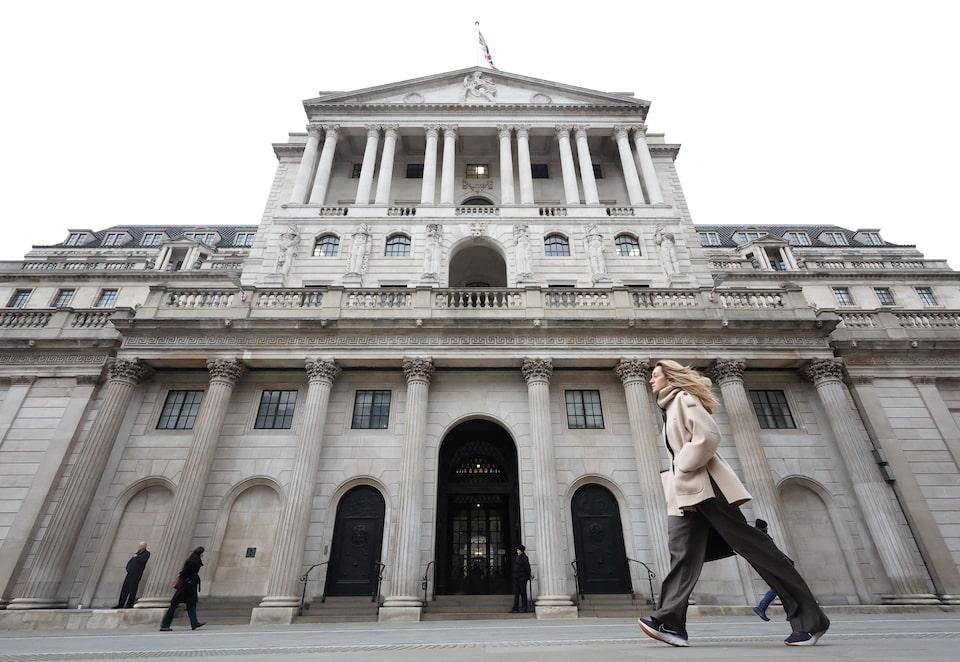
A look at the day ahead in European and global markets from Rae Wee Investors in Europe will wake up to an action-packed Thursday spanning a rate decision from the Bank of England (BoE) and a flurry of corporate earnings, alongside any news from U.S. President Donald Trump that could reignite market volatility. The BoE is all but certain to cut interest rates later on Thursday, though that would only mark its third since just after the start of the COVID-19 pandemic in 2020, as it juggles the need to help the sluggish economy with still-strong inflation pressures. The focus, though, will be on the outlook for UK rates, particularly as investors have loads to fret about - from finance minister Rachel Reeves' tax increases for employers, the risk of a global trade war led by Trump, and rising costs. The British economy has barely grown since mid-2024. Markets have priced in more than 80 basis points worth of easing by the year-end , so it remains to be seen whether policymakers will cement those expectations or push back against them. Mexico's central bank also announces its rate decision later in the day, where it is likely to deliver a 50 basis points cut, as inflation cools and the economy notched a slight contraction late last year. In other central bank news, Federal Reserve Vice Chair Philip Jefferson said he is content to keep the central bank's policy rate in its current position until more clarity on the Trump administration's policies emerges. Still, U.S. Treasury yields languished near their lowest in over a month on Thursday, on the back of mixed U.S. economic data and as investors seek safety amid uncertainty about Trump's tariff policy and the prospect of escalating trade wars. In contrast, Japanese government bond yields jumped and the yen strengthened on more comments from Bank of Japan officials supporting the case for further rate hikes there. It's also a busy day on the earnings front, with those of Amazon's (AMZN.O) , opens new tab in focus. The pressure is on Amazon.com to deliver on lofty expectations for cloud computing in its fourth-quarter results, after lacklustre reports from Microsoft (MSFT.O) , opens new tab and Alphabet (GOOGL.O) , opens new tab jolted investor faith in Big Tech's multibillion-dollar investments in AI. Options pricing shows markets are hedging for a share price move of up to 8% either way on the results. Investors will also be on the lookout for what company executives say about Trump's closure of the "de minimis" exemption for package imports valued under $800. The move should theoretically be positive for Amazon since it hurts Chinese competitors. In Europe, L'Oreal's (OREP.PA) , opens new tab earnings will be another litmus test for Chinese consumer spending, though dismal duty-free spending in China's island province of Hainan could be a foreshadowing of disappointing results. Key developments that could influence markets on Thursday: - Bank of England, Bank of Mexico rate decisions - Amazon earnings release (Q4 2024) - AstraZeneca earnings release (Q4 2024) - Carlsberg earnings release (FY 2024) - L'Oreal earnings release (FY 2024) - U.S. weekly jobless claims Sign up here. https://www.reuters.com/markets/europe/global-markets-view-europe-2025-02-06/
2025-02-06 05:31
MUMBAI, Feb 6 (Reuters) - India's central bank is likely conducting buy/sell dollar-rupee swaps in addition to selling spot dollars to support the rupee, three traders told Reuters on Thursday. The Reserve Bank of India's (RBI) buy/sell swaps are largely for spot over February and January, the traders said. The RBI has been routinely conducting such swaps to manage the impact of its spot market interventions on rupee liquidity in the banking system. The central bank was likely selling dollars to support the rupee on Thursday as well, traders said. Spot dollar sales by the central bank suck out rupee liquidity but that can be offset using buy/sell USD/INR swaps. The dollar-rupee February forward premium fell over 2 paisa to 11 paisa, while the January forward premium was also lower at 185.50 paisa. The central bank had also conducted a six-month $5 billion buy/sell dollar-rupee swap last week, which was oversubscribed by about 5 times. Sign up here. https://www.reuters.com/markets/currencies/indian-central-bank-likely-conducting-buysell-usd-inr-swaps-traders-say-2025-02-06/