2025-02-05 15:13
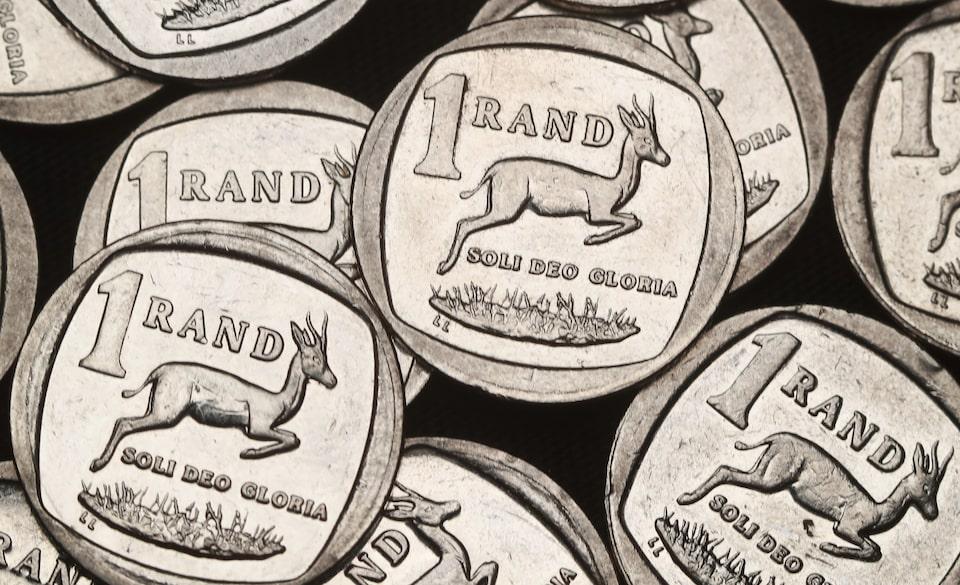
JOHANNESBURG, Feb 5 (Reuters) - South Africa's rand gained against a weaker dollar on Wednesday, as investors awaited President Cyril Ramaphosa's national address on Thursday and closely watched developments between the U.S. and China in their dispute over tariffs. At 1507 GMT, the rand traded at 18.55 against the U.S. dollar , about 0.7% stronger than its previous close. The dollar last traded about 0.6% weaker against a basket of currencies after China retaliated to tariffs imposed by U.S. President Donald Trump. Ramaphosa will deliver on Thursday the annual State of the Nation Address (SONA), the first under his coalition government. Investors will pay particular attention to comments on reforms and fiscal discipline. "Rand sentiment hinges on SONA and U.S.-China trade war developments. Stronger messaging on reforms and fiscal discipline could support South African assets," said Andre Cilliers, currency strategist at TreasuryONE. "Investors remain cautious, with global trade tensions keeping risk appetite subdued," Cilliers added. On the stock market, the Top-40 (.JTOPI) , opens new tab index closed about 0.3% higher. South Africa's benchmark 2030 government bond was firmer, with the yield down 4 basis points to 9.045%. Sign up here. https://www.reuters.com/markets/currencies/south-african-rand-firms-ahead-presidents-address-2025-02-05/
2025-02-05 14:42
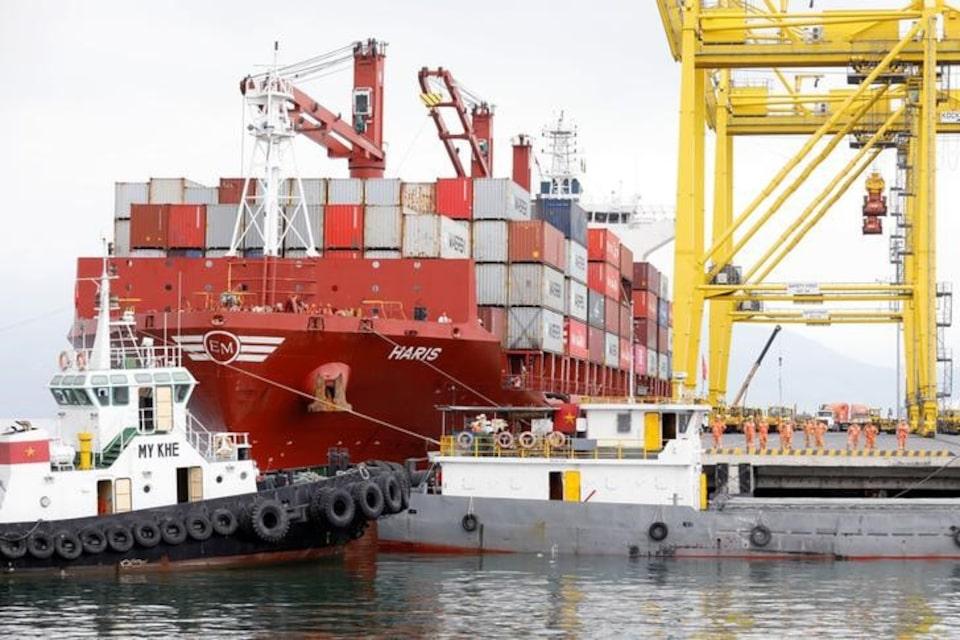
Vietnam's trade surplus up nearly 20% to more than $123 billion All partners with bigger gaps face duties or threats of tariffs Vietnam may reduce duty risks with vows to import more, analysts say HANOI, Feb 5 (Reuters) - Vietnam's trade surplus with the U.S. soared to a record high last year, U.S. data released on Wednesday showed, potentially complicating Hanoi's efforts to stave off trade tariffs from the new Trump administration. The data shows the Southeast Asian nation behind only China, the European Union and Mexico in the scale of its trade imbalance with Washington, but analysts say Hanoi's pledges to import more from the U.S. as well as other offsetting measures could spare it from the punitive measures. Sweeping U.S. tariffs on all Chinese imports came into effect on Tuesday, prompting an immediate response from Beijing, while Trump has also threatened the EU with new levies. Mexico and Canada had new 25% duties suspended for 30 days on Tuesday after they promised to beef up border protection. U.S. President Donald Trump has not made any comment about Vietnam since his reelection, but "he is still obsessed with trade deficits," making the country a likely target for tariffs, said Deborah Elms, head of trade policy at the Asia-based Hinrich Foundation. Vietnam's trade surplus with the U.S. rose annually by nearly 20% in 2024 to a record level exceeding $123 billion, according to the latest data from the U.S. government. In the same period the gap with China grew by less than 6% to $295.4 billion, far below its peak in 2018; the EU's surplus went up by nearly 13% to a high of $235.5 billion; and the deficit with Mexico increased by 12.5% to almost $172 billion, also an all-time record. Vietnam and Mexico were both major beneficiaries of the last U.S.-China trade war, as manufacturers based in China moved production overseas to avoid tariffs imposed on Beijing from 2018 during Trump's first term in office. CHIPS RISK Despite the ballooning trade gap, Vietnam is in a different position from other top exporters, as it does not pose an apparent security threat to the U.S., said Sayaka Shiba, a senior analyst at research firm BMI. The Trump administration prepared tariffs on Mexico and China under the International Emergency Economic Powers Act (IEEPA), citing risks from immigration and drugs, said Shiba, noting "it would be more difficult to argue convincingly that Vietnam is a threat to national security." Vietnam may still face trade-related tariffs, Shiba said, adding that such measures would need to be upheld with investigations, which would give Vietnam time to work out ways to avoid them. Sectoral tariffs may carry a higher risk for Vietnam, especially on the import of semiconductors, Shiba said, noting Vietnam is a top exporter of semiconductors to the U.S. Vietnamese officials have repeatedly said they would seek to find compromises with Washington on trade. Earlier on Wednesday Prime Minister Pham Minh Chinh instructed officials to prepare for the impact of a possible global trade war without mentioning the prospect of tariffs on Vietnam, according to a post on the government portal. Among possible sweeteners are boosting Vietnam's imports from the U.S. of liquefied natural gas (LNG) and a reduction of import duties on U.S. agricultural products, such as soybeans, cotton and meat, Shiba said, noting exports were hard to cut as they were mostly from large multinational companies operating from Vietnam, such as Samsung Electronics (005930.KS) , opens new tab and Intel (INTC.O) , opens new tab. "Promising to buy things is the best strategy for Vietnam, even if tangible results are not always possible in the short term," Elms said. Sign up here. https://www.reuters.com/world/asia-pacific/vietnams-trade-surplus-with-us-hits-record-high-2024-2025-02-05/
2025-02-05 12:46
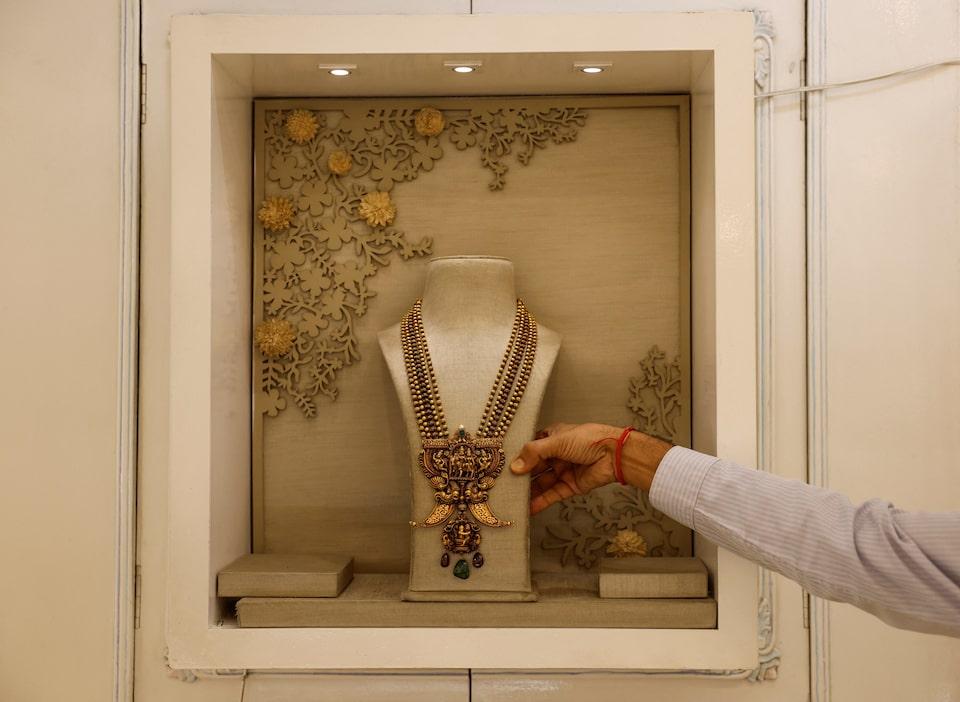
Bullion hits all-time high at $2,882.16 per ounce Trump in no hurry to talk to Xi amid new tariff war ADP report shows US job growth exceeded forecasts Feb 5 (Reuters) - Gold prices continued their record run on Wednesday, as investors sought the safe-haven asset amid escalating concerns about a U.S.-China trade war and the potential impact on economic growth. Spot gold was up 0.8% at $2,865.61 per ounce by 01:59 p.m. ET (1859 GMT), after hitting a record high of $2,882.16 earlier in the session. U.S. gold futures settled 0.6% higher at $2,893 per ounce. "Gold continues to be largely influenced by trade uncertainties ... the tariffs with China and the retaliation has the market on edge, so safe-haven flows remain the dominant factor," said Peter Grant, vice president and senior metals strategist at Zaner Metals. Earlier this week, China retaliated by imposing tariffs on U.S. goods in response to new U.S. tariffs, escalating the trade war, while U.S. President Donald Trump expressed no urgency in speaking with Chinese President Xi Jinping to alleviate tensions. Meanwhile, the U.S. Postal Service said it will resume accepting all inbound mail and packages from China and Hong Kong on Wednesday, a day after temporarily suspending such service. Three U.S. Federal Reserve officials warned Trump's trade tariffs could drive inflation, with one suggesting uncertainty over price outlooks warrants slower interest rate cuts. The ADP National Employment report showed the U.S. economy added 183,000 jobs in the private sector last month, compared with economists' estimate of a rise of 150,000. "Employment is going to be an important focus this week ... but I don't think that anything is going to materially impact the Fed expectations on the policy, unless it's really out of line," Grant said. Investors are looking to the U.S. payrolls report on Friday for further clues on the outlook for rates. Bullion is considered an inflation hedge, but higher rates could dampen its appeal as the metal yields no interest. Spot silver rose 0.8% to $32.36 per ounce, platinum gained 1.8% to $980.95 and palladium added 0.3% to $990.75. Sign up here. https://www.reuters.com/markets/commodities/gold-rises-all-time-high-sino-us-tariff-war-2025-02-05/
2025-02-05 12:22
NEW DELHI, Feb 5 (Reuters) - Foreign companies have often struggled in India due to high tax demands related to duty evasion on imports or levies payable on big M&A transactions, leading to prolonged litigation at times. Here are some of the key past and current tax disputes involving foreign companies: KIA South Korea's Kia has been accused of dodging $155 million in taxes by misclassifying some car component imports, but the company is contesting the charge privately with officials, Reuters reported on Wednesday. At the heart of the dispute lie Kia's imports of parts of a car in separate shipments to assemble the vehicles in India, paying a lower tax applicable, circumventing the higher tax outgo when parts come together as a CKD, or a completely knocked down unit, of a car. VOLKSWAGEN In a similar case as Kia, Volkswagen (VOWG_p.DE) , opens new tab has sued Indian authorities in a Mumbai court after being slapped with a $1.4 billion tax notice for importing parts related to its 14 models, including some Audi ones, instead of classifying them as CKD. The German automaker's court challenge states that India's "impossibly enormous" tax demand will hit its investment in the country, and foreign investor sentiment. VODAFONE In one of the most controversial cases, Vodafone (VOD.L) , opens new tab was slapped with a $2 billion tax demand when it purchased Indian assets of Hutchison Whampoa in an $11 billion deal in 2007. The dispute saw years-long litigation including a ruling in company's favour by India's top court, followed by a change of law which reimposed the demand and an international arbitration between the two sides. Vodafone won the arbitration case in 2020. CAIRN ENERGY Britain's Cairn Energy faced a more than $1.4 billion tax demand over the transfer of shares during an internal reorganization in 2007. In 2011, Cairn Energy sold its majority stake in Cairn India to Vedanta Ltd, reducing its share in the Indian company to about 10%. The Indian administration and Cairn India finally settled the years-long dispute in 2021 by offering to refund the tax amount. PERNOD RICARD French liquor giant Pernod Ricard (PERP.PA) , opens new tab has been accused by Indian authorities of undervaluing certain imports for more than a decade to avoid full payment of duties. India is demanding roughly $250 million in back taxes but the maker of Chivas Regal and Absolut vodka has contested the findings. The dispute is pending. In 2022, Pernod warned Prime Minister Narendra Modi's administration that its long-running tax disputes with authorities on valuing liquor imports has inhibited fresh investment and its current business. BYD Chinese automaker BYD has been accused by Indian authorities of underpaying $8.37 million on parts for cars it assembles and sells in India. BYD later deposited the demand but the probe is still ongoing and could lead to additional tax charges and penalties, Reuters has previously reported. Sign up here. https://www.reuters.com/business/foreign-companies-embroiled-tax-disputes-with-india-2025-02-05/

2025-02-05 12:22
SAO PAULO, Feb 5 (Reuters) - Brazilian farmers have been expanding their solar energy capacity and testing batteries as a storage solution, in a bid to make electricity supplies more predictable and potentially reduce diesel consumption, according to growers and experts. Increased use of alternative energy in Brazil, the world's largest exporter of various food staples, means greater business for equipment providers, reduced dependence on fossil fuels, and more efficient farming. Companies that provide energy solutions, such as WEG (WEGE3.SA) , opens new tab, say that farmers' interest in battery-based storage systems has risen in recent months, with projects coming into fruition after a sharp drop in battery prices. Rural properties currently account for approximately 14% of all installed solar power in Brazil, with 4.8 gigawatts distributed via small photovoltaic stations, often built on rooftops or unused land. Solar capacity in agriculture has grown more than seven-fold since 2020, when renewable-source projects took off across the country, according to a survey by the Brazilian Association of Photovoltaic Solar Energy. The association said the number of rural consumer units using solar panels had jumped to 471,000 by the end of 2024, from 54,000 four years earlier. Brazilian farmers use solar power for crop irrigation, air conditioning systems, lighting, pumping water into reservoirs and powering cold storage rooms. The use of batteries may also reduce diesel consumption on farms, where generators powered by the fuel provide electricity for irrigation and agricultural machinery on farms not connected to the power grid. Farm group Bom Futuro, a large grain and oilseed producer in Mato Grosso state that invests in power generation, is evaluating whether to use batteries as a means to reduce losses associated with power outages. Livio Costa, Bom Futuro's manager of energy, said interruption of electricity supplies disrupts cotton machines and production, causing material losses. "Let's say the power goes out for 15 minutes, it will take up to two hours to resume production again," he said. "This doesn't just happen once. It happens a few times during the harvest." Bom Futuro's investments in power generation reflect increased on-farm demand for drying and storage of grain and power-intensive cotton processing. Sign up here. https://www.reuters.com/business/energy/brazils-farmers-bet-solar-energy-batteries-stabilize-power-supply-2025-02-05/

2025-02-05 12:21
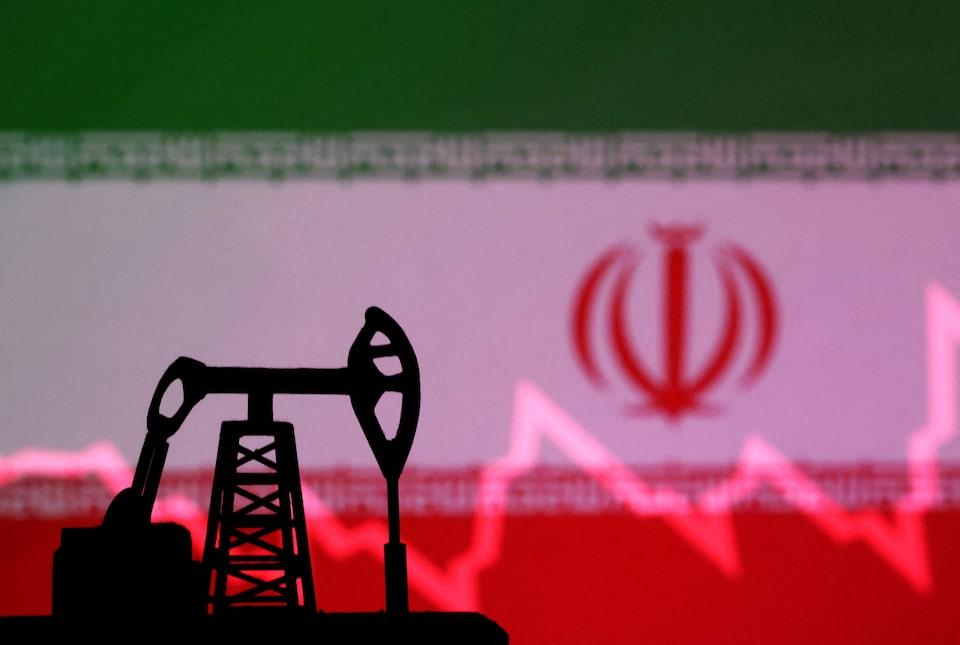
DUBAI, Feb 5 (Reuters) - Iran's oil minister said imposing unilateral sanctions on crude producers would destabilise energy markets, the ministry's SHANA news outlet reported on Wednesday, after U.S. President Donald Trump said he would seek to drive Tehran's oil exports to zero. "Depoliticising the oil market is a vital issue for energy security. Imposing unilateral sanctions against major oil producers and putting pressure on OPEC will destabilise oil and energy markets as well as harm consumers around the world," Mohsen Paknejad told OPEC Secretary General Haitham Al Ghais. Paknejad's comments came after Trump restored his "maximum pressure" campaign on Iran that includes efforts to drive its oil exports down to zero in order to stop Tehran from obtaining a nuclear weapon. This campaign was first launched during Trump's first term in 2018 and led to a sharp drop in Iranian oil exports to as little as 200,000 barrels per day in some months of 2020. Iranian oil exports then rebounded during U.S. President Joe Biden's administration and currently stand at around 1.5 million barrels per day, with the majority of flows going to China. Paknejad also told state TV on Wednesday that Tehran had prepared strategies for any situation regarding U.S. sanctions. On broader energy matters, Paknejad said the most important challenge for the global oil market in the medium to long-term was the issue of upstream investments. "If today some major oil consumers are concerned about oil supply, this is the result of their political actions putting pressure on OPEC+ and pushing for regulatory restrictions on new upstream investments," he said. Paknejad was elected in December as president of the OPEC Conference for 2025. Sign up here. https://www.reuters.com/business/energy/iran-says-us-sanctions-will-destabilise-oil-energy-markets-2025-02-05/