2025-02-05 06:18
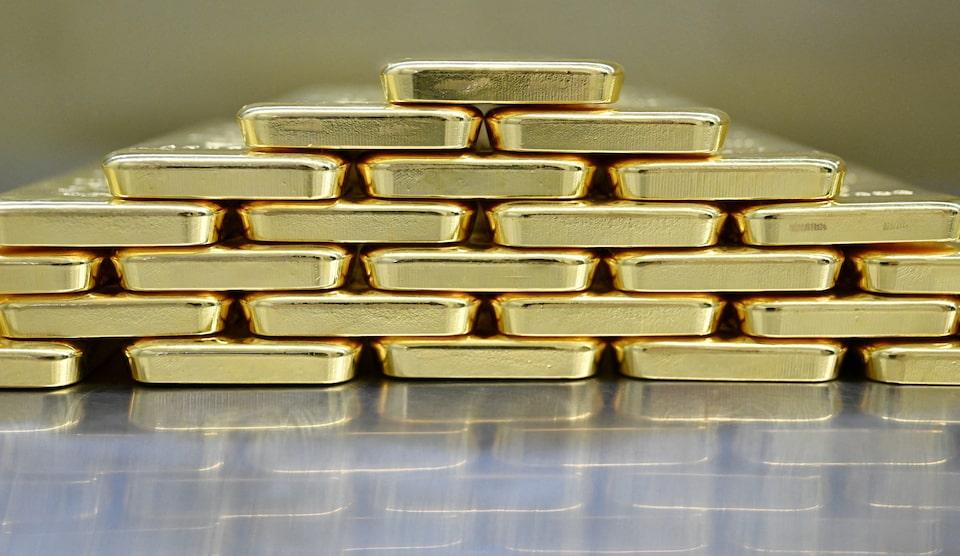
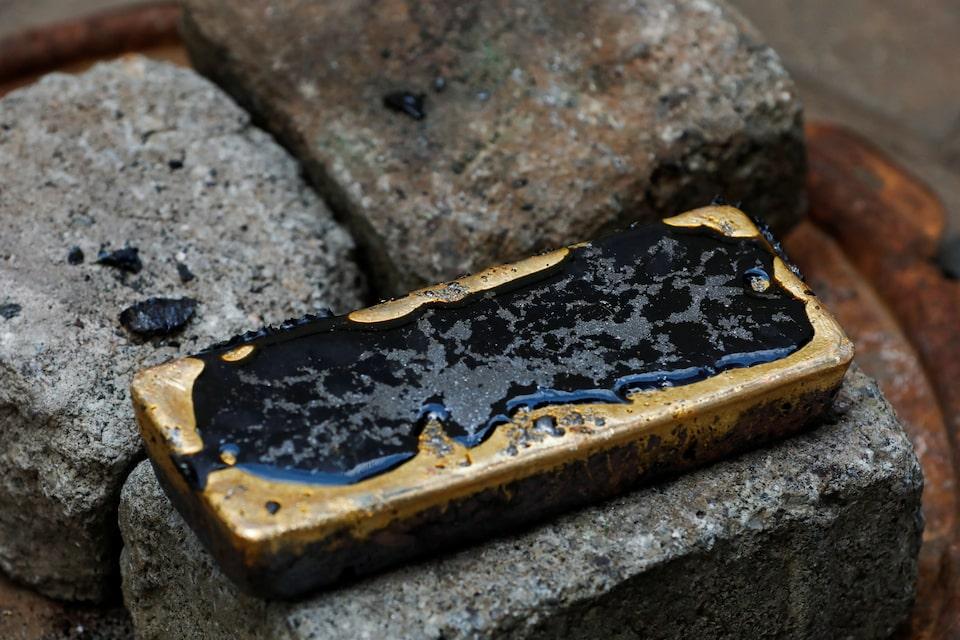
WGC estimates demand from central banks jumped 54% y/y in Q4 OTC demand in Q4 hit by profit-taking Gold jewellery consumption fell 11% due to high prices in 2024 Mine supply was steady, recycling rose by 11% in 2024 LONDON, Feb 5 (Reuters) - Global gold demand including over-the-counter (OTC) trading rose by 1% to a record high of 4,974.5 metric tons in 2024 as investment increased, the World Gold Council (WGC) said on Wednesday, adding that central banks sped up buying in the fourth quarter. Spot gold prices rose by 27% last year, the most since 2010, as investors chose the metal to hedge against global risks and as the U.S. Federal Reserve slashed interest rates. Prices hit another all-time high on Tuesday, driven by safe-haven demand after China retaliated with tariffs on the United States in response to President Donald Trump's trade levies. Central banks, a major source of gold demand, bought more than 1,000 tons of the metal for the third year in a row in 2024. The National Bank of Poland was the largest such buyer, adding 90 tons to its reserves, the WGC, an industry body whose members are global gold miners, said in a quarterly report. In the final quarter of 2024, when Trump won the U.S. election, buying by central banks accelerated by 54% year on year to 333 tons, the WGC calculated, based on reported purchases and an estimate of unreported buying. Last year's investment demand for gold rose 25% to a four-year high of 1,180 tons, mainly because outflows from physically-backed gold exchange-traded funds (ETFs) dried up for the first time in four years. Indicating a major shift in appetite for different products, investment demand for bars rose 10%, while coin buying fell 31%. "In 2025, we expect central banks to remain in the driving seat and gold ETF investors to join the fray, especially if we see lower, albeit volatile interest rates," WGC senior markets analyst Louise Street, said. "Geopolitical and macroeconomic uncertainty should be prevalent themes this year, supporting demand for gold as a store of wealth and hedge against risk." Total gold demand, excluding opaque OTC trading, rose 1% to 4,553.7 tons last year, the highest since 2022, the WGC said. It estimates that OTC demand fell 7% due to a slump in the final quarter of the year as profit-taking offset persistent demand from high-net-worth investors. Gold jewellery consumption, the biggest category of physical demand, fell 11% in 2024, while mine production was steady and recycling rose 15%. The WGC expects jewellery demand to remain under pressure and recycling to rise further this year due to high prices. Gold supply and demand by WGC*: *Source: Metals Focus, Refinitiv GFMS, ICE Benchmark Administration, World Gold Council. Sign up here. https://www.reuters.com/markets/commodities/gold-demand-up-1-2024-remain-supported-by-economic-uncertainty-world-gold-2025-02-05/
2025-02-05 06:11
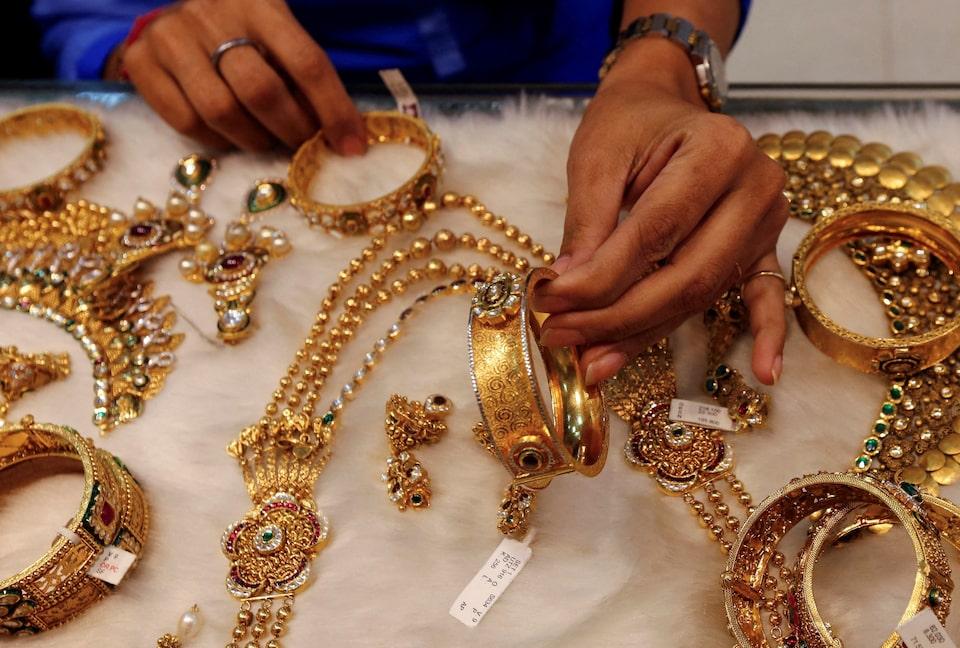
MUMBAI, Feb 5 (Reuters) - India's gold consumption in 2025 is set to moderate from last year's nine-year peak, as a rally in prices to a record high is seen dampening jewellery demand, even as investment demand rises, the World Gold Council (WGC) said on Wednesday. Demand for gold could stand between 700 metric tons and 800 metric tons, compared to last year's 802.8 tons, which was the highest since 2015, Sachin Jain, CEO of WGC's Indian operations, told Reuters. Historically, rising gold prices first affect jewellery customers, and if prices keep rising and remain volatile this year, jewellery demand will be impacted, Jain said. Domestic gold prices hit a record high of 84,399 rupees ($968.62) per 10 grams on Wednesday. They have risen 10% so far in 2025 after rising more than 21% in 2024. "Households that buy jewellery have a set budget, and when they purchase jewellery, their budget does not increase at the same rate as the rise in gold prices," Jain said. However, the soaring gold prices, leading to effectively higher returns, are boosting investment demand, which will rise further in 2025 after surging 29% in 2024 to an 11-year high of 239.4 tons, he said. Jewellery accounts for nearly 70% of India's total gold demand, while investment demand makes up the rest. "It is anticipated that the trend of robust gold investment demand will continue, with retail investors showing growing interest in gold ETFs, digital gold, and coins and bars," Jain said. ($1 = 87.1330 Indian rupees) Sign up here. https://www.reuters.com/markets/commodities/gold-demand-india-cool-2025-prices-soar-wgc-says-2025-02-05/
2025-02-05 06:03
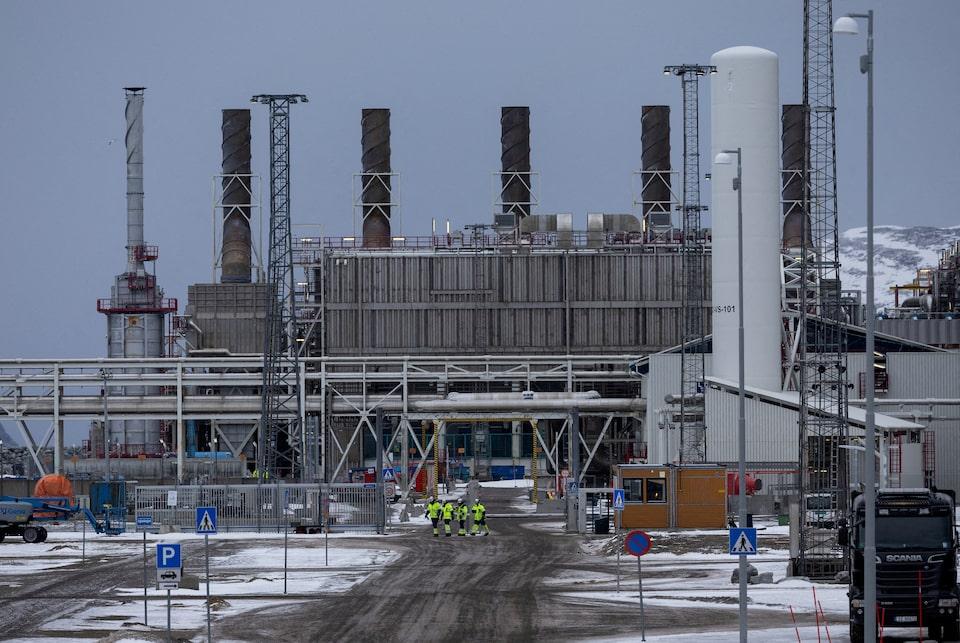
LITTLETON, Colorado, Feb 5 (Reuters) - Many of northern Europe's largest economies have sharply boosted gas-fired power generation so far in 2025, helping to lift regional gas prices to their highest since early 2023. Gas-fired output during January in Germany, the United Kingdom, the Netherlands and Poland all jumped by well over 10% from January 2024's levels to their highest for that month since at least 2022, according to data from LSEG. But the pace of gas consumption going forward may start to slow as regional gas prices have now climbed above the price of coal-fired generation, which may spur some power firms to cut gas output and raise coal-fired generation instead. This switch-out of gas for coal is especially likely in Germany and Poland where coal-fired power holds a larger share than natural gas of national generation systems. Reduced gas consumption by those countries could help cap the recent rally in European gas prices, which are up by roughly 60% from where they were trading a year ago. However, reduced gas use and more coal-fired generation will have significant emissions repercussions, as nearly twice as much carbon dioxide is discharged per unit of generated power from coal as from gas. GAS BOOM Gas-fired power output scaled historic highs in Germany and the United Kingdom in January, registering the highest monthly tallies in both countries since before Russia's invasion of Ukraine in early 2022 snarled regional gas markets. The January 2025 gas-fired total was also the second-highest monthly tally on record since 2022 in both the Netherlands and Poland, underscoring the broad sweep of gas use seen across Europe in recent months. Europe's main gas pricing hub - the TTF facility in the Netherlands - has reflected the robust consumption pace, with prices in January averaging 48.36 euros per megawatt hour, according to LSEG. That average is 40% above the TTF average for 2024 and 60% higher than where TTF averaged in January 2024, and is the highest price the region has registered since February 2023. SWITCHING OUT The steep ascent in TTF gas values has squeezed margins for power producers, who are under pressure to limit price increases for consumers. Consumer energy costs across Europe climbed more steeply than in the United States and Asia in 2022 and 2023, and as a result European power suppliers are under intense governmental and societal pressure to avert any further cost increases. One means of doing so is to switch out pricey gas for cheaper generation sources wherever possible. In Germany and Poland, coal has become the cheaper power generation source compared to natural gas following the steep rise in gas costs over the past year. Indeed, gas prices have been consistently above the so-called coal-switching price since August 2024. The coal-switching price marks the point at which a power supplier can more economically generate power from coal than from gas, assuming that both fuel sources are available. From August through the end of 2024, TTF gas prices averaged around 6.20 euros per megawatt hour (MWh), or 18%, above the coal-switching price, according to LSEG data. So far in 2025, that differential has widened to nearly 13 euros/MWh - or 36% - above the coal-switching price. For managers of complex power networks that feature coal and gas power plants, both the spot and forward prices of locally available natural gas and thermal coal factor into the coal-switching equation. And the current forward curve for TTF natural gas indicates that gas costs will remain above the coal-switching price until well into 2026, by which point gas costs are projected to head lower again. LSEG forward curve data indicates that TTF prices will average around 14.70 euros/MWh above the coal switching price for 2025, although the forward curves for both gas and coal will remain dynamic. For power producers in continental Europe, this price outlook suggests that firms which can boost output from coal and cut gas use may be able to reduce operating costs, and potentially limit further rises in consumer energy bills. However, any sharp climbs in coal-fired output will undermine efforts to reduce regional emissions, and may generate criticism from regional emissions watchdogs. Power firms in the United Kingdom have no option to revert to coal-fired output following the closure of Britain's last coal plant in 2024, but may see a sustained rise in wind power generation over the coming months that may limit the amount of gas-fired generation required. In all, power firms across Europe look set to try to boost output from non-gas sources going forward following the steep climb in local gas costs, although gas-fired plants will remain a key part of the overall generation mix. The opinions expressed here are those of the author, a market analyst for Reuters. Sign up here. https://www.reuters.com/business/energy/europes-strong-gas-use-pace-may-wilt-coal-switching-kicks-maguire-2025-02-05/
2025-02-05 05:58
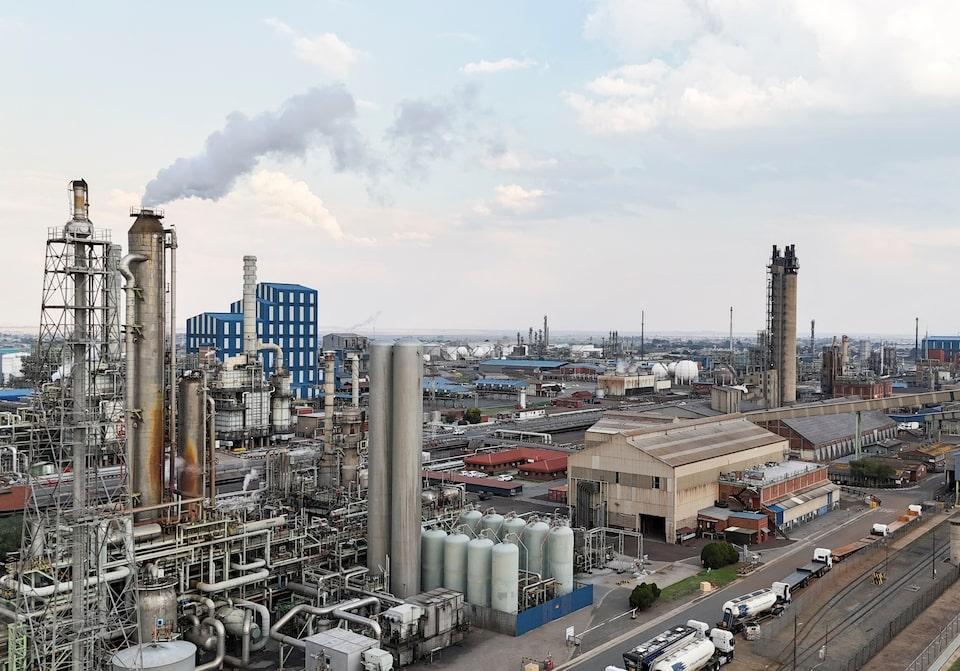
Feb 5 (Reuters) - South African petrochemical firm Sasol (SOLJ.J) , opens new tab forecast a fall of up to 36% in half-yearly earnings on Wednesday, mainly due to a decline in oil prices and lower sales volumes. Sasol said in a trading update that it expects its headline earnings per share (HEPS), a profit measure widely used in South Africa, to come in between 13 rand and 15 rand ($0.6955-$0.8025), down from 20.37 rand in the same period last year. The company, which produces chemicals and liquid fuels from coal and gas, said the decline was primarily because of a 13% fall in the average rand Brent crude oil price per barrel, as well as a significant drop in refining margins and fuel price differentials. A 5% decrease in sales volumes due to lower production and market demand also hurt income, Sasol said. The company will release its half-yearly results on Feb. 24. ($1 = 18.6923 rand) Sign up here. https://www.reuters.com/business/energy/sasol-sees-up-36-drop-half-yearly-profit-lower-oil-prices-2025-02-05/
2025-02-05 05:52
CAPE TOWN, Feb 5 (Reuters) - Beyond the short-term volatility and uncertainty created by U.S. President Donald Trump's tariff machinations, it's likely that the longer-term trend of the world splitting into two trading blocs is accelerating. Stripping away Trump's bluster and often contradictory actions, the message seems to be fairly clear. Trump's view of the world is that you are either with the United States or against it. That presents a dilemma for Africa's mineral rich countries as they want to develop their resources to provide them with the maximum benefit, but they also want to stay largely neutral. But it's increasingly likely that at some level African countries will have to decide whether they are more in the Trump camp, or whether they prefer to do business with the China-led BRICS group. There are risks and rewards under both scenarios, and the circumstances of each African country may cause to lean one way or another. Much of the debate at this weeks Investing in African Mining Conference in Cape Town has effectively been about the best path forward for Africa's miners and governments. The continent is already a major producer of minerals, but it's untapped reserves are the major prize in coming decades, especially if the energy transition accelerates. Africa is richly endowed, with an estimated 20% of global copper reserves, about the same for aluminium raw materials, 50% of manganese and cobalt, 90% of platinum group metals, 36% of chromium, as well as reserves of lithium, uranium, gold and rare earths. But developing its mineral resources has been often too challenging, given political instability and corruption, poor infrastructure, lack of capital and legal frameworks that make long-term investments hard to justify. However, the increasing appetite of the world for minerals, especially to enable the energy transition, is likely to set off a new scramble for Africa, this time Africans will have more say in how it unfolds. Finding the right partners is the challenge for African countries. On the one hand the Western world still offers deep capital reserves, sophisticated equity markets and investors and skills and experience in mining and engineering. But Trump is undermining these advantages with his tariffs and threats to withhold aid and other funding, as well as his habit of turning on traditional allies and flip-flopping policies. The main issue with Trump is his apparent transactional view of the world, in which there must always be a winner and a loser, and he always wants to be the winner. This means getting a mutually beneficial deal from the United States is going to be more difficult while Trump is in office. NOT BEGGARS It was perhaps this frustration that boiled over in the remarks at the Investing in African Mining event, on Monday when South Africa's Resources Minister Gwede Mantashe said Africa should withhold minerals from the United States if Trump cuts aid. "If they don't give us money, let's not give them minerals. We are not just beggars," Mantashe told the conference, which is also known as Mining Indaba. "We cannot continue to debate these minerals based on the dictates of some developed nations as if we have no aspirations to accelerate Africa's industrialisation and close the development deficit," Mantashe said. These comments may be unwise in that they may serve to antagonise Trump, but they may also sharpen some thinking in the West on how best to get access to Africa's minerals. Should Africa be looking more toward China and the rest of the BRICS nations, as the best option to unlock its mineral wealth? The experience here has been somewhat mixed. While China has been willing to develop mines in Africa, it tends to want to do it mainly using its own people and processes, and it wants to export raw ores and beneficiate them in China. This has limited the benefits to African countries, but there may be an option to use legislation to copy what Indonesia has done in forcing companies to commit to domestic downstream operations as part of access to raw materials. The views expressed here are those of the author, a columnist for Reuters. Sign up here. https://www.reuters.com/markets/commodities/trump-or-brics-quandary-africas-miners-governments-russell-2025-02-05/
2025-02-05 05:35
Feb 5 (Reuters) - A look at the day ahead in European and global markets from Wayne Cole. First off, nobody knows what to make of President Donald Trump's sudden suggestion that the United States take over the Gaza strip and turn it into the Riviera of the Middle East - once the Palestinians are resettled elsewhere, of course. It's not clear if this was a serious proposal, given it sounds eerily reminiscent of an idea floated last year by Trump's son-in-law Jared Kushner that Gaza's waterfront property could be very valuable and Israel should remove civilians while the strip was cleaned up. Markets have seemingly taken it with a pinch of salt and there's been no obvious reaction in oil prices. Otherwise, it's been a messy session so far in Asia with idiosyncratic moves in share markets, and a pullback in the U.S. dollar following a drop in Treasury yields. While Wall Street had edged up on Tuesday, Nasdaq futures are now down about 0.5% following disappointing earnings from Alphabet (GOOGL.O) , opens new tab as it spends heavily on capex. The Google owner's shares shed 7.6% after hours, wiping $192 billion off its market worth. Asia share markets were mixed with some relieved that China had been restrained in its retaliation against President Donald Trump's tariffs. JPMorgan notes that China's additional levies would apply to products that last year accounted for just $14 billion of imports. Beijing also set a firm 7.1693-per-dollar fix for its yuan as markets returned from the Lunar New Year holidays, countering concerns it might allow a sharp depreciation to offset the impact of tariffs. The dollar did rise 0.5% on the onshore yuan, but that merely catches up to where the offshore market already was and remains well short of Monday's record top at 7.3765. Chinese blue chips were off just a shade, a resilient performance given they were returning from holiday to an actual trade war. Elsewhere, the dollar was mostly on the retreat, slipping 0.6% on the Japanese yen to around 153.33, partly reflecting a continued rise in JGB yields to highs not seen since 2008. The rise in the yen erased early gains made by the Nikkei. European share futures are all modestly in the red, no surprise given Trump continues to warn that the European Union is in his sight for tariffs but without specifying what he wants in return. Key developments that could influence markets on Wednesday: - Service PMIs for EU, Germany, UK and France; EU producer prices; ECB chief economist Philip Lane speaks - U.S. ISM services survey, ADP employment report, Treasury refunding announcement - Speeches by Federal Reserve Board Governor Michelle Bowman and Vice Chair Philip Jefferson, along with Fed Presidents Barkin and Goolsbee Sign up here. https://www.reuters.com/markets/europe/global-markets-view-europe-2025-02-05/